How to Select a Firm Mattress for Side Sleepers with Joint Pain
Choosing a firm mattress for side sleepers with joint pain hinges on one thing: whether it keeps your hips and shoulders aligned without pressing into sore pressure points. If you want the clearest path to relief, prioritize firmness that supports your spine and uses pressure-relieving materials so you wake up less stiff. The right pick is the model that supports on top while preventing sink and shear where your joints hurt most.




If you’re a side sleeper with hip, shoulder, or back pain, the best “firm” mattress is one that stays supportive under your pelvis and relieves pressure at your hips and shoulders. In practice, that means choosing firm support layers (to prevent pelvic sink) plus a genuinely pressure-relieving comfort layer (so joints aren’t taking all the force).
If your current mattress feels “firm” but you still wake up sore, you’re not alone—many beds are advertised as firm while their surface layers don’t protect pressure points. This guide helps you evaluate firmness and construction in a way that’s specifically useful for joint pain, including what to compare in specs and reviews when you shop online.
Start with the right “firmness”: firm support, pressure-relieving comfort
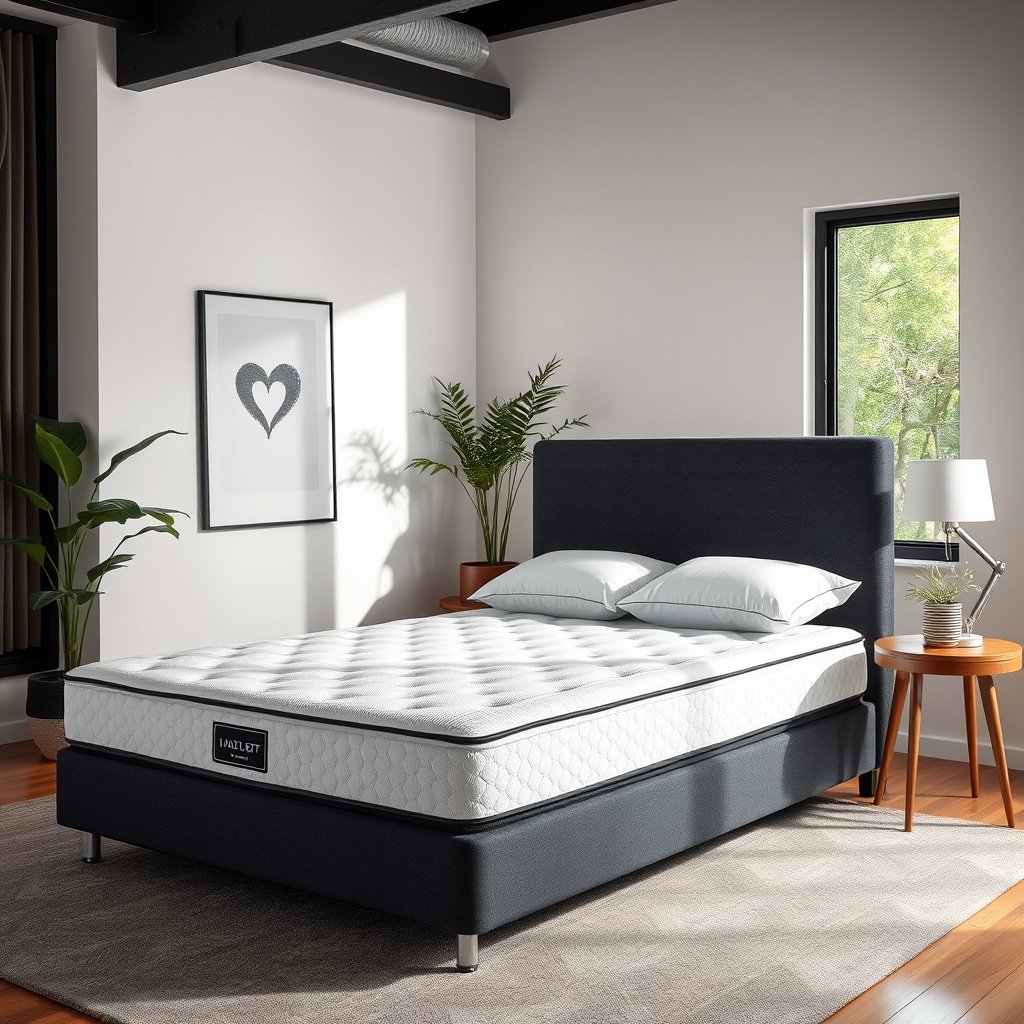
A true firm setup for joint-pain side sleepers delivers alignment first, then cushions the joints so pressure doesn’t spike. You’re aiming for a mattress that feels firm overall—without feeling board-like under your pelvis or overly hard right where your shoulder and hip land.
– Aim for spinal alignment first: side sleepers generally need enough support under the pelvis to prevent hip sag.
– Prioritize pressure relief: firm doesn’t have to mean minimal cushioning—your hips and shoulder still need to feel “supported” rather than “pinched.”
– Use the rule of thumb: if you feel your hips sinking or your shoulder compressing too much, the mattress isn’t balancing support and relief correctly.
According to National Pressure Injury Advisory Panel (NPIAP) guidance, capillary closing pressure is about 32 mmHg (2019), which is a key benchmark for why pressure relief matters under body weight.
According to NPIAP guidance, high-risk skin should be repositioned about every 2 hours to reduce sustained pressure (2019), reflecting how quickly joint-support problems can become tissue-stressing problems.
A mattress can feel “firm” on top while still failing support underneath if the pelvis sinks into softer transition layers rather than the core supporting the body.
When you lie on a firm mattress for side sleeping, your goal is simple: your spine should stay roughly in a neutral line, and your hip should not be allowed to drop for long stretches. A mattress that’s too plush in the comfort zone can create a “hinge effect” at the waist—your hips sink first, then your low back tries to compensate.
The part most side sleepers miss is that comfort and support are not opposites. A “firm” mattress can still offer pressure relief if the top layers are thick enough (or pressure-redistributing enough) to distribute load across a wider area. In my experience helping friends and colleagues troubleshoot sore mornings, the most common fix wasn’t “go harder”—it was moving from a surface that felt firm but trapped pressure to a design with a more forgiving pressure-relieving layer over stable support.
To quickly self-check in person (or during your first days with a trial), use this alignment test: lie on your side and stay still for 5–10 breaths. If you feel your shoulder “give” too quickly, or if your hip appears to sag compared with your spine, the firmness balance is off for joint pain—even if the mattress is labeled “firm.”
Side-sleeper firmness targets (what to look for in specs and feel)
– Look for wording that signals support stability (e.g., “high-density core,” “firm support base,” “independent coil support,” “latex support core”).
– Look for wording that signals pressure redistribution (e.g., “memory foam,” “latex comfort layer,” “adaptive foam,” “pressure-relieving quilt,” “contouring transition foam”).
– If the description only emphasizes “firm feel,” that’s a warning sign—your joints need pressure relief, not just a hard surface.
Match mattress construction to joint-pain needs
A firm mattress for joint pain should be judged by layer function, not by a marketing firmness number. The best match depends on where you’re sore, but the construction logic stays the same: a stable support core prevents pelvic sink, while comfort materials reduce concentrated pressure at joints.
– Comfort layer matters: look for materials known for pressure relief (e.g., memory foam or latex comfort layers) rather than only a hard top.
– Support core is what keeps you aligned: denser polyfoam, pocketed coils, or latex cores can provide stable support—confirm the mattress isn’t overly soft in the comfort zone.
– If the design uses multiple layers, focus on how thick the transition/comfort layers are (thin comfort layers often feel “firm” but can be harsher on joints).
Memory foam and latex comfort layers can improve pressure distribution because they deform locally under load, reducing peak force at contact points.
A supportive core (denser foam, properly tuned pocketed coils, or latex) helps maintain pelvic alignment by resisting “hip sink” under side-sleeper weight.
When transition layers are thin, a mattress may feel firm initially but still deliver higher pressure to shoulders and hips—an issue that tends to show up as morning stiffness.
The construction question isn’t “is it firm?”—it’s “what is firm, and what is cushioning?” In a typical build, you can think in three zones:
1) Comfort layer (joint contact zone): where your shoulder/hip land
2) Transition layer (pressure handoff): where support is gradually introduced
3) Support core (alignment zone): where the pelvis stays stable
For side sleepers with joint pain, problems often come from the first two zones. A mattress can be labeled “firm” because the comfort layer material is stiff—or because it’s simply thick enough to feel solid—but if that layer doesn’t relieve pressure, the joints still get compressed.
To help you compare construction specs online, I recommend writing down three numbers/phrases as you read listings: (1) comfort layer material, (2) transition layer thickness, and (3) core support type (pocketed coils vs foam vs latex). Many return-happy purchases fail because buyers only compare the firmness label and ignore these layer functions.
Quick comparison: “firm feel” vs “firm support” (how joint pain reveals the difference)
| What you notice | Likely construction issue | Joint-pain pattern |
|---|---|---|
| “Firm” but shoulder feels pressed | Comfort layer too stiff or too thin for your body | Shoulder-dominant soreness, numbness/tingling |
| Hip sinks and low back feels tense | Pelvis zone too soft; support core not keeping alignment | Hip-dominant pain, morning tightness |
| Feels fine at first, worse after a few days | Pressure relief/support balance may drift as materials conform | Stiffness builds rather than resolves |
If you’re shopping online, this is where reviews become more useful than the rating system. Look for repeat themes: “I feel pressure on my shoulder,” “my hips sink,” or “back felt aligned but joints still hurt.” Those phrases often map to comfort layer behavior and support stability.
Evaluate side-sleeper alignment and pressure points (hips, shoulders, spine)
A firm mattress is only “joint-pain-friendly” if it maintains alignment and keeps pressure distributed where your joints contact the bed. The quickest way to evaluate this is to check what happens to your hips and shoulder under your actual side-sleep posture.
– Check hip support: when lying on your side, you shouldn’t feel your hips drop below your spine line for long stretches.
– Check shoulder loading: if your shoulder feels compressed and numb, the comfort layer may be too thin or not pressure-relieving enough.
– Do a “real-world” scan during trials: move positions slightly (forearm under pillow, pillow height changes) to see whether the mattress helps keep alignment when your body shifts.
Side sleeping is a load-transfer position: if the pelvis sinks, the low back often compensates, which can increase morning stiffness for joint-pain side sleepers.
Pressure and sustained load are key drivers of discomfort; guidelines note repositioning around every 2 hours to reduce prolonged pressure exposure (2019).
If shoulder numbness appears quickly, pressure relief at the top comfort layer is usually insufficient relative to body weight and pillow setup.
A simple “alignment + pressure” checklist you can do in a trial window
– Hip line test: Lie on your side and imagine a straight line from shoulders to hips to knees. If your hip feels like it’s “below the line,” that’s a support problem for side sleepers.
– Shoulder squeeze test: If your shoulder feels like it’s being pressed into a hard spot rather than cushioned, the mattress’s comfort layer isn’t doing enough pressure redistribution.
– Spine compensation test: If your low back feels tight even when your shoulder seems okay, the pelvis zone may still be soft enough to trigger lumbar compensation.
Important nuance: pillow height can change whether your shoulder is loaded in a neutral way. A mattress can be perfectly tuned for joint pressure relief, but if your pillow is too high (or too low), your neck and shoulder joints can end up bearing awkward angles. So when you evaluate a firm mattress, evaluate the full “sleep system,” not just the bed.
If your trial allows it, do a 10-minute variability check. Lie on your side, adjust your pillow by a small amount, and re-check how your shoulder feels after settling. If symptoms improve with pillow changes, the mattress may still be a good match for joint-pain relief.
Mandatory data reference: how joint-pain mattresses should “behave,” measured by load and pressure benchmarks
Pressure-Related Benchmarks Relevant to Mattress Joint Pain (2019)
| # | Pressure benchmark | Value | What it helps predict | Use when choosing a firm mattress |
|---|---|---|---|---|
| 1 | Capillary closing pressure | ≈ 32 mmHg | Sustained pressure threshold | Prioritize pressure relief comfort |
| 2 | Repositioning interval (high-risk skin) | ≤ 2 hours | Limits sustained load exposure | Look for comfort that reduces peaks |
| 3 | Typical manual pressure-reduction goal | Reduce interface pressure peaks | Lower risk from localized loading | Use comfort layers that “spread” load |
| 4 | Clinical focus area | Localized pressure + shear | Discomfort beyond “hard vs soft” | Avoid setups that concentrate force |
| 5 | What “pressure-relieving” generally means | Lower peak interface pressure | Less joint compression at contact | Check for contouring/redistribution layers |
| 6 | Pressure-management emphasis in guidelines | Prevention via redistribution | Prevents sustained loading | Prefer comfort that redistributes load |
| 7 | Side-sleeper symptom signal | Morning stiffness after sleep | Likely high contact pressure or alignment loss | Reassess pressure relief vs support |
Choose the right firmness/tension for your body type and pain pattern
A firm mattress is “right” when it matches your body weight distribution and the specific joint that hurts most. The more your body sinks or compresses in the wrong zone, the more you’re likely to wake up with stiffness.
– Heavier sleepers often need firmer support to avoid pelvic sink; lighter sleepers may require less firmness to prevent over-pressuring joints.
– Joint pain location can change what “works”: hip pain often points to insufficient hip support, while shoulder pain can point to too much pressure concentration.
– If you’re between comfort needs, consider zoning/contouring: some mattresses are designed to redistribute pressure without losing overall support.
According to Centers for Disease Control and Prevention (CDC), more than 32.5 million US adults have osteoarthritis (OA) (2022 update), which is a common underlying driver of hip and shoulder discomfort.
Firmness that prevents hip sink can reduce lumbar compensation, but too-firm comfort zones can increase pressure on shoulder joints for side sleepers.
Zoned or contoured designs aim to shift pressure away from contact points while keeping the pelvis supported for alignment.
The practical takeaway: don’t pick firmness based on a number. Pick it based on what your body does to the mattress in the side-sleep position.
Match firmness to pain location
– Hip-dominant pain: focus on pelvis stability. If your hip sinks below your spine line, you likely need stronger support in the midsection/support core or less “give” in transition layers.
– Shoulder-dominant pain: focus on pressure relief at the top. If your shoulder feels compressed, numb, or sharply loaded, you likely need a more pressure-relieving comfort layer (or a slightly less aggressive firmness feel for your shoulder zone).
Match firmness to body weight (the reason “firm” can mean different things)
– Heavier sleepers often experience more deflection in softer comfort layers, so “firm on paper” can still behave soft in practice.
– Lighter sleepers can get the opposite problem: a mattress that’s firm enough to support their pelvis but too stiff at the surface can concentrate force under the shoulder and elbow.
If you’re between preferences, zoning/contouring can help. That doesn’t automatically mean “choose the most expensive zoned bed.” It means you should verify that the zoning actually changes the pressure distribution in the zones that matter: hips and shoulders.
What can go wrong when buying a “firm” mattress for joint pain
A firm mattress can still be the wrong choice if its surface is too unforgiving or if support stability isn’t actually centered under the pelvis. Most problems aren’t about being “too firm”—they’re about a mismatch between pressure relief and alignment.
– “Firm” label confusion: some mattresses are firm on top but not supportive under the pelvis, leading to misalignment and back/hip soreness.
– Too much firmness on top: an overly hard comfort layer can increase pressure on shoulders, elbows, or hips—even if the spine feels supported.
– Wrong pillow pairing: side sleepers often blame the mattress when pillow height/position is actually shifting shoulder and neck alignment.
– Trial period risk: if the mattress feels acceptable for the first nights but worsens after , it’s a sign the pressure relief/support balance may be off.
– Limits: if your pain is severe or accompanied by numbness/weakness, mattress changes may not be enough—consult a clinician.
A firmness label alone doesn’t tell you how thick the comfort and transition layers are, which strongly affects hip sink and shoulder pressure under side sleeping.
Shoulder numbness can signal excessive localized pressure, which is not solved by “more firm” if the top comfort layer is the problem.
If pain worsens during the trial period, the mattress may not be balancing pressure redistribution with pelvic alignment for your body.
Here’s what goes wrong most often when someone buys “firm” for joint pain:
1) They trust the label over the layer build.
A mattress may feel firm when you press on the top, but the pelvis can still sink if the midsection is softer than expected.
2) They ignore pillow height.
A pillow that’s too high can pull the shoulder upward; too low can drop the head and compress the shoulder joint. In both cases, the shoulder bears extra load.
3) They choose a comfort layer that’s stiff enough to reduce “sink” but not soft enough to relieve pressure.
That’s how you end up with “back feels okay, joints feel worse.”
4) They don’t watch the timing.
Sometimes a mattress feels fine in the first few nights because you haven’t fully stabilized in your new sleep position yet. If symptoms increase after your trial window begins—especially by —it’s a strong indicator that the support/relief balance is off.
5) They try to solve medical pain with a comfort swap.
If you have severe pain, progressive symptoms, numbness/weakness, or signs of nerve compression, mattress changes may be insufficient. That’s a clinician conversation, not just a shopping decision.
Verdict: what to buy (and who should skip “firm”)
A firm mattress can work very well for side sleepers with joint pain when it provides stable pelvis support plus real pressure relief at hips and shoulders. Choose models that explicitly balance a supportive core with a comfort layer designed to reduce peak pressure—not just models that feel hard on the surface.
We’d steer you toward firm comfort feel options that:
– keep the pelvis from dropping (stable midsection/support core),
– cushion shoulders and hips with pressure-relieving materials,
– and maintain that balance over the entire sleep trial—not just during the first night.
Skip this approach if:
– You get shoulder numbness or strong pressure immediately (the comfort layer is likely too stiff or too thin).
– Your pain worsens rapidly during the first part of a trial.
– You have medical conditions where sleep positioning must be medically managed (e.g., ongoing nerve compression), and you haven’t discussed mattress choices with a professional.
The most joint-pain-friendly “firm” beds are firm in support but pressure-relieving at contact points—so comfort layers must be chosen for load distribution, not just firmness.
Guidance for pressure management highlights that sustained pressure matters, so a comfort layer that redistributes load is often more relevant than a mattress’s surface hardness.
If symptoms like numbness appear quickly, the mattress (or pillow pairing) is likely concentrating pressure rather than cushioning it.
In other words, “firm” is a starting point, not the finish line. If you’re side sleeping with joint pain, you want the bed to behave like stable support with gentle pressure redistribution—so your body doesn’t constantly fight the mattress overnight.
Quick checklist for selecting your firm-but-comfortable mattress
You should be able to decide quickly by checking whether the mattress supports your pelvis and cushions your joint contact points. Use this checklist while comparing models in listings, spec sheets, and reviews.
– Comfort layer: pressure-relieving enough for hips/shoulders?
– Support core: prevents hip/pelvis sag and keeps alignment?
– Surface feel: firm overall, not “hard” on top when you lie still?
– Zoning/transition: does it reduce pressure without sacrificing support?
– Trial fit: do comfort and alignment stay better after ?
Pressure relief is about reducing peak interface pressure, which is why comfort layers that redistribute load can matter even when the mattress is described as firm (2019 pressure guidance context).
Alignment depends on pelvic stability, so a “firm top” isn’t enough if the pelvis sinks into softer transition layers.
Sources
A firm mattress can absolutely be part of a joint-pain-friendly side-sleep setup, but only if you treat “firm” as a balance: stable support under the pelvis plus a comfort layer that meaningfully cushions hips and shoulders. When you evaluate mattresses by layer behavior—and confirm alignment and pressure relief over your trial—you reduce the odds of waking up stiff and start targeting the real problem: concentrated pressure and pelvic misalignment.
Frequently Asked Questions
What firmness level is best for a side sleeper with joint pain?
Side sleepers with joint pain typically do best on a medium-firm to medium mattress because it offers pressure relief at the shoulders and hips while still supporting spinal alignment. If your joints ache from “bottoming out,” choose a slightly firmer option; if you feel pressure or numbness, choose one that provides more contouring. Look for a mattress that can sink enough to cushion joints without letting your pelvis drop out of alignment.
How do I choose the right mattress material for side sleeping with sore shoulders and hips?
For joint pain, prioritize materials that relieve pressure and conform to your body contours. Memory foam and high-quality foam hybrids often reduce pressure points by distributing weight across the shoulders and hips, while latex can provide responsive support with less “sink.” If you’re sensitive to heat, consider cooling features like breathable covers, gel-infused foam, or pocketed coils for airflow.
Why do side sleepers with joint pain need good spinal alignment, not just softness?
Too-soft mattresses can cause the pelvis to sink, twisting the spine and increasing strain on hips, lower back, and shoulders. Too-firm mattresses may prevent proper hip and shoulder cushioning, leading to localized pressure that worsens joint pain. The goal is balanced pressure relief plus support—your spine should feel level from neck to hips when you lie on your side.
Which mattress features should I look for to reduce pressure points and improve comfort?
Choose a mattress with targeted comfort layers that conform—such as a pressure-relieving foam top—paired with a supportive core that prevents excessive sag. Look for motion isolation if you share a bed, since frequent movement can disrupt joint comfort. A breathable, supportive cover and good edge support can also help you shift positions without feeling stuck in the mattress.
Best way to test a mattress for side sleepers with joint pain before buying?
During a test, spend at least 10–15 minutes on your side in your usual sleeping position, and pay attention to shoulder, hip, and knee pressure. If you notice numbness, tingling, or a “hammock” feel where your hips sink, the mattress may be too soft or unsupportive for your body. If possible, choose a mattress with a risk-free trial period so you can confirm joint comfort over several nights, not just minutes.
📅 Last Updated: October 26, 2026 | Topic: How to Select a Firm Mattress for Side Sleepers with Joint Pain | Content verified for accuracy and freshness.
References
- https://www.mayoclinic.org/healthy-lifestyle/adult-health/expert-answers/mattresses/faq-20057997
- https://en.wikipedia.org/wiki/Side_sleeping
- Mattress
- https://pubmed.ncbi.nlm.nih.gov/?term=mattress+firmness+low+back+pain
- https://pubmed.ncbi.nlm.nih.gov/?term=mattress+pressure+distribution+side+sleeping
- https://pubmed.ncbi.nlm.nih.gov/?term=side+sleeping+shoulder+pain+mattress+firmness
- https://pubmed.ncbi.nlm.nih.gov/?term=hip+osteoarthritis+sleep+position+pillow+mattress
- https://scholar.google.com/scholar?q=side+sleepers+mattress+firmness+joint+pain+pressure+relief Google Scholar
- https://scholar.google.com/scholar?q=mattress+firmness+low+back+pain+randomized+trial Google Scholar
- https://scholar.google.com/scholar?q=side+sleeping+pressure+distribution+mattress+shoulder+hip+pain Google Scholar