

Choosing a mattress as a side sleeper with fibromyalgia is essential for your comfort and sleep quality. Look for materials like memory foam or latex that contour to your body and relieve pressure points. A medium soft to medium firm firmness level often offers the best support while allowing your hips and shoulders to sink in. Also, consider features like cooling technology and strong edge support. There’s more to explore about selecting the perfect mattress that suits your unique needs.
Understanding Fibromyalgia and Its Impact on Sleep

When you live with fibromyalgia, understanding how it affects your sleep is essential, as the condition often leads to widespread pain and fatigue that can make restful nights feel elusive. Chronic pain is a significant factor, creating discomfort that disrupts your ability to fall and stay asleep. You might find that even a brief moment of rest is interrupted by sleep disturbances, leaving you feeling exhausted the next day. This cycle can affect your overall well-being, making daily activities challenging. Recognizing these patterns can empower you to take proactive steps in managing your sleep environment. By addressing these issues, you can work towards improving your sleep quality and, ultimately, reclaiming a sense of freedom in your daily life.
Importance of Mattress Material for Pressure Relief
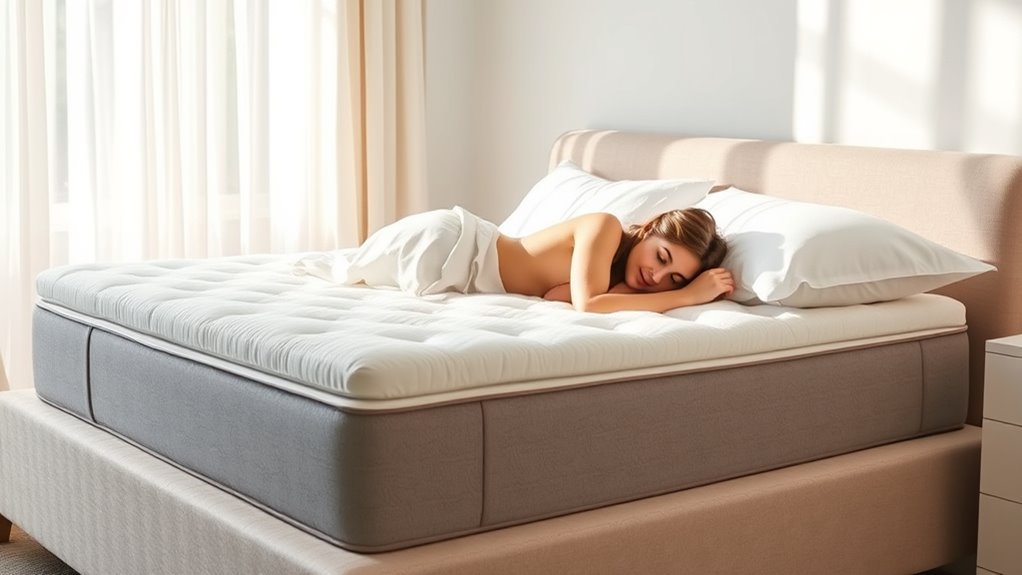
Finding the right mattress material is essential for alleviating pressure points, especially for side sleepers with fibromyalgia. Memory foam is a popular choice because it contours to your body’s shape, providing support where you need it most. This material helps distribute your weight evenly, reducing the stress on tender areas and promoting better sleep. On the other hand, latex options offer a more responsive feel while still providing pressure relief. They’re also naturally breathable, helping to regulate temperature throughout the night. Both materials can help you achieve a more restful sleep, minimizing discomfort and allowing you the freedom to relax. Ultimately, selecting the right material tailored to your needs can greatly improve your sleep quality and overall well-being.
The Right Firmness Level for Side Sleepers
Choosing the right firmness level for your mattress is essential if you’re a side sleeper with fibromyalgia. The firmness scale can guide you in selecting a mattress that alleviates pressure points while providing support. Here are three key considerations:
- Medium Soft to Medium Firm: This range typically offers the best balance, allowing your shoulders and hips to sink in without compromising spinal alignment.
- Memory Foam and Latex Mattress Types: These materials contour to your body, helping to distribute weight evenly and reduce pressure on sensitive areas.
- Personal Comfort: Everyone’s body is different. It’s important to test various firmness levels to find what feels best for your unique needs, ensuring a restful night’s sleep.
Additional Features to Look for in a Mattress
After settling on the right firmness level, it’s time to explore additional features that can enhance your sleep experience, especially if you have fibromyalgia. Look for mattresses with cooling technology to help regulate your body temperature throughout the night. This can be essential, as overheating can exacerbate discomfort and disrupt sleep quality. Additionally, consider edge support; a mattress with strong edge support allows you to comfortably sit on the edge without feeling like you’ll roll off. This feature can also enhance your sleeping surface, providing extra space and stability. By focusing on these additional elements, you can create a sleep environment that not only supports your body but also promotes restorative rest, making your nights feel more rejuvenating.
Tips for Testing a Mattress Before Purchase
How can you be certain a mattress is right for you before making a purchase? Mattress testing is essential, especially for those with fibromyalgia. Here are three tips to help you evaluate a mattress effectively:
- Test it in-store: Lay down on the mattress for at least 10-15 minutes. Pay attention to how it feels against your pressure points, especially your hips and shoulders.
- Consider your sleeping position: Since you’re a side sleeper, make sure the mattress offers adequate support and cushioning for proper spinal alignment.
- Check the return policy: A generous trial period allows you to test the mattress at home, confirming it meets your needs without pressure.
These steps can empower you to find a mattress that truly enhances your comfort and well-being.
Frequently Asked Questions
Can Specific Mattress Brands Help With Fibromyalgia Symptoms?
Yes, specific mattress brands can help with fibromyalgia symptoms by offering tailored support. Imagine sinking into a cloud-like surface that cradles your body, alleviating pressure points. Look for options with medium firmness, balancing softness and support to enhance sleep quality. Brands like Tempur-Pedic or Purple often receive praise for their adaptive materials. Choosing the right mattress can make a significant difference in your comfort, allowing you to wake up refreshed and ready for the day.
How Often Should I Replace My Mattress?
You should replace your mattress every 7 to 10 years, but keep an eye out for replacement signs like sagging, discomfort, or waking up tired. A mattress’s lifespan can vary based on materials and usage, so trust your body. If you’re not getting restful sleep or your pain levels increase, it might be time for a change. Prioritizing your comfort can lead to better rest and improved overall well-being.
Are Adjustable Beds Beneficial for Side Sleepers With Fibromyalgia?
Yes, adjustable beds can be beneficial for side sleepers with fibromyalgia. They allow you to customize your sleep position, which can help alleviate pressure on sensitive areas. When you adjust the mattress firmness, you can find the perfect balance that supports your body’s contours. This flexibility promotes better spinal alignment and reduces discomfort, giving you the freedom to experience a more restful night’s sleep. Ultimately, it’s all about finding what works best for you.
What Is the Best Bedding for Side Sleepers With Fibromyalgia?
The best bedding for you includes a mattress that balances firmness and pressure relief. Look for a medium to medium-soft mattress that contours to your body, reducing pressure on your hips and shoulders. Memory foam or latex options often provide excellent support while minimizing pain. Pair it with breathable, soft sheets that wick moisture away, ensuring you stay comfortable throughout the night. This way, you can truly enjoy restful sleep without discomfort.
How Can I Reduce Mattress-Related Allergies While Sleeping?
Imagine your bedroom as a sanctuary, free from distractions and irritants. To reduce mattress-related allergies, consider investing in allergy-proof materials and hypoallergenic bedding. These options can create a barrier against dust mites and allergens, allowing you to breathe easier while you sleep. Regularly wash your bedding in hot water and use a mattress protector to maintain a clean environment. Embracing these changes can help you enjoy restful nights, free from allergy concerns.