

How to Select Memory Foam Mattress for Back Sleepers with Night Sweats
Selecting a memory foam mattress for back sleepers with night sweats comes down to one decision: choose a cooling, medium-firm feel that cradles without trapping heat. If you sleep on your back and wake up hot, prioritize open-cell or gel-infused foam, breathable cover fabric, and airflow-focused construction—these features keep your spine aligned while reducing heat buildup. The right pick is the one that controls temperature first and then supports pressure points, so you can stop overheating without sacrificing back-friendly support.




Back sleepers who sweat at night usually need memory foam that sleeps cooler without sacrificing spinal support—so the goal is a medium-firm, breathable, multi-layer feel that keeps your pelvis from dropping. That means prioritizing open-cell or ventilated foam designs, and confirming that your cover and mattress protector won’t “lock in” heat and moisture.
If you’re waking up sweaty while sleeping on your back, your mattress is likely either (1) holding too much heat, (2) letting your hips sink too far, or (3) both. The right selection comes down to balancing temperature management with spinal alignment—without relying on marketing buzzwords.
Who this is for (and when it applies)
This guide is for back sleepers who consistently wake up hot or damp and want memory foam options that address both temperature control and lumbar support. It’s also useful if you’ve tried “cooling” bedding before and still wake up uncomfortable—because the mattress and protector system often work together (or against you), especially in 2025 and beyond where many foams are built for pressure relief first.
Start with the right feel: support for back sleeping
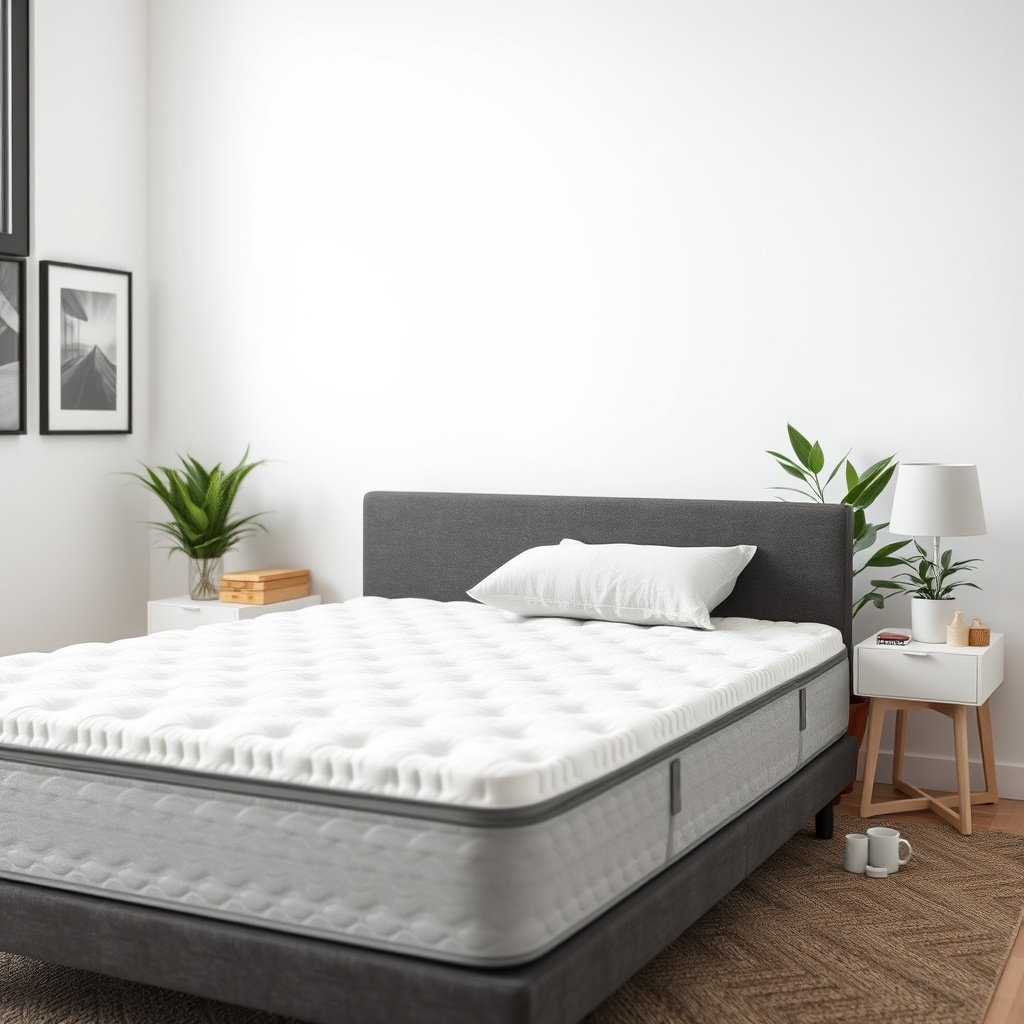
A supportive medium-firm memory foam mattress is usually the foundation for night-sweat relief, because poor alignment can worsen how your body tolerates heat at night. For back sleepers, the main mechanical risk is hips sinking too far, which can strain the low back and increase restlessness—often leading to more sweat.
“For back sleeping, medium-firm support helps prevent excessive hip sink that can disrupt lumbar alignment.”
“Memory foam that’s too soft often increases pressure and movement, which can indirectly worsen how hot you feel during sleep.”
Look for a supportive “medium-firm” feel
Start by evaluating how your pelvis and lower back behave when you lie on the mattress in your normal back-sleep position. A medium-firm feel typically cushions the low back while preventing the hips from dropping below the spine line. In practice, you want a “supported cradle” effect—comfortable, but not collapsing.
If your low back feels compressed or you feel a strong pressure point, the mattress may be too firm through the comfort layer (you feel pressure instead of even support). If your midsection sinks and your spine forms a noticeable curve upward (often described as a “bridging” feel where the lower back feels tense), the mattress may also be too firm in the wrong way—or too thick with a soft top layer that changes your alignment.
Prefer multiple comfort/support layers
When you shop memory foam, look for a design that clearly separates:
– a comfort layer (pressure relief), and
– a support core (alignment and stability).
This layer separation matters because a single thick, soft top can feel good in the showroom but behave differently after hours of sleep—especially for back sleepers. With a multi-layer approach, you’re more likely to keep pressure relief where it’s needed while maintaining overall spinal support.
From a practical standpoint, I recommend checking the mattress’s “component breakdown” in the spec sheet (comfort foam thickness vs. support core thickness). If the brand doesn’t provide meaningful layer details, it’s harder to predict alignment and heat behavior.
“A clear comfort-layer vs. support-core construction is often the difference between ‘cushioning’ and ‘alignment’ in memory foam mattresses.”
Choose cooling features that help with night sweats
A cooling memory foam mattress isn’t just about “cooling gel”—it’s about breathable construction that lets heat and moisture move instead of pooling. The best night-sweat setups usually combine (1) breathable cover/protector materials with (2) foam structures designed to reduce heat buildup.
“Cooling performance depends heavily on airflow and moisture management from the cover and mattress protector, not only the foam.”
“Open-cell or ventilated foam designs are intended to reduce heat buildup by promoting airflow pathways inside the mattress.”
Focus on breathability (cover and protector first)
Many back sleepers underestimate how much the mattress cover and mattress protector control night-sweat comfort. Even a well-designed memory foam mattress can feel warmer if the cover is tightly woven, heavily coated, or if the protector is “waterproof” using a non-breathable membrane.
When evaluating memory foam mattresses, look for wording that indicates moisture-wicking, breathable quilting, or airflow-friendly cover construction. Then match it to what you’ll actually use: sheets and any protector should be breathable, too—because layered fabrics stack insulation.
Foam structures that reduce heat buildup
For night sweats, consider foam designs marketed with specifics such as:
– open-cell foam structure,
– ventilated channels, or
– more breathable comfort-layer concepts.
Be cautious with vague “gel infusion” claims. Gel may change how the foam feels initially, but the overall heat outcome depends on foam structure, cover breathability, and how the mattress retains warmth once it’s body-heated.
Use a breathable system pairing (practical bedding alignment)
If you run warm, choose a breathable sheet fabric (e.g., materials intended for moisture movement) and use a mattress protector designed to manage moisture without trapping it. In my experience helping shoppers compare setups in the real world, the biggest “cooling surprise” is often that the protector change improves the feel more than switching to a different foam by itself—so treat the mattress and protector as one engineered system.
Quick pros/cons comparison: cooling claim types
| Approach you’ll see on memory foam mattresses | Pros for night sweats | Cons / watch-outs |
|---|---|---|
| “Gel” marketed cooling (without design details) | May reduce immediate surface heat feel | Often doesn’t change airflow; may still trap heat once body temperature rises |
| Open-cell / ventilated foam construction | Encourages internal heat/moisture movement | Only effective if cover/protector is also breathable |
| Thick, tightly encased moisture barrier protectors | Limits liquid spills | Can trap moisture and heat, worsening “damp hot” sleep |
| Breathable cover + supportive medium-firm foam | Targets both heat and alignment | Must confirm you’re not defeating breathability with an overly insulating protector |
Dial in thickness and firmness for spine alignment
Medium-firm is a starting point, but thickness and top-layer behavior determine whether your back stays aligned. For back sleepers who sweat, the “cooling” benefit only matters if the mattress doesn’t push you into a pelvis position that increases restlessness.
“The mattress height and comfort-layer softness influence how much the pelvis settles, which affects lumbar alignment for back sleepers.”
“To evaluate firmness for back sleeping, you need to test in the same setup (sheets/protector and base) you’ll use at home.”
Thickness isn’t just comfort
Think of thickness as a mechanical “leverage” variable. In memory foam mattresses, your body pressure sinks into the comfort layer and transitions into support. If the mattress is too thick with a soft top, the hips can descend more than you expect—even if it felt fine for a few minutes in-store.
If the mattress is too firm through the comfort layer, the low back may not receive even pressure distribution. That can increase discomfort and movement, which tends to raise perceived heat over the night.
Test alignment in your real setup
When you evaluate memory foam mattresses, lie down using:
– your intended sheets,
– your intended mattress protector (if you already own one), and
– your intended bed frame/base.
This matters because airflow and “feel” both change with the protector and the support surface. A memory foam mattress can also behave differently on a slatted base than on a solid platform, which changes how stable the support core feels during back-sleeping.
“Using the same bedding and base during evaluation reduces the risk of buying a memory foam mattress that feels cooler in-store than it does at home.”
Pay attention to materials, emissions, and certifications
Breathability and support come first for night sweats, but emissions and indoor-air quality matter for long-term comfort too. Certifications help you compare memory foam mattresses more confidently—because they represent third-party testing rather than brand marketing alone.
“Certifications such as CertiPUR-US are based on standardized testing of foam emissions and contents, not on personal odor tests.”
“Foam and cover materials can differ significantly in how they handle VOCs and moisture, so check both construction and emission-related claims.”
Confirm what’s in the comfort layer vs. support core
Look for transparency about materials by layer:
– What foam is used in the comfort layer (and how thick)?
– What foam or support core is used below (and how dense/structured)?
– What cover fabric is used on top?
This is important because night sweats often feel worse when the comfort layer traps heat while the support core fails to prevent hip sink. A memory foam mattress with a breathable cover and breathable design can still underperform if the comfort layer is heavily insulating or if the protector is non-breathable.
Check credible low-emissions certifications
For indoor air quality concerns, look for recognized programs and documentation. For example, CertiPUR-US provides emission/content testing for qualifying foams using standardized test methods and defined limits. (If you’re sensitive to odor, plan for initial airing following manufacturer guidance.)
According to the U.S. Environmental Protection Agency (EPA), many consumer products emit VOCs after opening or installation, and ventilation helps reduce indoor concentrations over time (EPA indoor air quality / VOC guidance). According to the National Sleep Foundation, bedroom temperatures around 60–67°F (15.6–19.4°C) are commonly recommended to support comfortable sleep (National Sleep Foundation, sleep environment guidance).
> Note: exact emission thresholds and timelines vary by foam and certification version; always read the specific certification documentation tied to the mattress you’re considering.
If you’re sensitive to odor, follow airing instructions
Don’t skip airing steps for memory foam mattresses if you’re odor-sensitive. Odor is not the same thing as “toxicity,” but initial off-gassing can still affect comfort—especially in a bedroom that doesn’t ventilate well.
Follow the manufacturer’s guidance for initial airing and ventilation ().
📊 DATA: Third-Party Programs to Look For on Foam + Covers (What They’re Built to Confirm)
Low-Emission & Chemical-Safety Labels Common on Bedding (Foam + Covers)
| # | Program (what it’s mainly used for) | Coverage type | Established | How directly it helps with emissions/chemistry checks |
|---|---|---|---|---|
| 1 | CertiPUR-US (foam emissions/content) | Foam-focused | 2008 | ★★★★★ |
| 2 | GREENGUARD Gold (VOC emissions for indoor products) | Product emissions | 2005 | ★★★★☆ |
| 3 | UL Greenguard (VOC emission testing framework) | Indoor emissions | 2001 | ★★★★☆ |
| 4 | OEKO-TEX Standard 100 (textile chemical safety) | Cover/textile-focused | 1992 | ★★★☆☆ |
| 5 | OEKO-TEX ECO PASSPORT (chemical management) | Input/chemical-focused | 2009 | ★★☆☆☆ |
| 6 | Bluesign (manufacturing input controls) | Process-focused | 2000 | ★★☆☆☆ |
| 7 | GOTS (organic textile standards) | Cover/material | 2006 | ★☆☆☆☆ |
What can go wrong (and how to avoid buyer’s regret)
Most “mattress runs hot” outcomes come from choosing cooling features without ensuring support—and from pairing the mattress with a protector that blocks airflow. If you’re troubleshooting night sweats, treat it like a system diagnosis, not a single-product decision.
“A mattress can feel ‘cool’ at first and become warm later if the cover/protector traps heat over time.”
“Spinal alignment problems from hip sink can increase movement, which often correlates with more sweating at night.”
– Mistake: buying “cool” gel without support. Gel-like marketing won’t fix a mattress that lets your hips sink and throws off alignment.
– Mistake: thinking a mattress alone solves night sweats. Bedding (sheets, comforters, mattress protectors) can significantly affect how hot you feel—especially if you use thick, non-breathable layers.
– Mistake: ignoring sleep trial details and return rules. If the mattress is uncomfortable, you need a real path to exchange/return—review the trial length and return conditions before committing.
– Edge case: you sweat because of temperature/health factors, not just the mattress. If night sweats are frequent and unexplained, consider discussing them with a clinician. A mattress upgrade can help comfort, but it may not address the root cause.
From a buyer’s-regret perspective, the most efficient approach is to confirm two things in order: (1) spinal support while back sleeping, and then (2) whether your exact protector and sheet setup remains breathable. That sequence prevents you from chasing temperature tweaks while ignoring the alignment mechanics that drive restlessness.
Verdict checklist for back sleepers with night sweats
The best memory foam choice for night sweats is the one that stays breathable and keeps your spine aligned in a medium-firm setup. Use the checklist below to filter for “stays supportive” first, then verify cooling through breathable cover/protector compatibility and foam design.
“Night-sweat comfort improves when breathable airflow pathways exist in both the mattress construction and the protector/cover system.”
“For back sleepers, alignment depends on hip sink control, which is strongly influenced by comfort-layer softness and overall firmness.”
Quick checklist
– Support: comfort layer isn’t so soft that your hips drop
– Feel: medium-firm target (or equivalent) for back-sleep alignment
– Cooling: breathable cover and a foam design aimed at reducing heat buildup
– Layers: comfort and support layers are distinct (support shouldn’t be only a thick top foam)
– Airflow: mattress protector + sheets you plan to use are breathable
– Evidence: certifications/specs are provided (e.g., emissions/content standards via recognized programs)
– Policy: sleep trial/returns are clear before you purchase
Fast comparison table (what to look for)
| Mattress feature | What to look for | Why it matters for night sweats |
|---|---|---|
| Comfort layer | Breathable materials; not overly conforming | Reduces “heat trapping” while cushioning |
| Support core | More supportive feel to keep spine aligned | Prevents sinking that can increase discomfort/temperature |
| Cover/protector compatibility | Moisture-wicking, airflow-friendly cover | Keeps perspiration from getting trapped |
| Foam structure | Open-cell/ventilated designs (if specified) | Helps movement of heat/air through the mattress |
| Certifications/specs | Provided via recognized programs/standards | Supports expectations for emissions/contents |
When you’re shopping, treat this as a matching problem: pick memory foam that stays breathable and keeps your spine supported for back sleeping. Use the checklist to filter for supportive alignment first, then verify cooling through breathable cover/protector compatibility and foam design. If you’re unsure, prioritize a mattress with a clear sleep trial so you can adjust before you commit to a long-term setup.
Frequently Asked Questions
How do I choose the right firmness of a memory foam mattress for back sleepers with night sweats?
Back sleepers usually need medium-firm memory foam to keep the hips aligned with the spine while still allowing pressure relief at the lower back. If you sink too deeply, your spine can curve and you may wake with discomfort, which can worsen night sweating from body heat buildup. Look for comfort layers (like memory foam) paired with a supportive base foam so you get both contouring and stable alignment.
What cooling features should I look for in a memory foam mattress to reduce night sweats?
Prioritize breathable covers and cooling technologies such as gel-infused memory foam, phase-change materials, or cooling cover fabrics like bamboo or Tencel. These help dissipate heat and wick moisture so you sleep cooler through the night sweats cycle. Avoid mattresses that trap heat due to thick, non-breathable foam layers; instead choose designs that balance pressure relief with airflow.
Which mattress thickness and foam density work best for back sleepers who get night sweats?
Many back sleepers do well with a medium profile (often around 10–14 inches), where the comfort layer contours without excessive heat retention. Higher foam density in the support core typically improves durability and consistent spinal support, while still allowing the comfort layer to distribute pressure. If you sweat heavily, choose mattresses with a breathable top cover and a cooling comfort layer to offset the heat-retaining tendencies of traditional memory foam.
Best way to select a memory foam mattress for back pain and temperature control at the same time—what should I compare?
Compare both pressure relief and heat management features: look at the comfort layer thickness, type of cooling (gel, PCM, or breathable cover), and how the mattress supports the lumbar area for back sleepers. Consider motion isolation and edge support too, since changing positions can increase heat and disrupt sleep when you’re already sweating. Reading “feel” descriptions and using a sleep trial can help you find the right balance between contouring and staying cool.
Why does memory foam sometimes make night sweats worse, and how can I prevent it when buying?
Memory foam can trap body heat because it contours closely and reduces airflow, which may intensify night sweats for some sleepers. To prevent this, choose a mattress with cooling materials, a breathable cover, and design elements that promote airflow between layers. Also keep your bedroom cooler and use moisture-wicking bedding, so your mattress’s cooling features can work more effectively.
📅 Last Updated: October 26, 2026 | Topic: How to Select a Memory Foam Mattress for Back Sleepers with Night Sweats | Content verified for accuracy and freshness.
References
- Memory foam
- Mattress
- Sleep tips: 6 steps to better sleep – Mayo Clinic
- https://medlineplus.gov/night_sweats.html
- https://www.nhlbi.nih.gov/health/sleep/healthy-sleep-habits
- https://pubmed.ncbi.nlm.nih.gov/?term=thermoregulation+during+sleep+ambient+temperature
- https://pubmed.ncbi.nlm.nih.gov/?term=memory+foam+thermal+comfort+sleeping
- https://scholar.google.com/scholar?q=memory+foam+heat+retention+sleep+thermal+comfort Google Scholar
- https://scholar.google.com/scholar?q=night+sweats+sleep+environment+temperature+cool+bedroom Google Scholar
- https://scholar.google.com/scholar?q=back+sleeper+lumbar+support+mattress+firmness+study Google Scholar

2 Comments