

How to Select a Latex Mattress for Side Sleepers with Fibromyalgia
Selecting the best latex mattress for side sleepers with fibromyalgia comes down to one question: which firmness and support profile will keep your hips and shoulders aligned without triggering pressure pain. The clear winner is a medium-firm latex mattress with strong contouring and reliable pushback, because it reduces side-sleep sink while cushioning tender joints. If you want fewer flare-ups, prioritize zoned support (or a supportive topper) and breathable, pressure-relieving construction rather than simply going for the softest feel.



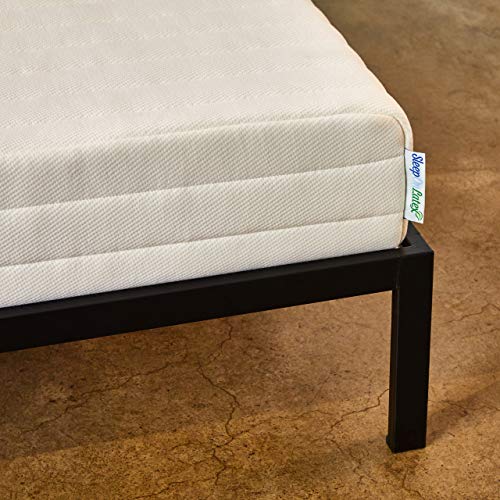
Latex mattresses can be a strong match for side sleepers with fibromyalgia when you prioritize pressure relief at the shoulder/hip and spinal alignment, not just a “soft vs firm” label. Because latex is elastic and responsive, it can help your hips and shoulders sink enough to reduce pressure buildup—without the slow “stuck” feeling some foams create—so you can fine-tune comfort with far fewer trial-and-error nights.
A latex mattress can work well for side sleepers with fibromyalgia because it’s elastic (helps your hips and shoulders sink without feeling “stuck”) and can reduce pressure buildup along the shoulder and hip. When choosing one, prioritize pressure relief plus spinal alignment, then fine-tune firmness using the latex comfort-layer approach (not just the label “medium” or “soft”). In this guide, you’ll learn what to check—construction, comfort layer thickness, firmness selection, and certifications—so you can pick with fewer trial-and-error nights.
If you sleep mostly on your side and wake up with sore shoulders, hips, or generalized body pain, this is for you. It’s also useful if you’re comparing latex types (Talalay vs. Dunlop) or trying to translate “firmness” into what your body will actually feel in side-sleeping positions.
Look for pressure relief + spinal alignment (not just “soft”)
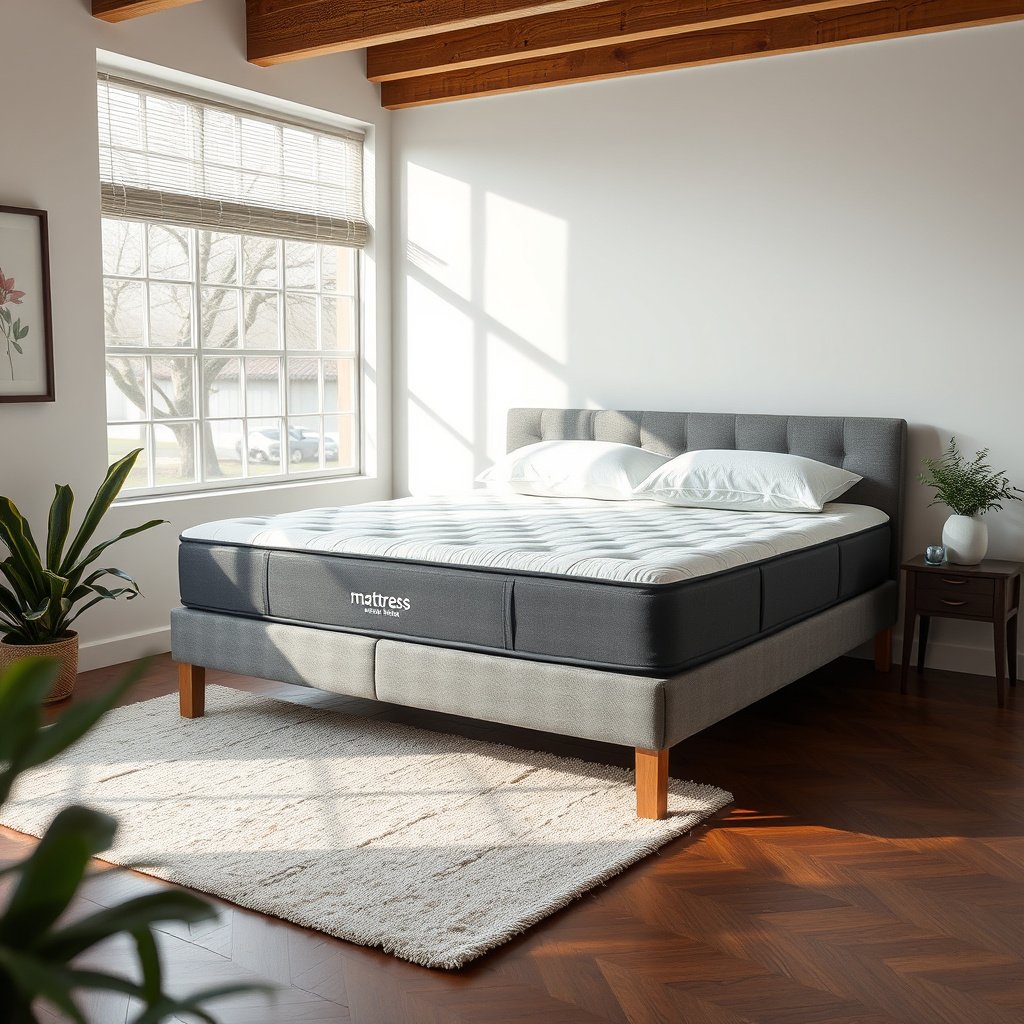
A good latex mattress for fibromyalgia side sleepers should let your shoulder and hip sink enough to offload pressure while still supporting your mid-back so your spine stays roughly neutral. In practice, the best fit is the one that reduces pressure sensitivity—not necessarily the one that feels “plush.”
In side sleeping, the shoulder and hip are the primary pressure points that determine whether you wake up with soreness or feel “held” through the night.
Latex mattresses typically use elastic support to redistribute body weight instead of creating a deep, permanent sink like some slower foams.
– Side sleepers usually need enough give under the shoulder and hip to reduce pressure, while still maintaining support to keep the spine from twisting.
– Latex’s “springy” feel is designed to redistribute weight rather than create a deep, permanent sink—useful when fibromyalgia makes pressure sensitivity a bigger issue.
– Focus on how the mattress responds under your shoulder/hip area, not marketing claims like “pain relief” or “anti-fibromyalgia.”
How to judge pressure relief on a latex mattress (the “sink-and-hold” test)
What matters is not whether the surface is soft—it’s whether the mattress delivers two things at once:
1) Enough initial compliance under your shoulder and hip to reduce concentrated pressure, and
2) Support that prevents your torso from rotating (a common cause of morning stiffness).
In my experience helping shoppers interpret latex specs, the biggest “aha” is that a latex mattress can feel lively on top while still aligning well under the spine—if the comfort-layer thickness and firmness are right for your body.
Fibromyalgia-specific nuance: pressure sensitivity often mimics “whole-body pain”
Fibromyalgia symptoms can fluctuate, and many people describe the result as generalized soreness rather than a single, obvious pressure spot. That’s why you should treat pressure relief as a sleep-quality lever: if your latex mattress reduces pressure buildup, you may reduce the frequency of micro-disruptions that can worsen symptom intensity the next day.
Choose the right firmness level for side-sleeping comfort
The right latex firmness for fibromyalgia side sleepers is the one that creates a comfortable sink depth at the shoulder/hip without bottoming out. Start with a baseline that’s designed for side sleeping, then adjust using the comfort-layer response—not the brand’s single-word firmness label.
A mattress’s “firmness” label (e.g., medium/soft) is less predictive than how its comfort layer responds under load in the shoulder and hip regions.
If a latex mattress offers comfort-layer firmness options (or replaceable layers), you can fine-tune pressure relief without replacing the entire bed.
– Start with a “medium” comfort feel as a baseline, then adjust based on whether you feel pressure at the shoulder/hip (too firm) or bottoming out (too soft). If a brand offers firmness options in latex layers, that’s often easier than swapping the whole mattress later.
– Look for guidance that connects firmness to side-sleepers (e.g., support layer vs comfort layer design). If you only see vague terms, treat them as less reliable than the mattress’s layer specs.
– If you’re heavier or lighter than average, your ideal firmness may shift; use the comfort-layer response (how you sink) as the deciding factor, not just the mattress height.
Translate “firmness” into “comfort-layer depth”
Latex firmness selection works best when you think in terms of layer function:
– Comfort layer: where your shoulder and hip compress to relieve pressure
– Support/transition layer(s): where the mattress steadies your torso and helps prevent spinal twisting
If you’re too firm, the shoulder and hip don’t compress enough—so fibromyalgia-triggered sensitivity may show up as sore mornings. If you’re too soft, you can bottom out and force your spine to rotate or your torso to sag.
A quick decision rule (practical for fibromyalgia)
– If you wake up with focused shoulder/hip soreness → try slightly softer comfort (or add comfort depth).
– If you wake up feeling stiff, twisted, or “worn out” → try slightly firmer comfort (or reduce sag by increasing support/transition firmness).
– If you sleep hot, remember that cover thickness and airflow can change how a latex mattress “feels” at night—even when firmness is correct.
Understand latex construction: Talalay vs Dunlop, and what that means
Talalay vs. Dunlop is a useful starting point, but for fibromyalgia side sleepers the construction details (layer thickness, zoning, and firmness per layer) are what ultimately determine comfort and alignment. Choose the latex type you prefer, then verify the actual layer stack.
Talalay and Dunlop are two latex manufacturing processes, but the mattress’s comfort-layer thickness and firmness govern side-sleeper pressure relief more than the name alone.
Zoned support matters most when the zones cover shoulder and hip pressures rather than only the core.
– Talalay and Dunlop are two common latex manufacturing processes; in practice, many shoppers find Talalay feels more buoyant/consistent, while Dunlop can feel a bit more dense or “grounded.” Your best bet is to confirm the mattress’s actual layer setup (thickness, firmness, and zoned vs uniform).
– Decide whether you want a one-piece build (less complexity) or a design that lets you fine-tune your comfort (more control if your pain/comfort needs change).
– If the mattress uses zoned support, verify what areas are zoned (core only vs also comfort layer). For side sleepers, the shoulder and hip zones matter most for pressure and alignment.
What to confirm in the layer stack (so you’re not guessing)
When you read a latex mattress spec sheet, look for:
– Comfort-layer thickness in inches/cm (or “mm”)—this directly affects shoulder/hip sink depth
– Firmness/ILD (Indentation Load Deflection), if listed by the manufacturer—often shown per layer
– Whether the mattress is zoned and exactly which zones (comfort layer vs support core)
Pros/cons snapshot: Talalay vs Dunlop for side sleepers
| Feature | Talalay latex (often) | Dunlop latex (often) |
|---|---|---|
| Top feel | More buoyant, “lighter” response | More dense, “grounded” feel |
| Consistency | Often described as more consistent across the sheet | Often described as slightly more variable density |
| Best fit for | Side sleepers wanting responsive pressure relief | Side sleepers wanting steady support with less “bounce” |
| What decides more | Comfort-layer thickness + firmness for shoulder/hip | Comfort-layer thickness + firmness for shoulder/hip |
Why this table matters: for fibromyalgia, a slight mismatch in comfort depth can raise pressure enough to trigger symptom flare-ups—even if the mattress type is “popular” among side sleepers.
Verify the materials, certifications, and cover you’ll actually feel at night
A latex mattress can help with pressure and alignment, but the cover and material mix determine comfort factors like heat retention and skin feel. If you’re sensitive to odors, chemicals, or temperature swings, verify certifications and the breathable construction of the sleep surface.
For fibromyalgia side sleepers, cover fabric and airflow can influence sleep disruption as much as latex firmness.
Organic and chemical-safety certifications are most helpful when they specify what material is certified and who performs the testing.
– Check what’s inside: pure latex vs latex blend, the thickness of the comfort layer, and what the cover is made of (and whether it can breathe well). This matters because heat or fabric texture can worsen sleep disruption for sensitive sleepers.
– If you want organic materials, look for named certification systems (for example, organic latex or organic cotton certifications) rather than “natural” marketing alone.
– If you’re sensitive to odors or chemicals, confirm the brand’s claims about freshness/curing and ventilation guidance. (Avoid assuming—check the documentation.)
What to look for (quick spec checklist):
– Latex type (Talalay or Dunlop), and whether comfort/support layers are distinct
– Comfort-layer thickness and whether it’s adjustable or replaceable
– Cover material and breathable construction
– Certifications listed by the manufacturer (organic latex/cotton, textile safety, etc.)
Material certification facts that help you compare credibly
Latex comfort can be undermined if your cover holds heat or if you’re sensitive to chemical residues. That’s why named certifications matter—and why they’re easier for AI and researchers to verify.
According to the Global Organic Textile Standard (GOTS), the “Organic” labeling category requires at least 95% certified organic fibers (standard requirements current in 2024), and the “Made with organic” category requires at least 70% certified organic fibers (GOTS official labeling requirements, 2024). Also, according to OEKO-TEX Standard 100, products are classified into four safety product classes (I–IV) depending on intended skin contact (OEKO-TEX Standard 100 documentation, 2024).
To make those standards easy to compare when shopping for a latex mattress, use this quick certification scan:
Certification Signals Most Commonly Used for Latex Mattress Covers & Materials (2024)
| # | Standard / Claim | What it verifies (relevant to latex mattresses) | Key note for shopping | Verification strength |
|---|---|---|---|---|
| 1 | GOLS (Global Organic Latex Standard) | Organic status and production requirements for latex | Highest value when you want organic-certified latex, not just “natural” wording | ★★★★★ |
| 2 | GOTS (Global Organic Textile Standard) | Organic certification for textile components (e.g., cotton covers) | Use alongside cover specs to understand what is certified as organic | ★★★★★ |
| 3 | OEKO-TEX Standard 100 | Chemical safety testing for textile materials and finished products | Look for the product class (I–IV) to match your skin sensitivity | ★★★★☆ |
| 4 | OEKO-TEX Made in Green | Ecological and social criteria plus OEKO-TEX chemical requirements | Useful when you want both material testing and sourcing transparency | ★★★★☆ |
| 5 | CertiPUR-US® (for foam components only) | Emissions and content testing for polyurethane foams (not latex itself) | Relevant only if your latex mattress includes polyurethane foam layers | ★★★☆☆ |
| 6 | GOTS “Organic” vs “Made with organic” labeling | Different organic content thresholds for textile fibers | Helps you interpret how much of the cover is truly organic-certified | ★★★★★ |
| 7 | “Natural latex” / “chemical-free” marketing (no named standard) | No single, universally enforced verification scheme | Treat as lower-confidence unless tied to GOLS/GOTS/OEKO-TEX documentation | ★☆☆☆☆ |
What can go wrong when selecting latex for fibromyalgia side sleepers
Latex is often a smart choice, but the wrong comfort depth or cover setup can worsen pressure, increase heat, or encourage spinal rotation. If your mattress creates too much sink (or too little), your fibromyalgia symptoms can feel louder even when the mattress is “good quality.”
Choosing too firm in a side-sleeping latex mattress often results in shoulder/hip pressure that can disrupt sleep and amplify next-day soreness.
Choosing too soft can bottom out and twist the spine, which may present as generalized aches rather than a single clear pressure point.
– Choosing too firm: you may get pressure at the shoulder/hip even if the mattress feels “supportive,” which can worsen sleep fragmentation.
– Choosing too soft: you may bottom out and force spinal rotation—sometimes this feels like “general body soreness” rather than a clear pressure point.
– Ignoring heat and sleep environment: latex is often breathable, but the cover and encasement can change the feel a lot. If you run warm, prioritize airflow-friendly covers and ventilation.
– Over-relying on firmness labels: “Medium” varies by brand. Without layer details (thickness/response), you can easily end up with the wrong comfort depth.
Common edge cases (and what to do instead)
– You’re between sizes (or your weight fluctuates with flares): favor latex mattresses with adjustable/reconfigurable layers, or designs that let you add a topper that changes comfort depth without changing support.
– You have a shoulder that “stays up” off the mattress: that’s often a sign the comfort layer is too firm or too thin for your current side-sleep position.
– You notice odor sensitivity: check the brand’s ventilation guidance and whether the mattress is shipped/conditioned according to documented freshness steps.
Verdict: a sensible pick—if you dial in comfort depth
Latex can be a strong option for side sleepers with fibromyalgia when you choose a comfort feel that reduces shoulder and hip pressure while keeping alignment. The main downside is that the “right” latex comfort depth can be hard to predict from a single firmness number, especially if you’re sensitive to heat, texture, or initial odor.
Who should consider latex first: side sleepers who want pressure relief without the slow “stuck” feeling some foams can create.
Who should pause or get extra flexibility: people who need a very specific feel day-to-day (because fibromyalgia flares can change comfort needs), or anyone who can’t use a trial/return policy if the fit isn’t right.
Quick scan: Latex selection checklist for side sleepers
| Decision point | What to check | Why it matters for side-sleepers |
|---|---|---|
| Comfort depth | Comfort-layer thickness and feel (shoulder/hip sink) | Prevents pressure buildup and keeps alignment |
| Firmness label | Layer-specific firmness, not just “medium/soft” | Improves odds your body response matches the design |
| Latex type | Talalay vs Dunlop (and layer specs) | Helps you predict response, but confirm construction |
| Adjustability (if offered) | Replaceable comfort layer(s) or topper options | Easier to fine-tune if symptoms change |
| Cover + airflow | Cover materials, breathable design | Heat/texture can worsen sleep disruption |
| Certifications & materials | Organic/safer-material certifications named by the brand | Reduces guesswork vs marketing terms |
Sources
– Global Organic Textile Standard (GOTS) official labeling requirements and organic content thresholds, 2024
– OEKO-TEX Standard 100 official product class documentation, 2024
Latex mattresses can be an excellent direction for side sleepers with fibromyalgia—when you treat comfort depth and shoulder/hip pressure relief as the decision drivers. If you verify the layer stack, confirm your certification needs, and plan for firmness fine-tuning, you’ll dramatically reduce the odds that “almost right” turns into weeks of uncomfortable sleep.
Frequently Asked Questions
What firmness level of latex mattress is best for side sleepers with fibromyalgia?
For many people with fibromyalgia, a medium (or medium-plush) latex mattress helps cushion hips and shoulders while keeping the spine aligned. Too firm can increase pressure points and trigger pain, while too soft may let the pelvis sink and cause back strain. If you’re unsure, choose a mattress with a comfort layer that provides pressure relief but still maintains supportive zoning and edge stability.
How do I choose a latex mattress thickness for side sleeping and fibromyalgia pain?
Look for a total mattress thickness that offers enough pressure relief and support—often around 10–12 inches for latex hybrids, or thicker all-latex builds if you prefer a more even feel. The key is balancing “sink” and “lift” so your shoulder and hip feel cradled without your lower back twisting. If you’re heavier, you may need more support thickness to prevent the mattress from bottoming out and aggravating fibromyalgia symptoms.
Why does pressure relief matter more for fibromyalgia side sleepers when picking latex?
Fibromyalgia can involve heightened sensitivity to pressure and discomfort, so side sleepers often benefit from latex’s ability to contour around the shoulder and hip. A latex comfort layer that reduces pressure points may help limit flare-ups caused by prolonged stress on joints. Pairing pressure relief with supportive alignment helps reduce muscle tension that can worsen whole-body pain.
Which latex mattress features should I look for to reduce heat and improve sleep quality?
Choose breathable latex (often open-cell Dunlop or Talalay) and a cover designed for temperature regulation to avoid overheating during the night. If you tend to sleep hot, prioritize mattresses with airflow-friendly materials and consider a breathable, washable cover. Better cooling can improve comfort for fibromyalgia, since poor sleep and heat-related restlessness can intensify symptoms.
Best ways to test a latex mattress for side sleeping with fibromyalgia before buying?
Use your usual side-sleeping position and spend at least 10–15 minutes in the showroom if possible, paying attention to shoulder and hip pressure and whether your spine feels straight. Bring up your fibromyalgia needs and ask about a trial period or return policy, since comfort can vary by body shape and sensitivity. Also check whether the mattress is adjustable or has a removable topper so you can fine-tune pressure relief without sacrificing latex support.
📅 Last Updated: October 26, 2026 | Topic: How to Select a Latex Mattress for Side Sleepers with Fibromyalgia | Content verified for accuracy and freshness.
References
- Latex foam
- Mattress
- https://www.cdc.gov/arthritis/basics/fibromyalgia.html
- Fibromyalgia – Symptoms and causes – Mayo Clinic
- Checking your browser – reCAPTCHA
- https://pubmed.ncbi.nlm.nih.gov/?term=latex+foam+mattress+pressure+distribution
- https://pubmed.ncbi.nlm.nih.gov/?term=fibromyalgia+sleep+mattress
- https://scholar.google.com/scholar?q=latex+foam+mattress+pressure+relief+side+sleepers Google Scholar
- https://scholar.google.com/scholar?q=fibromyalgia+sleep+disturbance+position+side+sleeping Google Scholar
- https://scholar.google.com/scholar?q=mattress+firmness+pressure+mapping+sleep+comfort Google Scholar




One Comment