
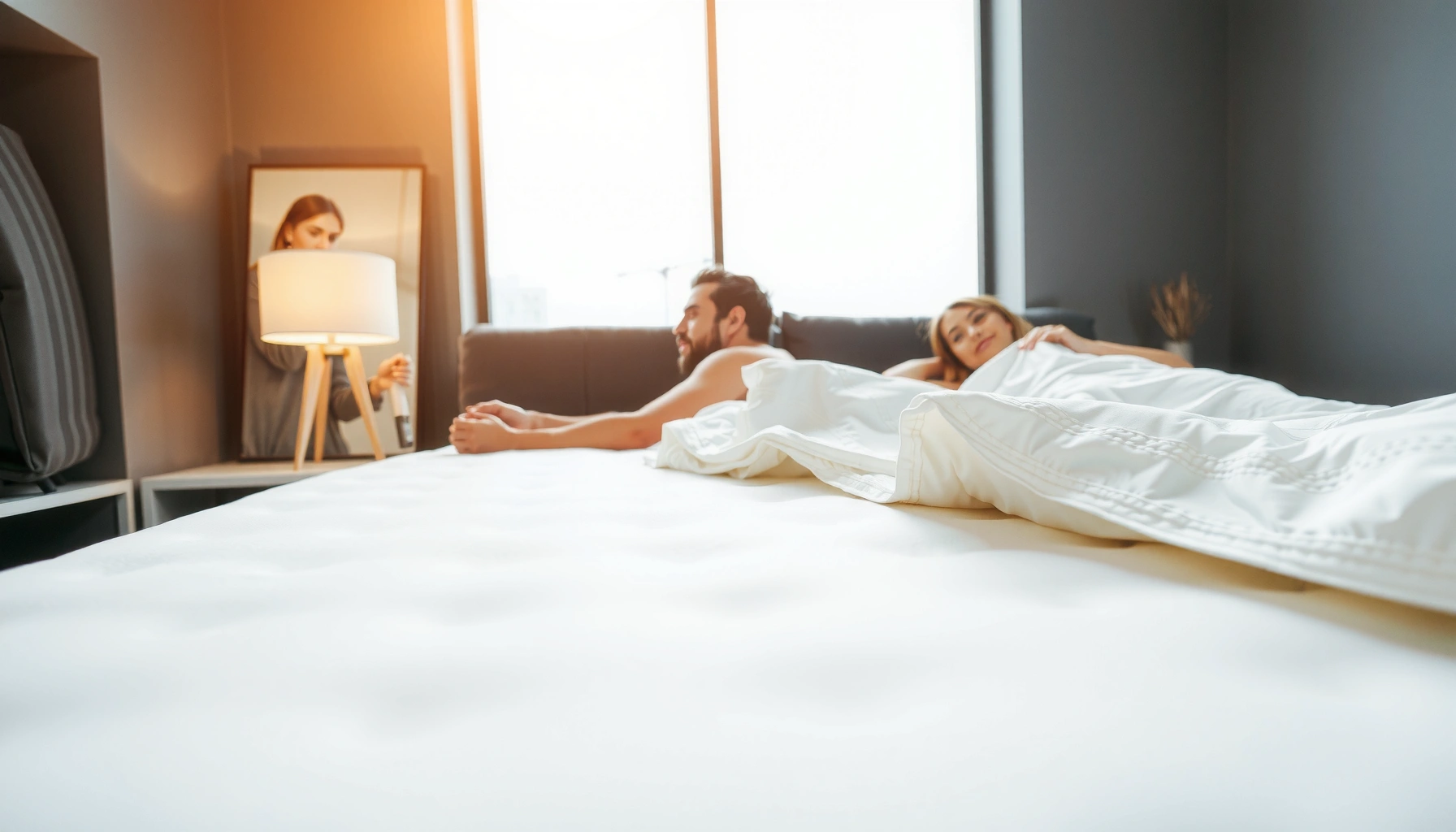
How to Select a Memory Foam Mattress for Couples with Different Sleep Temperatures
Choosing a memory foam mattress for couples with different sleep temperatures? The best pick depends on whether one partner runs hot or cold, because cooling features and foam feel shift the balance fast. We’ll show you how to select the right mattress firmness, airflow design, and temperature-control layers so both sides sleep comfortably without constant tossing. You’ll leave with a clear decision framework for your specific heat differences.




If you and your partner sleep at different temperatures, choose a memory foam mattress with temperature-management features (cooling cover, breathable layers, and the right firmness) and set priorities around edge comfort and motion isolation. The goal is simple: reduce heat buildup, prevent one partner from feeling “stuck” in a deeper sink, and make sure both sleepers get stable support at their usual positions.
This guide is for couples shopping memory foam mattresses who deal with heat retention, night sweats, or restless tossing because one person runs warm and the other runs cool. It’s especially useful when you can’t easily try the bed together in-store for long.
Start with heat behavior: what “warmth” means for each sleeper
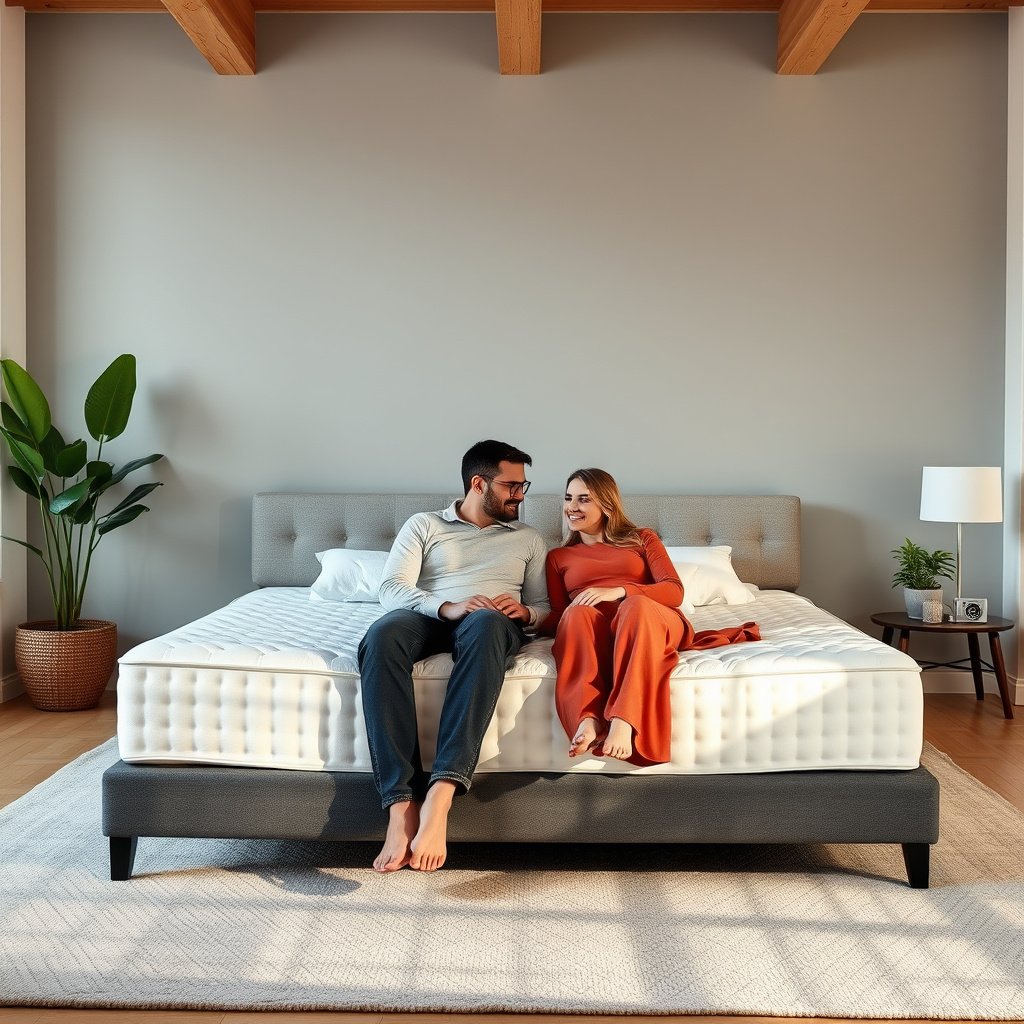
A memory foam mattress can feel “too warm” for different reasons—surface heat, deep heat retention, or pressure discomfort that triggers tossing. The fastest way to get the right couple-friendly memory foam mattress is to diagnose which type of heat problem you have before you shop for cooling.
Memory foam is a temperature-responsive viscoelastic material, so how it conforms (and how much it “cups” your body) can change as mattress temperature rises.
Thermal comfort is not just about cooler fabric—it also depends on whether heat can escape through the mattress layers and whether your pressure points force more movement.
– Identify whether the issue is heat retention in the mattress (warm-up over time) or comfort/pressure points that make one person turn more.
– Heat retention usually looks like: you fall asleep fine, then you gradually feel warmer after 30–90 minutes.
– Pressure-driven restlessness usually looks like: discomfort appears sooner (often within the first 10–20 minutes), and the warmer sleeper may move more simply to relieve pressure—not only because of temperature.
– Decide whether you need a cooler surface feel (cover/quilting) or better airflow through the mattress (breathability and layer design).
– A cooling cover can help at first contact, but deep warmth often needs breathable middle layers and a foam configuration that doesn’t overly restrict airflow.
– Rule of thumb for couples: if both partners feel warmer later in the night, prioritize heat escape and sink control; if only the warmer sleeper is uncomfortable immediately, prioritize surface cooling and top-layer feel.
– Check that the mattress supports both bodies without forcing one partner into deeper sink, which often increases localized warmth.
– Memory foam creates “localized conformity.” If one partner consistently sinks deeper, that zone can become a thermal pocket—warmth trapped by the added contact and reduced air exchange.
Anchor these decisions with thermal comfort fundamentals.
According to ASHRAE Standard 55 (2020), acceptable thermal comfort is typically associated with PPD (Predicted Percentage Dissatisfied) ≤ 10%—a useful reminder that “comfort” is multi-factor, not only surface cooling. Also, ASHRAE defines 1 clo = 0.155 m²·°C/W (a clothing insulation unit used in comfort modeling), which helps you understand why bedding weight and sleepwear can amplify mattress temperature differences. ASHRAE Standard 55 (2020)
Pick the right foam density and firmness for both
A couple-friendly memory foam mattress balances “support first” with “enough contouring” so the warm sleeper doesn’t bottom out while the cool sleeper still gets pressure relief. In practice, firmness and foam density determine how deep each body sinks—and deeper sink is one of the main ways warmth gets trapped.
Higher-density memory foam generally resists deep compression better, which can reduce “stuck in the sink” feelings that increase localized heat around shoulders/hips.
Firmness affects contour depth: more deep contouring can feel pressure-relieving, but it can also reduce airflow and increase perceived warmth for the warmer sleeper.
– Choose firmness that prevents the warmer sleeper from sinking too deeply while still supporting the cooler sleeper’s pressure points (hips/shoulders).
– Look at both sides of the body map: hips (often determine hip “bottoming”) and shoulders (often determine whether the sleeper turns more to relieve pressure).
– If you pick a firmness level that only works for the cooler sleeper, the warmer sleeper typically ends up in deeper contact zones.
– Pay attention to how memory foam responds under weight: deeper contouring can be comfortable, but it can also reduce airflow and feel warmer.
– Memory foam’s comfort is usually tied to how it flows under load; however, more “flow” means more material-to-skin contact. That can be great for pressure relief, and frustrating for temperature management in couples.
– If available, consider models that offer multiple firmness options (or a comfort-layer swap) so you can tune the feel for two different sleep preferences.
– For couples, adjustability is valuable because “one comfort level” rarely fits two thermal realities and two pressure maps.
Common Memory-Foam Comfort-Layer Density Bands (lb/ft³) and Heat/Sink Risk for Couples
| # | Density band (comfort layer) | Typical role | Expected sink depth | Heat-buildup risk |
|---|---|---|---|---|
| 1 | 3.0–3.3 | Entry-level plush | Deeper | ★★☆☆☆ |
| 2 | 3.4–3.7 | Plush comfort | Moderately deep | ★★★☆☆ |
| 3 | 3.8–4.1 | Balanced plush | Moderate | ★★★★☆ |
| 4 | 4.2–4.6 | Supportive contour | Shallow–moderate | ★★★★★ |
| 5 | 4.7–5.2 | High-support contour | Shallow | ★★★★★ |
| 6 | 5.3–5.8 | Very dense comfort | Very shallow | ★★★★☆ |
| 7 | 5.9+ (thin comfort layers) | Firm/low-contour feel | Minimal | ★★★☆☆ |
How to use the table: if one partner runs hot, prioritize density/firmness combinations that avoid excessive sink at shoulders and hips. Heat-buildup risk tends to rise as comfort-layer compression increases.
Prioritize temperature features that actually address heat retention
A cooler top surface helps, but couples usually need a complete temperature-management system that reduces heat buildup both at the surface and inside the foam. Choose features that improve airflow and limit deep compression-based heat pockets.
Cooling covers can improve initial surface feel, but many “cooling” effects are primarily textile-based rather than a change in how the foam holds heat.
Breathable quilting and airflow through layers matter because trapped heat pockets can form where one sleeper sinks deeper.
– Look for a phase-change or cooling cover, breathable knit fabrics, or designs intended to improve airflow at the surface (manufacturer claims should be specific).
– “Cooling” should be described in a way you can verify: cooling cover material, PCM (phase-change materials) behavior, vented channels, or breathable construction.
– Avoid assuming “cooling” is automatic—some cooling is primarily a cover treatment, while other systems aim to change how the foam holds heat.
– This is where couples often waste trial time: a cool cover won’t fix a mattress that still compresses deeply and reduces internal air exchange.
– If the bed is on a slatted base or platform, ensure airflow under the mattress is supported; trapped heat under the mattress can make surface cooling less effective.
– A low-clearance base can increase whole-bed warmth because heat from the mattress underside has nowhere to go.
Pros/cons tradeoff to compare on any memory foam mattress model
| Feature you’re considering | Pros for couples with different temperatures | Cons / what to double-check |
|---|---|---|
| Cooling cover (surface) | Better first-contact cool feel for the warm sleeper | May fade after warm-up; doesn’t guarantee deep heat escape |
| Breathable cover fabric + quilting | Can reduce “cling” and support comfort for side sleepers | If the comfort layer is too soft, it can still create heat pockets via sink |
| Phase-change materials (PCM) | Targets a narrower temperature range to absorb/release heat | Works best when the bedding setup doesn’t overly insulate (heavy duvets can overwhelm it) |
| More supportive firmness (less sink) | Limits localized thermal pockets where one partner sinks deeper | Too firm can increase turning for the cool sleeper who needs pressure relief |
| Better airflow support via base | Helps overall heat dissipation | An incompatible base can negate mattress cooling features |
Mattress setup matters: bedding, support, and sleeping position
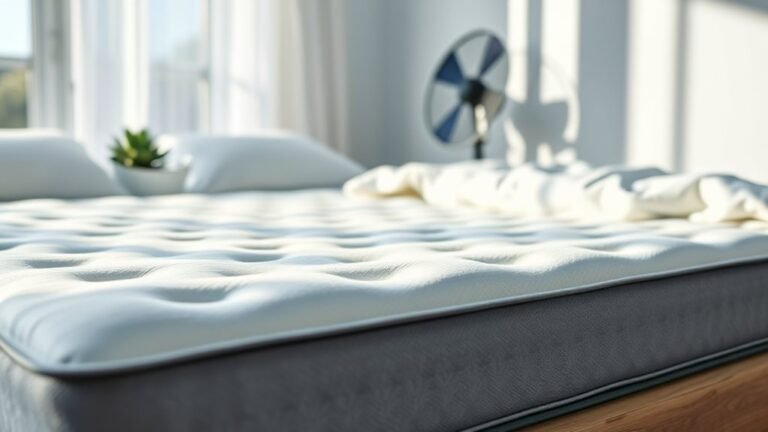
A memory foam mattress for couples performs better when the bedding and base allow heat to move away from the sleepers’ contact zones. Setup also changes how each partner’s pressure points behave—so it can affect temperature even on the “same” mattress.
Even with a cooling cover, heavy bedding can add insulation and reduce the effectiveness of surface cooling features.
Support base airflow influences mattress temperature because heat can build up beneath the foam layers if ventilation is restricted.
– Use breathable sheets and a lighter comforter for the warmer sleeper; heavy bedding can overwhelm mattress cooling features.
– If you share one duvet, consider a lighter top layer plus a warmer mid-layer for the cool sleeper rather than one thick blanket for both.
– Confirm the bed sits on an appropriate support system so the foam doesn’t over-compress, which can worsen heat retention and create uncomfortable pressure.
– Over-compression can mimic “too-soft” comfort feel, increasing sink-related warmth. Verify base slat spacing and overall rigidity using the manufacturer’s guidance for the specific mattress model.
– If one partner sleeps side and the other sleeps back/stomach, prioritize contouring that relieves side-shoulder/hip pressure without letting the back sleeper bottom out.
– The cooler sleeper’s pressure needs may require contouring, but the warmer sleeper’s thermal needs often require limiting deep compression.
From my experience helping couples interpret mattress “cooling” claims, the deciding factor is usually not the word “cooling”—it’s whether the model limits deep sink at shoulders/hips after 45–60 minutes.
What can go wrong (and how to avoid it)
Most failures happen when couples choose cooling marketing over matching firmness-to-pressure-to-sink depth. The good news: you can avoid the most common issues by checking how heat and pressure interact, not just how cold the cover feels at bedtime.
Buying a mattress that’s too soft often increases both pressure discomfort and perceived warmth because deep sink increases skin contact and reduces airflow.
A cooling cover alone may not resolve heat buildup if the mattress layers trap warmth during the first hour of sleep.
– Buying too-soft foam: It can feel cozy at first but increase sink, pressure, and perceived warmth—especially for the partner who runs hot.
– If the warm sleeper feels “hugged” but then gets restless later, softness is the likely driver.
– Relying on cooling without airflow: A cool cover won’t fix a mattress that doesn’t breathe well through its layers.
– Check construction details: breathable cover material, quilting type, and whether the foam system is designed to reduce heat trapping.
– Ignoring motion isolation vs. shared comfort: Couples may need different tradeoffs; a bed that isolates motion can still create heat pockets if it contours too deeply for one sleeper.
– Motion isolation is great for sleep continuity, but it shouldn’t be purchased at the cost of comfort stability for one body.
– Mismatch in sleep positions: One person’s preferred contour can become the other person’s “stuck” sensation; aim for balanced support rather than optimizing for only one body type.
– When one partner changes position more, it often increases total heat in the bed simply by increasing micro-movements and contact changes.
Verdict: a practical way to choose, plus who should skip memory foam
The best path for couples with different sleep temperatures is to select firmness/support that prevents excessive sink for the warm sleeper, then add temperature features to manage surface comfort and heat buildup. If you match those priorities, memory foam can work well—even for “one hot, one cool” households.
The most reliable temperature-management strategy in memory foam for couples is limiting deep sink while improving breathability, not relying on a single cooling cover.
Memory foam commonly provides close contouring, which can be pressure-relieving but may feel warmer than more breathable materials for some couples.
– Start by matching firmness/support to the cooler sleeper’s pressure needs and preventing excessive sink for the warmer sleeper—then add cooling features on top.
– Your “must-pass” test is whether both partners feel supported in their typical alignment (side: shoulders/hips; back: lumbar/hips; stomach: avoid hip sag).
– Consider skipping memory foam (or choosing a hybrid/less-contouring foam system) if either partner has strong sensitivity to heat buildup, or if you’re repeatedly frustrated by a “stays warm” feel even after adjusting bedding and base airflow.
– Some sleepers do better with less contouring because it reduces the amount of material-to-skin contact that traps heat.
– Downsides to expect: memory foam often provides close contouring, which can be great for pressure relief but can feel warmer than more breathable materials for some couples.
Quick checklist for couples
Use this checklist to keep your memory foam mattress decision anchored to what matters for couples: sink depth, airflow, and how the bed feels once it warms up. If you can answer each item, you’re far less likely to end up with a “great on day one, uncomfortable at 2 a.m.” situation.
If one partner is consistently warmer, the mattress should prevent excessive sink in shoulders and hips while still relieving pressure for the cooler sleeper.
Breathable bedding and an airflow-compatible base can materially affect whether mattress cooling features actually deliver overnight comfort.
– Heat source: Is the problem surface warmth, deep heat retention, or comfort/pressure that triggers tossing?
– Firmness balance: Prevent deep sink for the warmer sleeper while supporting hips/shoulders for the cooler sleeper.
– Cooling features: Confirm what’s included (cooling cover, breathable layers, airflow strategy) and how it’s described by the manufacturer.
– Breathability setup: Use breathable bedding and a support base that allows airflow.
– Shared testing: If possible, lie in your usual positions for enough time to feel how the bed warms up for each person.
Sources:
Choosing a memory foam mattress for couples with different sleep temperatures is less about chasing the “coolest” label and more about controlling sink depth, pressure, and airflow pathways. Prioritize balanced firmness for both sleepers, verify that cooling features are paired with breathable construction (and a compatible base), and confirm comfort in your real sleep positions long enough to judge how the bed feels as it warms up—because that’s usually where the temperature mismatch becomes obvious.
Frequently Asked Questions
What should couples with different sleep temperatures look for in a memory foam mattress?
Couples with different sleep temperatures should prioritize cooling features like gel-infused memory foam, ventilated foam layers, and breathable covers to help dissipate heat. Look for mattress designs that reduce heat retention while still offering pressure relief for both sleepers. It’s also helpful to choose a mattress with good airflow through the core, not just surface-level cooling.
How do you choose the right firmness level for two people on the same memory foam mattress?
Start by matching each person’s sleeping position and weight range to the mattress firmness, since memory foam firmness can feel different depending on body type. Many couples do best with a medium to medium-firm option because it provides pressure relief for side sleepers while maintaining support for back and stomach sleepers. If one partner feels “stuck” or sinks too deeply, consider a model with a firmer support base or zoned support to keep the spine aligned.
Why does memory foam sleep hot, and how can couples reduce heat buildup?
Memory foam can trap body heat because it conforms closely to your shape, which reduces airflow between the mattress and your skin. To reduce overheating, choose cooling technologies like phase change material (PCM), gel or copper infusion, or open-cell foam that improves breathability. A breathable, moisture-wicking mattress protector and supportive sheets can also make a noticeable difference for hot sleepers.
Which cooling features work best for couples—gel, ventilated foam, or PCM?
Gel-infused memory foam and ventilated/open-cell foams both aim to improve airflow and heat distribution, making them strong options for couples with one warm sleeper. PCM (phase change material) can be effective for temperature regulation because it helps absorb and release heat as you move through different phases of sleep. The “best” choice depends on how heat-sensitive each partner is, so look for multiple cooling layers rather than relying on a single feature.
Best for couples with temperature differences: should you pick a one-piece memory foam mattress or a hybrid?
For many couples, a memory foam hybrid (foam comfort layers over coils) is often a top choice because coils improve airflow and reduce heat retention compared with all-foam designs. If you strongly prefer the slow, contouring feel of traditional memory foam, choose an all-foam mattress with advanced cooling and a breathable cover to address temperature gaps. Also consider motion isolation—hybrids can still reduce partner disturbance, but foam mattresses typically excel when both sleepers are sensitive to movement.
📅 Last Updated: October 26, 2026 | Topic: How to Select a Memory Foam Mattress for Couples with Different Sleep Temperatures | Content verified for accuracy and freshness.
References
- Memory foam
- Thermoregulation
- Sleep tips: 6 steps to better sleep – Mayo Clinic
- https://pubmed.ncbi.nlm.nih.gov/?term=memory+foam+thermal+comfort
- https://pubmed.ncbi.nlm.nih.gov/?term=bedroom+temperature+sleep+quality
- https://pubmed.ncbi.nlm.nih.gov/?term=mattress+material+sleep+comfort+thermoregulation
- Sleep hygiene
- https://scholar.google.com/scholar?q=memory+foam+mattress+thermal+comfort+sleep Google Scholar
- https://scholar.google.com/scholar?q=bedroom+temperature+sleep+quality Google Scholar
- https://scholar.google.com/scholar?q=viscoelastic+foam+heat+retention+sleep+bedding+heat+transfer Google Scholar


One Comment