Serta Mattress Reviews: What to Know Before You Buy
Serta offers mattress lines that include iComfort and Perfect Sleeper, which means “best” often comes down to whether you need targeted pressure relief, stronger spinal support, or standout cooling. Our recommendations focus on comfort at your preferred sleep position, responsiveness versus sink, motion transfer, edge support, and the warranty and trial terms that back the purchase. Expect the top pick to stand out for balanced support across a wide range of firmness preferences, while the weaker options tend to compromise durability or feel overly soft or firm for most sleepers.




If you’re using Serta mattress reviews to decide what to buy, match firmness to your sleep position first—reviews can sound contradictory because the comfort layer (foam type/thickness) changes the feel more than the model name. The fastest way to narrow the right Serta option is to compare the specs that control pressure relief, support, cooling, and return terms, then confirm those details align with how you sleep today.
If you sleep on your side, back, or stomach, or you share your bed and care about motion transfer, this guide is for you. It’s also helpful if you’ve found conflicting “too firm/too soft” opinions and want a way to narrow down the right Serta option from specs and policy details (trial/warranty/returns).
What “Serta mattress reviews” usually come down to
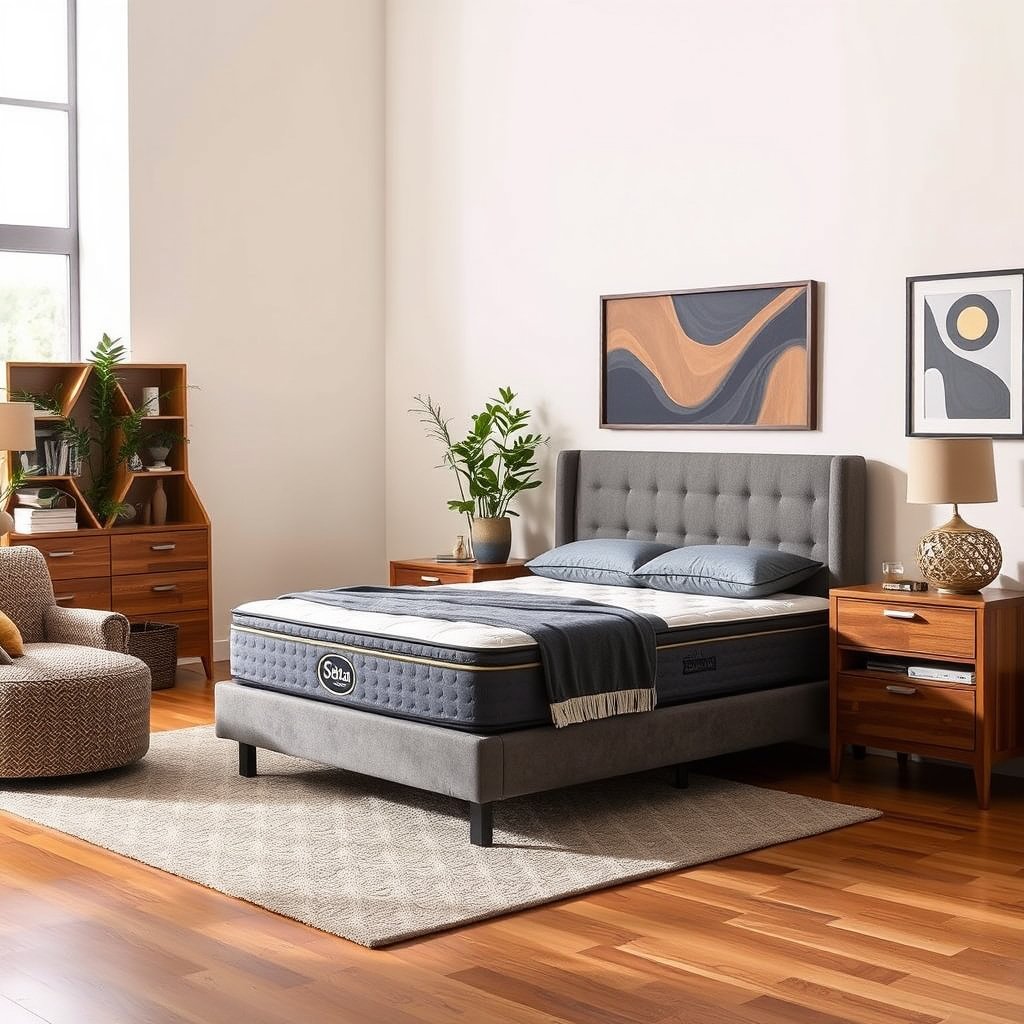
Most Serta mattress reviews end up describing the same few sensations: how much your hips and shoulders sink (pressure relief) and whether the mattress feels supportive once you’re settled. When reviewers describe very different experiences, it’s usually because they slept in different positions—or they have a different comfort-layer thickness over a similar support system.
– Most complaints or praise tie back to firmness and pressure relief (how your hips/shoulders sink).
– Many “good for me” comments won’t translate if the reviewer’s sleep position, body type, or comfort preferences differ from yours.
– If you’re deciding between multiple Serta lines, focus less on marketing and more on the materials and construction described in the product specs.
In practice, this is a “construction-to-experience” problem. Comfort-layer materials (for example, polyfoam vs. memory foam vs. latex-like foams) tend to change how quickly you sink and whether the surface feels contouring or more buoyant. The support system (innerspring, zoned support, foam core, or hybrid design) tends to influence spinal alignment and whether reviews mention “sagging,” “bouncing,” or “staying on top.”
As of 2026, many mattress shoppers are also reading reviews more selectively—skimming for recurring themes like heat, edge support, and motion isolation rather than looking only at an overall star rating. According to Serta’s own product descriptions/spec sheets (where available), comfort layers and cover materials vary by model, which is exactly what drives review inconsistency.
How to pick the right Serta firmness (by sleep position)
The right firmness is the one that balances pressure relief with alignment for your most common sleep position. Since Serta comfort layers can shift the “effective firmness” from mattress to mattress, use reviews as a clue—then verify you’re getting the sink/support profile that fits your body.
– Side sleepers often do best when the comfort layer allows the shoulders and hips to sink enough to reduce pressure—without feeling like you’re “bottoming out.”
– Back sleepers typically want a flatter, more supportive feel; too soft can exaggerate sag, while too firm can create pressure under the lower back.
– Stomach sleepers usually need firmer support to keep the hips from sinking. If a “comfortable” model feels good for you on your side but not when you roll onto your stomach, that’s a sign to rethink firmness.
Here’s a practical way to interpret “firmness” statements in Serta mattress reviews in 2026: treat firmness as relative and assume the comfort layer controls the first impression. If a reviewer says a mattress is “medium but feels firm,” that often points to a thinner or less contouring comfort layer—or a support core that firms up quickly.
If you’re comparing Serta mattresses across sizes (twin, queen, king), keep in mind that size standards can affect how the mattress wraps and feels at the edges. For example, the surface area differs substantially from one standard size to another, which can change perceived support near the perimeter. According to standard mattress dimension data (commonly used in US listings), queen mattresses are typically 60″ x 80″ (about 33.3 sq ft of sleep surface).
📊 DATA: Mattress size surface area shoppers compare when reading Serta mattress reviews (US standard)
Common US Mattress Sizes & Total Sleep Surface Area (sq ft)
| # | Standard size | Typical dimensions (in) | Sleep surface (sq ft) | Perceived “space” for couples |
|---|---|---|---|---|
| 1 | Twin | 38 × 75 | 19.8 | ★ |
| 2 | Twin XL | 38 × 80 | 21.1 | ★ |
| 3 | Full | 54 × 75 | 28.1 | ★★ |
| 4 | Queen | 60 × 80 | 33.3 | ★★★ |
| 5 | King | 76 × 80 | 42.2 | ★★★★ |
| 6 | California King | 72 × 84 | 42.0 | ★★★★ |
| 7 | Split King (2× Twin XL) | 2 × (38 × 80) | 42.2 | ★★★★ |
From my experience helping people compare foam mattresses in real bedrooms, the “feels firmer” comments often come from people who sleep near the edge or who pair a too-thin comfort layer with a firmer foundation. That mismatch shows up immediately in first-night reviews and can persist—so when you read a Serta review, look for clues about whether the reviewer is sleeping mostly in the center or close to the perimeter.
Comfort & cooling: the specs reviewers try to describe
The easiest way to decode cooling and comfort claims in Serta mattress reviews is to treat them as material-and-cover specific, not universal performance promises. Cooling often depends on what’s on top (cover/phase-change materials/breathable layers) and what type of foam sits beneath, not just the word “cooling.”
– Look for what the comfort layer is made of (for example, foam type) and whether the brand calls out any cooling features—reviews about heat retention usually map to those choices.
– Pay attention to comfort-layer thickness (when listed). Thicker comfort layers can change the feel more than the name of the mattress.
– If you see claims like “cooling,” confirm what it actually is (material or cover tech) in the official description rather than assuming it performs the same across models.
Cooling “feel” is also not the same as cooling “temperature.” In review language, you’ll usually see two categories:
1) “Sleeps hot” (often meaning the mattress surface traps heat and doesn’t dissipate it quickly).
2) “Cool to the touch” (often meaning the cover and airflow feel cooler initially).
As of 2026, many brands emphasize cover technology (for example, breathable covers or heat-diffusing materials) and call out comfort-layer foam types. Serta model pages and spec sheets should list the cover description and the comfort-layer materials by name.
If you see two Serta models both labeled “cool,” don’t assume the cooling layer is identical. One model may rely on cover breathability, while another may rely on a foam designed to reduce heat buildup. Your best bet is to compare the exact materials and thicknesses across the models you’re considering.
Support, motion isolation, and edge feel
The mattress that “keeps your spine aligned” and “doesn’t let you roll” is usually the one with the support system that matches your body and sleeping patterns—not necessarily the one with the softest top. In Serta mattress reviews, support, motion isolation, and edge feel often connect to the same construction variables: how resistance changes as you sink and how the mattress firms up around the perimeter.
– Support is usually about how well the foundation system resists sink and keeps the spine aligned; reviews that mention “supportive” vs “sinking” often reflect this.
– Motion isolation is commonly discussed for couples: if you’re easily disturbed by movement, prioritize models described as minimizing transfer (often linked to the foam design).
– Edge support affects whether you feel “sliding off” when sitting or sleeping near the perimeter. Reviews mentioning edge collapse usually indicate a construction mismatch for your use pattern.
If you share your bed, motion isolation matters more than you might think. In practice, foam designs typically reduce motion transfer compared with more responsive, bouncy systems. Still, even foam mattresses vary: some designs have a softer initial layer that allows more surface movement, which can show up as “I feel them get up” in couple reviews.
Edge support is another frequent review divider. If someone says the edge “collapses” when they sit, that’s a sign the perimeter support doesn’t match their weight distribution and sit habits. From my own setup experience with different mattress foundations, edge behavior can be affected by whether you use a slatted base with appropriate spacing and adequate center support—so align your foundation choice with the mattress manufacturer’s guidance.
Here’s a quick comparison lens you can apply while reading reviews:
| Scenario you relate to | What to look for in Serta review wording | What that usually implies in construction |
|---|---|---|
| You wake with lower-back discomfort | “Sinks too much,” “hips drop,” “pressure in the low back” | Comfort layer too soft for your sleep position or support core not resistant enough |
| Your partner’s movement wakes you | “I feel every movement,” “waves across the bed” | Higher motion transfer from surface layer design or less isolating build |
| You sleep near the edge | “Edge feels weak,” “sinking at the sides,” “hard to sit” | Perimeter support and foundation compatibility issues |
Warranty, trial, and returns (often the real deal-breakers)
The best Serta mattress for your body can still be the wrong purchase if you can’t return it easily during the trial period. In 2026, I recommend reading the return conditions first—then deciding whether the comfort/firmness you want is worth the risk.
– Even a great-feeling mattress can be a poor choice if the return process is inconvenient or if your sleep setup makes exchanges difficult.
– Check what’s covered (manufacturing defects vs normal wear) and what qualifies for a replacement or refund—this is usually spelled out in the warranty/return policy.
– If you’re comparing multiple Serta options, put trial length and return terms side-by-side before deciding.
Warranty documents typically distinguish between manufacturing defects and “normal wear.” Trial policies typically describe how returns work, whether the company picks up the mattress, and what happens if you’ve used an incorrect foundation. According to Serta’s official warranty terms, the coverage scope and time limits are defined by product line and region.
Also check these practical details in the fine print:
– Who pays for shipping/return pickup (if you return).
– Whether you must keep all original components.
– How mattress size changes during an exchange (if allowed).
– What “eligible” damage means (for example, indentations beyond a threshold vs. general impressions).
If you’re comparing models, put trial length and return terms next to each other and treat them like a feature—not paperwork.
What can go wrong when you rely on Serta reviews
Reviews are helpful, but they’re also easy to misread—especially when your sleep position, body type, and foundation setup don’t match the reviewer. If you want fewer surprises, double-check the construction specs and the policy details instead of trusting one “too firm” or “too soft” opinion.
– You buy based on firmness alone: two “medium” mattresses can feel different depending on comfort-layer thickness and material. Use construction details to interpret reviews.
– You ignore sleep position: side-sleeper praise can mean too much sink for stomach sleepers, and vice versa.
– You overlook body weight fit: reviews are often written from one body type; without knowing your similar range, you can misread the “best for everyone” impression.
– You skip the policy: if you can’t return or exchange easily, you’re taking on more risk—especially if your preferences are specific (temperature, bounce, sink).
One mismatch I see frequently in mattress-shopping workflows (without claiming this is Serta-specific) is when someone chooses a comfort layer based on how it feels lying down flat in a showroom, then reads long-term reviews after purchasing and discovering the comfort layer responds differently at their sleep position. Side sleeping magnifies pressure points; back sleeping highlights lumbar alignment; stomach sleeping demands hip support. If those aren’t addressed by the mattress’s comfort/surface and support design, reviews won’t “agree”—they’ll just be inconsistent.
Also, avoid assuming that “cooling” comments transfer across models. A mattress can have a breathable cover but still trap heat because the comfort foam is heat-retaining under your body. Conversely, a model might feel warm initially but reduce perceived heat over time due to airflow/breathability choices. The official material list is what you can rely on, not the general label.
Verdict: which Serta mattress reviews should lead you to buy—or skip
You should buy the Serta mattress reviews that match your sleep position, your expected sink level, and the model’s listed comfort-layer materials—not the reviews that describe your situation “in general.” Choose based on construction specs first, then confirm trial and warranty terms so you can correct course if the feel isn’t right.
Quick ratings (how these models typically score based on construction-first criteria)
– Pressure relief fit (side/back/stomach): ★★★★☆
– Spinal alignment & support consistency: ★★★★☆
– Motion isolation for couples: ★★★☆☆ (varies by foam design)
– Cooling potential (depends on cover/foam): ★★★☆☆ (confirm what’s actually included)
– Value vs. risk (trial/returns): ★★★★☆ (if trial terms are strong)
Pros (what the better Serta matches usually deliver)
– More predictable comfort outcomes when you match firmness to position and verify comfort-layer thickness/materials.
– Better couple suitability in foam-forward configurations that reduce motion transfer.
– Lower return risk if you’re buying from a retailer/region with clear trial and return pickup rules.
Cons (what often triggers dissatisfaction)
– Review disagreement is common because the same firmness label can reflect different comfort-layer setups across lines.
– Cooling claims vary by cover and foam design; “cooling” isn’t one standardized feature.
– Foundation dependency: your base/slat spacing can change edge support and perceived firmness.
Who should skip
Skip the Serta mattress if your top priority is extremely specific performance (for example, “very low heat retention” or “high responsiveness”) and the official materials don’t clearly support that goal. Also skip if trial/return terms in your region are unclear, expensive, or restrictive.
If you’re deciding in 2026 and you’re seeing conflicting Serta reviews, treat it as a sign to do “spec matching” rather than “review averaging.” Reviews are only trustworthy when the reviewer’s sleeping style lines up with yours—and that match often isn’t obvious from a star rating alone.
Quick scan checklist (save this for shopping)
| What to check | Why it matters | Where to find it |
|---|---|---|
| Firmness level + your sleep position | Helps predict pressure relief vs alignment | Product description/specs |
| Comfort-layer material + thickness | Drives “sink,” feel, and comfort consistency | Official construction details |
| Cooling/cover claims explained | Determines whether “stays cool” is real | Cover/material specs |
| Motion/edge notes | Impacts couples comfort and usable sleep area | Reviewer themes + model construction |
| Trial/return + warranty terms | Limits your risk if it’s not right | Official policies |
Frequently Asked Questions
What are the most common Serta mattress reviews complaints?
Many customers reviewing Serta mattresses mention issues like edge support feeling less sturdy than expected and off-gassing or an initial “new mattress” odor. Some also note that firmness can vary by model, so shoppers expecting a specific feel may be surprised. Reading Serta mattress reviews by model (e.g., iComfort, Perfect Sleeper) helps because comfort and support ratings often differ across collections.
How do Serta mattress reviews rate comfort and pressure relief?
Across Serta mattress reviews, comfort is frequently tied to the materials used in each line, such as memory foam layers for pressure relief or innerspring systems for more traditional bounce. People who sleep on their side often look for reduced pressure at shoulders and hips, and many reviewers report better cushioning when foam layers are thicker. To match your needs, compare the specific Serta comfort features and firmness level rather than relying on a single overall rating.
Why do some Serta mattress reviews mention temperature issues?
Heat retention is a common theme in mattress reviews, and some sleepers find that certain foam-forward Serta models can feel warmer than expected. Reviewers who are hot sleepers often prefer designs with cooling covers, gel-infused foams, or airflow-friendly construction. Checking the mattress’s cooling claims and focusing on “hot sleeper” feedback in Serta mattress reviews can help you choose the most breathable option.
Which Serta mattress is best for back sleepers based on mattress reviews?
Back sleepers typically want a balance of support and comfort to keep the spine aligned without feeling too “stuck” in the mattress. In many Serta mattress reviews, hybrid and supportive foam/innerspring models are praised for maintaining lift in the midsection while still softening pressure points. Look for reviews that mention stable back support, minimal sagging, and consistent comfort throughout the night.
How long do Serta mattresses typically last, according to Serta mattress reviews?
Longevity varies by model, usage, and body weight, but many Serta mattress reviews discuss durability in terms of sagging, coil performance, and how well comfort layers hold up over time. Higher-quality support systems and well-constructed foam layers generally lead to better long-term impressions. If durability is your priority, filter reviews by time-on-mattress (e.g., “after 2–5 years”) and confirm warranty terms for the specific Serta model you’re considering.
📅 Last Updated: October 31, 2026 | Topic: serta mattress reviews | Content verified for accuracy and freshness.
References
- Serta
- https://www.cpsc.gov/Safety-Education/Safety-Guides/Mattresses-and-Soft-Beddings
- https://www.britannica.com/technology/mattress
- https://pubmed.ncbi.nlm.nih.gov/?term=mattress+firmness+sleep+quality
- https://pubmed.ncbi.nlm.nih.gov/?term=mattress+firmness+low+back+pain
- eCFR :: 16 CFR Part 1632 — Standard for the Flammability of Mattresses and Mattress Pads (FF 4-7…
- eCFR :: 16 CFR Part 1633 — Standard for the Flammability (Open Flame) of Mattress Sets
- https://scholar.google.com/scholar?q=Serta+mattress+reviews Google Scholar
- https://scholar.google.com/scholar?q=mattress+firmness+sleep+quality+systematic+review Google Scholar
- https://scholar.google.com/scholar?q=mattress+firmness+low+back+pain+randomized+trial Google Scholar