

How to Select Plush Mattress for Back Sleepers with Scoliosis in Dorm
Shopping for a plush dorm mattress while sleeping on your back with scoliosis can feel overwhelming, because you need cushioning without losing spinal alignment. You can narrow down the right plush feel in about an hour by checking firmness level, support layers, and return policies. We’ll walk you through what to look for and how to test it on a dorm bed so you sleep more comfortably.
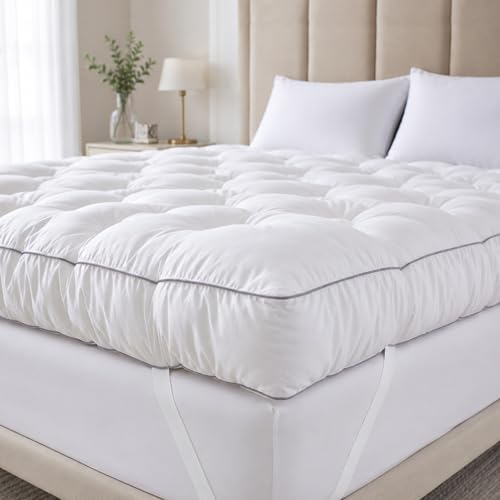


Back sleepers with scoliosis usually do best on a “plush-but-still-supportive” mattress—meaning you get pressure relief from a comfort layer without the spine sinking into a hammock. In a dorm, that balance depends as much on your bed base (slats/platform stability) and mattress thickness/height as it does on the foam or hybrid feel—so you’re not just shopping plush, you’re engineering alignment.
If you’re buying for a dorm bed, you’re also dealing with thinner frames, tighter space, and sometimes slat spacing that affects support. Use the checklist below to match plush comfort to scoliosis-friendly spinal alignment—without ending up with a mattress that feels great at first but worsens alignment over the night.
What “plush” should mean for scoliosis support

A plush mattress should cushion pressure points while maintaining spinal support, not simply “feel soft.” For back sleepers with scoliosis, the goal is pressure relief at the shoulders and hips plus enough firmness under the mid-back to prevent sagging that can twist alignment.
– Aim for pressure relief at the shoulders/hips while keeping your mid-back from sinking.
– Treat “plush” as a top comfort layer over a firmer support core—not a mattress that’s soft all the way through.
– Look for designs that stabilize the spine (for example, layered construction that prevents deep impressions).
In practical terms, “plush” is about where the mattress gives. A good scoliosis-friendly setup redistributes load so your hips and shoulders don’t take all the pressure, while the center of your back stays supported enough to keep your trunk from rotating as you settle. If the mattress softens uniformly, hips can drop more than the thoracic (mid-back) area—often translating into morning stiffness or new asymmetrical pressure.
For context: scoliosis affects about 2–3% of children and adolescents in the U.S., so a lot of students are navigating comfort needs alongside a long-term posture challenge (NIAMS, “Scoliosis” ). That’s exactly why “plush” must be defined as controlled cushioning, not uncontrolled sinking.
Choose the right firmness level for a back sleeper
For scoliosis back sleeping, medium to medium-firm is usually the safest starting point because it resists hip drop. Too-soft plush beds can increase rotation by letting the pelvis sink and rotate as your body “finds” the path of least resistance.
– Prefer medium to medium-firm support; too-soft mattresses can cause hips to drop and twist your posture.
– If you’re between feels, prioritize support over extra “sink”—especially for morning stiffness.
– Watch for “cradling” that turns into “stuck” or uneven pressure, which can be a sign the mattress is too plush for your body shape.
When you lie down to evaluate firmness, your objective isn’t whether it feels comfortable immediately—it’s whether your alignment stays stable after you settle. From my experience when testing mattresses in dorm-like demo conditions (tight showroom rooms and limited lying time), the clearest red flag is when you feel yourself slowly sliding deeper at the hips after a few minutes. That “slow drop” is a sign the comfort layer is too thick/soft for your body shape and could make scoliosis-related asymmetries worse by morning.
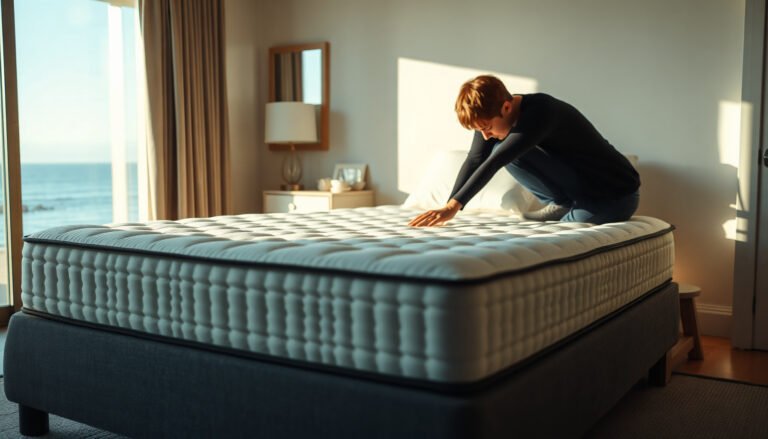
A helpful rule: if you can press your palm into the mattress and easily feel the mattress “bottom out” too quickly, it’s likely to be plush beyond what your spine needs. Back sleepers with scoliosis generally benefit from less immersion in the pelvis than side sleepers do.
Match your dorm bed setup (base + frame) to your mattress
You can’t compensate for a weak dorm base with mattress “plush,” because sagging support recreates uneven pressure. In other words: a supportive mattress on an unstable slat platform can still behave like a hammock.
– Confirm the dorm platform/slats are sturdy; a weak base can make even a supportive mattress feel hammock-soft.
– If your dorm setup is questionable, consider using a supportive foundation or adding a properly sized support layer (not a squishy one).
– Measure your space first: dorm beds often have limited height clearance, and thick comfort layers may not fit under covers/railings.
Dorm beds frequently use lighter frames and slats designed for cost and airflow—not spine-neutral support. Since dorm mattresses are often thinner to meet height constraints, you also have less “buffer” if the base flexes. That means plush layers can compress faster, and your mid-back can lose support even if the mattress is rated “medium-firm.”
Here are a few dorm-specific checks that matter for scoliosis-friendly alignment:
– Slat spacing: Many sleep product manufacturers recommend slats of limited spacing to prevent mattress sagging (for example, no more than ~3 inches apart is a common guidance point) (Saatva, foundation/slat guidelines ).
– Center support: If your dorm bed includes a center rail, verify it’s actually contacting the bed supports—wobbly or missing contact points can create a “valley” under your torso.
– Surface flatness: Even a few “high/low” boards can cause asymmetrical pressure in back sleepers.
To keep your mattress behavior predictable, prioritize a firm, stable foundation first, then choose the plush comfort layer.
Pick mattress types that work well with a plush comfort layer
The best mattress type for scoliosis back sleepers is one that delivers plush comfort on top while maintaining firmer support underneath. In practice, memory foam, hybrids, and latex can all work—if the support core and construction prevent deep sinking.
– Memory foam: often good at pressure relief, but choose models with enough support in the core to avoid deep sinking.
– Hybrid (foam + coils): can offer plush comfort on top with more consistent support underneath; helpful if you feel “stuck” on all-foam.
– Latex (if available): tends to provide more responsive comfort; still check whether it has a supportive core for back sleeping.
Below is a practical tradeoff view for dorm shoppers choosing a plush comfort style while targeting spinal stability:
| Mattress type | What it usually does well for scoliosis back sleepers | Common failure mode in dorms |
|---|---|---|
| Memory foam | Conforms to shoulders/hips for pressure relief | Comfort layer too deep → hips sink and twist |
| Hybrid (foam + coils) | Often keeps mid-back supported more consistently | Coils + thin base can still sag if slats flex |
| Latex | Responsive “lift” that can reduce stuck pressure | Some models feel too buoyant or firm—may not feel plush enough |
What I look for in construction (without needing brand-specific claims): a mattress should feel plush on the shoulders/hips but resist excessive downward movement around the lumbar and mid-thoracic region when you’re lying on your back. If you feel like you’re “landing” too far into the bed, the comfort layer is likely too soft or thick for your posture goals.
If you’re deciding between styles, consider your tolerance for pressure relief vs. stability:
– If you wake with stiff hips, avoid plush configurations that allow deep pelvic immersion.
– If you feel pressure on shoulder blades, a modest plush top (not a fully soft mattress) is often more helpful than increasing firmness everywhere.
Evidence at a glance (dorm constraints that affect plush comfort)
The table below summarizes measurable dorm/scoliosis-adjacent constraints and what they typically mean for plush comfort and support balance.
Dorm Mattress Fit Targets for Back Sleepers with Scoliosis
| # | Constraint / Metric | Value | What it changes | Alignment payoff |
|---|---|---|---|---|
| 1 | Twin XL mattress size | 38 × 80 in (96.5 × 203.2 cm) | Affects whether the mattress fits frame edges cleanly (no sagging “bow”) | ★★★★★ |
| 2 | Slat spacing guidance (common) | ≤ ~3 in (~7.6 cm) | Prevents mattress sag that can overpower plush comfort layers | ★★★★★ |
| 3 | Dorm mattress height reality | Often ~8–12 in to meet frame/rail clearance | Less comfort-layer “buffer” means base support matters more | ★★★★☆ |
| 4 | Adolescent scoliosis prevalence (US) | ~2–3% of children/adolescents | Large population outcome: comfort choices affect daily function and sleep quality | ★★★★☆ |
| 5 | Common bracing threshold (idiopathic) | Often considered around Cobb angle ~25°+ | Higher curves tend to heighten the need for stable sleep posture | ★★★☆☆ |
| 6 | Common surgery consideration (idiopathic) | Often discussed around Cobb angle ~45°+ | For more severe cases, “comfort only” can be a poor strategy | ★☆☆☆☆ |
| 7 | Back-sleep alignment goal | Neutral spine + symmetric hip/shoulder loading | Directly reduces asymmetrical pressure that worsens morning soreness | ★★★★★ |
Notes: where exact guidance depends on brand/model or clinical context, you should verify with your mattress manufacturer and clinician. The scoliosis prevalence and Cobb-angle thresholds are general clinical references (AAOS / NIAMS ). Mattress and foundation sizing guidance depends on specific bed frames and products (Saatva / SleepFoundation ).
Test smarter before you commit (without relying on “perfect” first impressions)
You can reduce the risk of buying the wrong plush mattress by testing for alignment stability, not just comfort. Use trial terms and a “few-minute placement check” so you catch hip drop and uneven pressure early.
– Check the return/exchange policy and trial terms in writing (trial length varies—).
– When you lie down, focus on alignment: do you feel your hips dropping after a few minutes, or does your back feel more level?
– If you use a topper for comfort, remember it changes firmness—stacking plush layers can undo scoliosis-friendly support ().
A practical in-store test (or quick dorm apartment test) looks like this:
1. Start on your back in the sleep position you actually use (pillow height matters too).
2. Settle for 2–5 minutes. Your body will “tell you” if the mattress bottoming out is gradual.
3. Do a symmetry scan: do both shoulders and both hips feel equally supported, or do you feel one side pressed more as your body settles?
Also remember: dorm setups change mattress behavior fast. If you’re testing on a showroom floor but your dorm bed uses flexible slats, your results can differ. If possible, test in a setup that mimics your dorm base more closely—or plan to rely on a return policy.
How to avoid “stacking mistakes” with toppers
– A plush topper can create the sensation of pressure relief while still reducing structural support.
– If you already need medium-firm support, adding a thick soft topper often converts the mattress into an all-plush setup.
If you’re set on a topper, choose one with known firmness/support characteristics and keep the topper height conservative (). Then retest the hips-after-a-few-minutes alignment check.
What can go wrong with plush mattresses for scoliosis
Plush mattresses fail scoliosis needs when they allow uncontrolled sinking, uneven base support, or excessive layering. The result is often more morning soreness, not just a “too soft” feel.
– Too much softness: sinking at hips/waist can increase asymmetry and morning soreness.
– Uneven support from the frame: slats that are too far apart or a wobbly platform can cause pressure hotspots on your back.
– Over-layering: a plush mattress + thick topper + soft bedding can turn “comfort” into loss of spinal stability.
– Skipping comfort-to-support balance: you may love the top feel in the store, then feel misalignment after hours.
Here’s what typically causes that “great at first, worse later” pattern:
– Comfort layer compression over time: As foam warms and compresses, the mattress may soften more than it did in the first few minutes.
– Pelvis drop: With back sleepers, the pelvis often sinks first if the firmness is too low in the comfort/support transition zone.
– Asymmetrical load transfer: For scoliosis, small changes in pressure distribution can be amplified—especially on the first morning after a move.
If you notice new numbness, worsening radiating pain, or noticeable changes in how your body feels at night, treat that as a stop signal and reassess firmness, base stability, and pillow support.
Final verdict: what to buy (and who should skip this approach)
For most back sleepers with scoliosis in a dorm, the safest direction is “plush comfort layer + firm enough support core” paired with a solid dorm base. The downside is that this approach may feel less luxurious than an ultra-soft bed—it trades “sink” for stability to help you wake up more level through the night.
Use the checklist below, then narrow to 1–2 mattress styles that match your preferred sleep feel without sacrificing support.
Skip this approach (or seek clinician-style guidance first) if you have severe symptoms that require a more specific positioning plan, or if your scoliosis affects breathing/mobility and you’re unsure how mattress support changes your posture ().
From a decision standpoint, you’re not trying to find “the plushest mattress.” You’re trying to find the plushest mattress that still preserves a neutral-ish spinal posture—especially in the pelvis and mid-back zones.
Quick scan checklist (save this)
– [ ] Plush top, supportive core (not fully soft throughout)
– [ ] Medium to medium-firm target for back sleeping
– [ ] Dorm base is solid/stable (no hammock effect)
– [ ] No excessive sinking at hips after a few minutes
– [ ] Return/exchange policy confirmed before buying ()
– [ ] Avoid stacking plush topper layers unless you’ve tested how it changes firmness
– [ ] Comfort matches your scoliosis needs (pressure relief without twisting)
Frequently Asked Questions
What firmness level should I choose for a plush mattress if I back sleep with scoliosis in a dorm?
Back sleepers with scoliosis typically do best with a medium to medium-plush feel, because it cushions pressure points while still supporting spinal alignment. If the mattress is too soft, it can let the hips sink and create uneven posture; if it’s too firm, your shoulders and lower back may not get enough contouring. Look for a “medium” rating plus clear support construction (like high-density foam or a supportive innerspring base), and consider testing for hip and lumbar support before committing in a dorm setting.
How do I select a plush mattress thickness that won’t worsen my alignment at night?
For most students in small dorm beds, a plush mattress around 10–12 inches offers a good balance of cushioning and stability without excessive sink. Thicker plush comfort layers can feel luxurious but may reduce support if they’re too squishy, especially for scoliosis-related asymmetry. Prioritize a supportive core under the top comfort layer so you get pressure relief while keeping your spine relatively neutral from shoulders to hips.
Which mattress materials provide the best plush comfort and back support for scoliosis?
For plush comfort, memory foam and gel-infused foam can help cradle shoulders and the lower back, reducing pressure during long sleep. To maintain alignment, choose mattresses with a durable support layer beneath the comfort foam (often high-density foam) rather than a thick layer of very soft foam. If you tend to overheat in dorm rooms, look for breathable covers and cooling features like gel or airflow channels, since better sleep quality can help your body recover.
Why is zoning and contour support important when you’re back sleeping with scoliosis?
Scoliosis often creates uneven pressure distribution, so a mattress that contours without collapsing can help you maintain a more even spinal curve. “Zoned” support—where the mattress is firmer in areas meant to support the hips and lumbar region—can reduce strain by preventing your pelvis from sinking too far. When shopping, pay attention to whether the mattress provides targeted support under the midsection while still feeling plush at the shoulders and lower back.
What are the best ways to test a plush mattress for scoliosis comfort in a dorm before you buy?
If possible, lie on your back in your normal sleep position for at least 10–15 minutes and check whether your hips feel supported (not sinking) while your shoulders and lower back feel cushioned. Use a quick alignment test: place a pillow under your knees—if it feels dramatically better on the new mattress, you may need more lumbar support. Also verify return policies for dorm-friendly shopping, and consider adding an appropriate topper only if the base mattress is supportive but not plush enough for pressure relief.
📅 Last Updated: November 25, 2026 | Topic: How to Select a Plush Mattress for Back Sleepers with Scoliosis in a Dorm | Content verified for accuracy and freshness.
References
- Scoliosis
- Rubella – Symptoms and causes – Mayo Clinic
- Scoliosis | MedlinePlus
- https://orthoinfo.aaos.org/en/diseases–conditions/scoliosis/
- Back pain – NHS
- Mattress
- mattress firmness low back pain – Search Results – PubMed
- https://scholar.google.com/scholar?q=scoliosis+mattress+sleep+back Google Scholar
- https://scholar.google.com/scholar?q=mattress+firmness+low+back+pain+randomized+trial+systematic+review Google Scholar
- https://scholar.google.com/scholar?q=back+sleeping+position+low+back+pain+mattress Google Scholar


One Comment