How to Avoid Buying the Wrong Mattress: Smart Buying Tips
To avoid buying the wrong mattress, shop by feel plus value checks: correct size, a real trial, and transparent construction. Before you pay, confirm firmness and support details, verify what the warranty covers, and check the total cost after delivery, any fees, and return terms. If the mattress does not fit your sleep position and comfort needs, a lower price won’t make it a good purchase.




Avoid buying the wrong mattress by matching firmness and support to your body and sleep position—then backing that choice with a clear return/trial and warranty policy. If you only shop by “medium” or by how it feels for a few minutes, you’ll miss the fit/support details that cause back, hip, or shoulder discomfort. This guide walks you through a quick checklist you can use before you commit.
If you’re shopping for a new mattress (including a first-time buyer or someone replacing an older bed that’s started to feel unsupportive), this is for you—especially if you’ve tried a few options and still can’t tell what will feel right at home.
Start with how you actually sleep (not just comfort)

The best way to avoid a “wrong mattress” purchase is to choose based on what your body needs in the position you use most at night. That means focusing on pressure relief (comfort at contact points) and support (spine/hip alignment), not just whether the bed feels soft, medium, or firm.
– Identify your main sleep position (side, back, stomach) and what tends to bother you (pressure points vs. back support).
If you mainly sleep on your side, discomfort often shows up as pressure at the shoulder and hip. If you mainly sleep on your back, the issue is more frequently mid-back or low-back alignment—meaning the mattress needs to keep your pelvis from either tilting upward (too firm) or sinking too much (too soft). If you mostly sleep on your stomach, you’re looking for enough support to discourage excessive sag (which can strain the low back), while still allowing the chest/abdomen to settle without “bridging.”
– Think in terms of “pressure relief + support,” not “soft vs. firm” labels.
Firmness is a marketing shorthand; “pressure relief + support” is the functional outcome. Pressure relief generally comes from comfort layers (often foams, latex, or fabric-wrapped quilting), while support is typically generated by the transition and support cores (often pocketed coils, high-density foam, or layered latex systems). When these don’t match your anatomy and sleep habits, you can get the worst of both worlds: a bed that feels good in the showroom but fails to maintain alignment overnight.
– If you share the bed, factor in both sleepers’ preferences so one person’s “perfect” doesn’t become the other person’s pain.
Two people often experience the same mattress differently—especially if one is lighter, warmer, or uses a different primary sleep position. Motion isolation (how much the mattress transfers movement) also matters more when one sleeper’s restlessness interrupts the other. If “your” comfort comes at the cost of “their” support, you may need to compromise using zoning (design features that distribute load differently) or choose a model with strong motion isolation and responsive support rather than a purely plush surface.
Evaluate firmness, support, and materials with intention
You avoid the wrong mattress most reliably by evaluating how it’s built—because layer design determines how it supports you after the novelty of the first night wears off. This is where showroom feel often misleads: a mattress can match your hand test while failing to match your body’s pressure map and alignment needs.
– Use the mattress’s build details (layers and design) to judge support—not just the firmness rating on the showroom tag.
Ask for the mattress’s layer breakdown (comfort layer type and thickness, transition layer, and support core). “Medium” can mean very different constructions—e.g., a plush top over a supportive coil system versus a foam bed that’s “medium” because it’s denser, not because it relieves pressure effectively. For analytical shopping, treat each layer as a function: (1) surface conformance and pressure relief, (2) gradual transition to prevent hammocking, and (3) deep support to maintain alignment.
– Look for cues that address common issues: motion transfer (for light sleepers), heat retention (for warm sleepers), and edge support (for people who sit or sleep near the edge).
– Motion transfer: If you’re easily woken by partner movement, you want stronger isolation. Pocketed coils and certain foams typically reduce motion better than highly responsive, tightly coupled systems—though the exact outcome depends on construction.
– Heat retention: Warm sleepers often need airflow-friendly materials (breathable covers, open-cell foams, latex, or coil support that allows more heat escape).
– Edge support: If you sit near the edge or sleep close to it, weak edge reinforcement can cause premature sink and reduce usable sleep area—one of the subtle reasons beds feel “fine” at first and uncomfortable later.
– Watch out for vague descriptions like “balanced” or “no pressure” without layer information; rely on the manufacturer’s specs and guidance.
“No pressure” claims can be true in an idealized comfort scenario but still fail for real bodies and real positions. The manufacturer’s specs (layer materials, thicknesses, and design purpose) give you a way to predict fit. If those details aren’t available, you’re forced to guess—exactly what leads to wrong purchases.
Confirm size, foundation compatibility, and real-life setup
Choosing the correct size and setup is one of the fastest ways to prevent a mattress from feeling wrong after delivery. Even a well-matched mattress can underperform—or age faster—when it’s paired with an incompatible foundation or an incorrectly sized frame.
– Make sure the mattress size fits your bed frame and that you’re using the correct foundation (or the one recommended by the manufacturer).
Mattress dimensions in inches are standardized enough to matter. According to the American industry bedding sizing standard used for common retail mattress sizes (reported as the standard dimensions in bedding references), Twin is 38 in × 75 in and Queen is 60 in × 80 in (). If your frame or foundation is undersized, the mattress edges can overhang less (or bow), which changes how you experience edge support and surface stability.
– Check whether you’re planning to use an adjustable base—some mattresses specify compatibility and installation requirements.
Adjustable bases can alter how load is distributed across the mattress surface. A mattress designed for adjustable use typically has guidance about maximum incline, whether the comfort layers are resilient enough for repeated bending, and how installation should be completed to preserve warranty eligibility. If the manufacturer does not approve your base type or setup method, your “great” mattress may lose performance—and possibly coverage—over time.
– Consider logistics: how you’ll get it into the room, whether you can keep it flat while it settles, and how that affects your trial/warranty conditions.
Many mattresses ship compressed, rolled, or boxed; they need time to fully expand, and some have explicit instructions about airing out before use. Keep setup documentation so you can prove you followed requirements if there’s a dispute about perceived defects versus normal settling.
Common US Mattress Sizes and Surface Area (Standard Dimensions)
| # | Size | Dimensions (in) | Use Case | Surface Area (in²) |
|---|---|---|---|---|
| 1 | Twin | 38 × 75 | Solo sleeping / kids rooms | 2,850 |
| 2 | Twin XL | 38 × 80 | Solo sleeping / taller sleepers | 3,040 |
| 3 | Full | 54 × 75 | Single sleeper / guest | 4,050 |
| 4 | Queen | 60 × 80 | Most couples | 4,800 |
| 5 | King | 76 × 80 | Couples needing space | 6,080 |
| 6 | California King | 72 × 84 | Longer sleepers / slimmer footprint | 6,048 |
| 7 | Split King* | 2 × (38 × 80) | Dual-zone adjustable bases | 6,080 |
Split King typically consists of two Twin XL mattresses used together.
> Note: Surface area is calculated as width × length for the full sleeping footprint. Dimension values should be verified against the manufacturer’s listed size chart ().
Lock in a return/trial window and understand the warranty
The safest way to avoid buying the wrong mattress is to make sure the trial is actually usable and the warranty language matches the types of problems you’re most likely to face. If you can’t confidently return it—or you can’t clearly understand what counts as a defect—you’re taking on risk you don’t need to.
– Before paying, verify the return policy terms (trial length, return shipping responsibilities, and restocking/condition requirements).
A strong trial policy is not just the number of nights; it’s also what happens if you decide the mattress isn’t right after your body adapts. Look for rules about whether you must keep it in a protective cover, whether pickup fees apply, and what counts as “like new.” For example, “final sale” promos can eliminate the ability to correct a mismatch.
– Read warranty language for the kind of issues it covers and how it defines “defect” vs. normal wear (including sagging criteria, if stated).
Warranties often distinguish between normal comfort changes and covered defects like premature structural issues or excessive sag. According to , warranties commonly specify criteria for indentation/sagging and require documentation of proper setup (including foundation type). The key takeaway: a warranty won’t help if your setup violated the manufacturer’s requirements.
– Keep the documentation you’re given (order details, warranty terms, and any setup requirements) so you can act if something feels off.
If you end up returning, documentation speeds up approval and prevents confusion about whether the mattress met condition requirements. If you end up filing a warranty claim, it helps you prove you followed the manufacturer’s setup steps (including foundation compatibility and any break-in instructions).
What can go wrong when you rush the decision
Rushing usually causes mismatch in one of three areas: your real sleeping pressures, the setup compatibility, or the policy terms. When the decision is emotional (“it feels great!”), you can miss the details that determine whether your spine and hips stay aligned after hours of sleep.
– Trusting a single in-store feel: a mattress can feel “great” for minutes but fail to provide consistent support for your typical body position overnight.
In-store testing often favors quick comfort and excludes the variables you experience at home: longer time in one position, changes in body temperature, and the cumulative effect of your usual sleep posture. If you’re a side sleeper with shoulder/hip pressure sensitivity, the surface layers that feel comfortable for a short laydown may not be the right blend for full-night weight distribution.
– Ignoring support compatibility: using the wrong foundation or an incompatible base can change how the mattress performs and how it ages.
Foundations affect airflow and the mattress’s ability to maintain its designed shape. In practical terms, an overly flexible platform can contribute to sag, while a too-stiff base can feel harsher on the comfort layers. Also, if a manufacturer specifies approved foundations or adjustable base models, using anything outside those instructions can affect warranty eligibility ().
– Overlooking the fine print: final-sale deals, restrictive returns, or warranty exclusions can turn a bad purchase into a long-term problem.
A policy that sounds generous can include restocking fees, return shipping requirements, or conditions about packaging, stains, or damage. This matters because a “wrong mattress” is often easiest to correct during the trial window—after that, you’re usually paying more to fix the situation.
| Risk from rushing | What it looks like at home | How to prevent it |
|---|---|---|
| Showroom feel only | Pressure points return after 2–7 nights; back alignment feels off | Use layer specs + sleep-position logic; rely on trial policy |
| Foundation mismatch | Early sag/edge instability; uneven comfort | Match manufacturer-approved foundation/base setup |
| Policy surprises | Return rejected for condition/packaging; warranty won’t cover the issue | Read trial terms and warranty definitions before checkout |
Verdict: how to avoid the wrong mattress—and who should skip this approach
The safest way to avoid the wrong mattress is to (1) match support/pressure to your sleep habits, (2) verify build/material details from the manufacturer, and (3) buy only if the return and warranty terms are understandable and genuinely usable. The downside is it takes more time up front—reading specs, checking compatibility, and confirming return logistics before you’re emotionally “sold” on how it feels in-store.
Skip this approach (or get additional help) if you can’t tolerate the hassle of returns, you’re buying from a seller with unclear policies, or you have ongoing pain that needs a clinician’s input on sleep ergonomics. If you already know you need medical support (for example, due to a specific diagnosis or persistent symptoms), the best first step may be a clinician-guided plan rather than a purely consumer mattress fit strategy.
Quick checklist (save this) + FAQ
| Check | What to look for |
|---|---|
| Sleep position match | Comfort for pressure points *and* support for your spine/hips |
| Firmness label clarity | Layer info or specs, not only “medium/firm” marketing |
| Build purpose | Motion/heat/edge support features that match your needs |
| Size + foundation fit | Correct bed frame and foundation (or manufacturer-approved setup) |
| Return/trial reality | Clear trial steps, who pays shipping, and restocking/condition rules |
| Warranty coverage | What counts as covered issues and how wear/sag is defined |
Frequently Asked Questions
What mattress firmness should I choose to avoid buying the wrong mattress?
Start by matching firmness to your sleep position: side sleepers usually do best with medium (or medium-soft) to cushion shoulders and hips, while back sleepers often prefer medium to medium-firm for spinal alignment. Stomach sleepers typically need firmer support to prevent the hips from sinking. If you’re between sizes or weights, choose the option that keeps your spine neutral rather than relying only on brand “ratings.”
How can I tell the right mattress size and thickness before I buy?
Measure your current bed frame and bedroom space, including door clearance, to ensure the mattress fits without being squeezed or blocked. For thickness, consider your foundation type and mattress cover height—too-thick for low-profile frames can create instability, while too-thin may lack comfort layers. If you share the bed, also check movement transfer and mattress width to avoid feeling “crowded,” especially with a too-small size.
Why do people regret buying a mattress online, and how do I prevent it?
Most mattress regrets come from choosing based on specs alone—like firmness or price—without considering how materials feel for your body. Use the product’s comfort descriptions alongside return policies, trial periods, and warranty terms so you can test at home safely. Pay attention to sleep temperature, motion isolation, and support claims, since a mattress that feels good in a showroom may feel different after a full night.
Which mattress materials are best for preventing back pain and poor support?
Back pain is often linked to inadequate support or incorrect pressure relief, so look for a balance between comfort layers and a supportive core. Memory foam can provide pressure relief, while latex and pocketed coils often help with responsiveness and airflow; hybrids combine both for many sleepers. The key is ensuring your hips don’t sink too far and that the mattress contours without collapsing—this is where correct zoning and construction matter.
Best way to compare mattresses in a store without guessing?
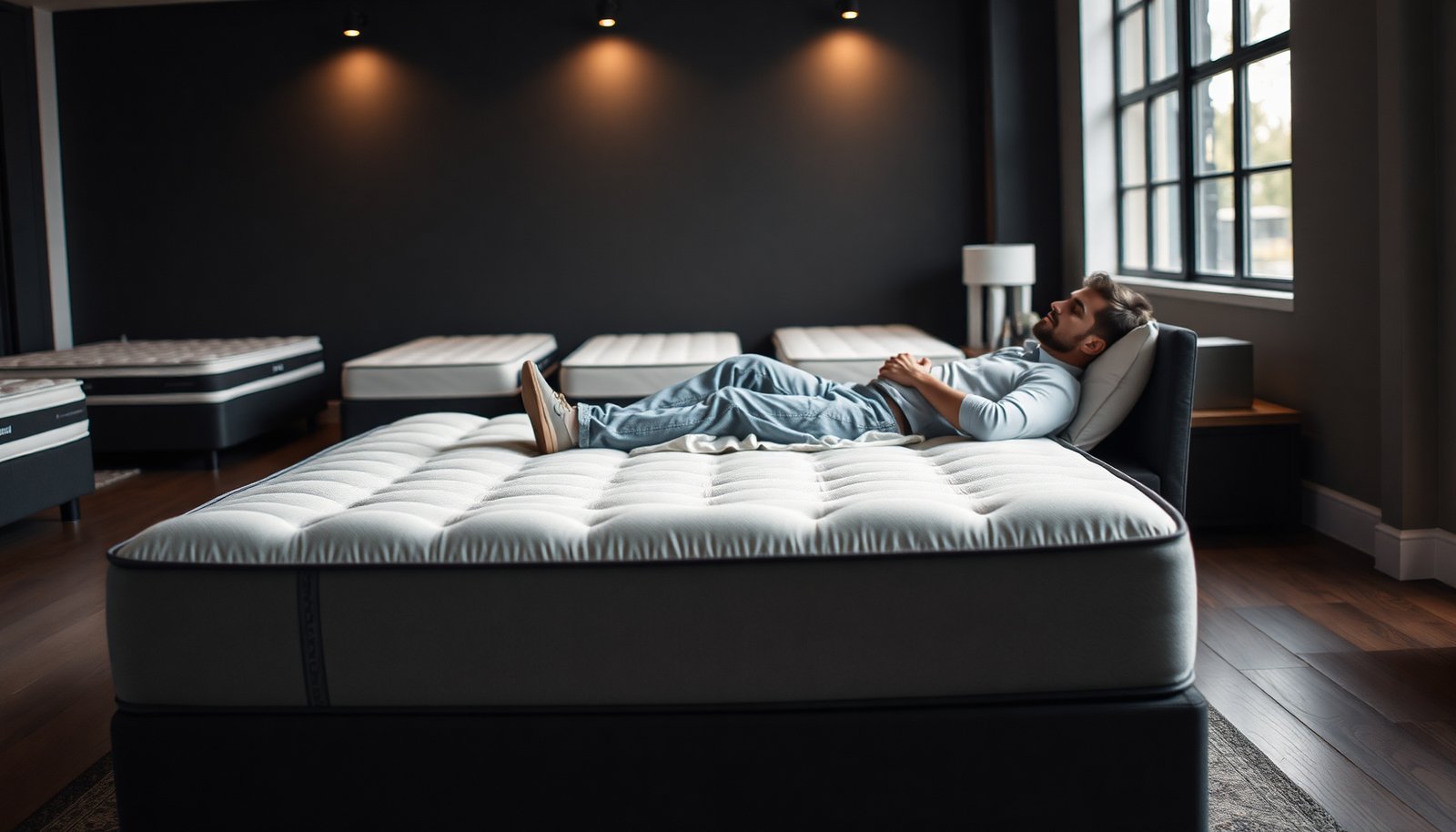
Test in the exact sleep positions you use at home, and spend enough time—about 10–15 minutes per position—to feel pressure points and alignment. Bring awareness to how the mattress supports your midsection in back-sleeping and how it cushions hips and shoulders in side-sleeping. Compare multiple options back-to-back, and ask about return/exchange policies so you can confirm your choice after sleeping on it.
📅 Last Updated: November 02, 2026 | Topic: How to Avoid Buying the Wrong Mattress | Content verified for accuracy and freshness.
References
- mattress firmness low back pain systematic review – Search Results – PubMed
- bed surface mattress support low back pain randomized trial – Search Results – PubMed
- new mattress sleep quality trial – Search Results – PubMed
- Mattress
- 16 CFR Part 1632 – STANDARD FOR THE FLAMMABILITY OF MATTRESSES AND MATTRESS PADS (FF 4-72, AMENDE…
- 16 CFR Part 1633 – STANDARD FOR THE FLAMMABILITY (OPEN FLAME) OF MATTRESS SETS | Electronic Code …
- Search results for choosing a mattress – NHS
- https://scholar.google.com/scholar?q=how+to+choose+a+mattress+clinical+guideline Google Scholar
- https://scholar.google.com/scholar?q=mattress+firmness+low+back+pain+systematic+review Google Scholar
- https://scholar.google.com/scholar?q=mattress+type+sleep+quality+randomized+trial Google Scholar