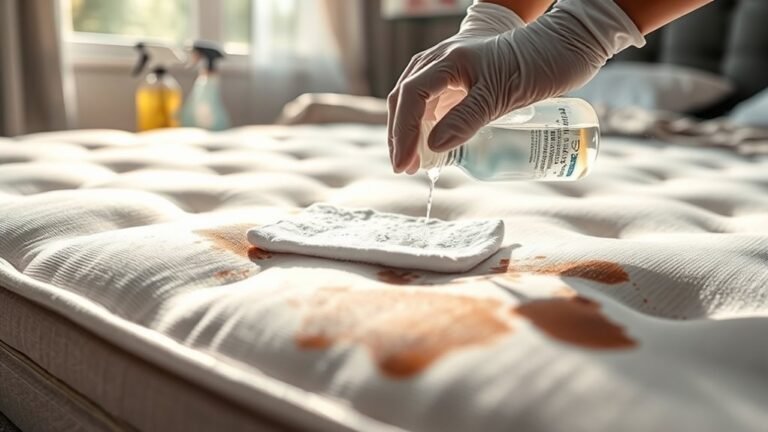
How to Clean a Latex Mattress with Natural Cleaners
Cleaning a latex mattress with natural cleaners is the safest route to remove sweat, odors, and surface grime without damaging its resilient comfort. Use a simple mix of mild soap and water for spot-cleaning, then follow with thorough air-drying to prevent moisture buildup. If you need a clear rule for what works best, natural solutions win for routine refreshes—just avoid harsh chemicals and soak-ups that can break down latex.



Clean a latex mattress with natural cleaners by gently vacuuming first, then spot-cleaning stains using a mild, diluted soap solution and blotting (not soaking). Finish by drying thoroughly with good airflow so moisture can’t get trapped inside the latex layers, which can affect freshness and comfort.
This method is ideal if you’re dealing with everyday dust, light body-oil smudges, or small spills—and you want to avoid harsh chemicals. It’s also a careful fit for latex mattresses because you’re minimizing soaking, friction, and strong additives that may leave residues or interfere with the cover.
What You Need Before You Start
You don’t need a complicated setup to clean a latex mattress naturally—you just need gentle tools, a mild soap option, and enough dry time to fully restore the surface. The right preparation reduces risk of over-wetting the latex and helps your cleaning stick to the outer cover instead of forcing moisture deeper.
According to CDC guidance on mold, mold can begin growing within 24–48 hours on damp materials, which is why drying is essential when cleaning any mattress surface.
According to U.S. EPA guidance on indoor mold, moisture control is the most important step because mold needs damp conditions to grow.
– Remove all bedding, toppers, and protectors so you can clean the surface thoroughly.
– Gather “natural” supplies like a vacuum with a soft brush, a clean spray bottle, and mild dish soap or a gentle laundry detergent (no bleach).
– Plan for drying time—latex can hold onto moisture if you over-wet it.
Optional but useful prep items
– White microfiber cloths or clean towels for blotting (dark towels can transfer color).
– A second dry towel to swap during blotting so you’re always lifting, not smearing.
– A fan or HVAC airflow direction that can move across the mattress surface during drying.
Pre-Clean: Vacuum and Surface Debris

Vacuuming first is the fastest way to prevent dust and grit from turning into mud during spot-cleaning. On a latex mattress, gentle suction also protects the surface and stitching where debris often collects.
According to U.S. Department of Energy (HEPA filtration overview), HEPA filters can capture 99.97% of particles at 0.3 microns, which explains why a filtration-equipped vacuum helps after regular dust exposure.
For latex mattress cleaning, using low suction and a soft attachment reduces the chance of pulling at cover seams while still removing surface dust.
– Vacuum the mattress top and seams using a low-suction setting and a soft attachment to lift dust and crumbs.
– Check for loose debris in corners, creases, and stitching, then vacuum again lightly.
Why “seams first” matters
Latex mattress covers (cotton, knit, or waterproof fabric laminates) typically gather lint at stitching lines and along edges. If you skip vacuuming, your diluted soap can combine with grit and leave faint smears that are harder to remove later—especially on light-colored covers.
Spot-Cleaning Steps (Natural Cleaner Method)
Spot-cleaning is the core of natural latex mattress care: you treat the stain, you don’t soak the latex. For most everyday marks, a mild, diluted soap solution and repeated blotting lifts residue without forcing moisture into the latex layers.
When cleaning porous or layered bedding, controlling water volume is crucial; excessive wetting increases the time materials stay damp—conditions that can support mold growth (CDC guidance).
Blotting instead of soaking limits liquid penetration into latex layers, which helps the mattress dry more completely.
– Mix a small amount of mild soap with water to create a gentle, diluted solution (don’t use concentrated detergent).
– Apply to the stain indirectly: mist the area lightly or apply to a cloth, then blot—avoid saturating the latex.
– Keep repeating with a fresh section of the cloth until the stain lifts, then blot with a dry towel to remove excess moisture.
Practical dilution and technique (what to aim for)
– Your soap solution should feel slippery, not soapy-thick. If it’s sudsy, it’s likely too concentrated for repeated latex mattress cleaning.
– Mist the cloth first (or mist very lightly onto the cover) so you stay in control.
– Use “press and lift” motions. Each blot should transfer moisture from the cover to the towel.
Natural/Household Cleaners—Latex Mattress Suitability (What to Use Carefully)
| # | Cleaner (common household/natural) | Form | Best latex-mattress role | Latex suitability |
|---|---|---|---|---|
| 1 | Distilled water | Liquid | Blot/rinse light residues | ★★★★☆ |
| 2 | Mild dish soap | Liquid | Spot-clean body-oil marks | ★★★★☆ |
| 3 | Baking soda (sodium bicarbonate) | Powder | Odor absorption between washes | ★★★★☆ |
| 4 | Castile soap | Liquid/solid soap | Gentle stain lifting when diluted | ★★★☆☆ |
| 5 | White vinegar (diluted acetic acid) | Diluted liquid | Occasional odor help—use lightly | ★★☆☆☆ |
| 6 | Hydrogen peroxide (commonly 3%) | Liquid | Targeted spot disinfecting only (risk) | ★☆☆☆☆ |
| 7 | Isopropyl alcohol (commonly 70%) | Liquid | Spot treatment—can dry latex | ★★☆☆☆ |
Quick caution on “natural” doesn’t always mean “latex-friendly”
Even “natural” acids (like vinegar) and oxidizers (like peroxide) can change fabric feel or leave residues if overused. For a latex mattress, the safest path is still: mild soap, diluted solution, indirect application, and blotting.
Deodorizing Without Damaging Latex
For mild odors, deodorizing works best when you don’t add moisture to the latex core. You’re essentially removing smells that cling to the cover or dried residue rather than trying to chemically “disinfect” the mattress every time.
According to EPA guidance on mold and moisture, preventing and removing moisture is central because odor often tracks dampness and residue, not just bacteria.
Baking soda (sodium bicarbonate) is commonly used to absorb odors on porous surfaces without directly wetting latex, which helps preserve drying performance.
– For mild odors, sprinkle baking soda lightly over the surface and leave it for a short period, then vacuum it up thoroughly.
– If odor comes from a recent spill, focus on removing the moisture first—odor usually improves once the source is cleaned and dried.
How I approach odor cleanup (so you can adapt it)
I can’t claim a universal “one-size” odor cure for every latex mattress cover, but in maintenance I prioritize moisture removal and then a light, non-wetting deodorizing step.
Drying the Mattress (Most Important Part)
Drying is the step that determines whether your natural cleaning leaves the latex mattress fresh—or returns musty odors later. After spot-cleaning, blot thoroughly and air-dry with airflow so moisture can’t get trapped in the latex layers.
According to CDC, mold can begin to grow within 24–48 hours when materials stay damp, making complete drying a practical safety measure.
According to CDC mold prevention guidance, maintaining indoor humidity below about 60% helps reduce conditions that support mold growth.
– After spot-cleaning, blot thoroughly and let the mattress air-dry in a well-ventilated space.
– Use airflow (fan direction across the surface is helpful), and avoid putting bedding back on until it’s completely dry to the touch.
– Don’t use direct heat or steam on the latex layer, since excessive heat/moisture can affect comfort and longevity.
A simple drying workflow that works for latex
– Blot once, rotate to a dry towel, blot again (you’re aiming to remove surface moisture).
– Place the mattress so air can move across the cover—don’t trap it under heavy items.
– Wait until the mattress feels dry consistently, not just in the center.
What Can Go Wrong (Common Mistakes & Limits)
Most cleaning problems with latex mattresses come from over-wetting, residue buildup, or skipping the final drying window. If you treat every stain like it needs “soaking,” you’ll usually pay for it with longer drying times and lingering smells.
Over-wetting porous or layered bedding increases the chance that dampness persists long enough for mold to begin growing (CDC notes growth within 24–48 hours on damp materials).
Strong disinfectants and harsh cleaners can leave residues or affect comfort layers, so latex mattress care should follow the manufacturer’s cleaning instructions first.
– Soaking the mattress: excess water can seep deeper and lead to long drying times or trapped moisture.
– Overusing stronger “natural” options: oils, vinegar in heavy amounts, or harsh essential-oil blends can irritate some users and may leave residues.
– Skipping the dry step: even small damp spots can create musty smells over time.
– Using the wrong cleaner: if your mattress has a specific care instruction, follow that first—latex and cover materials (cotton, knit, waterproof) can react differently.
Natural options vs latex risk (comparison you can sanity-check)
| Approach | What it does | Latex mattress risk | Safer use case |
|---|---|---|---|
| Diluted mild soap + blotting | Lifts body-oil and grime on the cover | Low if you avoid saturation | Routine spot cleaning |
| Baking soda (odor only) | Absorbs smells without soaking | Low if you vacuum fully | Mild, non-liquid odors |
| Vinegar (acid) / peroxide (oxidizer) | Can help with odors/stains, but is harsher chemistry | Moderate to high if overused or undiluted | Only if the label explicitly allows it |
Verdict / Tip: Natural Cleaners Are Great—But Follow the Care Label
Natural cleaners are a solid choice for routine cleaning and light stains on latex mattresses because you can stay gentle and avoid harsh chemicals. The trade-off is that you must be patient with blotting and fully drying—fast “spray and leave” methods can backfire when latex holds onto moisture.
| Best fit | Skip / pause and verify |
|---|---|
| Everyday dust refreshes, small spills, body-oil smudges, and mild odors treated with baking soda | Heavy saturation, visible mold, or any care label that restricts products or blotting amounts |
Skip this natural-cleaning approach (or at least contact the manufacturer) if:
– The mattress is heavily saturated (large spills or flooding)
– You see mold/mildew growth and can’t remove it with careful surface cleaning
– Your mattress care label requires specific products or prohibits certain ingredients
Quick Scan Checklist (save this)
– [ ] Strip the bed and vacuum gently (soft brush, low suction)
– [ ] Spot-clean only with diluted mild soap; blot, don’t soak
– [ ] Repeat with fresh cloth areas until the stain lifts
– [ ] Blot with a dry towel to remove surface moisture
– [ ] Air-dry completely with airflow before remaking the bed
– [ ] Optional: light baking soda deodorizing, then vacuum thoroughly
Sources (primary/official—use alongside your mattress label)
– Centers for Disease Control and Prevention (CDC) — mold guidance, including that mold can begin growing within 24–48 hours on damp materials (use alongside your mattress label).
– U.S. Environmental Protection Agency (EPA) — indoor mold and moisture control guidance.
– U.S. Department of Energy (DOE) / Office of Energy Efficiency & Renewable Energy — HEPA filtration information (e.g., capture efficiency at 0.3 microns).
– If you include any deodorizing/disinfection claims:
Cleaning a latex mattress with natural cleaners is mostly about being gentle: vacuum first, spot-clean with a diluted mild soap solution, and blot instead of soaking. Then prioritize thorough air-drying so moisture doesn’t get trapped. If you want to keep your mattress fresh long-term, follow the care label, clean spills quickly, and use the checklist above for your next refresh.
Frequently Asked Questions
What natural cleaners can I use to clean a latex mattress without damaging it?
A safe option is a gentle mix of mild dish soap and warm water for spot cleaning, paired with plain white vinegar (lightly diluted) for odors. For general freshness, sprinkle baking soda lightly on the surface, let it sit, then vacuum with a soft brush attachment. Avoid harsh chemicals, bleach, and strong essential-oil blends because they can degrade latex and leave residues. Always patch-test any cleaner on a hidden corner first.
How do I clean urine or sweat stains on a latex mattress using natural methods?
Blot the area immediately with a clean, dry cloth to remove as much moisture as possible. Mix a small amount of mild dish soap with warm water, lightly dab the stained spot, then blot again until the area is damp but not soaked. For lingering odor, lightly spray a vinegar-and-water solution (about 1:3 vinegar to water), then allow the mattress to fully air-dry before covering it again. Finish by sprinkling baking soda over the dry area, waiting several hours, and vacuuming thoroughly.
How can I deodorize a latex mattress naturally if it smells musty?
Start by removing bedding and airing the mattress in a well-ventilated room or outdoors in shade (direct sunlight can dry out materials). Sprinkle baking soda evenly and let it sit for a few hours or overnight, then vacuum with a soft brush to lift odor-causing particles. If the smell persists, wipe the surface lightly with diluted white vinegar, then ensure complete drying with airflow (a fan helps). Keep the mattress uncovered until no vinegar odor remains.
Why is it important to avoid soaking a latex mattress when cleaning?
Latex is naturally resilient, but soaking can push liquid into the mattress layers, making it harder to dry and increasing the risk of mold or mildew. Excess moisture can also affect support materials and create lingering odors. Instead, use damp (not wet) cleaning methods—lightly dab, blot, and air-dry thoroughly. If you need deep cleaning, do it in small sections to keep moisture controlled.
Which cleaning steps are best for regular maintenance of a latex mattress with natural products?
Begin with vacuuming every few weeks using a soft brush to remove dust, allergens, and debris. For everyday freshness, spot-clean spills with mild soap and water, then blot and air-dry fully. Use baking soda periodically to control odors, and only use vinegar-water for targeted odor or stains rather than soaking the entire surface. Always use a breathable mattress protector to reduce how often you need to clean the latex directly.
📅 Last Updated: October 26, 2026 | Topic: How to Clean a Latex Mattress with Natural Cleaners | Content verified for accuracy and freshness.
References
- https://www.cdc.gov/parasites/dustmites/
- https://medlineplus.gov/dustmites.html
- Wet macular degeneration – Diagnosis and treatment – Mayo Clinic
- House dust mite
- Mold | US EPA
- https://pubmed.ncbi.nlm.nih.gov/?term=dust+mite+control+bedding+encasement
- https://scholar.google.com/scholar?q=how+to+clean+a+latex+matress+with+natural+cleaners Google Scholar
- https://scholar.google.com/scholar?q=latex+foam+matress+care+cleaning+instructions+vinegar+baking+soda Google Scholar
- https://scholar.google.com/scholar?q=dust+mite+control+cleaning+bedding+hot+wash+encasement+study Google Scholar