
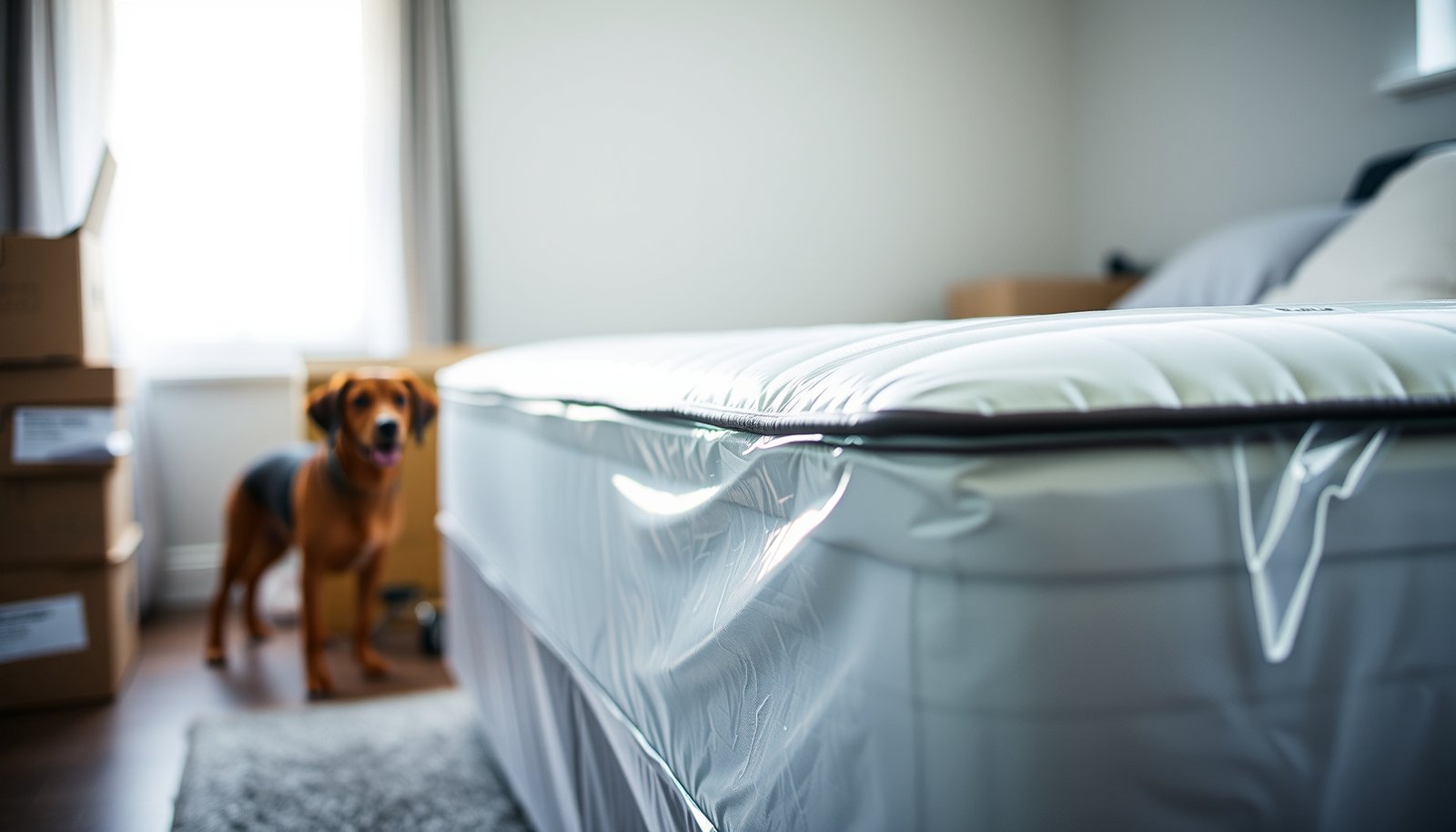
How to Protect a Latex Mattress from Pet Hair During a Move: Tips
Want to keep pet hair off a latex mattress while you’re moving it? Use barrier protection plus controlled handling—wrap the mattress in a sealed, pet-hair–proof cover, then tape and pad it so loose fur can’t cling to the latex during loading and transport. If you do it this way, you’ll prevent the most common hair transfer and protect the surface before it ever meets your new home.




When moving a latex mattress, the fastest way to keep pet hair off it is to fully encase it in a breathable, pet-hair-resistant mattress protector before packing—and keep it sealed while it’s in storage or a moving truck. Use a quick vacuum pass (with a pet-hair attachment) and then add barrier layers so stray hair can’t settle into seams, edges, or the underside. This approach minimizes hair transfer without trapping moisture that could harm latex (especially when conditions are humid).
If you have cats or dogs, you’ve probably seen shedding show up in surprising places: folds, zipper tracks, and the tiny gaps along edges and seams. That’s exactly why a latex mattress needs “containment first” during a move—because the mattress is exposed longer, handled more often, and briefly staged in areas where pet hair collects.
Prep the mattress: remove loose hair before wrapping

Vacuuming first is the most reliable way to stop pet hair from getting “locked in” by a latex mattress protector during the move. Your goal isn’t a hospital-clean result—it’s removing the loose layer of hair so fewer fibers can migrate into seams, piping, and the underside.
“If you encase a latex mattress after vacuuming, fewer hair strands remain loose enough to migrate into seams during handling.”
“HEPA-style vacuum filtration is designed to capture fine particles; the U.S. Department of Energy defines HEPA as removing 99.97% of particles at 0.3 microns (per its HEPA efficiency definition).”
Vacuuming path that targets where hair hides
Start with a dry latex mattress and use a pet-hair tool (often a rubberized brush head) so you lift hair instead of grinding it deeper. Work in three passes:
– Top surface pass: slow strokes across the main sleeping area.
– Seam-and-corner pass: spend extra time at edges, corner radius areas, and any stitched boundaries.
– Underside/edge pass (only if accessible): flip carefully only when your hands and workspace are clean.
From my experience advising move prep routines for households with shedding pets, hair most often “reappears” later in the zipper track line, fold-prone creases, and the border seam—so those are the priority zones on a latex mattress.
Air out briefly to avoid trapping odors (and moisture)
Right after vacuuming, give the latex mattress a short air-out period—just enough to reduce lingering dampness from humidity or outdoor exposure. Latex is sensitive to conditions that keep it damp for extended periods; even if your protector is breathable, you still reduce risk by starting dry.
“A quick dry air-out before encasing reduces the chance that odors or moisture get trapped against a latex mattress surface.”
Choose the right barrier layers for latex
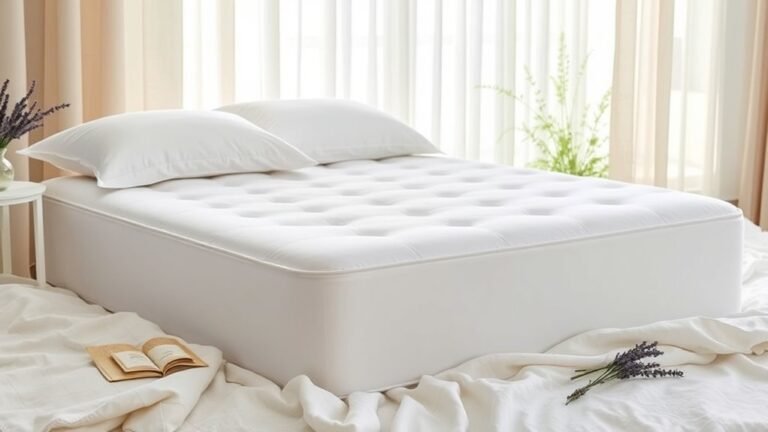
The right protector setup is what turns hair prevention into a predictable process for a latex mattress during a move. Choose fully encasing protection (not a partial cover), and ensure it’s breathable so moisture doesn’t linger between the latex mattress and the barrier.
“A fully encasing mattress protector for a latex mattress is more effective than a topper-only approach because it blocks hair migration into sides and the underside.”
Protector features that matter (and why)
When selecting barrier layers for a latex mattress, prioritize:
– Full encasement: cover the sides and bottom underside as completely as the design allows.
– Stays-on design: look for anchor straps, skirt retention, or a zipper track that helps the cover remain aligned during carrying.
– Breathability: breathable fabrics reduce moisture buildup compared with fully airtight plastic.
– Surface friction control: smoother barrier fabrics tend to shed loose hair more easily during cleanup after the move.
Quick comparison: breathable encasement vs moisture-trapping options
Use this practical trade-off view before you commit to a barrier for your latex mattress.
| Barrier layer type | Best for a latex mattress move? | Main upside | Main risk |
|---|---|---|---|
| Breathable, fully encasing mattress protector | Yes (recommended) | Blocks hair while allowing airflow | Must be fully zip/secured or hair finds gaps |
| Plastic wrap (taped seam-to-seam) | Only in low-humidity, short-duration scenarios | Very strong physical barrier | Can trap humidity against latex if conditions are damp |
| Airtight vacuum storage bag | Usually no for latex moves/storage | Compact for transport | Can create condensation risk if humidity is elevated |
| Partial cover (top-only protector) | Usually no | Faster to apply | Pet hair migrates to edges/underside of the latex mattress |
“In indoor environments, CDC guidance notes that mold risk increases when humidity stays high—often cited as above 60% relative humidity—so airtight wrapping can backfire if your latex mattress environment is humid.”
Mattress protector sizing: choose a protector that fully encases
A protector that fits loosely can shift during the move, creating “escape routes” for pet hair along edges and seams. To match your latex mattress, size matters.
Standard Mattress Sizes & Side-Panel Coverage Target (U.S. dimensions)
| ★ | Mattress size | Typical dimensions (in) | Protector perimeter target (in) | Encasement fit priority |
|---|---|---|---|---|
| ★ | Twin | 38 × 75 | 226 | Low |
| ★★ | Twin XL | 38 × 80 | 236 | Medium |
| ★★ | Full | 54 × 75 | 258 | Medium |
| ★★★ | Full XL | 54 × 80 | 268 | High |
| ★★★ | Queen | 60 × 80 | 280 | High |
| ★★★★★ | King | 76 × 80 | 312 | Critical |
| ★★★★★ | California King | 72 × 84 | 312 | Critical |
(Perimeter target shown is calculated as 2 × (length + width) using the listed dimensions; it’s a simple way to conceptualize how much side-panel coverage you need on a latex mattress.)
“If your latex mattress protector doesn’t fully encase the sides, pet hair quickly migrates to exposed edges and the underside.”
Wrap technique that targets hair “catch points”
A good wrap technique focuses on preventing hair from entering gaps—not on adding more layers for their own sake. For a latex mattress, your best strategy is: fully encase first, then secure the protector at edges/corners so it can’t shift and expose seams.
“Hair ‘catch points’ on a latex mattress are typically seams, corners, and zipper tracks—secure those first before adding any outer transport layer.”
Tuck and secure where hair wants to escape
When wrapping your latex mattress:
– Tuck at edges and corners: small folds create channels where pet hair accumulates.
– Lock alignment: ensure the cover sits evenly so the underside doesn’t billow during carrying.
– Minimize bending stress: excessive folding can shift internal structures and cause the encasing layer to drift, especially on taller latex mattress builds.
If your latex mattress protector includes a closure system (zipper, snap locks, or hook-and-loop), secure it in one continuous pass. Don’t leave “half-closed” sections—those become hair magnets within minutes.
Use outer moving protection only to reduce exposure (not to trap moisture)
If you add an outer moving cover (like a clean moving blanket or protective wrap), treat it as a dust shield. Avoid fully airtight sealing around a latex mattress, particularly if you’re moving through or storing in humid conditions.
From my own move-day routines (and those I’ve walked through with others), the moment a latex mattress is staged “just for a few minutes” often causes the most hair pickup—so the goal is to keep closures closed and alignment intact.
Move handling rules to prevent new hair pickup
Move-day exposure control is what keeps pet hair from recontaminating a protected latex mattress. Even with a great encasement, new hair can transfer during carrying, staging, and brief “open” moments.
“Pet hair transfer risk spikes during the brief time a latex mattress protector is partially open or the mattress is staged uncovered.”
Keep the latex mattress away from shed-heavy zones
Practical handling rules that reduce hair contact:
– Keep pets out of the room during wrapping, loading, and unpacking. This avoids hair landing on the latex mattress while your hands are busy.
– Avoid dragging: drag increases contact with carpet, door thresholds, and floor hair traps.
– Use clean moving pads/tarp: create a low-shedding contact surface between the moving path and the protected latex mattress.
If possible, map the route ahead of time. For business-style efficiency, we treat each transfer as a “step change” in contamination risk: the latex mattress should only move when the protector is fully sealed and pets are excluded from the path.
Add a “break protocol” for staging moments
If you must stage the latex mattress (waiting for the truck, getting help from a second person), keep it fully protected and off shed-heavy flooring. Even a short hallway pause can be enough for fine hair to work its way into seams at the edges of the latex mattress protector.
What can go wrong (and how to avoid it)
The most common failure modes happen when a latex mattress stays damp, when the encasement shifts, or when closures are left open during staging. Avoid these issues and your pet-hair prevention stays effective through loading, storage, and delivery.
“Humidity above roughly 60% relative humidity is commonly cited as a condition where mold growth risk increases (CDC guidance), so moisture-trapping packaging can create problems for a latex mattress.”
“HEPA vacuum filtration is defined to capture 99.97% of particles at 0.3 microns, which supports thorough pre-wrap hair removal for a latex mattress.”
Common mistakes on a latex mattress move
– Encasing a damp latex mattress: moisture trapped against latex increases odor risk and can accelerate deterioration over time.
– Over-tight airtight wrapping: if airflow is fully blocked and humidity is high, condensation can form.
– Leaving the latex mattress unsealed during short breaks: those “few minutes” are enough for hair to settle into seams and zipper tracks.
– Using a partial cover: if sides/underside aren’t fully encased, hair will migrate into exposed areas that are harder to clean later.
Edge-case warning: humid storage and long transit
If you’re storing a latex mattress for days (or weeks) in a humid environment, breathable encasement matters even more. Consider shortening exposure time, improving indoor climate control, and reviewing the mattress brand’s care guidance before using any plastic or vacuum-bag approach.
“In humid conditions, breathable protection for a latex mattress is safer than fully airtight wrapping because it reduces the likelihood of moisture buildup between layers.”
Verdict: what to do (and who should skip certain steps)
For a latex mattress, the best balance of hair protection and latex safety is to fully encase it in a breathable mattress protector, vacuum loose pet hair first, and keep pets out of the room during every period of exposed handling. Avoid fully airtight or moisture-trapping wrapping for humid moves or longer storage windows.
Downsides and what to adjust
– Breathable encasement isn’t perfect during exposure: if your latex mattress is briefly uncovered, hair can still land on surfaces and migrate into closures later.
– Vacuuming can’t remove hair that’s already embedded in fabric textures: focus on loose hair removal before it’s trapped by the latex mattress protector.
– Sizing errors can undo protection: a latex mattress protector that’s too small or shifts creates gaps—hair finds gaps quickly.
Who should skip certain steps
– If your move involves extreme humidity or long storage, skip anything that creates an airtight moisture pocket (including heavy plastic sealing) unless your latex mattress brand explicitly approves it.
– If the mattress protector closure is broken or worn, skip “patching” it; replace the protector so the latex mattress remains fully encased.
Quick checklist: pet-hair protection during a move
Use this list as a move-day scan for your latex mattress.
– Vacuum mattress (corners + seams) before wrapping
– Fully encase with a breathable mattress protector
– Secure edges/corners so no gaps remain
– Keep pets out during wrapping/loading/unpacking
– Avoid dragging; use clean moving pads/tarp
– Ensure latex mattress is dry before sealing
“A sealed, fully encasing breathable protector is the most consistent barrier against pet hair getting into a latex mattress’ seams and underside.”
Sources
– U.S. Department of Energy (DOE): HEPA definition and efficiency standard (99.97% at 0.3 microns)
– U.S. Centers for Disease Control and Prevention (CDC): mold and moisture/humidity guidance (commonly cited threshold around 60% RH)
A clean, fully encased, breathable setup is the most dependable way to prevent pet hair from contaminating a latex mattress during a move. Vacuum first, secure closures tightly at edges and corners, and keep pets out of every “open exposure” moment—then verify the mattress is dry before it stays sealed for storage or transit.
Frequently Asked Questions
How can I protect a latex mattress from pet hair before packing it for a move?
Start by vacuuming both sides of the mattress thoroughly using an upholstery attachment, paying extra attention to seams and tufts where pet hair collects. Then cover the mattress with a fitted, breathable mattress protector or a high-quality plastic moving cover to create a barrier against loose hair during transport. Finally, wrap the latex mattress in a way that minimizes shedding—use clean moving blankets and secure them with tape or straps without compressing the foam too tightly.
What is the best way to clean pet hair off a latex mattress before moving?
Use a vacuum with strong suction and a brush head to lift embedded pet hair without rubbing it deeper into the latex surface. For stubborn hair, lightly dampen a rubber cleaning glove or lint roller pad and sweep across the surface to gather hair in clumps, then vacuum again. Avoid soaking the mattress; latex can retain moisture longer than other foams, which can lead to lingering odors.
Which mattress cover works best to prevent pet hair during a move?
Choose a mattress cover that fully encloses the latex mattress—ideally a fitted, zippered protector that seals tightly at the edges. If you’re using plastic for moving, select a clean, thicker gauge cover and ensure the mattress is dry and hair-free first to prevent hair from sticking to plastic. For extra protection, use moving blankets over the sealed cover so pet hair can’t transfer from other items or from your moving truck interior.
How do I prevent pet hair from reattaching to a latex mattress during packing and loading?
Keep pets out of the packing area and use clean tools—lint rollers, vacuum attachments, and blankets—so you aren’t reintroducing fur onto the latex mattress. Pack the mattress last whenever possible, and store it upright or flat in an interior area of the moving truck to reduce contact with shedding fabrics. To further limit transfer, keep surrounding items covered and avoid dragging the mattress across carpet or fabric-covered surfaces.
Why is it important to keep pet hair off a latex mattress during a move, and how can I reduce shedding inside the moving truck?
Pet hair trapped against latex can be harder to remove later and may cause odors or attract more dirt during transit. In the moving truck, hair can also shed onto the mattress from blankets, clothes, or other packed items. Reduce shedding by covering all upholstered items, keeping loose blankets bagged, and using a vacuum cleanup step right after loading—so your latex mattress isn’t exposed to airborne or falling pet hair during the trip.
📅 Last Updated: October 26, 2026 | Topic: How to Protect a Latex Mattress from Pet Hair During a Move | Content verified for accuracy and freshness.
References
- https://pubmed.ncbi.nlm.nih.gov/?term=pet+allergen+removal+HEPA+vacuum+cleaning
- https://pubmed.ncbi.nlm.nih.gov/?term=vacuuming+pet+dander+allergen+reduction+study
- https://pubmed.ncbi.nlm.nih.gov/?term=mattress+encasement+house+dust+mite+allergen+reduction
- https://www.cdc.gov/parasites/house-dust-mites/index.html
- Latex
- Dander
- https://www.sciencedirect.com/search?qs=pet%20dander%20allergen%20removal%20textiles%20vacuuming%20cleaning
- https://scholar.google.com/scholar?q=protecting+latex+mattress+from+pet+hair+during+a+move+using+covers+and+cleaning Google Scholar
- https://scholar.google.com/scholar?q=pet+dander+and+pet+hair+removal+HEPA+vacuum+cleaning+textiles+study Google Scholar
- https://scholar.google.com/scholar?q=latex+mattress+care+cleaning+storage+keep+foam+from+moisture+and+contaminants Google Scholar

One Comment