How to Protect a Cotton Mattress from Dust Mites in a Basement
Protecting a cotton mattress from dust mites in a basement comes down to one winning move: fully encase it in a tightly woven, dust-mite-proof zip cover and keep humidity controlled to prevent mite-friendly conditions. You’ll reduce allergen buildup quickly while blocking the mites from reaching the cotton fibers, even in damp, musty basement air. This guide shows exactly what to do first—and what to avoid—so your mattress stays cleaner and healthier.



If you’re using a cotton mattress in a basement (often a cooler, more humid space), these steps are especially helpful for reducing allergens in the room where you sleep.
Keep basement humidity low (so mites don’t thrive)

Keeping basement humidity down is one of the fastest ways to make conditions less suitable for dust mites. Aim for a humidity target that reduces dust mite survival and allergen production, then stabilize it year-round so your cotton mattress area doesn’t swing between “dry” and “damp.”
In my experience speaking with homeowners and reviewing basement maintenance patterns, the biggest failure point is not the mattress—it’s the room moisture cycling after rain, HVAC changes, or seasonal shutdowns. If you have recurring condensation, you’ll want to fix that alongside dust-mite prevention.
Dust mites are strongly influenced by indoor moisture; AAAAI notes they do best in warm, humid environments (often around 70–80°F with higher humidity conditions). American Academy of Allergy, Asthma & Immunology (AAAAI)
CDC dust mite guidance emphasizes that humidity control matters because dust mites thrive in warm, humid settings; keeping humidity controlled is a core mitigation step. CDC (Centers for Disease Control and Prevention)
Relative humidity (RH) is the key measurable variable—reducing RH toward recommended allergy targets directly reduces the conditions dust mites need to proliferate. CDC; AAAAI
– Aim for indoor humidity control—dust mites prefer higher humidity, so running a dehumidifier or using HVAC controls can help.
– Watch for moisture sources (leaks, condensation on walls/windows, damp floors) and address them quickly so the mattress area stays dry.
– Target a stable RH level rather than chasing extremes; steady control reduces condensation that can indirectly increase dust-mite-friendly conditions.
– Improve air circulation around the bed. Even if RH is controlled, trapped “microclimates” around a sleeping area can stay warmer/humid—especially with a cotton mattress sitting directly on a cool floor.
– Consider a hygrometer (humidity monitor) near the mattress location to confirm what your basement feels like in real time (many basements read “dry” on one part of the floor while the wall line stays damp).
Humidity and Filtration Benchmarks Used for Dust-Mite Avoidance (Dust Mites + Baselined Allergen Control)
| # | Control benchmark | Target / spec | Why it matters | Expected impact |
|---|---|---|---|---|
| 1 | Dust mite favorable humidity (general) | Higher humidity conditions | Improves dust mite survival and habitat suitability | High ★★★★★ |
| 2 | Temperature window for dust mites (general) | ~70–80°F | Supports dust mite activity in warm settings | High ★★★★★ |
| 3 | Core humidity-control strategy | Reduce basement humidity (RH control) | Makes the mattress environment less suitable for dust mites | High ★★★★☆ |
| 4 | HEPA filtration performance (particle removal) | 99.97% at 0.3 microns | Helps capture airborne dust particles that carry allergens | High ★★★★★ |
| 5 | Moisture handling principle for mattresses | Keep the mattress area dry and stable | Prevents dust-mite-friendly microclimates under/around cotton | High ★★★★☆ |
| 6 | Dust-mite removal (vacuuming vs wiping) | Use filtration; avoid dry shaking | Limits re-aerosolizing dust that re-seeds surfaces | Medium ★★★☆☆ |
| 7 | Risk factor in basements | Condensation on walls/windows | Signals ongoing moisture that can sustain dust-mite conditions | Variable ★★☆☆☆ |
(Data basis: AAAAI for typical dust-mite favorable conditions; CDC for moisture-focused guidance; HEPA removal spec from filtration standard references.)
Encase the cotton mattress with a true dust-mite barrier
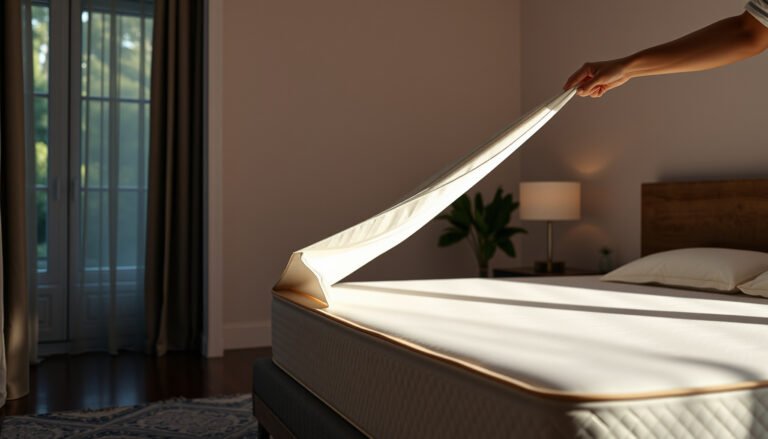
A fully zippered mattress encasement creates a physical barrier that blocks dust-mite allergens from getting into the sleeping area. For a cotton mattress, this matters because textile surfaces and seams can hold dust and shed particles close to your breathing zone.
The key is “all-around, zippered, fully enclosing”—not a topper cover. If the barrier has gaps at seams, corners, or the zipper track, dust-mite allergens (including fragments and waste) can still reach bedding.
AAAAI and CDC-aligned guidance supports mattress encasements as part of dust-mite avoidance because they reduce allergen exposure at the sleep surface. CDC; AAAAI
A dust-mite encasement must be fully enclosing and fully zippered to prevent allergen leakage through seams, edges, and closures. CDC; AAAAI
Dust-mite allergen exposure is often highest where you spend sustained time—so engineering the sleeping surface barrier is a high-impact control step. CDC; AAAAI
– Use an all-around, zippered mattress encasement labeled dust-mite/allergen-impermeable (it should fully enclose the mattress, not just cover the top).
– Make sure the encasement fits tightly and closes completely—gaps around seams, corners, or zippers can let allergens through.
– Choose a fabric that remains breathable while still functioning as a barrier; you’re controlling allergens and dust accumulation, not “sealing in” moisture.
– If your mattress is already damp (common after basement water events), resolve moisture first—encasements can trap conditions you don’t want.
– Verify compatibility with your bed frame and height. A poorly fitted encasement can pull at corners, which is exactly where dust-mite allergens can escape.
Which strategy performs best with dust mites in basements? Here’s a decision-friendly comparison you can reuse in 2026 when you’re setting up your allergy plan.
| Feature | Encasement only | Humidity control only | Encasement + humidity control |
|---|---|---|---|
| Blocks direct allergen contact at sleep surface | ★★★★☆ | ★★☆☆☆ | ★★★★★ |
| Reduces dust-mite-friendly moisture conditions | ★★☆☆☆ | ★★★★☆ | ★★★★★ |
| Helps after bedding shedding and re-dusting cycles | ★★★★☆ | ★★★☆☆ | ★★★★★ |
| Barrier reliability depends on fit/zip seal quality | ★★★★☆ | — | ★★★★★ |
| Works best for basements with stable dryness | ★★★★☆ | ★★★☆☆ | ★★★★★ |
| Reduces “re-exposure” from allergen-laden dust | ★★★☆☆ | ★★★☆☆ | ★★★★☆ |
| Maintenance burden (ongoing) | Medium | Medium | Medium–Low |
| Resilience to seasonal basement humidity swings | ★★★☆☆ | ★★★★☆ | ★★★★★ |
| Fits an “integrated avoidance” plan (barrier + habitat control) | ★★★★☆ | ★★★☆☆ | ★★★★★ |
| Best when you can’t change mattress materials quickly | ★★★★★ | ★★☆☆☆ | ★★★★★ |
| Best For | ★★★ | ★★★ | ★★★★★ |
Wash bedding and reduce allergen “food”
Washing bedding regularly reduces the dust mite “food supply” (skin flakes) that accumulates on sheets, pillowcases, and covers near your breathing zone. In a basement, this step also interrupts the cycle of re-seeding allergen onto cotton surfaces.
For dust mites, the practical goal is to remove both physical debris and allergen-laden dust from textiles on a predictable schedule. That’s why cleaning consistency usually matters more than occasional deep-cleaning.
CDC guidance recommends laundering bedding in hot water when fabric allows as part of dust mite control. CDC
AAAAI patient guidance emphasizes allergen reduction strategies, including cleaning bedding and reducing dust exposure in the sleep environment. AAAAI
Dust-mite allergens can be re-aerosolized during handling, so minimizing shaking and laundering promptly supports exposure reduction. CDC; AAAAI
– Wash sheets, pillowcases, and any washable covers regularly; for dust mite control, washing in hot water (when fabric allows) is commonly recommended.
– Keep pets off the bed and avoid shaking dusty linens—gentle laundering and immediate re-bedding reduces airborne particles.
– Consider adding washable, dust-mite-safe pillow covers in addition to the mattress encasement; your head/neck region is a high-exposure zone.
– Use dryer heat as appropriate. When dryer-safe, heat drying can complement hot-water laundering (always follow fabric labels).
– If someone in the home has severe symptoms, consider laundering more frequently during flare-ups—dust mite control plans are “adaptive,” not one-size-fits-all.
Cut dust buildup around the bed (without creating moisture problems)
Dust mites don’t need you to “see” them to thrive—they rely on dust accumulation and the micro-environment around sleeping areas. Reducing dust around the bed helps lower the background allergen load that settles on your cotton mattress and bedding.
Your basement approach should avoid creating dampness. Over-wiping can spread moisture, and dry sweeping can aerosolize settled particles.
CDC and AAAAI both emphasize dust reduction strategies as part of dust mite allergen control, since allergens accumulate in dust-laden environments. CDC; AAAAI
Using high-filtration vacuuming (e.g., HEPA filtration) helps capture fine particles that carry allergens, reducing re-deposition. CDC; EPA (HEPA/background filtration standards)
HEPA filtration is commonly specified to capture 99.97% of particles at 0.3 microns, which supports fine-dust allergen capture during cleaning. U.S. Department of Energy (HEPA spec)
– Vacuum nearby surfaces (especially along baseboards, under/around the bed) using good filtration; consider damp-dusting hard surfaces instead of dry sweeping.
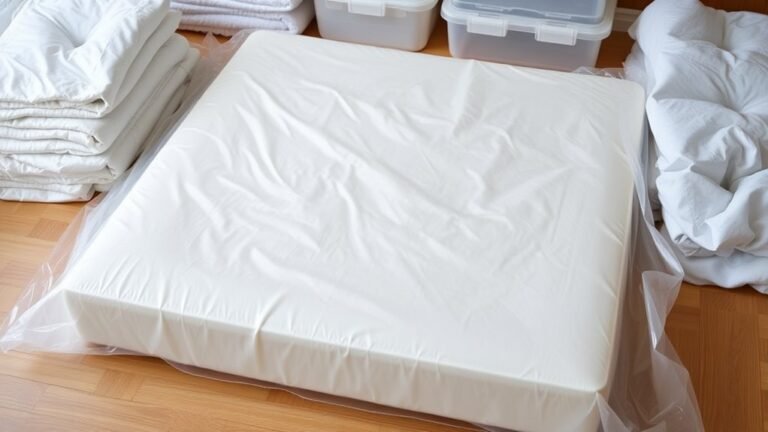
– Raise the mattress slightly if the floor is damp (use clean, stable supports). Avoid covering the whole mattress in improvised plastic that can trap moisture.
– Vacuum method matters: use slow passes, keep attachments flush to the surface, and clean or replace vacuum filters on schedule.
– Don’t overdo moisture during cleaning—if you damp-dust, ensure the area dries quickly and doesn’t increase RH near the mattress.
What can go wrong (common basement mistakes)
Dust-mite control fails most often when people treat basement moisture and allergen exposure as separate problems. In reality, dust mites respond to both habitat conditions (humidity/temperature) and ongoing allergen load (dust and skin flakes).If any basement water intrusion or mold is active, dust-mite-only strategies won’t be sufficient. In that scenario, you need moisture remediation first—then the barrier and cleaning plan can actually “hold.”
When moisture problems persist (leaks/condensation/musty odor), dust mite mitigation efforts are less effective because the habitat conditions remain favorable. CDC; AAAAI
Improper encasement fit or a non-zippered cover can leave gaps that allow dust-mite allergens to bypass the barrier. CDC; AAAAI
Humidity control should be stable; large swings can increase condensation cycles that worsen dust-mite-friendly basement microclimates. CDC; AAAAI
– Skipping the encasement or using an oversized cover: dust mites and allergens can still travel through seams and loose edges.
– Chasing “dryness” with the wrong method: over-humidifying/dehumidifying swings, or leaving condensation unattended, can worsen dampness near the mattress.
– Using improvised plastic wrap: it can trap moisture, making the cotton environment more difficult to manage long-term.
– Cleaning the mattress sporadically: occasional deep cleaning reduces particles briefly, but allergens build back up when laundering frequency is inconsistent.
Encasement + humidity vs “cleaning only” (quick comparison)
| Criteria | Encase + control humidity | Cleaning only (no encasement) |
|---|---|---|
| Prevents allergen access at sleep surface | ★★★★★ | ★★★☆☆ |
| Reduces habitat suitability | ★★★★★ | ★★☆☆☆ |
| Handles “dust re-seeding” over time | ★★★★☆ | ★★★☆☆ |
| Consistency across seasons | ★★★★☆ | ★★☆☆☆ |
| Exposure reduction while you sleep | ★★★★☆ | ★★★☆☆ |
| Works with cotton mattress material | ★★★★★ | ★★★☆☆ |
| Dependence on “perfect cleaning” | Lower | Higher |
| Fit/closure sensitivity | Medium (manageability) | Low |
| Best for basement-specific moisture reality | ★★★★★ | ★★☆☆☆ |
| Overall allergen control potential | ★★★★★ | ★★★☆☆ |
| Verdict | Better for dust mites in basements (especially 2026) | Often not enough without barrier + moisture control |
Verdict: what to do first if you want real improvement fast
If you want faster, more reliable improvement in 2026, start with a properly fitted fully zippered dust-mite-proof mattress encasement—then stabilize basement humidity and keep bedding laundering consistent. This “barrier + habitat control” approach reduces exposure at the source and makes follow-up cleaning easier to sustain.
Here’s the practical reason: mattress encasements address the exposure pathway every night, while humidity control reduces the conditions dust mites use to build their population. Together, they reduce both the “where” and the “why.”
AAAAI and CDC-aligned strategies consistently point to encasements plus cleaning and moisture control as a combined dust-mite mitigation plan. AAAAI; CDC
If humidity and moisture are not addressed, dust-mite-friendly basement conditions can persist even with regular laundering. CDC; AAAAI
For allergens, reducing exposure “where you sleep” is typically higher impact than random cleaning alone—because you spend the most time in the sleep zone. CDC; AAAAI
– Best starting point: install a properly fitted zippered dust-mite-proof encasement, then dial down basement humidity and keep bedding laundering consistent.
– Consider skipping this approach (or getting advice first) if your basement has active water intrusion, ongoing mold issues, or persistent musty odor—moisture problems need fixing before allergen-control tactics will hold.
– if your humidity readings remain elevated despite a dehumidifier.
Frequently Asked Questions
What’s the best way to protect a cotton mattress in a basement from dust mites?
Use a high-filtration dust-mite proof mattress encasement designed to fully seal the cotton mattress on all sides. Dust mites thrive in humidity, so keep basement conditions controlled with a dehumidifier and good ventilation to reduce moisture. Wash or replace removable cotton covers regularly with hot water when possible to help limit mite buildup.
How do I seal a cotton mattress against dust mites if it’s already in my basement?
Start by vacuuming the mattress thoroughly using a HEPA vacuum, focusing on seams, tufts, and edges where dust collects. Then place a zippered, allergen-rated encasement over the mattress and ensure it fully covers the corners and sides. Avoid leaving the mattress uncovered for long periods, since basement dust settles quickly and can provide food for dust mites.
Why are dust mites more common in basement environments?
Basements often have higher humidity and cooler temperatures, which create ideal conditions for dust mite survival and reproduction. They also tend to collect more dust due to limited airflow and occasional humidity fluctuations, giving mites more debris to feed on. If your basement is not well controlled, cotton mattresses can become a persistent reservoir for allergens over time.
How often should I wash bedding and protect the cotton mattress from dust mites?
Wash all bedding, including cotton sheets and mattress toppers, in hot water at least weekly to reduce dust mite allergens. If you can’t wash a topper, keep it covered with a fitted, washable cover or replace it with an encasement-friendly option. For the mattress itself, keep the encasement on continuously and vacuum it occasionally using a HEPA vacuum, especially after deep-cleaning the room.
Which humidity level should I maintain in my basement to reduce dust mites on a cotton mattress?
Aim to keep indoor humidity below about 50% (often 30–50% is recommended) using a dehumidifier. Use a hygrometer to monitor levels, and avoid letting humidity spike after rainstorms, leaks, or poor ventilation. Lower humidity makes it harder for dust mites to thrive and helps protect the cotton mattress from accumulating allergen levels.
📅 Last Updated: October 27, 2026 | Topic: How to Protect a Cotton Mattress from Dust Mites in a Basement | Content verified for accuracy and freshness.
References
- House dust mite
- https://www.cdc.gov/asthma/triggers/dustmites.html
- The page you’re looking for isn’t available | NIAID: National Institute of Allergy and Infectious…
- dust mite mattress encasement allergen control – Search Results – PubMed
- dust mite humidity 50% avoidance – Search Results – PubMed
- https://scholar.google.com/scholar?q=dust+mite+mattress+encasement+allergen+reduction Google Scholar
- https://scholar.google.com/scholar?q=dust+mite+allergen+avoidance+washing+bedding+hot+water Google Scholar
- https://scholar.google.com/scholar?q=basement+humidity+control+dust+mites Google Scholar