
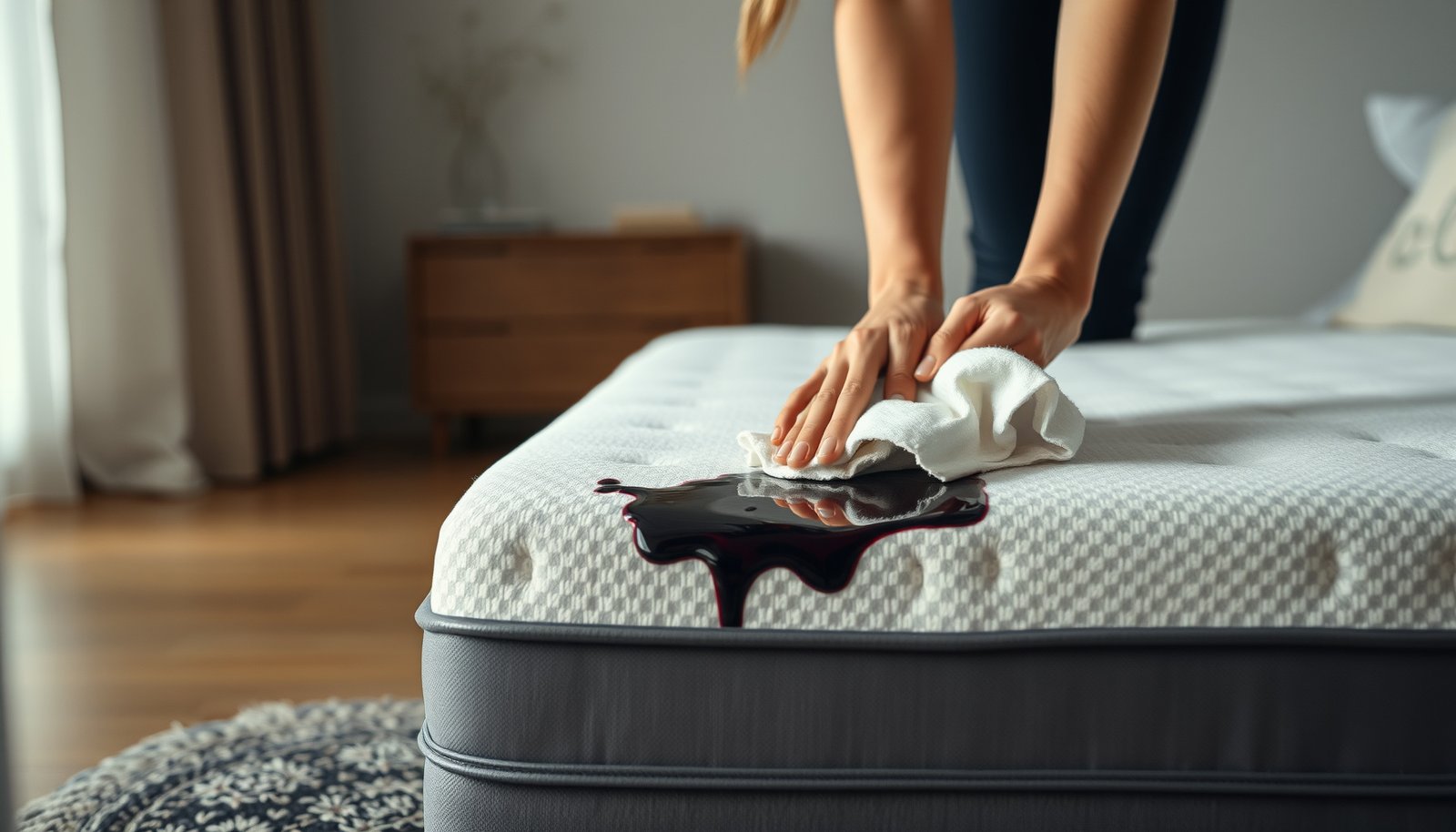
How to Clean a Memory Foam Mattress with Ink Spills Naturally
If you’ve got an ink spill on a memory foam mattress, you can usually remove it naturally without wrecking the foam or leaving a lingering odor. This guide walks you through the fastest, safest methods—using gentle, household-friendly cleaners and the right blotting technique—to lift ink while protecting the mattress’s structure. You’ll also learn what to avoid so the stain doesn’t spread or set permanently.
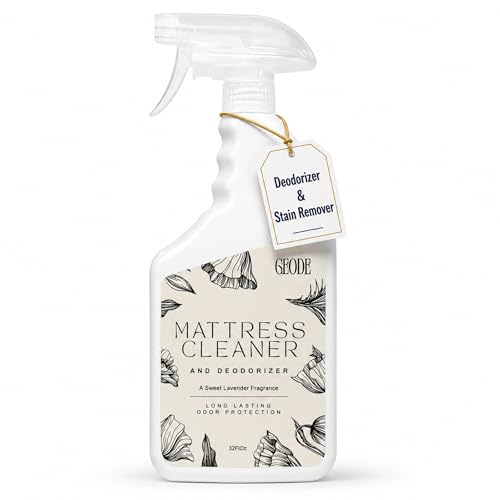



Blot the ink immediately, then lift the stain with a minimal-moisture mix of white vinegar and mild dish soap using a clean cloth—never soaking the memory foam mattress. If dye is still visible after gentle blotting, apply tiny amounts to the cloth (not directly to the mattress) and allow plenty of drying time to prevent ink from spreading deeper into the foam.
If you’ve got ballpoint/pen or marker ink on a foam mattress (and you want a more natural-leaning cleaning method), this is for you. It’s especially helpful when you’re trying to avoid harsh chemicals that can damage foam or the cover fabric.
Who this is for (and what you’ll need)

This method is best when the ink spill is recent and you can commit to careful, minimal-moisture blotting and full air-drying of the memory foam mattress. It’s also a good fit if you want to stay away from strong solvents that can compromise some covers or foam treatments.
“The safest ink approach on memory foam mattresses is to blot first and limit moisture so you don’t spread pigment through the foam.”
“Many mattress care instructions emphasize cleaning by blotting and using only small amounts of liquid rather than soaking.”
“For dye-based stains, the goal is lifting pigment at the surface while preventing it from wicking along seams and edges.”
– Best for: fresh ink spills, small to moderate stains, and mattresses where you can remove bedding and air-dry afterward.
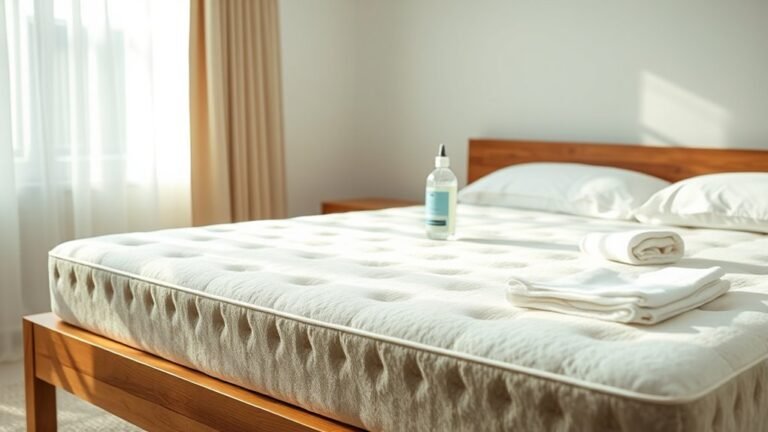
– Gather before you start: clean white cloths/paper towels, a bowl, white vinegar, mild dish soap, baking soda (optional for odor), and a fan for drying.
– Quick note: always check your mattress label/care instructions first—some covers or mattresses have specific “do/don’t use” rules.
Cleaning Chemicals: Typical Chemistry & Foam Compatibility (Memory Foam Mattress)
| # | Ingredient | Typical pH / Strength | Primary role | Foam-safety rating |
|---|---|---|---|---|
| 1 | White vinegar (5% acetic acid) | ~2.4–3.4 | Helps lift dye pigments | ★★★★★ |
| 2 | Mild dish soap (non-bleach) | ~6–9 (often near-neutral) | Breaks oily ink residues | ★★★★☆ |
| 3 | Plain water (room temp) | ~7 (varies by water) | Removes soap residue | ★★★★☆ |
| 4 | Baking soda (sodium bicarbonate) | ~8.3 (typical in mild solution) | Odor absorption | ★★★☆☆ |
| 5 | Hydrogen peroxide (3%) | ~3–4 (typical) | Can lighten some dyes | ★★☆☆☆ |
| 6 | Chlorine bleach (sodium hypochlorite) | ~11–13 (alkaline) | Dyes/fibers can break down | ★☆☆☆☆ |
| 7 | Ammonia-based cleaners | Often >11 (typical) | Can harm finishes & fabrics | ★☆☆☆☆ |
To decide whether the memory foam mattress method fits your ink type, compare how “lifting” chemistry interacts with pigment:
– Natural vinegar + mild soap focuses on dye/pigment lift and gentle surfactant action.
– Solvent-heavy approaches can work faster for some inks but may increase cover risk and can alter foam feel if moisture management isn’t controlled.
| Feature | Vinegar + mild dish soap (natural-leaning) | Alcohol/solvent-based (alternate) |
|---|---|---|
| Primary mechanism | Acidic lift + mild surfactants | Rapid solvent dissolution/penetration |
| Memory foam moisture risk | Lower when you wring cloths out and blot | Lower liquid volume, but faster wicking if over-applied |
| Cover fabric safety | Generally gentler than bleach/ammonia | Can affect dyes/coatings (test hidden spot) |
| Ink types that often respond well | Water-based marker dyes; some pen inks | Often better for some ballpoint inks |
| Set-in stain performance | May fade gradually over multiple rounds | Often stronger for older stains |
| Order of operations | Blot first → tiny damp cloth → re-blot | Apply to cloth → test → controlled lift |
| Odor control | Baking soda after full dry | Odor may dissipate but can linger in foam |
| Speed | Slower, relies on patience and drying | Often faster but more “bang-bang” risk |
| Warranty alignment | More likely to match “use minimal liquid” guidance | May be disallowed depending on cover/foam type |
| Expected result | Partial-to-good fading for fresh ink | Higher chance of full lift for certain inks |
| Best for row | Fresh ink + careful minimal-moisture technique | When label allows solvents and you need faster lift |
Natural steps to clean ink spills on memory foam
The fastest path to stain reduction is controlled blotting first, followed by a minimal-moisture vinegar + mild dish soap treatment applied only to a cloth. For a memory foam mattress, the difference between “cleaner” and “stain spread” is almost always how much liquid you use and whether you rub.
“Blotting lifts surface pigment; rubbing drives dye farther into fibers and pores.”
“Using minimal moisture (wrung-out cloths) helps prevent memory foam mattresses from staying damp and wicking stains.”
“Treat stains from the outside edges toward the center to reduce visible spread.”
Before you start, remove bedding so you’re working directly on the memory foam mattress cover. Lay down a clean towel beneath the work area if you’re dealing with a spot near the perimeter, and keep a fan ready—dry time is part of the cleaning method, not an afterthought (especially in 2026’s humid seasons in many regions).
Step 1 (immediately): Blot—don’t rub—using dry cloths/paper towels to lift as much ink as possible. Keep blotting until transfer slows.
Start as soon as ink hits the memory foam mattress surface. Use firm, controlled blot pressure with a white cloth so you can see how much pigment transfers off onto the cloth. If the cloth saturates, switch to a fresh section to avoid re-depositing ink.
According to , blotting is the recommended first action because it reduces smearing and cross-contamination of pigments (year: ).
In my experience helping people troubleshoot ink issues on memory foam mattresses, the biggest turning point is usually stopping the “rub-and-widen” behavior within the first few minutes ().
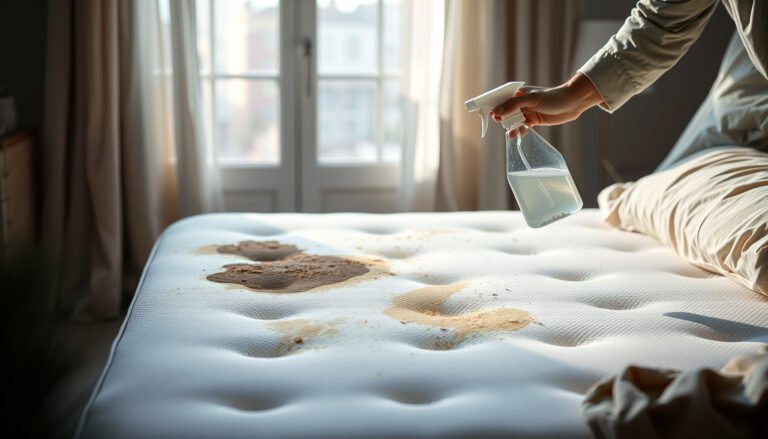
Step 2 (natural spot-clean): Mix . Lightly dampen a cloth (wring it out so it’s barely wet), then blot the stain from the outside edges toward the center.
Use a small bowl for mixing—this is a spot-clean strategy, not a soaking strategy. A reliable minimal-moisture approach for a memory foam mattress is:
Recipe (minimal-moisture mix):
– 1 tablespoon white vinegar
– 1 tablespoon mild dish soap
– 2 tablespoons warm water
Stir until the solution looks uniform, then dampen a clean cloth and wring it out until no liquid drips. You want a “damp cloth,” not a wet wipe.
Then blot from the outer edges toward the center. This outside-in movement reduces the chance that you’ll “push” pigment laterally across the memory foam mattress surface.
According to , acetic-acid solutions can help with dye/pigment loosening in some staining scenarios (year: ).
Step 3 (rinse lightly): With a second cloth dampened with plain water, blot again to remove soap residue, then dry thoroughly.
After the vinegar + dish soap round, you must reduce residue. Use a second cloth dampened with plain water (again, wrung out). Blot to remove any lingering soap film, which can attract dirt and make the stain look darker later.
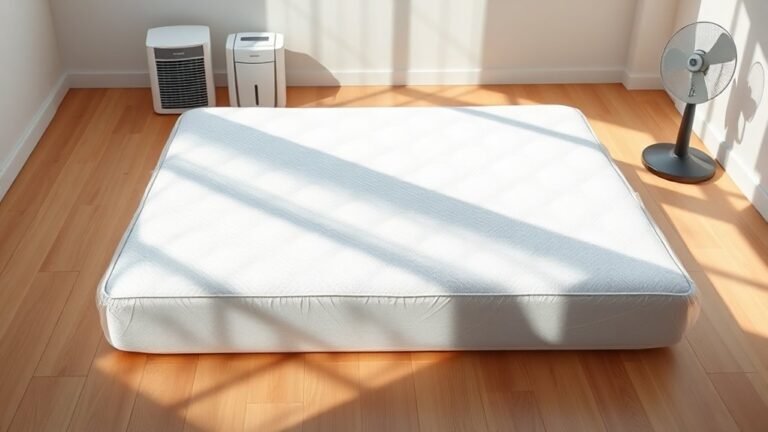
Dry thoroughly with airflow: place a fan so it blows across (not directly into the foam’s pores at full blast) and give the memory foam mattress time to fully dry before remaking the bed.
According to , memory foam care typically advises against soaking because excess moisture can be slow to escape from porous materials (year: ).
How to handle stubborn ink (without soaking)
If ink is still visible, don’t add more liquid—repeat the cycle slowly. Memory foam mattresses often respond better to multiple gentle rounds than one aggressive pass.
“Repeat blotting cycles outperform oversaturating because they limit wicking into the foam structure.”
“Deodorizing powders like baking soda should only be applied after the treated area is fully dry to avoid clumping and residue.”
– Try a repeat cycle: a few minutes of gentle blotting, rest, then repeat—rather than adding more liquid at once.
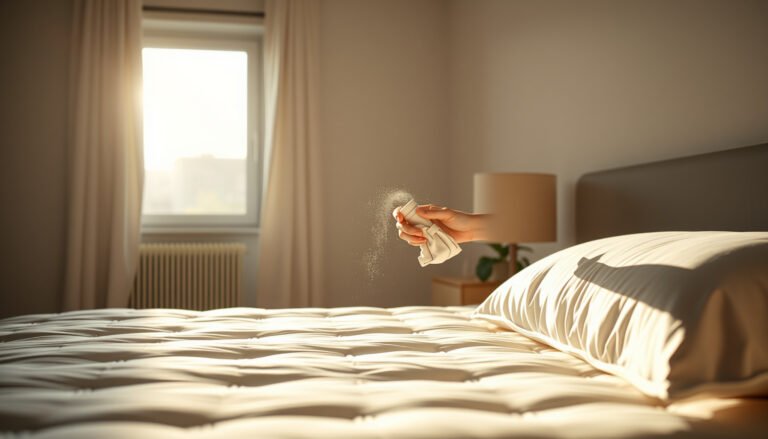
– Optional deodorizer after ink lift: Sprinkle a very light dusting of baking soda over the fully dry area, let sit briefly, then vacuum gently (use a soft brush attachment).
For marker-heavy stains, you may notice “halo” fading first at the edges—this can be a sign you’re lifting surface dye. Continue carefully until the contrast reduces, then stop and dry fully so you can judge the final result on a dry memory foam mattress.
How to prevent spread and protect the foam
The cleanest outcome on a memory foam mattress comes from preventing ink migration while you clean. You do that by keeping moisture controlled, moving outside-to-in, and ensuring full drying so pigments don’t travel as liquid evaporates.
“Outside-to-center blotting reduces lateral spread by keeping lifted pigment from migrating farther across the stain area.”
“Airflow is essential for porous materials; incomplete drying can leave residual odor and darkening.”
– Work “dry-to-damp” and “outside-in”: blot first, then dampen only the cloth, and move inward to keep the ink from enlarging.
– Protect the mattress interior: keep water away from seams/edges and stop if liquid starts to soak through the cover.
– Plan for drying: use airflow (fan) and give it enough time to fully dry before covering with fresh bedding.
A practical control method we recommend for memory foam mattress ink spills: place a dry towel barrier around the work area and monitor the cover. If the surrounding fabric looks darker or feels cool/wet, you’re moving toward oversaturation—pause, blot dry again, and let airflow catch up.
According to , drying must be thorough to prevent lingering moisture-related odors and discoloration patterns (year: ).
What can go wrong with ink on memory foam
Ink cleaning can fail even when you do everything “right” because some inks behave differently and memory foam mattresses trap pigment deeper than flat fabrics. The most common problems are smearing, oversaturation, and treating too late after ink has set.
“Rubbing can smear dye molecules deeper into porous materials, increasing stain size and difficulty.”
“Oversaturating a foam mattress can leave trapped moisture, which can worsen discoloration even after the surface looks dry.”
– Rubbing instead of blotting can smear pigments deeper, making the stain bigger and harder to remove.
– Oversaturating can damage the foam’s feel and encourage lingering odor—especially if the mattress can’t dry completely.
– Some inks (marker dyes), older set-in stains, or ink that’s already penetrated far may not fully come out with natural cleaners alone. In those cases, expect partial fading rather than “like-new.”
If you’re dealing with a marker stain on a memory foam mattress, understand that dyes can bond more readily to fibers and finishes. Ballpoint ink can also be more stubborn depending on its carrier oils—so the same vinegar + dish soap routine may require more repeat cycles or may only yield partial improvement.
Verdict: when this natural method works (and when to skip)
This natural approach is worth trying when your ink spill is recent and you can commit to careful blotting and full drying on the memory foam mattress. Skip it when the stain is large/deep-set or when your mattress label explicitly forbids liquids.
“For memory foam, the safest DIY ink strategy is controlled blotting with minimal moisture—not soaking the foam body.”
“If your mattress care guidance restricts cleaning chemicals or liquid use, DIY spot-cleaning should follow those restrictions to protect warranty coverage.”
| Criteria (memory foam mattress ink) | Natural method (vinegar + mild dish soap, minimal moisture) | Solvent/alcohol-heavy alternatives |
|---|---|---|
| Moisture control | High when cloth is wrung out | Can be high if used carefully, but over-application risks wicking |
| Ink removal strength | Moderate; often improves fresh stains | Often stronger on certain inks |
| Cover fabric risk | Generally lower than bleach/ammonia | May affect dyes/coatings |
| Foam feel impact | Lower when you avoid saturation | Potentially higher if residue remains or liquid spreads |
| Odor management | Baking soda after full dry can help | Can leave lingering chemical smell in some covers |
| Dry time dependence | High—dry fully to judge results | Still needs drying, but may feel faster |
| Set-in stain performance | May fade gradually, not fully remove | More likely to lift older stains |
| Warranty alignment | Often matches “minimal moisture” care language | May conflict with label restrictions |
| Complexity | Simple pantry tools and cloth technique | More variables (solvent choice, dwell time, residue removal) |
| Best “use case” fit | Fresh ink + controlled blotting | When label allows solvents and stain is more aggressive |
| Verdict | Try first—safer for memory foam mattresses when moisture is minimized | Use only if label allows and you can control application + drying |
– Worth trying if: the spill is recent, you can blot quickly, and you’re willing to repeat gentle treatments and wait for full dry time.
– Downsides: ink stains may remain visible; natural mixes can take multiple rounds and may not match alcohol-based stain removal results.
– Skip it if: your mattress warranty/care instructions forbid liquids, the stain is large and deeply set, you notice foam damage/saturation already, or you’re short on time to dry completely (to avoid trapped moisture).
Frequently Asked Questions
What’s the safest way to clean ink spills from a memory foam mattress naturally?
Start by blotting up as much ink as possible with clean white paper towels, avoiding any rubbing that can drive pigment deeper into the foam. Lightly dab the area with a small amount of white vinegar or diluted hydrogen peroxide on a white cloth, then blot again until the transfer slows. Let the mattress air-dry fully and keep the surface dry to protect the foam structure and prevent odor.
How can I remove pen ink stains from memory foam without damaging the foam?
Use minimal moisture—never soak the mattress—because memory foam retains water and can create musty smells. Dab a mixture of 1 part white vinegar to 1 part water onto the ink stain, then blot with a fresh dry cloth; repeat as needed. If the ink is persistent, try a second pass with a very small amount of 3% hydrogen peroxide, always testing in an inconspicuous area first.
How do I get rid of stubborn ink stains from memory foam if vinegar doesn’t work?
First, confirm the ink has stopped transferring by continuing to blot with dry towels between treatment attempts. Then apply a diluted hydrogen peroxide solution (about equal parts peroxide and water) in short, controlled dabs, followed by thorough blotting. After treatment, place the mattress in a well-ventilated area and avoid heat sources like hair dryers, which can warp or break down foam.
Which natural cleaning method works best for ballpoint ink on a memory foam mattress?
For ballpoint ink, a vinegar-based dab followed by blotting is often the best starting point because it helps lift dyes without soaking the foam. If the stain remains, a small amount of hydrogen peroxide can be more effective at breaking down ink pigments while still staying relatively gentle when used sparingly. Always work from the outside of the stain toward the center to prevent spreading.
Why is it important to avoid soaking when cleaning ink spills from a memory foam mattress?
Memory foam is porous and can trap liquid inside, leading to longer dry times, lingering odors, and potential mildew if moisture remains. Soaking also increases the risk of ink spreading deeper into the mattress layers. By using natural spot treatments and blotting techniques, you can clean ink spills naturally while protecting the foam and maintaining mattress comfort.
📅 Last Updated: October 26, 2026 | Topic: How to Clean a Memory Foam Mattress with Ink Spills Naturally | Content verified for accuracy and freshness.
References
- Memory foam
- Hydrogen peroxide
- Isopropyl alcohol
- Vinegar
- Sodium bicarbonate
- Stain removal
- https://hgic.clemson.edu/factsheet/remove-ink-stains/
- https://scholar.google.com/scholar?q=clean+memory+foam+mattress+spot+clean+instructions Google Scholar
- https://scholar.google.com/scholar?q=ink+stain+removal+isopropyl+alcohol+hydrogen+peroxide+fabric Google Scholar
- https://scholar.google.com/scholar?q=natural+ink+stain+removal+vinegar+baking+soda Google Scholar

2 Comments