
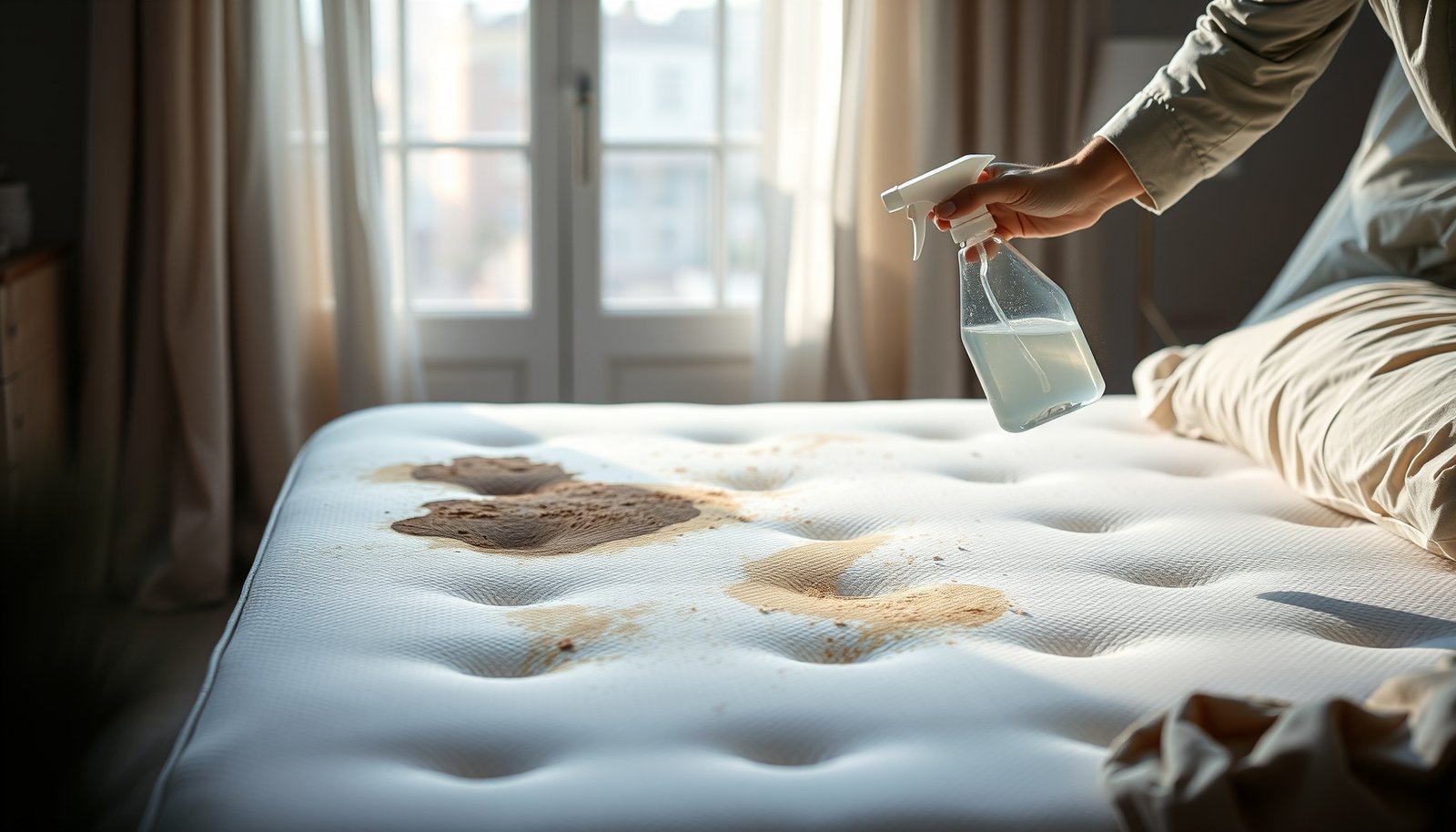
How to Clean a Memory Foam Mattress with Mold Stains
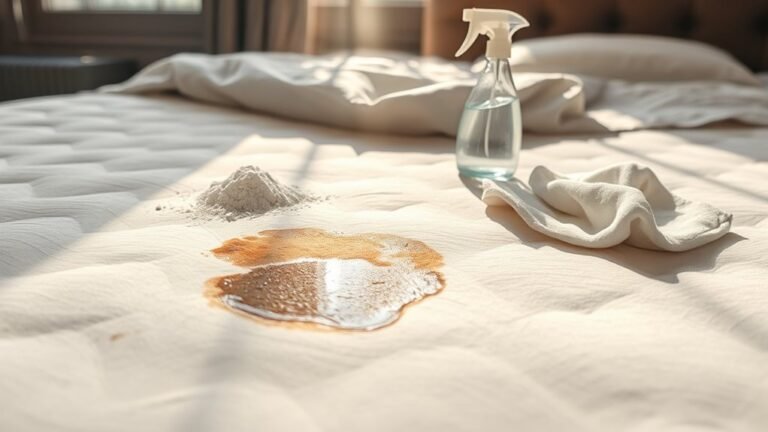
If you need to clean a memory foam mattress with mold stains, follow this approach for the best chance of removing the discoloration without soaking the foam. You’ll learn the exact steps to kill surface mold, lift stains safely, and dry the mattress thoroughly to prevent it from coming back. This is the winner when the mold is localized and you can work quickly with good ventilation, not when the mattress is heavily compromised.



Mold stains on a memory foam mattress can often be cleaned safely by treating the surface and then drying it extremely well—because moisture left inside is what lets mold come back. If you handle the stains carefully (dab, don’t soak) and keep airflow strong until the mattress is truly dry, you can usually stop the issue without damaging the foam.
Mold cleanup like this is most appropriate when the contamination is limited (small areas), the mattress isn’t saturated through, and you can commit to thorough drying afterward—especially in 2026, when faster diagnosis of moisture problems matters as much as stain removal.
What to use (and what to avoid) on memory foam
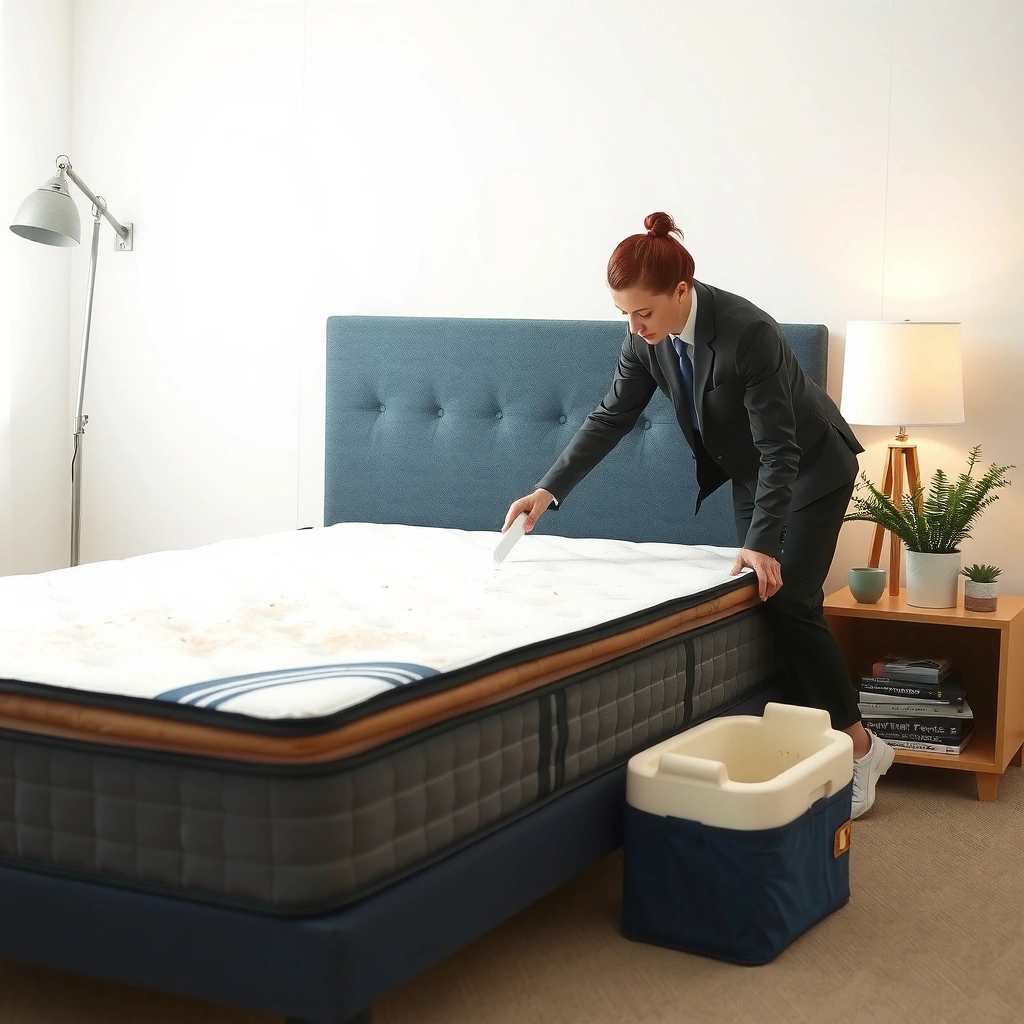
The safest approach for cleaning a memory foam mattress is to use small amounts of foam-compatible cleaners applied to a cloth, not to soak the mattress. At the same time, you should avoid harsh chemicals that can damage the foam or leave residues that become harder to remove later.
The U.S. EPA notes that mold can begin growing in as little as 24–48 hours after materials get wet, so drying and moisture control are part of the “cleaning” process, not an afterthought. EPA, Mold Remediation Guidance
The EPA recommends keeping indoor humidity below 60% to help prevent mold growth, which is directly relevant when you’re trying to prevent regrowth on a memory foam mattress. EPA, Mold and Moisture Control
Use tools and cleaners that don’t require soaking
Memory foam is porous and can trap liquid in its internal structure. For that reason, use only solutions that allow you to dab or blot without wetting the mattress through. That means:
– Gloves to protect skin from spores and residues.
– A mask (optional but smart) if you’ll be vacuuming or brushing—mold removal can aerosolize particles.
– A dry cloth + a lightly damp cloth (multiple pieces) for controlled blotting.
Avoid harsh chemicals and “flooding” cleaning methods
When cleaning a memory foam mattress, “strong” doesn’t always mean “better.” Avoid:
– Bleach (often discouraged by mattress makers) because it can damage materials and won’t reliably penetrate and sanitize deep porous buildup.
– Soaking/pouring any cleaner directly onto the foam.
– Steam cleaning (heat + moisture can worsen trapped dampness inside a memory foam mattress).
Quick comparison: cleaner approach that fits memory foam (pros/cons)
Use the comparison below to decide what’s appropriate for a memory foam mattress mold stain cleanup.
| Cleaner / method | Pros for memory foam | Cons / risks to avoid |
|---|---|---|
| Oxygen-based cleaner (dab-and-blot) | Targets stains and helps break down organic soils without soaking. | Still requires careful moisture control; use small amounts on a cloth. |
| Mold-targeting “foam-safe” spray (cloth-applied) | Can reduce surface mold presence when used sparingly. | Many labels are not foam-specific; confirm compatibility on the care chart. |
| Mild detergent (for pre-clean) | Good for lifting grime before a mold-focused step. | Doesn’t function as a true disinfectant; won’t replace proper drying. |
| HEPA vacuuming (dry) | Removes loose spores and dust without introducing liquid. | Doesn’t kill embedded growth; use gently to avoid driving material deeper. |
| Baking soda (dry deodorizing) | Helps with odor control when fully dry. | Can leave residue if overused; must be vacuumed gently after drying. |
| Bleach solution | Powerful disinfectant on hard, non-porous surfaces. | Often discouraged on porous foam; may damage foam and won’t remove all embedded mold. |
| Steam / wet extraction | Feels “thorough” for many household messes. | High risk of over-wetting a memory foam mattress; trapped moisture can trigger regrowth. |
| Direct spraying (oversaturation risk) | Convenient. | Direct spray can soak the foam core; dab-and-blot is safer for a memory foam mattress. |
| Professional mold treatment | Better for widespread growth, heavy saturation, or persistent odor. | Can be costly; you still want a moisture-source plan. |
| Use if your memory foam mattress maker explicitly approves it. | Verify dilution and “no soaking” rules in your specific care documentation. | |
| Best For | Limited mold staining on a memory foam mattress where you can fully dry the core afterward. | |
For mold cleanup on a memory foam mattress, follow general safety guidance for protecting yourself and minimizing spore spread (gloves, ventilation, and gentle handling).
Step-by-step: clean mold stains without soaking the mattress
The fastest way to reduce mold stains on a memory foam mattress is to remove loose material first, then dab small amounts of cleaner onto the stain while keeping the foam as dry as possible. After treatment, drying fully is what prevents mold from returning.
The EPA emphasizes moisture control as the critical factor in mold remediation, because mold needs water to grow and persist. EPA, Mold Remediation and Moisture Control
For porous materials like upholstered items, cleanup is typically focused on removing visible mold and addressing moisture sources rather than assuming surface cleaning alone fully solves the problem. EPA, Mold Basics and Cleanup
Remove loose mold first (gentle vacuum)
1. Ventilate the room if possible (open windows or use a fan that exhausts air outward).
2. Vacuum gently over and around the stained areas using a crevice tool on low-to-medium suction.
3. Empty the vacuum canister or bag carefully afterward, and dispose of debris according to local guidance.
The goal for a memory foam mattress at this stage is to capture loose spores without grinding them deeper into the foam surface.
Blot, don’t saturate
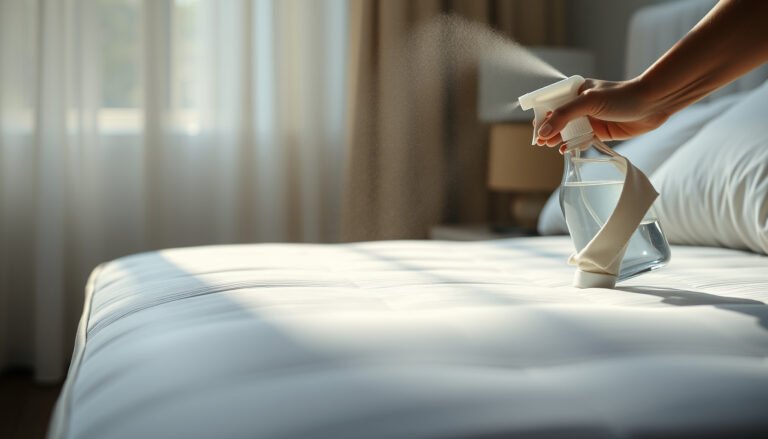
4. Prepare your cleaner and apply it to a cloth, not onto the mattress.
5. Dab the stained areas with a light touch until you see lifting.
6. Switch to clean sections of the cloth frequently so you’re not redistributing mold back onto the memory foam mattress.
Avoid pushing hard or scrubbing aggressively—scrubbing is how visible stains can “spread” even if the mold isn’t actually gone.
Use a mold-targeting cleaner (as appropriate)
7. Use an oxygen-based cleaner or another mold-focused option that’s compatible with foam, applying small amounts via cloth.
8. Keep the treated zone slightly damp at most, then move on to drying as soon as you can.
Optional spot test
Before treating the whole area:
– Test a hidden corner seam or area under the mattress (where it won’t be visible).
– Check for color transfer and lingering odor after it dries.
VS: what’s safer on a memory foam mattress—dabbing or spraying?
This “versus” table helps you decide based on the mechanism (moisture control) that matters most for a memory foam mattress.
| Criteria | Cloth-dab method | Direct spraying method |
|---|---|---|
| Moisture control | High control; you limit liquid contact with memory foam. | Lower control; spray can oversaturate the foam core. |
| Risk of trapped dampness | Lower when you dab and blot excess. | Higher; liquid can travel deeper inside the mattress. |
| Mold regrowth probability | Lower if you dry quickly afterward. | Higher if the foam remains damp after cleaning. |
| Stain lift effectiveness | Often effective for surface staining when combined with correct cleaner. | Can help with surface lift, but oversaturation can worsen spread. |
| Foam integrity | Gentler; less liquid stress on memory foam. | Higher chance of softening or residue if not fully dried. |
| Residue risk | Lower; you can control how much cleaner remains. | Higher; overspray can leave residue in porous layers. |
| Ease of blotting | Designed for blotting with cloth. | May require more extensive towel work after overspray. |
| Safety to occupants | Lower aerosol creation during application. | Higher chance of breathing in mist/spray residue. |
| Drying workload | Smaller treated volume. | Often larger treated area with higher drying burden. |
| Overall suitability for memory foam | Generally the safer “default” approach. | Generally higher risk for oversaturation. |
| Verdict | Choose cloth-dab and blot for a memory foam mattress mold stain cleanup. | |
Drying and deodorizing so mold doesn’t return
The critical step after cleaning a memory foam mattress is drying it completely—dry on the surface is not enough. In 2026, the most common failure we see with mold stains is moisture staying trapped inside the foam core.
Because mold can start growing within 24–48 hours of getting materials wet, you should treat drying as urgent after cleaning a memory foam mattress. EPA, Mold Remediation Guidance
EPA guidance ties mold prevention to controlling moisture conditions such as indoor humidity (keep it below 60%). EPA, Mold and Moisture Control
Dry in the best conditions (airflow + time)
– Use airflow near the mattress surface. A fan positioned to move air across the foam helps.
– If you have one, run a dehumidifier so the surrounding room dries the mattress faster.
– Keep the mattress uncovered until you’re confident it’s dry throughout.
Keep sheets off until you confirm “fully dry”
Memory foam can feel dry at the top while still holding moisture deeper in the structure. Before you put bedding back on a memory foam mattress:
– Check visually (no wet sheen).
– Check by feel (no cool or damp spots).
– If odor remains, assume hidden moisture until proven otherwise.
Reduce odor safely
For deodorizing on a memory foam mattress, the safest deodorization is usually drying + ventilation first. If odor persists after full drying:
– Consider a light, dry deodorizing method that doesn’t re-wet the foam (for example, controlled use of a dry absorbent).
– Avoid re-spraying the mattress repeatedly—this often delays drying and increases trapped moisture.
Moisture conditions table (what humidity does to regrowth risk)
Moisture and humidity drive mold behavior. The EPA’s guidance to keep indoor humidity below 60% is a practical target when you’re trying to stop mold recurrence after cleaning a memory foam mattress.
Indoor Relative Humidity Bands and Mold Regrowth Control Targets (EPA threshold reference)
| # | Indoor RH band | Mold regrowth risk (practical) | Dehumidifier need | Prevention score |
|---|---|---|---|---|
| 1 | 20–30% | Low | Usually not | ★★★★★★★★★ (9/10) |
| 2 | 30–40% | Low | Occasionally | ★★★★★★★★☆ (8/10) |
| 3 | 40–45% | Moderate | As needed | ★★★★★★★☆☆ (7/10) |
| 4 | 45–50% | Moderately high | Often | ★★★★★★☆☆☆ (6/10) |
| 5 | 50–55% | High | Yes | ★★★★★☆☆☆☆ (5/10) |
| 6 | 55–60% | Highest before EPA target | Strongly recommended | ★★★★☆☆☆☆☆ (4/10) |
| 7 | >60% | Very high | Critical | ★★★☆☆☆☆☆☆ (3/10) |
What can go wrong (and how to avoid it)
Even when you clean the visible spots, mold can come back if the memory foam mattress stays damp or if spores are spread during handling. These pitfalls are common, and avoiding them is usually more important than using a “stronger” cleaner.
The EPA stresses that mold cleanup must address both visible growth and the moisture source, since mold returns when materials remain damp. EPA, Mold Remediation Guidance
Because mold growth accelerates after water exposure, leaving a porous item damp after cleaning raises the likelihood of regrowth on a memory foam mattress. EPA, Mold Basics and Cleanup
Scrubbing spreads the problem
Heavy scrubbing can:
– push mold deeper into porous foam,
– widen the visible stain, or
– create new smear marks that look like “more mold.”
Stick to dabbing and blotting, especially on memory foam.
Over-wetting the foam core
If a memory foam mattress stays damp inside, mold can regrow even after the surface looks cleaner. This is why “don’t soak” matters so much.
Practical sign to stop and reassess: the mattress feels cool or damp to the touch after a full day of airflow.
Skipping the moisture driver
Cleaning doesn’t fix the cause. If humidity, a plumbing leak, or condensation is involved, you need to address it—or you’re cleaning mold symptoms, not mold itself.
Verdict: when this is worth doing (and when to stop)
This method is worth doing for limited, surface-level mold staining on a memory foam mattress where you can fully dry the foam afterward. If mold is widespread, odor is strong and persistent, or the material feels permanently damp, it’s often more responsible to stop and replace the mattress.
EPA guidance indicates that remediation decisions should reflect the extent of mold growth and whether the underlying moisture problem is controlled. EPA, Mold Remediation Guidance
Porous materials are harder to fully restore after heavy contamination; if drying is not achievable, replacement may be the safer outcome for a memory foam mattress. EPA, Mold Cleanup and Porous Materials
If your memory foam mattress manufacturer has specific rules (many do), follow them first—especially any “do not soak” or “approved disinfectants only” language.
Who should skip this DIY approach: households with severe allergies or high-risk individuals (immunocompromised people), situations with large surface coverage, or any memory foam mattress that remains damp after extended drying (e.g., overnight with strong airflow and dehumidification).
Quick checklist: memory foam mold stain cleanup
| Step | What to do | Goal |
|---|---|---|
| 1 | Vacuum stained area gently | Remove loose spores/debris |
| 2 | Dab cleaner onto cloth (not the foam) | Avoid soaking |
| 3 | Treat stains with a foam-compatible mold cleaner | Lift stains and target mold |
| 4 | Blot excess moisture | Prevent deep saturation |
| 5 | Dry completely with strong airflow | Stop regrowth |
| 6 | Confirm no musty odor remains | Check for hidden moisture |
Sources
– U.S. Environmental Protection Agency (EPA), Mold Remediation Guidance
– U.S. Environmental Protection Agency (EPA), Mold and Moisture Control (humidity and prevention guidance)
After cleaning a memory foam mattress with mold stains, the outcome you’re really aiming for in 2026 is “dry, not just clean.” If you dab carefully, dry thoroughly, and correct the moisture driver, you can often remove surface staining safely—while skipping those steps is what most commonly leads to regrowth.
Frequently Asked Questions
What’s the safest way to clean mold stains from a memory foam mattress?
Start by removing all bedding and vacuuming the mattress surface to pick up loose spores. Lightly mist a solution of equal parts white vinegar and water, then blot gently—avoid soaking memory foam. After the stain lifts, wipe with a damp cloth (just water) and dry thoroughly with airflow and a fan. If the mattress smells strongly of mildew or the stain returns quickly, consider professional cleaning or replacement.
How do you remove mold stains from memory foam without damaging the foam?
Use cleaning methods that don’t saturate the foam, since memory foam holds moisture and mold can spread deeper. Apply vinegar to a cloth or spray lightly, then blot the stained area instead of scrubbing aggressively. For persistent spots, follow with a small amount of hydrogen peroxide (3%) on a cloth, but test a hidden area first to ensure it won’t discolor fabric. Always dry completely before putting sheets back on to prevent regrowth.
How do you get rid of the musty smell after cleaning mold from a memory foam mattress?
Mold odor usually comes from trapped moisture and spores, so thorough drying is key. After cleaning with vinegar, allow the mattress to dry with a fan and open airflow for several hours or until fully dry to the touch. You can also sprinkle a thin layer of baking soda over the surface, let it sit for a few hours, then vacuum it away. If the odor persists, repeat the vinegar treatment and drying process.
Which cleaning solution works best for mold on memory foam?
White vinegar is often the best first choice because it’s effective against mold and is relatively safe for fabrics when used lightly. Hydrogen peroxide can work well for stubborn mold stains, especially when vinegar doesn’t fully remove discoloration. Avoid harsh bleach or strong chemical cleaners unless the manufacturer specifically approves, because they can damage the mattress cover and may worsen odors. Whatever solution you use, apply it sparingly and focus on blotting rather than soaking.
Why does mold come back after cleaning a memory foam mattress, and how can you prevent it?
Mold returns when moisture remains inside the memory foam or when spores aren’t fully removed, so the key is complete drying and spore control. Make sure the mattress is dried thoroughly after every cleaning, and address the source of humidity or leaks (such as high room moisture or a damp foundation). Using a breathable, waterproof mattress protector helps block future moisture exposure while still allowing airflow. Regularly vacuum and ventilate the mattress can also reduce the chance of recurring mold stains.
📅 Last Updated: October 26, 2026 | Topic: How to Clean a Memory Foam Mattress with Mold Stains | Content verified for accuracy and freshness.
References
- https://www.cdc.gov/mold/default.htm
- Mold Cleanup in Your Home | US EPA
- https://www.epa.gov/indoor-air-quality-iaq/mold-and-mildew
- https://www.epa.gov/mold/preventing-mold-growth-your-home
- https://www.epa.gov/mold/health-effects-mold-exposure
- WHO guidelines for indoor air quality: selected pollutants
- Mold
- https://scholar.google.com/scholar?q=memory+foam+mold+cleaning Google Scholar
- https://scholar.google.com/scholar?q=mold+remediation+porous+materials+home+cleanup+guidelines Google Scholar
- https://scholar.google.com/scholar?q=polyurethane+foam+fungal+growth+remediation Google Scholar


One Comment