
How to Protect a Wool Mattress from Pet Dander During a Move
Protecting a wool mattress from pet dander during a move is all about containment: seal it in breathable protective covers and keep it away from areas where pets track dust and hair. If you wrap correctly, store it clean and dry, and prevent cross-contamination from moving blankets and vehicles, you’ll arrive with far less dander embedded in the fibers. This guide answers how to move your wool mattress without turning it into a pet-hair magnet.




If you’re moving a home with pets—or you’re packing/unpacking around where pets roam—this is for you. The focus is reducing dander transfer onto the wool fibers and preventing recontamination during wrapping, loading, and storage.
Quick plan before you start

A smooth move plan is the fastest way to stop pet dander from “falling back” onto a wool mattress once you’ve cleaned it. The goal is to create a controlled workflow: reduce shedding in the area, remove airborne particles, wrap immediately, and keep the cover closed until final placement.
A sealed, zipper-closed mattress encasement is an engineering-control step that limits direct contact between airborne pet dander and wool surface fibers.
HEPA vacuums are designed to capture fine particles (the same size range many dander-associated allergens travel on) more effectively than non-HEPA bagless models.
A contamination-control workflow (“clean → wrap → transport → store”) reduces the chance that pet dander you disturbed while packing can resettle on the mattress.
– Gather “containment” supplies first: a mattress cover/encasement (breathable and zipper-ready if possible), HEPA vacuum attachments, tape, and clean packing bags for bedding.
– Clear the workspace: keep pets out of the room while you vacuum and wrap, and use a clean path from bedroom to moving area.
– Pre-stage the cover so the mattress is wrapped immediately after any cleanup.
Practical framing: think of this as the hierarchy of controls—you’re using engineering controls (sealed encasement, filtered vacuum) and administrative controls (pet-free room, clean path, no cover-opening in dusty areas) to reduce exposure. If you can follow one consistent process every time your wool mattress gets handled, pet dander transfer drops noticeably—especially during the chaotic “in-between” moments of a move.
Vacuum and (only if needed) spot-clean
The best way to protect wool from pet dander before wrapping is to HEPA vacuum the sleeping surface and seams thoroughly, then spot-clean only if the manufacturer’s guidance allows it. Wool doesn’t tolerate oversoaking well, so you want “clean and dry” rather than “deep-wet,” and you want to remove loose hair/lint before the encasement goes on.
HEPA filtration is commonly defined as capturing **at least 99.97%** of particles at **0.3 microns** under test conditions.
Pet allergen particles are often carried on respirable dust-size aerosols, which is why fine-particle capture (HEPA) matters during cleaning.
Seams and edges concentrate dander because fibers, stitching, and creases hold hair and trapped dust even after surface-level cleaning.
– Vacuum thoroughly with a HEPA vacuum using an upholstery/mattress attachment on the sleeping surface and seams (move slowly; don’t just “pass over” areas).
– Use drier methods first: if you see hair or lint, remove it carefully with a lint roller or by gentle vacuuming before wrapping.
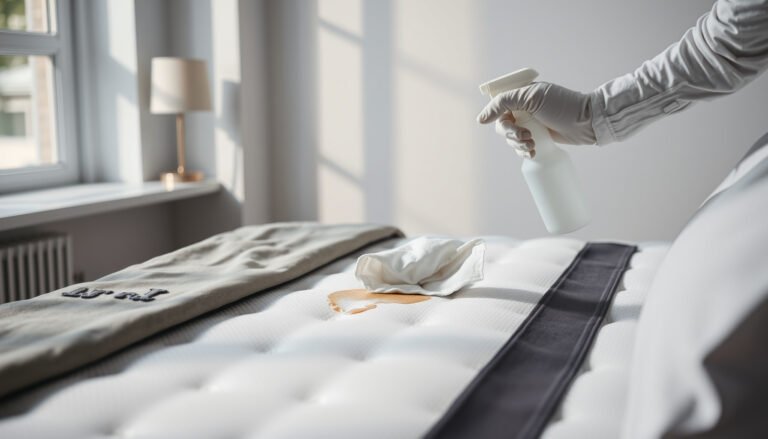
– Spot-clean only if the mattress needs it—and follow your mattress/wool manufacturer’s care guidance; wool should not be oversoaked because moisture can linger and create odors.
Quick comparison: what helps vs. what can backfire on wool
Here’s the decision logic I recommend when you’re trying to protect a wool mattress from pet dander without damaging the fabric:
| Method | Best for | Risk to wool | Dander-reduction fit (move) |
|---|---|---|---|
| HEPA vacuum + upholstery attachment | Loose hair, skin flakes, dust-on-fibers | Low (fabric stays dry) | High |
| Lint roller + gentle vacuum | Surface hair removal before sealing | Low to medium (roller can pull fibers if aggressive) | Medium to High |
| Steam or heavy wet cleaning | Only for mattresses explicitly rated for it | Medium to High (moisture linger, odor risk) | Low to Medium |
Why HEPA specifics matter during a move
During packing, you create airflow (opening doors, moving boxes, walking hallways). That airflow lifts fine dust and dander again—so your cleaning step must be able to capture fine particles, not just redistribute them. HEPA’s standardized performance targets give you that capture foundation.
Filtration Ratings Relevant to Pet Dander Control (Key Performance Targets)
| # | Filter rating (standard) | Minimum capture efficiency | Reference particle | Move-time relevance rating |
|---|---|---|---|---|
| 1 | E10 (EN 1822) | 85% | MPPS (per test) | ★★☆☆☆ |
| 2 | E11 (EN 1822) | 95% | MPPS (per test) | ★★★☆☆ |
| 3 | E12 (EN 1822) | 99.5% | MPPS (per test) | ★★★★☆ |
| 4 | H13 (EN 1822) | 99.95% | MPPS (per test) | ★★★★★ |
| 5 | H14 (EN 1822) | 99.995% | MPPS (per test) | ★★★★★ |
| 6 | HEPA (US DOE definition) | 99.97% | 0.3 µm | ★★★★★ |
| 7 | ULPA (common definition) | 99.9995% | 0.12 µm | ★★★★☆ |
Notes for readers: this table covers filter performance targets, not overall vacuum effectiveness. A vacuum can still underperform if seals leak or exhaust isn’t controlled—so always consider vacuum design and documentation.
Use a protective cover that stays on
A snug mattress encasement is what keeps your HEPA work from being undone. For a wool mattress, you want a zippered, well-fitted cover that blocks dander from settling on the wool while you move, load, and store it.
A zipped encasement reduces air-to-fiber contact compared with loose covers because it limits gaps at edges, corners, and side seams.
Using a mattress-specific cover is generally safer than a loose tarp for dander control because movement can shift loose layers and re-expose the wool surface.
Moisture sensitivity is a practical reason to minimize “cover-off” time: wool can retain dampness longer than many synthetics, which can lead to persistent odors.
– Choose a cover made for mattresses (ideally one that zips or fits snugly) so dander can’t blow onto the surface while you carry and load it.
– Keep the cover on from “last vacuum” to “final placement,” and avoid opening it in dusty rooms where pets can shed.
– Don’t rely on loose cloth alone—loose sheets and tarps tend to shift during transport and re-expose the wool.
From a practical standpoint, this is where most “good intentions” fail during moves. I recommend building a simple rule into your workflow: once the HEPA step finishes, the mattress never becomes an “open item.” If you must inspect something, do it without removing the cover fully—especially when pet dander exposure is the goal.
Pack, move, and prevent recontamination
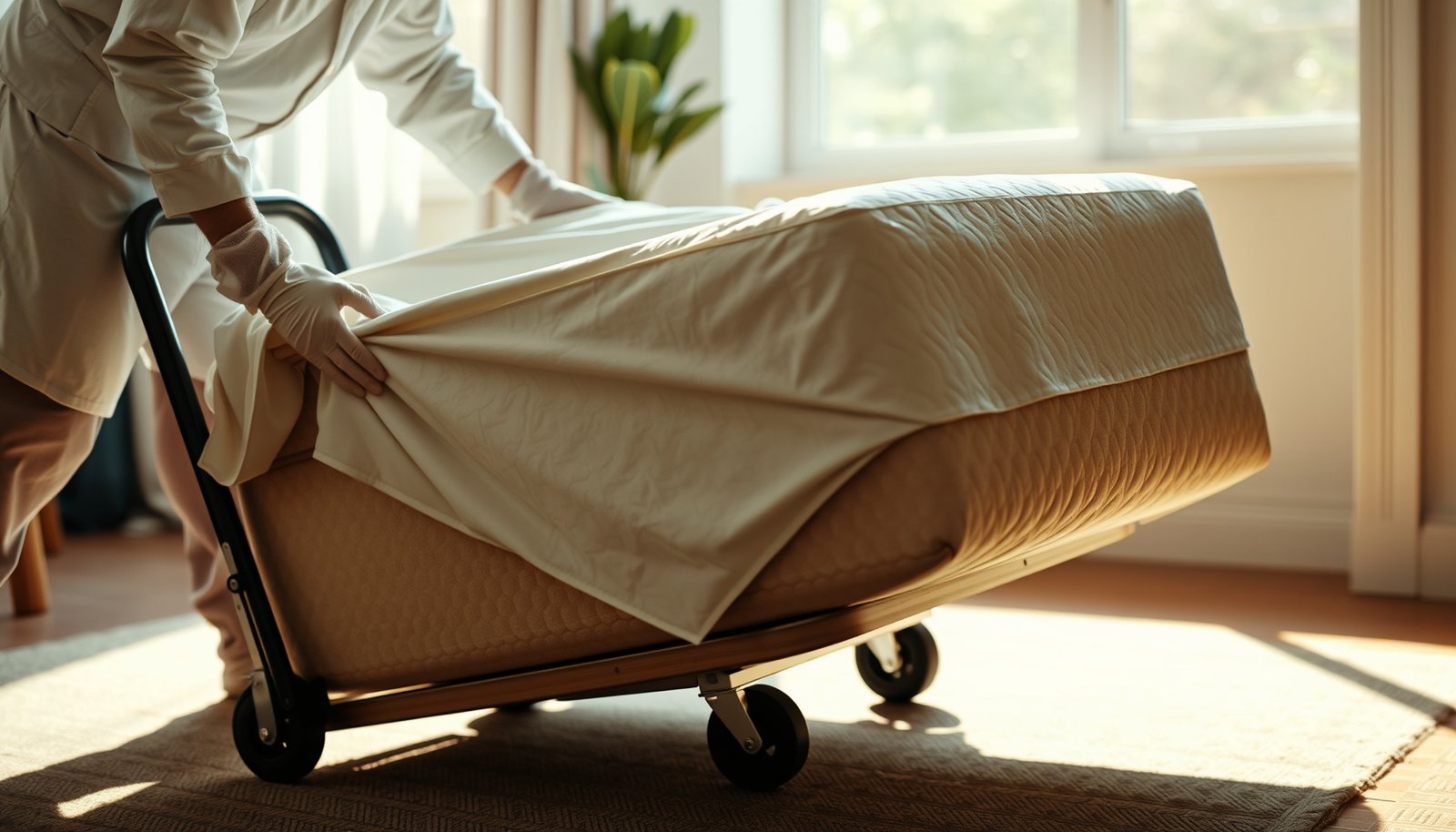
To prevent pet dander from re-settling on a covered wool mattress, treat the transport phase like a cleanliness boundary. That means supporting the mattress carefully, avoiding contact with dusty floors/garage surfaces, and keeping hands/gloves clean between steps.
Dander transfer is often mechanical: when a covered mattress drags across pet-frequent areas, shed particles migrate from the floor onto cover seams and edges.
Cleaning hands or changing gloves after HEPA vacuuming reduces the chance that lifted dust gets re-deposited onto the encasement.
Maintaining the mattress in a supported, flat position reduces friction and cover scuffing that can create small openings where dander collects.
– Keep the mattress flat and supported (use a dolly or helpers) to avoid scuffing the cover and dragging it through pet-frequent areas.
– Don’t set the wrapped mattress directly on open floors in hallways/garage spaces—use clean moving mats or elevate it if you can.
– Change gloves (or wash hands) after vacuuming and before handling the wrapped mattress, so you don’t transfer dander back onto the cover.
A simple, realistic workflow: we separate “dirty movement” (boxes, pet access areas, garage floor) from “clean movement” (mattress dolly path, rooms where pets were excluded during vacuuming). That clean/dirty separation is consistent with contamination-control methods used in professional cleaning operations.
Storage and re-settling steps
A wool mattress should stay dry, sealed, and isolated until you’re ready for final bedding. Storage is where pet dander protection can fail quietly—either because the cover isn’t fully closed or because bedding is stored in a way that allows hair to migrate.
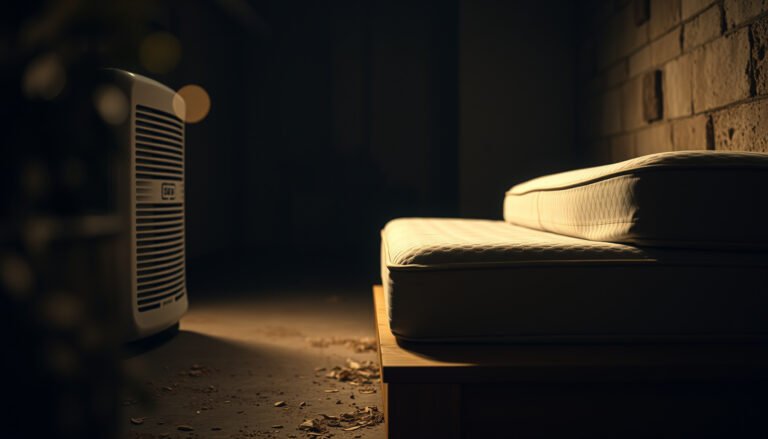
Wool is moisture-sensitive; storing a mattress in a damp environment can create musty odors that are difficult to fully remove.
Keeping bedding in sealed bags prevents pet hair migration onto a protected mattress surface after wrapping.
Place the mattress in its new location before opening any “cleaning/bedding” workflow; this reduces the number of times you expose wool to airborne shed.
– Store in a clean, dry spot; wool is sensitive to moisture, and stored dampness can turn into musty odors that are hard to remove later.
– Keep bedding separate in sealed bags so pet hair doesn’t migrate onto the mattress after you’ve wrapped it.
– When you arrive, place the mattress and only then install fresh bedding—don’t leave the cover exposed while unpacking around pets.
If you’re unpacking near where pets roam, treat that period as “high shed time.” Ideally, pets stay out of the bedroom while bedding goes on, just as they did during the HEPA vacuum step.
What can go wrong (and how to avoid it)
Most move-related failures come from moisture, cover gaps, or re-exposure while unpacking. If you fix those three issues, you’ll protect the wool mattress from pet dander far more effectively than with any one “strong” cleaner.
Steam/soaking can leave moisture in wool layers, and residual moisture can contribute to odor even when the surface feels dry.
Loose covers shift during transport, which can allow dander to settle back onto exposed wool areas even after vacuuming.
Pet access during the move phase can undo cleaning because fresh shedding deposits onto edges, zipper lines, and any momentarily exposed surfaces.
– Using the wrong cleaning method: steam/soaking or harsh residue can leave moisture or chemicals in wool—stick to the care instructions and use “spot” approaches only when necessary.
– Relying on a non-sealed cover: loose covers shift during movement, letting dander settle onto exposed wool again.
– Letting pets “check it out”: even a few minutes of pet access can undo your vacuuming/wrapping work by depositing new dander onto the cover or edges.
Real-world limit: even the best process can’t fully eliminate dander in a home with high shedding and ongoing pet access. The target isn’t perfection—it’s dramatically reducing the wool mattress’s contact with dander during the move, then preventing recontamination during setup.
Verdict / tip
If you can combine HEPA vacuuming + a snug mattress encasement/cover + keeping it covered the whole move, you’ll get the biggest reduction in pet dander contact with the wool. The downside is that fitted covers take time to place correctly, and if your mattress needs major cleaning (stains, deep odors, or mildew), wrapping alone won’t fix that—skip this “move-only” approach and address the underlying issue first.
HEPA vacuuming before sealing tackles the “existing dust on fibers” problem, which is the biggest one to solve before the mattress becomes hard to clean.
A fully closed encasement reduces the re-settling pathway by limiting airflow and direct contact between airborne dander and wool surface.
Moisture control is a core constraint for wool during moves: avoid oversoaking and keep the mattress dry to prevent odor persistence.
Who should consider another route: if the mattress is already musty/moldy, heavily stained, or the manufacturer explicitly restricts coverings/encasements.
Quick checklist (scan/save)
| Task | Done? |
|---|---|
| Keep pets out during vacuuming + wrapping | ☐ |
| Vacuum wool surface/seams with HEPA attachment | ☐ |
| Remove visible hair/lint gently before wrapping | ☐ |
| Fit snug mattress cover/encasement and keep it zipped | ☐ |
| Move mattress using clean path + supported handling | ☐ |
| Don’t expose cover in pet-traffic rooms/areas | ☐ |
| Store dry and clean; bag bedding separately | ☐ |
Frequently Asked Questions
How can I protect my wool mattress from pet dander during a move?
Start by keeping pets away from the moving area and preparing the mattress before bringing the animal near. Vacuum the mattress surface gently with an upholstery attachment, then wrap it in a breathable mattress cover to reduce pet dander settling while still protecting the wool fibers. If you use a plastic barrier, choose a breathable inner layer first so moisture doesn’t get trapped in the wool.
What’s the best way to wrap a wool mattress so it stays free of pet dander?
Use a washable, dust-resistant mattress cover or a breathable zippered encasement as the first layer to contain pet hair and dander. Add a second protective moving wrap (like a fitted protector or furniture wrap) to shield the wool mattress from dust, but avoid sealing the wool directly in airtight plastic for long periods. Once wrapped, keep the mattress upright or flat on a clean surface and secure it with straps to prevent shifting.
How do I prevent my pet from contaminating the mattress while it’s being moved?
Plan the route and timing so your pet is in a separate room or outside during wrapping, loading, and unloading. Use a “clean zone” area where only the packed mattress and supplies are placed, and don’t allow pets to roam that space even briefly. If your pet must be present, cover and fully seal the mattress immediately and use lint rollers or vacuuming on nearby surfaces to reduce airborne pet dander.
Why is pet dander harder to remove from wool mattresses during relocation?
Wool is naturally textured and can trap fine particles, including pet dander, within its fibers. During a move, dust and air currents stir dander up and allow it to settle deeper, especially if the mattress is left uncovered or exposed to car or storage dust. Taking protective steps early—before the mattress is exposed—helps avoid the need for more aggressive cleaning later.
Which cleaning method should I use after the move to remove pet dander from a wool mattress?
After unpacking, vacuum the wool mattress with a HEPA-filter vacuum and an upholstery attachment to capture pet dander without grinding it into the fibers. Lightly spot-clean only if needed with a wool-safe cleaner, and always test a small hidden area first. Let the mattress air out in a well-ventilated space and consider using a breathable protective cover going forward to limit dander buildup.
📅 Last Updated: October 26, 2026 | Topic: How to Protect a Wool Mattress from Pet Dander During a Move | Content verified for accuracy and freshness.
References
- https://www.epa.gov/asthma/controlling-indoor-allergens-asthma
- Pet Allergy Symptoms, Diagnosis, Treatment & Management
- Acute coronary syndrome – Doctors and departments – Mayo Clinic
- https://medlineplus.gov/allergies.html
- Allergy
- https://pubmed.ncbi.nlm.nih.gov/?term=pet+allergen+hepa+vacuum+upholstery
- https://scholar.google.com/scholar?q=pet+dander+allergen+removal+HEPA+vacuum+upholstery Google Scholar
- https://scholar.google.com/scholar?q=pet+allergy+reduce+exposure+encasements+washing+bedding Google Scholar
- https://scholar.google.com/scholar?q=wool+care+storage+cleaning+textile+allergen+reduction Google Scholar



One Comment