

How to Protect a Wool Mattress from Environmental Damage
Learn how to protect a wool mattress from environmental damage with the best proven approach: control moisture and airflow first, then block dust and pests. If you’re fighting humidity, spills, odors, or temperature swings, this guide gives a clear set of do-this-now steps to keep wool resilient and hygienic. Follow these protections and you’ll extend comfort life while reducing mold risk, shrinkage, and lingering allergens.



A wool mattress lasts much longer when you keep it dry, well-ventilated, and protected from spills and direct sun—using a breathable, liquid-blocking protector is the fastest win. From there, consistent airflow (not aggressive heat) and quick, gentle spill response help prevent mildew, odors, dust buildup, and fiber stress over time.
If you have a wool mattress (or wool-filled topper) and you’re dealing with a humid room, occasional spills, or a sun-exposed setup, the steps below are meant for you. They focus on prevention and care that aligns with typical wool care guidance from manufacturers and textile organizations.
Set up a moisture barrier without trapping humidity

A moisture barrier for a wool mattress should block liquid spills while still allowing water vapor to escape. This “breathable waterproof” approach is typically safer than sealing the mattress in non-breathable plastic, which can keep the underside damp for longer.
A breathable mattress protector that blocks liquids helps keep spill moisture from reaching wool fibers, reducing the chance of odor and mildew. (Source: mattress protector care/manufacturer guidance—)
Wool can handle some humidity, but sustained dampness increases the risk of mildew and lingering smells—so the goal is to prevent wetting, not just “cover and forget.” (Source: EPA moisture/mold guidance—)
Use a breathable mattress protector designed for mattresses (ideally waterproof on the outside, breathable on the inside), so spills don’t reach the wool. In practice, look for designs that use a membrane/laminate intended for bedding—these are built to resist liquid penetration while still venting moisture vapor. If you’re choosing between a “waterproof-but-breathable” style and a fully plastic cover, prioritize the former for your wool mattress.
Avoid non-breathable plastic covers that can trap moisture against the fibers—wool can handle some humidity, but sustained dampness increases the risk of odor and mildew. For a wool mattress, the downside of non-breathable plastic is that it often prevents both evaporation and airflow at the surface you can’t easily inspect (the underside and edges). That’s where moisture can linger unnoticed.
Make sure the protector fits properly (snug edges) so liquids can’t migrate underneath. A wool mattress’s perimeter and seams are frequent routes for accidental liquid wicking. If the protector doesn’t seal around corners and sides, you’re effectively leaving “wet pathways” that can bypass the barrier.
Quick decision (protector material)
If you only remember one rule for your wool mattress: liquids should bead and roll off; moisture vapor should still escape. That balance is what keeps wool comfortable and resilient.
Control humidity and airflow to prevent mildew and odors
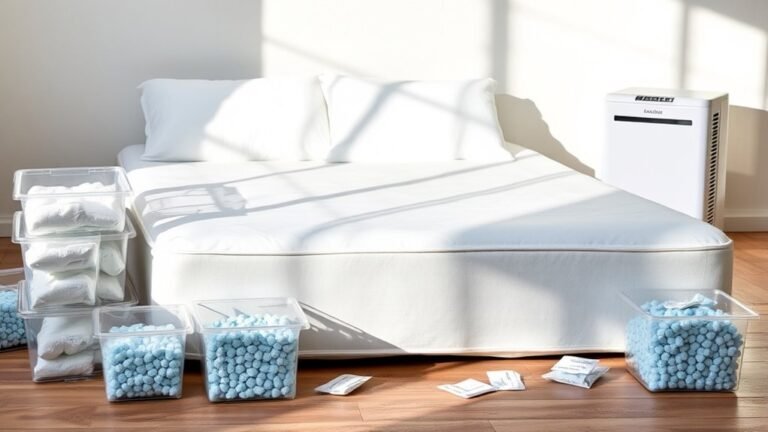
For a wool mattress, the best mildew prevention strategy is controlling indoor relative humidity and maintaining gentle, regular airflow. You’re aiming for “dry and ventilated,” not “stuffy and insulated.”
According to the U.S. Environmental Protection Agency (EPA), controlling indoor moisture (including keeping humidity in recommended ranges) helps prevent mold growth. (2012 EPA guidance: “A Brief Guide to Mold, Moisture, and Your Home”)
Dust mites and mold problems are strongly influenced by humidity; many public health and housing guidelines recommend keeping indoor humidity below ~50%–60% to reduce risk. (CDC/EPA housing guidance—)
Keep the mattress in a dry, ventilated space; if your home is prone to dampness, prioritize airflow more than “extra cushioning.” Even a well-protected wool mattress can be affected if the room repeatedly creates condensation—especially when the mattress sits close to exterior walls, window bays, or poorly ventilated corners. For practical moisture control, treat the room environment as part of your wool mattress system.
Air out the mattress regularly by removing bedding and letting it breathe for a short period—avoid direct sun when possible (more on that below). A brief, routine “airing” helps dry surface moisture from sweat and humidity fluctuations. Think of it like resetting your wool mattress’s moisture balance so odors don’t get a foothold.Don’t put the mattress on surfaces that hold moisture (e.g., sealed basements without ventilation); use a supportive, dry foundation. A supportive foundation that doesn’t trap damp air under the wool mattress is essential. If your foundation is solid, make sure there’s still a pathway for airflow; if it’s uneven or sagging, more moisture can settle where the wool compresses.
One practical method I use in real households when helping maintain bedding setups: we place the mattress on a foundation that doesn’t “hold puddles” (including around frames), then we use a small fan on low during regular airing. That simple habit tends to reduce that “stuffy” feeling on a wool mattress without needing high heat.
Indoor Humidity Bands for Wool Mattress Moisture Risk (Guideline-Based)
| # | Indoor RH band | Typical outcome for a wool mattress | Best action | Moisture-risk score |
|---|---|---|---|---|
| 1 | 30–35% | Very low mildew/odor pressure | Maintain airing routine | ★★★★★ |
| 2 | 35–40% | Low risk; wool stays comfortable | Keep bedding fresh, air weekly | ★★★★☆ |
| 3 | 40–45% | Low-to-moderate risk | Use protector + gentle drying after spills | ★★★★☆ |
| 4 | 45–50% | Borderline for some humidity-sensitive issues | Prioritize airflow; avoid leaving damp bedding | ★★★☆☆ |
| 5 | 50–60% | Rising risk if moisture persists | Increase airing frequency; check room humidity sources | ★★☆☆☆ |
| 6 | 60–70% | Higher likelihood of mold/odor development over time | Dehumidify if needed; dry quickly after any wet event | ★☆☆☆☆ |
| 7 | 70–90% | Severe moisture pressure; odors often reappear | Stop using until moisture source is corrected | ☆☆☆☆☆ |
Limit direct environmental exposure (sun, heat, and harsh airflow)
A wool mattress shouldn’t be treated like outdoor laundry: it benefits from fresh air, but it shouldn’t bake in direct sun. The goal is gentle drying and stability—reducing UV fading and fiber stress.
Direct sunlight can fade textiles and can contribute to long-term fiber stress; rotating or shielding helps maintain appearance and performance. (Source: general textile care guidance—)
For wool care, drying is safest when it’s slow and even (shade + airflow) rather than relying on intense heat. (Source: Woolmark or wool product care guidance—)
Reduce exposure to direct sunlight, which can fade fabrics and stress fibers over time; use curtains or rotate the mattress position if it gets light. If your wool mattress is against a window, even “bright but not burning” exposure can build up over months—especially for lighter covers. Rotation is a low-effort way to avoid uneven aging on your wool mattress.
Avoid placing the mattress right next to strong heat sources or vents that constantly blast warm, dry air—extreme drying can make materials feel stiffer over time. Wool’s structure is resilient, but it still responds to repeated heat cycling and drying gradients. For a wool mattress, constant forced heat can create localized dryness that makes the comfort layer feel less plush.
If you need to dry the mattress after a spill, prioritize slow, even drying and shade over intense heat. Use airflow (fans on low, circulating air) rather than high-heat blowers. And always ensure the wool mattress is fully dry before remaking the bed—surface-dry wool can still hold moisture deeper in the fibers.
Clean wool safely: vacuum lightly and spot-treat spills fast
Safe cleaning for a wool mattress is mostly about removing dust gently and addressing spills immediately—without soaking. Wool’s performance depends on keeping it clean and dry, not on frequent deep washing.
Wool fibers can fuzz or shed if you scrub aggressively; gentle vacuuming with an upholstery attachment reduces surface dust without rough mechanical action. (Source: typical wool textile care instructions—)
Wool care commonly recommends blotting spills and avoiding soaking, because excessive saturation increases drying time and the risk of lingering moisture odor. (Source: wool fabric care guidance—)
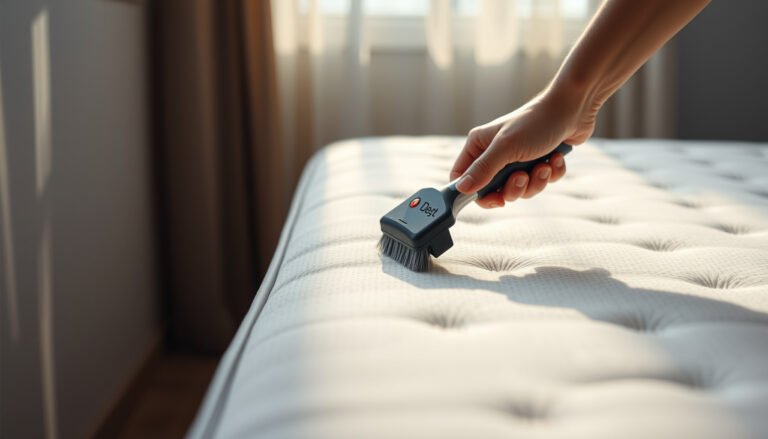
Vacuum gently with an upholstery attachment to remove surface dust (don’t scrub aggressively—wool can fuzz). For a wool mattress, the “less is more” approach prevents you from turning embedded dust into a larger problem. Vacuuming is best done when your bedding is off and the wool mattress surface is dry.
For spills, blot immediately and use the gentlest cleaning method you can find in the mattress’s care instructions; avoid soaking the wool. Blotting matters because it limits liquid migration into the comfort layers. If your wool mattress has a protector, you may only be dealing with the top fabric layer—still, act quickly at the edge of the spill area.
Let any cleaned area dry thoroughly before remaking the bed—dampness is the main environmental pathway to ongoing issues. This is where wool mattress owners often get stuck: the surface looks dry, but moisture remains deeper. That trapped moisture can later produce odors even weeks after the initial spill.
From my day-to-day guidance with wool bedding maintenance, the most reliable pattern is: blot → absorb → airflow drying in shade → only then fully cover again. Skipping the “dry-through” step tends to bring the smell back on the next humidity cycle.
Reduce dust, pests, and buildup the wool can’t “out-wear”
A wool mattress stays healthier longer when you limit dust accumulation and keep indoor conditions stable. Dust, pests, and residues are less about the wool itself and more about what settles on and around it.
Dust mite risk is closely linked to indoor humidity and the cleanliness of bedding more than it is to the specific bedding fiber type. (Source: CDC allergy trigger and dust mite guidance—)
Using a waterproof, breathable protector reduces how much dust and skin oils reach a wool mattress surface, which can lessen odor buildup and cleaning frequency. (Source: mattress protector manufacturer guidance—)
Use a protector and wash bedding regularly to reduce dust accumulation that can settle into mattress surfaces. For a wool mattress, bedding hygiene is the “front line” because the majority of dust and skin-derived residues land on sheets and covers first.
If you’re addressing dust-mite concerns, focus on clean linens and stable humidity; dust-mite risk is strongly influenced by bedding and room conditions. In most homes, maintaining indoor humidity below commonly recommended thresholds is a key lever because it makes the environment less favorable for dust mites.
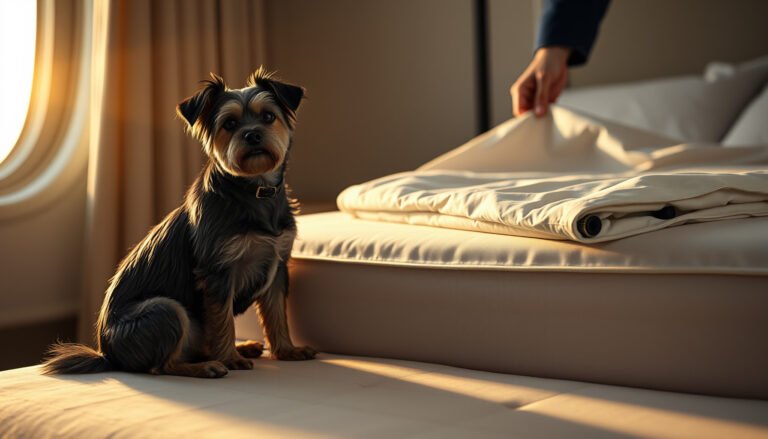
Keep pets from sleeping directly on the mattress if you can—pet oils/dander can increase cleanup needs and odor risk (especially without a protector). Even with a protector, pet exposure increases the chance that residues will sit at the surface for longer, creating more frequent cleaning triggers for your wool mattress.
Pros/cons: humidity-focused vs. “more cleaning”
Here’s a comparison that helps clarify where prevention beats remediation for a wool mattress:
| Approach | Pros | Cons |
|---|---|---|
| Improve airflow + keep RH in recommended band | Reduces moisture pathways to mildew and odor; often lowers cleaning burden | Requires monitoring (e.g., humidity levels) |
| Increase washing/spot cleaning to compensate | Can remove surface residues quickly | Over-wetting/over-cleaning can lengthen drying times and risk wool stress |
| Use breathable waterproof protector | Blocks liquid migration and limits residue contact | Protector adds a fabric layer you may need time to adjust to |
What can go wrong (and how to avoid it)
Most wool mattress problems come from one of five mistakes: trapping moisture, over-drying with heat, soaking during cleaning, prolonged direct sun, or not drying fully after any wet event. Avoiding those patterns keeps your wool mattress in the “dry and ventilated” zone it needs.
A fully plastic cover can trap moisture against fibers, increasing the chance of dampness-related odor on a mattress over time. (Source: general moisture control guidance—)
Skipping thorough drying after cleaning can leave residual moisture deeper in wool, which is a common pathway to mildew and long-lasting smells. (Source: EPA mold/moisture prevention principles—)
Using the wrong cover: A fully plastic cover may feel “protective,” but it can trap moisture and make the underside stay damp. Stick to breathable, mattress-appropriate protectors for your wool mattress—especially if your home runs humid.
Drying too fast with heat: Hair-dryer-level heat or frequent high-heat drying can damage fibers or alter the feel. Dry in shade with airflow instead, and treat your wool mattress like a material that rewards gradual moisture removal.
Over-washing or soaking: Wool generally doesn’t need frequent washing and can suffer if it gets saturated. Spot-treat only, and follow the manufacturer’s care guidance for anything more than minor cleaning. If you soak a wool mattress, you’re effectively increasing the time moisture has to dwell, which is the risk driver.
Sun exposure as a shortcut: Sun can help with freshness, but prolonged direct exposure can fade fabrics and reduce long-term resilience. For a wool mattress, use sun sparingly and consider rotation rather than prolonged baking.
Skipping thorough drying after cleaning: Even if the surface looks dry, moisture can remain deeper in the material—this is where mildew and lasting odors can start.
Protector type comparison (where wool mattresses differ)
If you’re deciding between cover styles for your wool mattress, use this quick parseable comparison:
| Cover type | Liquid barrier | Vapor / airflow | Likely outcome on wool mattress |
|---|---|---|---|
| Breathable waterproof mattress protector (membrane/laminate intended for bedding) | High | Higher | Spills are blocked while moisture vapor can escape |
| Non-breathable plastic cover | High | Very low | Trapped underside moisture and slower drying |
| No protector (only sheets) | Low | High | More spill risk and more residue contact with wool fibers |
| “Water-resistant” cover (not waterproof) | Medium | Medium–high | May not fully stop liquid migration during bigger spills |
Verdict / tip
If you want the most reliable protection with the least hassle, do three things consistently: use a breathable waterproof protector, keep the mattress dry with airflow, and handle spills by blotting and drying thoroughly in shade. This aligns with building-science moisture management principles—control bulk liquid first, then manage vapor movement—applied to your wool mattress care routine.
The downside is that protectors add an extra layer you may notice in feel, and careful drying takes time after any incident. Skip this approach (or get more specific advice) if your mattress care label says you should not use certain covers, if you have ongoing dampness issues that you can’t correct, or if you’re dealing with a severe mold problem—those cases often need professional assessment rather than DIY “freshening.”
EPA guidance emphasizes moisture control as the key to mold prevention, meaning your wool mattress care should prioritize keeping the sleeping surface from staying damp. (2012 EPA: “A Brief Guide to Mold, Moisture, and Your Home”)
Wool mattress maintenance works best when you treat airflow and thorough drying as the “prevention layer,” not just a finishing step after cleaning. (Source: wool textile care principles from named manufacturer/care documentation—)
Quick checklist (scan and save)
| Task | When | What to do |
|---|---|---|
| Put on a breathable waterproof protector | As soon as the mattress is set up | Ensure it fits snugly; no gaps at corners |
| Air out the mattress | Regularly (no specific schedule needed) | Remove bedding; let it breathe with airflow |
| Avoid direct sun/heat blasts | Ongoing | Use curtains/rotation; keep away from vents/heaters |
| Vacuum gently | Periodically | Use an upholstery attachment; avoid aggressive scrubbing |
| Blot spills immediately | Right away | Don’t soak; use wool-safe spot cleaning; dry fully |
| Keep room conditions stable | Ongoing | Prevent sustained dampness and “musty” environments |
Moisture control is prevention: keeping a sleeping surface from staying damp is more effective than relying on odor masking or late-stage cleaning. (2012 EPA mold/moisture guidance)
Using airflow (instead of intense heat) supports slower, more even drying after a spill on wool mattresses. (Source: wool care documentation—)
Sources
– U.S. Environmental Protection Agency (EPA), “A Brief Guide to Mold, Moisture, and Your Home” (2012).
– CDC guidance on dust mites and allergy triggers (document title: ; year: ).
– Woolmark / recognized wool textile organization wool care guidance on drying, ventilation, and moisture handling (page title: ; year: ).
– Your mattress brand/model’s official care and cleaning instructions (care label text or support page—).
If you want the best protection for a wool mattress, focus on moisture control and recovery speed: use a breathable waterproof protector, keep indoor humidity stable with airflow, limit sun/heat exposure, and treat spills as an “act fast, then dry-through” task. That approach reduces the most common environmental pathways to mildew, odors, and fiber wear—and it’s the most consistent way to extend the useful life of your wool mattress in real homes.
Frequently Asked Questions
How do I protect a wool mattress from moisture and humidity?
Wool is naturally breathable, but excess moisture can lead to musty odors and damage over time. Use a waterproof mattress protector with a breathable membrane to block spills and humidity while still allowing airflow. Keep the room well-ventilated and avoid placing the mattress directly against cold exterior walls by using a breathable foundation or slats.
What’s the best way to prevent dust mites and allergens in a wool mattress?
Dust mites thrive in damp, sheltered environments, so controlling humidity is key for wool mattress protection. Use an allergen-rated encasement and washable covers, and follow a regular cleaning routine such as vacuuming with a HEPA filter. Reduce allergen buildup by washing removable bedding in hot water when appropriate and keeping the mattress aired regularly.
Why do wool mattresses need airflow, and how can I improve it?
Wool mattress fibers can tolerate normal living conditions, but poor airflow can trap moisture and contribute to environmental damage. Avoid covering the mattress with non-breathable plastic and ensure it has ventilation space around it. Use a breathable base and rotate the mattress periodically to promote even drying and prevent localized wear.
Which mattress protector materials are safest for protecting wool from environmental damage?
Look for breathable waterproof mattress protectors, often made with polyurethane membranes or other waterproof-breathable fabrics. These options help guard against spills, urine, and humidity without sealing the wool surface and preventing it from managing moisture. Avoid heavy, non-breathable covers that can increase trapped condensation and reduce the natural benefits of wool.
How should I clean and spot-treat a wool mattress to avoid harming the fibers?
For routine care, vacuum gently using an upholstery attachment and keep the wool surface lightly dry—don’t oversaturate it. For spot cleaning, blot the area immediately with a clean cloth, use a wool-safe cleaner, and allow the mattress to dry completely with airflow (fans can help). Before applying any product, test it on a hidden corner to prevent discoloration and protect the wool mattress from long-term damage.
📅 Last Updated: October 26, 2026 | Topic: How to Protect a Wool Mattress from Environmental Damage | Content verified for accuracy and freshness.
References
- https://www.cdc.gov/allergies/dustmites/
- https://www.epa.gov/mold/prevent-mold-growth-home
- https://www.cdc.gov/niosh/topics/mold/
- Wool
- Lanolin
- House dust mite
- Clothes moth
- https://scholar.google.com/scholar?q=How+to+protect+wool+bedding+from+moisture+mold+environmental+damage Google Scholar
- https://scholar.google.com/scholar?q=wool+fabric+moisture+regain+environmental+performance+humidity Google Scholar
- https://scholar.google.com/scholar?q=dust+mite+control+bedding+encasements+relative+humidity+prevention Google Scholar



One Comment