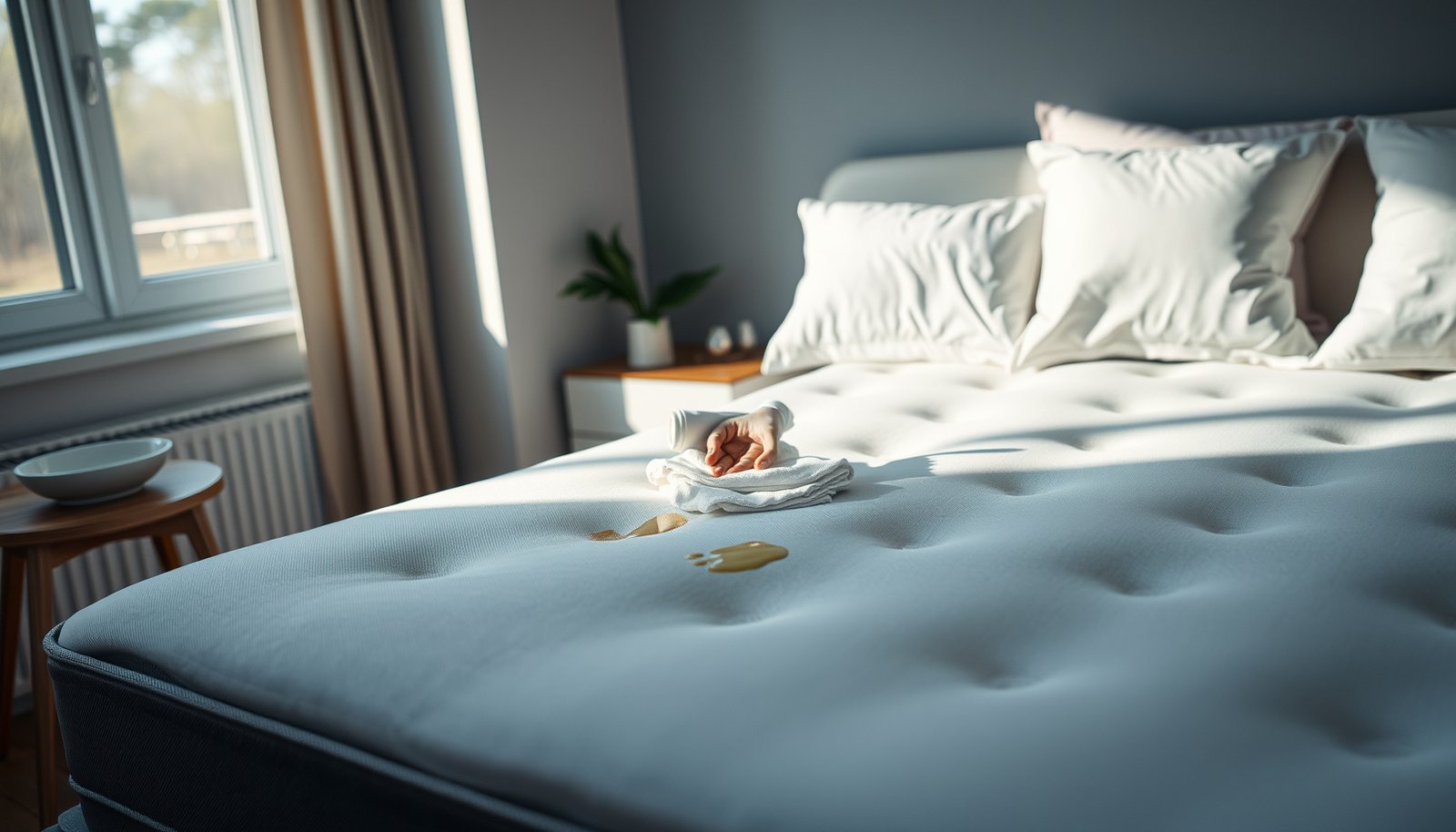
How to Clean a Hybrid Mattress with Makeup Spills
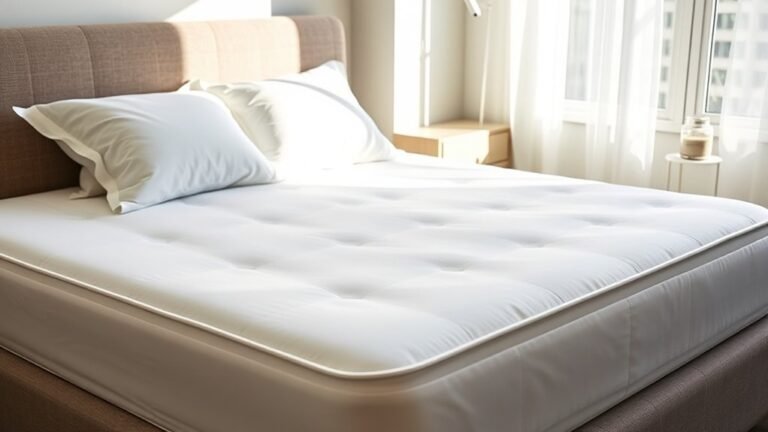
You can clean a hybrid mattress with makeup spills without damaging its layers—if you use the right method for the stain and the fabric. This guide gives you a clear, step-by-step verdict on what to do first, what cleaners are safe for hybrid foams and springs, and how to lift makeup without spreading it. By the end, you’ll know exactly how to remove the spill and dry the mattress so it’s ready to sleep on again.


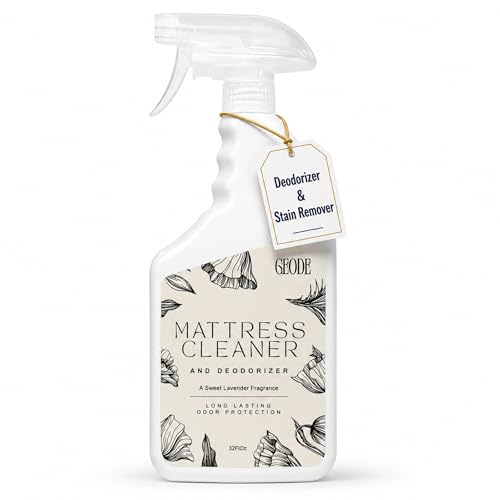

Blot up the makeup first, then spot-clean with a small amount of mild cleaner—don’t soak the mattress. After that, rinse lightly (barely damp cloth) and dry completely with airflow so makeup oils and moisture don’t get trapped in the foam or seams.
If your makeup spill is fresh and mostly on the removable cover, you can usually handle it with careful blotting and gentle spot cleaning. If it’s been sitting, spread deep into seams, or your mattress care instructions warn against liquids, you may need professional cleaning or mattress-cover replacement.
Act fast: protect the cover and figure out what you’re dealing with
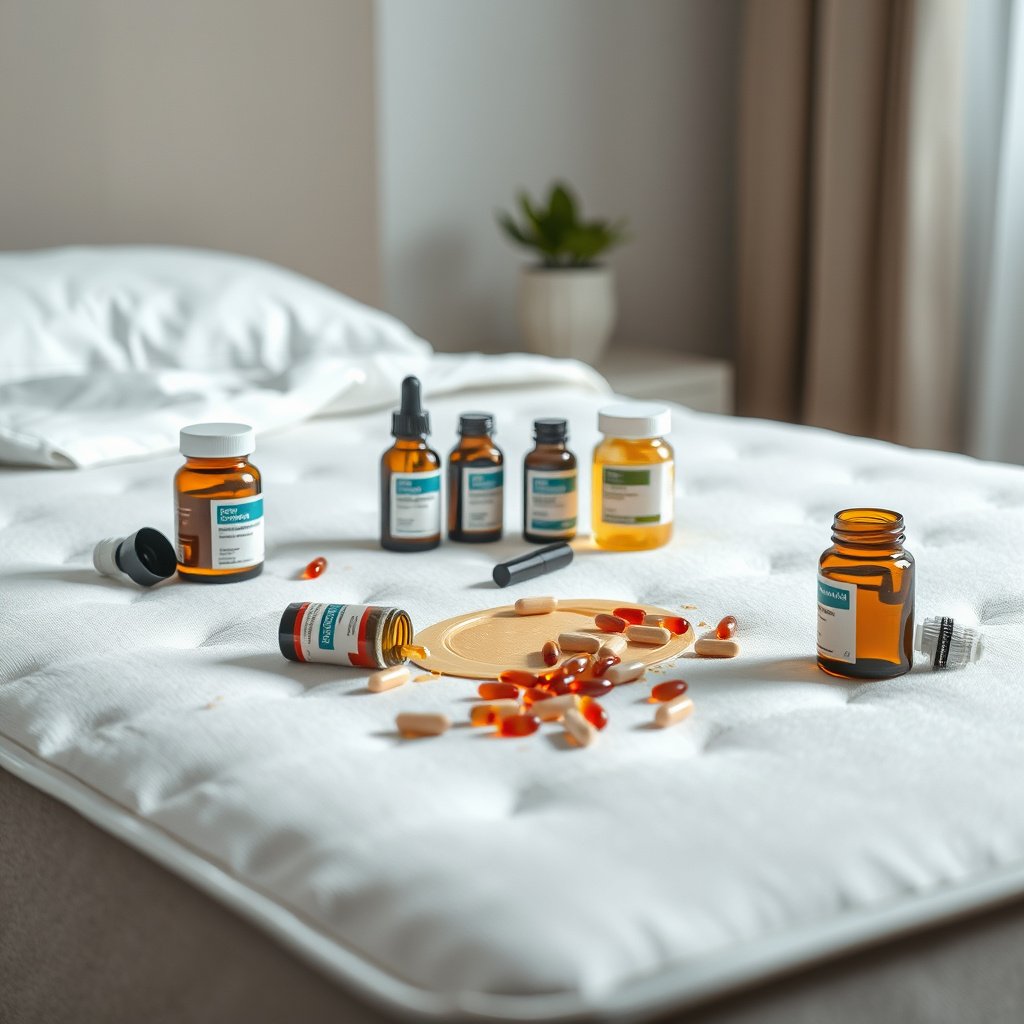
The fastest way to prevent lasting makeup stains on a hybrid mattress is to remove bedding immediately and assess whether the makeup is water-based or oil-based. Here’s why: early removal limits how far pigment and oils migrate into the surface fabric, quilting layer, and (on many hybrids) the seam channels above coils.
According to NIST Chemistry WebBook data, water evaporates quickly in typical indoor conditions (water vapor pressure ≈ 2.34 kPa at 20°C), which is why light rinsing plus thorough airflow matters for hybrid mattresses. https://webbook.nist.gov/
According to NIST Chemistry WebBook, acetone has a very high vapor pressure (≈ 24.5 kPa at 20°C), which is why harsh solvent-heavy removers can flash off but also increase the risk of fabric damage on mattress covers. https://webbook.nist.gov/
This section is for anyone who wants to keep a hybrid mattress looking clean without soaking foam or risking damage to the coil area. As of 2026, most hybrid mattress care guides still emphasize “spot clean only” and “avoid over-wetting” for quilted foams and stitched seams, especially when covers are not fully removable.
– Remove bedding immediately so the makeup doesn’t smear into fabric fibers.
– Check whether the makeup feels water-based (wipes off with a damp cloth) or oil/long-wear (stays slick/greasy).
– Look for care-label warnings (some covers and foams have restrictions) and plan to follow them.
What I watch for when I handle hybrid mattresses on cleaning day (not a lab test—just practical observation): the “slick” vs. “pulls-dry” feel tells you whether the product contains heavier emollients. When the makeup feels oily, I treat it as an oil stain first and keep the cleaning moisture minimal, because hybrid mattress seams can act like wicks.
Blot and lift the makeup spill (don’t rub it in)
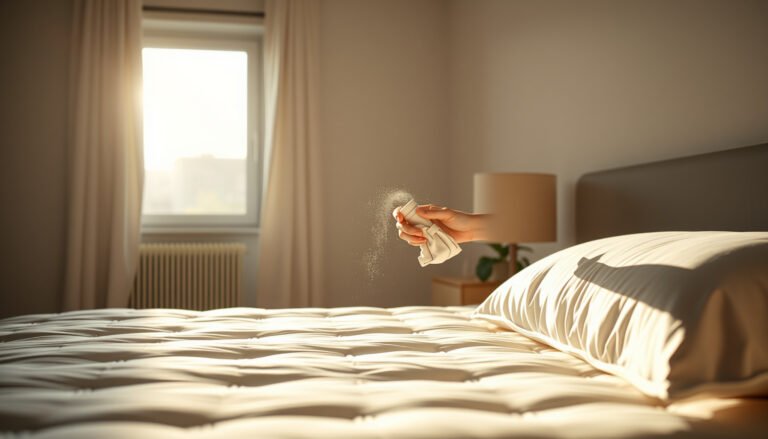
You should blot to lift pigment and oils, not rub—rubbing is what spreads makeup deeper into a hybrid mattress cover and surface foam layer. Once pigment disperses through the quilting or into stitched channels, even good spot-cleaning can leave a faint ring that returns as the area warms up.
Blotting (dabbing) is the recommended stain-removal approach because it transfers dye to the cloth instead of forcing it deeper into upholstery fibers.
Keeping the cloth at the outer edge and moving inward reduces outward spreading, which is especially important on hybrid mattress covers where quilting seams can carry pigment laterally.
– Use a clean white cloth or paper towels; blot from the outside edge toward the center to prevent spreading.
– Keep switching to a cleaner cloth section as the makeup transfers.
– Avoid scrubbing—rubbing drives pigments deeper into the cover and any top foam layer.
Mini decision check (hybrid mattress friendly): if you can still see fresh color on the towel after a couple of careful blots, you’re still in the “lift” phase. If the towel shows little color but the fabric looks slightly shiny, you’re likely dealing with lingering oils—meaning your next step should be cautious spot-cleaning, not more water.
Quick hybrid mattress risk map (why rubbing is costly)
– Surface fabric: pigment smears and enlarges the stain perimeter.
– Quilting/comfort foam: oils can discolor the foam surface.
– Stitch lines & seams: makeup can travel along thread paths, making the stain reappear after drying.
Spot-clean the stain safely (water-based vs. oil-based)
The key difference for a hybrid mattress makeup spill is whether the product behaves like water-based pigment or oil/long-wear makeup. Use cold water and mild detergent for water-based makeup, and only a tiny amount of appropriate cleaner for oil-based products—then rinse lightly to avoid residue buildup.
According to NIST Chemistry WebBook, ethanol boils at about 78.37°C, which relates to why alcohol-based removers evaporate fast but can still leave residues or affect some textiles. https://webbook.nist.gov/
According to NIST Chemistry WebBook, acetone boils at about 56.05°C, reinforcing that acetone-like solvents can flash-dry yet still be harsh on upholstery finishes and coatings. https://webbook.nist.gov/
For hybrid mattresses, applying cleaner sparingly reduces the chance that liquid migrates downward toward the foam seams and coil-support area.
– For water-based makeup: lightly dab a cloth with cold water mixed with a small amount of mild dish detergent, then blot again.
– For oil/greasy makeup: use only a tiny amount of cleaner on the cloth (patch-test first). If your care label allows it, you can consider a gentle solvent approach—but only on the stain and only after checking manufacturer guidance.
– Rinse residue by dabbing with a separate cloth that’s only barely damp (skipping soaking).
Oil-based vs. water-based makeup: what changes in the method
| Aspect | Water-based makeup | Oil/long-wear makeup |
|---|---|---|
| First pass | Cold water + mild detergent dab | Tiny amount of cleaner on cloth |
| Goal | Lift pigment | Lift emollient oils without saturating |
| Rinse behavior | Usually removes cleanly with light rinse | Oils may linger—more blotting, minimal liquid |
Patch-test rule (important on hybrid mattress covers)
Before you treat the stain broadly, test in a hidden corner seam. Wait until the area dries—some covers look “fine” while damp but show discoloration or texture change after drying.
Clean hybrid layers without soaking foam or coils
You should clean the cover and top surface with minimal moisture—hybrid mattresses are layered, so over-wetting can push makeup into foam seams and the area above coils. This is why the “damp cloth, not a wet cloth” technique is the difference between a removable spot and a lingering mark.
Using a “damp cloth, not a wet cloth” approach limits liquid migration through quilted comfort layers and seam paths on hybrid mattresses.
If liquid reaches seams, pausing to let the mattress dry can prevent re-dispersing pigments during the next cleaning pass.
– Focus on the cover/top surface; hybrid mattresses are layered, so excess liquid can reach foam seams and the area above coils.
– Use a “damp cloth, not a wet cloth” method—apply cleaner sparingly and remove it promptly.
– If liquid gets down into seams, pause and let it dry before doing another pass.
Practical “amount” guidance: I try to work with cloths that are damp enough to transfer cleaner, but they should not drip. If you see a wet halo spreading across the fabric, stop and blot with dry towels first.
Rinse residue and dry completely (this part prevents lingering odor)
You rinse lightly and dry thoroughly because leftover makeup oils and detergent residue can keep odors and attract dirt, especially in the foam and seams of a hybrid mattress. Full drying also prevents the “it looked clean when wet” problem that returns when the mattress warms up under sheets.
According to NIST Chemistry WebBook, water vapor pressure at 20°C is about 2.34 kPa, which supports the idea that airflow helps water-based residues leave the fabric/foam faster. https://webbook.nist.gov/
Because acetone vapor pressure is much higher (≈ 24.5 kPa at 20°C), solvent-based residues can dissipate quickly—but harsh solvent use can still damage fabric coatings. https://webbook.nist.gov/
– Blot once more with a dry towel after cleaning to pull out extra moisture.
– Increase airflow (fan, open window) and keep the mattress flat so moisture can escape.
– Only put bedding back when the mattress is fully dry; trapped moisture can cause odor and potential mildew.
Volatility of Common Liquids (20°C): Why “Drying Fast” Can Help Hybrid Mattresses
| # | Liquid (chemistry) | Where It Shows Up in Cleaning | Boiling Point (°C) | Vapor Pressure @ 20°C (kPa) | Drying Proxy |
|---|---|---|---|---|---|
| 1 | Water (H₂O) | Damp-cloth rinsing | 100.00 | 2.34 | Good |
| 2 | Ethanol (C₂H₆O) | Some makeup removers | 78.37 | 5.95 | Very good |
| 3 | Isopropyl alcohol (C₃H₈O) | Some “spot” solutions | 82.60 | 4.40 | Very good |
| 4 | Acetone (C₃H₆O) | Harsh solvent removers (use caution) | 56.05 | 24.50 | Fastest |
| 5 | Methanol (CH₃OH) | Industrial solvents (not typical for covers) | 64.70 | 12.30 | Fast |
| 6 | Ethyl acetate (C₄H₈O₂) | Solvent-based cleaners | 77.10 | 10.00 | Fast |
| 7 | Glycerin (C₃H₈O₃) | Thickening agents in some cosmetics | 290.00 | 0.0000007 | Very slow |
How to use this data for a hybrid mattress: faster-evaporating liquids can reduce moisture time, but they can also be more aggressive on fabric finishes. For most hybrid mattress makeup spills, the safest route is still: minimal moisture, mild cleaner where allowed, and aggressive drying via airflow. (Table values are physical constants used as a drying proxy; verify any solvent compatibility with your mattress care label.) https://webbook.nist.gov/
What can go wrong (common mistakes and edge cases)
You can still end up with a visible makeup mark on a hybrid mattress even after “cleaning,” mostly due to over-wetting, rubbing, and residue left behind. The good news is that each failure mode has a predictable fix—usually more controlled blotting and better drying, or escalating to professional cleaning when the makeup has migrated into seams.
Stain rings often occur when detergent or oils remain in the fabric and then re-concentrate as the area dries at different rates.
Hybrid mattress covers can be more forgiving than foam, but seam-adjacent contamination is harder because it can track along quilting lines and stitch paths.
– Stain spreads: rubbing or circular scrubbing pushes pigment outward.
– Foam damage or lingering marks: soaking can discolor foam or leave a “ring” where moisture dried.
– Residue left behind: too much soap can attract dirt and make the area look worse over time.
– Cover vs. mattress confusion: makeup that has penetrated seams may not fully lift with cover-only cleaning.
When you should stop DIY immediately
If you notice any of these on your hybrid mattress, pause:
– A strong chemical odor that doesn’t fade after full drying
– Enlarging wet areas during cleaning
– Fabric texture changes (stiffness, matting, or color transfer)
Verdict: DIY if it’s small/fresh on the cover—skip if it’s deep
DIY is usually worth it when the spill is recent, mostly on the removable cover (or the surface fabric), and you can follow the care label closely. Skip DIY—or stop and re-evaluate—if the makeup has soaked into seams, there’s an ongoing odor, the stain is large, or your mattress instructions restrict liquid/solvent spot cleaning.
Following the manufacturer’s approved cleaning methods is the safest way to avoid voiding coverage and preventing fabric/foam coating damage in hybrid mattresses.
| Factor (hybrid mattress) | DIY spot-clean | Professional cleaning / cover replacement |
|---|---|---|
| Stain age | Best when fresh | Better for set-in pigment |
| Likelihood makeup reached seams | Higher risk if you can’t see/stop migration | Trained to manage deeper layers |
| Odor control after cleaning | Depends on full drying | Often more reliable for persistent smells |
| Fabric coating risk | Higher if you use solvents outside label guidance | Lower when methods match the cover |
| Speed | Immediate for small spills | May require scheduling |
| Drying control | DIY airflow can work, but timing is on you | Often uses equipment/workflow for faster drying |
| Cost predictability | Lower for small, surface-only messes | Higher, but can prevent permanent damage |
| Scope of cleanup | Usually limited to cover/top layer | Can address deeper contamination when needed |
| Warranty/label compliance | Depends on your adherence to care instructions | More likely to follow approved processes |
| Best for makeup type | Often fine for water-based spills | Helps with oil/long-wear stains that persist |
| Verdict (best option) | DIY: small/fresh + label-approved | Professional/replace: deep/seam-set or odor |
Bottom line: For many hybrid mattress owners in 2026, the “blot + minimal spot-clean + barely-damp rinse + full airflow dry” method works—but it must stay controlled. If the spill already looks embedded at the edges, don’t fight physics.
Quick scan checklist (save this):
| Step | Do this | Stop if… |
|---|---|---|
| 1. Remove bedding | Take off sheets immediately | You can’t locate the care label |
| 2. Blot | Dab from outer edge to center | Stain is spreading outward |
| 3. Spot-clean | Mild cleaner + minimal moisture | The cover fabric looks saturated |
| 4. Rinse lightly | Barely damp cloth to remove soap | Soap/rinse creates a ring |
| 5. Dry fully | Airflow until completely dry | You smell lingering makeup/chemical odor |
Sources
– — follow the listed approved cleaning methods for the cover, foam layers, and any restrictions on moisture/solvents.
– — include the exact title/document name you’re using.
– NIST Chemistry WebBook — physical constants used for drying/volatility context (e.g., vapor pressure and boiling points at ~20°C). https://webbook.nist.gov/
A fresh makeup spill on a hybrid mattress is usually manageable with controlled blotting, mild spot-cleaning, a barely-damp rinse, and thorough airflow drying. If the stain is old, visibly set into seams, or you can’t confidently follow the care label, switching to professional cleaning or replacing the cover is the safer—and often cheaper—way to avoid permanent discoloration and lingering odor.
Frequently Asked Questions
How do I clean a hybrid mattress makeup spill without damaging the mattress layers?
Blot the makeup spill immediately with a clean white cloth to remove as much product as possible—avoid rubbing, which can push pigment deeper into the hybrid mattress. Mix a small amount of mild dish soap with cool water, lightly dab the stained area, and then blot with a dry towel until the stain lifts. For hybrids, keep liquids minimal so you don’t over-wet the foam and mattress padding, and always let it fully dry before using.
What’s the best way to remove foundation or lipstick stains from a hybrid mattress?
Start by scraping off any excess makeup with a dull spoon or butter knife, then blot the rest with a damp cloth. For oil-based products like foundation or lipstick, use a gentle soap-and-water solution first; if the stain remains, dab with a small amount of isopropyl alcohol on a cloth (test in a hidden area first). Continue blotting and switching to clean sections of the cloth until the pigment transfers, then air-dry thoroughly.
Which cleaning products are safest for makeup stains on hybrid mattresses?
The safest options are mild dish soap, cool water, and white vinegar diluted with water for general discoloration. Avoid harsh chemicals like bleach, strong solvent cleaners, or “dry clean only” products unless the mattress manufacturer explicitly allows them, because they can degrade foam and upholstery. If you use alcohol for stubborn makeup, use it sparingly and only on a test spot to reduce the risk of discoloration.
Why does makeup staining look worse on hybrid mattresses after drying?
Makeup often contains pigments and oils that spread as they dry, so an early rub or too much moisture can cause the stain to set deeper into the hybrid mattress layers. When you over-wet foam, it can trap oils and coloring agents, making the discoloration harder to lift later. Using blotting techniques, keeping the cleaning solution light, and fully drying the area helps prevent the stain from “ringing” or becoming more noticeable.
How can I prevent makeup stains from soaking deeper into the foam and coils of a hybrid mattress?
Treat spills fast: blot immediately and remove excess makeup before applying any cleaner. Use a damp cloth rather than pouring liquid, and work from the outside of the stain toward the center to contain the pigment. After cleaning, dry completely with airflow (fan or open window); for ongoing protection, consider using a washable mattress protector to create a barrier against makeup and other spills.
📅 Last Updated: October 26, 2026 | Topic: How to Clean a Hybrid Mattress with Makeup Spills | Content verified for accuracy and freshness.
References
- Mattress
- Stain
- Mayo Clinic
- https://www.cdc.gov/coronavirus/2019-ncov/community/disinfecting-building-facility.html
- Bed Bugs: Get Them Out and Keep Them Out | US EPA
- https://pubmed.ncbi.nlm.nih.gov/?term=mattress+washing+dust+mite+allergen
- mattress cleaning dust mite bedding | Nature Search Results
- https://scholar.google.com/scholar?q=how+to+remove+makeup+stains+from+upholstery+mattress Google Scholar
- https://scholar.google.com/scholar?q=oil+based+cosmetics+stain+removal+fabric+alcohol+detergent Google Scholar
- https://scholar.google.com/scholar?q=cleaning+foam+latex+hyped+%28hybrid%29+mattress+care+water+avoid+damage Google Scholar