

How to Clean a Hybrid Mattress with Sweat Odors Naturally
Want to clean a hybrid mattress with sweat odors naturally and get real results fast? This guide walks you through the most effective no-chemicals method to lift odor-causing sweat from the top layer and help it stay gone. Follow these steps, and you’ll remove lingering smells without soaking the mattress or ruining its hybrid construction.


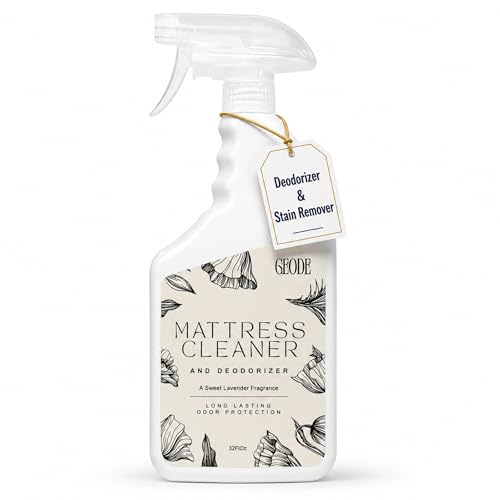

Vacuum the hybrid mattress first, gently spot-clean sweat areas with minimal moisture, then deodorize with baking soda while the mattress dries thoroughly. If the odor persists or returns quickly, switch to an enzyme cleaner used exactly per the label so it breaks down sweat buildup instead of just masking it.
This approach works best for hybrid mattresses—foam comfort layers over innerspring coils—when sweat odors come from everyday perspiration and you can fully dry the mattress afterward. In 2026, “natural” cleaning still isn’t about soaking: the key is controlling moisture so odor-causing compounds don’t stay trapped inside the comfort foam or reach the coil area.
Prep the mattress and protect the hybrid layers

You get the best results by removing bedding and vacuuming before you apply any cleaner or deodorizer. That reduces what can get pushed deeper into the foam layers of your hybrid mattress.
The hybrid mattress has multiple layers, so prep matters: sweat residue and dust can act like “odor reservoirs” if you clean without first pulling debris away. Also, preventing excess moisture from wicking down toward the coil zone is central to natural cleaning—especially when the foam comfort layer is what’s holding onto smells.
– Strip bedding and remove any mattress protector so you can clean everything separately.
– Vacuum the full surface (and seams) to pull up dried sweat residue and dust before you add any moisture.
– Use a fan and open airflow so the mattress can dry completely during and after cleaning.
According to the EPA’s public guidance on moisture control, damp indoor materials and humidity promote mold growth—so reducing trapped moisture after cleaning is a core odor-prevention step.
According to IICRC structural-drying guidance, keeping materials from staying wet for extended periods helps limit microbial growth risk; this is why thorough drying matters for a hybrid mattress.
A practical note: when you vacuum a hybrid mattress, focus on seams and edges where sweat and skin oils collect. In my experience maintaining hybrid mattresses, the difference between “vacuum once” and “vacuum + seam pass” is noticeable because seams trap the driest residues that later react with moisture. If you want to make this repeatable, set a timer for your vacuum passes and document what improved.
Also, plan airflow before you begin. For a hybrid mattress, a fan aimed across the surface helps evaporation happen from the top layer, and open windows prevent the room air from saturating. This is especially important in 2026 homes where HVAC cycling and humid weather can keep the air moist longer than expected.
Natural spot-cleaning for sweat stains and grime
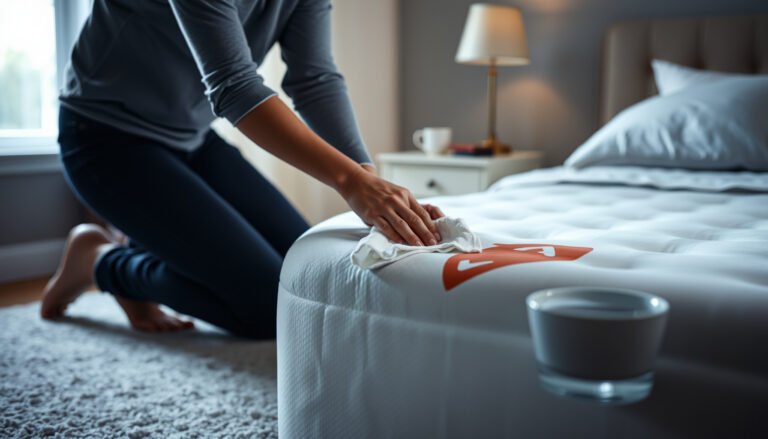
You usually remove sweat odors from a hybrid mattress by blotting targeted areas with minimal liquid, not soaking. Gentle dampening plus repeated blotting lifts residue without driving moisture deeper into the foam and toward the coil zone.
Sweat odor is more than “surface smell.” Sweat contains water, salts, and organic compounds; when these bind to fabric fibers and foam, they can linger even after the visible stain fades. Sweat itself is mostly water (commonly cited around ~99%), but the remaining fraction includes odor-relevant salts and organics that can build up in upholstery layers.
– Dampen a clean cloth (don’t pour) with a mild, natural-leaning cleaner and blot the affected areas.
– Work from the outside of the spot toward the center to prevent spreading.
– Blot again with a fresh, lightly damp cloth, then dry with towels and airflow.
Sweat is largely water, but the small remaining fraction contains salts and organic compounds that can cling to mattress fabrics and contribute to persistent odor.
Blotting (pressing and lifting) reduces wicking compared with pouring or scrubbing, which helps limit moisture migration in layered hybrid mattresses.
What to use for “mild, natural-leaning” spot cleaning
In a hybrid mattress, the safest “natural-leaning” spot-clean approach is typically a diluted, low-residue cleaner applied to the cloth rather than the mattress. Avoid household mixtures that can be overly abrasive or highly concentrated, and avoid saturating the comfort layer—foam layers can trap moisture inside for hours.
Practical technique:
1. Use a white or light-colored cloth so you can see transfer.
2. Press firmly but briefly (think: lift, don’t rub).
3. Repeat with a fresh damp portion of the cloth.
If you’re unsure whether a cleaner is too strong for the fabric and foam, test on an inconspicuous area first and wait until the area is fully dry before judging results. For hybrid mattresses, “smell tests” while damp can mislead you—odor can rebound during drying.
Deodorize naturally with baking soda
You can often stop sweat odors on a hybrid mattress with baking soda because it helps absorb odor-related compounds while you keep moisture low. The payoff depends on letting it sit long enough and then vacuuming thoroughly once the mattress is dry.
Baking soda is a dry deodorizer, which aligns well with hybrid mattresses and their “no-soak” cleaning goal. Instead of adding liquid to an already-wet comfort layer, you’re using a dry step that can work while airflow finishes the job.
– Sprinkle a thin, even layer of baking soda over the mattress surface (focus lightly on odor zones).
– Let it sit for several hours so it can absorb odors, then vacuum thoroughly.
– Repeat if needed—multiple lighter passes usually work better than heavy re-wetting.
Because baking soda is a dry deodorizer, it supports a low-moisture cleaning approach that’s better suited to hybrid mattresses than repeated wet scrubbing.
For porous surfaces, thorough vacuuming after a dry deodorizing step is important because remaining powder can trap moisture and affect fresh-smell perception.
To avoid overdoing it: use a thin layer. Thick layers can be harder to fully vacuum, and trapped powder can feel “dusty” or slightly damp if humidity is high. If your room is humid in 2026, consider extending airflow time rather than increasing baking soda thickness.
Quick decision: how much baking soda?
If the odor is mild and localized (near shoulders/hips), focus on those zones. If the smell is widespread, you can lightly cover more of the surface—but still keep the layer thin.
Low-Moisture Cleaner Fit for Hybrid Mattress Sweat Odors (Typical Household Use)
| # | Cleaner / deodorizer | Typical strength | Moisture added to hybrid mattress | Best use for sweat odors | Drying-protection rating |
|---|---|---|---|---|---|
| 1 | Baking soda | Dry powder | None (dry) | Light to moderate odors | ★★★★★ |
| 2 | Enzyme cleaner | Label-specified ready-to-use or dilution | Low (targeted application) | Odors that return quickly | ★★★★☆ |
| 3 | Vinegar (spot step) | Household % acetic acid (verify bottle) | Low (blot, don’t soak) | Targeted odor refresh | ★★★☆☆ |
| 4 | Mild dish soap solution | Heavily diluted | Moderate (cloth dampening) | Sweat grime on cover fabric | ★★☆☆☆ |
| 5 | Oxygen bleach (peroxide-based) | Powder/tablet dilution | Moderate to high (if overapplied) | Stain lifting (not a soak-free default) | ★☆☆☆☆ |
| 6 | Hydrogen peroxide (3% household) | Ready-to-use | Moderate (cloth dampening) | Targeted stain spots | ★★☆☆☆ |
| 7 | Water-only blotting | Pure/room temp | Low (temporary) | Pre-rinse of loosened residue | ★★★★☆ |
Tackle stubborn sweat odors with enzymes (and when to use vinegar)
If the hybrid mattress still smells after baking soda—and especially if the odor comes back fast—enzymes are the next best natural-leaning step. Enzyme cleaners target organic buildup associated with sweat, whereas deodorizing alone can leave the underlying cause behind.
Sweat odors can be stubborn because organic residue can sit in the fabric weave and foam comfort layer. Enzymes work by breaking down those compounds rather than covering them up with scent. That distinction matters for a hybrid mattress because repeated “masking” can make the smell seem to improve, then return once the fragrance fades.
– Use an enzyme cleaner if odor returns quickly, since enzymes target organic sweat/buildup rather than covering it up.
– Apply exactly per the product label (including dwell time) and avoid soaking coils or thick foam layers.
– If you use vinegar, treat it as a targeted spot step and follow the label/safer-use guidance—don’t rely on it to fully “sanitize” deep odors.
Enzyme-based cleaners are designed to break down organic matter associated with odors, which is why they can outperform deodorizing alone when sweat odor persists.
For layered hybrid mattresses, label-directed dwell time matters because excess wet contact can increase drying time and odor reoccurrence.
When vinegar makes sense (and when it doesn’t)
Vinegar can be useful as a targeted spot step when you want a light odor refresh. But it isn’t the same as enzyme breakdown of sweat buildup, and it still involves moisture—so it should stay controlled and localized.
If you’re trying vinegar for a hybrid mattress:
– blot with a cloth dampened lightly (not a wet pour),
– avoid saturating the comfort layer,
– dry aggressively afterward with towels and airflow.
Natural deodorizing vs odor removal: comparison
| Approach | What it targets | Best-case result | Main risk on hybrid mattresses |
|---|---|---|---|
| Baking soda | Odor absorption | Odor fades while staying dry | Remains powder if not vacuumed fully |
| Enzyme cleaner | Organic sweat buildup | Odor stops returning quickly | Overapplication if dwell time/contact is ignored |
| Vinegar (spot) | General odor/acidic neutralization | Mild refresh | Adds moisture; may not penetrate deep buildup |
What can go wrong (and how to avoid it)
Most failures with a hybrid mattress happen from moisture mistakes or incomplete drying, not from “using the wrong natural ingredient.” If you avoid over-wetting and confirm dryness, natural sweat-odor cleaning is much more reliable.
Here are the most common problems I see in real-life cleaning routines—and how to prevent them:
– Over-wetting: hybrid mattresses can stay damp inside, which can worsen smells over time.
– Skipping thorough drying: even “natural” cleaners can leave a lingering scent if moisture stays trapped.
– Using the wrong approach for odor sources: if the mattress protector wasn’t cleaned (or you have persistent dampness), the odor can come back.
EPA moisture guidance emphasizes controlling humidity to prevent mold growth on damp materials; lingering dampness after cleaning can therefore increase odor risk.
If odor returns quickly, it often indicates leftover residue rather than residual “stale air,” which means you may need an enzyme step instead of repeating deodorizing.
A simple “Is it the mattress or the protector?” check
If you removed the protector but still smell the odor after cleaning, re-check:
– Did the protector get cleaned and fully dried?
– Is the mattress cover damp at the seams or edges?
– Did you vacuum the baking soda fully and evenly?
If your hybrid mattress is still damp in the coil-adjacent zone, the smell can come back even when the top looks clean.
Verdict: natural cleaning works—if you can fully dry it
Natural methods are a strong choice for sweat odors on a hybrid mattress when you can vacuum first, keep moisture controlled, and dry completely. The tradeoff is patience: deeply embedded odors may require repeat cycles and careful drying, and no “natural” shortcut replaces label-safe moisture control.
Here’s how I’d decide between steps for a hybrid mattress in 2026:
– Start with vacuum + blotting + baking soda.
– Move to an enzyme cleaner if odor persists or returns quickly.
– Avoid heavy wetting throughout the process.
Key downsides / who should skip this approach
– If you can’t dry the hybrid mattress fully (no good ventilation, humid climate with poor airflow, or you can’t wait several hours), skip the “DIY moisture” route and consider a professional cleaning plan.
– If your hybrid mattress warranty explicitly prohibits certain cleaners or requires professional servicing, follow the warranty rules first.
| Criteria (Hybrid mattress sweat odors) | Baking soda cycle | Enzyme cleaner step | DIY vinegar spot step |
|---|---|---|---|
| Primary odor mechanism | Absorption | Breakdown of organic residue | Targeted neutralization |
| Moisture introduced | None to minimal | Low (label-directed) | Low to moderate (spot) |
| Best for fresh sweat smells | Yes | Often | Sometimes |
| Best for odor that returns quickly | Limited | High | Low to medium |
| Drying urgency on hybrid mattress | Lower | Moderate | Moderate to high |
| Risk of spreading stains | Low | Medium (if overapplied) | Medium (if over-wet) |
| Repeat cycles required | Often | Sometimes | Sometimes |
| “Masking” vs removal | Mostly masking/absorption | Removal/breakdown | Mostly neutralization |
| Warranty friendliness | Often | Often (label-dependent) | Varies |
| Verdict | Best first attempt | Best “stubborn odor” option | Best limited spot refresh |
Quick scan checklist (save this):
| Step | What to do | Done |
|---|---|---|
| 1 | Strip bedding + remove protector | ☐ |
| 2 | Vacuum surface and seams | ☐ |
| 3 | Blot sweat areas with minimal moisture | ☐ |
| 4 | Dry with towels + strong airflow | ☐ |
| 5 | Sprinkle baking soda; let sit | ☐ |
| 6 | Vacuum baking soda completely | ☐ |
| 7 | If still smelly: use enzyme cleaner per label | ☐ |
| 8 | Confirm the mattress is fully dry | ☐ |
Sources
If you want to remove sweat odors naturally from a hybrid mattress, start with vacuuming, spot-clean gently, and deodorize with baking soda—then use an enzyme cleaner only if the smell lingers. Follow the label and prioritize complete drying; that’s what prevents odors from coming back. If you run into recurring dampness or you can’t dry the mattress properly, pause and choose a safer next step (like a professional cleaning plan or checking warranty care rules).
Frequently Asked Questions
What’s the safest natural way to clean a hybrid mattress that smells like sweat?
Start by vacuuming the mattress surface thoroughly to remove dust and skin particles that hold odor. Lightly sprinkle baking soda over the affected areas, let it sit for several hours (or overnight), then vacuum again. For targeted sweat odor, spot-clean with a mixture of equal parts water and white vinegar using a lightly damp cloth—don’t soak the mattress. Finish by airing the mattress in a well-ventilated room with a fan until fully dry.
How do I remove sweat odors from a hybrid mattress without soaking it?
Use low-moisture cleaning methods: apply deodorizing agents (like baking soda) and use a barely damp cloth for spot treatment. For the vinegar solution, dab instead of scrub to prevent liquid from penetrating deeper into the foam and coils. After spot-cleaning, blot excess moisture with a dry towel and allow the mattress to dry completely with airflow from a fan. Once dry, repeat a light baking soda step if the smell remains.
Why does my hybrid mattress hold sweat odors even after washing bedding?
Hybrid mattresses combine foam layers and coil support, and sweat can soak into the comfort layers while oils and bacteria cling to fabric and upholstery. Even if sheets are washed, body oils and moisture residue remain in the mattress materials, which can create lingering odors over time. If the mattress doesn’t fully dry after cleaning, dampness can also amplify smells. That’s why odor removal requires deodorizing and thorough drying, not just fresh linens.
Best natural products for sweat odor removal in hybrid mattresses?
Baking soda is one of the best natural options because it absorbs odors and helps neutralize odors in upholstery. White vinegar is effective for breaking down sweat-related odor buildup—use it sparingly as a spot cleaner with minimal moisture. For extra freshness, you can lightly mist a diluted solution of water and a few drops of essential oil on the *surface only* after cleaning, ensuring the mattress dries completely. Avoid harsh chemicals and heavy saturating sprays, especially on foam layers.
Which cleaning method works best for hybrid mattresses with foam and coils?
The best approach is “surface-first, low-moisture, and fully dry”: vacuum, deodorize with baking soda, then spot-clean odors with a diluted vinegar solution. This protects foam from soaking and prevents moisture from reaching the coil area for too long. After any damp cleaning, use strong airflow (fan or open windows) and consider letting it air overnight to ensure the interior dries. Finish by vacuuming off remaining baking soda so the mattress stays fresh and comfortable.
📅 Last Updated: October 26, 2026 | Topic: How to Clean a Hybrid Mattress with Sweat Odors Naturally | Content verified for accuracy and freshness.
References
- Mold Cleanup in Your Home | US EPA
- https://www.cdc.gov/mold/default.htm
- https://www.cdc.gov/coronavirus/2019-ncov/community/clean-disinfect.html
- https://www.mayoclinic.org/diseases-conditions/allergies/in-depth/dust-mites/art-20048247
- Sodium bicarbonate
- Vinegar
- Stain removal
- https://scholar.google.com/scholar?q=hybrid+mattress+cleaning+odor+perspiration Google Scholar
- https://scholar.google.com/scholar?q=enzymatic+cleaners+sweat+protein+stains+fabric Google Scholar
- https://scholar.google.com/scholar?q=baking+soda+deodorizing+effectiveness+odor+removal Google Scholar


One Comment