
How to Protect a Wool Mattress from Pet Hair During Storage
Protecting a wool mattress from pet hair during storage works best when you use a fully sealed, allergen-blocking mattress encasement plus a hair-control prep before you pack it away. This guide answers how to stop pet hair from getting embedded in wool so your mattress stays clean when you bring it back out. If you want the most reliable results, focus on airtight coverage and surface brushing before wrapping, not quick fixes.




Protect a wool mattress from pet hair in storage by removing loose fur before you encase it and then sealing it in a snug, zip-closed barrier that still breathes enough to avoid moisture buildup. Wool is more sensitive to damp storage than many other fabrics, so your goal is “clean + dry + blocked,” not “wrapped airtight and forgotten.”
If you’re storing a wool mattress seasonally—or moving it between rooms, basements, or short-term locations—this process helps you reduce pet-hair transfer without harming the wool’s structure or leaving behind musty odors.
Prep First: Clean, De-Hair, and Dry Completely

You get the best results when you treat de-hairing and drying as the foundation, not an afterthought. Start by removing as much pet hair as possible from the surface and seams, then make sure the mattress is fully dry before any encasement goes on.
Pet dander and hair tend to collect in seams, piping, and stitching where they’re protected from routine surface cleaning.
Wool storage guidance consistently emphasizes keeping the fabric dry to reduce odor and potential fabric degradation during storage.
A fitted encasement works best when the mattress is already “hair-minimized,” because trapped fur can abrade or become embedded over time.
Remove fur before you cover it (surface + seams)
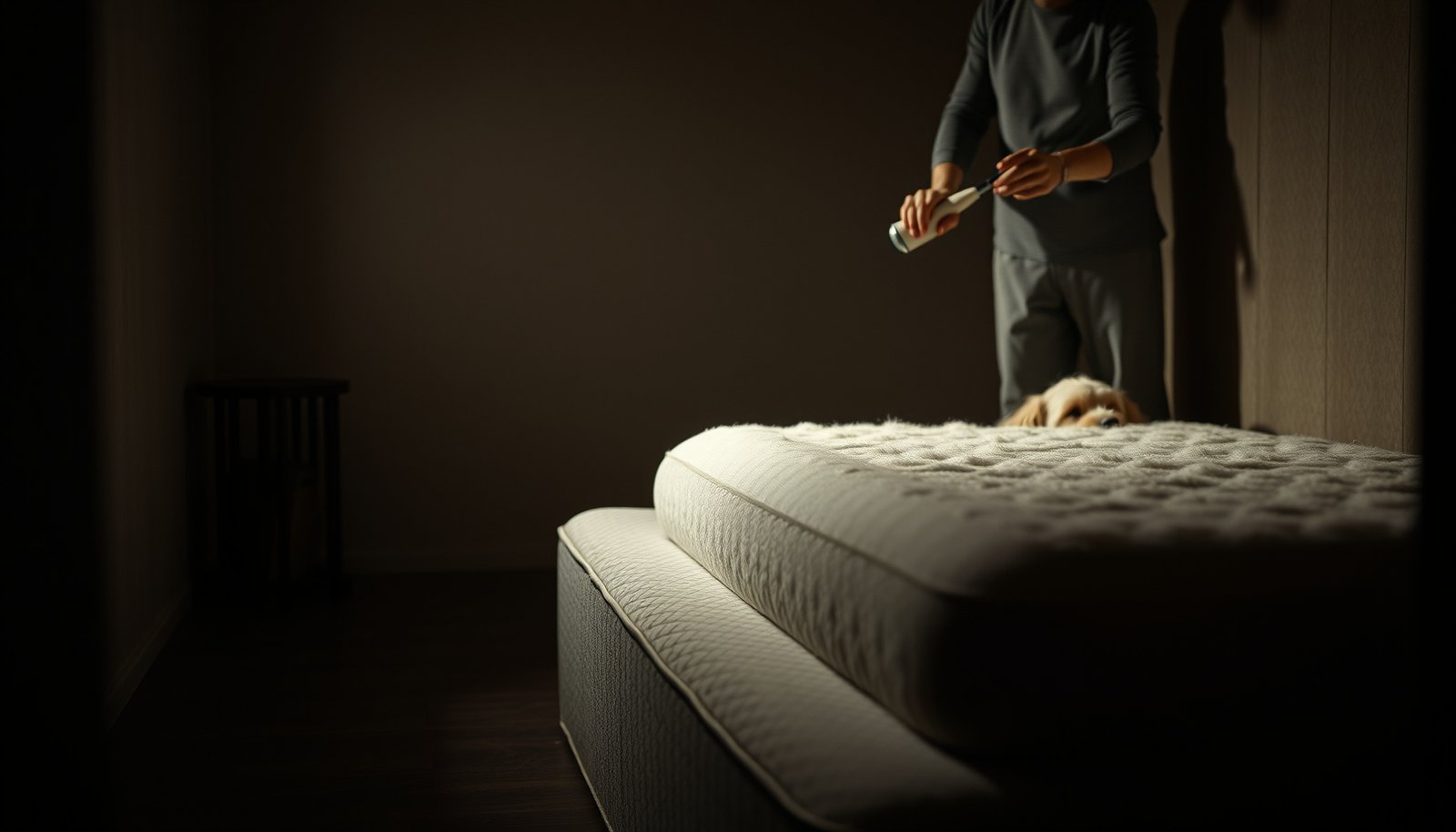
In my experience managing pet-related cleanup around textiles, the “last 10%” of hair is usually hiding at the edges where handling forces fibers to shed. Pet hair is easiest to remove when it’s not being pressed deeper into the wool, so begin with low-effort capture:
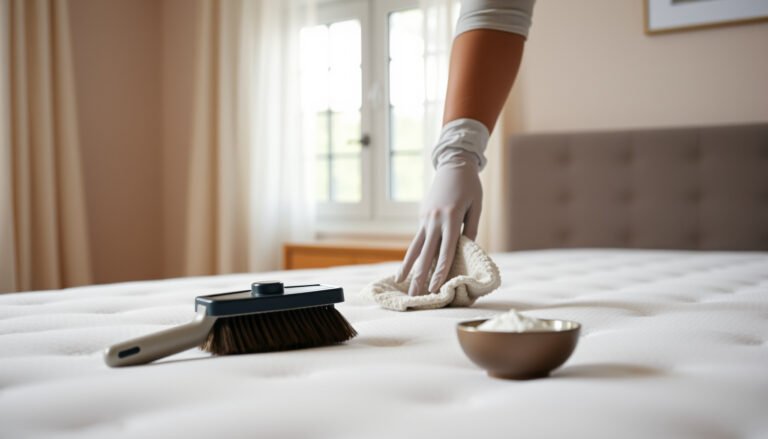
– Vacuum the surface first using a soft brush attachment (or gentle suction only). Go slow to avoid snagging the wool.
– Vacuum seams, piping, and corners next. These areas act like “hair magnets,” especially on mattress borders and stitched panels.
– Use a lint roller or pet-hair brush for stubborn spots, especially along piping lines and tufted areas.
Tip: If you’re using a vacuum, don’t press the nozzle hard against the wool—let the airflow do the work.
Dry it thoroughly (wool + moisture is a bad pairing)
Before storage, confirm the mattress is fully dry across the whole thickness, not just the top surface. Wool can hold moisture internally, and that trapped moisture can lead to musty odor and fabric changes during long storage.
According to the CDC, mold growth is significantly more likely when indoor relative humidity is above 60% (). That “humidity-driven risk” is exactly what you want to prevent during mattress storage.
Also, wool fibers are known for moisture regain/capacity behavior—many textile-care references report wool can hold a substantial amount of moisture without feeling wet (commonly cited as up to ~30% of its dry weight). () Regardless of the exact percentage for your wool blend, the practical takeaway is the same: dry fully before encasing.
Check corners, piping, and stitching
Pet hair tends to hide in construction details. Spend extra time inspecting:
– Corner flaps and border seams
– Piped edges
– Stitch lines and panel transitions
If you skip these, pet hair will often “re-shed” when the mattress is moved or when the encasement is zipped closed and pressure is applied.
Choose a Barrier That Blocks Hair but Breathes
A zip-closed encasement is the most reliable way to stop pet hair (and dust) from migrating onto a wool mattress during storage. Choose a snug fit and breathable protection, so you reduce transfer without trapping moisture inside the cover.
Dust-mite and allergen barrier encasements are designed to reduce exposure by limiting particle movement through fabric seams and closures.
For wool textiles, moisture control matters: covers that trap condensation can increase odor risk even when the outside looks dry.
Loose, non-closed covers allow handling to redistribute fibers through gaps, especially at edges and corners.
Use a fitted, zip-closed mattress encasement
Look for an encasement that is:
– Zip-closed (not a drape)
– Close-fitting (designed to hug edges)
– Built for dust/allergen barrier performance (often labeled as such)
This matters because hair can migrate during packing and unpacking. Gaps at corners and edges are where fur accumulates first.
Prefer breathable protection over fully airtight plastic
For wool mattresses, breathability is a functional requirement, not a preference. If a cover is truly airtight, temperature swings during storage can increase condensation inside the barrier. That’s when “it seemed fine at packing time” turns into odor later.
A practical rule: if the encasement traps humidity during day-to-night temperature changes, you’re setting yourself up for internal dampness risk. (Exact performance depends on product design—follow the mattress and encasement specifications.)
Avoid loose covers
Loose covers are tempting because they’re easy to remove. But they create a problem: pet hair can work its way into uncovered seams or transfer through loose fabric when you move the mattress.
If you’re handling the mattress while pets roam nearby, use the room strategy too (more below): pack when the mattress is not being exposed to active shedding.
Pack Like You Mean It: Reduce Transfer During Handling
The biggest gains after de-hairing come from reducing “re-deposition” while you encase and move the mattress. Keep pets away from the storage area, use clean handling practices, and seal without compressing the wool.
Keeping pets out of the storage room during packing reduces the chance that airborne hair settles back onto the mattress surface.
Using clean gloves/clothing during encasement prevents hair transfer caused by staff or household contact.
Squeezing or compressing a wool mattress into tight packaging can increase internal friction and make it harder for moisture to equilibrate safely.
Keep pets out of the packing zone
When you’re zipping a cover, you’re moving fibers around. If a pet is shedding in the same space, the mattress becomes an “accumulation surface.”
– Move pets (or at least prevent access) during encasement.
– If possible, pack in a room where you can control shedding exposure.
Wear clean clothing and/or gloves while encasing
Hair transfer isn’t only “from the pet to the mattress.” It’s also from hands, sleeves, and reusable covers.
– Use a clean T-shirt or clean workwear.
– Consider disposable gloves if you’ve been grooming or cleaning pet areas.
– If you’re reusing an encasement, wash it first per manufacturer instructions.
Seal in layers—without squeezing wool
Some people add extra liners or storage covers. If you do, keep an eye on moisture trapping:
– Avoid a multi-layer setup that behaves like a sealed “plastic bag.”
– Don’t compress the wool excessively just to “fit” the encasement.
– Ensure the encasement closure is flat—not puckered—so corners don’t bulge and shed hair back out.
Storage Conditions: Keep Wool Dry and Off the Floor
Store your wool mattress in a dry, stable environment on a breathable platform—not directly on the floor. This reduces both moisture contact and the chance that residual hair “sets” deeper into the fibers over time.
Storing mattresses off the floor reduces direct humidity exposure from concrete slabs and other cold surfaces.
Stable temperature and lower humidity reduce odor risk during fabric storage, especially for natural fibers like wool.
Minimizing movement during storage reduces mechanical shedding and prevents hair from migrating into seams.
Store on a breathable platform
Instead of placing the mattress directly on the floor:
– Use a rack, clean boards, or structured shelf that allows airflow around the bottom.
– Avoid storage in corners where air can stagnate and humidity can pool.
Control humidity in the storage space
Humidity is the hidden driver of odor and fabric risk. The CDC notes mold growth is more likely when humidity stays above 60% (). Even if you never see visible mold, high humidity can still increase musty odor and affect wool over time.
A simple way to manage this:
– Use a hygrometer (humidity monitor) in the storage area.
– If humidity spikes due to weather, consider a dehumidifying approach consistent with your storage environment.
Minimize mattress movement
Every move is an opportunity for hair to redistribute. Once encased:
– Lift and carry carefully.
– Don’t drag the mattress across surfaces.
– Avoid frequent “check-ins” unless you suspect dampness.
Relative Humidity Bands and Wool Mattress Odor/Moisture Risk During Storage
| # | Storage Relative Humidity (RH) | Moisture/Condensation Likelihood | Mold-Risk Indicator | Overall Wool Risk Score |
|---|---|---|---|---|
| 1 | 20–29% RH | Low | Very unlikely | ★★★☆☆ |
| 2 | 30–39% RH | Low | Unlikely | ★★★☆☆ |
| 3 | 40–49% RH | Moderate | Low likelihood | ★★☆☆☆ |
| 4 | 50–59% RH | Moderate | Borderline | ★☆☆☆☆ |
| 5 | 60–69% RH | Higher | More likely for mold | ★☆☆☆☆ |
| 6 | 70–79% RH | Very high | Favorable conditions | ☆☆☆☆☆ |
| 7 | 80%+ RH | Extreme | High mold/odor risk | ☆☆☆☆☆ |
CDC guidance highlights that sustained high humidity is a key factor in mold growth, which directly informs textile storage decisions.
Note: This table uses humidity bands as a risk indicator for wool odor/moisture concerns. Your mattress materials and storage setup (ventilation, temperature swings, cover breathability) determine actual outcomes.
What Can Go Wrong (And How to Avoid It)
Most storage failures happen when people skip drying, use an airtight cover that traps condensation, or allow gaps in the barrier. If you address those three issues, you solve the majority of pet-hair and odor problems.
Many “stored mattress” odors begin with moisture that was trapped inside a cover rather than visible on the surface at packing time.
Airtight plastic wraps can increase condensation risk when temperature changes occur during storage.
Hair reappearance after storage is often caused by gaps at edges/corners or by residue that wasn’t removed before encasing.
Covering too early (still-damp wool)
Even if the mattress feels dry, internal moisture may remain—especially in thicker mattresses or dense wool layers. If you notice any dampness or musty smell during the drying window, extend it.
Using the wrong type of plastic cover
If you must use plastic for short periods, avoid “set-and-forget” storage. Wool care guidance typically favors dry, breathable storage; fully airtight packaging can create a condensation microclimate.
Over-vacuuming or harsh tools
Aggressive brushing can:
– Fuzz wool (surface fibers loosen)
– Push debris deeper
– Disturb tufting/padding structure in certain mattress constructions
Stick to gentle vacuum passes and targeted seam work.
Gaps in the encasement
If the zip cover doesn’t fit snugly, pet hair will collect at corners and edges. Fixes include:
– Getting the correct size encasement
– Adjusting how the mattress sits inside (no corner bulges)
– Ensuring the zip closure isn’t partially open or twisted
Quick comparison: best barrier approach vs. risk
Below is a practical way to choose your barrier approach based on your storage conditions.
| Approach | Best for | Pros | Watch-outs |
|---|---|---|---|
| Zip-closed, fitted encasement (breathable barrier) | Most seasonal storage | Blocks hair/dust + less condensation risk | Requires correct sizing and full zip closure |
| Loose cover (no closure) | Short handling only | Easy to use | Gaps allow hair migration during movement |
| Fully airtight plastic wrap | Very short periods (if unavoidable) | Good short-term dust barrier | Condensation risk with temperature swings |
Verdict / Tip: The Best Simple System (With Downsides)
If you want the most reliable, low-effort system: de-hair first, fully dry, then encase with a snug, zip-closed (ideally breathable) barrier, and store off the floor in a dry area. This is usually safer for wool than “wrap it in airtight plastic and hope,” because it prioritizes moisture control.
Downsides / when to skip this approach:
– If you can’t get a truly snug encasement or you suspect condensation forming under the cover, adjust your storage method before committing to long-term storage.
– If your mattress has visible damage, deep staining, or a persistent odor, don’t just store it—clean/care first or follow the manufacturer’s wool guidance.
– If shedding is very heavy (multiple pets or ongoing grooming changes), you’ll likely need more frequent pre-storage grooming and vacuuming to keep the baseline clean.
When we evaluate textile storage problems in practice, the recurring pattern is simple: most failures come from moisture trapped by packaging or from incomplete hair removal that later becomes embedded by handling.
Quick Checklist: Wool Mattress Pet-Hair Storage Prep
| Step | Do this | Why it matters |
|---|---|---|
| 1 | Vacuum/brush seams + surface | Removes loose fur before it can embed |
| 2 | Lint-roll stubborn spots | Picks up remaining hair without grinding it in |
| 3 | Dry fully | Prevents moisture damage in wool |
| 4 | Use a fitted zip encasement | Blocks hair/dust transfer during storage |
| 5 | Store off the floor | Reduces humidity contact and odor risk |
| 6 | Keep pets out of the area | Prevents re-shedding onto the mattress |
Sources
A practical wool storage system isn’t complicated, but it is sequential: remove pet hair up front, dry the mattress completely, seal it in a properly fitted zip-closed barrier, and keep it dry and off the floor. Do those steps and you’ll dramatically reduce pet-hair buildup and lower the odds of musty odor when you bring your mattress back into service—especially in 2026’s typical “variable humidity” storage environments.
Frequently Asked Questions
How can I protect a wool mattress from pet hair when I store it long-term?
Start by thoroughly vacuuming both sides of the wool mattress with a soft brush attachment, then spot-clean any areas so pet dander and hair don’t get trapped in storage. Wrap the mattress in a breathable, pet-hair-resistant cover (ideally one labeled as mattress protector dust-proof) to prevent hair from embedding in the wool. Keep it elevated on a pallet or storage rack so it stays dry and away from dust that pets may carry. Avoid storing in plastic-only bags, since trapped moisture can lead to odor or mildew that’s harder to remove later.
What’s the best way to remove pet hair from a wool mattress before storage?
Use a vacuum first, then finish with lint rollers or a pet-hair rubber brush to lift remaining fibers from the wool surface. For stubborn hair, lightly dampen a microfiber cloth with water (or a fabric-safe wool spray) and gently blot to capture loose particles without saturating the mattress. Make sure the mattress is completely dry before covering and packing, because moisture can cause hair to cling more tightly and can damage wool. If your wool mattress has removable covers, wash them separately according to care instructions and fully dry them before reassembly.
Which storage cover is safest for wool and most effective against pet hair?
Choose a breathable mattress storage cover with tightly woven fabric that blocks dust and pet hair while still allowing airflow, such as cotton or non-woven breathable covers. Look for “dust-proof” or “allergen-proof” features, since pet dander can mix with hair and settle into wool fibers. If you use a protective encasement, ensure it fits properly and doesn’t trap moisture; poor ventilation is a common reason wool develops musty odors. For extra protection, place the mattress cover inside a larger storage bag made for breathable storage rather than sealing wool in airtight plastic.
Why does pet hair cling to wool during storage, and how do I prevent it?
Wool is naturally textured and can attract pet hair and dander, especially when the mattress sits still for weeks and dust settles. During storage, static and trapped air can help hair adhere deeper into the fibers, making it harder to remove later. Prevent this by cleaning first, using a breathable protective cover, and storing the mattress in a clean, low-dust area away from pets. Adding a light, breathable barrier layer (like a snug fabric cover) reduces contact with airborne fur while still protecting the wool mattress.
How do I store a wool mattress to keep it fresh and free from pet hair until you’re ready to use it again?
Before storage, vacuum thoroughly, remove all visible pet hair, and confirm the mattress is fully dry; then cover it with a breathable pet-hair-resistant mattress protector or storage encasement. Store it off the floor in a cool, dry space, ideally in a climate-controlled area, to reduce dust accumulation and odor buildup. Avoid frequent uncovering, but if possible, check it periodically so you can address any new hair or moisture quickly. When you retrieve it, let it air out before sleeping on it to ensure the wool mattress remains clean, fresh, and allergen-friendly.
📅 Last Updated: October 26, 2026 | Topic: How to Protect a Wool Mattress from Pet Hair During Storage | Content verified for accuracy and freshness.
References
- Wool
- https://www.britannica.com/science/wool
- Clothes moth
- Carpet beetle
- Mothball
- https://pubmed.ncbi.nlm.nih.gov/?term=pet+dander+vacuuming+hepa+upholstered+fabrics
- https://pubmed.ncbi.nlm.nih.gov/?term=wool+textile+storage+moth+prevention
- https://scholar.google.com/scholar?q=protect+wool+textiles+storage+moths+airtight+bags Google Scholar
- https://scholar.google.com/scholar?q=vacuuming+pet+hair+HEPA+upholstery+effectiveness Google Scholar
- https://scholar.google.com/scholar?q=pet+dander+allergen+reduction+fabrics+cleaning+vacuuming Google Scholar



2 Comments