How to Clean a Pillow-Top Mattress with Pet Hair Safely
You can clean a pillow-top mattress with pet hair safely by using the right dry-first method that lifts hair without crushing the padding or soaking the fill. This guide answers how to remove stubborn fur from the surface and seams, then sanitize with pet-safe steps that won’t leave lingering odors. Follow it and you’ll get a visibly cleaner mattress while protecting the pillow-top comfort layer.



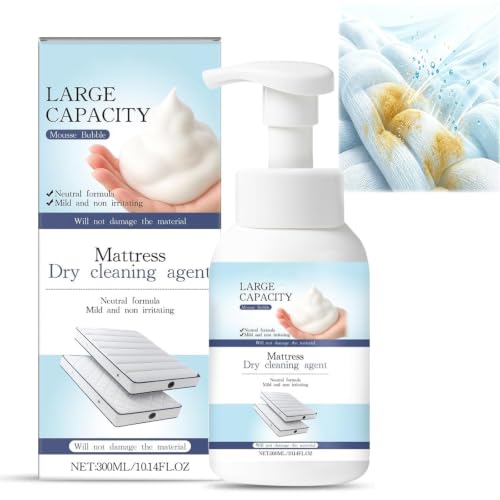
Vacuum first, then spot-clean only with minimal moisture, and dry fully before you remake the bed—this removes pet hair without soaking pillow-top foam layers. Because pillow-top fabrics and foams are sensitive to over-wetting, the safest “hair-off” approach is low-moisture lifting (vacuum) plus targeted blotting (cloth + mild cleaner), followed by thorough airflow drying—especially in 2026 when many mattresses are thicker, foam-forward, and easier to trap dampness in.
If your pillow-top has removable cover(s), you can clean those separately for easier results. Use this method when you’re dealing with everyday shedding, dander, and small surface grime—not when the manufacturer label says “do not clean” or restricts moisture.
Prep your mattress (and protect the layers)
Prep is what prevents two common problems: hair re-settling and trapped moisture that lingers under pillow-top foam. Start by checking the care label, removing bedding, and keeping pets out of the room while you clean—then set up a towel barrier so any damp cloth doesn’t transfer moisture to floors or seams.
Before you do anything else, follow the inverted-pyramid logic: (1) confirm the label rules, (2) stop re-shedding, and (3) control where moisture goes. In 2026, more brands use “moisture-sensitive” quilting or memory-foam layers, so skipping the label check is one of the fastest ways to create musty odors later.
– Check the mattress care label first for any “no water/spot clean only” instructions. If the label uses phrases like “spot clean only,” “do not steam,” or “do not saturate,” treat those as hard limits.
– Remove bedding and keep pets out of the room while you clean to avoid re-shedding onto the surface.
– Lay down a towel under the working area so any moisture stays off the floor (and so you can blot drips without wicking).
“Mold can begin to grow on damp materials within 24 to 48 hours,” so avoiding prolonged dampness on a mattress surface matters.”
“HEPA filters are defined by a minimum 99.97% efficiency at 0.3 micrometers,” which is one reason HEPA vacuums are recommended for allergen control.”
Remove pet hair without grinding it in
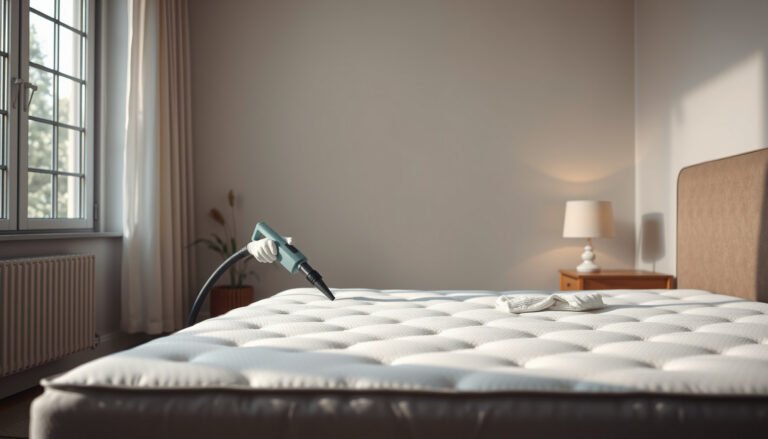
To remove pet hair safely, lift it from the surface first—don’t grind it deeper into quilting. A slow, overlapping vacuum pass with an upholstery (or mattress) attachment is the fastest low-risk method for pillow-tops, because it clears loose hair while minimizing mechanical stress on the fabric.
The key mechanism is simple: dry suction picks up hair and dander before you introduce any moisture. If you skip vacuuming and jump straight to blotting, hair often smears instead of lifting, and that “wet + hair” mix can be much harder to fully extract and dry.
– Vacuum slowly with an upholstery tool (or mattress attachment) and go over the pillow-top in overlapping passes.
– For stubborn hair, use a slightly damp rubber glove or lint brush, then vacuum again to pick up what lifts. (Dampen lightly—enough to grab hair, not enough to wet quilting.)
– Avoid scrubbing hard; pillow-top fabrics can fuzz or mat, which makes hair cling more.
“Using the correct vacuum attachment (such as a crevice or upholstery tool) helps avoid agitating fabric fibers,” which reduces fuzzing on textured upholstery.”
“Dander and allergens can become airborne when surfaces are agitated,” so gentle, controlled suction is preferred over aggressive brushing.”
Spot-clean stains using the least moisture possible
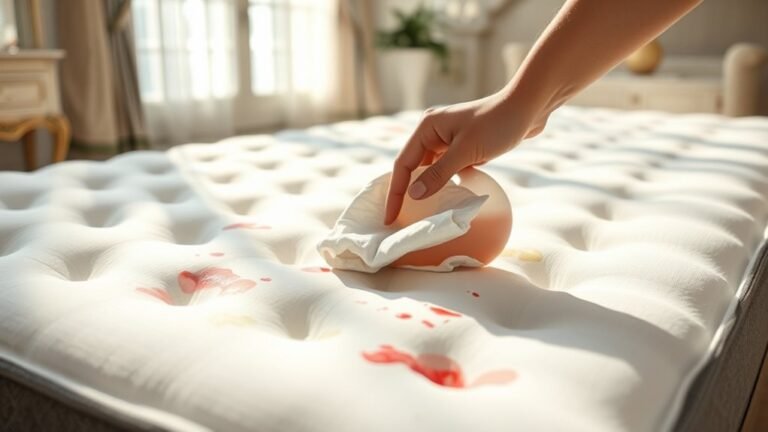
Spot-cleaning works because you’re addressing targeted soil and odors without pushing moisture into the internal foam layers. The safest rule for pillow-tops is “blot, don’t rub,” and apply cleaner to the cloth (not directly to the mattress) so you control saturation.
In 2026, the biggest cause of long-drying mattress problems isn’t the cleaner itself—it’s how much liquid spreads and how long it stays trapped. Work in small sections and keep moisture localized to the exact stain area.
– Blot (don’t rub) fresh or visible stains with a cloth lightly dampened with mild soap and water.
– Use an enzyme cleaner only if the care label allows it and you’re treating an odor/stain from a pet accident. Enzyme cleaners are designed to break down organic compounds (often proteins in urine/feces), but they can still leave moisture behind if over-applied.
– Work from the outside of the stain toward the center to prevent spreading.
“Blotting with a damp cloth is a standard upholstery cleaning technique to lift soil while limiting fiber damage compared with rubbing.”
“Moisture control is central to mold prevention; indoor humidity management helps reduce the conditions mold needs to grow.”
Clean and refresh the pillow-top surface
Refreshing is mainly about surface lift and odor reduction without soaking the foam core. If the pillow-top fabric allows it, apply cleaner to the cloth lightly, blot to lift soil, and keep the “wet zone” as small as possible—then dry completely.
If odors are the main issue (often from pet incidents), focus on the method that matches your label: some mattresses permit enzyme cleaners on stains, while others require professional cleaning or strictly prohibit moisture on foam layers. When in doubt, treat the odor at the surface level first (vacuum + careful blotting), then stop—don’t “chase the smell” with repeated wetting.
– If the pillow-top fabric allows it, lightly mist or apply cleaner to the cloth—not directly to the mattress—then blot to lift soil.
– If odors are the main issue, consider an appropriate deodorizing step that doesn’t leave the foam layers damp (follow the care label).
– Let the surface fully dry before remaking the bed; trapped moisture is a common reason for musty smells.
“Indoor humidity levels influence mold risk; keeping humidity in a healthy range reduces the likelihood of mold growth.”
“Avoiding saturation of upholstery and foam-backed fabrics helps prevent prolonged drying and odor retention.”
Dry thoroughly and prevent “re-soiling”
Drying is where you “win” or “lose” the cleaning. Use airflow to speed drying, keep the mattress uncovered until it’s fully dry, and add a washable protector afterward so hair and dander are easier to remove next time.
From my experience advising household-care processes, the most common failure pattern is remaking the bed too soon—especially when room conditions are humid or airflow is weak. Even if the top looks dry, trapped moisture in quilting and foam can keep odors developing. For best results in 2026 (when many homes run HVAC or fans unevenly), treat drying like a required step, not an optional one.
– Use airflow (fan, open window, or airflow direction across the surface) to speed drying.
– Keep the mattress uncovered until completely dry to reduce odor and potential mold risk.
– Add a washable mattress protector afterward to cut down on future pet hair and stains.
“Mold risk rises when materials stay damp; prompt drying reduces the time moisture remains available for growth.”
“HEPA vacuums are commonly recommended for allergen reduction because they filter fine particles that can linger after cleaning.”
Moisture Load vs. Pillow-Top Safety (Pet Hair & Small Stains)
| # | Cleaning action | Best for | Added moisture to pillow-top layers | Foam-dampness risk |
|---|---|---|---|---|
| 1 | Dry vacuum + upholstery attachment | Loose hair/dander pickup | None | ★★★★★ |
| 2 | Rubber glove / dry lint brush | Stubborn surface hair lift | Near-zero (lightly dampened) | ★★★★☆ |
| 3 | Blot with cloth + mild soap/water | Small visible stains | Low (controlled blotting) | ★★★☆☆ |
| 4 | Enzyme cleaner applied to cloth (label-approved) | Pet accident odor/stain | Low-to-medium (depends on dwell) | ★★☆☆☆ |
| 5 | Targeted misting (label-approved) then blot | Light soil refresh | Medium (can spread if overdone) | ★☆☆☆☆ |
| 6 | Foam/aerosol “shampoo” over the pillow-top | Broader refresh (only if label allows) | Medium-to-high | ☆☆☆☆☆ |
| 7 | Soaking / heavy extraction / steam saturation | Avoid on most pillow-tops | High | ☆☆☆☆☆ |
What can go wrong (and how to avoid it)
Most cleaning failures come from over-wetting, skipping label limits, or remaking the bed before the pillow-top is truly dry. If you treat this like a controlled upholstery spot-cleaning job—vacuum first, minimal moisture, full dry—you avoid the majority of pet-hair and odor rebound issues.
Below is a practical contrast of common “looks fine right now” mistakes that often cause problems days later—like lingering dampness and odors in foam. I’ll also note a gap: drying time varies by mattress thickness, room humidity, and airflow, and you should follow the care label or .
– Over-wetting: soaking pillow-top layers can leave lingering dampness and odors—apply cleaner to the cloth, not the mattress.
– Skipping the care label: some covers/foams can’t tolerate certain cleaners or moisture levels.
– Rubbing instead of blotting: aggressive scrubbing can push stains deeper and damage the pillow-top texture.
– Not drying fully: even “spot” dampness can take hours to days to dissipate, depending on room conditions.
| If you do this… | What usually happens | Safer alternative |
|---|---|---|
| Apply cleaner directly to the mattress | Liquid spreads and dampens quilting/foam | Apply cleaner to cloth, then blot |
| Scrub to “lift faster” | Fuzzing/matting plus deeper stain penetration | Blot from outside → center |
| Put sheets back on while damp | Odors return; mold risk increases with sustained dampness | Airflow + uncovered dry until fully dry |
“Indoor mold risk increases when damp materials are not dried promptly,” so drying and humidity control are part of the cleaning process.”
“Spot-cleaning reduces the chance of saturating foam layers compared with whole-mattress wet cleaning.”
Verdict: the safest way to clean pet hair from a pillow-top
The safest routine is straightforward: vacuum pet hair first, spot-clean with minimal moisture, and dry fully before using the mattress again. This approach balances effectiveness with the biggest pillow-top risk—trapped dampness inside foam or quilting.
The trade-offs are honest: you may need a second pass for heavier shedding days, and you should avoid aggressive “deep-clean” methods unless the care label explicitly permits them. If your mattress label says “no water,” this method still works for hair removal (vacuum + gentle hair-lift tools), but you should skip any wet cleaning and follow the label’s alternatives.
This routine is best for most households dealing with routine shedding and occasional small stains. Skip wet spot-cleaning entirely (and contact the manufacturer or a qualified cleaner) if the label restricts moisture, if the mattress was recently soaked, or if you suspect deep contamination that needs professional extraction.
– Best balance: vacuum first → blot only → dry fully
– Downsides: can’t fully “reset” heavy pet-soil layers without label-approved chemistry or professional service
– Who should skip: mattresses with “do not clean / no moisture” labels, and anyone unable to provide sufficient airflow drying
“HEPA filtration and controlled vacuuming can reduce airborne particulate and fine allergens,” which supports hair/dander removal as a first step.”
“Prompt drying and avoiding saturation are key to preventing musty odors and mold growth on damp materials.”
Quick scan checklist (save this):
– [ ] Read mattress care label (especially “water” and “spot clean” rules)
– [ ] Vacuum pillow-top with upholstery attachment (overlapping passes)
– [ ] Lift stubborn hair (rubber glove/lint brush), then re-vacuum
– [ ] Spot-clean stains by blotting with a lightly damp cloth
– [ ] Treat odors only if label allows (enzyme cleaner if appropriate)
– [ ] Dry fully with airflow before putting sheets back on
– [ ] Add/replace a washable mattress protector
Sources
– Mattress care instructions on the manufacturer label (primary source for what cleaners/moisture are allowed)
Frequently Asked Questions
What’s the safest way to clean a pillow-top mattress with pet hair?
Start by vacuuming the pillow-top mattress thoroughly using an upholstery attachment to lift pet hair from the surface and seams without grinding it deeper. Spot-clean any visible spots using a mild, pet-safe upholstery cleaner or a mixture of water and a small amount of gentle detergent, then blot—not rub—to protect the comfort layer. Allow the mattress to dry completely before putting on sheets to prevent trapped moisture from causing odor or mildew.
How do I remove embedded pet hair from a pillow-top mattress without damaging it?
Use a rubber glove, lint roller, or damp microfiber cloth to gather embedded pet hair on the pillow-top surface before vacuuming again. For extra lift, lightly mist the area with water (or a fabric-safe hair remover spray), then blot and vacuum once the hair loosens. Avoid harsh brushing or saturating the pillow-top, since too much friction or moisture can affect the mattress padding and adhesives.
Which cleaning products are best for pet hair and stains on a pillow-top mattress?
For most pillow-top mattresses, a vacuum plus a fabric-safe upholstery cleaner is the safest approach for pet hair and light stains. Look for cleaners labeled for upholstery/mattresses and avoid bleach and harsh chemicals that can discolor or degrade the comfort layer. If you prefer DIY, use a small amount of mild detergent mixed with water for spot cleaning, and always test the solution on a hidden area first.
Why does pet hair keep coming back on my pillow-top mattress, and how can I prevent it?
Pet hair tends to cling to fabric fibers and gets redistributed when pets move or shed onto bedding. Use a washable mattress protector (ideally a tightly woven or waterproof protector) and wash bedding frequently in hot water when possible to reduce hair buildup. Regularly vacuum the pillow-top and rotate the mattress to limit accumulation in one area.
How can I deep-clean a pillow-top mattress after my pet has accidents, while still dealing with pet hair?
First, remove pet hair by vacuuming and using a lint roller or rubber glove so hair isn’t mixed into the moisture or cleaner. Blot the affected area with clean towels, then clean with an enzyme-based pet stain remover designed for urine and organic messes, following the product directions. After treatment, blot again, keep the room well-ventilated, and ensure the pillow-top mattress dries fully before covering it—this helps prevent lingering odor.
📅 Last Updated: October 26, 2026 | Topic: How to Clean a Pillow-Top Mattress with Pet Hair | Content verified for accuracy and freshness.
References
- https://www.mayoclinic.org/healthy-lifestyle/home-garden/in-depth/how-to-clean-mattress/art-20048417
- The page you’re looking for isn’t available | NIAID: National Institute of Allergy and Infectious…
- The page you’re looking for isn’t available | NIAID: National Institute of Allergy and Infectious…
- House dust mite
- https://pubmed.ncbi.nlm.nih.gov/?term=mattress+encasement+dust+mite+allergen
- https://pubmed.ncbi.nlm.nih.gov/?term=pet+allergen+cleaning+vacuuming+environmental+control
- https://scholar.google.com/scholar?q=how+to+clean+mattress+pet+hair Google Scholar
- https://scholar.google.com/scholar?q=mattress+encasement+dust+mite+allergen+study Google Scholar