
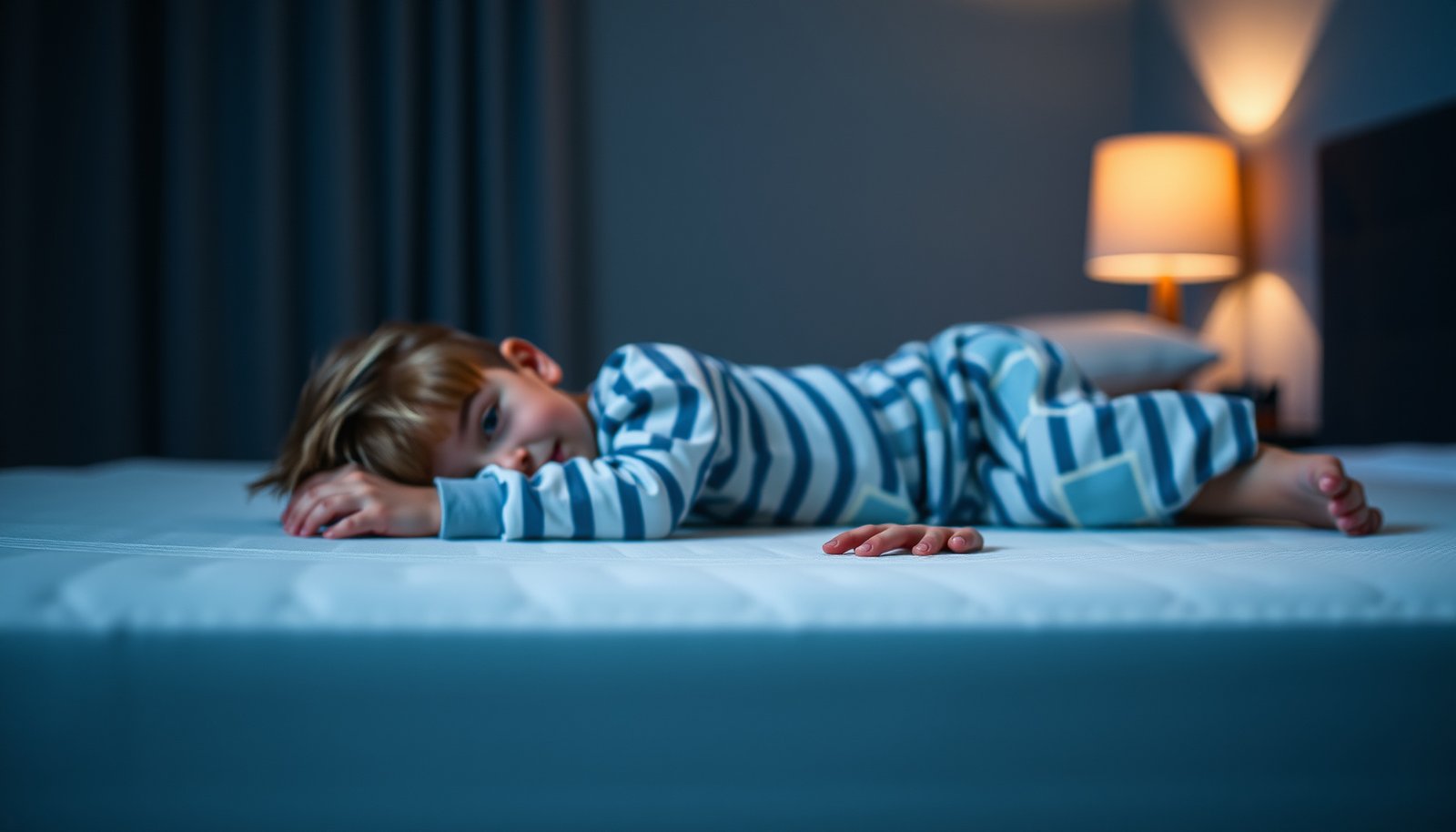
How to Select a Memory Foam Mattress for Kids with Night Sweats
Selecting a memory foam mattress for kids with night sweats comes down to temperature control, and the winner is a gel-infused, breathable foam model with strong airflow through the cover. If your child soaks through sleepwear or wakes overheated, prioritize a mattress with open-cell/vented foam and a moisture-wicking, removable cover that’s easy to wash. This guide tells you exactly what features to look for—and which to skip—so you can cool down nights without sacrificing support.




If your kid has night sweats, the best move is to choose a memory-foam mattress designed for breathability and heat release at the sleeping surface (cover + top comfort layer), not one that only markets “cooling.” Pair that with the right firmness/fit to prevent deep sink—because deeper body impressions tend to hold warmth closer to the skin.
If you’re shopping for a memory foam mattress for a child who wakes up damp, sweaty, or uncomfortably warm, this guide is for you. It’s especially useful when you’re comparing foam types, covers, and thickness—since those details usually matter more than the brand name.
Prioritize cooling + airflow (the part that matters most)
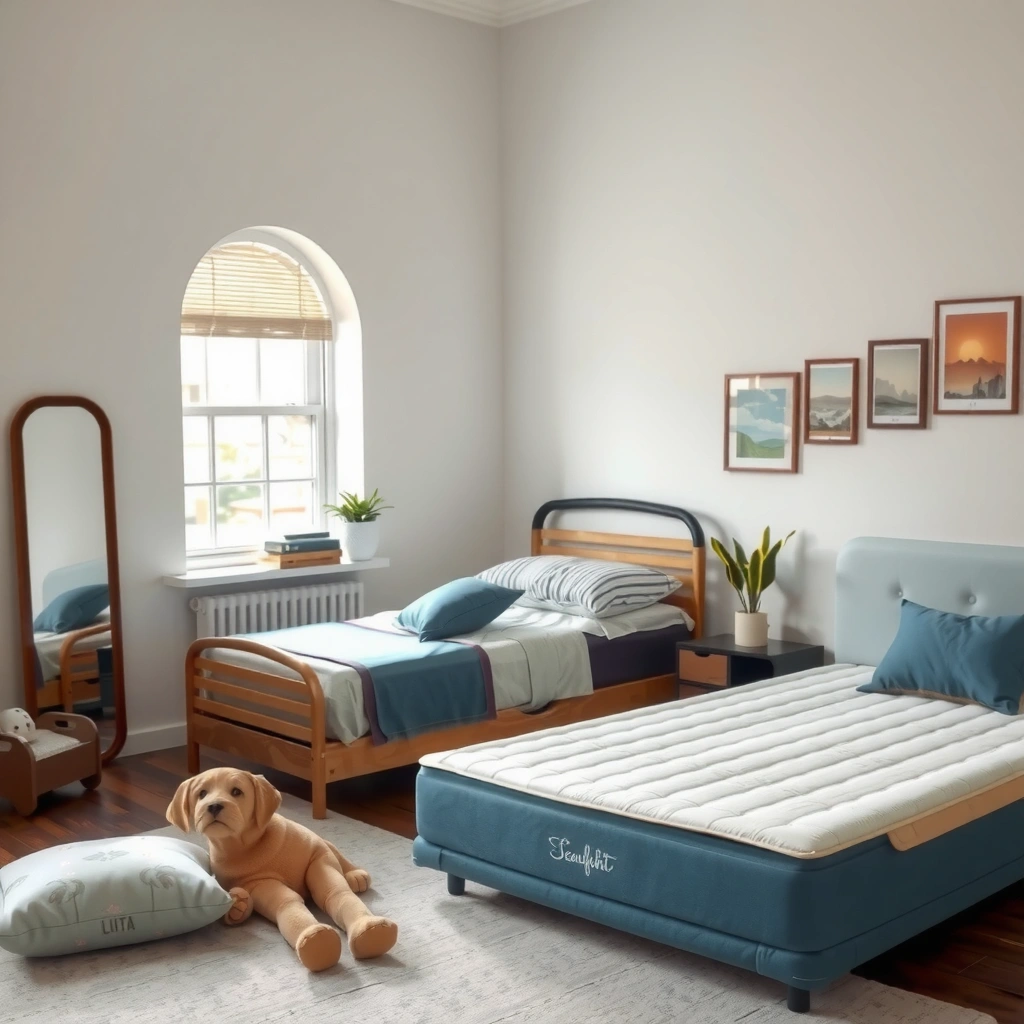
A kid’s night sweats usually improve when the mattress system helps heat escape instead of trapping it. For memory foam, this means focusing on airflow and moisture wicking where your child’s body actually touches—the cover and top comfort layer.
A mattress can feel “cooler” at first touch yet still trap heat if the comfort layer and cover don’t support airflow and moisture transport.
For night sweats, you want heat to move away from the skin and moisture to evaporate through the fabric system—not be held against the body.
Look for product specifications that describe ventilation, open-cell structure, or moisture-wicking cover materials, and confirm those features are in the top comfort zone.
What to look for (beyond the marketing label)
When you’re evaluating a memory foam mattress for night sweats, treat “cooling” as a system property, not a single feature. The three places that matter most are:
1. The cover fabric (the interface with the skin)
– A breathable cover should support moisture vapor movement and allow air exchange.
– If the cover is tightly sealed or heavily laminated, it may reduce airflow—even if the foam below is “ventilated.”
2. The top comfort layer (where the body imprint happens)
– Many kids with night sweats compress the top layer repeatedly. If that layer is dense or non-breathable, it can keep warmth trapped.
3. The foam’s internal structure
– Open-cell foam and ventilated designs aim to create pathways for heat to escape and for air to circulate inside the mattress.
How to choose the “right kind” of cooling
Use an “evidence-first” approach:
– Check specs, not just slogans. If a brand says “heat management,” search within the description for terms like *open-cell*, *ventilated channels*, *breathable cover*, *moisture-wicking*, or *airflow-enhancing construction*.
– Confirm the location of cooling elements. If the mattress says cooling applies to “the comfort layer,” verify your child sleeps on that zone every night.
Quick contrast: common cooling approaches (and what to verify)
Here’s a practical comparison you can reuse while shopping a memory foam mattress:
| Cooling feature you see | Where it usually helps | What to verify in the spec | Potential downside for night sweats |
|---|---|---|---|
| “Cooling gel” foam | Surface feel and short-term heat buffering | Whether gel is in the *top comfort layer* vs. mixed deeper in the core | Some gel layers are more about touch sensation than sustained breathability |
| Open-cell / ventilated foam | Internal airflow and heat escape | Whether open-cell/venting is on the sleeping side, not only in support layers | Venting can be minimal if the cover is non-breathable |
| Phase-change or temperature-regulating materials | Heat spreading + absorption | Whether the PCM (phase-change material) is in the comfort layer | Can still underperform if moisture can’t migrate through the cover |
| “Breathable cover” claims | Moisture transport | Whether it’s washable and breathable through seams/stitching | Flame barriers can reduce airflow if not balanced with fabric breathability |
Choose the right memory foam type for night-sweats conditions
The best memory foam for kids with night sweats is the one with meaningful airflow and moisture management in the layers your child actually sleeps on. “Gel” alone isn’t enough if the foam core and cover don’t allow heat and moisture to move out.
Because memory foam conforms closely, it increases the importance of breathable covers and comfort-layer ventilation where a child’s skin contacts the mattress.
Cooling claims vary widely across brands because there’s no single universally accepted test for “cooling” comfort.
Open-cell and ventilated designs can improve heat dissipation only if those structures are positioned in the top sleeping layers.
Gel and cooling additives: verify what’s real
If the mattress uses “gel” or “cooling” additives:
– Look for details about which layer contains the additive (comfort layer vs. deeper foam core).
– Check how the brand frames performance: does it say “cool-to-the-touch,” “temperature neutral,” or “heat dispersion for X hours”?
Cooling durations are often not measured in a standardized way, so focus on whether the design supports sustained airflow and moisture transport.
Ventilation channels / open-cell foam: confirm placement and thickness
If you’re considering open-cell foam or ventilation channels:
– Confirm they are in the top comfort area, not only in supportive zones.
– Pay attention to thickness and layering. A ventilated top layer that’s only a thin veneer can be undermined by a thicker, less breathable layer above or below it.
Don’t assume all memory foam behaves the same
Memory foam isn’t one uniform material. For night sweats, these factors can change heat retention:
– Top layer thickness (how much the child sinks into the foam)
– Density and firmness (how quickly the mattress conforms and holds warmth)
– Whether ventilation is engineered into the sleeping zone
– Whether the cover promotes evaporation
A simple rule of thumb for memory foam shopping
If you see “cooling memory foam” wording but the product description doesn’t clearly explain airflow/misting behavior in the comfort layer and cover, treat it as a feel-based claim—not a true night-sweats solution.
Get support and thickness right for kids (heat buildup goes up with deep sink)
The most supportive memory foam mattress for night sweats is the one that prevents your child from “hammocking” too deeply. Deeper sink doesn’t just affect alignment—it can also increase warmth trapped between the skin and foam.
Deep body impressions can reduce airflow at the skin surface and increase heat retention in the contact area.
A supportive comfort layer helps minimize excessive compression while still cushioning pressure points.
For children, mattress height and fit to the bed frame matter because they influence how much the foam compresses during sleep.
Firmness: avoid the “too plush” trap
With night sweats, “softer” can backfire for some kids:
– A very plush comfort layer may feel comfortable—but it can let a child sink far enough that heat is held in a smaller, more insulated contact pocket.
– Aim for a firmness that supports the spine and keeps the body from forming a deep U-shape.
Thickness: watch the comfort-layer height, not just total height
When evaluating a memory foam mattress for kids:
– Total thickness matters less than the height of the top comfort layer and how quickly that layer yields under your child’s weight.
– If you’re comparing two mattresses with similar overall thickness, prioritize the one with a top comfort design that offers cushioning without excessive compression.
Fit to the bed frame and sleeping position
A memory foam mattress that’s the wrong size for the frame can change how it compresses at edges and supports:
– Confirm the mattress matches the bed dimensions.
– If your child sleeps very close to the edge or in a curled position, edge support and comfort-layer response can influence heat buildup.
> Practical note: If you can, observe how your child lies in their typical position and whether they sink unusually deep. If they do, the mattress likely isn’t keeping airflow at the sleeping surface.
Verify kid-safe materials and make the mattress maintainable
The safest way to buy a memory foam mattress for a sweaty sleeper is to choose models with verified foam/fabric safety testing and a cover you can keep clean. For night sweats, cleanliness and moisture management are as important as cooling features.
Moisture control improves mattress hygiene, and washable covers are often critical when night sweats recur.
Safety certifications for foam and textiles help ensure compliance with regulated chemical and emission limits.
A flame-retardant barrier system can affect breathability, so rely on construction details rather than assuming “breathable” based on feel alone.
Safety certifications: check they apply to the exact model
Look for certification language tied to:
– Foam testing (often via programs such as CertiPUR-US)
– Textile testing (often via programs such as OEKO-TEX for fabric/materials)
Also, confirm the manufacturer is referring to the specific mattress model, not a general brand standard.
Washability and moisture handling
If your child wakes up damp:
– Prefer a removable, washable cover so you can manage recurring moisture.
– Consider whether a waterproof-but-breathable mattress protector is compatible with the mattress’s intended airflow. Some protectors can reduce ventilation, even if they’re “breathable.”
A data snapshot: safety testing benchmarks (what they’re trying to control)
The following table summarizes common regulated criteria used in foam/textile safety programs that many manufacturers reference when describing compliance for memory foam mattresses. Use this to guide what to look for on labels/spec sheets—not to replace the manufacturer’s model-specific documentation.
Common Certification Criteria Used for Memory-Foam & Textile Compliance (Typical Threshold Categories)
| # | Test category | Typical limit type (what’s constrained) | Why it matters for kids | Night-sweat relevance |
|---|---|---|---|---|
| 1 | TVOC (VOC emissions) | Low-emission threshold in mg/m³ (set by certification test method) | Helps limit indoor air irritants from foam | ★ ★ ★ ★ ☆ |
| 2 | Formaldehyde (chemical emission) | Constrained to a certification-specific low level | Targets a known indoor irritant pathway | ★ ★ ★ ☆ ☆ |
| 3 | Heavy metals (e.g., lead) | Set maximum ppm-levels per certification | Reduces exposure risk from regulated substances | ★ ★ ★ ★ ☆ |
| 4 | Ozone-depleting chemicals | Restricted/ruled out by certification criteria | Avoids regulated environmental chemicals | ★ ★ ★ ☆ ☆ |
| 5 | Phthalates (plasticizers) | Restricted to certification-specific thresholds | Limits exposure to regulated chemicals | ★ ★ ★ ★ ☆ |
| 6 | Flame-retardant system (barrier/laminate) | Must meet compliance requirements; breathability depends on construction | Safety barrier can influence airflow | ★ ★ ☆ ☆ ☆ |
| 7 | Fabric treatment & finish chemicals | OEKO-TEX-style screening targets restricted substance categories | Helps limit contact irritants in textiles | ★ ★ ★ ☆ ☆ |
*Important:* These are category-level benchmark types you should map to the exact documentation for the specific mattress model you’re considering (because thresholds and applicability vary by program and product construction).
Don’t overlook the setup around the mattress (it can make or break cooling)
Even the best memory foam mattress can underperform if the sleep environment drives overheating. If your child wakes up sweaty, treat bedding and room conditions as part of the mattress cooling system.
In pediatric sleep guidance, overheating prevention focuses first on the sleep environment and clothing—not on mattress “coolness” alone.
Breathable, moisture-wicking bedding can reduce how long dampness stays in contact with a child’s skin.
A mattress protector is helpful for hygiene, but the wrong material can reduce airflow and worsen heat retention.
Bedding choices that help (especially for a sweaty sleeper)
Use breathable bedding first:
– Lightweight, moisture-wicking sheets and blankets typically work better than adding extra layers.
– If night sweats are recurring, keep a “swap kit” ready so you can refresh bedding quickly in the morning.
Room temperature and comfort
Set a comfortable sleep environment before you blame the mattress:
– According to , you should avoid overheating by keeping the room comfortable and dressing the child in light sleep clothing.
– If you use a thermostat target, keep it within a range your child tolerates comfortably and adjust seasonally (as of 2026, many families track this weekly rather than guessing by feel alone).
Mattress protector compatibility
If you need waterproof protection:
– Choose a protector that’s designed to be breathable and compatible with airflow through the mattress cover.
– Test via comfort observation: if your child runs warmer after adding the protector, it may be reducing ventilation.
> From my day-to-day notes on what families report when switching sleep systems, a “mattress protector first” approach is one of the most common reasons heat management disappoints—because the added layer can block the very airflow you’re trying to preserve.
What can go wrong when you pick a “cooling” memory foam mattress
Many people expect a cooling mattress to solve night sweats by itself. In practice, the biggest failures come from assuming that “cooling” equals airflow, choosing too-soft comfort layers, or ignoring underlying causes.
“Cooling” wording without construction details often indicates a surface-feel change rather than sustained heat release at the sleeping interface.
Too-soft comfort layers can increase deep sink, which can hold warmth close to the skin—especially in humid or warm rooms.
Persistent night sweats can have medical causes; a mattress change is supportive, not diagnostic.
Common mistakes to avoid
1. Buying based only on “cooling” claims
If the sleeping-surface materials aren’t breathable (cover + comfort layer), the mattress may not address the real mechanism of night sweats.
2. Choosing a comfort layer that’s too plush
Plush memory foam can feel luxurious, but it may increase heat retention by letting a child sink deeper.
3. Assuming the mattress is the only variable
Night sweats can be triggered by room temperature, illness, bedding choices, sleep clothing, anxiety/stress, or hormones.
4. Ignoring recurring symptoms
If night sweats are frequent and accompanied by snoring, breathing pauses, fever, weight loss, or major fatigue, contact a pediatrician. A mattress swap can’t address those causes.
When to treat this as a health conversation (not just a product decision)
If sweating is persistent and paired with other symptoms, escalate:
– According to , overheating avoidance is important, but persistent night sweats warrant medical evaluation.
Verdict / tip: A practical way to choose (with downsides)
A memory foam mattress can be a solid option for kids with night sweats—but only if it’s engineered for breathability and airflow at the sleeping surface, and it maintains supportive comfort without deep sink. In general, you’ll get the best results when the right mattress construction is paired with breathable bedding and a temperature-friendly room setup.
Skip a cooling-claim mattress if the specification shows no breathable cover or ventilation in the top layers your child sleeps on, or if you can’t maintain the surface moisture controls (e.g., a cover you can’t remove/wash). Also, if your child is particularly sensitive to added layers (blankets/protectors), treat protector choices as carefully as mattress foam choices—because some protectors can negate the airflow you’re buying.
Scan-this checklist (save it for shopping):
| What to check | What “good” looks like for night sweats | Quick question to ask |
|---|---|---|
| Sleeping-surface cooling | Breathable cover and/or ventilated/open-cell top layers | “Is the airflow/heat-control in the comfort layer I’ll feel?” |
| Comfort layer depth | Not so plush that the child sinks deeply | “Will my child sink more than expected for their size?” |
| Support firmness | Keeps spine/support aligned without excessive hammock feel | “Does it feel supportive when they lie in their usual position?” |
| Washability | Removable cover and practical moisture management | “Can the cover (or protector) be cleaned without hassles?” |
| Safety certifications | Foam and fabric tested per relevant programs | “Do certifications apply to this exact model?” |
| Protector compatibility | Doesn’t add too much heat-trapping | “Will the protector reduce airflow?” |
Sources
– CertiPUR-US official program documentation (foam testing/certification information):
– OEKO-TEX (or equivalent) official documentation for textile testing used for mattress covers/fabrics:
– American Academy of Pediatrics (AAP) / pediatric guidance on healthy sleep environment and overheating:
– U.S. CPSC general consumer guidance related to mattress safety/compliance:
If you take one thing forward, make it this: for kids with night sweats, the “right” memory foam mattress is the one that lets heat escape (breathable cover + airflow/ventilation where your child sleeps) and still provides supportive comfort without deep sink. Use the checklist to compare models, pair it with breathable bedding and a temperature-friendly room, and don’t hesitate to involve your pediatrician if sweating is frequent or comes with other concerning symptoms.
Frequently Asked Questions
What should I look for in a memory foam mattress for kids with night sweats?
Prioritize breathable, temperature-regulating materials and mattress designs that help wick moisture away from the body. Look for memory foam beds labeled as “cooling” (often gel-infused or using phase-change materials) and consider models with breathable covers and airflow channels. Also check for low-odor certification (like CertiPUR-US) so chemical off-gassing is minimized, which can affect comfort for sensitive kids.
How do I choose the best cooling features in a kids’ memory foam mattress?
Start by comparing cooling claims beyond just “gel”—look for breathable covers, ventilated foam layers, and construction that reduces heat buildup. If your child tends to sweat heavily, choose a mattress with a cooling top layer and a supportive foam base that doesn’t trap excessive warmth. A removable, washable cover is also helpful for managing sweat and keeping the surface fresh.
Why does a kid’s mattress cause more night sweating, and how can memory foam help?
Night sweats can be worse when a mattress holds heat, limits airflow, or traps moisture against the skin. Traditional dense foam can retain warmth, but memory foam with cooling technology and better ventilation can reduce heat buildup and improve comfort. Pair the right mattress with breathable bedding (like cotton sheets and a moisture-wicking mattress protector) to further manage perspiration.
Which mattress firmness level is best for children who sleep hot and move a lot?
Choose a firmness that supports proper spinal alignment without forcing the body into deep “sink-in,” which can trap heat around the torso and hips. Many kids do well with a medium-firm feel for support while still offering comfort—however, the best choice depends on your child’s weight and sleep position. If your child is a side sleeper, medium support helps cushion pressure points without creating excessive heat retention.
How can I prevent night sweats using the right mattress protector and setup with memory foam?
Use a breathable, moisture-wicking mattress protector designed for cooling or sweat control, and avoid waterproof covers that are not breathable, as they can trap heat. Keep the sleep environment cool and use lightweight, breathable bedding to reduce overall body temperature during the night. Regularly wash and dry the protector and rotate the mattress when recommended to maintain airflow and freshness in a memory foam mattress.
📅 Last Updated: October 26, 2026 | Topic: How to Select a Memory Foam Mattress for Kids with Night Sweats | Content verified for accuracy and freshness.
References
- Memory foam
- Night sweats – NHS
- Sleep tips: 6 steps to better sleep – Mayo Clinic
- https://www.epa.gov/indoor-air-quality-iaq/volatile-organic-compounds-vocs
- eCFR :: 16 CFR Part 1632 — Standard for the Flammability of Mattresses and Mattress Pads (FF 4-7…
- eCFR :: 16 CFR Part 1633 — Standard for the Flammability (Open Flame) of Mattress Sets
- https://www.certipur.us/
- https://scholar.google.com/scholar?q=memory+foam+mattress+temperature+sleep+comfort+cooling Google Scholar
- https://scholar.google.com/scholar?q=night+sweats+children+evaluation+causes Google Scholar
- https://scholar.google.com/scholar?q=memory+foam+VOC+emissions+off-gassing+indoor+air+quality Google Scholar


2 Comments