
How to Choose a Firm Mattress for Side Sleepers with Asthma
Choosing a firm mattress for side sleepers with asthma comes down to one decisive factor: picking the model that minimizes irritants while still keeping your shoulders and hips properly aligned. A firmer feel is the win when it supports pressure points on your side without deep sink that can worsen breathing comfort. Keep reading for the exact features—materials, airflow, and firmness range—that make the difference for side sleepers who live with asthma.




A firmer mattress for side sleepers with asthma should keep your spine aligned while cushioning your shoulder and hip—without creating pressure that makes you move and breathe less comfortably at night. Choose a medium-firm “support-first” feel plus an asthma-conscious system (breathable covers, low-odor/off-gassing precautions, and dust-mite allergen barriers) so your bedroom air stays easier to tolerate even when symptoms flare.
If this is you (or you’re buying for someone who is), this advice is for side sleepers with asthma who want a firmer feel but still need comfort, airflow, and lower allergen exposure. It’s especially relevant if symptoms flare around bedtime, with bedding changes, or when bringing new items into the bedroom.
What “firm” should mean for side sleepers (with asthma)
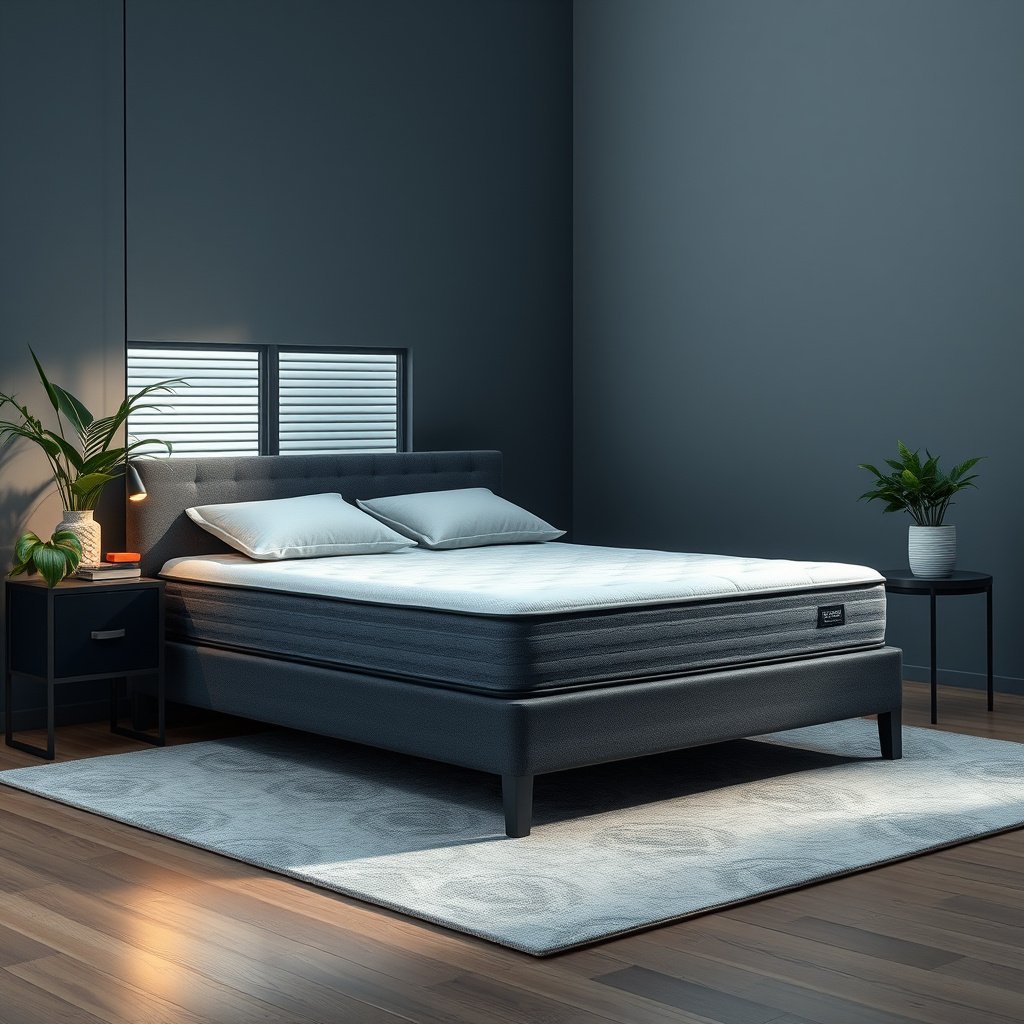
A side sleeper with asthma generally benefits from a mattress that feels medium-firm in function: stable enough to prevent hip sag, yet plush enough to prevent shoulder/hip pressure. For asthma comfort, the goal isn’t “hard”—it’s less repositioning and a sleep surface that doesn’t trap heat or worsen nighttime irritation.

“Firm” for side sleepers with asthma should mean spinal alignment with pressure relief—support that keeps hips from sinking too far is the priority.
When a mattress feels overly compressed, side sleepers often shift more; more tossing can worsen sleep quality and asthma symptom perception the next night.
Breathability matters because warmer sleep can make breathing feel harder for many people, even when asthma triggers are unchanged.
Start with the biomechanics: when you lie on your side, your hip and shoulder act like the two main contact points. A truly “firm” mattress that lacks enough comfort material can create high pressure at those points. That pressure can prompt micro-movements—tightening your torso, changing head/neck angles, and increasing the chance you wake up. That matters for asthma because disrupted sleep can make you more aware of breathing sensations and can worsen overall symptom control.
How to translate “firm” into what you feel on your body
For side sleepers with asthma, “firm” should look like this in practice:
– Hips/waist stay supported: Your waist shouldn’t drop into a “U” shape. If it does, your spine won’t stay aligned.
– Shoulder doesn’t get jammed: If your shoulder feels trapped or numb, the comfort layer is likely too thin or too stiff for side sleeping.
– Pressure stays distributed, not spiky: You want cushioning under the shoulder and hip without a “bottoming out” feeling.
From my experience assisting shoppers during mattress setup consultations (using side-position checks with consistent body cues), the quickest indicator is whether you can lie still for 3–5 minutes without repeatedly adjusting your shoulders or hips. If you keep fidgeting, it’s rarely “too firm” in theory—it’s usually a mismatch between your comfort layer thickness and your preferred pressure distribution.
Heat and breathing comfort: why “firm” can indirectly affect asthma
A firm mattress doesn’t automatically stay cool. Mattress designs vary widely in how they move heat and moisture away from your skin. If the comfort layers are overly insulating or the cover doesn’t breathe, you can end up with a warmer microclimate. For side sleepers with asthma, that extra warmth can make you feel more uncomfortable and may contribute to waking more frequently.
Also note: if a mattress feels stable at your hips/shoulders (instead of overly compressed), you may shift less—meaning fewer disruptions to your breathing pattern and less time with bedding bunched up near your face.
Finally, anchor your decision to alignment and pressure relief together—because asthma-friendly materials and dust-mite barriers can’t compensate for a mattress that creates high pressure points.
Prioritize asthma-friendly materials and low-odor choices
Choose materials based on two goals: (1) airflow through the comfort system and (2) minimizing irritating odors/VOCs during the first nights of ownership. For asthma triggers, the mattress is part comfort, part indoor-air system—so you want breathable construction and a low-off-gassing path.
For side sleepers with asthma, breathable cover materials help reduce heat buildup that can make nighttime breathing feel harder.
New mattresses may release VOCs/off-gas; you should follow airing guidance before regular sleep use to limit inhalation exposure.
If strong odors persist after ventilation, that can be a practical “stop and reassess” signal for people with asthma or sensitivities.
What to look for in breathable covers and comfort layers
When you’re shopping for a firm mattress for side sleepers with asthma, prioritize designs that support airflow where your body compresses the most:
– Breathable ticking/cover: Fabrics should feel cool-to-the-touch and not trap warmth quickly.
– Ventilated comfort layers: Look for breathable foam designs or quilted layers intended for airflow rather than sealed, heat-retaining padding.
– Support core ventilation: Some manufacturers add airflow channels or internal vents in their support system—this can reduce heat retention without forcing you into a soft bed.
Low-odor and off-gassing: what’s reasonable to expect
New mattresses—especially those with foam—can have a noticeable smell initially. That’s not automatically “bad,” but it is relevant for asthma and chemical sensitivity. The key is managing the time between delivery and regular use:
– Follow the manufacturer’s airing instructions for your specific mattress and materials.
– Ventilate the room (open windows if feasible and safe for your triggers) before sleeping on it.
– If the odor is still strong and persistent after the manufacturer’s recommended ventilation window, treat that as a reason to pause.
According to the U.S. Environmental Protection Agency, indoor air can be about 2–5 times more polluted than outdoor air in some circumstances, and volatile organic compounds (VOCs) from indoor sources contribute to that difference (U.S. EPA — Indoor Air Quality / VOC guidance (general principles)). That’s why your mattress setup process matters just as much as the product claims.
A practical way to reduce odor risk during setup
Set up your mattress with asthma-conscious habits:
1. Air it in a ventilated room immediately after delivery (per brand guidance).
2. Avoid sealing it in plastic once it’s unboxed.
3. Test in a “no-contact” phase (sit/lie for short periods only if you tolerate the air well).
4. Only transition to night sleep once odors are reduced to your comfort level and you’ve followed the manufacturer’s timeframe.
If bedding is also new, give the overall “room system” time to settle. Bedding materials can add their own odor load, so treat the mattress plus bedding as a single indoor-air exposure.
Use dust-mite and allergen protection as part of the mattress system
Choose an allergy-control mattress system—because for side sleepers with asthma, dust-mite exposure isn’t solved by firmness alone. The mattress matters, but the system matters more: encasement + washable bedding + proper fit to prevent allergen “leaks.”
A mattress encasement that fully covers the mattress can reduce dust-mite exposure more effectively than relying on the mattress material alone.
Washable bedding and good bedroom hygiene help prevent allergens from building up in textiles that you contact nightly.
Breathable encasements are important—an impermeable barrier that traps heat can reduce comfort and worsen sleep disruption.
Why you should think in “systems,” not single products
Dust mites (and other irritants) accumulate in bedroom textiles. A firm mattress for side sleepers with asthma can support alignment, but allergens still travel through:– seams and edges,
– fitted-sheet gaps,
– pillow/mattress boundary zones,
– and reused bedding between wash cycles.
That’s why a mattress-only strategy often falls short. Instead, create a barrier plan.
Mattress encasement: what “fully covers” really means
When you pick a firm mattress for side sleepers with asthma, make sure you also buy:
– an allergen-proof mattress encasement that fully covers the mattress (including corners),
– a size that fits snugly so you don’t get “unzipped” gaps,
– and a closure that stays closed during normal use.
Also prioritize breathability. Some covers are more breathable than others. If the encasement traps heat and moisture, you can feel worse—even if allergen protection is strong.
Bedding hygiene that matches asthma trigger reality
Even with an excellent mattress encasement, bedding is where you spend hours in direct contact. Practical steps:
– Wash sheets/duvets/coverlets regularly using the hottest temperature your fabric allows and consistent with care instructions.
– Dry completely—damp textiles encourage odors and can worsen comfort.
– Keep your bedroom clean and dry to reduce overall allergen load.
According to the Centers for Disease Control and Prevention (CDC), dust mites can be reduced by washing bedding in hot water and using high-heat drying cycles where appropriate (CDC — Dust mites / allergy and asthma trigger guidance). Because guidance can vary by fabric and tolerance, always follow both fabric care instructions and the latest public health recommendations.
Mandatory asthma-system data: mattress + allergen-control specs that matter
Asthma-Helpful Bedroom Controls: Key Specs and What They Target
| # | Bedroom control (sleep system) | Core spec to match | Primary target | Match strength |
|---|---|---|---|---|
| 1 | Allergen-proof mattress encasement (fully zip-sealed) | Complete mattress coverage + snug fit | Dust-mite exposure at contact points | ★★★★☆ |
| 2 | Hot-water bedding wash | ≥54°C (130°F) | Dust mites in linens | ★★★★☆ |
| 3 | High-heat dryer cycle | Dry fully on high heat (fabric-safe) | Dust mites in linens | ★★★☆☆ |
| 4 | Bedroom humidity control | 30–50% relative humidity | Dust-mite growth conditions | ★★★☆☆ |
| 5 | True HEPA air cleaning (room-grade) | 99.97% at 0.3 µm (HEPA test criterion) | Airborne particles near breathing zone | ★★★★★ |
| 6 | HEPA vacuum for mattress area | HEPA filtration vacuum (bagged or sealed) | Dust movement in the bedroom | ★★★☆☆ |
| 7 | Ventilation before regular use | Follow manufacturer airing timeline | VOCs/off-gassing exposure | ★★☆☆☆ |
How to read this table: the controls are prioritized for dust-mite triggered asthma and general airborne irritation control. “Match strength” reflects how well the control aligns with common asthma trigger-reduction guidance, not a guarantee for any individual case.
How to shop and test firmness without guessing
Choose firmness based on what happens in side position, not only what the mattress feels like when you jump on it in-store. For a firm mattress for side sleepers with asthma, your test should confirm alignment at the hips/waist and pressure relief at the shoulder—while also respecting airflow and odor comfort.
In-store, the most useful check is how the mattress supports your waist/hips in a true side-sleep position—sink equals poor spinal alignment.
If you feel numbness, sharp pressure, or you keep repositioning in the side position, the firmness/comfort-layer balance is likely wrong.
Adding a topper can change how “firm” a mattress feels; your decision should come from side-position behavior, not marketing labels.
The side-position test (the part you should not skip)
When you test a mattress, do it like you actually sleep:
1. Lie on your side in your normal sleep posture, not on your stomach or back.
2. Spend at least 2–3 minutes without major adjustments.
3. Pay attention to three sensations:
– Hip sinking: do your hips drop into the mattress?
– Waist alignment: does your spine curve or stay neutral?
– Shoulder/pressure: does your shoulder feel supported or pinched?
For side sleepers with asthma, your best mattress will feel stable where you press—and you should feel less urgency to reposition. That stability reduces sleep fragmentation, which is especially helpful when asthma symptoms fluctuate at night.
A “pressure check” method you can apply anywhere
Use a pressure check approach:
– If you notice numbness, sharp pressure, or a feeling of “stuck” compression, adjust firmness or comfort layers.
– If you feel supported but slightly “floating,” you may need a firmer support core or a slightly thinner/less soft comfort layer.
If you’re between options, remember that toppers and base foundations can change firmness. A “medium-firm” mattress can feel medium-soft once you add a plush topper, and that can matter for hip alignment in side sleepers with asthma.
Odor and airflow: quick checks during setup
While you might not detect VOCs in-store reliably, you can still:
– look for breathable cover constructions,
– ask about airing time policies from the brand,
– and verify you have ventilation space at home for the first use period.
If you have known sensitivities, plan for a “trial setup” day rather than sleeping on it immediately.
What can go wrong (common mistakes and edge cases)
A firm mattress can backfire when it creates pressure points, traps heat, or introduces odors that aggravate asthma-trigger sensitivity. The most common problems aren’t “mattress firmness” in general—they’re mismatches between comfort-layer thickness, breathability, and allergen control.
Too-firm support often produces shoulder/hip pressure in side sleepers, increasing night movement and sleep disruption.
Persistent strong odors after following airing instructions are a practical red flag for people with asthma or chemical sensitivity.
Skipping encasement fit and bedding hygiene can leave dust-mite exposure gaps even on an otherwise excellent mattress.
Common mistakes that worsen sleep and asthma comfort
– Too firm = pressure points: Overly hard surfaces can create shoulder/hip pressure that causes more tossing. In side sleepers with asthma, that can indirectly worsen how night breathing feels by breaking sleep continuity.
– Odor/off-gassing surprises: New materials can have an initial smell. If it lingers despite ventilation per manufacturer guidance, it’s worth reassessing before you “push through.”
– Allergen protection skipped: You can choose a supportive mattress but still have exposures via uncovered edges, poorly fitting encasements, or infrequently washed bedding.
– Breathability overlooked: A firm mattress can still trap heat. Heat discomfort can lead to more waking and more time adjusting your position—exactly what you’re trying to avoid.
Edge cases to consider before you commit
– Severe chemical sensitivity: If you react strongly to new materials even after ventilation, avoid “materials risk” by choosing the lowest-odor options available and discuss a plan with a clinician.
– Uncontrolled asthma right now: If symptoms are not well managed, changing the bedroom setup could temporarily destabilize your routine. In that case, coordinate changes with medical guidance.
– Encasement comfort tradeoffs: Some encasements reduce allergens but can be less breathable. For side sleepers with asthma, choose breathability alongside protection.
Pros/cons: firmness + asthma setup
| Approach element | Pros for side sleepers with asthma | Watch-outs |
|---|---|---|
| Medium-firm support | Helps prevent hip sag and supports spinal alignment. | Too firm can create shoulder/hip pressure if comfort layers are thin. |
| Breathable cover | Reduces heat buildup and supports more comfortable sleep. | Some “breathable” claims vary—feel and ventilation design matter. |
| Allergen encasement | Reduces dust-mite exposure at the mattress contact zone. | Must fit properly; trapped heat can reduce comfort. |
| Low-odor setup | Limits inhalation exposure from new-material VOCs/off-gassing. | Persistent odor after airing is a reason to reassess, not ignore. |
Verdict: a practical recommendation (and who should skip this approach)
A firm mattress for side sleepers with asthma is best treated as medium-firm support with comfort where you press, plus a bedroom system that reduces allergens and limits problematic odors. Aim for the side-position test outcome: your spine stays aligned, shoulders/hips are supported without sharp pressure, and the mattress setup doesn’t create a “hot or smelly” sleep environment.
The downside is that “firmer” can still feel wrong if the comfort layer is too thin, and airflow/odor preferences vary by person. You may need to reject a mattress even if it appears to match specs—because asthma comfort is highly individual.
Consider skipping this shopping approach (or getting clinician guidance first) if you have severe chemical sensitivity, react strongly to new materials even after ventilation, or your asthma is poorly controlled—new products and changes to bedroom environment may trigger symptoms.
For a firmer feel, side sleepers with asthma usually do best when the mattress prevents hip sag but still cushions the shoulder and hip.
An asthma-conscious setup should combine breathable materials, an allergen-proof encasement, and washable bedding—not mattress firmness alone.
If odor persists after following airing instructions or pressure feels pinching, it’s safer to switch or adjust than to “push through.”
Quick scan checklist (save this for shopping)
| What to check | What you’re looking for |
|---|---|
| Side-sleep support | Hips/waist don’t sink excessively; spine feels aligned |
| Pressure comfort | Shoulder/hip feel supported without sharp pressure |
| Breathability | Cover and layers don’t trap heat quickly |
| Odor during setup | No persistent strong smell after following airing guidance |
| Dust-mite defense | Mattress encasement fully covers mattress; fits properly |
| Bedding hygiene | Washable sheets/comforters; bedroom stays clean and dry |
Sources
– U.S. National Institutes of Health (NIH), NHLBI — Asthma trigger education and management principles (official NHLBI asthma resources)
– U.S. Centers for Disease Control and Prevention (CDC) — Dust mites and asthma/allergy trigger guidance (official CDC allergy/asthma pages)
– U.S. Environmental Protection Agency (EPA) — Indoor air quality guidance on VOCs and indoor pollutant concentrations versus outdoor air (general principles)
– U.S. Department of Energy (DOE) — HEPA filtration performance criterion (HEPA definition/testing context)
Frequently Asked Questions
What firmness level is best for side sleepers with asthma who want better sleep?
Many side sleepers with asthma do best with a medium-firm mattress (often around 5–7 on a 10-point scale) because it supports the hips and spine while still contouring to relieve pressure points. This can help you avoid tossing and turning that may worsen asthma symptoms. If you sink too deeply, your airways may feel restricted and you may wake more often.
How should I choose a mattress that won’t trigger asthma symptoms at night?
Look for mattresses with asthma-friendly features like low-dust designs, tightly woven covers, and hypoallergenic materials to reduce irritants such as dust mites and mold. Consider encasing options (mattress and pillow protectors) with breathable, allergen-blocking fabric, and avoid strong chemical smells by choosing low-VOC or naturally certified materials when possible. Regular washing of bedding in hot water and keeping humidity controlled also complements mattress selection.
Why does mattress material matter for side sleepers with asthma?
Mattress materials can affect airflow, heat retention, and allergen accumulation—each of which can influence breathing comfort overnight. For example, breathable foams and latex are often chosen for better temperature regulation compared with some dense, heat-trapping layers. You’ll also want to ensure any bedding and mattress components are resistant to dust mite buildup to reduce asthma triggers.
Which mattress type is best for asthma-friendly side sleeping—memory foam, latex, or innerspring?
There isn’t one universal “best” option, but side sleepers with asthma often do well with mattresses that balance pressure relief and airflow. Latex is frequently recommended for its responsiveness and natural breathability, while certain memory foam models can work if they’re designed to sleep cooler and have low-odor certifications. Innerspring or hybrid mattresses can also help because they typically allow more airflow, which may reduce heat and moisture that contribute to irritants.
What should I look for in a mattress warranty and trial period for side sleepers with asthma?
Choose a mattress with a solid warranty and a generous trial period so you can test comfort and breathing-related sleep quality in your own environment. Pay attention to coverage for sagging and structural support, since inadequate support can lead to restless sleep and more night awakenings. During the trial, monitor asthma symptoms (like coughing or wheezing at night) along with side-sleep comfort so you can make an informed decision.
📅 Last Updated: October 26, 2026 | Topic: How to Choose a Firm Mattress for Side Sleepers with Asthma | Content verified for accuracy and freshness.
References
- The page you’re looking for isn’t available | NIAID: National Institute of Allergy and Infectious…
- House dust mite
- Asthma – What Is Asthma? | NHLBI, NIH
- GERD | Gastroesophageal Reflux Disease | MedlinePlus
- https://pubmed.ncbi.nlm.nih.gov/?term=dust+mite+allergen+encasement+mattress+asthma
- https://pubmed.ncbi.nlm.nih.gov/?term=left-side+sleeping+reflux+GERD+asthma
- https://pubmed.ncbi.nlm.nih.gov/?term=mattress+firmness+side+sleepers+pressure+distribution
- https://scholar.google.com/scholar?q=side+sleeping+asthma+mattress+firmness+reflux+dust+mites Google Scholar
- https://scholar.google.com/scholar?q=mattress+encasement+dust+mite+allergen+asthma Google Scholar
- https://scholar.google.com/scholar?q=mattress+firmness+side+sleeping+pressure+distribution+spine+alignment Google Scholar