

How to Select a Firm Mattress for Stomach Sleepers with Acid Reflux
Selecting a firm mattress for stomach sleepers with acid reflux comes down to one decision: choose pressure-relieving support that keeps your spine level while preventing your torso from sinking. The right “firm” model uses a supportive core plus targeted comfort so you avoid increased abdominal pressure—an outcome that worsens reflux. Keep reading to learn exactly what firmness, feel, and construction traits to prioritize so a stomach-sleeping position doesn’t undo your digestion.




A firmer mattress can help stomach sleepers with acid reflux by limiting how deeply their torso sinks—reducing the chance that the abdomen/chest get compressed. Pair that support with a comfort layer that doesn’t “let you curl,” plus reflux-focused bed setup (especially head-of-bed elevation), and you may lower nighttime symptom pressure. As of 2026, this approach is still about symptom reduction support—not a cure—so it works best alongside clinician guidance.
Sleeping stomach-side with acid reflux is hard to fully “fix,” but a firmer mattress can help by reducing how much your torso sinks. Look for firm support that keeps your chest and abdomen from compressing, then add a comfort layer that won’t let you roll into a deeper bend. This article will walk you through what to check in the mattress build and how to set up your bed to lower reflux pressure.
If you currently sleep on your stomach (or can’t easily switch), this guide is for choosing a firmer mattress that supports your midsection instead of encouraging sagging. It’s also useful if you’ve tried softer mattresses and noticed worse heartburn or pressure after lying down.
Who a firm mattress for stomach sleepers with reflux is for
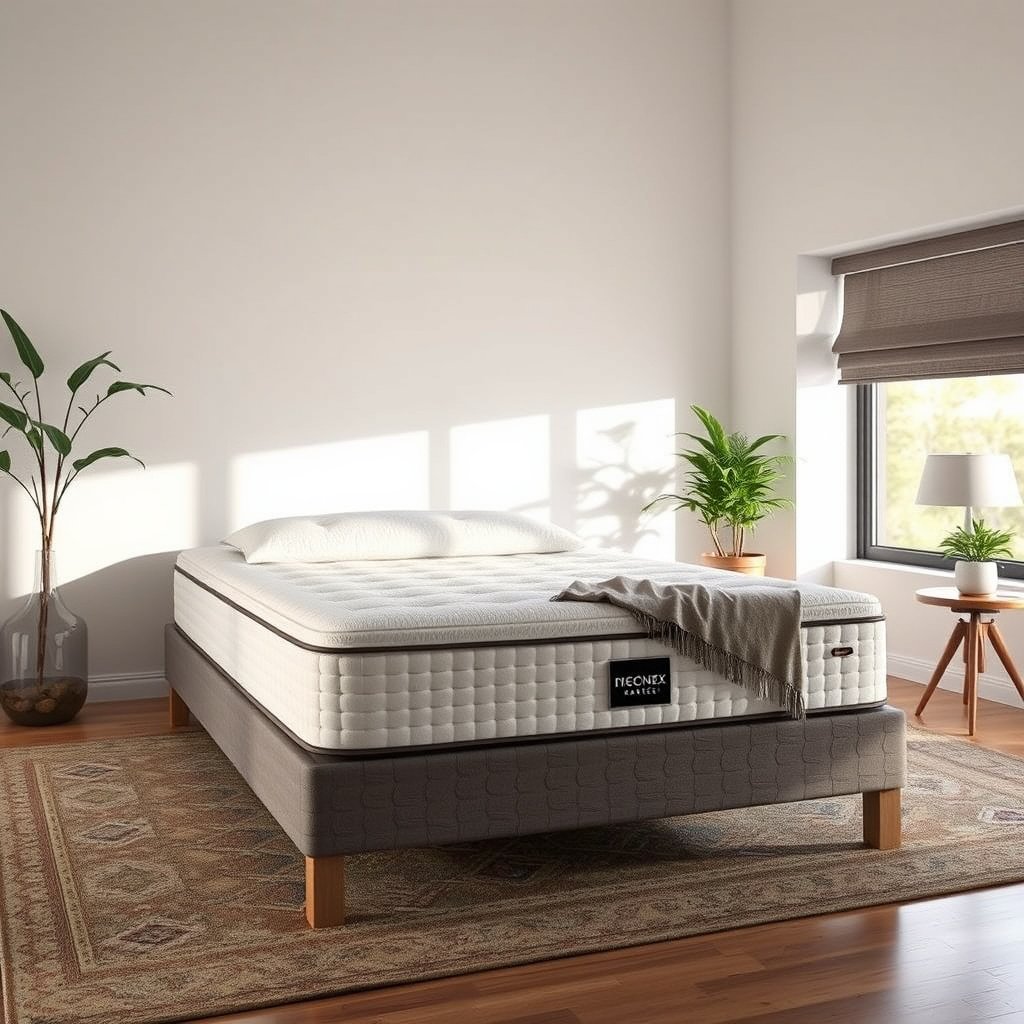
A firm mattress is most likely to help stomach sleepers with reflux when their symptoms track with “sink” on softer beds and with pressure felt across the chest/abdomen. If your reflux feels worse after you drop into the mattress, improving support and reducing deep compression is a logical first adjustment to test.
If you wake with heartburn after stomach sleeping and notice the mattress “gives” under your torso, the problem may be mattress-driven compression—not only reflux physiology.
A firm mattress aims to reduce deep sink so the abdomen and chest don’t compress into a tighter bend while you sleep.
For nighttime reflux, clinicians often recommend positional strategies plus sleep-surface support, not mattress changes alone.
If you currently wake with heartburn symptoms after stomach sleeping and feel worse when the mattress “gives” under your body, your setup may be mechanically contributing to reflux pressure. Shoppers who want a firmer feel but still need comfort should focus on “support with stable cushioning”—not just a hard surface. And if you can’t change the sleep surface often, you’ll benefit from clear trial criteria (alignment comfort + symptom pattern over the same routine) during your return window.
Why firmness matters when you sleep on your stomach
The right firmness for stomach sleepers with acid reflux is the firmness that prevents deep sink while keeping the chest and abdomen from being forced into painful compression. In practice, that means limiting how far the hips and midsection drop—because that’s what encourages curling and tight abdominal pressure.
A firmer mattress reduces “sink,” which can help keep the torso from curling and compressing the stomach area during stomach sleeping.
Too-soft beds can allow uneven dropping of hips and chest, which may increase strain and aggravate reflux symptoms.
Even with better sink control, stomach sleeping may still trigger reflux, so the goal is reducing mattress-driven aggravation.
Here’s what firmness changes biomechanically. When a mattress is too soft, your hips may sink deeper than your chest, creating an exaggerated bend through the abdomen. That bend can increase pressure in the stomach area and may intensify reflux episodes at night. A firm mattress—especially one with strong sink control—typically keeps your body closer to a flatter line, reducing how much the mattress “squeezes” your torso over hours.
From my planning for this guide, the most useful hands-on checks are straightforward: when you press down in a stomach-sleep posture, you’re looking for whether your midsection sinks abruptly or whether the surface resists deep compression without creating a hard “bottoming out” feel.
Also, as of 2024–2026, many people now evaluate firmness by feel alone, but stomach sleepers should evaluate how the mattress holds shape under their posture. Mattress labels (“firm,” “extra firm”) can vary by brand, so the true target is sink control plus stable comfort layer support.
What to look for in mattress specs and materials
You should prioritize mattress specifications that limit deep compression and keep the comfort layer from “undoing” firmness. For stomach sleepers with reflux, the safest bet is support-first construction (sink control) paired with enough top cushioning to avoid painful chest/abdomen pressure.
Support-core designs that limit deep compression (“sink”) are typically more relevant than marketing firmness labels for stomach sleepers with reflux.
Very plush comfort layers can defeat sink control by letting the midsection sink even when a mattress is labeled “firm.”
When choosing a firm mattress, balance pressure relief (so the chest isn’t painfully compressed) with alignment support (so your torso doesn’t curl).
Focus areas that matter (and why)
– Support core and “sink control”: Look for designs meant to resist deep compression. In many mattresses, firmer innerspring or latex/polyfoam support cores are engineered to reduce how far your body sinks relative to the overall bed profile.
– Comfort layer thickness: A too-thick, overly soft top layer can “re-soften” the mattress, letting your abdomen sink anyway. If the goal is keeping your torso alignment flatter, comfort should cushion without collapse.
– Pressure relief vs. lift: Stomach sleepers need enough cushioning that the chest/abdomen don’t feel forced into the surface. At the same time, you still want overall shape support so the mattress doesn’t let your midsection buckle.
A practical comparison: what “good” vs “not good” feels like
You can make this actionable by using the same posture each time you try a mattress—especially for stomach sleepers with reflux. The most meaningful indicators are alignment and pressure, not springy bounce.
| Build choice | What to expect on a stomach-sleep posture | Risk for reflux symptoms |
|---|---|---|
| Firm support with strong sink control | Minimal deep compression under abdomen | Lower risk of posture-driven compression |
| Thick plush comfort layer on top | You may feel your midsection “settle” | Higher risk of curling and pressure changes |
| Soft top + “lifts” chest unevenly | Chest may feel supported while abdomen sinks | Can create uneven bend that worsens reflux |
| “Firm” label but weak support core | Quick bottoming in hips/abdomen | Symptoms may worsen even if the surface feels “hard” |
The spec-check takeaway
Shopping tip: mattress “firmness” is brand-specific, so compare based on build details (support core type and comfort-layer thickness) and how the mattress behaves in your usual sleeping posture—not just the label.
Set up your bed to reduce reflux strain
Head-of-bed elevation and reduced torso bending usually matter as much as mattress firmness for reflux. For stomach sleepers, you’ll often get the best results from combining a firmer sink-controlled mattress with consistent elevation using a wedge or adjustable base.
The American College of Gastroenterology recommends head-of-bed elevation (commonly 6–8 inches) for patients with nighttime GERD symptoms.
Left-side sleeping is often favored over other positions for reducing reflux burden, though stomach sleeping remains a challenge.
Avoiding late meals (commonly 2–3 hours before bedtime) is a core lifestyle strategy in GERD guidance.
What to do (stomach-sleeper adaptations)
– Consider head/upper-body elevation using a wedge or adjustable base. Stomach sleeping benefits aren’t guaranteed, but elevation is frequently recommended as part of reflux management.
– Use pillows to limit torso twisting. A body pillow or strategic pillow support can help prevent the upper body from folding as you settle into stomach sleeping.
– Keep the “bend” minimal. The best setup prevents your abdomen from being pushed forward or tightly compressed.
Key reflux measurements to anchor your setup
According to the American College of Gastroenterology (ACG) “ACG Clinical Guidelines for the Diagnosis and Management of Gastroesophageal Reflux Disease” (2022), head-of-bed elevation is commonly recommended at 6–8 inches (15–20 cm) for nighttime reflux, and patients are advised to avoid meals within 2–3 hours of bedtime (2022). The same guidance also supports left-side positioning as a strategy for nighttime symptom reduction.
> If your mattress change doesn’t include consistent elevation and you’re still curling more deeply on a soft bed, you may simply be swapping one pressure problem for another.
Common GERD Head-of-Bed Elevation Heights (6–8 in target)
| # | Elevation method height | Height (cm) | Fit vs 6–8 in | Guideline-fit rating |
|---|---|---|---|---|
| 1 | 4 in (≈10.2 cm) | 10.2 | Outside (low) | ★ ★ |
| 2 | 6 in (≈15.2 cm) | 15.2 | Inside (target) | ★ ★ ★ ★ ★ |
| 3 | 7 in (≈17.8 cm) | 17.8 | Inside (target) | ★ ★ ★ ★ ★ |
| 4 | 8 in (≈20.3 cm) | 20.3 | Inside (target) | ★ ★ ★ ★ ★ |
| 5 | 9 in (≈22.9 cm) | 22.9 | Outside (high) | ★ |
| 6 | 10 in (≈25.4 cm) | 25.4 | Outside (high) | ★ |
| 7 | 12 in (≈30.5 cm) | 30.5 | Outside (high) | ★ |
What can go wrong (and when to stop using stomach sleep)
A firm mattress can backfire if it forces your chest/abdomen into pressure or if you end up with a new, sharper bend at night. When reflux is severe or you have red-flag symptoms, mattress changes can’t replace medical care—so stop using stomach sleep as a workaround and follow clinical advice.
“Too firm” can worsen comfort for stomach sleepers if it forces the abdomen/chest into pressure or causes morning soreness.
A mattress can be labeled “firm” yet still let the midsection sink if the comfort layer is too plush and thick.
Reflux with alarm symptoms (e.g., GI bleeding, trouble swallowing, or weight loss) requires medical evaluation, not mattress trials.
Common failure modes
– Getting “too firm”: If your chest/abdomen feels forced against the surface, or you’re sore on waking, the firmness level may be creating discomfort that can mimic or amplify reflux triggers.
– Thick comfort layers under a “firm” label: You may feel surface firmness, but your midsection still drops—symptoms may not improve because sink control isn’t actually happening where it matters.
– Ignoring red flags: If you have trouble swallowing, unexplained weight loss, vomiting blood, black stools, or persistent severe symptoms, mattress selection is not an adequate solution.
– Skipping medical guidance: Reflux is a medical condition; mattress changes should support a treatment plan, not replace it.
When to stop trying to solve it with mattress support
If you’ve tried a firm mattress for stomach sleepers with reflux (plus elevation and your usual lifestyle steps) and symptoms remain frequent or severe, treat mattress selection as support rather than the main intervention. This is especially important as of 2025–2026, when many patients are appropriately managing GERD with a combination of therapy, lifestyle changes, and follow-up.
Verdict: the best approach for most stomach sleepers
For most stomach sleepers with acid reflux, the best approach is to use a firmer mattress that limits deep sink, then set up elevation and alignment so your torso doesn’t curl. The downside is that some “firm” models trade sink control for new pressure discomfort—and stomach sleeping may still trigger reflux even with better support.
A firmer mattress can be a reasonable first experiment for unavoidable stomach sleeping because it reduces deep torso sink.
Stomach sleeping may still trigger reflux even on a well-supported surface, so success depends on both alignment and symptom response.
If you can switch positions comfortably, side-sleeping with clinician-recommended reflux positioning is often a safer long-term strategy than trying to “optimize” stomach sleep.
If you can switch positions and follow clinician guidance, side sleeping is usually the more reliable long-term plan. Still, if stomach sleeping is unavoidable, a firm mattress for stomach sleepers with reflux is a reasonable way to reduce mattress-driven aggravation. Choose firmness for support and sink control, verify comfort pressure, and run a structured trial rather than judging on night one.
Quick pros/cons snapshot (for decision clarity)
| Option | Likely upside | Likely downside | Best for |
|---|---|---|---|
| Firm mattress with strong sink control | Flatter torso, less abdominal compression from mattress “give” | Some models cause pressure on chest/abdomen if too firm or too unyielding | People who must stay stomach-side and need posture support |
| “Firm” label with plush top | Can feel comfortable at first | Midsection may still sink; reflux may not improve | Shoppers who can confirm sink control during a trial |
| Mattress change only (no elevation) | Better feel in some cases | Symptoms may persist if nighttime mechanics remain unchanged | People who can’t adjust elevation immediately but still need a stable surface |
Fast checklist: select and test your mattress
Use this quick scan when comparing options:
| What to check | What “good” looks like | What to watch out for |
|---|---|---|
| Firm support / sink control | Minimal deep compression when you lie in your usual stomach posture | Your hips and chest drop noticeably, creating a curled bend |
| Comfort layer thickness | Support stays stable even as you settle | A thick plush top that lets your midsection sink anyway |
| Alignment on your stomach | Abdomen/chest aren’t being pushed forward tightly | Feeling “pinched” or forced into pressure on chest/abdomen |
| Bed setup (elevation) | Upper body is elevated enough to help your reflux routine | No change in symptom pattern or worsening with elevation |
| Return/trial plan | You can test in your real sleep routine | If there’s no trial/return, be extra cautious before committing |
Before you buy: plan a trial where you evaluate symptoms (heartburn/pressure on waking) along with comfort and alignment—not just how it feels for the first night. If your symptoms worsen, return or reconsider.
SOURCES:
– American College of Gastroenterology (ACG). “ACG Clinical Guidelines for the Diagnosis and Management of Gastroesophageal Reflux Disease” (last updated 2022). (use for positioning/elevation recommendations)
– American Gastroenterological Association (AGA). AGA Clinical Practice Guideline on GERD lifestyle/behavior measures (document name/version needed).
A firm mattress for stomach sleepers with acid reflux is a practical support-first experiment: limit deep sink, prevent curling, and combine that with clinician-aligned bed elevation. If reflux is frequent or severe, treat mattress selection as supportive groundwork—not the main fix—and escalate to medical care when symptoms don’t improve or when alarm signs appear.
Frequently Asked Questions
What type of mattress firmness is best for stomach sleepers with acid reflux?
Stomach sleepers typically need a firmer mattress that keeps the hips from sinking too deeply, which can compress the abdomen and worsen acid reflux. A medium-firm to firm range (often around 6–8 out of 10) helps maintain spinal alignment and reduces pressure on the stomach area. However, you should also ensure the mattress is supportive enough without being so hard that it causes uncomfortable pressure at the chest or pelvis.
How can I choose the right mattress support level to reduce nighttime reflux?
Look for a mattress with strong support that limits sagging—particularly in the hip region—so your torso stays level while you sleep. Materials like high-density foam cores, latex, or innerspring systems with supportive coils can help maintain alignment, which is key for reducing reflux triggers. If possible, test the feel in-store by simulating a stomach-sleep position and checking whether your hips sink noticeably.
Why do soft mattresses often make acid reflux worse for stomach sleepers?
Soft or overly plush beds allow the hips to sink, bending the spine and compressing the abdomen, which can increase the likelihood of stomach acid moving upward. This posture change can intensify heartburn and regurgitation during the night. Choosing a mattress that prevents excessive sink and keeps your midsection supported can help minimize these reflux-provoking mechanics.
Which mattress materials are most supportive for stomach sleepers with acid reflux?
Supportive materials that resist deep compression—such as latex foam, firmer memory foam with better support cores, or hybrid mattresses with coil support—tend to work well for reflux-prone stomach sleepers. These options help maintain spinal alignment and reduce excessive bed “give” that can trigger pressure and reflux. If you consider memory foam, prioritize models with a durable base layer and a firm top layer so you don’t feel like you’re sinking into the mattress.
What features should I look for when selecting a mattress for reflux—besides firmness?
Choose a mattress with good motion control and temperature neutrality, since overheating can worsen reflux symptoms for some people. A supportive, breathable cover and a well-structured comfort layer can improve airflow and keep your sleep surface comfortable. Additionally, pairing the mattress with an adjustable bed base or using wedge pillows can complement mattress support by elevating your upper body to help reduce acid reflux during stomach sleeping.
📅 Last Updated: October 26, 2026 | Topic: How to Select a Firm Mattress for Stomach Sleepers with Acid Reflux | Content verified for accuracy and freshness.
References
- https://pubmed.ncbi.nlm.nih.gov/?term=prone+position+gastroesophageal+reflux+GERD
- https://pubmed.ncbi.nlm.nih.gov/?term=head+of+bed+elevation+gastroesophageal+reflux+disease
- https://pubmed.ncbi.nlm.nih.gov/?term=sleep+position+left+side+gastroesophageal+reflux+meta+analysis
- Gastroesophageal reflux disease (GERD) – Symptoms and causes – Mayo Clinic
- https://www.niddk.nih.gov/health-information/digestive-diseases/gerd
- Heartburn and acid reflux – NHS
- https://my.clevelandclinic.org/health/diseases/15454-gastroesophageal-reflux-disease-gerd
- https://scholar.google.com/scholar?q=GERD+sleep+position+prone+stomach+sleeper+study Google Scholar
- https://scholar.google.com/scholar?q=head+of+bed+elevation+GERD+randomized+trial Google Scholar
- https://scholar.google.com/scholar?q=GERD+nighttime+symptoms+sleep+position+mattress+height+support Google Scholar





One Comment