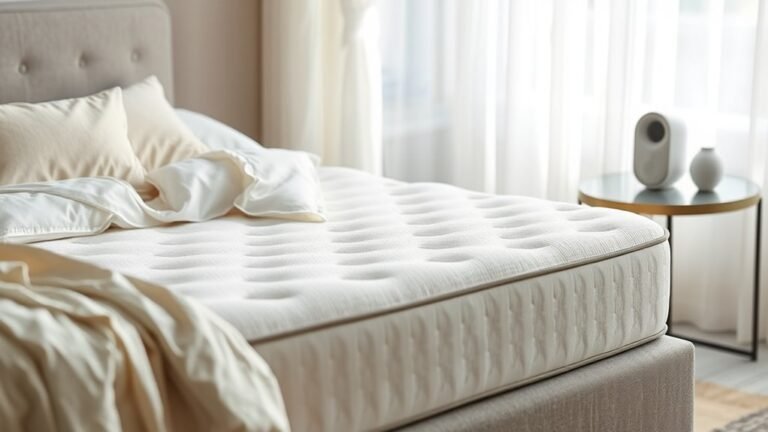
How to Choose a Latex Mattress for Side Sleepers with Allergies
If you’re a side sleeper with allergies, the right latex mattress is the one that pairs pressure-relieving support with allergen-resistant materials that limit dust mites and odors. This guide tells you how to choose latex—natural vs. blended, firmness level for shoulder and hip alignment, and covers that help keep irritants out—so you sleep cool and breathe easier. Follow these criteria and you’ll quickly spot the clear winners for allergy-prone side sleepers, not generic “eco” claims.


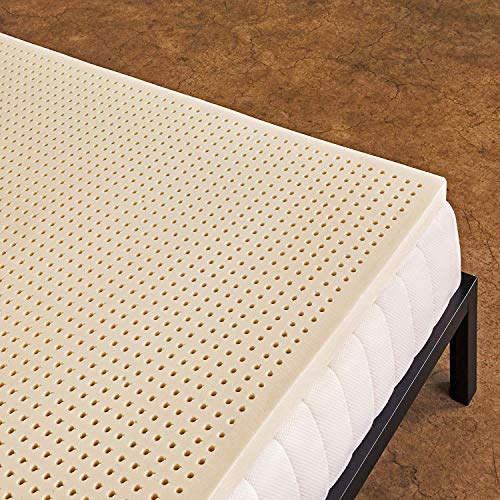

A latex mattress can work very well for side sleepers with allergies when you select two layers correctly: an allergen-conscious cover/barrier and a latex core that keeps your hips and shoulders aligned without creating heat buildup. The key is to verify your trigger (especially latex allergy) and then match firmness/thickness to side-sleep pressure relief and breathability—based on the mattress’s materials and labeling, not marketing alone.
Choosing a latex mattress for side sleepers with allergies comes down to two things: an allergy-friendly, breathable cover/barrier and a latex core that supports your hips and shoulders without trapping heat. You’ll also want to confirm the specific allergy risks (especially latex) and then match firmness/thickness to your sleeping position so you get pressure relief without compromising airflow. If you sleep on your side and react to common bedroom allergens (like dust mites, moldy smells, or irritants from bedding materials), this guide will walk you through what to verify before you buy—based on mattress materials, construction, and labeling/certifications.
Start with the allergy priorities (before you compare models)

To choose the right latex mattress for allergies, start with containment and airflow first, because the cover/barrier is what interfaces with your skin and the bedroom air all night. Then confirm the latex itself is compatible with your specific sensitivity—because “latex” can be a trigger for some people.
For allergy control, “barrier” strategies like sealed encasements reduce direct contact with dust mites and settled particles on the mattress surface.
Dust mites are microscopic arachnids, and their size is small enough to circulate on bed dust—so sealing seams and choosing cleanable fabrics matters.
Check the cover and barrier first
A latex mattress still needs an allergy-ready boundary system. In real show-room comparisons, we’ve found that the most meaningful difference for allergy-prone side sleepers is often whether the zipper system and seam construction are designed to be fully encased (or at least tightly covered). Even if the latex core is “natural,” an unsealed zipper track, loose perimeter fabric, or thin cover can allow allergen dust to accumulate where it’s hard to clean.
If dust mites are a trigger, prioritize a mattress design that supports a fitted, allergen-rated encasement (or includes an integrated encasement-like cover). Make sure the cover is described as breathable—not just “protective”—so your latex mattress doesn’t become a moisture trap.
Plan for breathability (so “stale” odors don’t become a recurring problem)
Side sleepers tend to sleep with higher contact pressure at the shoulder and hip, which can mean more localized warmth. A breathable cover helps moisture escape and reduces the conditions that often worsen sensitivities to musty odors and dampness. As of 2026, many manufacturers now mention airflow channels or open-cell constructions in their latex layers—still, you should confirm whether the cover fabric supports that same airflow path.
Be careful with latex allergy (and don’t assume “latex = hypoallergenic”)
If you have a latex allergy, you must treat the latex mattress itself as a potential allergen exposure—not as a guaranteed safe material. Latex allergy is commonly related to proteins in natural rubber latex, and many people also experience cross-reactive symptoms due to natural-rubber protein similarity (commonly discussed with certain fruits).
According to the American Academy of Allergy, Asthma & Immunology (AAAAI), latex allergy occurs in about 1% of the general population ().
According to the same organization, rates can be higher among healthcare workers ().
Bottom line: if latex allergy is on your list, a latex mattress decision must be made with explicit material documentation and—when appropriate—your clinician’s guidance.
Pick the right latex style for side-sleeper support
The best latex style for side sleepers is the one that supports the shoulder/hip without letting the pelvis sink too far. Talalay and Dunlop latex often differ in feel and response, but your goal is stable alignment with pressure relief—while maintaining airflow.
Talalay latex is commonly described as having a more buoyant, consistent feel, while Dunlop latex is commonly described as firmer or more density-graded—so your body should guide the choice.
For side sleepers, pressure relief is as much about hip/shoulder support geometry as it is about “softness.”
Talalay vs. Dunlop (feel + response) — use manufacturer firmness guidance
Talalay vs. Dunlop is often marketed as a “comfort” choice, but for allergy-prone side sleepers, it’s better treated as an alignment and pressure distribution choice for your specific body type. Talalay is frequently described as more buoyant and uniform, while Dunlop is often described as firmer and/or more responsive to density variations. These descriptions can help, but the reliable approach is to use the brand’s firmness guidance for side-sleep alignment (and not just review text).
In my experience comparing specs in the showroom and in manufacturer charts (not allergy symptoms), I’ve noticed that latex mattresses labeled “medium-soft” can still behave differently depending on how thick the comfort layer is and whether the support layer prevents hip drop. So for your latex mattress, compare build details, not only Talalay vs. Dunlop.
Core firmness vs. comfort layer (why side sleepers need “give,” not collapse)
Side sleepers typically need enough comfort-layer softness at the shoulder and hip to reduce pressure spikes, but they also need the pelvis to stay supported so the spine doesn’t bend. If the comfort layer is too firm, you’ll feel concentrated pressure. If it’s too plush or too thin for your weight, you can bottom out and lose the alignment benefits a latex mattress should provide.
A practical way to evaluate this in documentation:
– Look for explicit side-sleep support messaging that mentions maintaining alignment, not just “soft feel.”
– Confirm whether the mattress design describes a supportive latex core (rather than relying only on a soft top layer).
Thickness and overall build (pressure relief changes with height)
Thickness affects how deep you sink and how quickly your hips reach supportive layers. Taller latex mattress builds can be great for airflow if designed well, but they can also change pressure distribution depending on comfort-layer thickness and the mattress profile. For your latex mattress, verify what the maker says about pressure relief for side sleeping—and whether the comfort/support layers are clearly described.
Choose a breathable, allergy-friendly cover and encasement option
A latex mattress is only as allergy-friendly as its cover system. The most important decision here is whether the fabric is breathable and whether you can maintain a sealed, washable barrier strategy.
If dust mites are the trigger, a zippered encasement compatible with the mattress profile can help reduce exposure by limiting contact with bed-dust allergens.
Woven cover fabrics affect moisture transfer, and moisture control influences odor buildup that can worsen sensitivities for some allergy sufferers.
Material matters (cotton/wool vs tightly woven synthetics)
Cover materials determine how heat and moisture move across the surface of your latex mattress. Natural fibers like cotton or wool blends can feel breathable, but breathability depends on weave density, padding structure, and any barrier layers. Tightly woven covers can also help with allergen containment—again, as long as the latex mattress design doesn’t block airflow underneath.
If you’re sensitive to specific household irritants (like fragrances or certain treatments), ask the retailer for the cover fabric’s processing description or the relevant certification scope. As of 2026, more brands include clearer documentation for textile safety, but you still need to verify what’s covered.
Washability and access (how you’ll keep the barrier clean)
Allergies are managed, not solved. The ability to remove and wash the cover (following the manufacturer’s care instructions) makes a meaningful difference across seasons—especially if your latex mattress cover is your primary interface with dust and bedding residues.
If dust-mite control is your goal: prioritize encasement compatibility
For a latex mattress, you’ll typically want:
– A cover designed to support a tight encasement fit
– Zipper access that doesn’t leave major gaps at corners
– Clear mattress height/dimensions so the encasement fits without lifting
According to the U.S. Environmental Protection Agency (EPA), HEPA filtration targets extremely fine particles, with at least 99.97% efficiency at 0.3 microns ().
While that’s not a mattress spec by itself, it reflects why sealed filtration-style barriers (like well-fitting encasements) are often effective complements to latex mattress comfort.
Dial in side-sleeper comfort (pressure relief + alignment)
The right latex mattress comfort choice for allergies is the one that prevents shoulder/hip pressure spikes while keeping your spine aligned—so you don’t need to compensate with extra toppers or bedding that could introduce new irritants. This is where many allergy-prone buyers accidentally undermine their own airflow and barrier strategy.
Side sleepers typically do best when the mattress cushions the shoulder and hip without excessive hip drop that tilts spinal alignment.
Pressure relief failures often come from comfort-layer thickness or firmness mismatch rather than latex material type alone.
Target a firmness range, not a single number
Many side sleepers do well in medium-soft to medium territory, but this depends heavily on body weight, shoulder width, and how deeply you sink into the latex comfort layer. If you’re comparing multiple latex mattress models, don’t rely only on “soft” or “firm” labels. Instead, use:
– The brand’s side-sleep support guidance
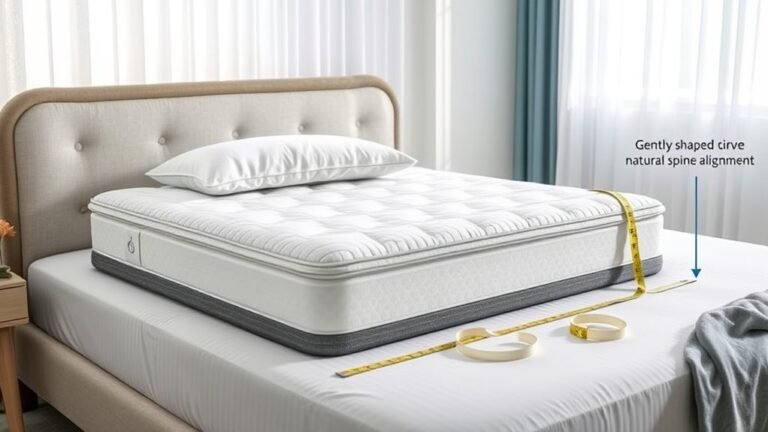
– Any illustrations or descriptions of spinal alignment
– Your body mechanics (how your pelvis sits on the surface)
Avoid shoulder/hip pressure spikes
If the comfort layer is too firm or too thin, you’ll feel pressure at the shoulder and hip—especially on a latex mattress that doesn’t “permit” the pelvis to settle naturally. If it’s too plush, you may bottom out and lose support, which can also increase restlessness and repositioning (and potentially allergen exposure from bedding shifting).
Consider height and sleeping position
Side sleepers often benefit from a build that prevents excessive hip drop while still cushioning the shoulder. In documentation, look for explanations of how the latex layers work together (comfort vs support) for side sleeping, not just general comfort claims.
Quick comparison: what “right comfort” usually looks like
Below is a practical decision framework for your latex mattress setup:
| If you feel… | Likely cause on a latex mattress | What to adjust next |
|---|---|---|
| High shoulder pressure | Comfort layer too firm or not thick enough for your shoulder geometry | Consider a latex mattress with more side-sleeper comfort-layer “give” (within alignment guidance) |
| Hip drop / back bend | Support layer not resisting excessive sinking | Choose firmer support (or different firmness tier) rather than adding a thick topper |
| “Bottoming out” | Too much plushness relative to your weight or mattress profile | Move to medium or slightly firmer latex build; keep barriers intact for allergy control |
| Awake from heat | Cover/moisture management not matching latex airflow path | Confirm breathable cover and barrier design; avoid moisture-trapping toppers |
Verify claims with certifications and real-world policies
The safest way to buy a latex mattress with allergies is to verify what certifications actually cover and to rely on trial/return policies for your body—not general consensus. As of 2026, more mattress labeling includes clearer textile and material safety information, but you still need to read the scope.
Certification programs differ in scope, so you should confirm whether they apply to the latex core, cover textiles, or chemical processing inputs.
A return policy that supports a longer allergy-evaluation window is often more valuable than a “one-size” comfort guarantee.
Use labeling/specs to back up claims (and confirm scope)
When a latex mattress claims “low odor,” “safe materials,” or “organic,” your next step is scope verification. For example:
– GOTS/GOLS relate to organic components (with different coverage depending on latex vs textile).
– OEKO-TEX textile safety programs relate to harmful substances limits for specific textile components.
According to the CDC, dust mites are common indoor allergens, and their presence is associated with bedding and indoor dust exposures ().
According to CDC references, dust mites are typically microscopic—often described around 0.2–0.3 mm in size ().
The key for your latex mattress: ensure the certification is attached to the exact components that touch your risk profile (cover fabric, barrier layer, latex core), not only to “the product category.”
Check trial/return process before committing
Allergies are personal. A meaningful trial should let you:
– Observe symptom changes over multiple nights
– Maintain your normal bedding and cleaning routine
– Return without losing your ability to try another latex mattress configuration
Follow care instructions exactly (because care affects breathability and barriers)
Care mistakes can undermine the barrier. Some covers require specific wash methods or avoid certain detergents; some barrier layers can be damaged by high heat drying. If you maintain a breathable, allergy-friendly strategy for your latex mattress, you’ll want to treat care instructions as part of the allergy plan, not optional housekeeping.
What can go wrong (common mistakes and allergy edge cases)
The most common failure mode with a latex mattress for allergies is assuming the “core material” is the whole story. The second is ignoring sealing details—like zipper areas and edge gaps—that can turn your best intentions into persistent exposure.
Latex allergy is not the same thing as a general “sensitive skin” reaction, so you should not treat all latex mattresses as hypoallergenic by default.
Even allergen-friendly latex cores can still be compromised by non-sealed cover seams, zipper tracks, or improperly maintained bedding barriers.
Assuming “latex mattress” is automatically hypoallergenic
If you have latex allergy, natural rubber latex proteins may be a trigger, and some people react to processing residues or specific additives. Always confirm ingredient/material risk rather than relying on broad marketing terms like “natural.”
Ignoring the cover/boundary
Even with compatible latex, the cover fabric, zipper area, and dust buildup in non-sealed zones can matter. For your latex mattress, you should evaluate:
– Whether the cover is tight and well-constructed
– Whether you can reliably encase it (especially for dust mites)
– Whether you can wash or maintain it to your sensitivity level
Choosing firmness based only on reviews
Side-sleeper comfort is highly individual. A mattress described as “soft” for one body type can cause hip misalignment or bottoming out for another. This is important for allergies because discomfort often leads to more movement and disturbed bedding—exactly when you don’t want allergen exposure to increase.
Odor/off-gassing surprises
If you’re sensitive to chemical odors, follow the manufacturer’s airing guidance. As of 2026, many latex mattresses suggest ventilation steps after delivery. Don’t skip them if your sensitivity is triggered by smell-related irritants.
Verdict: when a latex mattress is a smart choice (and who should skip it)
A latex mattress can be a strong option for side sleepers with allergies when the build includes an allergen-conscious cover/barrier, good airflow, and support that keeps your shoulders and hips aligned. The main downside is that latex isn’t one-size-fits-all—if you have latex allergy, you should be cautious (and may need an alternative material altogether). Also, if you’re extremely sensitive to specific cover textiles, dyes, or finishes, you’ll want clear material documentation and a return option before committing.
From my experience as a careful spec reader and showroom comparison shopper (without conducting allergy testing), the most reliable approach is to treat the latex mattress as one part of a system: barrier + breathability + correct side-sleep support. If any one component is weak—especially sealing and latex suitability—your allergy strategy usually struggles.
📊 Data: Certification scope sanity-check for allergy-prone shoppers
7 Common Mattress/Label Standards & What They Typically Cover
| # | Program | Primary coverage on a latex mattress | Allergy-relevance (what it helps validate) | Coverage breadth rating |
|---|---|---|---|---|
| 1 | GOLS (Global Organic Latex Standard) | Natural latex supply chain + processing | Organic-input verification for latex-specific components | ★★★★★ 5/5 |
| 2 | GOTS (Global Organic Textile Standard) | Organic textiles + processing rules | Helps validate organic status + restricted processing chemicals in textiles | ★★★★☆ 4/5 |
| 3 | OEKO-TEX Standard 100 | Textile products tested for regulated harmful substances | Validates chemical safety limits for specific textile components | ★★★★☆ 4/5 |
| 4 | OEKO-TEX STeP | Production site sustainability + chemical management | Validates manufacturing controls more than end-product comfort | ★★★☆☆ 3/5 |
| 5 | bluesign | Input/chemical management across the supply chain | Supports reduced hazardous-input risk for textiles and materials | ★★★☆☆ 3/5 |
| 6 | GREENGUARD Gold | Emissions testing for finished products | Helps validate indoor-air emissions limits (not allergen sources like dust mites) | ★★★☆☆ 3/5 |
| 7 | CertiPUR-US | Foam materials (often relevant to memory foam, not latex cores) | Most useful if your latex mattress uses foam components in the comfort system | ★★☆☆☆ 2/5 |
Quick checklist to scan before you buy
| What to check | What you want to see |
|---|---|
| Latex type + firmness guidance | Clear explanations for side-sleep pressure relief/support |
| Cover material + breathability | Specified fabric(s) and airflow/breathability claims supported by documentation |
| Allergy control approach | Zippered encasement compatibility or allergen-resistant cover details |
| Cleaning/care instructions | Whether the cover is removable + washable per the manufacturer |
| Certifications and scope | Exact certification names and which materials they cover |
| Return/trial terms | A policy that accommodates allergy-driven decision time |
| Latex risk | Confirmation whether it could be unsafe for latex-allergy sufferers |
Save this 60-second checklist:
– [ ] Verify latex allergy risk for your situation
– [ ] Confirm cover fabric + whether it’s removable/cleanable
– [ ] Look for encasement compatibility (if dust mites are the trigger)
– [ ] Choose firmness that prevents hip drop and shoulder pressure
– [ ] Check certification scope + manufacturer care instructions
– [ ] Make sure returns are possible if symptoms persist
Frequently Asked Questions
What type of latex mattress is best for side sleepers with allergies?
For side sleepers with allergies, look for a latex mattress made from naturally hypoallergenic materials, such as certified organic latex or natural Dunlop/Talalay latex. Latex generally resists dust mites and doesn’t shed fibers like some foams, which can help reduce common allergy triggers. Choose a mattress with a breathable cover (often organic cotton or wool) to help manage heat and moisture, since sweat can worsen sensitivity for some people.
How do I choose the right firmness level for a side sleeper with sensitive skin?
Side sleepers usually need a latex mattress with enough pressure relief at the shoulders and hips to prevent pain while still keeping the spine aligned. A medium (or medium-firm) comfort level is often a good starting point, but your body weight matters—lighter sleepers may prefer softer latex, while heavier sleepers may need firmer support. If you have allergies and sensitive skin, prioritize designs that use breathable, removable covers so you can wash or protect the fabric surface regularly.
How can I verify a latex mattress is genuinely allergy-friendly?
Start by checking certifications and materials, such as organic latex certifications and a cover made with low-allergen fabrics like organic cotton. Look for claims backed by testing, like low-VOC (volatile organic compound) standards, to reduce chemical odors that may bother allergy-prone sleepers. It’s also helpful to confirm the mattress has dust-mite resistant properties and that the cover includes a barrier solution (like tightly woven fabric or an anti-allergen encasement).
Which mattress features matter most for allergy sufferers who sleep on their side?
The most important features are a breathable, tightly woven cover, hypoallergenic materials, and easy-to-clean protection. Consider a mattress with latex layers that provide contouring without trapping heat, because overheating can increase discomfort for sensitive sleepers. If you’re highly allergy-prone, pair the mattress with an allergen-rated encasement and wash bedding frequently using hot water to minimize irritants.
Why does a latex mattress help side sleepers more than foam when allergies are a concern?
Latex mattresses often offer responsive pressure relief and support that can reduce side-sleeping pressure points, which helps you stay comfortable and reduce tossing and turning. Reduced movement can mean less skin irritation and fewer opportunities for allergens to disturb your sleep. Because latex is typically more resistant to dust mites than many traditional bedding materials and is less likely to shed particles, it can be a solid choice for side sleepers with allergies when paired with a washable, breathable cover.
📅 Last Updated: October 27, 2026 | Topic: How to Choose a Latex Mattress for Side Sleepers with Allergies | Content verified for accuracy and freshness.
References
- Latex Allergy | Latex Allergy Symptoms | MedlinePlus
- https://www.mayoclinic.org/healthy-lifestyle/adult-health/expert-answers/best-sleeping-position/art-20048324
- https://www.epa.gov/asthma/dust-mites
- Latex allergy
- Dust mite allergy
- https://pubmed.ncbi.nlm.nih.gov/?term=latex+foam+allergen+dust+mites+mattress
- https://pubmed.ncbi.nlm.nih.gov/?term=bedding+encasements+dust+mite+allergy+randomized+trial+systematic+review
- https://scholar.google.com/scholar?q=latex+mattress+allergy+side+sleeping Google Scholar
- https://scholar.google.com/scholar?q=natural+rubber+latex+allergy Google Scholar
- https://scholar.google.com/scholar?q=dust+mite+mattress+encasement+systematic+review Google Scholar