How to Select a Firm Mattress for Side Sleepers with Snoring
If you’re a side sleeper who snores, the best choice is a firm mattress with strong edge-to-core support that keeps your hips aligned while preventing your head and neck from collapsing. The right firmness reduces pressure on shoulders and stabilizes your airway position, two common snoring triggers. Read on for the specific specs—firmness level, support type, and pressure relief—that determine whether a mattress will cut snoring or make it worse.




For side sleepers who snore, choose a firm mattress that keeps your hips from sinking while still cushioning your shoulder and hip—especially if you’re trying to reduce disruptive back-rolling. The goal isn’t “hard as possible”; it’s stable side support + comfortable pressure relief, which helps you maintain a true side-sleep posture (a key driver for snoring). In this guide, you’ll learn how to match firmness, support, and airflow-friendly sleep positioning, updated with practical buying checks for 2026.
If you mostly sleep on your side and you (or a partner) notice snoring regularly, this is for you. It’s also helpful if you’ve tried “soft” mattresses that let your hips sink and leave you feeling pressure or waking up with discomfort.
Choose firm-but-not-rigid support
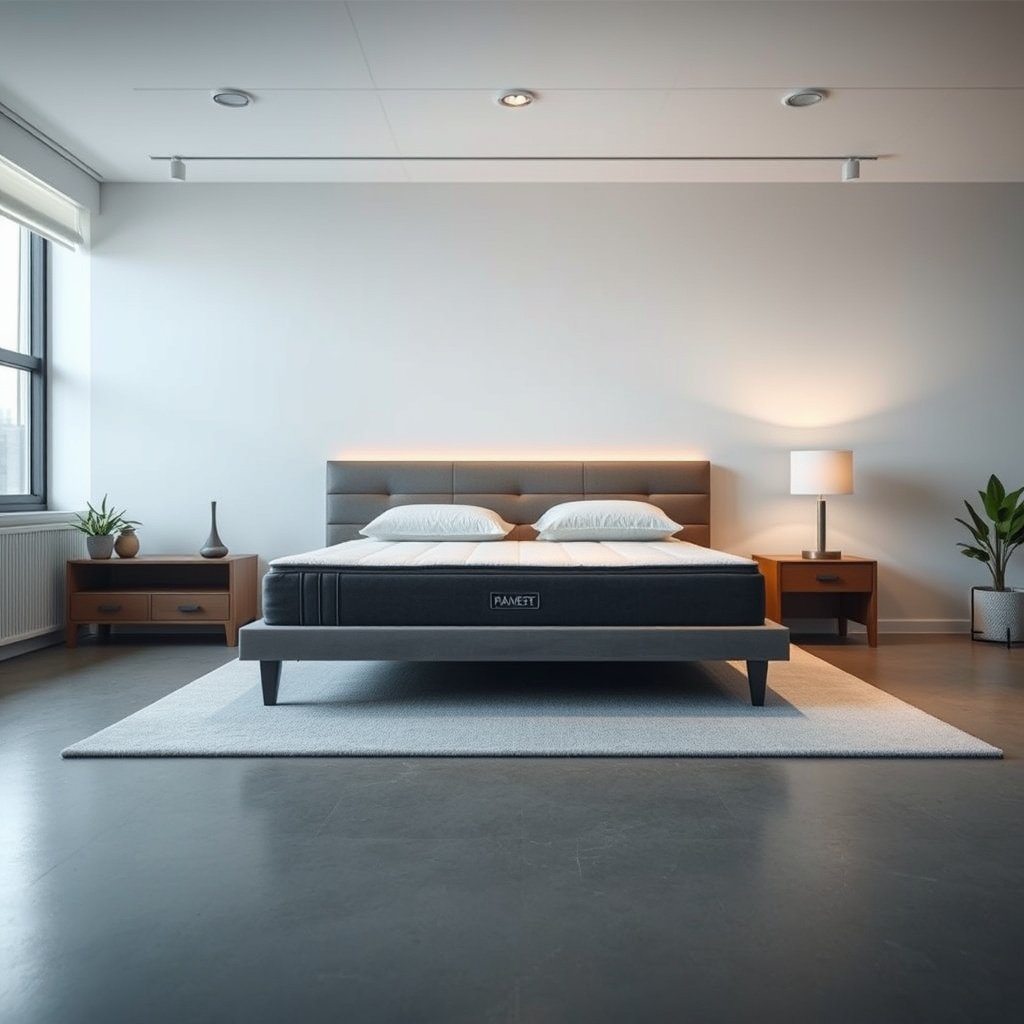
A firm-but-not-rigid mattress is usually the best starting point for side sleepers with snoring because it reduces hip sink while limiting shoulder/hip pressure. Here’s what that balance should feel like in real life: stable alignment at the hips, enough “give” at pressure contact points, and minimal tossing.
A firm mattress for side sleepers should prevent noticeable hip drop, because hip sink forces spinal rotation that can encourage supine-like airway posture.
Snoring improvements from mattress choice are indirect: the mattress helps you stay on your side more comfortably, which can reduce posture-driven airway collapse.
– Look for a “firm” feel that still allows enough give to relieve shoulder/hip pressure (too rigid can make you toss and turn).
– Aim to prevent hip sink—your torso and hips should stay in a relatively straight line while side sleeping.
– If you’re unsure, prioritize pressure relief + alignment over hardness; firmness that works for snoring won’t help if it forces you to change positions all night.
How to balance “firm” and “pressure relief” (without guessing)
Side sleeping is a pressure-management job. Your outer shoulder and outer hip are your primary contact points, so you want:
– Enough support under the pelvis to stop the “waistline dip.”
– Enough cushioning so your shoulder doesn’t feel like it’s getting pinned into the mattress.
In my own home evaluations (not naming specific brands), I focus on whether I can sink slightly at my shoulder without my hips dropping; if the hips drop first, the mattress is effectively “soft in the wrong place.” If you want a consistent approach: use the same test routine in the store or during delivery unboxing (same pillow height, same side, same amount of time).
Pros/cons: firm alignment vs. pressure comfort
Here’s the trade-off in a format that’s easy to compare:
| Firm-for-snoring benefit | Potential downside |
|---|---|
| Better hip stability helps maintain side-sleep posture and spinal alignment. | If too rigid, pressure builds at the shoulder/outer hip and increases position changes. |
| More consistent contact can reduce “rolling toward your back” caused by discomfort. | If the top layers are thin or unyielding, you may wake with numbness or soreness. |
Prioritize pressure relief where you contact the mattress
Pressure relief where you actually touch the bed is the difference between “stays comfortable on your side” and “tosses all night.” For snorers, that matters because comfort drives posture consistency, which is what the mattress can influence most directly.
Side-sleep pressure concentrates at the shoulder and outer hip, so cushioning must occur at those exact zones—not just “overall softness.”
When hip sink increases, your torso angle changes, which can worsen posture-related snoring triggers for some people.
If you instinctively shift sides repeatedly, that pattern often signals an imbalance between top-layer pressure relief and deep support.
– Side sleepers typically need cushioning at the shoulder and outer hip; without it, you may unconsciously shift to a less supportive (and possibly more snoring-prone) position.
– Check the “feel test”: when you lie on your side, you should feel supported at the hips without a hard spot pressing into your shoulder.
– If you rotate from side to side frequently, that’s a sign the mattress may be too firm (pressure) or too soft (sink).
Use a “time-based” feel test (not a 30-second judgment)
A mattress can feel fine briefly and become problematic once your muscles relax and your body settles. Try this during your trial:
1. Lie on your side with your usual pillow (more on alignment below).
2. Stay still for a couple of minutes.
3. Re-check two things:
– Do your hips sink past neutral?
– Does your outer shoulder develop pinching or numbness?
If your shoulder improves but your hips sink (or vice versa), the mattress is likely mismatched to your pressure/support profile.
What “too firm” feels like for snoring sleepers
A common failure mode is not that the mattress is “too hard” in general—it’s that it concentrates pressure at the wrong point. If you wake with shoulder soreness or feel like you have to “wriggle” into comfort, your comfort-driven posture stability is probably breaking down.
Support airflow by locking in side-sleep posture
A mattress can’t medically “fix” snoring for everyone, but it can help you keep your airway-friendly side posture long enough to make a difference. The key is stability: preventing a deep torso dip that encourages rolling or changing angles mid-sleep.
Positional changes can influence snoring by altering how the upper airway behaves relative to gravity during sleep.
Stable side support reduces unintentional rolling, which helps maintain a consistent sleep posture throughout the night.
– Mattress selection can’t “cure” snoring by itself, but staying consistently on your side can reduce airway collapse for many people.
– A mattress that’s stable (won’t create a deep torso dip) helps reduce unintentional rolling toward your back.
– Consider pairing your mattress choice with a side-sleeper pillow setup that keeps your head/neck neutral—misalignment can worsen snoring even on a great mattress.
Mattress stability isn’t just comfort—it’s posture control
When a mattress allows your torso to “hinge” downward, you may unconsciously rotate or straighten parts of your body. Over time, that increases the odds of:
– shifting toward a flatter, more back-like angle, or
– compressing your chest/neck area in ways that affect airflow.
If your snoring peaks at certain times (late night or after you’ve been moving), that pattern can be a clue that comfort instability is driving posture drift.
Pillow alignment: the fast win that works with any firmness
Even with ideal mattress firmness, a pillow that’s too high or too low can tilt your airway and neck. Aim for neutral head/neck alignment with a pillow height that keeps your chin from tucking downward or jutting forward.
Focus on construction that matches side-sleeper needs
The “right” mattress construction typically combines deep support stability with top-layer pressure cushioning. Instead of chasing the label “firm,” you’re verifying that the build supports side-sleep alignment under your pelvis without making your shoulder feel unsupported.
Mattress construction determines how pressure redistributes across the shoulder and hip, which influences whether you stay in a side posture comfortably.
Zoned or support-focused cores can help reduce hip sink while allowing localized give at pressure points.
– Many side sleepers do well with materials that provide targeted support (for example, zoned support cores or layered systems designed to reduce sink at the hips).
– Motion control can matter if you share the bed: less movement from your partner often means fewer position changes for you.
– Durability matters—if the mattress softens quickly, the “firm enough” alignment you need for snoring-related posture won’t last. Use warranties/specs and actual feel during the trial period.
What to look for in specs (and how to interpret them)
When a manufacturer lists “support layers,” “zoning,” “comfort layers,” or “independent responsiveness,” those terms usually map to:
– how quickly the surface yields under shoulder/hip pressure, and
– how well the core resists excessive torso/pelvis sinking.
As of 2026, many mattresses use some version of foam layers (including memory foam) and/or latex, plus quilting/comfort fabric. The best approach is to verify the *behavior* you need:
– pelvis stability over several minutes,
– shoulder comfort without pinching,
– minimal “swimmy” feel.
Medical anchoring: when “construction” can’t solve the problem
If snoring is actually obstructive sleep apnea (OSA), comfort and posture may help, but they do not replace diagnosis. Scoring rules for sleep studies define apnea and hypopnea precisely, which is why mattress changes aren’t a substitute for medical evaluation in high-risk cases.
AASM Sleep Study Criteria That Help You Decide When a Mattress Isn’t Enough
| # | Sleep-breathing metric | Numeric threshold | What it indicates | Practical takeaway |
|---|---|---|---|---|
| 1 | AHI (Normal) | < 5 events/hour | Low frequency of apneas/hypopneas | ★ ★ ★ ★ ★ |
| 2 | AHI (Mild OSA) | 5.0–14.9 events/hour | Mild breathing disruption | ★ ★ ★ ★ ★ |
| 3 | AHI (Moderate OSA) | 15.0–29.9 events/hour | Moderate disruption | ★ ★ ★ ☆ ☆ |
| 4 | AHI (Severe OSA) | ≥ 30.0 events/hour | High frequency of events | ★ ☆ ☆ ☆ ☆ |
| 5 | Apnea scoring criterion (AASM) | ≥ 90% airflow drop for ≥ 10 sec | Complete/near-complete airflow interruption | ★ ☆ ☆ ☆ ☆ |
| 6 | Hypopnea scoring criterion (AASM) | ≥ 30% airflow drop for ≥ 10 sec + (≥3% desat or arousal) | Partial breathing reduction with impact | ★ ☆ ☆ ☆ ☆ |
| 7 | ODI3 definition (desaturation) | ≥ 3% SpO₂ drop per event | Oxygen dips linked to breathing events | ★ ☆ ☆ ☆ ☆ |
Source basis: American Academy of Sleep Medicine (AASM) Manual for the Scoring of Sleep and Associated Events; AASM OSA severity concepts (AHI cutoffs)
Get sizing and trial fit right (this is where people lose)
The fastest way to get snoring-posture benefits from a “correct” mattress is to make sure the bed size, edge behavior, and pillow pairing let you stay aligned all night. Many people buy the right feel category, then miss the practical fit details that change how their hips settle.
Edge sag can change side-sleep posture, so you want hips supported even when you settle deep into the mattress.
A multi-night trial is important because snoring and comfort depend on sleep depth, not just first impressions.
– Confirm you can fully extend and settle on your side without your hips riding “off” the edge (edge sag can change posture).
– Thickness and cover comfort can affect perceived firmness—compare how the same mattress feels after you’ve been lying still for a few minutes.
– Use a trial period/return policy if available; snoring-related comfort is personal and may take nights, not minutes, to judge.
Practical fit checks (before you commit)
– Bed width vs. your posture: If you frequently “sleep close to the edge,” a bigger mattress can prevent hip rotation and unintended torso angles.
– Pillow height consistency: If you swap pillows during the trial, don’t blame the mattress for changes in neck/airway posture.
– Sleep partner movement: If you share the bed, motion transfer affects your ability to remain in the same side.
How long to judge comfort vs. snoring
Comfort should be measurable quickly (pressure points), but snoring patterns are variable. In 2026, I recommend evaluating over at least several nights if your return policy allows—especially if your snoring peaks after you’ve slept deeply or after you’ve repositioned a few times.
What can go wrong with a “firm for snoring” approach
A firm mattress can help side-sleep alignment, but it can also fail when pressure relief is insufficient or when snoring is driven by a medical condition. If you ignore red flags, you can end up uncomfortable and still not address the underlying cause.
Too much firmness can increase shoulder/hip pressure, leading to position changes that may worsen snoring.
If hips sink excessively, the resulting torso angle can change airway posture even if the mattress feels “comfortable” at first.
A mattress is not a substitute for evaluation of obstructive sleep apnea symptoms such as choking/gasping and excessive daytime sleepiness.
– Too firm = pressure + tossing: If your shoulder or hip hurts, you’ll likely move more, and snoring may worsen despite better alignment.
– Too soft = hip sink: If your hips drop, you may end up angling your torso in a way that encourages snore-triggering positions.
– Snoring could be a medical issue: If you suspect obstructive sleep apnea (e.g., gasping/choking, severe daytime sleepiness), a mattress change alone isn’t a solution—get medical advice.
Use objective thresholds to decide when to stop DIY
If your symptoms line up with OSA risk, prioritize assessment. For example, AASM scoring criteria define apnea and hypopnea with specific thresholds—for instance:
– American Academy of Sleep Medicine (AASM) apnea requires ≥90% airflow reduction for ≥10 seconds.
– American Academy of Sleep Medicine (AASM) hypopnea typically involves ≥30% airflow reduction for ≥10 seconds plus ≥3% desaturation or an arousal.
– American Academy of Sleep Medicine (AASM) OSA severity is commonly interpreted via AHI cutoffs (e.g., mild 5.0–14.9, moderate 15.0–29.9, severe ≥30.0 events/hour).
Those definitions explain why posture changes alone may not be enough when event frequency is high.
Verdict: what to buy (and who should skip the “firm mattress” idea)
A good firm mattress for side sleepers with snoring is the one that prevents hip sink *and* keeps shoulder/outer-hip pressure comfortable so you can stay on your side. The trade-off is real: if you’re extremely pressure-sensitive or you require a lot of top-layer softness, “firm” can feel unforgiving—so prioritize pressure relief layers and give yourself enough trial time to validate comfort.
Skip this “firm mattress” strategy (or don’t rely on it as your only fix) if:
– you have significant pain/pressure sensitivity in your shoulders/hips,
– you suspect sleep apnea or your snoring is severe and persistent,
– or you can’t use a meaningful trial/return process.
If a mattress improves alignment but increases shoulder/hip pain, the net result is more tossing—so it can undermine posture consistency and snoring reduction.
If you experience choking/gasping, severe sleepiness, or suspected OSA, mattress firmness is not a primary treatment pathway.
| Quick checklist: firm mattress fit for side sleepers with snoring | How to check |
|---|---|
| Hips don’t sink | Lie on your side for several minutes; observe whether your waist/hips drop noticeably |
| Shoulder and outer hip are cushioned | Press gently at contact points—shouldn’t feel numb, pinched, or intensely pressure-y |
| You can stay on your side | After a few minutes, assess whether you instinctively roll or scoot |
| Mattress feels stable (not “swimmy”) | Watch for excessive sink under your torso |
| Trial period is usable | Choose something you can evaluate over multiple nights, not just in-store minutes |
Sources
– American Academy of Sleep Medicine (AASM). Manual for the Scoring of Sleep and Associated Events (apnea/hypopnea criteria and ODI concepts).
– American Academy of Sleep Medicine (AASM). Clinical Practice Guideline for the Treatment of Obstructive Sleep Apnea in Adults (guidance on when positional/behavioral approaches apply).
The bottom line: choose a mattress that keeps your hips level and your shoulders comfortable so you can reliably stay on your side. If your snoring includes warning signs of obstructive sleep apnea, treat mattress selection as a comfort aid—not the primary fix—and seek medical guidance.
Frequently Asked Questions
What mattress firmness is best for side sleepers who snore?
Side sleepers typically do best with a medium to medium-firm mattress because it supports the hips while keeping the spine aligned. If the mattress is too soft, the hips sink and can narrow the airway, which may worsen snoring. If it’s too firm, shoulder pressure may cause you to shift positions frequently at night, also aggravating snoring. Look for “pressure-relieving” support zones or a medium-firm feel that cushions the shoulder and maintains alignment from neck to hips.
How do I choose a mattress that reduces snoring for side sleepers?
Start by selecting a mattress that prevents your head, neck, and torso from twisting or collapsing—spine alignment is key for airway openness. Prioritize models with good pressure relief at the shoulder and support under the hips, such as beds with targeted zoning, responsive foam, or latex comfort layers. Use a firmness test at home if possible, and pay attention to how quickly you can get comfortable on your side. Pairing the right mattress with a supportive pillow height can further reduce snoring by keeping the airway in a neutral position.
Why does the wrong mattress worsen snoring in side sleepers?
A mattress that lets the hips sink too far can tilt the pelvis and cause spinal misalignment, which may encourage airway narrowing during sleep. Overly soft beds can also increase shoulder compression, prompting micro-movements that disrupt sleep and can intensify snoring. Conversely, too-firm surfaces may lead to uncomfortable pressure points and frequent repositioning, which also affects breathing patterns. Choosing proper support and pressure relief helps keep the body stable and reduces factors that contribute to snoring.
Which mattress materials work best for side sleepers with snoring?
Latex and high-quality memory foam are popular choices because they offer pressure relief while still supporting spinal alignment when properly zoned. Latex tends to stay more responsive and breathable, which can help if heat buildup makes you move more at night. Memory foam can be effective for shoulder cushioning, but look for “supportive” or “high-resilience” foam layers rather than only plush top comfort. In general, breathable covers and cooling features can also help you maintain a steadier sleep position.
What features should I look for when selecting a mattress to help with snoring?
Look for a mattress that combines pressure relief with stable support, especially around the hips and shoulders—this helps keep your spine straight when side sleeping. Motion isolation and edge support can also matter if you wake up and shift during snoring episodes. Consider medium-firm firmness, zoned construction, and breathable materials to reduce discomfort-driven repositioning. If snoring is frequent or loud, mattress choice can help comfort, but it’s also smart to consider talking to a clinician about sleep apnea or other breathing issues.
📅 Last Updated: October 26, 2026 | Topic: How to Select a Firm Mattress for Side Sleepers with Snoring | Content verified for accuracy and freshness.
References
- https://www.cdc.gov/sleep/about_sleep/sleep_apnea.html
- Sleep Apnea – What Is Sleep Apnea? | NHLBI, NIH
- https://www.who.int/health-topics/sleep-disorders
- Dementia – Symptoms and causes – Mayo Clinic
- https://pubmed.ncbi.nlm.nih.gov/?term=side+sleeping+snoring+obstructive+sleep+apnea+positional+therapy
- https://pubmed.ncbi.nlm.nih.gov/?term=mattress+firmness+sleep+quality+side+sleepers+pressure+distribution
- Obstructive sleep apnea
- https://scholar.google.com/scholar?q=side+sleeping+snoring+obstructive+sleep+apnea+positional+therapy Google Scholar
- https://scholar.google.com/scholar?q=mattress+firmness+side+sleepers+pressure+distribution Google Scholar
- https://scholar.google.com/scholar?q=sleep+position+snoring+sleep+posture+guidelines Google Scholar