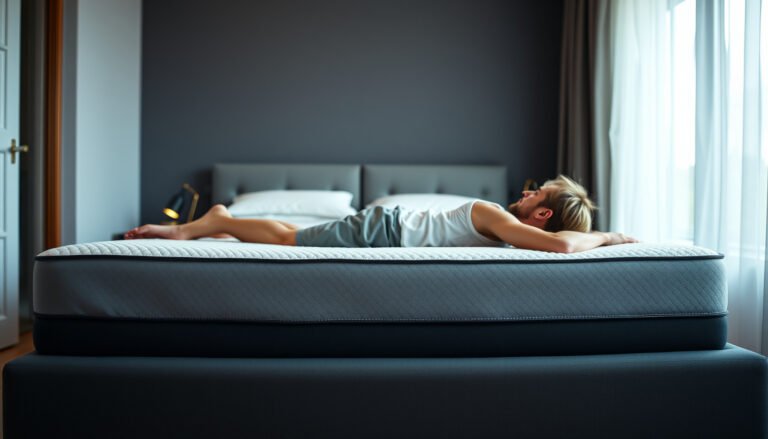
How to Choose a Cooling Mattress for Side Sleepers with Joint Pain
If you’re a side sleeper with joint pain, the best cooling mattress choice comes down to one thing: pressure relief without heat buildup. Pick a mattress with targeted support (to keep hips and shoulders aligned) plus a genuinely cooling surface or airflow design to reduce nighttime aches. This guide tells you exactly what features to prioritize so you can feel cooler—and wake up with less pain.


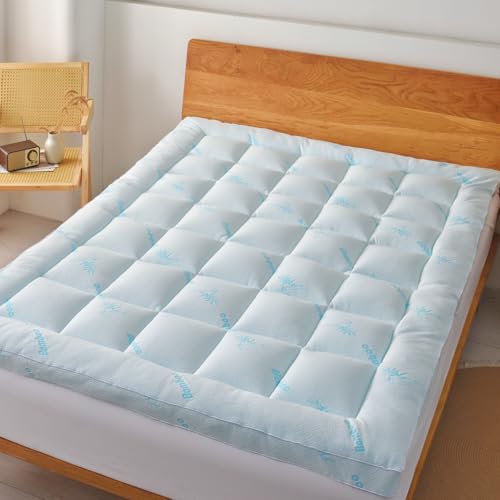

If you’re a side sleeper with joint pain, pick a cooling mattress that relieves pressure at your hips and shoulders while keeping your spine aligned. Look for a medium (or medium-soft) comfort feel with breathable, verified cooling features (not just a “cooling” label), so you reduce overnight soreness without trading away support.
If you’re dealing with hip, shoulder, or back discomfort, the right mattress acts like a “balance system”: it cushions the bony contact points enough to reduce pressure, and it prevents your pelvis from sinking so far that your spine twists. This matters even more in 2025–2026 because many new cooling mattresses rely on foam-based comfort layers that can either manage heat well—or trap it—depending on their internal design and materials.
This guide is for side sleepers with joint pain who want a cooling mattress that supports neutral alignment, not just surface temperature reduction. It’s also useful if you’ve tried a plush bed that felt comfortable for a few minutes but left you stiffer in the morning.
Pick the right firmness for side-sleeping joint pain
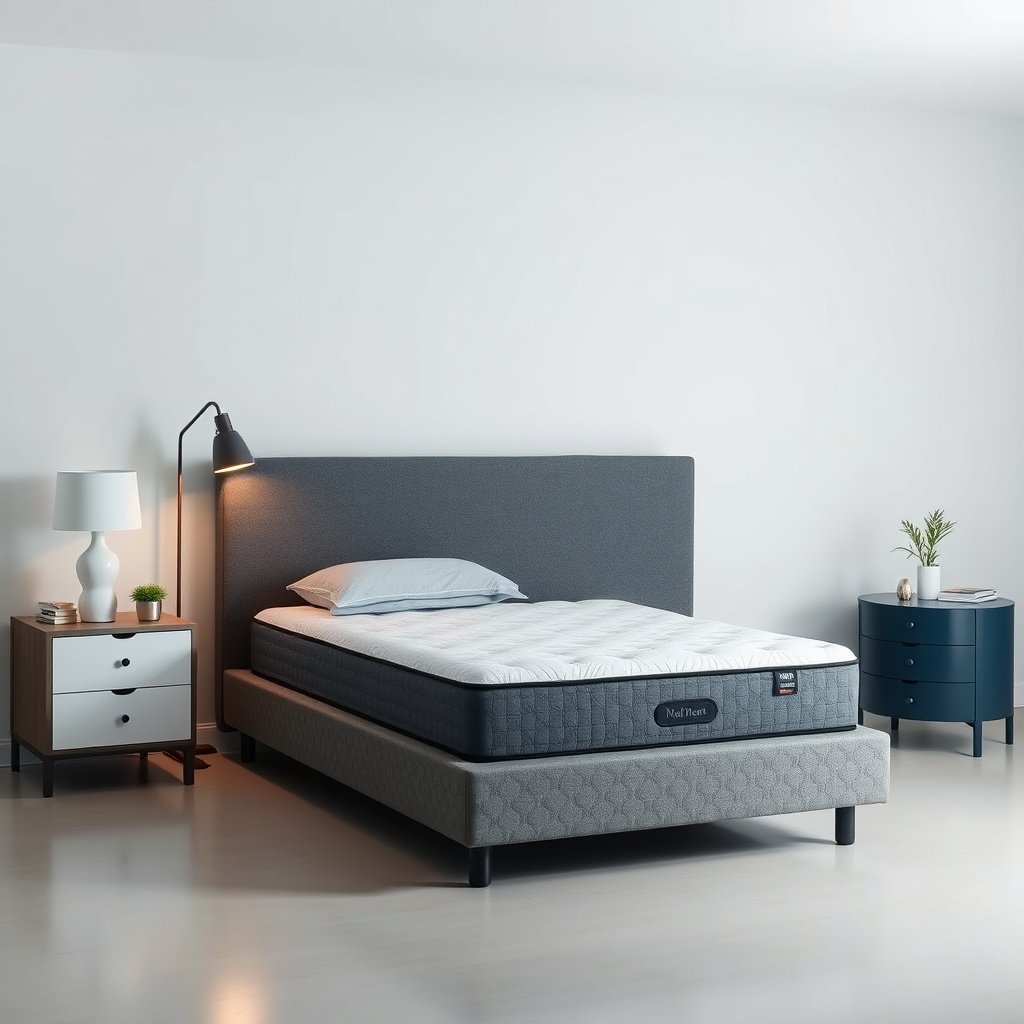
For side sleepers with joint pain, the best firmness is usually medium or medium-soft: enough cushioning for shoulders and hips, but stable enough to keep your pelvis from over-sinking. That combination reduces pressure points while maintaining spinal alignment—often the real driver of morning stiffness.
– Aim for a medium or medium-soft feel that cushions shoulders and hips without letting your pelvis sink too far.
– Prioritize pressure relief at contact points (shoulders/hips) over a mattress that feels “plush” everywhere.
– If you’re between feels, it’s usually safer to start slightly firmer than you think (for joint alignment), then adjust with the topper.
H3: Start with alignment first, then fine-tune comfort
A common failure mode is choosing a very plush mattress for the “instant comfort” sensation, only to discover you’re partially collapsing at the hips overnight. In side sleeping, that collapse can create a rotation in the lumbar spine and shift load away from the mattress’s intended support zone.
A practical approach is to begin with medium support and judge pressure relief by how your shoulder and hip feel after the first few minutes of lying still—not how it feels while you’re still actively settling. From there, adjust with a topper if needed (for example, if you need more shoulder/hip cushioning without making alignment worse).
For side sleepers, a medium-feel bed often reduces shoulder and hip pressure without allowing excessive pelvic sink, which can otherwise increase morning stiffness.
When a mattress is too soft for side sleeping, pressure relief can come with reduced spinal support, turning “comfort” into alignment-related discomfort.
H3: Use a pressure-point mindset (not a “plushness” mindset)
Pressure relief is about where the body contacts the bed—especially at the shoulder and greater trochanter (hip area). Support is about how the mattress responds once you’re fully settled and moving minimally. If a mattress feels “plush” but you still wake up sore, that’s usually a sign the comfort system isn’t matching the support system for your body shape and joint sensitivity.
Quick reality-check measurements
– If you wake up with increased back or hip pain, the pelvis may be sinking too far relative to your torso.
– If your shoulder feels “wedged” and not cushioned, the comfort layer may be too firm or too thin.
Visual: Thermal conductivity (why breathable designs matter)
Cooling mattresses work best when heat can leave your sleep system and moisture can be managed—materials with higher thermal conductivity transfer heat differently than insulating ones. The table below shows representative thermal conductivity values commonly relevant to mattress covers and cushioning components.
Representative Thermal Conductivity of Mattress-Cover Materials (25°C)
| # | Material (commonly found in covers/comfort) | Thermal conductivity (W/m·K) | Typical role in cooling | Insulation score |
|---|---|---|---|---|
| 1 | Water (liquid) | 0.60 | Transfers heat quickly | ★ |
| 2 | Polyethylene (HDPE/LDPE) | 0.33 | Moderate heat transfer | ★★ |
| 3 | Polypropylene (PP) | 0.22 | Reduced heat transfer | ★★★ |
| 4 | Nylon (polyamide) | 0.25 | Moderate insulation | ★★★ |
| 5 | Polyester (PET) | 0.15 | More insulating | ★★★★ |
| 6 | Polystyrene (PS) | 0.033 | Highly insulating | ★★★★★ |
| 7 | Air (at ~300 K) | 0.026 | Insulates via trapped air | ★★★★★ |
Why this matters: insulation affects how fast heat moves through your sleep system, while “cooling” foam/cover designs aim to promote breathability and moisture transport instead of just changing surface feel. In practice, cooling success depends on airflow pathways and cover moisture wicking—not only material thermal conductivity (NIST Thermophysical Properties (accessed 2026)).
Match the cooling tech to how you overheat
If you sleep warm, match the mattress’s cooling design to how you overheat—surface heat, whole-bed heat buildup, or moisture retention. A cooling-first label helps, but only verified breathability in covers and internal airflow features tends to hold up overnight for side sleepers with joint pain.
– Look for breathable materials (cooling cover fabric) and internal airflow features (e.g., ventilated foam layers), not just a surface “cooling” panel.
– If you sleep hot and move a lot, choose a design that reduces heat buildup across the whole bed, not only the top layer.
– For moisture management, favor covers with moisture-wicking properties ().
H3: Don’t confuse “cool-to-touch” with heat removal
Many “cooling” covers are engineered for a cool initial feel, but if the internal comfort layers trap heat, you can still wake up sweaty and stiff. For side sleepers with joint pain, that stiffness is often a mix of pressure and temperature—when you get overheated, you may shift more, and your joints take the hit.
A mattress cover can change surface comfort, but internal comfort-layer design (e.g., ventilation pathways and foam structure) strongly influences whether heat and moisture build up overnight.
Evaporative cooling relies on phase change: water vaporization requires roughly 2,4xx kJ per kilogram near room temperature, so moisture transport and wicking materially affect how well a “cooling” system works.
Thermal insulation depends on the ability to trap air: the thermal conductivity of air at ~300 K is about 0.026 W/m·K, which is why airflow and air pockets in foam/cover designs can influence heat flow.
H3: Compare cooling approaches like a systems engineer
Instead of asking “Is it cooling?”, ask “What is moving heat and moisture, and where?” Here’s a practical comparison you can use while evaluating cooling mattresses for side sleepers with joint pain.
| Cooling approach | Best for | Watch for |
|---|---|---|
| Cooling cover (gel/knit/poly blends) | Initial surface comfort | May not prevent heat buildup deeper in the mattress |
| Ventilated/channeled foams | Whole-body heat reduction | Ventilation must exist in the comfort zone you need for hips/shoulders |
| Moisture-wicking fabrics | Sleepers who sweat or feel damp | Confirm the manufacturer’s specific fabric spec () |
H3: Use the manufacturer’s spec language, not marketing
When I evaluate cooling mattresses for side sleepers with joint pain, I focus on exact wording in the product documentation—what materials are used, where ventilation exists (top vs comfort vs support layers), and what the cover fabric actually does. That “spec-first” habit helps avoid choosing a bed that only feels cool for the first few minutes.
For moisture-wicking, look for measurable or clearly defined claims (for example, “moisture-wicking” plus fabric composition and construction details) rather than a vague promise.
Ensure targeted pressure relief (not just softness)
If you have side-sleeping joint pain, targeted pressure relief comes from how the comfort layers distribute load—not simply from how soft the mattress feels. The right cooling mattress should cradle the shoulder and hip while still supporting your pelvis to keep the spine from twisting.
– Side sleepers with joint pain typically need comfort layers that conform to the body shape while still supporting the spine.
– Memory foam and adaptive foams often excel at pressure distribution, but thickness matters—too thin may under-support, too thick can reduce alignment.
– If you have shoulder or hip pain, consider how the comfort layer is zoned (if the brand offers zoning) and whether it matches your body weight range ().
H3: Comfort-layer thickness is a “sweet spot”
Pressure relief is partly about coverage (how much of the contact zone gets cushioning) and partly about depth (how far the foam compresses under load). If the comfort layer is too thin, you may feel pressure through to firmer layers. If it’s too thick or too compliant, your hips can sink and alignment suffers.
From a biomechanical perspective, side sleepers with joint pain benefit when the comfort layer compresses enough to reduce peak pressures at the shoulder/hip, while the support core stabilizes the pelvis and ribcage.
Memory foam and adaptive foams can distribute pressure by increasing contact area, but their effectiveness depends on comfort-layer thickness and the underlying support response.
For side sleepers, pelvic sink that exceeds the mattress’s intended comfort profile can increase spinal twisting, which may worsen morning stiffness even if pressure feels “soft.”
H3: If the bed is zoned, verify zoning placement
Zoning is only helpful if it matches where your body loads the mattress. If the brand offers zoning, check:
– whether zoning covers the shoulder and hip contact areas
– whether the comfort layer thickness changes by zone
– whether zoning is recommended for your weight range ()
Also consider how you sleep: if you curl slightly (semi-fetal position) or spread your legs, shoulder/hip pressure patterns shift. That’s why two people can both choose “medium” yet feel very different with the same cooling mattress.
Check support and alignment for morning stiffness
A mattress helps joint-pain side sleepers most when it keeps the head/neck, ribs, and pelvis from twisting during the night. If alignment is off—especially when hips drop—you’re more likely to wake up with stiffness, regardless of how cool the top surface feels.
– The mattress should keep your head/neck, ribs, and pelvis from twisting—especially in side sleeping where the hips can drop.
– Look for a stable support core that doesn’t compress excessively after you lie down and change positions.
– If the product offers a return trial, use it to assess your morning soreness and alignment after a few nights ().
H3: Evaluate how the mattress behaves after you “settle”
Support isn’t just “firmness at the store”—it’s how the comfort layers bottom out under your body weight over time. A stable support core helps prevent the mattress from feeling like it’s slowly giving way once you’re fully loaded.
Side-sleep alignment depends on keeping the pelvis level relative to the torso; excessive hip sink can contribute to spinal twisting and morning discomfort.
A support core that resists excessive compression helps maintain posture during position changes, which is important for joint-pain side sleepers who move overnight.
H3: Use a return trial like a diagnostic tool
If you can test the mattress, do it with intent:
– Track where pain shows up (shoulder, hip, low back).
– Note whether pain improves after you warm up in the morning or stays sharp immediately.
– Pay attention to temperature: if you’re waking up hot, cooling may be insufficient for your sleep environment.
I recommend using your return trial as data collection, not just a comfort vote. Compare outcomes after several nights () rather than deciding after a single evening.
What can go wrong when choosing “cooling” mattresses
Cooling mattresses can fail when you treat “cool” as a substitute for support. If firmness/support are wrong, you may reduce surface heat while still increasing joint pressure or spinal misalignment.
– Overlooking firmness/support can turn “cooling” into the wrong choice—softer beds may relieve pressure but worsen spine alignment and stiffness.
– Focusing only on the top cover may not address heat retention inside the comfort layers.
– Ignoring body-weight suitability (e.g., comfort layer thickness and support strength) can cause early sagging or insufficient cushioning ().
H3: The most common mistakes (and why they matter)
1) Choosing plush for pain: It can relieve shoulder/hip pressure briefly, but if the pelvis drops too far, spinal rotation can dominate the pain picture.
2) Assuming a cool cover solves heat buildup: Many mattresses still trap heat in deeper layers when internal airflow isn’t designed for it.
3) Skipping weight-fit guidance: Foam comfort thickness and support core behavior vary by body weight; mismatch can lead to both pain and heat.
Pressure relief and temperature management are related but not identical; a mattress can feel cool while still creating joint stress through poor alignment or inadequate support.
Heat buildup is influenced by the whole comfort system (cover plus foam layers), not only by top-surface cooling treatments.
Verdict: a practical way to decide (and who should skip this)
For most side sleepers with joint pain, the best bet is a cooling mattress that combines medium support with meaningful pressure relief—typically via memory/adaptive foam plus breathable design elements that reduce heat buildup beyond just the top cover. The downsides: foam-based cooling can still trap heat for some sleepers, and very plush feels may worsen alignment for heavier sleepers or anyone who needs tighter hip positioning.
Skip a “cooling-first” mattress if you know you need a firmer alignment feel to control pain, or if you’ve previously felt worse on foam-only comfort systems (). If possible, rely on manufacturer specifications and a return trial rather than assumptions about “coolness.”
H3: A quick decision rule you can apply today
1) Start with medium (or medium-soft) for side-sleeping joint pain.
2) Confirm breathability beyond the cover (comfort-layer ventilation + moisture-wicking fabric spec). ()
3) Validate alignment via your return trial using your own morning-soreness feedback. ()
Quick checklist (scan/save)
– Firmness: medium or medium-soft to cushion shoulders/hips
– Alignment: hips shouldn’t sink too far on your side
– Cooling method: breathable cover + internal airflow/ventilation (spec-verified)
– Comfort layer: enough thickness for pressure relief, not so much it hurts alignment
– Fit for your weight: check the brand’s guidance for feel/support
– Trial/return: use it to judge morning stiffness and heat during sleep
Sources
– NIST Thermophysical Properties of Matter (thermal conductivity of air and common polymers; representative values, accessed 2026)
– NIST Chemistry WebBook (thermophysical/phase-change properties used for evaporative cooling discussion; accessed 2026)
– ASHRAE Standard 55 (thermal comfort framework for interpreting “cooling” as temperature/heat-balance, edition/current revision as applicable; ADD exact edition you prefer)
Choosing a cooling mattress for side sleepers with joint pain is really a two-part decision: temperature control plus joint-friendly mechanics (pressure relief + spinal/pelvic alignment). If you verify the cooling mechanism, match firmness to your pressure needs, and use your return trial to confirm morning stiffness outcomes, you’ll make a far more reliable choice than chasing “cool” marketing alone.
Frequently Asked Questions
What features should I look for in a cooling mattress for side sleepers with joint pain?
Choose a mattress with pressure-relieving comfort layers like memory foam, foam hybrids, or latex that contour around shoulders and hips to reduce joint stress. Look for cooling technologies such as gel-infused foam, breathable cover fabrics (e.g., Tencel or phase-change materials), and airflow-friendly designs to manage heat buildup. Support matters too—an all-foam or hybrid mattress should keep your spine aligned so painful joints don’t take extra load.
How do I choose the right mattress firmness level if I sleep on my side and have sore joints?
Side sleepers with joint pain usually do best with medium to medium-soft firmness because it cushions the hips and shoulders while still supporting the lumbar area. If you sink too much, your spine can tilt and worsen pain, so prioritize “shoulder/hip pressure relief” plus adequate core support. A good rule is to test for a snug, pressure-free feel at the shoulders and hips without feeling like you’re bottoming out.
Why do cooling mattresses help people with joint pain, especially for side sleeping?
Cooling can improve sleep quality by reducing overheating, which may help you stay asleep longer and move less during the night. When you’re more comfortable and can maintain consistent positions, your joints may experience less micro-tension from frequent shifting. While cooling doesn’t directly “treat” joint conditions, a cooler, more stable sleep surface can support better recovery and comfort for side sleepers.
Which mattress materials provide the best combination of cooling and joint pressure relief for side sleepers?
Gel memory foam and open-cell foams can offer pressure relief while helping dissipate heat, but the mattress still needs airflow in its design. Latex (especially natural latex) often stays more breathable and provides responsive cushioning that can reduce pressure on hips and shoulders. For many side sleepers, a foam-and-innerspring hybrid delivers balanced support plus enhanced airflow, which can be a strong choice for cooling mattress performance and joint comfort.
What’s the best way to test a cooling mattress before buying for side-sleeper joint pain?
Use your side-sleep position during the trial period and pay attention to pressure points at your shoulder and hip—there should be cushioning without numbness or a “hammock” feel. Spend a few minutes observing alignment: your head, spine, and hips should feel straight, not curved downward. If available, check cooling claims by looking for breathable covers and targeted cooling layers, and confirm return/warranty terms so you can switch if the mattress doesn’t relieve your joint pain.
📅 Last Updated: October 26, 2026 | Topic: How to Choose a Cooling Mattress for Side Sleepers with Joint Pain | Content verified for accuracy and freshness.
References
- Aerobic exercise: How to warm up and cool down – Mayo Clinic
- https://en.wikipedia.org/wiki/Side_sleeping
- Mattress
- Pressure ulcer
- https://pubmed.ncbi.nlm.nih.gov/?term=mattress+firmness+back+pain+systematic+review
- https://pubmed.ncbi.nlm.nih.gov/?term=mattress+firmness+pressure+distribution+sleep
- https://pubmed.ncbi.nlm.nih.gov/?term=bed+covers+cooling+sleep+temperature+thermoregulation
- https://scholar.google.com/scholar?q=cooling+mattress+side+sleepers+joint+pain Google Scholar
- https://scholar.google.com/scholar?q=mattress+firmness+pressure+distribution+side+sleeping+hip+shoulder+pain Google Scholar
- https://scholar.google.com/scholar?q=sleep+temperature+thermoregulation+cooling+bedding Google Scholar