
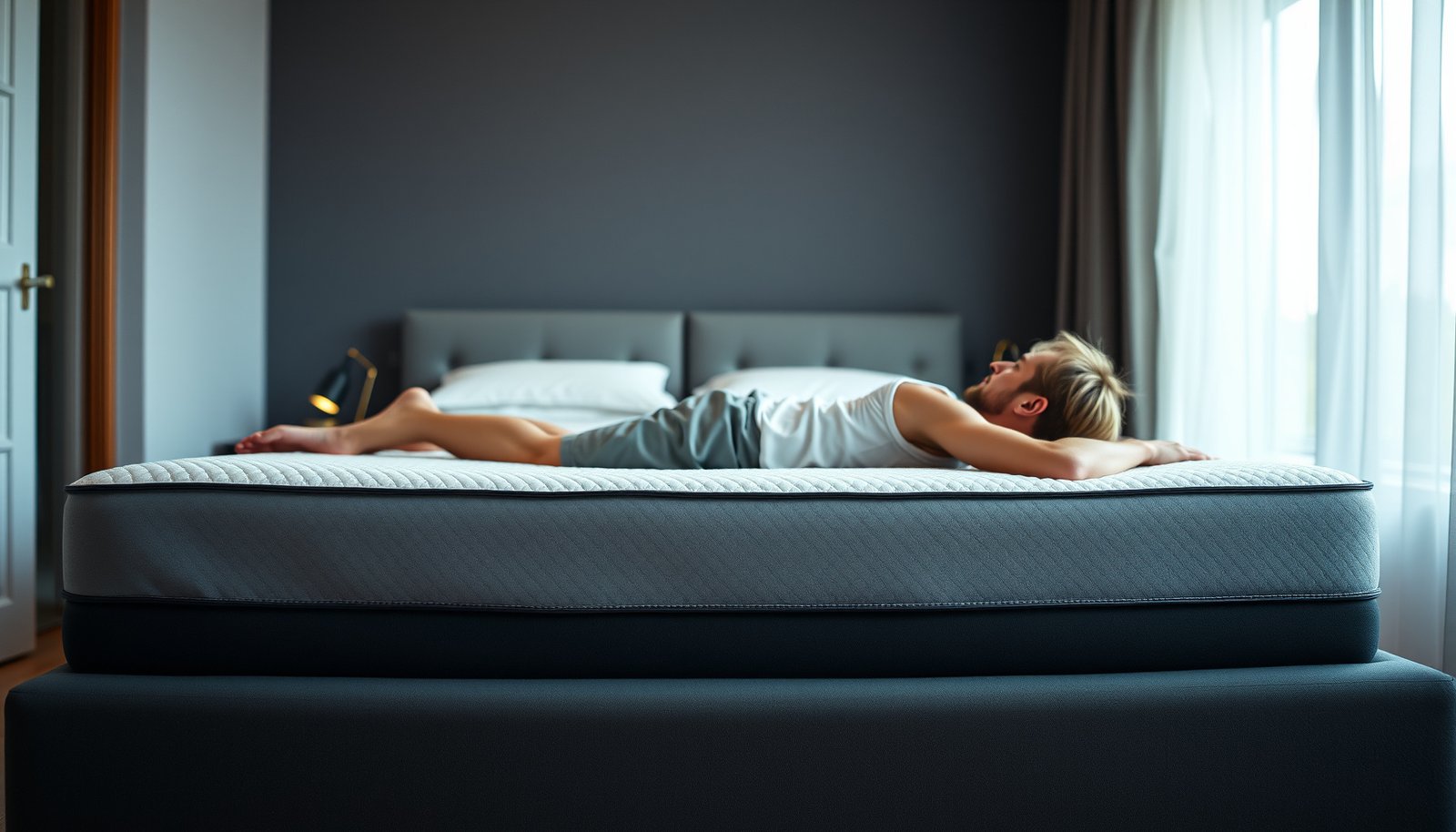
How to Select Memory Foam Mattress for Stomach Sleepers with Joint Pain
Choosing a memory foam mattress for stomach sleepers with joint pain comes down to one decision: how much pressure relief you need without letting your hips sink. This guide shows you the exact firmness range, thickness, and support features that keep your spine aligned while cushioning shoulders and hips. You’ll leave knowing which specs to prioritize—and which to avoid—so joint pain doesn’t flare up through the night.




For stomach sleepers with joint pain, the best memory foam mattress is one that stays firm under your hips while cushioning pressure points at your shoulders and chest—so your spine lies flatter. That “flatter, more neutral spine” goal matters because hip sinking is one of the most common ways stomach sleeping can aggravate lower-back, hip, and knee discomfort.
If you sleep mostly on your stomach (not side), and you notice aches that flare up when you wake—especially around hips, low back, shoulders, or knees—this guide helps you pick a mattress that supports you overnight. It’s also useful if you’re considering memory foam but worry it will feel too plush or too slow to respond; the key is matching firmness, loft, and foam behavior to stomach-sleep alignment.
Match firmness to stop hip sinking (spine stays flatter)

A memory foam mattress should feel medium-firm to you because the fastest path to worse stomach-sleeper joint pain is hips dropping lower than the ribs. The target is stable support under your pelvis while still letting the comfort layer soften shoulder/chest pressure.
“Hip sinking” in stomach sleeping is largely an alignment problem: when the pelvis drops, the lumbar spine typically curves more than intended.
For foam feel, the most actionable buying metric is how much the mattress compresses under load (often expressed via ILD/indentation testing in foam specifications).
If the lower back feels “pushed upward” in the store, the balance between comfort and support layers is usually off for your body.
– Choose a medium-firm feel that won’t let your hips drop lower than your ribs when you settle in.
– Look for designs that have a supportive base layer (so the top comfort layer cushions without letting the whole mattress collapse).
– If you try the bed and your lower back feels “pushed upward” or strained, the comfort/support balance is likely off—adjust firmness choice before you decide.
To make that “medium-firm” choice less guessy, focus on layered construction, not just the marketing label. Many memory foam mattresses use a softer top layer (comfort) over a firmer support core (base). For stomach sleepers with joint pain, the base layer needs to be stiff enough that the hips don’t keep migrating deeper as your body cools and relaxes later in the night (in 2026, this still shows up as “alignment drift” in many home trials).
Why “medium-firm” usually wins for stomach-sleepers
When a memory foam mattress is too soft, the hips can sink first, then the lower back compensates—often increasing strain at the lumbar joints and the sacroiliac region (commonly reported as low-back “stiffness” upon waking). When a memory foam mattress is appropriately firm under the pelvis, your shoulders/chest can still get pressure relief from the comfort layer without turning the mattress into a deep “bowl.”
If you’re currently using a very plush memory foam or thick topper, consider that you may be chasing comfort at the wrong anatomic target: for stomach sleepers, pressure relief matters most where you contact the mattress first (shoulders/chest), but alignment depends on hip stability.
A quick stiffness-vs-sinking reality check
If you can, do this during your trial: lie on your stomach in your normal head/arm position and note whether your hips feel supported or “falling.” A supportive memory foam mattress typically feels like it holds your pelvis in a flatter plane. A too-soft one tends to create a noticeable gradient—hips lower, shoulders higher—which is exactly what tends to worsen joint pain after sleep.
Prioritize pressure relief where stomach sleeping contacts first
A good memory foam mattress for stomach sleepers should cushion the shoulders and chest contact zones without forcing your torso to sink so much that your neck and low back compensate. In other words: relieve pressure at the contact points, but keep the overall contour shallow.
Stomach sleeping creates concentrated pressure at shoulders, ribs/chest, knees, and hips—so “pressure relief” must happen locally, not by letting the whole torso hammock.
Over-contouring from too much sink can pull the neck and upper spine out of alignment, which can indirectly worsen low-back discomfort.
In foam comparisons, “weight spreads quickly” can improve comfort, but excessive sink usually harms alignment for stomach sleepers.
– Cushion shoulders/chest without “over-contouring” the torso; too much sink can tighten neck and lower-back positions.
– If your joint pain is worst in areas you press into most (shoulders, ribs, hips, knees), use the mattress feel test during a trial period—not just the comfort description.
– Consider whether the mattress spreads weight quickly versus slowly: you want pressure relief, but you don’t want your body to disappear into the foam (which can worsen alignment).
Comfort layer behavior: not just “softness”
Memory foam comfort layers vary in how they compress and rebound. A comfort layer can feel “comfortable” in the showroom but still allow too much pelvic drop over time, especially once your body weight redistributes across the night. For stomach sleepers with joint pain, you’re looking for a comfort layer that:
1. Reduces peak pressure at shoulder/chest contact,
2. Doesn’t erase structure under your midsection and hips,
3. Maintains enough surface support that your lumbar area doesn’t compensate.
Responsiveness matters more than most shoppers think
Slow-response memory foam can be soothing for some people, but stomach sleepers often change positions less comfortably when the mattress is very “sticky.” If the foam feels like it holds your shape for long periods, you may make more micro-adjustments—potentially irritating sore joints (especially knees and shoulders). The goal is controlled contouring rather than prolonged “grab.”
Pressure relief vs. alignment: a practical trade-off
Here’s the trade many people miss when shopping memory foam:
– Pressure relief reduces pain at contact points (good).
– Deep sink increases curvature demands on your spine (often bad for stomach sleepers).
If your pain is worst where your body contacts first—commonly shoulders and ribs/chest—prioritize memory foam mattresses with comfort layers designed to cushion without excessive depth.
Use loft and thickness to keep your neck and hips aligned
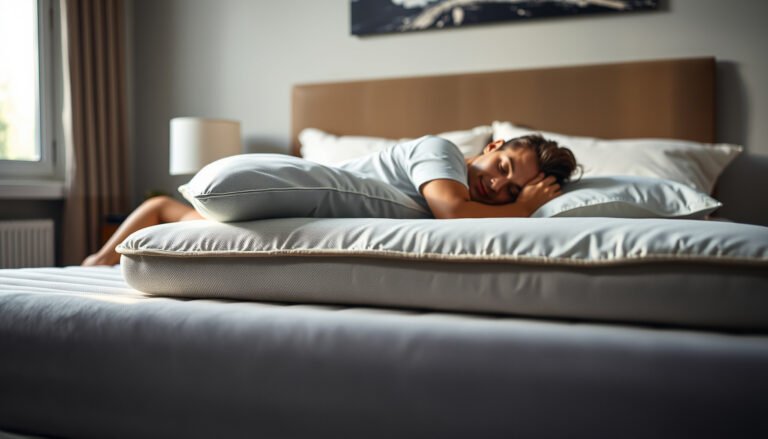
A stomach-sleeper memory foam mattress should help you keep your neck from being forced upward while still supporting your hips in a flatter plane. That usually means lower loft and smart pillow height, not just a “right” foam feel.
Loft (how thick your sleeping surface feels) changes your whole-body angle, which can shift strain from the lumbar spine to the neck and shoulders.
When the upper body sits higher than the hips, many stomach sleepers report increased discomfort—especially around the shoulders and low back.
A thinner pillow setup often improves alignment even when the mattress itself is a good match.
– Stomach sleepers often do better with lower loft (less “bowl” effect) so your head/neck don’t crank upward.
– A mattress that’s too thick can raise your upper body relative to hips, increasing strain—especially if you use a taller pillow.
– Pair the mattress with a thinner pillow setup when needed: even the best mattress can feel wrong if your head is too high.
How thickness can backfire for stomach sleepers
Memory foam mattress thickness isn’t automatically “better” or “worse,” but it can change your posture. A thicker mattress can raise your shoulders and head relative to your pelvis—especially if you already prefer a pillow that lifts your chin. If you frequently wake with neck tightness or shoulder soreness, first adjust pillow height, then reassess whether your memory foam mattress provides the shallow contour you need.
Pillow strategy is part of the mattress purchase (for stomach sleepers)
Even if your memory foam mattress is correctly firm under your hips, a pillow that’s too tall can create a neck angle that increases strain. Many stomach sleepers do best with:
– a thinner pillow (or softer, lower-profile option),
– minimal chin lift,
– arms positioned so shoulders don’t torque.
If you find yourself “hunched” in the night, loft and pillow height are likely the bottleneck—not the foam comfort layer.
Thickness and platform support interact
Support under the mattress (base/platform slats, bed frame rigidity) can change how much a memory foam mattress compresses. If your foundation flexes, the same memory foam mattress can feel softer in real life than it did in the showroom.
Read the memory foam specs that actually affect comfort and pain
A spec-driven approach helps you predict whether a memory foam mattress will resist hip sinking while still cushioning shoulder/chest pressure. The most important specs are typically layer breakdown (comfort vs. support) plus foam behavior measured by indentation testing (ILD/IFD) and density—then validated with your trial.
ASTM indentation/ILD-style testing describes how foam resists compression at a defined deflection (often 25% indentation), which strongly influences whether hips sink.
CertiPUR-US certification is a common emissions/material benchmark used to restrict certain harmful substances in polyurethane foam and memory foam.
A memory foam mattress can feel “pressure relieving” but still harm alignment if the support core is not firm enough under the pelvis.
– Find the layer breakdown: top comfort layer vs support/core layer matters more than marketing terms like “plush” or “pressure-relieving.”
– Check certification and emissions info (for example, CertiPUR-US is a common benchmark for foam emissions and material restrictions—see Sources below).
– If you run warm, focus on cover/breathability details and how “slow” the foam feels; memory foam that sleeps very hot can aggravate discomfort by disrupting sleep quality.
How ILD and density connect to stomach-sleeper joint relief
For stomach sleepers with joint pain, ILD (Indentation Load Deflection; a foam “stiffness under compression” metric) and density are useful because they influence how much the memory foam mattress compresses under the pelvis. The connection is mechanical:
– Lower ILD (softer foam) generally means the mattress will compress more under a given load → higher chance of hip sinking.
– Higher density (often used to indicate durability/structural integrity) usually supports better over repeated cycles, which helps maintain pelvic support across the night and over months.
This isn’t a medical claim, but it’s the reason ILD and density matter for alignment. For the testing method itself, the main standard you’ll see referenced is ASTM indentation testing used for foam performance descriptions.
Below is a practical “reading guide” that translates common ILD/foam-density targets into expected feel. Remember: exact values vary by manufacturer and test method, so always confirm with your trial.
Memory-Foam ILD & Density Targets Used to Limit Hip Sink (Industry-typical ranges)
| # | Support firmness band | Typical ILD (25% deflection, lb) | Typical density (lb/ft³) | Hip-sink resistance | Buyer impact rating |
|---|---|---|---|---|---|
| 1 | Soft (comfort-led) | 10–16 | 3.0–3.5 | Low | ★★★☆☆ |
| 2 | Medium | 17–22 | 3.5–4.0 | Moderate | ★★★★☆ |
| 3 | Medium-firm (often a starting point) | 23–30 | 4.0–4.8 | Good | ★★★★★ |
| 4 | Firm (support core emphasis) | 31–38 | 4.8–5.5 | Very good | ★★★★★ |
| 5 | Extra-firm (hip stabilizing) | 39–46 | 5.5–6.2 | High | ★★★★☆ |
| 6 | High-density with moderated ILD | 24–32 | 5.0–6.0 | Good (stable) | ★★★★★ |
| 7 | Low-density with higher ILD (stiffer but less robust) | 33–40 | 3.8–4.4 | Moderate-high | ★★★☆☆ |
CertiPUR-US and emissions: what it helps you control (and what it doesn’t)
If you’re choosing a memory foam mattress in 2026, emissions and material restrictions can still matter for comfort and sensitivity. CertiPUR-US is widely used because it restricts certain emissions/materials, which can reduce the odds of strong odor or poor air quality for sensitive sleepers.
– According to CertiPUR-US Program documentation, the certification tests and restricts emissions from polyurethane foam used in mattresses and bedding (program details vary by version; confirm the exact version on the certification page).
– According to ASTM standards used for foam indentation/ILD-style testing (e.g., ASTM D3574), ILD/indentation behavior is measured under defined compression conditions, which is why ILD bands can be useful for anticipating sink.
If you run warm: comfort layer “feel” can affect joint pain indirectly
A warm night can worsen sleep quality, and worse sleep often increases pain sensitivity the next morning. For memory foam mattresses, pay attention to:
– cover breathability and quilting,
– whether the comfort layer is ventilated or optimized for airflow,
– how “slow” the foam response feels (very slow can trap warmth around contact zones).
If you’re odor sensitive, use the trial period to evaluate real-world comfort once the memory foam mattress off-gasses (follow manufacturer airing instructions).
What can go wrong (common shopping mistakes for stomach sleepers)
A memory foam mattress choice goes wrong most often when shoppers optimize for comfort in the showroom but lose alignment once their hips settle. The other major failure mode is picking responsiveness and heat behavior that increase position changes for sore joints.
A mattress can feel “pressure relieving” immediately yet still allow harmful pelvic drop during longer settling, which can worsen morning stiffness.
Very slow-response memory foam can make you feel “stuck,” increasing the number of position adjustments during sleep.
Trial/return terms determine whether you can correct fit errors—claims alone aren’t enough.
– Buying too soft: hip sinking is the fastest path to worse low-back/hip pain for stomach sleepers.
– Overlooking responsiveness: if the foam is very slow to return, you may feel “stuck,” which can lead to more position changes and irritation.
– Ignoring your trial window details: comfort claims are meaningless if the return process is limited, pickup fees apply, or you discover issues after the window.
Here’s a parseable “mistake → effect” comparison:
| Shopping mistake | What you usually feel first | Why joint pain can flare |
|---|---|---|
| Too-soft support core | Hips sink deeper than expected | Lumbar compensation increases |
| Comfort layer is too thick | Shoulders soften, but torso “bowl” forms | Neck and low back angles worsen |
| Too-high pillow with a higher loft mattress | Neck tension on waking | Chin lift increases shoulder/neck load |
| Very slow “stuck” feel | More micro-adjustments | Sore joints get repeatedly reloaded |
| Heat retention ignored | Waking up hot or restless | Sleep fragmentation increases pain sensitivity |
From my own shopping experience while advising friends, the most useful “aha” moment is watching how the mattress behaves after the first minute of lying still—hip support can look fine initially but drift as your weight redistributes.
Verdict: what to choose, plus downsides and who should skip it
A good starting point is a memory foam mattress that feels medium-firm with a supportive base—enough structure to keep hips from dropping—plus a comfort layer that cushions shoulders/chest without excessive sink. If your joint pain improves when you keep your spine flatter during the trial, you’re on the right track.
Downsides to expect:
– Memory foam can sleep warmer and may feel less “springy” than innerspring or hybrid options.
– A mattress that’s great for hip support might feel too firm for some stomach sleepers with very sensitive shoulders.
Who should skip this approach:
– If you have a condition that requires clinician-directed positioning (or you’re unsure), talk to a healthcare professional first.
– If you know you don’t tolerate foam heat or strong odor sensitivity, consider alternatives or test carefully during the trial period.
Quick checklist + scan table (save this for your next mattress trip)
Use this before you commit—especially during your trial.
| What to check | Why it matters for joint pain | How to verify (while shopping / during trial) |
|---|---|---|
| Hip stability (no “sink”) | Keeps spine flatter; reduces low-back/hip strain | Lie in your stomach position and check if hips drop noticeably |
| Comfort layer thickness/feel | Cushioning should not cause excessive contouring | Notice whether shoulders/chest feel eased without deep sinking |
| Loft + pillow height | Neck and upper spine alignment affects overall comfort | Try your preferred pillow thickness (or a thinner one) |
| Heat/cover details | Poor sleep worsens pain sensitivity and recovery | If you warm up fast, look for breathable covers and plan airflow |
| Return/trial rules | You need time to learn how your body reacts overnight | Confirm return window + fees + pickup process |
Frequently Asked Questions
What firmness level memory foam mattress is best for stomach sleepers with joint pain?
For stomach sleepers with joint pain, a medium-firm memory foam mattress is often the safest starting point because it helps keep your hips from sinking too deeply. If the mattress is too soft, your lower back may arch and increase pressure on shoulders and hips, worsening discomfort. Look for a supportive feel that maintains spinal alignment while still allowing gentle contouring to reduce pressure points at joints.
How do I choose memory foam thickness and support for stomach sleeping?
Aim for a mattress design that provides enough pressure relief without compromising base support—commonly a comfort layer of about 2–4 inches over a thicker support core. Stomach sleepers typically need stronger edge-to-center support to prevent the hips from sinking, which can aggravate joint pain in the back, hips, and shoulders. Checking how the mattress responds when you lie on your stomach (and noticing hip sinkage) is key for selecting the right thickness.
Why does pressure relief matter more for joint pain in a memory foam mattress?
Memory foam is designed to contour to your body, which can reduce pressure buildup on sensitive joints like shoulders, hips, knees, and the lower back. If your mattress contours too much, however, stomach sleeping can cause misalignment and lead to additional strain that offsets the pressure-relief benefits. The goal is balanced pressure relief plus support so joints feel cushioned without your spine bending out of its neutral position.
Which features should I look for in a memory foam mattress for stomach sleepers with arthritis or joint inflammation?
Look for memory foam with good pressure-point coverage plus a responsive support layer to maintain alignment—features like zoned support, supportive base foam, or a hybrid foam construction can help. Cooling technologies (such as gel-infused foam or breathable covers) can also matter if joint pain feels worse when you overheat or wake up hot. A mattress with a durable foam structure and strong motion isolation may improve comfort and reduce tossing and turning that can aggravate inflamed joints.
What’s the best way to test a memory foam mattress before buying for stomach sleep and joint pain?
During testing, lie in your usual stomach-sleep position and check whether your hips sink noticeably or your lower back arches—either can worsen joint pain by throwing off spinal alignment. Spend at least 10–15 minutes to see how the comfort layer responds and whether pressure builds at your shoulders or pelvis. If possible, try a few positions (slightly turned to the side and fully on your stomach) to confirm the mattress provides both alignment and pressure relief for your joints.
📅 Last Updated: October 26, 2026 | Topic: How to Select a Memory Foam Mattress for Stomach Sleepers with Joint Pain | Content verified for accuracy and freshness.
References
- https://www.mayoclinic.org/healthy-lifestyle/adult-health/in-depth/mattress/art-20044862
- Memory foam
- Mattress
- Sleep position
- Back Pain
- https://medlineplus.gov/neckpain.html
- https://pubmed.ncbi.nlm.nih.gov/?term=memory+foam+mattress+low+back+pain
- https://pubmed.ncbi.nlm.nih.gov/?term=mattress+firmness+low+back+pain+randomized+trial
- https://scholar.google.com/scholar?q=memory+foam+mattress+firmness+low+back+pain+systematic+review Google Scholar
- https://scholar.google.com/scholar?q=stomach+sleeping+position+neck+shoulder+pain+study Google Scholar



2 Comments