
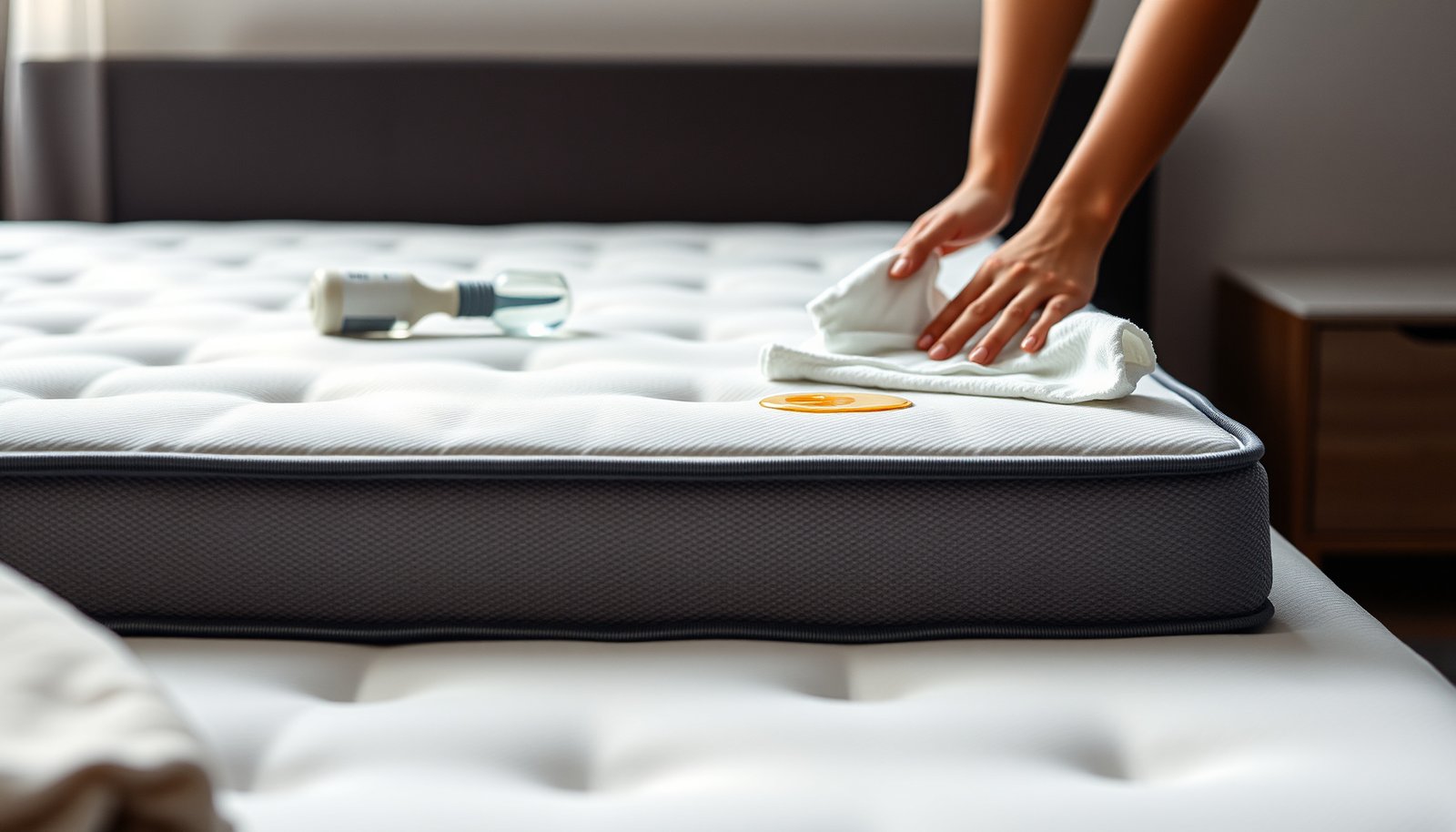
How to Clean a Hybrid Mattress with Food Residue: Step-by-Step
Need to clean a hybrid mattress with food residue, fast and safely without soaking the layers? This step-by-step guide tells you the exact cleaning method to lift sticky food spills, remove odors, and protect the foam and innerspring from damage. Follow these instructions and you’ll know what to do immediately after the spill—and how to finish the clean so the mattress stays fresh.




If you have food residue on a hybrid mattress, blot first, loosen any solids gently, then clean with a mild cleaner using a barely-damp cloth—never soak the mattress. Finish with a light wipe (if needed) and dry quickly to prevent trapped moisture from turning into lingering odors or mildew in the foam-and-coil layers. This guide shows the exact sequence to use for sticky, oily, and crumb-based residue so you don’t push food deeper into the comfort layers.
This is for anyone dealing with fresh or dried food spills on a hybrid mattress (foam comfort layers over coils). It’s especially useful when you want a safer DIY approach that avoids oversaturating foam or keeping moisture trapped near the spring unit.
Identify the food residue and protect the mattress

You’ll get better results on a hybrid mattress when you first identify what the “food residue” actually is, because each residue type behaves differently with water and soap. Here’s the fast logic: crumbs are mechanical debris (lift, don’t rub), sugar/sticky deposits are water-soluble (dissolve gently), and oils/grease repel water (require surfactants like mild dish soap).
Food stains on a hybrid mattress aren’t all the same: crumbs behave like dry debris, while sticky sugar residues require controlled moisture to dissolve without soaking foam layers.
Mold risk increases when moisture remains indoors: the CDC notes mold can begin growing within 24–48 hours of water exposure (CDC guidance, undated; commonly cited as part of moisture-control recommendations).
When you protect the hybrid mattress first (cover removal and careful blotting), you reduce the chance you’ll spread residue wider across foam comfort layers.
What “food residue” looks like (sticky vs oily vs crumb-based)
On a hybrid mattress, “food residue” usually falls into three practical buckets:
– Crumb-based: crumbs, dried flakes, and visible particles. These should be lifted first to avoid grinding debris deeper.
– Sticky/sugary: jam, syrup, chocolate drips, sweet sauces. These often re-stiffen when you add too much water, so you need controlled, light dampness.
– Oily/greasy: pizza oils, gravy, butter, mayonnaise. These typically smear if you wipe aggressively; they need a mild surfactant and patience with thin passes.
Protect the hybrid mattress before you clean
– Remove loose bits first: lift crumbs with a spoon or a dull butter knife. Don’t rub—rubbing on a hybrid mattress can embed particles into the foam’s surface pores.
– Check for a removable cover: if your hybrid mattress has a zip-off or removable cover, unzip it and clean the cover separately according to the care label. This prevents you from driving residue into the foam/coil interior.
According to the EPA, controlling indoor moisture is key to preventing mold problems; EPA guidance commonly recommends keeping indoor relative humidity in the 30–50% range to reduce mold growth risk (EPA mold guidance, typically cited as 2008 in indoor moisture recommendations).
What to use (and what to avoid) on hybrid materials
The best cleaner for a hybrid mattress is the one that’s mild and used in minimal liquid form—because hybrid foams can trap moisture while coils stay slower to “dry out.” Use your cleaner on a cloth, dab in thin motions, and stop well short of soaking the mattress surface.
Hybrid mattresses are foam-over-coils systems, so over-wetting can trap moisture near the foam comfort layer where drying is slower.
Spot cleaning works best when the cleaner is applied to a cloth rather than poured directly onto the hybrid mattress surface.
The CDC emphasizes that addressing moisture promptly is important because mold can develop on damp materials quickly (CDC guidance, moisture-control recommendations).
Use mild, mattress-safe options
Depending on what you’re removing from your hybrid mattress:
– For greasy residue: use a small amount of mild dish soap diluted in water, then apply with a cloth you can wring nearly dry.
– For general stains (non-greasy): use a gentle upholstery cleaner that’s designed for fabrics, again applied to cloth—not poured.
Rule of thumb for a hybrid mattress: if liquid is pooling or you can feel dampness through to the next layer, you’re using too much.
Avoid soaking and harsh chemistry
– Avoid soaking: hybrid mattresses can trap moisture near foam layers, leading to lingering smells or mold risk.
– Don’t rely on heat: skip hair dryers/steamers unless your mattress label explicitly allows heat-assisted drying, and always spot test first in an inconspicuous area.
– Skip bleach/hydrogen peroxide by default: even when they work on stains, they can discolor some covers and can be too aggressive for foam materials unless your label explicitly permits them.
Step-by-step cleaning for food residue
The safest step-by-step method for cleaning food residue from a hybrid mattress is: blot → loosen solids → clean with a barely-damp cloth → light rinse (only if needed) → dry hard and fast. That sequence minimizes both residue spread and trapped moisture inside the foam comfort layers.
Blotting first is more effective than wiping because it lifts residue without pushing it deeper into the foam layers of a hybrid mattress.
Working from the outside of a stain inward reduces ring marks and limits how far sticky or oily food spreads across the hybrid mattress surface.
Drying promptly matters: CDC moisture guidance notes mold can begin growing within 24–48 hours after water exposure.
A quick compatibility map (so you choose the right cleaning logic)
For a hybrid mattress, match the “residue type” to your cleaning behavior:
– Crumbs (dry): lift + minimal dampness
– Sticky sugar: dissolve gently with a barely-damp cloth + thin passes
– Oily/grease: emulsify with diluted mild dish soap + thin passes, then lightly wipe clean
Comparison at a glance (what to do differently on a hybrid mattress):
| Food residue type on a hybrid mattress | Cleaning starter | Motion style | Why this works |
|---|---|---|---|
| Crumbs / dried bits | Lift with spoon/knife | No rubbing | Prevents particle grinding into foam |
| Sticky sugar (jam/syrup) | Barely-damp cloth + mild cleaner | Dab/wipe in small sections | Controlled moisture re-dissolves without soaking |
| Oily sauce/grease | Diluted dish soap solution | Gentle dab; repeat thin passes | Surfactants break up oil before wiping |
Mandatory data table: cleaner choices vs. foam-friendly risk
Use this as a practical reference while you clean your hybrid mattress (foam comfort layers over coils).
Common Cleaner Strengths Used for Food Residue on Hybrid Mattresses
| # | Cleaner (typical use strength) | Approx pH | Best fit | Foam-safety DIY rating |
|---|---|---|---|---|
| 1 | Plain water (barely-damp cloth) | ~7.0 | General cleanup / light rinse | ★★★★★ |
| 2 | Mild dish soap (diluted) | ~7–9 | Greasy residue (pizza, sauces) | ★★★★☆ |
| 3 | Baking soda (light paste) | ~8.3 (in solution) | Odor-neutralizing + residue lift (test first) | ★★★☆☆ |
| 4 | White vinegar (5% acetic acid) | ~2.4–3.4 | Sticky sugar residue (spot test) | ★★★☆☆ |
| 5 | 3% hydrogen peroxide (only if label allows) | ~4–5 | Targeted lightening/disinfection | ★★☆☆☆ |
| 6 | 70% isopropyl alcohol (spot test) | Neutral range (varies) | Some sticky residue types (label-dependent) | ★★☆☆☆ |
| 7 | Diluted ammonia (only if label allows) | ~11–12 | Hard stains (high risk to foams/fabrics) | ★☆☆☆☆ |
> Note: Always prioritize your hybrid mattress manufacturer’s label instructions over general chemistry guidance. If a cleaner isn’t explicitly allowed, treat it as “test-only” or “skip.”
Step-by-step cleaning for food residue
– 1) Blot and loosen: blot with a clean white cloth/paper towels to lift as much as possible; for dried food, lightly lift and remove particles before adding any liquid.
– 2) Clean in thin passes: mix your cleaner with water lightly, then dab and wipe with a cloth until the stain lightens (work from the outside of the stain inward).
– 3) Rinse lightly + dry hard: if your cleaner leaves residue, wipe again with a cloth dampened with plain water; then dry thoroughly with airflow (fan) and time—.
Practical details for oily vs sticky residue on a hybrid mattress
– Oily food on a hybrid mattress: diluted dish soap is your best first move, but expect multiple thin passes. Grease often “looks lighter” before it’s fully emulsified, so keep your cloth barely damp and avoid scrubbing.
– Sticky syrup/jam on a hybrid mattress: start with the smallest amount of dampness possible. If it smears, stop and blot again—adding more liquid can spread the sticky layer across adjacent foam.
What can go wrong (and how to prevent it)
The most common problems when cleaning food residue from a hybrid mattress are over-wetting, using an incompatible chemical, and not drying fully. The fix in every case is the same: use less liquid than you think you need, follow label restrictions, and commit to fast drying.
Pouring or soaking a hybrid mattress increases the risk that moisture penetrates into foam comfort layers, where drying is slower.
Mold prevention guidance centers on prompt moisture control: mold can begin growing within 24–48 hours after water exposure (CDC moisture guidance).
Spot-testing cleaners in an inconspicuous area helps prevent discoloration or texture changes on hybrid mattress covers.
Over-wetting: the fastest route to lingering odor
– Over-wetting: pouring liquid can drive food and moisture into deeper layers—use “barely damp,” and stop if you notice saturation.
– If you can feel cool dampness after blotting (even without seeing liquid), you likely used too much moisture for your hybrid mattress.
Wrong cleaner for the material
– Some foams and covers can discolor or react with harsh chemicals.
– Always do a spot test in a hidden corner of the hybrid mattress cover (or the underside if it’s accessible).
Insufficient drying
Even if the surface stain looks better, trapped moisture can cause:
– odor returning after the bed is remade, and/or
– a damp smell that builds over days.
For moisture control, EPA guidance commonly recommends maintaining indoor relative humidity between 30–50% as part of mold risk reduction (EPA mold guidance, cited 2008).
Verdict: best approach, plus who should skip it
For most small-to-medium food spills on a hybrid mattress, the best DIY approach is blotting first, cleaning with a mild cleaner using a barely-damp cloth, and drying fast. This minimizes residue spreading and reduces the chance you’ll trap moisture in foam comfort layers over coils.
If your hybrid mattress care label allows spot cleaning, “light cleaner + blotting + fast drying” is typically the safest DIY workflow.
DIY cleaning can fail when residue is deeply set into foam layers, because limited moisture and agitation may not reach embedded particles.
Moisture left in a hybrid mattress can promote odor and microbial growth, so drying time is a critical part of the cleaning process.
Downsides to be transparent about
– DIY may not fully remove deep, set-in stains or embedded odors.
– Repeated moisture attempts can make odor-removal harder—especially if the hybrid mattress never dries completely between tries.
Who should skip DIY (or call a professional)
Skip DIY (or call a professional) if the spill is large, the mattress is heavily soaked, you can’t get it to dry properly, or your mattress warranty explicitly restricts cleaning—.
Also consider professional help if your hybrid mattress includes specialty foams (cooling gel, memory foam variants) and the label is strict about allowable cleaning chemistry and drying methods.
Quick checklist for cleaning hybrid mattresses
– [ ] Remove crumbs/solids first (don’t rub)
– [ ] Unzip/clean removable cover per label (if applicable)
– [ ] Blot, then clean using a barely-damp cloth (no soaking)
– [ ] Rinse lightly if your cleaner can leave residue
– [ ] Dry completely with strong airflow before using
Frequently Asked Questions
What’s the safest way to clean food residue off a hybrid mattress?
Start by blotting any fresh food with clean, dry paper towels—don’t rub, since hybrid mattress fibers can spread residue and push it deeper. Lightly scrape off dried bits, then vacuum the area using an upholstery attachment. Use a mild upholstery cleaner or a mixture of water and a small amount of gentle detergent, applied with a lightly damp cloth, then blot until the stain lifts. Finish by blotting again with a dry cloth and letting the mattress fully air-dry to prevent lingering odors and mold risk.
How do I remove grease or sticky spills from a hybrid mattress?
For greasy food residue, use a clean cloth with a small amount of dish soap diluted in water, and dab the stained area rather than soaking the mattress. If the residue feels tacky, repeat gentle blotting with a damp cloth to rinse away soap, then blot dry. Avoid saturating the comfort layers; hybrid mattresses have springs and cushioning materials that can retain moisture. Once clean, place the mattress in a well-ventilated area and allow thorough drying before using.
Why does food residue smell linger in hybrid mattresses, and how can I deodorize it?
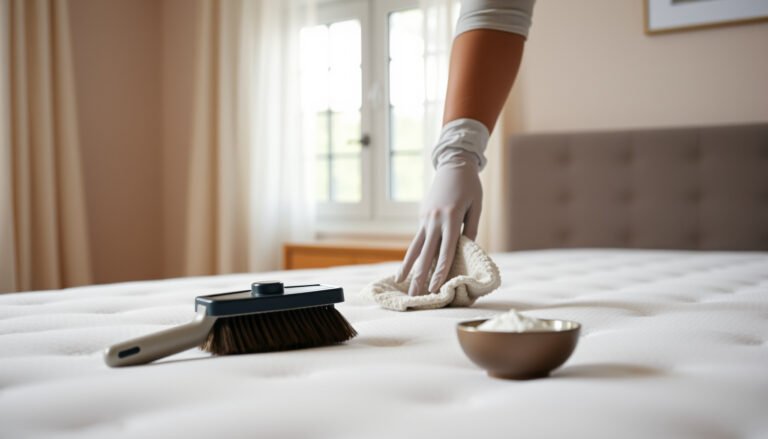
Food residue can leave behind sugars, proteins, and grease that feed odor-causing bacteria even after the visible stain fades. After cleaning, sprinkle a light layer of baking soda across the affected area and let it sit for several hours (or overnight) to absorb odors. Vacuum the baking soda gently with an upholstery attachment, then repeat cleaning/deodorizing if needed. Ensure the mattress is completely dry, because trapped moisture is a major cause of persistent odors.
What’s the best spot-cleaning method for hybrid mattresses without damaging the materials?
Use the “damp cloth” method: apply cleaner to the cloth first, then dab the stain to control moisture. Work from the outer edges toward the center to prevent the food residue from spreading across the top comfort layer. Avoid steam and harsh chemicals, which can damage foam, fabric covers, or specialty quilting while increasing the risk of odors. After cleaning, blot with dry towels and allow full air circulation so the hybrid mattress stays fresh.
Which cleaning products should I use (and avoid) when removing food residue from a hybrid mattress?
Choose mild, mattress-safe options like diluted dish soap for grease, a gentle upholstery cleaner, or an enzyme-based cleaner designed for organic stains (food, spills, biological residue). Avoid soaking products like excessive liquid, and steer clear of bleach, strong ammonia, or corrosive cleaners that can discolor fabric or break down foams. For best results, test any cleaner on a hidden corner of the mattress cover first. Always dry completely—use fans or open airflow if needed—before putting on sheets again.
📅 Last Updated: October 26, 2026 | Topic: How to Clean a Hybrid Mattress with Food Residue | Content verified for accuracy and freshness.
References
- Stain removal
- https://en.wikipedia.org/wiki/Enzymatic_detergent
- https://www.cdc.gov/healthywater/hygiene/cleaning-disinfection.html
- https://www.cdc.gov/parasites/bedbugs/index.html
- https://www.cdc.gov/coronavirus/2019-ncov/community/disinfecting-building-facility.html
- https://www.epa.gov/mold/mold-remediation-guide
- DSpace
- https://scholar.google.com/scholar?q=how+to+clean+mattress+food+stain+hybrid+foam+innerspring Google Scholar
- https://scholar.google.com/scholar?q=enzymatic+cleaner+food+stain+removal+textiles+fabric Google Scholar
- https://scholar.google.com/scholar?q=upholstery+stain+removal+detergent+steps+drying+avoid+damage Google Scholar



One Comment