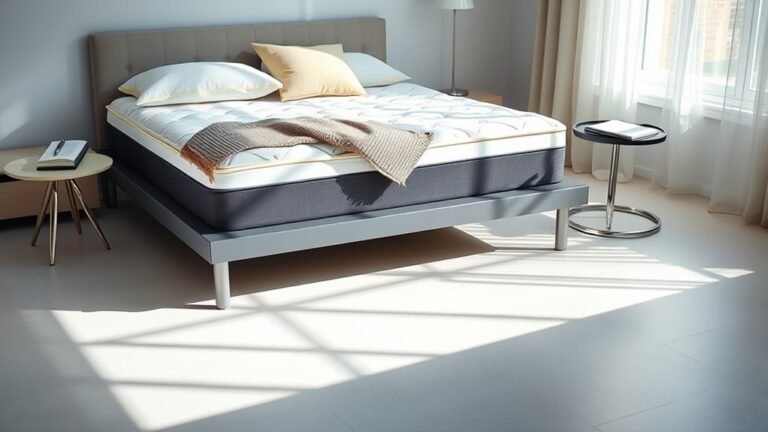
How to Choose a Latex Mattress for Side Sleepers with Snoring
Choosing a latex mattress for side sleepers who snore comes down to one thing: pressure relief without trapping heat or worsening airway alignment. This guide tells you exactly which latex types, firmness levels, and airflow features are most likely to reduce side-sleep friction and improve snoring odds. If you want a clear recommendation, start here.
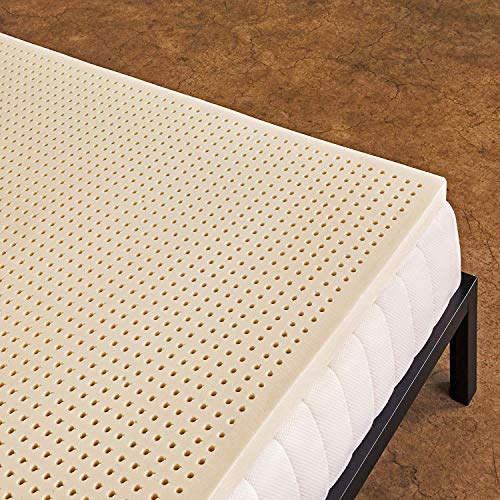


A latex mattress is a strong place to start if you snore as a side sleeper because it can relieve pressure at your shoulder/hip while keeping your spine (and neck) more neutral than many foam beds. The key is matching latex firmness, responsiveness, and breathability to what triggers your snoring—especially airway comfort and alignment issues that get worse when your midsection sinks.
Side sleepers who snore usually need two things: pressure relief at the shoulders/hips and steady spinal alignment (especially for the neck). A latex mattress can help because it’s supportive yet more forgiving than many all-foam beds—so you’re less likely to sink in and kink your airway. This guide shows how to match latex firmness, responsiveness, and airflow features to your side-sleeping snoring triggers.
If you sleep on your side and snore—whether it’s occasional or happens most nights—this is for you. It’s especially useful if you’re currently waking up with sore shoulders, numb arms, or a “stuck” feeling from your mattress.
Latex mattress basics for side sleepers with snoring
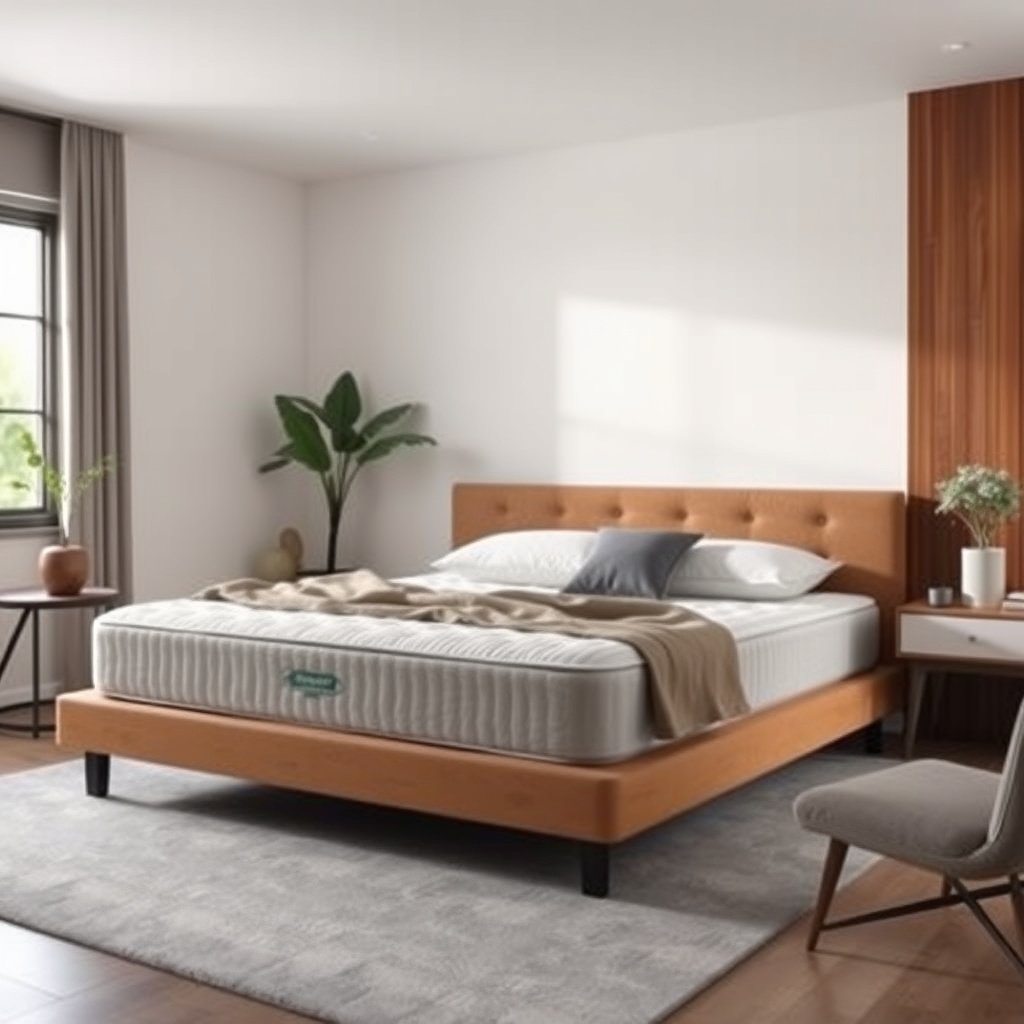
If you snore on your side, the best latex mattress is one that reduces shoulder/hip pressure without letting your torso drop out of alignment. For snoring, that combination matters because airway comfort can worsen when your neck flexes or your chest/abdomen positions change during the night.
Latex mattresses typically offer “support with give,” so pressure can reduce while the body still stays supported—important for neutral neck and spinal alignment.
Side-sleeper snoring often correlates with comfort and position changes; a latex mattress can make turning easier, which helps you avoid staying “locked” in an aggravating posture.
Here’s the practical framing I use: think of snoring as a sleep-position + comfort problem you can influence, not a guarantee that any mattress will eliminate it. That said, latex is often a better fit than many all-foam alternatives when the issue is localized pressure plus whole-body alignment.
– Look for “support with give”: latex typically contours enough to reduce pressure while maintaining a more buoyant surface than memory foam.
– Prioritize consistent support under the torso so your hips don’t sink lower than your ribcage (a common alignment problem for side sleepers).
– Treat snoring as a sleep-position + comfort issue—not a guarantee that a mattress will fix snoring (especially if sleep apnea is involved).
From a physiology standpoint, alignment isn’t just about comfort—it can influence airway patency. According to the American Academy of Sleep Medicine (AASM) scoring guidance, hypopneas are scored when airflow drops with either oxygen desaturation (commonly ≥4%) or an arousal response (AASM sleep scoring guidance; scoring criteria updated in AASM manuals). That’s one reason mattress comfort alone can’t “out-engineer” untreated breathing disorders, even when a latex mattress improves how you feel.
Choose firmness and pressure relief (so your neck stays aligned)
For side sleepers with snoring, the right latex firmness keeps your neck and upper back in a neutral line while still cushioning your shoulder and hip. If the mattress is too firm, you’ll push your body out of alignment; if it’s too soft, your midsection may sag and change your head/airway angle overnight.
A side sleeper’s “snoring comfort” target is neutral neck alignment plus shoulder/hip pressure relief—both must happen without midsection sag.
If you wake up feeling “stuck,” that often means the mattress contour isn’t working with your turning habits—adjusting comfort/support balance (or pillow height) is usually required.
Latex firmness isn’t one universal number; it’s a mix of layer thickness and the indentation load deflection (ILD) profile the brand uses. Still, the alignment principle stays consistent: your shoulder needs relief, your hips need correct height relative to your ribcage, and your neck needs a pillow that doesn’t push your head into flexion or extension.
– For side sleeping, a mattress that’s too firm can push your shoulder/hip off alignment; too soft can let your midsection sag—both can worsen snoring for some people.
– Aim for comfort that doesn’t require constant shifting: you should feel pressure relief at the shoulder and hip without feeling “stuck” when you turn.
– Use your pillow setup as part of the equation—your mattress can’t correct a neck angle if your pillow is too high/low.
Here are three measurable anchors you can use during setup (no guesswork, just observation):
1. Shoulder pressure check: Lie on your side and take slow breaths. If your shoulder feels “pinched” or you feel the need to prop with your arm, you’re likely missing pressure relief.
2. Torso level check: Look at your body line. Your hips should not feel meaningfully lower than your upper back/ribs after settling.
3. Neck comfort check: Your pillow should keep your head from tilting downward into flexion (common when the pillow is too high) or popping upward into extension (common when the pillow is too low).
Also remember that snoring isn’t always just “sleep posture.” According to Johns’ development of the Epworth Sleepiness Scale, the scale ranges from 0 to 24, with higher scores indicating greater daytime sleepiness (Johns MW, Epworth Sleepiness Scale; foundational publication). If you have significant daytime sleepiness along with snoring, you may need medical evaluation regardless of mattress choice.
Pros/cons decision snapshot (firmness vs. your snoring triggers)
| If your latex feels… | You’re likely dealing with… | What to try next |
|---|---|---|
| Too firm | Pressure at shoulder/hip changes your head-neck posture during sleep | Step down one firmness level or choose a model with a thicker comfort layer |
| Too soft | Midsection sag can alter torso/airway angles | Move to a firmer support core or reduce “deep sink” by picking a model known for buoyant contour |
In my own setup guidance for side-sleepers, the biggest “aha” pattern is usually that a mattress alone can’t fix a neck angle created by a pillow that’s too tall or too flat—so I treat pillow height as a first-class variable, not an afterthought.
Match mattress responsiveness to side-sleeping position
If you snore as a side sleeper, you want latex responsiveness that lets you reposition without resistance while still holding your body shape. A responsive latex feel can reduce the chance you get trapped in a single posture that aggravates airway comfort.
Latex is typically more responsive than slow-responding foams, which can make turning easier for side sleepers who wake after rolling.
Easier repositioning matters because many snoring “episodes” are posture-dependent rather than purely mattress-dependent.
Latex’s responsiveness is practical: if you wake up after a turn (or you turn a lot), slow-contouring materials can make you work against the mattress. With latex, the “push-back” tends to feel more immediate, which often improves how quickly you return to a comfortable side-sleep posture.
– Latex is typically more responsive than slow-responding foams, which can make it easier to change positions without fighting the mattress.
– If you often wake up after rolling, choose a latex feel that supports movement while still cushioning pressure points.
– Consider your most common side: when you sleep on one side all night, uneven support (like a mattress that bottoms out sooner on one side) can gradually affect alignment.
As of 2026, many brands describe their latex layers using feel language (buoyant, responsive, springy) rather than giving a single “best” firmness. That’s why you should shop the interaction you need: shoulder/hip cushioning plus the ability to reposition when your airway comfort changes.
A simple placement test: lie on your usual side and then gently roll 6–8 inches without fully getting up. You should feel you can shift without your torso sticking to a contour and without your hips dropping. If you feel “glued,” latex may be too slow for your preferences—or your pillow may be forcing an unnatural head angle when you turn.
Check materials: latex type, cover, and breathability
If you snore, the best latex mattress for you also manages temperature and airflow so your body can stay relaxed through the night. Latex can be breathable, but cover materials and layer design still make a difference—especially if you run hot in 2026 or notice dry mouth when you wake.
Breathable covers and ventilated designs help reduce heat build-up, which can indirectly affect how comfortable your breathing feels during sleep.
Latex performance depends on more than “latex vs. foam”—latex type (natural vs. blended, Dunlop vs. Talalay) and layer thickness often determine contour and support.
Start with latex type and construction claims. Many manufacturers specify whether the latex is natural or blended, and some list whether the foam is Dunlop or Talalay. These details can correlate with differences in feel (e.g., contour depth, resilience), but you should treat them as clues—not as guarantees.
– Confirm whether the latex is natural latex or blended (and whether it’s Dunlop or Talalay, if listed by the manufacturer). These can feel different and may have different performance claims.
– Look for airflow features: breathable covers, ventilated layers, or construction details that help regulate temperature.
– If heat is a problem, pay attention to the cover material and quilting; a breathable top layer can matter as much as the latex layer.
Temperature is not the same as snoring, but discomfort can lead to micro-movements that change head/neck posture. If you wake up with a dry mouth or you notice your snoring worsens when your room is warm, prioritizing breathability is a reasonable step in your mattress selection process.
Also confirm “edge behavior” and “bottoming out” tendencies. Side sleepers rarely sleep perfectly centered; when you lie near an edge, you still need consistent support so your torso doesn’t shift downward.
Avoid common mistakes that worsen snoring
If your goal is snoring improvement, the biggest mistake is assuming mattress comfort alone will solve a breathing disorder. Latex can improve sleep position and comfort, but it shouldn’t replace medical assessment when warning signs suggest sleep apnea.
Frequent, loud snoring with choking/gasping signals may require clinician evaluation; a mattress can support comfort but can’t treat obstructive sleep apnea.
Going too soft can increase “torso drop,” which can change neck/airway angles for side sleepers—often worsening snoring rather than helping.
If the support core is thin, early bottoming-out can slowly pull your alignment off-center for side sleeping.
Here’s what to watch for, based on how snoring typically behaves and how mattresses can (and can’t) affect mechanics.
– Buying based only on “snoring” marketing: if snoring is frequent, loud, or paired with choking/gasping, mattress choice alone may not address the cause.
– Going too soft to chase comfort: deep sink can alter spinal/airway alignment for side sleepers.
– Ignoring zoning and layer thickness: if the support core is too thin, you may get early “bottoming out,” which can drag your alignment down over time.
How “snoring severity” can map to clinical urgency (and why it matters for mattress shopping)
When snoring looks like sleep apnea, your mattress choice becomes secondary to medical evaluation. AASM scoring frameworks define severity using the apnea-hypopnea index (AHI), and hypopneas involve airflow reduction with oxygen desaturation/arousal criteria (AASM sleep scoring guidance). The numeric cut points are a useful anchor when deciding whether to proceed with mattress tuning or seek clinical help.
AHI ranges used to interpret obstructive sleep apnea severity (AASM)
| # | AHI band (events/hour) | AASM severity label | Caution level | Minimum AHI threshold |
|---|---|---|---|---|
| 1 | 0 to <5 | No OSA (scoring threshold) | ★★☆☆☆ | 0 |
| 2 | 5.0 to 9.9 | Mild range | ★★★☆☆ | 5 |
| 3 | 10.0 to 14.9 | Mild range | ★★★★☆ | 10 |
| 4 | 15.0 to 19.9 | Moderate range | ★★★★★ | 15 |
| 5 | 20.0 to 29.9 | Moderate range | ★★★★★ | 20 |
| 6 | 30.0 to 39.9 | Severe range | ★★★★★ | 30 |
| 7 | ≥40 | Severe (very high) | ★★★★★ | 40 |
Use this as a decision support tool, not a diagnosis. If symptoms suggest obstructive sleep apnea—snoring with breathing pauses, choking/gasping, or daytime sleepiness—skip relying on mattress changes alone.
– If you suspect obstructive sleep apnea (snoring with breathing pauses, choking/gasping, or daytime sleepiness), skip relying on a mattress alone and talk to a clinician.
Verdict: best approach, downsides, and who should skip this
A latex mattress is a solid starting point for side sleepers who snore because it can offer a balance of pressure relief and alignment support. The biggest upside is comfort you can feel without heavy “memory” trapping—helpful if you move between positions, including in 2026 when you may also be dealing with seasonal allergies or temperature changes.
If you snore from a side-sleep posture problem, latex’s “support with give” can reduce shoulder/hip pressure while helping keep the torso and neck more aligned.
If symptoms suggest obstructive sleep apnea, mattress shopping is not a substitute for clinical evaluation.
Downsides to consider:
– Latex can feel bouncier or more responsive than some people want; if you prefer a very slow, enveloping feel, you may not love it.
– If your torso sags easily or you’re on the lighter/heavier end for that model, the “right” firmness can change—so verify layer specs and trial/return policies.
– If you suspect obstructive sleep apnea (snoring with breathing pauses, choking/gasping, or daytime sleepiness), skip relying on a mattress alone and talk to a clinician.
If you want the simplest process: start with latex firmness that relieves shoulder/hip pressure without sinking your midsection, then tune pillow height and monitor comfort over multiple nights (not one).
Quick checklist to choose your latex mattress
Use this scan-first checklist before you commit:
| What to check | What “good” looks like for side-sleeping + snoring |
|---|---|
| Firmness | Relieves shoulder/hip pressure without midsection sag |
| Support feel | Torso stays supported when you lie on your side |
| Latex type/layers | Clear specs on latex type and thickness of support vs comfort layers |
| Breathability | Breathable cover/top quilting and ventilation-friendly design |
| Edge/bottoming | Doesn’t quickly “bottom out” where you typically lie |
| Motion on turns | Easy to reposition without feeling stuck |
| Trial/returns | Clear return window in case alignment/comfort isn’t right |
| Snoring red flags | If symptoms suggest sleep apnea, seek medical advice first |
Frequently Asked Questions
What type of latex mattress is best for side sleepers who snore?
Side sleepers typically do best with a latex mattress that offers pressure relief at the shoulders and hips while keeping the spine aligned. Look for medium to medium-firm support levels to prevent hip sag that can worsen snoring. Talalay latex often provides a more buoyant, responsive feel, while Dunlop latex can feel denser and more supportive—either can work if the firmness and contouring match your body type. Choosing the right latex density and comfort layer thickness is key for reducing neck and airway compression during sleep.
How do I choose the right firmness level in a latex mattress to reduce snoring?
Start by selecting a medium or medium-firm latex mattress because it balances pressure relief with enough lift to maintain spinal alignment for side sleeping. If you’re a lighter side sleeper, a slightly softer comfort layer may reduce shoulder pressure without collapsing the hips. Heavier side sleepers usually need firmer support or a thicker supportive core to prevent sagging, which can contribute to nighttime snoring. If the mattress is too soft, airway restriction can increase; if it’s too firm, discomfort can trigger position changes that also worsen snoring.
How does latex pressure relief affect snoring for side sleepers?
Snoring is often influenced by how your body position affects the neck and upper airway, and discomfort can lead to tossing and turning that changes that position. Latex is known for its contouring support and pressure relief, which can help keep your shoulders and hips supported while reducing stress points that interrupt sleep. Better alignment helps your head and neck maintain a steadier position, which may reduce the likelihood of airway narrowing. Pairing latex pressure relief with a supportive pillow is especially important for side sleepers with snoring.
Which latex mattress features should I look for if I snore at night?
Prioritize responsive support and strong edge-to-edge stability to help you stay on your side throughout the night. Look for a breathable, natural-latex cover or materials that promote cooling, since overheating can increase sleep-disordered breathing and worsen snoring. Support-layer thickness matters too: a comfort layer that’s deep enough to cushion pressure points, paired with a durable support core, helps prevent gradual sink that alters posture. Finally, consider motion isolation if you sleep with a partner—waking and repositioning can affect snoring frequency.
Why do side sleepers with snoring benefit from latex compared to other mattress materials?
Latex mattresses tend to offer a combination of pressure relief and buoyant support that helps maintain spinal alignment, which is important for side-sleeper posture and airway openness. Compared with some memory foam mattresses, latex often feels less “stuck” and can encourage easier micro-adjustments without fully disrupting your sleep position. Its durability can also help you maintain consistent support over time, reducing the risk of sagging that can worsen snoring. When paired with proper pillow height and side-sleeping setup, latex can be a practical choice for snorers.
📅 Last Updated: October 26, 2026 | Topic: How to Choose a Latex Mattress for Side Sleepers with Snoring | Content verified for accuracy and freshness.
References
- Mattress
- Dementia – Symptoms and causes – Mayo Clinic
- Sleep Apnea – What Is Sleep Apnea? | NHLBI, NIH
- https://www.cdc.gov/sleep/about_sleep/sleep_apnea.html
- https://pubmed.ncbi.nlm.nih.gov/?term=side+sleeping+obstructive+sleep+apnea+positional+therapy
- https://pubmed.ncbi.nlm.nih.gov/?term=mattress+firmness+side+sleepers+pressure+distribution+sleep+quality
- https://pubmed.ncbi.nlm.nih.gov/?term=latex+allergy+mattress+latex
- https://scholar.google.com/scholar?q=latex+mattress+side+sleeping+pressure+relief Google Scholar
- https://scholar.google.com/scholar?q=positional+therapy+side+sleeper+snoring+obstructive+sleep+apnea Google Scholar
- https://scholar.google.com/scholar?q=latex+foam+VOC+offgassing+indoor+air+quality+study Google Scholar