How to Find the Manufacture Date on a Mattress: Simple Steps
Finding the manufacture date on a mattress can be frustrating, especially when the label is tucked away and the wording differs from one brand to another. The good news is that with a flashlight and a careful look at the tag or code, you can identify when it was made in just a few minutes. Next, you’ll follow straightforward steps to locate the information and interpret it correctly.
Finding a mattress’s manufacture date is usually as simple as locating the sewn-in “law label” on the side seam and reading the month/year (or an encoded date) exactly as printed. If the label only shows a serial/model number or the code is unclear, you’ll need to use that code to contact the manufacturer for an official decode—don’t guess.
This guide is for shoppers trying to verify mattress freshness, and for anyone whose mattress has a label but the date format isn’t obvious. It focuses on the most common ways the date appears and what to do when it doesn’t.
Check the mattress “law tag” on the side seam
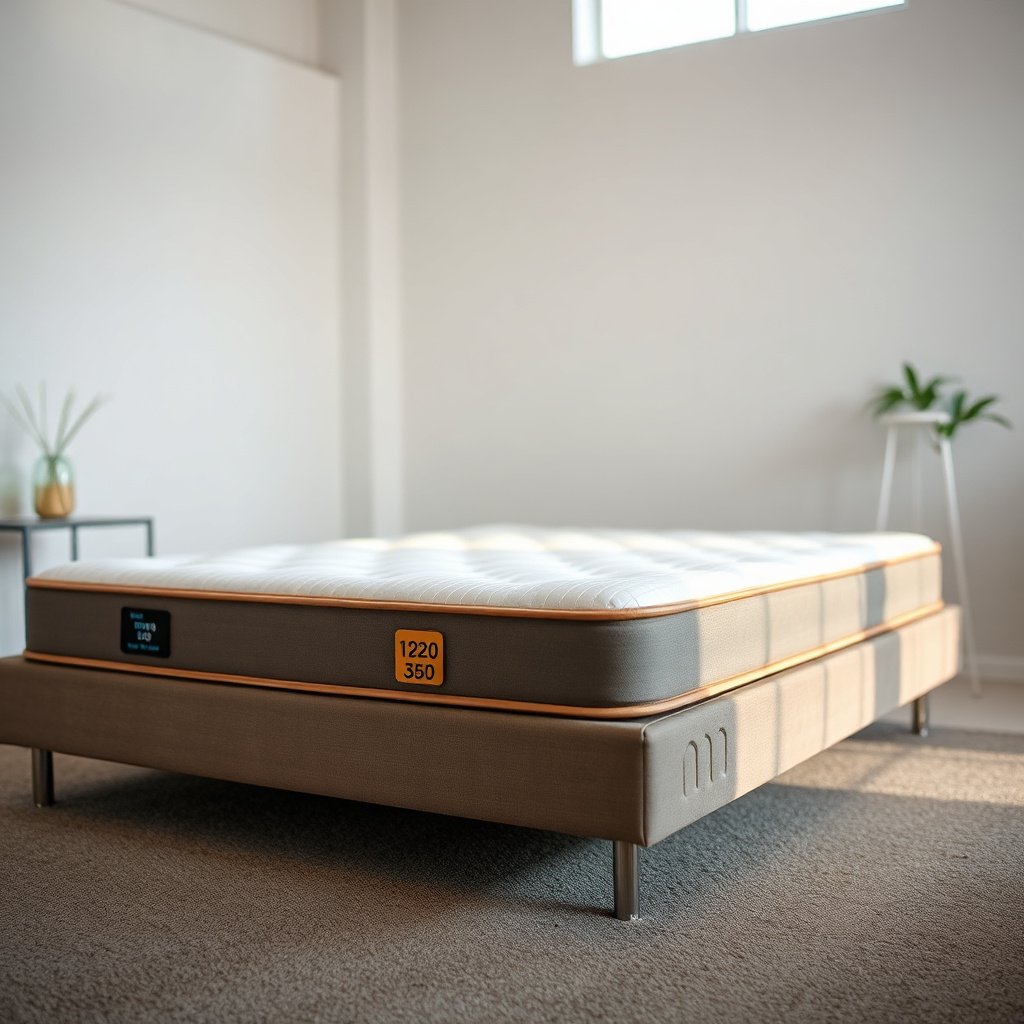
The fastest way to find a mattress manufacture date is to check the sewn-in mattress labeling (“law”) tag, most often on the side panel seam. In the U.S., this permanent label is required to include key manufacturing information, including the month and year of manufacture.
– Look along the edge of the mattress near the side panel seams (often inside the cover’s stitching).
– Search for a permanent label that includes manufacturer information (brand/model) and a manufacturing date field/code.
– If the mattress is in a zippered encasement, remove the cover temporarily (or lift fabric carefully) to access the tag.
What the “law tag” is (and what you’re hunting for)
That side-seam label is designed to be durable and readable over the life of the mattress. Under the U.S. mattress labeling requirements, it must be permanently attached and include manufacturing timing information. According to 16 CFR Part 300 (Mattress Labeling Rule), the label includes the “month and year of manufacture” as part of the required labeling elements.
In practice, that means you’re looking for either:
– A straightforward month/year (e.g., “01/2026”), or
– A manufacturing-date code field that still connects to a required “month and year” value, even if it’s not displayed as plain text.
Read the date format on the label
If the date is printed clearly on the law tag, you should record it exactly and move on to verifying freshness using that exact month/year. Mattress freshness decisions work best when your data matches the label format, not an interpretation you “think” the label means.
– Commonly, the manufacture date is given as a month/year (e.g., “MM/YYYY”) or a compact code that includes the date.
– Record the date exactly as printed—don’t “guess” if the label uses abbreviations or numeric-only formatting.
– Also write down the serial/model information, since many manufacturers require both to decode the date.
What “exactly as printed” means
A month/year date should be copied letter-for-letter and number-for-number. For example, “03/2025” is not the same as “3/25” if the label uses a specific format, and “YYYY/MM” is not the same order as “MM/YYYY.” The goal is to keep your record consistent with how the manufacturer presents the field.
Also capture the model/serial text near the date. According to 16 CFR Part 300, mattress labels contain other identifying information (such as manufacturer identity and model-related information) in addition to the manufacturing date, and that context is often necessary to interpret any encoded date format.
Common Mattress Label Date Presentations (What You’ll Actually Record)
| # | Label date presentation | Where it appears | What it typically includes | Verification reliability |
|---|---|---|---|---|
| 1 | Month/Year printed clearly | Sewn-in law tag | Month + Year (e.g., 01/2026) | ★★★★★ |
| 2 | Date shown as an encoded manufacture code | Sewn-in law tag | Code field + manufacturer context | ★★★★☆ |
| 3 | Serial/Model present; manufacture date not plain-text | Sewn-in law tag | Serial/model identifiers without readable month/year | ★★★☆☆ |
| 4 | Lot/Batch-style code only | Sewn-in label variants | Batch/lot string with no explicit month/year | ★★★☆☆ |
| 5 | Production-date code that maps to calendar date | Law tag or adjacent identifier label | Factory code + production timing indicators | ★★★★☆ |
| 6 | Law tag is partially obscured by encasement stitching | Side seam under cover/encasement | Readable label after careful cover access | ★★★★☆ |
| 7 | Label missing, removed, or replaced | Former tag location on seam | No authoritative manufacture date field | ★☆☆☆☆ |
Decode serial numbers when the date isn’t obvious
If the label doesn’t show a clearly readable month/year, you can still obtain the manufacture date—use the serial/model identifiers to get an official decode from the manufacturer. This is often the most reliable path because companies map their internal codes to production dates.
– Some mattresses list a serial number but not a clear “manufactured” date in plain text.
– In that case, contact the manufacturer and provide the serial/model number from the tag so they can map it to a production date.
– If the tag includes multiple codes (factory line, plant, etc.), mention all visible fields so support can interpret them correctly.
What to include in your manufacturer request
Most manufacturer support teams work faster when you provide:
1. The serial number exactly as printed,
2. The model name/number (if present),
3. Any plant/factory or production-line code shown on the same label,
4. A clear photo of the entire label (side seam included), and
5. Your intended “verification goal” (e.g., “confirm month/year of manufacture” for freshness).
According to 16 CFR Part 300, the labeling rule is built around required permanent label elements, which is why support teams can usually translate their code into the required “month and year of manufacture” value when you provide the identifying fields.
Quick comparison: which method works best in 2026?
When you’re trying to verify freshness in 2026, pick the method that matches what your label actually contains:
| Method | Best for | Tradeoffs |
|---|---|---|
| Read month/year directly from the law tag | Fast verification when the date is readable | You must interpret the label format correctly |
| Decode with manufacturer using serial/model codes | Encoded dates or serial-only labels | Takes time; response depends on support capacity |
| Use paperwork/seller documentation | When labeling is obscured or missing | Documentation may reflect shipment date, not production date |
If the label is missing or removed, use the next-best clues
If the law label is missing (or clearly damaged), you may not be able to confirm the manufacture date with full confidence. In that case, rely on secondary evidence like warranty documents, receipts, or seller statements—while treating “freshness” as less verifiable.
– Inspect for any leftover label marks, resewn seams, or hidden tags that may be covered by craftsmanship stitching.
– Check for paperwork that came with the mattress (delivery receipt, warranty card, or registration info), which sometimes includes production timing.
– If the mattress was refurbished, leased, or heavily customized, the “manufacture” date may not match the date you purchased it—ask the seller what documentation they have.
What “missing label” usually means in real listings
In 2026, missing labels often show up in these situations:
– The mattress cover/encasement has been replaced,
– The mattress is refurbished or repackaged,
– The mattress is a custom build where documentation exists but the permanent label has been altered.
Because the official manufacturing date is tied to the permanent label elements described in 16 CFR Part 300, you should treat missing label verification as “insufficient evidence” rather than “likely new” or “likely old.”
What can go wrong (and how to handle it)
Even when you follow the steps, a few common obstacles can block the manufacture date. The key is to stop digging in ways that damage the mattress and to switch to the next-best evidence path.
– Encasements and covers can hide the tag: if you can’t reach it, don’t pull the label off—just move the encasement and recheck.
– Labels can look different by brand/region: some use full month/year text, others use compact codes.
– Refurbished or replacement parts complicate dating: a repaired zipper, replaced cover, or “re-tucked” upholstery may not reflect original production.
Pros/cons: what to do when the label conflicts with your expectation
If the manufacturer date appears older than you were told (or older than your “freshness” assumptions), handle it with a documentation-first approach:
– Pros of confirming through the manufacturer
– You get the official mapping from code → month/year of manufacture.
– You avoid overreacting to superficial cues like cover condition.
– Cons of relying on indirect cues
– Receipts may show ship date, not production date.
– Seller descriptions can be incomplete or inaccurate.
In all cases, avoid removing or altering permanent labels. The labeling rule exists specifically so buyers can verify manufacturing timing through durable information. 16 CFR Part 300 is the relevant baseline for what the label should contain.
Verdict: what to do for the fastest, most reliable result
Start with the sewn-in law label and write down the manufacturing date/code exactly as shown. If the date isn’t readable or is only a serial/model code, contact the manufacturer using the tag details—this is usually more reliable than relying on any “guessing” method.
If the tag is missing due to removal or damage, you may not be able to confirm the true manufacture date—skip making freshness decisions based on appearance alone and rely on warranty terms or seller documentation instead. Also, in 2026 buying decisions, treat “shipment date” and “manufacture date” as different data points unless the seller explicitly states otherwise.
Quick checklist (scan/save)
| What to check | Where to look | What to record |
|---|---|---|
| Manufacturing date field (if shown) | Sewn-in law label on side seam | Month/year or printed date text |
| Serial/model code | Same label | Full serial/model exactly as printed |
| Hidden tags | Under encasements or cover stitching | Any additional label codes/fields |
| Documentation | Warranty card/receipt/registration | Any production timing or dates provided |
| Manufacturer interpretation | Manufacturer support | Ask them to decode the code using your tag info |
Sources
– U.S. Code of Federal Regulations (CFR), 16 CFR Part 300 — Mattress Labeling Rule / Mattress Labeling Requirements (primary government source for required labeling elements, including manufacturing date information).
In short, the manufacture date verification workflow is: read the sewn-in law label first, copy the date/code exactly as printed, and if it’s not directly readable, decode it through the manufacturer using the serial/model identifiers. When the label is missing, switch to documented evidence and treat “freshness” claims as unverified until you have manufacture-date-supporting information.
Frequently Asked Questions
How can I find the manufacture date on my mattress?
Check the mattress tag, usually sewn on the side seam, near the bottom edge, or on the inner label. Look for a “manufactured,” “mfg,” or “date of production” field, and sometimes a code that corresponds to a month and year. If you don’t see a clear date, inspect the polyurethane foam or quilting layers—some brands stamp or print production dates on internal labels or on the foam.
What do mattress date codes (like month/year or batch codes) mean?
Many mattress brands use a date code rather than a written “manufacture date,” often indicating the production week/month and year in a compact format. Common examples include “MM/YY,” “YYYY-MM,” or a line of numbers that represents the manufacturing run. If the code isn’t obvious, search the brand name plus “mattress date code” or contact customer support with a photo of the tag so they can decode it.
Which mattress labels should I check to locate the manufacturing month and year?
Start with the main sewn-in label on the side of the mattress, which often includes production details and compliance information. If it’s not present there, look for additional markings near the edges or in the border fabric, and inspect any internal tags inside the cover seams if the manufacturer allows it. For foam-heavy models, some layers may have stamped dates on the foam itself, but avoid removing materials that could affect warranty coverage.
Why is the manufacture date on a mattress important for comfort and warranty?
The mattress manufacture date helps you confirm freshness and can explain performance issues if the bed is older than expected. It’s also critical for warranty claims because many warranties are tied to the date of manufacture or the date you purchase the mattress. Knowing the production month/year can speed up troubleshooting with the manufacturer and prevent delays caused by unclear proof of age.
Best way to check a mattress for age quickly before buying or after delivery?
Ask the seller or delivery team to show you the mattress tag with the production date or date code before unboxing when possible. After delivery, take a clear photo of the sewn-in label on the side and any visible internal markings, then verify the code format with the brand’s support page or customer service. If you suspect the bed is older than advertised and the date code is unclear, request a written explanation or replacement policy confirmation.
📅 Last Updated: November 02, 2026 | Topic: How to Find the Manufacture Date on a Mattress | Content verified for accuracy and freshness.
References
- eCFR :: 16 CFR Part 1632 — Standard for the Flammability of Mattresses and Mattress Pads (FF 4-7…
- eCFR :: 16 CFR Part 1633 — Standard for the Flammability (Open Flame) of Mattress Sets
- Mattress
- https://www.cdc.gov/parasites/bedbugs/index.html
- https://www.who.int/news-room/fact-sheets/detail/bedbugs
- https://www.mayoclinic.org/diseases-conditions/bedbugs/symptoms-causes/syc-20376255
- https://www.mass.gov/info-details/bed-bugs
- https://scholar.google.com/scholar?q=how+to+find+the+manufacture+date+on+a+mattress Google Scholar
- https://scholar.google.com/scholar?q=how+to+read+mattress+tag+manufacturing+date Google Scholar
- https://scholar.google.com/scholar?q=mattress+label+date+of+manufacture+law+label Google Scholar