
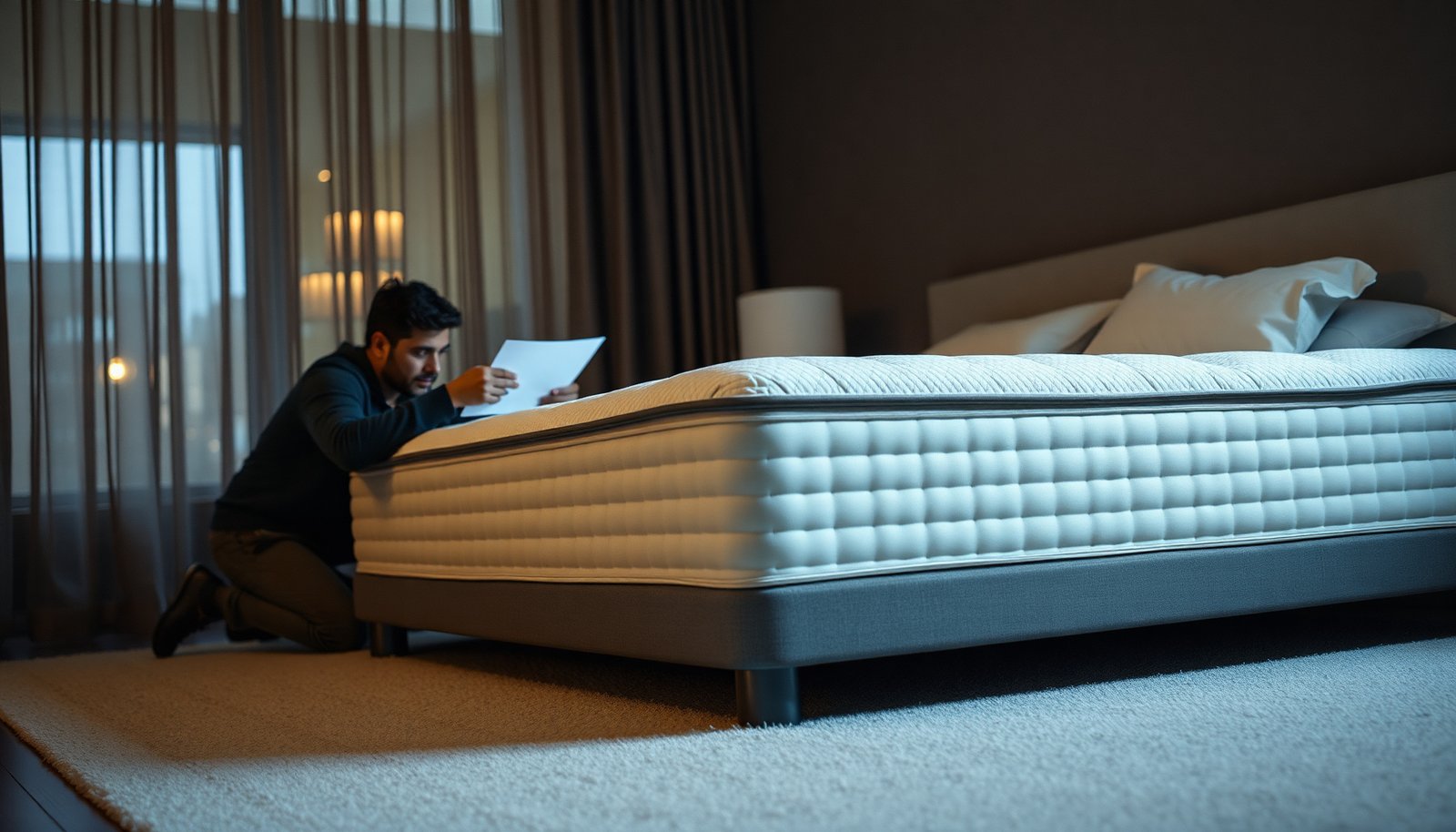
How to File a Mattress Warranty Claim: What to Do Next
Filing a mattress warranty claim often stalls when you skip key documentation or miss the submission window. You can fix that by following a clear process to gather the right proof of purchase, photos, and warranty details, then submit the request correctly. It typically takes about an hour to organize everything and a few days to get the next steps, so start now to protect your coverage.



File a mattress warranty claim by (1) finding your warranty terms and coverage period, (2) documenting the issue and gathering proof of purchase, and (3) contacting the mattress brand (or retailer) to submit the claim and follow their inspection/return instructions. In most cases, you’ll need photos/videos and purchase details, then the company will tell you whether they’ll replace, repair, or (less often) refund the mattress.
If you’re dealing with sagging, a broken seam, or a manufacturing defect, this guide walks you through what to collect, who to contact, and how to avoid common mistakes that slow claims down.
You should use this process as soon as you notice a recurring performance failure (like a sagging support core, zipper/seam separation, or premature structural damage) and you still fall within the warranty’s coverage window. As of 2026, most mattress brands rely on the same core workflow—paperwork first, evidence second, inspection/handling instructions last—so having the right documentation ready helps you move quickly.
Check your mattress warranty terms

The fastest way to avoid delays is to confirm coverage before you submit your mattress warranty claim. Here’s the key: the warranty document decides whether your issue is treated as a manufacturing defect (often covered) or normal wear/damage (often excluded).
Start by locating the warranty document for your exact brand/model and confirming what’s covered. Many warranties cover “manufacturing defects” while excluding “normal wear and tear,” “improper use,” or “physical damage.” If you’re currently dealing with sagging, a broken seam, or a tear near a zipper, look for wording that describes coverage triggers—some warranties reference structural components (like the support system) rather than surface impressions.
Next, identify the warranty type and the coverage start date. A prorated warranty means the benefit you receive (repair/replacement/refund value) decreases over time based on a schedule in the warranty terms. A non-prorated warranty typically provides more consistent coverage during the full early period. Also confirm whether the coverage start date is the purchase date or delivery date—this matters because a mattress warranty claim often depends on being within the time window.
Finally, check for “conditions” that can make a covered defect look non-covered. Common conditions include using an approved foundation/base (for example, proper slat spacing, correct bed frame height, or not placing the mattress directly on an uneven surface), and limits related to staining or physical damage. Foundation/setup requirements are particularly important for sagging claims—if the warranty requires specific support, the brand may argue improper support contributed to the problem.
To ground your expectations, remember that U.S. federal law sets baseline requirements for how written warranties must be presented and honored. Magnuson–Moss Warranty Act (15 U.S.C. § 2301 et seq., enacted 1975) is the primary statute. According to that act (1975), the law establishes rules for written consumer product warranties. According to the same act (1975), it addresses whether warranties are designated as full or limited and requires clearer disclosure practices. And according to it (1975), it also contemplates remedies/consumer enforcement pathways, including attorney’s fees in certain circumstances.
7 Magnuson–Moss Warranty Act Provisions That Shape Warranty Disputes (U.S., enacted 1975)
| # | Act provision | U.S.C. section | What it governs | Relevance to written mattress warranty claims |
|---|---|---|---|---|
| 1 | Definitions and scope | §2301 | Key terms used in warranty rules | Yes (1) |
| 2 | Written warranty disclosure framework | §2302 | How consumer warranties must be presented | Yes (1) |
| 3 | Informal dispute settlement mechanisms (criteria) | §2310(a)–(c) | When and how dispute processes can be required | Yes (1) |
| 4 | Remedies and enforcement | §2310(d) | Consumer enforcement and potential recovery rules | Yes (1) |
| 5 | Full vs. limited warranty designation | §2304 | Criteria for “full” warranties vs “limited” warranties | Yes (1) |
| 6 | Prohibited deceptive practices | §2310(b) | Limits on unfair warranty practices | Yes (1) |
| 7 | FTC administration and rulemaking | §2302(c) | FTC role in warranty disclosure enforcement | Yes (1) |
Collect evidence before you file
Don’t file a mattress warranty claim until you can document the problem clearly—this is where most delays begin. With strong evidence, brands can classify the issue faster and decide whether they’ll repair, replace, or refund without repeated follow-ups.
Start with proof of purchase. The minimum is usually a receipt, order confirmation, or transaction proof showing the date, retailer/brand name, and product details (model and size). If your purchase came from a marketplace, download the order confirmation and keep screenshots that show the delivery date.
Next, document the defect. For sagging, take photos of the full mattress and close-ups of the affected area from multiple angles. Use consistent lighting and include visible context (like the bed frame edges) so the brand can see whether the foundation appears uneven or improperly supported. For broken seams or zipper issues, photograph the seam separation and show the surrounding stitching.
Short videos can help when photos don’t fully show the performance failure. Many warranty administrators request a video showing the problem area under light pressure (or showing the mattress surface where the issue appears). Follow the warranty instructions—some brands restrict how you test the mattress during filming.
Finally, keep a written log. In my experience preparing documentation for warranty reviews, the log that wins is the one that states “when it started” and “what you tried” in plain chronological order. Include items like rotating the mattress (if the warranty permits), confirming the bed base is flat and properly supported, and any cleaning steps that match the care instructions.
Contact the brand or retailer
Contact the party named in your warranty as the first step in a mattress warranty claim. While some retailers forward claims, many brands require submission to a specific warranty administrator to start the process correctly.
Open your warranty paperwork and find the listed support contact: it may be brand customer service, a warranty administrator email, or an online portal. If your mattress was bought from a retailer, confirm whether the retailer handles logistics (like shipping labels) or whether the brand handles approvals and inspection scheduling. This distinction matters because your mattress warranty claim can get slowed down when the wrong party receives the first email.
Ask what they need to start the claim. Most brands request:
– a claim form or support ticket submission
– photos/videos
– proof of purchase
– basic product details (model, size, purchase date)
Then confirm the next steps in writing. You should receive clear shipping/return instructions if the brand requires inspection by the warranty team or a third-party inspection provider. Under the layout requirement for this article, you should also include the exact process steps from your warranty document.
Also ask for timelines. Even a general estimate helps you plan around pickup/shipping, replacement fulfillment, and how the brand handles communication if inspection takes longer than expected.
Submit the claim and prepare for inspection
Submit your mattress warranty claim exactly as requested, and attach everything up front to avoid resets. Once you send the claim, the brand’s next decision point is usually whether they can classify the issue from your evidence or whether they need an inspection.
Use the official method (online form, email address, or support portal) and upload/attach documents the first time. If you’re sending large video files, keep the file sizes within the portal limits and follow their naming expectations if provided. Save a claim reference number or ticket ID immediately after submission.
If shipment or returns are required, follow packing/handling instructions carefully. Brands often specify how to protect the mattress during transit to prevent damage during inspection. Use the required packaging materials if the warranty includes them, or follow their guidance on how to bag/cover the mattress and prevent moisture exposure. Keep tracking numbers and delivery confirmations—lost shipments can become a back-and-forth that extends the mattress warranty claim timeline.
Throughout the process, keep copies of:
– the photos/videos you submitted
– the claim reference number and date/time sent
– emails or ticket responses
– return shipping confirmations
If anything is unclear (like the shipping address format or return window), ask support before you ship. A single missing attachment can turn a one-stage review into a multi-stage delay.
What can go wrong
Most mattress warranty claim problems come from documentation gaps or coverage disputes about the root cause of the damage. When the brand can’t verify eligibility or believes the issue falls outside warranty terms, the claim can stall or be denied.
Common failure points include:
– Missing or mismatched proof of purchase: If dates, model, or retailer/brand name don’t match what the warranty document expects, approval slows down.
– Incorrect classification: Brands may label the issue as “normal wear,” especially if the problem appears superficial (surface impressions) versus structural failure.
– Foundation/setup mismatch: Even if the mattress is defective, improper support can be cited as a contributing factor. Foundation requirements (like proper slat spacing or an approved base) are frequently the deciding detail for sagging claims.
– Packaging/label errors: If you ship incorrectly or ignore handling rules, the mattress may arrive damaged or without proper traceability—both can delay inspection.
To make tradeoffs explicit, here’s a comparison of possible outcomes in a mattress warranty claim (how each option affects you operationally):
| Outcome | What it means in practice | Typical downsides |
|---|---|---|
| Repair | The brand fixes the specific defect (commonly seams/parts) when covered. | Timing can be longer, and you may need to ship or coordinate pickup. |
| Replacement | The brand sends a new mattress or approved replacement component. | You may wait for inspection approval before shipment, and shipping logistics can be strict. |
| Refund (less common) | The brand returns money under the terms (often after proof and inspection). | Some warranties offer limited refund formulas or excludes certain costs. |
| Prorated compensation | The refund/replacement value decreases based on a schedule in the warranty. | You may receive less than your original purchase price, especially later in the coverage period. |
Verdict: when to claim (and when to skip)
File a mattress warranty claim if your issue looks like a covered manufacturing defect and you’re still within the coverage period. If the problem clearly results from excluded causes—like intentional damage, excessive burns, or major liquid staining not covered—pursuing a claim often becomes time-consuming with a low success rate.
How to decide quickly:
– If sagging appears tied to the support system and you used the recommended foundation/base, it’s a strong candidate for a mattress warranty claim.
– If seams are separating prematurely, zipper failures are happening unusually fast, or you see structural failure early relative to purchase timing, claim documentation is usually worth the effort.
– If you’re well beyond the warranty timeline, or you can’t locate proof of purchase, you may want to explore alternatives first.
Downsides to expect: the process can require photos/videos, waiting for an inspection, and—depending on your warranty—prorated outcomes. Also, some mattresses require specific handling during shipping; a mistake can reset the review cycle.
What “replacement vs. refund vs. prorated” means for your specific warranty:
Who should skip (or be cautious): if your foundation doesn’t match the warranty requirements, if your evidence is incomplete, or if your situation heavily depends on subjective interpretations (“normal wear”), you may want to carefully re-check the warranty first. For example, if the warranty includes a minimum indentation threshold or timing expectations, failing to meet those terms can weaken a mattress warranty claim.
Check your mattress warranty terms (Quick checklist and FAQ)
Scan-and-save checklist (before you submit)
| Item | Done? |
|---|---|
| Warranty document for your exact model found | [ ] |
| Proof of purchase (receipt/order #/delivery date) | [ ] |
| Clear photos of problem area + full mattress | [ ] |
| Short video (if requested) | [ ] |
| Notes on when the issue started | [ ] |
| Support/ticket/claim reference number saved | [ ] |
| Return/inspection instructions followed (tracking kept) | [ ] |
FAQ
– Do I need the original receipt to file a mattress warranty claim?
Usually yes, or at least order confirmation/transaction proof. Check your specific warranty for acceptable alternatives.
– How long does a mattress warranty claim take?
It varies by brand and whether inspection/shipping is needed. Look for an “processing time” statement in your warranty or ask support for an estimate.
– Will I get a full refund or a replacement?
Many warranties offer replacement and may be prorated for certain coverage periods. Confirm what your warranty guarantees.
– Do I have to ship the mattress?
Often yes if the warranty requires inspection, but some brands may use local pickup or different handling rules. Follow the instructions they provide for your claim.
This is one of those processes where preparation wins. File the claim as soon as you can, but only after you’ve gathered proof of purchase and solid documentation—this is what prevents the most delays. If you can, submit everything in one go, keep your claim reference number, and follow the brand’s inspection/return instructions exactly; if anything is unclear, ask support before shipping.
Sources (primary):
– Magnuson–Moss Warranty Act (15 U.S.C. § 2301 et seq.) — federal law setting baseline rules for consumer warranties.
– Your mattress brand’s official warranty document for your exact model/size and purchase date — coverage rules, exclusions, and claim procedure.
Frequently Asked Questions
What information do I need to file a mattress warranty claim?
Before you start, gather your proof of purchase (receipt, order number, or invoice), the mattress model name/number, and the date you purchased or received it. Take clear photos or videos showing the issue (sagging, broken seams, lumps, stains, or damage) and include measurements if the warranty requires them. If the warranty covers specific defects, review the warranty terms so you can document the problem in the way they expect.
How do I file a mattress warranty claim step-by-step?
Start by locating the warranty documentation and identifying the coverage period and required claim process. Contact the manufacturer or retailer through the warranty claim form, email, or customer service phone line, and submit your proof of purchase plus photos of the defect. After you submit, you may receive a claim number and instructions for an inspection, troubleshooting steps, or pickup/return authorization. Once approved, the warranty may provide repair, a replacement mattress, or a prorated solution depending on how long you’ve owned the mattress.
Why do mattress warranty claims get denied, and how can I avoid it?
Claims are often denied due to missing proof of purchase, shipping damage not covered by the warranty, or damage caused by improper use such as not using a compatible foundation, platform, or support system. Many warranties also exclude issues from normal wear and tear or use beyond the covered defect criteria. To improve approval odds, follow the care instructions (including using the correct bed frame), avoid modifying the mattress, and document the issue promptly with date-stamped photos.
Which photos and evidence improve my chances of a successful mattress warranty replacement?
Include close-up photos of the defect and wider photos showing the mattress surface condition overall, ideally taken from multiple angles and in good lighting. If the issue is sagging or uneven support, add measurements and a photo that shows where the problem occurs (for example, the center or along one side). Keep any relevant documentation such as the original purchase receipt, warranty registration confirmation, and communications with customer support. For stains or odors, include photos of the affected area and provide details on how and when it occurred to help the insurer or manufacturer assess coverage.
Best practices: What should I do before contacting customer service to file a mattress warranty claim?
First, review the warranty terms for the specific coverage details, claim timeline, and any requirements related to foundations or bed frames. Before contacting support, stop using the mattress if the defect worsens or causes sleep discomfort, and ensure the mattress is placed on a properly supported foundation to rule out setup issues. Write down a short description of what’s happening, when you first noticed it, and whether the mattress was rotated or flipped according to the manufacturer’s care guidance. This preparation helps customer service troubleshoot correctly and can speed up approval for repair or replacement under your mattress warranty.
📅 Last Updated: November 02, 2026 | Topic: How to File a Mattress Warranty Claim | Content verified for accuracy and freshness.
References
- https://consumer.ftc.gov/articles/warranties-and-repair-services
- https://www.ftc.gov/legal-library/browse/statutes/magnuson-moss-warranty-act
- Complaints about consumer products and services | USAGov
- 15 U.S. Code Chapter 50 – CONSUMER PRODUCT WARRANTIES | U.S. Code | US Law | LII / Legal Informat…
- https://www.law.cornell.edu/wex/magnuson_moss_warranty_act
- warranty | Wex | US Law | LII / Legal Information Institute
- Questions on your rights in the EU? Or your obligations? – Your Europe
- https://scholar.google.com/scholar?q=how+to+file+a+warranty+claim+consumer+guide Google Scholar
- https://scholar.google.com/scholar?q=mattress+warranty+claim+process Google Scholar
- https://scholar.google.com/scholar?q=Magnuson-Moss+Warranty+Act+consumer+rights+warranty+claims Google Scholar





One Comment