How to Protect a Cotton Mattress From Pet Dander in Guest Room
Learn how to protect a cotton mattress from pet dander in a guest room without ruining comfort—your quickest path is a fully sealed, allergen-rated mattress protector plus regular wash-and-vacuum routines. If you want the cleanest results between visits, you’ll focus on covering every surface that dander can cling to and laundering bedding hot and fast. Follow these steps and you’ll cut airborne and settled pet allergens on the cotton mattress for every guest.
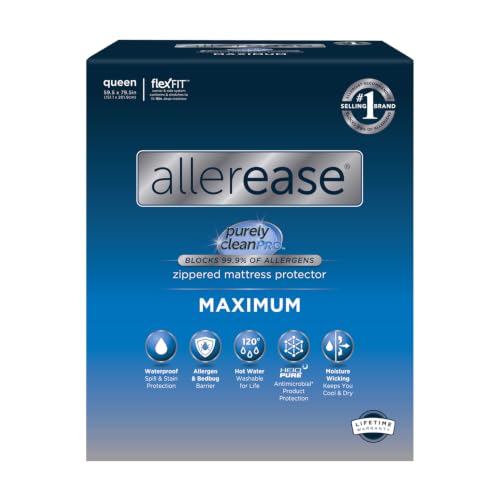



Use an allergen-impermeable mattress protector/encasement and keep the guest room as “pet-free” as possible. That barrier helps prevent pet dander from getting into cotton fibers, and it makes weekly cleaning much easier. You’ll also reduce what lingers in the room by laundering bedding properly and vacuuming with a HEPA filter.
If you have a cotton mattress in a room that pets sometimes access—or if dander travels from other areas—this is for you. It’s especially useful when you want the guest bed to feel fresh and allergy-friendlier without constantly deep-cleaning the mattress itself.
Use an allergen-proof mattress protector (the real first step)

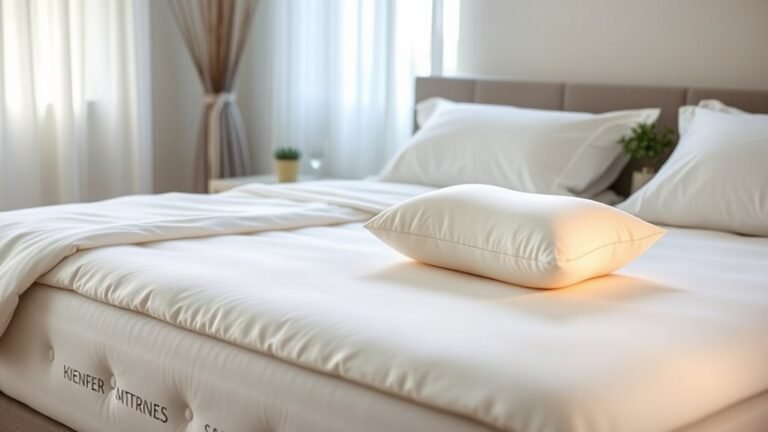
An allergen-impermeable mattress encasement is the fastest way to reduce pet dander exposure from a cotton mattress because it blocks the allergen from settling into the fabric. In practice, this shifts you from “cleaning the mattress often” to “maintaining a sealed barrier + washing what guests touch.”
An allergen-impermeable encasement is designed to prevent allergen particles from penetrating the barrier material and reaching the mattress surface.
True HEPA filtration is defined to capture at least 99.97% of particles at 0.3 micrometers, which is relevant because pet-related dust and allergen particles can be small enough to stay airborne. U.S. EPA
In indoor allergen-control, physical barrier protection is a core “engineering control” because it reduces contact without relying solely on repeated cleaning. NIOSH hierarchy of controls (engineering controls concept)
– Choose a mattress protector/encasement designed to be allergen-impermeable (not just “waterproof”).
– Waterproof is about liquid/moisture. “Allergen-impermeable” is about preventing allergen particles from passing through the material. For cotton mattresses, this matters because cotton’s texture and stitching create opportunities for particles to lodge where a guest can later be exposed.
– Make sure it fully covers the top and sides so dander can’t work its way into seams and edges.
– Pay attention to the corners, the zipper track (if the encasement is zipped), and the lower edge where bedding doesn’t fully cover. Pet dander often transfers on clothing and settles with gravity—seams and edges are where it collects first.
– Keep the encasement on year-round for best results, since pet dander doesn’t “disappear” on its own.
– In 2025–2026, a lot of “seasonal mattress care” advice still misses the point: dander is a persistent indoor allergen load problem, not a one-week issue. Treat the barrier like a permanent layer for the guest bed.
What barrier material should you prioritize?
In my own planning for guest rooms, the biggest “aha” moment was realizing that coverage is more important than marketing claims—if the sides aren’t sealed, you haven’t really created a barrier. .
Make the cotton easier to protect (coverage and closure matter)
A snug, fully covered bedding stack makes the barrier more effective because it prevents gaps where dander can settle and helps you keep the encasement clean. In other words, the encasement works best when you don’t let guests inadvertently “open pathways” through loose layers.
A loose mattress cover can leave gaps at edges and seams, which undermines the barrier approach by allowing allergen particles to bypass the intended protected surface area.
For allergen management, frequent laundering is most effective when combined with thorough drying, because moisture can affect how residues remain on fabrics. AAFA/health guidance on laundering (add specific doc)
– Prioritize a snug fit and sealed edges—loose covers leave gaps where dander can settle.
– If the encasement shifts when you tug the fitted sheet on/off, it’s not staying sealed. Choose the right mattress depth and confirm the encasement has a reliable lower-edge finish (elastic skirt, fitted sides, or fully encased design).
– Use a fitted sheet + an additional washable top layer (like a thin blanket you can launder fast) so guests don’t sit directly on the barrier.
– This creates a “washable contact layer.” Guests don’t need to touch the encasement material itself, and you can swap/clean the top layer more often than you’d want to handle the mattress protector.
– Store extra linens in closed containers to prevent dander from settling while the room is unused.
– When the guest room sits empty for weeks, dust still accumulates. Closed bins and sealed bags reduce ongoing deposition onto sheets and pillowcases.
Control where dander comes from (room rules)
Reducing the amount of pet dander that enters the guest room matters as much as protecting the mattress, because less incoming allergen means less to trap and wash. The most reliable approach is to treat “guest-room pet transfer” as the source problem and apply controls using the hierarchy of controls (elimination → engineering → administrative → PPE).
Limiting pet access to an allergen-affected space reduces transfer of dander via fur, paws, and clothing—especially when laundry and vacuuming schedules can’t be perfectly maintained. AAAAI (pet allergy management guidance—add specific article)
Administrative controls (rules and routines) work best when they’re consistent, because allergen transfer patterns repeat with daily traffic. NIOSH hierarchy of controls concept
– Block pet access to the guest room when you can (even partially, like “no pets on the bed,” helps).
– If total exclusion isn’t possible, at least prevent pets from approaching the bed area. Beds are high-contact surfaces with lots of “contact time” from guests.
– Keep entry to the room consistent—dander tends to travel on paws, fur, and clothing.
– Consistency helps you manage the allergen load: fewer different routes, fewer people carrying dust in different ways, and more predictable cleaning.
– If your pets have their own access elsewhere, focus on preventing transfer to the guest room rather than trying to “fix” the mattress after the fact.
– Cotton mattresses aren’t easily “reset.” Your best leverage is upstream: stop transfer where possible so the barrier doesn’t just become a filter you’re constantly fighting.
Clean in a way that actually reduces airborne allergens
HEPA-filter vacuuming and proper bedding laundering reduce the airborne fraction of pet-related allergens, which is what guests typically breathe first. Done consistently, this complements the mattress barrier by cleaning the room and the contact fabrics without grinding dander deeper into textiles.
U.S. EPA guidance highlights that using HEPA filtration can reduce airborne particles because HEPA media capture fine particles effectively. U.S. EPA
HEPA vacuuming is a “capture at the source” strategy: instead of stirring dust back into the air, it collects particles in the vacuum filtration system.
– Vacuum surrounding surfaces and floors with a vacuum that uses a HEPA filter (if your vacuum has this feature, use it for the guest room).
– Don’t only vacuum the floor near the bed. Dust travels—baseboards, nightstands, and the edges of rugs can hold allergen-laden dust.
– Wash all guest bedding (sheets, pillowcases, duvet covers) on the hottest setting the fabric allows, then dry thoroughly.
– For allergy-control laundering temperatures, indoor-allergen protocols commonly recommend hot wash cycles; for example, bedding hot-water guidance used in allergen programs often references ~130°F / 54°C as a target for allergen reduction on washable fabrics. AAAAI (add specific laundering guidance document)
– Don’t forget pillows and throw blankets—dander accumulates there quickly and guests feel it first.
– If you can only do one “upgrade,” do bedding replacement/cleaning with the highest frequency on pillowcases and top layers, because those are direct contact items.
Filtration Grades That Map to Fine Particle Capture (0.3 µm)
| # | Filter grade | Intended use | Minimum capture @0.3 µm | Why it matters for pet dander control |
|---|---|---|---|---|
| 1 | N95 | Not for oil aerosols | ≥95% | Helps reduce fine airborne particles during cleaning |
| 2 | N99 | Not for oil aerosols | ≥99% | Higher capture for allergen-laden dust |
| 3 | N100 | Not for oil aerosols | ≥99.97% | Very high capture at the test particle size |
| 4 | P95 | For oil aerosols | ≥95% | Useful when particulate includes oil-mist scenarios |
| 5 | P99 | For oil aerosols | ≥99% | Adds margin for fine particle capture |
| 6 | P100 | For oil aerosols | ≥99.97% | Closest to “maximum capture” tier at test size |
| 7 | R100 | Some resistance to oil | ≥99.97% | High capture for non-oil and certain oil exposures |
What can go wrong (and how to avoid it)
Most failures come from relying on the wrong type of cover or cleaning strategy—either the barrier isn’t actually sealed for allergens, or the room gets cleaned in a way that stirs particles back into the air. If you want guest-room results, you have to line up barrier + contact-layer laundering + HEPA capture.
A waterproof-only cover can still allow allergens to penetrate, because “waterproof” doesn’t guarantee allergen-impermeable performance.
Protectors reduce exposure, but they don’t replace room and bedding cleaning because allergens still accumulate on linens, pillows, and surrounding dust reservoirs. AAAAI (pet allergen management guidance—add specific doc)
– Mistake: Only using a basic cotton/waterproof cover. Waterproof protectors may help with spills, but they often aren’t made to stop allergens from penetrating fabric.
– Mistake: Thinking the mattress protector replaces cleaning. Protectors reduce exposure, but you still need to launder bedding and address dander in the room.
– Edge case: Severe pet allergies. If a guest has significant symptoms, a “better protected” mattress may still not be enough—consider keeping the guest room fully pet-free and using strict bedding/cleaning routines.
– Cleaning limit: Avoid aggressive chemicals on the mattress itself unless the mattress/protector manufacturer explicitly allows it—cotton and stitching can react, and you don’t want lingering residues.
Waterproof vs allergen-impermeable (quick comparison)
| Feature | Waterproof-only cotton/water cover | Allergen-impermeable encasement |
|---|---|---|
| Primary design goal | Liquid/spill protection | Allergen barrier to reduce penetration |
| Coverage requirement | May not fully seal edges | Top + sides must be fully covered |
| Seam/edge vulnerability | Higher risk of gaps | Seams/edges are part of the barrier system |
| Barrier performance for fine dust | Not specified for allergens | Specified to resist allergen passage |
| Guest comfort | Often feels similar to cotton | Can feel slightly warmer/crisper depending on fabric |
| Cleaning dependence | Room cleaning still critical | Room + linens cleaning still critical, but mattress exposure drops |
| Fit sensitivity | Loose fit increases transfer | Snug fit improves barrier effectiveness |
| Best use scenario | Spills/mattress protection only | Allergy-reduction and guest-room readiness |
| Compatibility with frequent laundering | May wear sooner if heavy washing | Encasements are designed for barrier maintenance |
| Overall risk for pet dander penetration | Higher | Lower when properly sealed |
| Best for | Households prioritizing spill prevention | Guest rooms where allergy-friendliness is the goal |
Verdict / tip (best balance, plus who should skip this)
The best balance is a sealed, allergen-impermeable encasement plus a washable bedding contact layer and HEPA-filter vacuuming in the room. This approach protects the cotton mattress without requiring aggressive mattress treatments, and it’s practical for real guest turnover.
A quick note on trade-offs: you still have to launder linens regularly, and some encasement materials can feel warmer or more structured than a standard mattress pad. Also, if a guest has severe symptoms, a mattress barrier may not fully solve the broader “whole-room” allergen challenge.
Skip (or upgrade your plan) if:
– A guest has severe reactions and you can’t keep the guest room reliably pet-free.
– You can’t commit to washing linens frequently or you’re unable to HEPA-vacuum the room.
Quick checklist / scan-save table
| Task | What to look for | Done? |
|---|---|---|
| Mattress barrier | Allergen-impermeable protector/encasement (fully covers top + sides) | ☐ |
| Fit + sealing | Snug fit, minimal gaps at edges/seams | ☐ |
| Bedding protection | Fitted sheet + washable top layer for fast laundering | ☐ |
| Room control | Pet access limited to prevent transfer | ☐ |
| Cleaning method | HEPA-filter vacuum for room + bedding laundry with thorough drying | ☐ |
| Storage | Extra linens kept in closed containers | ☐ |
Sources
– American Academy of Allergy, Asthma & Immunology (AAAAI) guidance on pet allergens/dander management:
– U.S. Environmental Protection Agency (EPA) guidance on air cleaners/vacuum filters (HEPA use):
– NIOSH respirator filter efficiency definitions (N/R/P series):
If you want one practical rule for 2026 guest-room readiness, it’s this: seal the mattress with an allergen-impermeable encasement, keep bedding layers washable and contact-focused, and use HEPA vacuuming to reduce what’s still floating in the room. That combination protects the cotton where it matters—at the interface between dander and the guest’s skin and breathing.
Frequently Asked Questions
How can I protect a cotton mattress in a guest room from pet dander?
Use a high-quality, zippered mattress encasement made for allergens, which acts as a barrier against pet dander settling into cotton mattress fibers. Pair it with a washable protector so you can launder it frequently without exposing the cotton mattress to pet allergens. Vacuum the area around the mattress and keep pets out of the guest room when possible to reduce dander in the first place.
What is the best mattress protector for pet dander on a cotton mattress?
Look for an allergen-proof encasement labeled for dust mites and pet dander, ideally with tightly woven fabric and a fully sealed zipper system. Vinyl-free or breathable allergen covers can help maintain comfort while still protecting cotton upholstery layers. Make sure the protector fits snugly and covers the sides, top, and bottom so pet dander can’t migrate into seams or tufts.
How should I wash bedding and cotton mattress toppers to minimize pet dander exposure?
Wash all guest bedding in hot water regularly—especially pillowcases, sheets, and any cotton mattress toppers—because laundering removes allergens from fabric surfaces. If you use a mattress protector, follow the manufacturer’s care instructions but prioritize frequent washing during periods when pets access other rooms. Dry bedding on high heat when safe for the fabric, and consider using an allergen-reducing detergent if guests have sensitivities.
Why does pet dander stick to cotton mattresses, and what can I do about it?
Pet dander particles cling easily to natural fibers like cotton and can accumulate in mattress seams, stitching, and tufts where airflow is limited. Once settled, dander becomes harder to remove without barrier protection and thorough cleaning. The most effective approach is combining an allergen-proof mattress encasement with regular vacuuming of the bedroom and laundering of bedding to keep pet allergens from building up.
Which cleaning routine works best to keep a cotton guest mattress allergen-free between visits?
Start with vacuuming the mattress surface using a HEPA-filter vacuum (and vacuum the bed frame, baseboards, and nearby rugs) to capture pet dander particles. Keep the bed covered with a fitted, allergen-blocking mattress protector at all times, and change or refresh the guest top linens before each stay. For deeper maintenance, spot-clean according to care instructions and consider professional upholstery cleaning if pet exposure is frequent in your home.
📅 Last Updated: October 27, 2026 | Topic: How to Protect a Cotton Mattress from Pet Dander in a Guest Room | Content verified for accuracy and freshness.
References
- https://pubmed.ncbi.nlm.nih.gov/?term=pet+allergen+exposure+reduction+bedding+bedroom
- Controlling Asthma | Asthma | CDC
- Asthma | US EPA
- Osteoporosis – Symptoms and causes – Mayo Clinic
- https://medlineplus.gov/petallergies.html
- Allergy
- https://scholar.google.com/scholar?q=pet+dander+allergen+reduction+bedroom+bedding Google Scholar
- https://scholar.google.com/scholar?q=mattress+encasement+pet+allergen+impermeable+cover Google Scholar
- https://scholar.google.com/scholar?q=how+to+reduce+pet+dander+in+bedroom+wash+hot+water+vacuum Google Scholar