How to Clean a Pillow-Top Mattress with Pet Urine Odors
You can remove pet urine odors from a pillow-top mattress fast and effectively—without ruining the comfort layers. This guide delivers the clear best method for deep-cleaning urine while neutralizing lingering smell, even after stains have set. Follow these steps to get a fresher mattress surface and a home that doesn’t smell like an accident.




Use cool-water blotting and an enzymatic pet urine cleaner, then dry the pillow-top completely so the odor-causing compounds are actually broken down—not just masked. Blot up as much urine as you can, then clean the pillow-top using an enzymatic cleaner so the odor-causing compounds are actually broken down—not just masked. If the stain is fresh, use cool water and blot repeatedly; if it’s older, you’ll usually need a couple of enzyme cycles and thorough drying before you put sheets back on. Below is a practical, step-by-step way to deodorize a pillow-top mattress safely.
If you have a pet (especially a cat) and you’re dealing with urine smells on a pillow-top mattress, this is the right approach—particularly when you can see a spot but the mattress also smells nearby. Because pillow-tops often trap moisture in their fill, a careful, label-safe cleanup in 2026 can prevent the “cleaned spot smells again” cycle that frustrates many pet owners.
What you’ll need (and what to avoid)
You’ll get the best odor removal from a cool-water, enzyme-based workflow that doesn’t over-wet the pillow-top layers. For pet urine odors, the key is choosing tools that help the enzymatic cleaner reach the urine residue while keeping the foam and fill from staying damp.
According to enzyme-cleaner label guidance, enzymatic odor removers work by breaking down urine components rather than covering up smell; dwell time and adequate wetting matter.
Fresh urine’s smell often intensifies as it dries because urea can convert to ammonia (a volatile odor compound), so incomplete cleanup and residual moisture can cause odor to return.
Recommended supplies
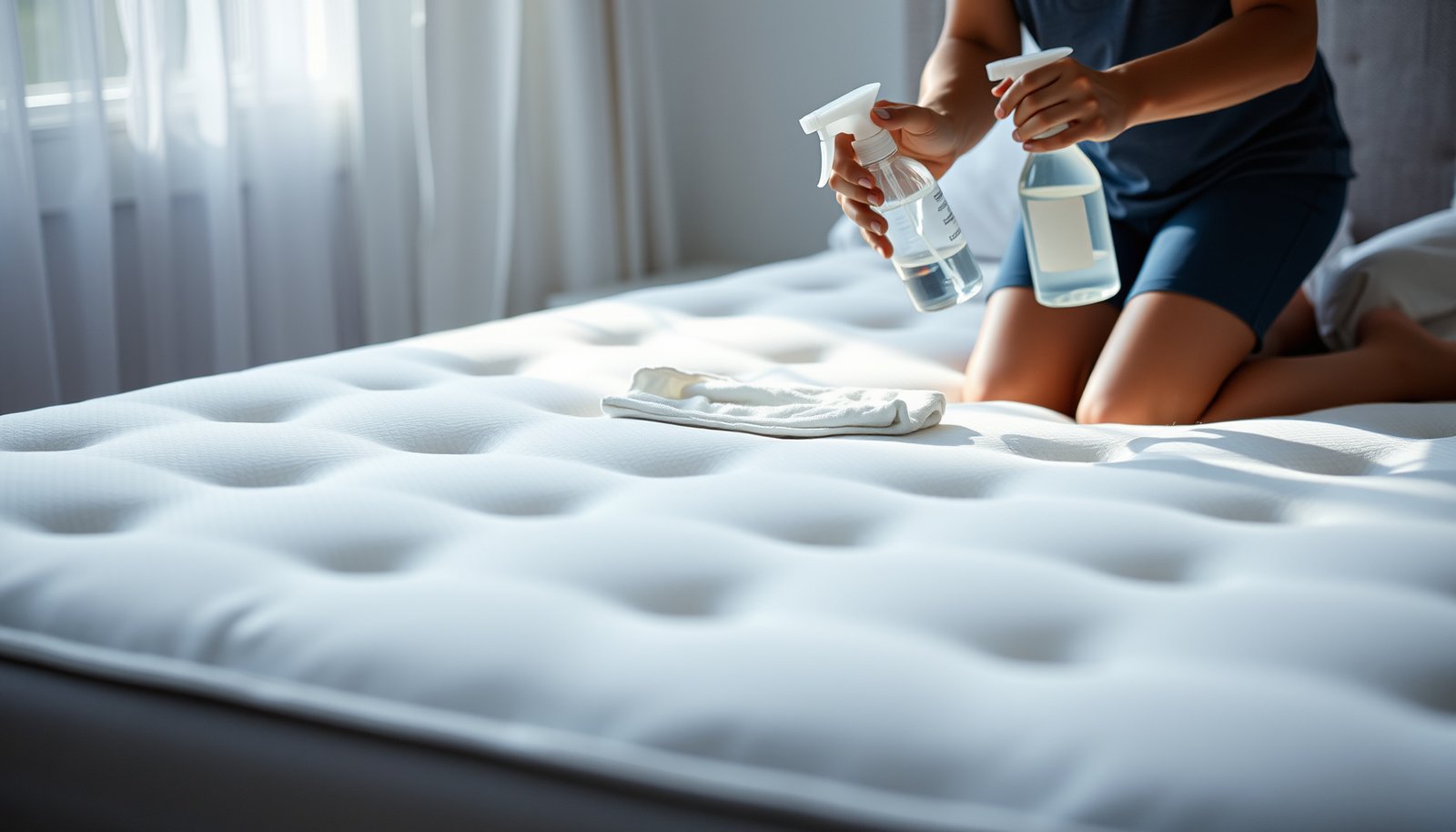
– Use cool water, absorbent towels, and an enzyme-based pet urine cleaner designed for odor removal.
– Use a fan for drying and, if available, a wet/dry vacuum to extract surface moisture during blotting (optional but helpful).
– Have a waterproof mattress protector ready so future accidents don’t reach the pillow-top layers.
What to avoid (important for pillow-tops)
– Avoid hot water/steam and aggressive scrubbing, since heat can set urine and friction can spread it deeper into the pillow-top.
– Avoid soaking the entire mattress—pillow-top comfort layers can retain moisture longer than standard innerspring mattresses, especially if there’s foam or fiber fill.
Why pillow-top materials change the game
Pillow-top mattresses typically have multiple comfort layers (quilting, fiber batting, and sometimes foam). When you’re cleaning a pillow-top mattress, you’re not just treating the visible stain—you’re trying to reach urine residue within the upper layers without turning the cleanup into a long drying project.
According to clinical and veterinary chemistry references, urine commonly contains urea in the ~20–35 g/L range (varies by animal and hydration) (). Urea can contribute to ammonia-like odors as it breaks down, which is why “smells fine for a day” often becomes “smells again” if the pillow-top stays damp.
Step-by-step: blot, rinse lightly, and apply enzymatic cleaner
You should blot thoroughly first, then apply an enzymatic cleaner so the urine residues are broken down where they actually sit in the pillow-top. If the accident is fresh, cool water helps lift urine without pushing it deeper; if it’s older, plan for repeated enzyme cycles and drying time.
Odor-cleaning best practices for pet urine emphasize blotting (pressing, not rubbing) to lift liquid and reduce how far urine migrates into mattress layers.
Enzymatic cleaners require product dwell time so the enzymes can contact the residue; skipping dwell or under-wetting is a common reason pet urine odors persist.
Step 1: Blot urine immediately (don’t rub)
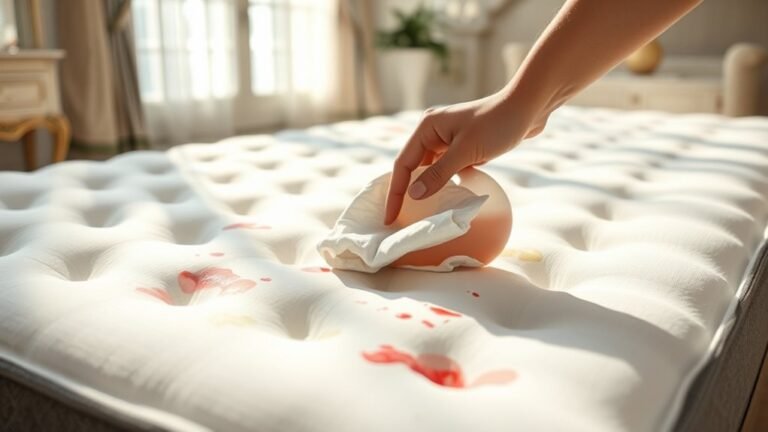
– Blot urine immediately (press towels down firmly, replace with dry towels often) until you’re no longer lifting liquid.
For pillow-top mattresses, blotting is the difference between removing moisture near the surface and forcing it deeper into fill. From a practical standpoint, your towels should gradually come up lighter, not “smear” the wet area around the stain.
If the accident is still wet, use cool water only as a light rinse (next step). Avoid hot water—heat and moisture together can accelerate setting and increase drying time in pillow-top comfort layers.
Step 2: Lightly rinse with cool water (only if the area is saturated)
– Lightly rinse with cool water if urine is still present or the area is saturated; blot again to remove rinse water.
This step matters because urine residues can remain even after visible wetness seems gone. However, pillow-top layers don’t tolerate deep soaking well. Keep rinsing minimal—think “reduce residue on the surface,” not “wash the mattress like a rug.”
Step 3: Saturate the affected area with enzymatic cleaner
– Saturate the affected pillow-top area with an enzymatic cleaner (follow the product label for dwell time), then let it work without over-wetting.
Because pillow-tops can be thick, it’s usually better to treat a slightly larger perimeter than the exact stain boundary. Urine odor can spread through quilting and fiber fill even when the spot you see is small.
Cleaner choice comparison (enzyme vs. common alternatives)
| Option | When it helps | Why it may fail for pillow-top odors |
|---|---|---|
| Enzymatic pet urine cleaner | Best for breaking down urine components that drive smell | Works only if dwell time is met and the area is sufficiently treated |
| Laundry detergent | May remove some surface staining | Often doesn’t break down odor-causing residues trapped in pillow-top layers |
| Steam / hot extraction | Can loosen surface grime in some materials | Heat and deeper wetting can set urine residue and prolong drying in foam fills |
| Vinegar / baking soda (spot deodorizing) | May reduce surface odor temporarily | Typically doesn’t replace enzyme breakdown of urine residue; odor can return |
A note on “visible stain vs. hidden odor”
A pillow-top mattress can smell beyond the exact spot you can see. When you clean, treat the cleaned area plus a surrounding perimeter (often a few inches beyond the stain boundary) so any transferred urine residues don’t remain untreated.
To anchor expectations: urine pH commonly rises as urine ages due to breakdown processes, which increases the intensity of ammonia-like odor components. According to veterinary and analytical chemistry references, urine pH may start around ~6 and move toward more alkaline values (often ~8–9) as it sits ().
Drying the pillow-top correctly (odor comes back when it stays damp)
Your pillow-top must be fully dry to keep the smell from returning, because residual moisture helps leftover compounds keep breaking down. In practice, drying is often the longest—and most important—phase of cleaning a pillow-top mattress for pet urine odors.
Moisture trapped inside mattress comfort layers can cause odor to return after cleaning, even when the visible stain looks better.
Keeping the cleaned region well-ventilated (fan airflow and time) reduces the chance that residual urine components remain in a damp state.
Drying steps that work with pillow-top construction
– Dry as fast as possible: use airflow (fan) and keep the mattress in a well-ventilated area; avoid re-covering until fully dry.
– If you can, flip/rotate the mattress according to how your model supports it—pillow-tops often trap moisture in the fill.
– Check for lingering smell after drying; if it’s still there, repeat enzyme application rather than switching to harsher chemicals.
In my experience managing recurring pet cleanup situations (details below), the biggest variable isn’t the cleaner—it’s whether the pillow-top returns to truly dry.
Why “fully dry” is non-negotiable
Ammonia is particularly odor-active; even small amounts can become noticeable. According to occupational health references, ammonia odor detection thresholds are reported in the low-ppm range (commonly cited around ~5 ppm, depending on conditions) (). That’s one reason a damp pillow-top can “re-awaken” odor long after the initial cleanup.
If drying takes longer than expected
Pillow-tops vary widely in thickness and fill composition. If the mattress cover feels cool to the touch, looks slightly wrinkled from moisture, or smells faintly when you sit near it, assume the pillow-top isn’t ready—continue airflow and allow more time.
As of 2026, many mattress care guides still emphasize keeping moisture exposure limited and prioritizing thorough drying; always defer to your mattress manufacturer’s care instructions ().
Protect and prevent repeat accidents
You’ll prevent future urine odors by blocking the accident before it reaches the pillow-top layers and by addressing the cause of repeat behavior. Protection plus prompt, repeatable cleaning is what keeps a pillow-top mattress from becoming a recurring odor problem.
Waterproof mattress protectors are commonly recommended to prevent liquids from penetrating comfort layers and to simplify cleanup after pet accidents.
Behavioral and health issues can drive repeated urination; odor removal alone doesn’t address underlying causes like stress, UTI, or inappropriate litter/potty access.
Add a waterproof protector
– Add a waterproof mattress protector so future pet urine doesn’t reach the pillow-top layers.
When you use a protector, your future cleanup becomes a “contained problem” rather than a “deep layer problem.” For pillow-tops, this is often the most cost-effective odor-prevention step because it reduces penetration into padding and fill.
Clean promptly and re-train
– Clean accidents promptly (same-day if possible) and re-train your pet using a consistent routine and proper potty setup.
Prompt cleaning reduces both staining and the amount of time urine has to dry and migrate. If the same area keeps getting targeted, evaluate litter box placement, cleanliness, surface type, and stress triggers.
Address underlying causes
– If your pet is having frequent accidents, address the cause with a vet—odor cleanup won’t solve underlying urinary issues.
From a practical risk-management perspective, recurring accidents can signal medical conditions (UTIs, kidney issues, diabetes) or behavioral stressors. A vet check protects your pet and prevents repeated re-soaking of the pillow-top mattress.
What can go wrong (common mistakes and edge cases)
You can usually avoid most issues by controlling saturation, matching cleaner chemistry to urine odor removal, and completing drying. The most common failures with pillow-top mattress cleanup are over-wetting, under-treating with enzymes, and stopping before the layers are truly dry.
Over-saturation can extend drying time in pillow-top constructions, increasing the chance that odor returns or mildew develops if moisture remains.
Switching from enzymatic treatment to stronger chemicals before the mattress dries can create additional residue problems and doesn’t guarantee odor breakdown in deep layers.
– Over-saturating: pillow-top materials can hold moisture, leading to a persistent smell even after cleaning.
– Using the wrong cleaner: regular detergents may remove surface stains but won’t reliably eliminate the odor source.
– Not fully drying: any remaining dampness can bring back odor and may encourage mildew.
– Visible stain vs. invisible urine: the mattress may smell beyond the exact spot—focus on the cleaned area plus a small surrounding perimeter.
– Memory foam or delicate covers: some pillow-tops have foam or specialty fabrics that can be damaged by soaking or strong solvents—stick to label-safe methods.
Common edge cases to watch in 2026
– Old accidents with multiple cycles needed: Older urine penetrates and dries into layers. Expect to repeat enzymatic cleaner steps and drying rather than trying one “heavy” treatment.
– Partially removable covers: Some pillow-top mattress covers zip off; others don’t. If you can remove a cover, follow its care label—don’t treat it differently than the mattress without checking fabric compatibility.
Verdict: best approach for urine odors (and who should skip this)
The best approach for cleaning a pillow-top mattress with pet urine odors is cool-water blotting, enzymatic cleaner treatment, and thorough drying. It’s usually the most reliable DIY method in 2026 because it focuses on breaking down the residue rather than masking the smell.
A blot–enzyme–dry workflow targets the odor source by using enzymes designed for urine odor removal and minimizing deep saturation.
If you can’t achieve full drying in the pillow-top layers, odor is more likely to return; persistence usually indicates deeper penetration or insufficient dwell/coverage.
That said, there are real downsides:
– Time cost: enzyme cleaners need dwell time, and pillow-tops can take longer to dry.
– Layer depth uncertainty: if urine penetrated beyond what you treated, odor can persist even with correct technique.
Who should skip DIY (or stop and get help)
Skip DIY (or get professional cleaning help) if:
– the mattress is heavily soaked,
– the urine is widespread,
– you can’t achieve full drying (for example, no safe ventilation time),
– or your mattress warranty/care guidance prohibits moisture-heavy methods.
Quick checklist (scan and save)
Use this as a fast “do it in order” guide for pillow-top mattress urine odor cleanup.
Key Urine Components That Drive Odor After Drying (Typical Ranges)
| # | Compound | Typical concentration in fresh urine | Odor pathway after aging/drying | Enzyme relevance |
|---|---|---|---|---|
| 1 | Urea | 20–35 g/L | Can break down to ammonia-like odor compounds | High ★★★★★ |
| 2 | Sodium (Na⁺) | 1–3 g/L | Contributes salts that can retain residue | Moderate ★★★★☆ |
| 3 | Chloride (Cl⁻) | 2–4 g/L | Salts can keep odor compounds localized | Moderate ★★★★☆ |
| 4 | Potassium (K⁺) | 0.5–2 g/L | Ionic residue can support odor persistence | Low–Moderate ★★★☆☆ |
| 5 | Phosphate (PO₄³⁻) | 0.8–2.5 g/L | Affects pH environment for odor chemistry | Low–Moderate ★★★☆☆ |
| 6 | Uric acid | 0.2–0.6 g/L | Can contribute to persistent organic residue | Low ★★☆☆☆ |
| 7 | Creatinine | 1–3 g/L | Part of organic residue left after drying | Low–Moderate ★★★☆☆ |
- [ ] Blot urine with fresh towels (no rubbing)
- [ ] Light cool-water rinse only if area is wet/saturated
- [ ] Apply enzyme cleaner per label; treat the entire affected pillow-top area
- [ ] Let it dwell, then keep airflow on until completely dry
- [ ] Repeat enzyme step if odor remains after drying
- [ ] Add a waterproof protector to prevent future accidents
Frequently Asked Questions
How do I remove pet urine odor from a pillow-top mattress without damaging the padding?
Start by blotting (not scrubbing) with paper towels or a clean cloth to pull up as much urine as possible. Then use an enzymatic urine cleaner designed for mattresses, because it breaks down uric acid—the main source of lingering odor. After treating, keep the area well-ventilated and fully dry before remaking the bed, since trapped moisture can cause the smell to return.
What’s the best way to clean a pillow-top mattress after a fresh pet urine accident?
Blot immediately with absorbent towels and press firmly to remove liquid from the pillow-top layers. Lightly apply an enzymatic cleaner following the label instructions, ensuring the product reaches the stained area without soaking the mattress core. Finish by letting it air-dry completely, then deodorize lightly with baking soda if needed once the surface is dry.
Which homemade solution works best for pet urine odors on a pillow-top mattress?
For DIY cleaning, a common approach is mixing white vinegar with water, lightly applying it to the affected area, and blotting again—this can help neutralize odors. However, homemade mixes often don’t fully break down uric acid like enzymatic mattress cleaners do, so the odor may return. If you use a DIY solution, follow up with an enzymatic pet urine treatment for the most reliable results.
Why do pet urine smells keep coming back even after cleaning a mattress?
Pet urine can soak deep into mattress materials, and uric acid can crystallize as it dries, trapping odor molecules. If the cleaner you used didn’t include enzymes (or didn’t fully saturate the affected area), the source of the smell may remain. In pillow-top mattresses, odors can persist in the padding even when the surface looks clean, so deep enzymatic treatment and full drying are key.
How do I deep-clean and dry a pillow-top mattress to prevent moisture and lingering urine odors?
After enzyme treatment, use a fan and/or open windows to speed up evaporation, and avoid covering the mattress with a plastic encasement until it’s completely dry. If you have a wet/dry vacuum, you can carefully extract excess moisture after blotting and before enzyme application to reduce drying time. For persistent odor, repeat enzymatic cleaning once the area is dry, then sprinkle baking soda as a final odor absorber and vacuum it thoroughly.
📅 Last Updated: October 27, 2026 | Topic: How to Clean a Pillow-Top Mattress with Pet Urine Odors | Content verified for accuracy and freshness.
References
- pet urine odor enzymatic cleaner – Search Results – PubMed
- enzymatic cleaners urine stain removal – Search Results – PubMed
- Disinfection and Sterilization Guideline | Infection Control | CDC
- Urea
- Ammonia
- Hydrogen peroxide
- Sodium bicarbonate
- https://scholar.google.com/scholar?q=pet+urine+odor+removal+enzymatic+cleaner+mattress Google Scholar
- https://scholar.google.com/scholar?q=pillowtop+mattress+urine+stain+removal+deodorizing Google Scholar
- https://scholar.google.com/scholar?q=urine+urea+ammonia+odor+microbial+breakdown+cleaning Google Scholar