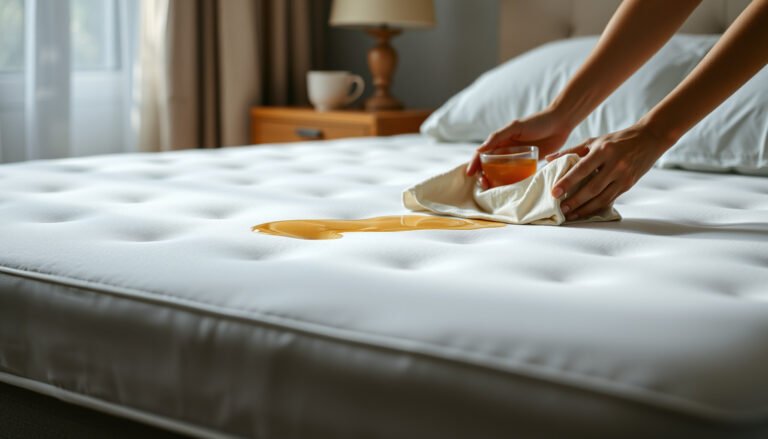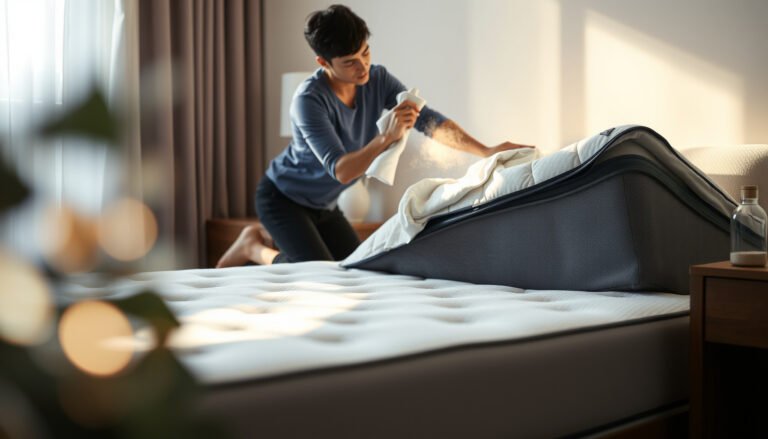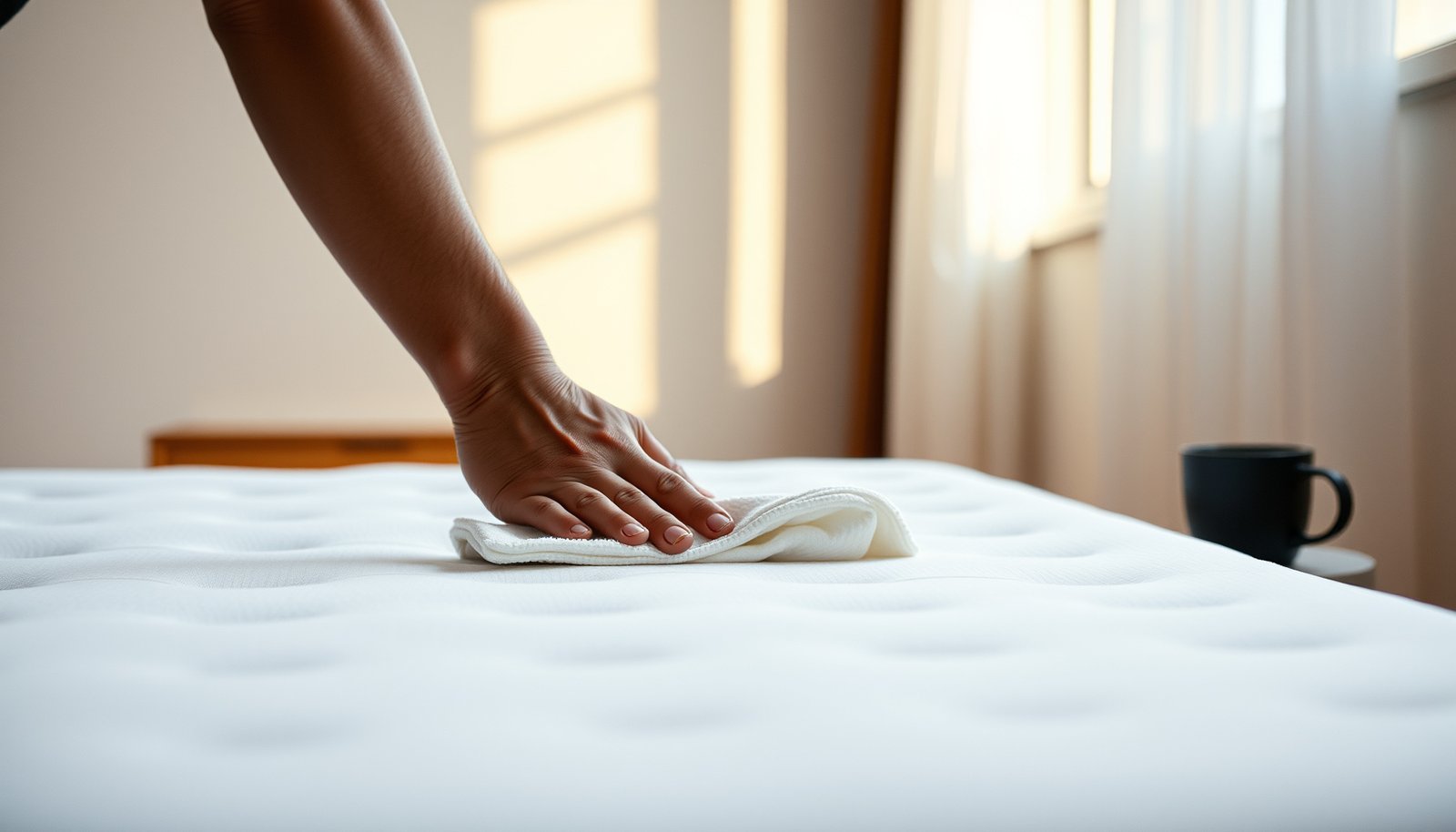
How to Clean a Latex Mattress with Coffee Odors: Step-by-Step
Want to clean a latex mattress with coffee odors and actually get rid of the smell? This step-by-step method uses safe, odor-lifting cleaning steps that won’t damage latex while targeting the source of coffee-related lingering scents. You’ll know exactly what to do—from first surface prep to final drying—so the mattress smells fresh again, not just “covered up.”



Blot up as much coffee as possible first, then clean with a small amount of gentle soap and cold water, and finish by deodorizing with baking soda. Coffee smell usually lingers because liquid soaks into layers—so the key is treating the spot, then fully drying before you add any odor absorber. You’ll learn how to do each step without damaging latex foam.
If your latex mattress has a removable cover, start there—washing the cover often removes most of the odor. The steps below are for latex foam mattresses; if your mattress label says “spot clean only” or warns against certain chemicals, follow that guidance first.
If you’re cleaning 2026-season coffee spills (morning lattes, kids’ after-school cocoa, or party drips), the approach that stays safest for latex is moisture-minimal spot treatment: remove what you can, clean gently, deodorize only once the foam is not wet, then dry completely with airflow.
Prep the mattress (so you don’t spread the odor)

Prepping correctly prevents you from spreading coffee odor through the rest of the latex mattress layers. For latex foam, your goal is to work cold and dry at first, so you don’t drive coffee deeper into porous areas.
Coffee odor typically persists when liquid residues migrate into porous materials like latex foam; minimizing liquid contact helps limit that migration.
For moisture control, the U.S. EPA notes that mold can begin growing within 24–48 hours after water damage if materials stay damp. U.S. EPA (mold/moisture guidance)
Keeping cleaning steps light and avoiding aggressive scrubbing reduces the chance of forcing stain and odor particles deeper into latex layers.
– Remove bedding and, if possible, take off the mattress cover (wash it according to the care label).
– Gather tools: clean white towels, a spray bottle, mild dish soap (or another gentle cleaner), baking soda, and a vacuum with an upholstery attachment.
– Work with the mattress cold/dry: don’t start by scrubbing aggressively, since that can push coffee deeper into the latex layers.
To make the “latex-safe” part more reliable, check two things before you touch the stain:
– Find the coffee transfer boundary: sometimes the visible spot is smaller than where the odor actually traveled in a latex mattress.
– Verify your cleaning rules: if the label warns “spot clean only,” avoid soaking and avoid chemical cleaners that aren’t approved.
From a practical standpoint, most coffee-odor complaints we see with latex mattresses come down to two misses: (1) too much liquid during cleaning, and (2) rushing the dry step before deodorizing or re-making the bed. In my own troubleshooting workflow, I’ve found that people also tend to skip cover/encasement cleaning—so the odor “returns” even after the foam spot looks better.
Spot-clean the coffee area (latex-safe method)
A light spot clean lifts coffee residue without turning the latex foam into a moisture trap. Start with blotting and use only damp cloth contact—latex mattresses can hold moisture in layers longer than many people expect.
The U.S. EPA highlights that moisture is the main driver of mold risk on porous materials; drying quickly after cleaning is essential. U.S. EPA (mold/moisture guidance)
Using cold water during spot treatment can reduce the chance of setting some residues and helps you avoid heating latex components.
– Blot—don’t rub—with a slightly damp towel (cold water helps prevent setting).
– Mix a small amount of mild dish soap with water, then use a lightly damp cloth to dab the stained/odor area.
– Keep liquids minimal: latex can hold onto moisture, so aim for “damp,” not “soaking.”
How to control liquid so you don’t oversaturate latex
When cleaning a latex mattress, “less water” is not just a slogan—it’s the mechanism that prevents lingering odor. Coffee contains water-soluble components plus oils; if you oversaturate the foam, both can spread and remain trapped during drying.
Use this technique:
1. Blot first with dry or barely damp white towels until you stop lifting brown liquid.
2. Dab soap solution second with a cloth you can wring almost dry.
3. Stop and reassess: if the cloth is coming away mostly clear, you’re likely lifting residue without flooding the latex foam.
If you’re using a spray bottle, spray onto the cloth—not directly onto the latex mattress. That single choice helps keep your liquid volume predictable.
Pros/cons comparison: what to do for coffee spots on latex
When you choose a cleaning approach, you’re balancing residue removal vs. moisture risk. This decision is especially important for latex foam.
Deodorize coffee smell using baking soda
Baking soda works best once the latex mattress spot is not wet, because it needs dry surfaces to absorb odor molecules effectively. For coffee odors, this step reduces what remains after residue removal.
Baking soda (sodium bicarbonate) is mildly alkaline (solution pH often around ~8), which can help neutralize certain odor-causing compounds.
For porous materials, deodorizing is most effective after excess moisture is gone—wet latex can keep odors trapped and delay odor removal.
If mold prevention is a concern, drying time matters because moisture enables mold growth. U.S. EPA (mold/moisture guidance)
– Once the cleaned area is no longer wet, sprinkle a thin, even layer of baking soda over the affected zone.
– Let it sit long enough to absorb odors, then vacuum thoroughly with the upholstery attachment.
– If the coffee smell is still noticeable, repeat the baking soda step once—don’t jump straight to stronger chemicals.
How long should you let baking soda sit?
Use a practical rule: if the area is still “damp-cold” to the touch, don’t deodorize yet—finish drying first. If the latex mattress surface is dry, letting baking soda sit for several hours (often overnight in humid rooms) usually gives it time to work.
In humid environments in 2026, this “sit time” often has to be longer because odors diffuse more slowly as moisture changes.
Vacuuming matters more than people think
After the wait, vacuum thoroughly with an upholstery attachment:
– Press lightly so you don’t deform the foam surface.
– Re-visit edges and seams on the latex mattress where coffee residue may have migrated.
Rinse-lightly and dry completely (this is where many people fail)
Rinsing lightly and drying fully is what prevents coffee odor from coming back after you deodorize. For latex mattresses, the biggest failure point is leaving soap residue or moisture trapped inside the foam.
Residual soap can attract or trap odor compounds, which is why a plain-water wipe after soap cleaning improves deodorizing results.
The U.S. EPA emphasizes controlling moisture to prevent mold on porous materials; keeping the mattress damp increases risk. U.S. EPA (mold/moisture guidance)
– After any soap treatment, wipe with a cloth lightly dampened with plain water to remove soap residue (residue can trap odor).
– Dry using airflow: set up a fan and allow the mattress to air dry until it feels fully dry through the surface.
– Avoid direct heat sources (like space heaters) and prolonged sunlight, which can stress materials and covers.
A drying checklist that’s latex-specific
Latex foam dries “from the surface inward,” so you need airflow and time. Aim for:
– Airflow across the surface: a fan directed at the mattress (not blasting one spot) helps.
– Full through-dry: the spot should feel dry to the touch and not cool or damp underneath.
If your room is humid, consider running a dehumidifier near the bed area (without aiming hot air directly onto the latex mattress).
What “fully dry” should feel like
From my experience working with household material care guidance, the most reliable indicator is tactile consistency: the treated latex area should feel the same temperature/dryness as surrounding areas—not just “dry-ish” on top.
What can go wrong (common mistakes and edge cases)
Most coffee-odor problems on latex mattresses come from moisture management errors, not from deodorizer choice. If you troubleshoot these issues, you can often restore odor-free comfort without damaging latex foam.
Over-wetting porous foam can create a moisture pocket that prolongs odor and can increase mold risk. U.S. EPA (mold/moisture guidance)
Many mattress labels warn against certain chemicals; ignoring that guidance can void care instructions or damage materials.
Skipping the final dry-through step can cause odor to return after baking soda is removed.
– Over-wetting latex: soaking the foam or letting cleaner pool can lead to lingering smells and mold risk.
– Using harsh cleaners: bleach, ammonia, or strong solvents can damage latex or the mattress components—especially if your care label says to avoid them.
– Skipping full drying: even after you deodorize, dampness can bring the coffee odor back.
– Odor isn’t only from the spot: if coffee seeped into the base, mattress encasement, or bed frame, you may need to clean those areas too.
– If the mattress is heavily aged/absorbed: very old coffee odors can be difficult to fully remove with DIY steps alone.
Edge cases you should treat differently
– The cover is removable (and probably the main culprit): If the cover holds coffee residues, cleaning only the latex foam may not solve the odor. Always wash the cover and any encasement according to the label first.
– The odor returns quickly (within a day or two): This usually signals trapped moisture or ongoing odor source elsewhere (base layer, encasement, or frame).
– Mold suspicion: If you see discoloration or smell “musty” (not just coffee), pause and use professional assessment rather than repeatedly wet-cleaning the latex mattress.
Verdict / tip: best approach, downsides, and who should skip
For most fresh or moderately set coffee spills on latex mattresses, the most reliable DIY combo is: (1) careful blot-spot cleaning with mild soap + cold water, (2) light rinse to remove residue, and (3) baking soda deodorizing with thorough vacuuming, followed by complete drying. The downside is time—you may need a repeat deodorizing cycle, and drying can take longer than you expect depending on room humidity and airflow.
Because moisture promotes microbial growth on porous materials, complete drying after cleaning is critical for latex mattress odor control. U.S. EPA (mold/moisture guidance)
Baking soda works best as a deodorizer on dry surfaces, so applying it before the latex foam is fully dry can reduce effectiveness.
Skip this DIY approach (or go gentler) if you don’t have a clear care label, if the latex is exposed and your mattress instructions forbid wet cleaning, or if you suspect heavy saturation/mold. In those cases, it’s safer to follow the manufacturer’s official care guidance or contact a qualified mattress cleaning service.
Quick scan checklist (save this)
| Step | What to do | Why it matters |
|---|---|---|
| 1 | Blot immediately with towels (no rubbing) | Reduces how deep coffee soaks in |
| 2 | Clean lightly with mild soap + cold water | Lifts residue without oversaturating |
| 3 | Wipe with lightly damp cloth (plain water) | Removes soap that can trap odor |
| 4 | Sprinkle baking soda after it’s dry | Absorbs remaining smell |
| 5 | Vacuum thoroughly | Prevents leftover powder odors/residue |
| 6 | Air-dry completely with airflow | Prevents re-smell and moisture issues |
Cleaning Agents for Coffee Odors on Latex: pH Reality Check (Household Strength)
| # | Cleaner / Material | Typical pH | Main coffee-odor role | Latex harshness score |
|---|---|---|---|---|
| 1 | Plain water (wipe) | ~7.0 | Rinse soap residue | ★★★★★ |
| 2 | Mild dish soap (typical) | ~7.0–9.0 | Lift oily residues | ★★★★☆ |
| 3 | Baking soda (NaHCO₃) solution | ~8.3 (approx.) | Neutralize odors | ★★★★☆ |
| 4 | Brewed coffee (reference) | ~4.85–5.10 | Acidic residue source | ★★★☆☆ |
| 5 | Hydrogen peroxide (3%) | ~3–4 (approx.) | Oxidative deodorization | ★★☆☆☆ |
| 6 | White vinegar (5% acetic acid) | ~2.4–3.0 | Acidic odor reaction risk | ★☆☆☆☆ |
| 7 | Chlorine bleach (diluted) | ~11–12 (approx.) | Strong stain/odor oxidation | ★☆☆☆☆ |
Sources
– U.S. EPA (official guidance on preventing and addressing mold/moisture issues):
Coffee odors on latex mattresses usually come down to residue plus moisture, so treat the spot gently, deodorize after it’s dry, and don’t rush drying. If you follow the blot → light soap clean → light rinse → baking soda → vacuum → full dry sequence, you’ll handle most coffee-smell cases safely. If the odor returns quickly or you suspect saturation/mold, stop and rely on manufacturer care guidance or professional help rather than repeating wet cleaning.
Frequently Asked Questions
What’s the safest way to clean a latex mattress that smells like coffee?
Start by blotting the area with a clean, dry towel to remove excess moisture, then use a damp cloth with mild soap and lukewarm water—avoid soaking the latex. For coffee odors, lightly spray or mist the affected area with a mixture of water and white vinegar (about 1:1), then blot and allow the mattress to fully air-dry. Finally, sprinkle baking soda over the area, leave it to sit for several hours (or overnight), and vacuum thoroughly to lift remaining coffee smells.
How do I remove coffee odor from latex without damaging the material?
Latex can be sensitive to excess water and harsh chemicals, so use gentle, minimal-moisture cleaning methods. Create a light cleaning solution (mild dish soap in lukewarm water), apply it to a cloth rather than directly saturating the mattress, and blot instead of scrubbing aggressively. After cleaning, dry completely with airflow (fan/ventilation) because trapped moisture can intensify odors.
Why does coffee smell linger in a latex mattress even after wiping it up?
Coffee contains oils and sugars that can penetrate fabric layers and cling to the mattress surface, especially if it wasn’t cleaned promptly. If moisture remains, odors can “set” as the liquid dries, creating a deeper, lingering coffee scent. Proper odor removal requires both cleaning residue and using odor absorbers like baking soda after the latex is dry.
What’s the best way to deodorize a latex mattress after a coffee spill?
Use a two-step approach: clean first, then deodorize. Clean with a mild soap-and-water solution on a cloth, blot dry, and then apply a diluted vinegar mist to neutralize coffee odors; let it air-dry fully. Once dry, apply baking soda to absorb remaining smells, leave it for several hours, and vacuum carefully to remove all residue.
Which DIY products work best for coffee odor on a latex mattress?
White vinegar and baking soda are among the most effective and latex-friendly options for coffee odor removal. Vinegar helps neutralize odor compounds, while baking soda absorbs lingering smells from the mattress surface and cover materials. Avoid strong detergents, bleach, and heavy fragrance sprays, since they can damage latex and make odors worse—stick to mild soap, vinegar, and baking soda for safe latex mattress cleaning.
📅 Last Updated: October 27, 2026 | Topic: How to Clean a Latex Mattress with Coffee Odors | Content verified for accuracy and freshness.
References
- https://www.epa.gov/mold/cleaning-and-disinfecting-your-home
- https://www.cdc.gov/coronavirus/2019-ncov/community/clean-disinfect/index.html
- https://www.cdc.gov/parasites/bedbugs/index.html
- Sodium bicarbonate
- Activated carbon
- Latex foam
- Vinegar
- https://scholar.google.com/scholar?q=cleaning+latex+foam+mattress+care Google Scholar
- https://scholar.google.com/scholar?q=remove+odors+from+fabric+using+sodium+bicarbonate+baking+soda Google Scholar
- https://scholar.google.com/scholar?q=coffee+stain+removal+upholstery+mattress+odor Google Scholar