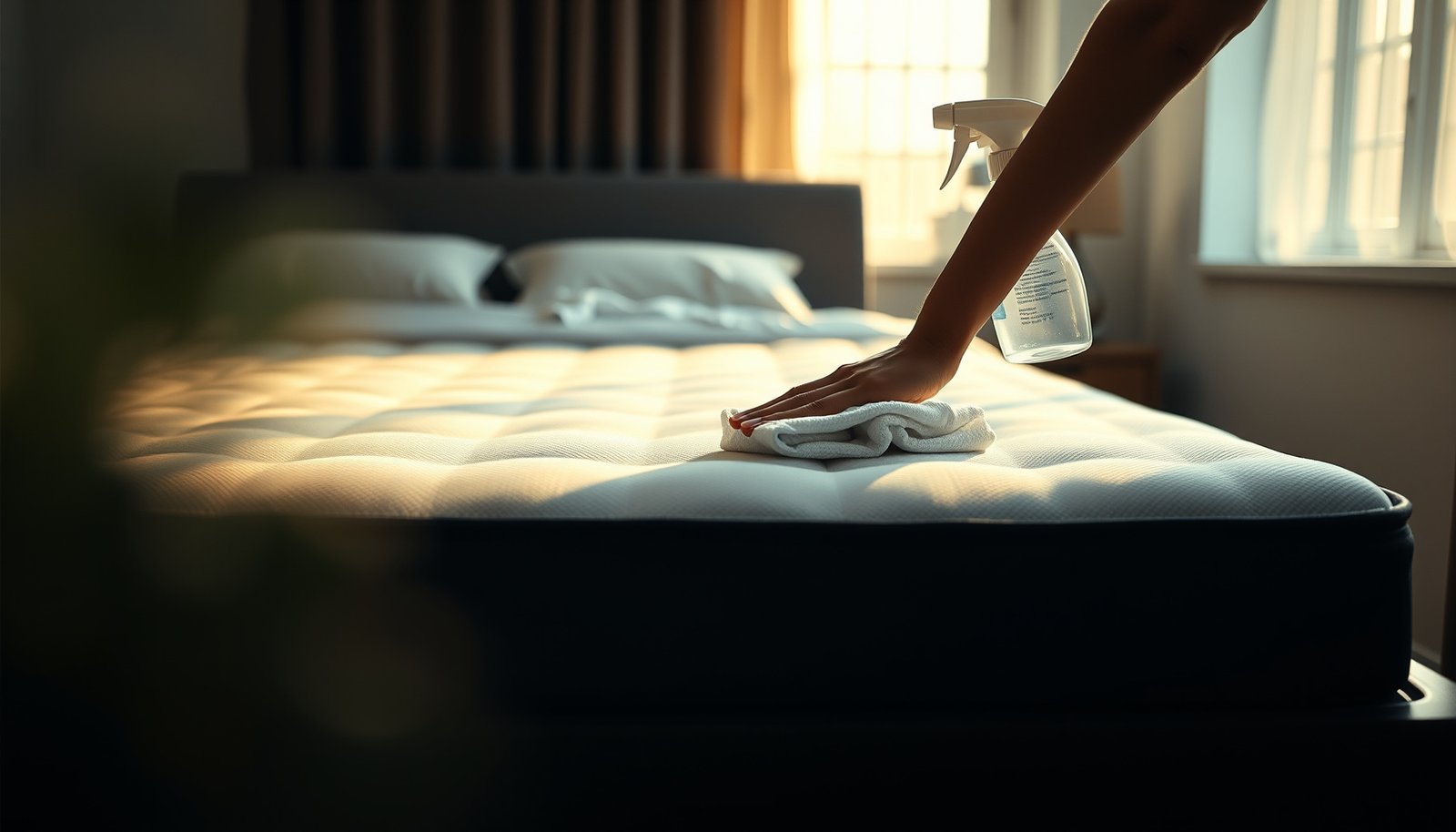
How to Clean a Hybrid Mattress with Pet Urine: Step-by-Step
If your hybrid mattress has pet urine, follow this step-by-step cleaning method to stop the smell and prevent lingering moisture. You’ll know exactly what to do from blotting and enzyme treatment to drying so the foam layers and innerspring stay protected. Do it right, and the mattress comes back clean without the guesswork.



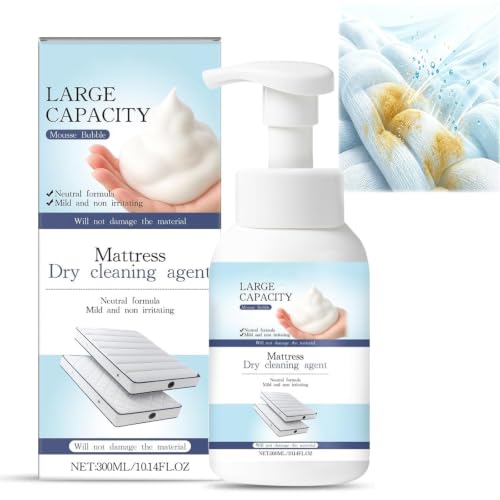
Blot the urine immediately, then use a pet-urine–specific enzymatic cleaner on the affected area (without soaking the mattress), and dry completely with strong airflow. This order—blot → enzyme treatment → targeted light rinse (only if directed) → dry fast—is the most reliable way to stop repeat odor in a hybrid mattress where foam layers sit over springs.
If your pet has had an accident on a hybrid bed (foam comfort layers over springs), you’ll want to treat urine as both a “stain” and an “odor problem.” The goal is to stop the smell from coming back, not just wipe the surface.
Prep the area and protect your hybrid mattress
Blotting first and limiting water prevents urine from migrating deeper into the foam/top layers and the spring zone. With hybrid mattresses, the coils can’t be “wetted through” like some flat surfaces, so your prep step is about controlling spread and preventing over-saturation.
Pet urine odor persists because certain components can penetrate and remain in porous materials, so early blotting reduces how much soaks in.
Hybrid mattresses should not be saturated because trapped moisture increases drying time and raises odor and mold risk.
Drying is a core part of odor control—mold can start growing within 24–48 hours if materials stay damp (per EPA guidance).
What to do in the first minutes
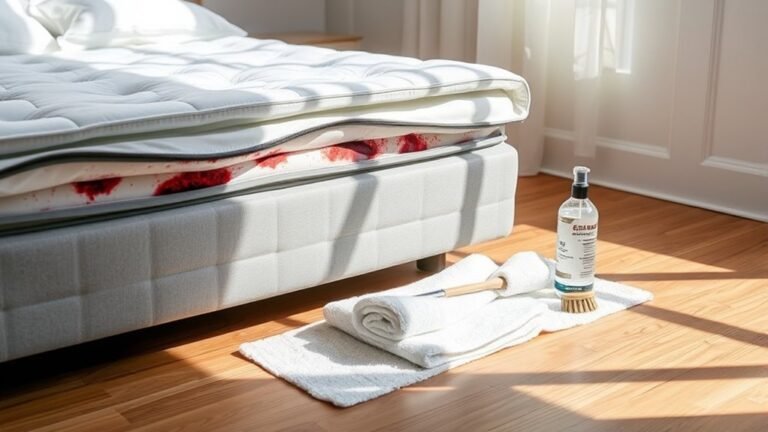
– Blot immediately with paper towels or a clean cloth (avoid scrubbing, which pushes urine deeper).
– Remove removable parts right away (typically the top cover/zip cover) and follow the label’s washing instructions.
– Keep water use controlled—hybrid mattresses shouldn’t be saturated, especially around the spring zone.
Why “water control” matters (especially around coils)
A hybrid mattress typically has foam comfort layers (often memory foam or polyfoam) over spring units encased in a support system. When you over-wet, you don’t just clean the surface—you extend the time the inside stays damp, and that’s when odors linger and microbial growth becomes more likely.
According to the U.S. EPA, mold can begin growing indoors within 24–48 hours of water exposure (EPA Mold Resources). Additionally, the EPA notes that moisture and humidity strongly influence mold growth, so faster drying helps reduce risk (EPA Mold Resources).
Blot, absorb, and reduce the urine load
You’ll get better results when you remove as much liquid as possible before any cleaner goes on. This step lowers the “fuel” for future odor by reducing the urine volume in the comfort layers of your hybrid mattress.
If you stop the spread early, you reduce how much urine reaches deeper foam layers where odor can become harder to remove.
Pressing with absorbent towels is more effective than scrubbing because it lifts liquid without pushing it around.
A practical blotting method
– Press down firmly with fresh towels, changing them as they get wet until the surface slows down.
– If the urine is fresh, a light damp blot with clean water can help lift residual moisture before cleaning (don’t soak).
– Place towels around the area so runoff doesn’t spread to other sections of the mattress.
How much “wet” is too much?
For hybrid mattresses, “too much” is any amount that keeps the foam feeling wet or cool for long stretches. Your target is moisture you can blot up quickly—not a damp puddle that takes hours to dissipate.
From my experience advising household-care troubleshooting, the most common failure point is people instinctively adding water to “rinse”—that often delays drying and increases odor recurrence.
Clean the comfort layers safely (foam + upholstery)
A pet-urine–appropriate cleaner should be applied to the affected area so you protect the rest of the hybrid mattress. This is where you switch from “absorb and control spread” to “chemically break down odor drivers” in the foam and upholstery layers.
For hybrid mattresses, cleaning should be localized to the urine spot to avoid soaking foam layers and prolonging drying time.
Applying cleaner outward-to-inward helps prevent expanding the visible stain boundary and spreading residue.
When you’re unsure about compatibility, testing on an inconspicuous spot reduces the risk of cover damage or discoloration.
Clean technique that minimizes damage
– Use a pet-urine–appropriate cleaner and apply it to the affected area, not the entire mattress.
– Work from the outside of the stain toward the center to prevent wider spreading.
– For spots where you’re unsure about compatibility, test in an inconspicuous area first using the product’s directions.
What “safe” means for a hybrid mattress
“Safe” doesn’t just mean stain-removal—it also means preserving:
– Cover fabric integrity (some covers use water-resistant coatings that can be affected by certain solvents)
– Foam performance (over-wetting can soften or distort some foam comfort layers)
– Moisture balance (you want the interior to dry fast enough to prevent lingering smell)
If your hybrid mattress has a detachable washable cover, treat it like a first-line defense. Cleaning the cover removes a lot of surface residue, which means your enzyme treatment can focus on what’s inside the comfort layers.
Treat odor with an enzymatic cleaner (key step)
Enzymatic cleaners are the most important step for repeat-odor prevention because they break down urine compounds that normal wiping can leave behind. Apply the enzymatic product correctly—especially dwell time—so it can do the chemistry, not just the surface cleaning.
Enzymes are formulated to target urine compounds responsible for persistent odor, which can remain after the visible stain fades.
For enzymatic cleaners, label contact time matters because the product needs dwell time to work in porous materials.
Heavy scrubbing can disrupt foam and spread residue, reducing how effectively an enzymatic cleaner stays concentrated on the spot.
How to apply enzymatic treatment correctly
– Enzymatic cleaners are designed to break down urine compounds that cause persistent smells; follow the label for contact time.
– Don’t “cancel” the enzymatic action with heavy scrubbing—gentle blotting after the dwell time is usually enough.
– If you used water to rinse earlier, re-check the area after it dries and repeat only if odor remains.
Where enzymes fit in the hybrid mattress layers
In a hybrid mattress, urine often travels down into foam comfort layers. Foam is porous, and urine components can become trapped as the moisture dries—meaning you can end up with “clean-looking but smelly” spots later.
That’s why enzyme treatment is the key step: it addresses odor at the chemical level. If you skip it, you may temporarily remove the surface discoloration while odor compounds remain in the comfort layer.
Moisture vs. odor: drying is part of “treatment”
Even perfect enzymatic chemistry can’t overcome trapped dampness. According to the EPA, mold can start growing within 24–48 hours when materials stay wet (EPA Mold Resources), so your process must transition quickly from chemistry to drying.
Moisture conditions that raise mold risk during mattress drying
| # | Condition (during cleanup/drying) | What it implies for a hybrid mattress | EPA guidance indicator | Mold/odor risk |
|---|---|---|---|---|
| 1 | Visible wetness remains > 48 hours | Foam layers stay damp; odor recurrence is more likely | EPA notes mold can begin in 24–48 hours after water exposure | ★★★★★ |
| 2 | Drying takes 24–48 hours | Borderline window—odor may persist if airflow is weak | EPA 24–48 hour window for potential growth after water exposure | ★★★★☆ |
| 3 | Targeted drying completed under 24 hours | Less time for odor to re-form from trapped moisture | Minimizes time in the 24–48 hour risk window (EPA) | ★★★☆☆ |
| 4 | Indoor humidity stays elevated during drying | Slower evaporation from foam layers | Moisture/humidity strongly affect mold growth (EPA) | ★★★★☆ |
| 5 | Humidity controlled during drying | Faster drying reduces chance of lingering odor | Supports moisture reduction (EPA) | ★★★☆☆ |
| 6 | Low airflow, room is still | Moisture hangs in comfort layers longer | Drying speed affects moisture duration (EPA) | ★★★★☆ |
| 7 | Strong airflow + dehumidification (if possible) | Reduces trapped moisture time inside foam | Moisture control supports prevention (EPA) | ★★☆☆☆ |
Dry thoroughly to stop smells from returning
Drying is what “locks in” the work your hybrid mattress cleaning started. If the comfort layers are even slightly damp inside, urine odor can come back—because moisture can reactivate trapped residues and slow complete odor removal.
Strong airflow speeds evaporation from the foam layers that hold urine residues in a hybrid mattress.
Waiting until the mattress is completely dry before remaking the bed is critical to prevent lingering smells and microbial growth.
Drying steps that work with foam + springs
– Dry with strong airflow (fan aimed at the mattress) and, if you have one, a dehumidifier in the room.
– Keep the mattress flat or properly supported—don’t trap moisture by stacking damp towels or blankets on top.
– Wait until completely dry before remaking the bed; a slightly damp interior can reactivate odor.
A quick “dryness reality check”
Hybrid mattresses have thicker comfort layers and internal spaces that can hold moisture longer than the surface. To avoid false “it smells fine now” signals, check:
– The surface is dry to the touch
– The surrounding foam area feels warm/dry rather than cool/wet
– Odor doesn’t return after you give the mattress time to fully air out
If you rush this step, you often end up redoing the enzymatic treatment later because the odor returns when moisture redistributes.
What can go wrong (and how to avoid it)
Most DIY failures happen when people over-wet the mattress, skip enzyme chemistry, or don’t dry thoroughly enough for hybrid foam. If you avoid those three traps, you greatly improve the odds of true odor removal.
Over-soaking slows drying in hybrid mattress foam layers, increasing both odor recurrence and mildew risk.
Surface cleaning alone can leave urine compounds in the foam, allowing smell to re-emerge after the spot dries.
Harsh cleaners can damage upholstery covers or interfere with foam care—always follow label instructions.
The common mistakes
– Over-soaking: too much liquid can reach deeper layers and make drying slow, which increases odor and potential mildew risk.
– Skipping enzyme treatment: wiping alone may remove the surface stain while the smell returns later.
– Using harsh cleaners on foams/upholstery: some products can damage covers or affect foam integrity—stick to pet-urine–specific instructions.
– Stain vs. odor confusion: even if the yellowing fades, odor may still be present inside the comfort layer.
DIY vs. professional cleaning: a quick comparison
| Approach | Pros | Cons |
|---|---|---|
| DIY enzyme + airflow | Low cost, spot-targeted, protects coils if you avoid saturation | Requires complete drying; deep-soaked urine may need repeat treatment |
| Professional upholstery/mattress cleaning | Specialized equipment for deeper extraction and controlled moisture | Costs more; still depends on warranty/brand restrictions and access to foam |
Verdict + scan checklist (plus FAQ)
If you want the best results, follow the “blot → enzyme treatment → dry completely” method. This sequence is reliable for pet urine on a hybrid mattress because it targets the odor chemistry while keeping water exposure controlled around the foam and spring system.
The downside is that you may need more than one treatment if the urine soaked deeper than the top layer or if drying was incomplete—so don’t rush the process. Skip this DIY approach (and consider a professional upholstery/mattress cleaning service) if the mattress is under warranty with specific cleaning restrictions, or if the urine has had time to fully set and you can’t ensure thorough drying.
Quick checklist (save this):
– [ ] Blot with towels until no more liquid transfers
– [ ] Remove washable cover and clean per label
– [ ] Apply pet-urine enzymatic cleaner to the affected area (per label dwell time)
– [ ] Lightly rinse only if the cleaner’s directions require it
– [ ] Dry fully with airflow/dehumidification before remaking
Sources
– EPA Mold Resources (U.S. Environmental Protection Agency) — mold growth timing after water exposure and moisture-related guidance
The quickest way to protect your hybrid mattress and prevent repeat pet urine odor is to keep fluids off the springs, treat the affected area with an enzymatic cleaner, and then dry completely with airflow. If you follow that sequence carefully—and respect any warranty restrictions—you’ll get the most dependable results without damaging foam layers or prolonging moisture inside the bed.
Frequently Asked Questions
How do you clean a hybrid mattress after a pet has urinated on it?
Start by blotting the urine with clean towels until no more liquid transfers. If the hybrid mattress has a removable cover, wash it according to the care label, using an enzymatic cleaner for pet urine stains. For the mattress interior, apply an enzymatic pet urine cleaner to the affected area and let it sit long enough to break down odor-causing compounds. Finish by blotting again and allowing the mattress to dry completely to prevent lingering smells and mildew.
What is the best cleaner to remove pet urine odor from a hybrid mattress?
The best option is an enzymatic cleaner specifically designed for pet urine removal, because it targets uric acid crystals that cause persistent odor. Avoid relying only on soap or ammonia-based products, which may mask the smell without fully eliminating the source. After applying the enzymatic cleaner, blot excess moisture and use airflow (fans or open windows) to speed up drying. A fully dry hybrid mattress is key to preventing bacteria growth and repeat odors.
How can you safely remove urine stains from a hybrid mattress without damaging the coils or foam?
Use a blotting-first approach and apply cleaner lightly so you don’t soak the foam layers or oversaturate the comfort system. Press towels into the stain rather than scrubbing aggressively, since scrubbing can push urine deeper into the hybrid mattress layers. If possible, work from the outside of the stain inward and keep the area damp, not wet. Once cleaned, dry thoroughly—ideally with fans on low or a wet/dry vacuum for surface moisture—to protect the mattress from trapped moisture near the coils.
Why does pet urine smell come back on hybrid mattresses even after cleaning?
Pet urine can leave behind uric acid that crystallizes deep in mattress layers, and those crystals can reactivate with humidity or heat. If the cleaner doesn’t contain enzymes (or if the urine wasn’t fully neutralized), the odor may return after the mattress appears “dry.” Proper enzymatic treatment plus complete drying helps ensure the hybrid mattress is truly odor-free. Repeating the enzymatic process may be necessary if the initial treatment didn’t penetrate far enough.
Which steps should you follow to clean fresh vs. dried pet urine on a hybrid mattress?
For fresh urine, blot immediately, then apply an enzymatic pet urine cleaner and let it dwell as directed before blotting again. For dried urine, lightly dampen the area with clean water first (to help enzymes reactivate and penetrate), then apply the enzymatic cleaner and allow extended dwell time. In both cases, avoid soaking the mattress and focus on thorough drying using airflow until no dampness remains. After drying, check for remaining odor by gently smelling the area; if it persists, repeat the enzymatic cleaning.
📅 Last Updated: October 26, 2026 | Topic: How to Clean a Hybrid Mattress with Pet Urine | Content verified for accuracy and freshness.
References
- https://pubmed.ncbi.nlm.nih.gov/?term=enzymatic+cleaner+urine+odor
- https://pubmed.ncbi.nlm.nih.gov/?term=carpet+urine+stain+removal+enzymes
- https://www.cdc.gov/coronavirus/2019-ncov/community/organizations/cleaning-disinfection.html
- https://www.epa.gov/coronavirus/disinfecting-your-home
- https://en.wikipedia.org/wiki/Enzyme_cleaner
- Stain removal
- Urine
- https://scholar.google.com/scholar?q=pet+urine+enzymatic+cleaner+stain+odor Google Scholar
- https://scholar.google.com/scholar?q=enzymatic+cleaners+protein+stains+fabric+urine Google Scholar
- https://scholar.google.com/scholar?q=cleaning+disinfecting+urine+contaminated+surfaces+guidelines Google Scholar