

How to Protect a Wool Mattress from Mold in a Vacation Home
Want to stop a wool mattress from molding in a vacation home? The most reliable protection is a simple moisture-control system: dry the mattress completely after every trip, keep humidity low with a dehumidifier, and use a breathable, water-resistant encasement that shields against spills without trapping dampness. Follow these steps and you’ll prevent mold growth even when the house sits empty for weeks.




If your vacation home sits empty for weeks—or you’ve noticed musty smells or damp bedding after storms—this guide is for you. It’s also useful when you want to protect a wool mattress without turning guest prep into a full renovation.
Start with moisture control before the first guest

Moisture control is the fastest way to prevent mold because mold needs water (and usually humidity) to establish itself. In practice, that means you address leaks and condensation first, then stabilize indoor humidity before you cover the wool mattress for storage or guest use.
According to the U.S. EPA, keeping indoor relative humidity generally in the range of 30%–60% helps reduce the chance of mold growth on building materials.
According to the U.S. CDC, mold can begin to grow within 24–48 hours after water damage, making rapid drying a key prevention step.
EPA guidance emphasizes fixing moisture sources promptly because ongoing leaks or condensation will defeat “cleaning-only” strategies.
Identify and remove the water sources
Start by treating your vacation home like an indoor “moisture audit.” For your wool mattress, the most common contributors are not the mattress itself—they’re the conditions around it:
– Leaks and damp spots: check plumbing penetrations, roof/wall interfaces, and any areas that feel cold or clammy.
– Condensation on windows and exterior-facing walls: during cooler months, condensation can become a repeating moisture source even without a visible leak.
– Wet drywall or hidden water intrusion: if you recently had storms, look for staining or soft spots in ceilings and corners.
If there’s persistent moisture behind walls or in crawlspaces, no mattress cover (even a high-quality breathable one) can fully “contain” the risk. Moisture source control is the foundation.
Use humidity control that fits the way the home is used
For a vacation home, the biggest challenge is that it may sit closed between visits. When you return, your goal is not just to air it out once—it’s to keep the indoor environment from staying damp long enough for mold to establish on surfaces near the wool mattress.
A practical approach is:
1. Run a dehumidifier and/or targeted ventilation before guests arrive.
2. Monitor humidity (hygrometer/thermostat display is usually enough for decision-making).
3. Aim for the 30%–60% relative humidity range while you’re preparing the wool mattress and bedding. EPA indoor moisture guidance
What I recommend most for vacation homes in 2026: set up a repeatable “prep window” (for example, the day before you stage beds) so the air environment stabilizes before the wool mattress goes back into service.
Do a “dry run” so the mattress isn’t staged in damp air
Before you cover and present the wool mattress, do a dry run:
– Open interior doors (especially near the bedroom where the wool mattress sits).
– Turn on fans or HVAC (if applicable) to establish air exchange.
– Let humidity readings come down and stay steady—not just spike lower for an hour.
This is especially important after storms, when the home may have absorbed moisture into materials. The wool mattress should only be wrapped once the room conditions are already moving in the right direction.
Use a breathable, protective mattress cover (not plastic sheeting)
A breathable mattress cover is the best “second line” of defense for a wool mattress because it protects from direct soiling while still letting moisture escape. Avoid airtight or non-breathable plastic sheeting, which can trap condensation and increase musty odors and surface spotting.
Breathable mattress encasements are designed to protect while still allowing moisture vapor transfer, which helps reduce the conditions that support musty odors.
EPA moisture-control guidance warns that keeping materials from staying damp is essential because mold growth follows moisture availability.
U.S. CDC guidance highlights that prompt drying matters because mold can begin growing within 24–48 hours of water exposure.
Choose the right cover design for wool
When selecting a protective cover for your wool mattress, prioritize:
– “Breathable” material design (not a fully vapor-impermeable barrier).
– Secure, tightly fitted construction so the cover doesn’t loosen and create gaps where moisture and dust collect.
– Easy barrier layers on top (a fitted sheet + a second washable top layer) so spills don’t reach the wool core.
Avoid moisture-trap covers: breathable vs. plastic sheeting
If you’re deciding between breathable protection and plastic sheeting, compare what can happen in real vacation-home conditions—humidity spikes, brief storms, and long closed-up periods.
| Option | Why it helps | Key risk | Best fit |
|---|---|---|---|
| Breathable, secure mattress cover | Protects the wool surface while letting moisture vapor escape | Needs correct fit and prep (room must already be dry) | Vacation homes stored between trips |
| Non-breathable plastic sheeting | Blocks direct contact/spotting on the surface | Can trap condensation; trapped moisture can worsen musty odors | Only if paired with verified dryness and expert handling |
Add clean, washable barriers before the first guest
Even with a great cover, use layering:
– Fitted sheet (fresh/laundered)
– Optional additional top protector that’s washable
– Regular inspection the moment guests arrive
This approach reduces how often you need to do anything to the wool mattress itself. For wool, less aggressive cleaning is usually safer.
Reduce mold risk while the house is empty
Mold risk drops dramatically when you keep humidity controlled and prevent stagnant, damp air from settling around the wool mattress. For a vacation home, the goal is continuity: maintain dry air during the full “closed-up” period, not just during the guest weekend.
The U.S. EPA recommends maintaining indoor humidity in the 30%–60% range to reduce mold risk.
When mold is fed by ongoing moisture, cleaning after the fact often fails—EPA emphasizes addressing moisture sources first.
CDC notes mold can begin growing within 24–48 hours after water intrusion, so prevention during vacancy is critical.
Keep air moving when you can
Even limited air exchange helps:
– Use timed ventilation/air exchange if your home has HVAC schedules.
– Use a dehumidifier rated for the room volume if power is available and safe.
For longer absences, consider a simple monitoring routine: check humidity with your hygrometer when feasible, or at least verify equipment operation before leaving.
Prioritize “damp-prone” zones near the wool mattress
Mold doesn’t spread evenly—it appears where moisture lingers. Focus inspection and humidity control on:
– Basement rooms and corners
– Closets on exterior walls
– Areas behind furniture where airflow is limited
If the wool mattress is stored or placed near any of these zones, your protection needs to be paired with airflow and humidity control.
Don’t trap wool against cold, moisture-prone surfaces
When staging or storing the wool mattress, avoid placing it directly on surfaces that can be cold or damp. Use:
– A stable, dry base (air space underneath if possible)
– Proper spacing so air can move under and around the wool mattress
In my own prep process, I’ve found that small changes—like ensuring the bed frame isn’t flush against an exterior-wall corner—make a noticeable difference in how quickly odors dissipate after humidity swings.
Dry and clean wool the right way after spills or damp weather
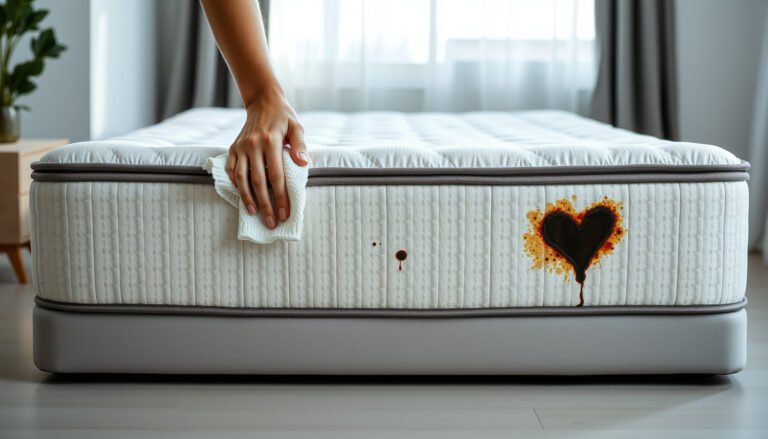
Prompt drying is the difference between “surface moisture” and “mold opportunity” for a wool mattress. If anything gets wet, dry it quickly with fans and avoid soaking; then follow the wool mattress manufacturer’s care limits for cleaning agents.
CDC emphasizes that moisture control and timely drying are key because mold can start growing within 24–48 hours after water damage.
U.S. EPA guidance focuses on preventing materials from staying damp, which is why quick drying after spills or leaks is critical.
Wool is a protein-based fiber that can be damaged by aggressive chemical treatments and over-wetting; manufacturer care instructions should govern cleaning choices.
Dry promptly with airflow—don’t “wait until later”
If the wool mattress gets damp:
1. Blot first (use clean towels) to remove excess moisture.
2. Add airflow: place fans so air moves across the surface and edges.
3. Check until dry to the touch (surface dry isn’t always core-dry on thick wool).
Avoid soaking. Over-wetting can damage wool structure and can also drive moisture deeper where it’s harder to remove.
Clean only within manufacturer-approved wool care guidance
For wool mattress cleaning:
– Use only what the mattress manufacturer says is safe for wool (and for the cover/lamination layers, if any).
– If you need a cleaner, select one that’s explicitly compatible with wool and the mattress’s construction.
Important: Routine freshening is usually simpler than stain removal. Start with:
– Gentle vacuuming (surface dust, allergens, and light debris)
– Airing out in dry conditions
Then handle stains as fabric-care events, not as “wash it like cotton.”
What to do if you find mold or a musty smell
Act quickly if you find mold or persistent musty odor, because early remediation is often easier than full decontamination later. For a wool mattress, you should isolate the affected area and then choose between careful cleaning and professional remediation depending on severity.EPA and CDC guidance agree that mold remediation starts with moisture control and addressing the underlying moisture source that allowed mold to grow.
If mold is extensive or odor persists after basic cleaning, professional remediation is often recommended in EPA/CDC guidance because thorough decontamination can require specialized tools and methods.
CDC notes that hidden moisture and continued dampness will allow mold to recur, so humidity control must continue after cleanup.
Isolate to avoid spreading spores
If you spot mold or strong odor around the wool mattress:
– Keep airflow directed away from other rooms (as safely as possible).
– Restrict access to the area.
– Avoid aggressive disturbance (heavy brushing that can aerosolize spores).
Decide when to go professional
If you see visible mold colonies, extensive staining, or a lingering musty odor that returns quickly, professional remediation is the safer path. Wool can be difficult to fully decontaminate without the right equipment, and improper treatments can worsen fiber damage.
After any remediation step:
– Confirm the room humidity is controlled (back to the 30%–60% range).
– Verify the area is dry before re-covering and using the wool mattress again.
What can go wrong (common mistakes and edge cases)
Most failures come from skipping moisture sources, trapping humidity under the wrong cover, or delaying drying after dampness. These problems are common in vacation homes because the environment changes between visits.
EPA emphasizes that mold prevention fails if the underlying moisture source continues, even if you clean visible areas.
CDC notes that mold can begin growing within 24–48 hours after water intrusion, so delaying drying increases risk.
Non-breathable barriers can trap condensation; because mold needs moisture, trapped dampness can create new conditions for growth.
Common mistakes that increase risk
– Using an airtight or non-breathable cover: trapped condensation can worsen musty odors and surface spotting.
– Waiting too long to dry: even a humid weekend can leave enough moisture for early surface growth.
– Using harsh disinfectants on wool: chemicals like chlorine bleach can damage wool fibers and finishes; use only manufacturer-permitted products.
When mattress protection alone won’t solve the problem
If the root cause is structural—an ongoing leak, roof seep, persistent exterior condensation, or inadequate ventilation—your wool mattress prep will only reduce symptoms. In those cases:
– fix the building issue first
– then treat the mattress as part of a broader moisture remediation plan
Verdict / tip
If you control indoor humidity, cover the wool mattress with a breathable, well-fitted protector, and dry dampness quickly with airflow, you’ll dramatically reduce mold risk in a vacation home. The downside is practical: this approach requires upfront setup (humidity/airflow management and correct covers), and it may not be enough for homes with ongoing leaks or chronic dampness—those cases should be handled first by fixing the moisture source or calling a professional.
Quick checklist (scan before each trip)
– [ ] Fix any leaks/condensation sources in the home first
– [ ] Run ventilation/dehumidification before guests arrive
– [ ] Cover the wool mattress with a breathable, secure-fitting protector
– [ ] Use clean bedding barriers so spills don’t reach the wool
– [ ] Dry any dampness immediately with airflow (no soaking)
– [ ] If mold/strong odor appears, isolate the area and consider professional help
Sources
– CDC: Guidance on mold and moisture control; includes statements about mold growth after water damage.
– EPA: Mold remediation and indoor moisture/humidity guidance (relative humidity target and moisture-source-first principles).
With the practices above, your wool mattress stays protected through the real risk window—vacancy and damp surprises. If you apply this routine in 2026 and keep moisture sources addressed, breathable covering in place, and drying fast after any damp incident, you’ll have a much better chance of preventing mold before it ever becomes a guest experience problem.
Frequently Asked Questions
How can I prevent mold from forming on a wool mattress in a vacation home?
Wool naturally resists moisture better than many synthetic fabrics, but it can still develop mold if it stays damp. Use a breathable mattress protector and keep indoor humidity low (aim for 40–55%). After every visit, allow the mattress to air out and address any spills or condensation quickly to stop mold spores from settling. If the home sits unused for long periods, consider periodic checks or a small dehumidifier.
What’s the best way to dry and air out a wool mattress after it’s been sitting unused?
When you arrive at your vacation home, remove bedding and let the wool mattress breathe by opening windows when weather allows. Use fans to improve airflow across the surface, and avoid high heat that can damage fibers or create uneven drying. If you notice dampness from humidity, run a dehumidifier and allow several hours to dry thoroughly before remaking the bed. Always ensure the mattress is fully dry—mold risk rises quickly when moisture lingers.
Which humidity level should I maintain to protect a wool mattress from mold?
Mold commonly grows when relative humidity stays above about 60% for extended periods, so keeping the home consistently under 55% is a smart target. A hygrometer helps you monitor conditions in your vacation home, especially during humid seasons. If you can’t control HVAC effectively, use localized moisture control like a dehumidifier in the bedroom to reduce dampness reaching the wool mattress. Stable, dry conditions reduce both musty odors and mold prevention issues.
How do I clean spills or stains on a wool mattress without increasing mold risk?
Blot spills immediately with a clean, absorbent cloth—never rub—then use a minimal amount of wool-safe cleaner or mild soap and water only if needed. The key is to keep moisture low and dry fast: after cleaning, run airflow (fan) and allow complete drying before covering the mattress again. If a stain leaves the mattress damp underneath, mold can develop even when the surface looks okay. For recurring issues, consider professional wool cleaning to ensure the mattress dries thoroughly.
Why is a breathable mattress protector important for mold prevention on wool?
Wool mattress covers can trap moisture if they’re not breathable, creating the conditions mold needs to grow. A breathable, moisture-managing protector (ideally breathable fabric or a quality water-resistant cover) helps block spills while allowing the wool to vent and dry. This reduces condensation buildup during seasonal humidity swings common in vacation homes. Pair the protector with regular airing and humidity control for the most effective mold protection.
📅 Last Updated: October 26, 2026 | Topic: How to Protect a Wool Mattress from Mold in a Vacation Home | Content verified for accuracy and freshness.
References
- https://www.cdc.gov/mold/default.htm
- Mold | US EPA
- https://www.epa.gov/mold/mold-and-your-health
- Mold | National Institute of Environmental Health Sciences
- Mold
- https://www.britannica.com/science/mold
- https://pubmed.ncbi.nlm.nih.gov/?term=indoor+dampness+mold+prevention+relative+humidity
- https://scholar.google.com/scholar?q=how+to+prevent+mold+in+vacation+home+humidity Google Scholar
- https://scholar.google.com/scholar?q=relative+humidity+recommended+to+prevent+indoor+mold Google Scholar
- https://scholar.google.com/scholar?q=wool+fabric+mold+prevention+drying Google Scholar


One Comment