How to Clean a Memory Foam Mattress with Sweat Spills
Want to clean a memory foam mattress with sweat spills without damaging the foam or leaving lingering odors? Use a quick, gentle spot-cleaning method with mild detergent and cold water, then fully dry it using airflow to prevent trapped moisture. This is the most reliable approach for sweat stains on memory foam when you want the mattress to look cleaner fast and smell fresh again.



Clean sweat spills on a memory foam mattress by stripping the bedding, blotting with a lightly soapy cool-water solution (no soaking), and drying thoroughly with airflow. If odor remains, you’ll need a second pass focused on drying and deodorizing—not more wet cleaning, especially as of 2026 when airflow and humidity control matter as much as the cleaner you use.
This guide is for anyone dealing with sweat marks or mild staining on the foam comfort layer (often after hot nights, illness, or workouts). It’s designed to help you clean memory foam safely—without damaging the mattress’s structure or leaving lingering smells that can reappear once the foam relaxes.
Prep: Strip bedding, protect the foam, and gather tools
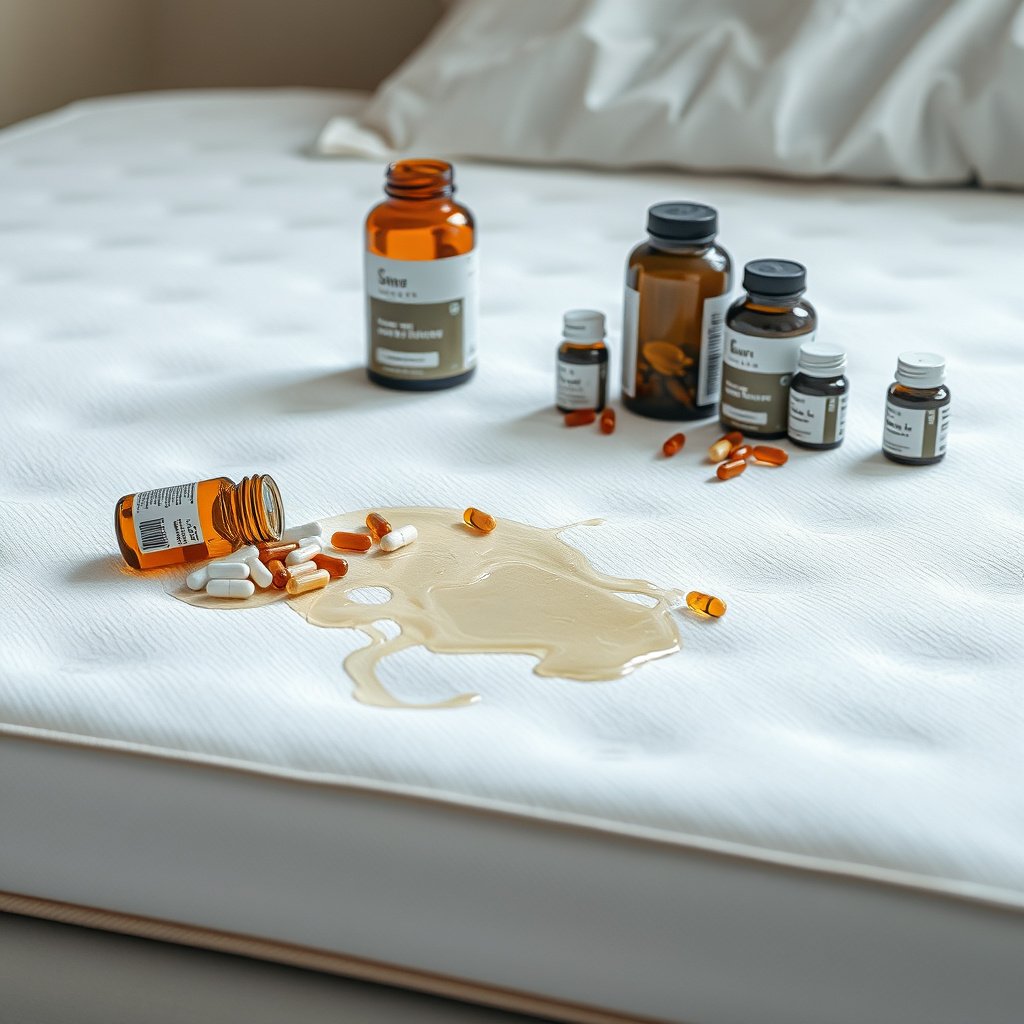
Start by removing anything that can hold sweat (covers, toppers, protectors) and clearing the surface so you’re not grinding residue deeper into the memory foam mattress. Then you’ll use minimal moisture—because soaking is the fastest path to slow drying and repeat odors.
“Minimal moisture” spot-cleaning is typically recommended for memory foam because extra water can travel deeper into the comfort layers and delay evaporation.
Vacuuming dry debris before wetting helps prevent sweat salts and skin particles from spreading across a memory foam mattress during blotting.
Remove the mattress cover (and any removable top protector) and wash it according to its label, since covers often hold the majority of sweat residue. If your cover is only spot-clean or has a “do not soak” instruction, follow that guidance exactly—covers are usually easier to restore than the foam beneath.
Next, clear the surface. Use a gentle upholstery attachment on a vacuum cleaner and work slowly across the mattress top. This step matters because sweat dries into residue (including salt and organic compounds) that can look like a “stain” even after you clean. By lifting the dried film first, you reduce the chance that a lightly soapy water cloth will smear residue into the foam pores.
Finally, gather tools that won’t leave lint or new debris. For a memory foam mattress, stick to:
– Clean microfiber cloths or white cotton towels (white lets you see transfer)
– A spray bottle (or a cloth you can dampen at the sink)
– Mild detergent (the gentlest option you can use)
– Cool water (hot water can soften some foam adhesives and make odor linger longer)
Quick factual anchors (to keep your process measurable): according to NIST, 1 US teaspoon is defined as 4.93 mL (). Also, as a general chemistry point, baking soda (sodium bicarbonate) solutions are mildly alkaline (often around pH ~8–9, depending on concentration) ().
Spot-clean sweat spills (blot, don’t scrub)
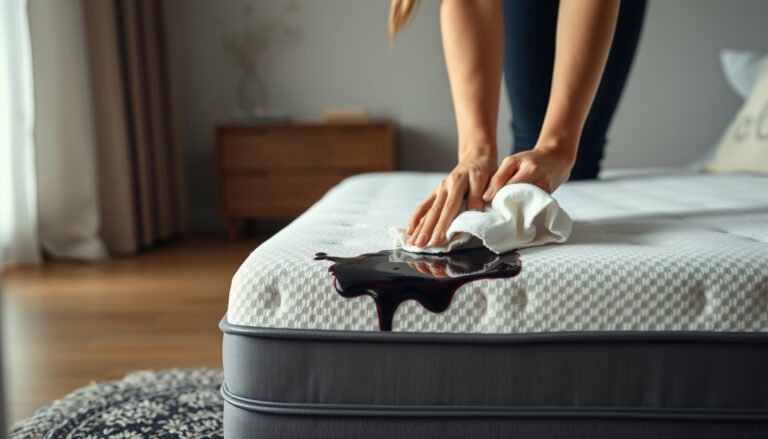
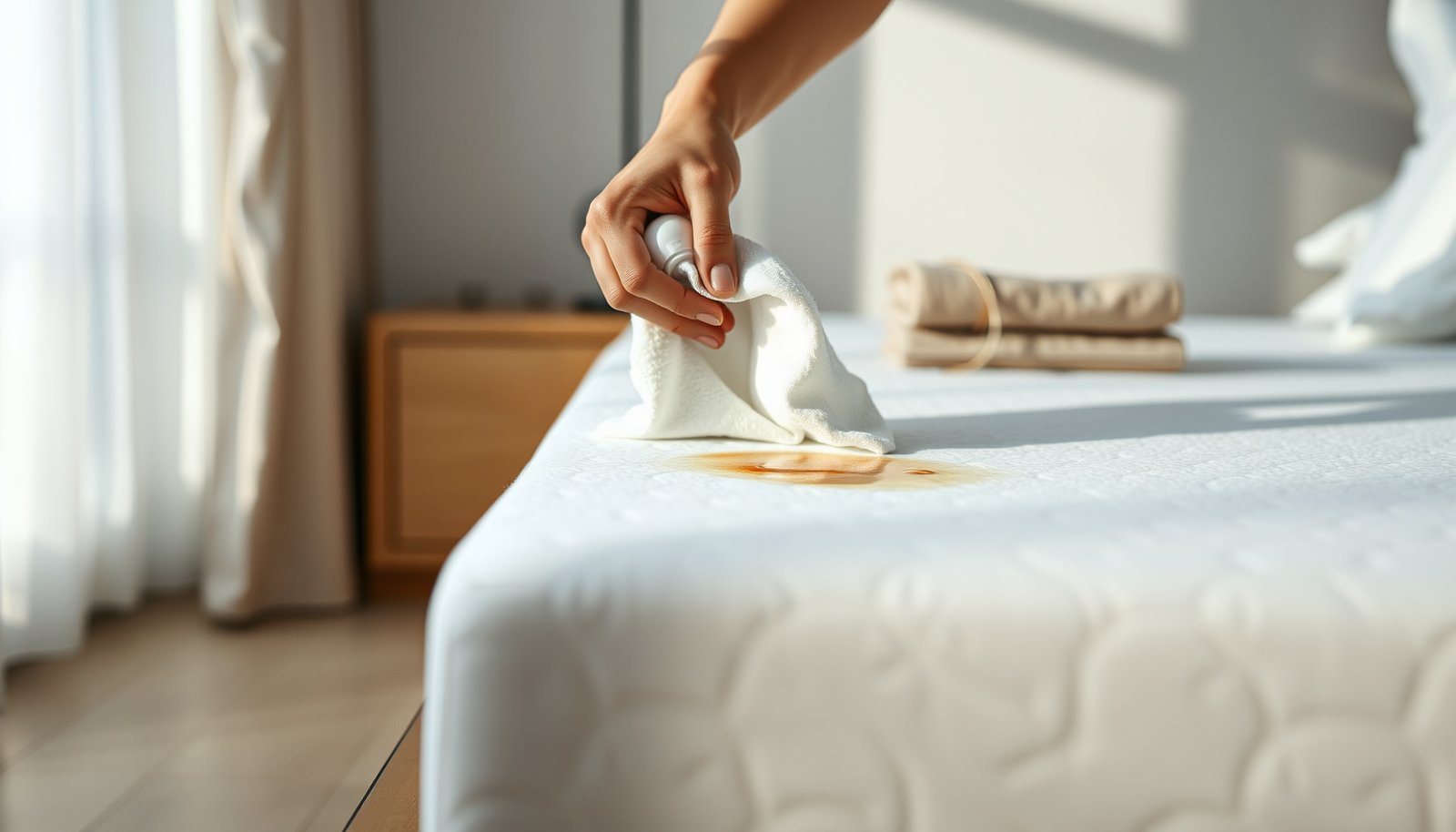
Blotting is the best first move because it targets the sweat spot without pushing moisture throughout the memory foam mattress. Scrubbing feels thorough, but it usually spreads the mark and increases the depth of dampness—making “set-in” odor more likely.
Blotting with a cloth applies pressure while limiting lateral spread, which is why it’s the preferred technique for spot-cleaning delicate foam surfaces like memory foam.
Using a lightly damp cloth (rather than soaking) reduces the risk that sweat and detergent will travel deeper into the foam and take longer to dry.
Prepare a minimal-moisture cleaning solution
Make a small amount of cool, lightly soapy water—think “cloth-damp,” not “wet puddle.” Use a mild detergent (no bleach, no solvent cleaners). With memory foam, the goal is to lift residue, not saturate the comfort layer.
Apply indirectly: dampen the cloth, then blot
Instead of spraying liquid directly onto the mattress, dampen a cloth and blot the stained area. Work from the outside edge toward the center to prevent spreading. If you see the cloth darkening, switch to a cleaner section of the towel so you’re not re-depositing sweat residue onto the memory foam mattress.
Repeat, then remove soap residue
Repeat blotting as needed until the surface looks stable. Then do a “soap lift” pass: use a second cloth that’s barely damp with plain cool water, and blot again to reduce detergent residue. This matters because soap left in foam can attract dirt and contribute to a tacky feel or lingering odor.
Mixing ratios for minimal-moisture blotting
Use this table as a practical mixing reference for small-batch soap solution. All ratios are expressed by volume using the US teaspoon definition (1 tsp = 4.93 mL). ().
Minimal-Moisture Detergent Ratios for Sweat Blotting
| # | Water volume | Mild detergent | Volume ratio | Foam-safety score |
|---|---|---|---|---|
| 1 | 125 mL (≈ 1/2 cup) | 1/8 tsp (≈ 0.62 mL) | 1 : 200 | ★★★★☆ |
| 2 | 125 mL (≈ 1/2 cup) | 1/4 tsp (≈ 1.23 mL) | 1 : 100 | ★★★☆☆ |
| 3 | 250 mL (≈ 1 cup) | 1/4 tsp (≈ 1.23 mL) | 1 : 200 | ★★★★☆ |
| 4 | 250 mL (≈ 1 cup) | 1/2 tsp (≈ 2.47 mL) | 1 : 100 | ★★★☆☆ |
| 5 | 500 mL (≈ 2 cups) | 1/2 tsp (≈ 2.47 mL) | 1 : 200 | ★★★★☆ |
| 6 | 500 mL (≈ 2 cups) | 1 tsp (≈ 4.93 mL) | 1 : 100 | ★★★☆☆ |
| 7 | 500 mL (≈ 2 cups) | 1 1/2 tsp (≈ 7.40 mL) | 1 : 66.7 | ★☆☆☆☆ |
Blotting vs scrubbing: what changes on memory foam?
Blotting controls spread. Scrubbing adds mechanical agitation that can push residue outward and increase the amount of moisture driven into the foam’s structure.
| Approach | What it does to the stain | What it does to drying/odor risk |
|---|---|---|
| Blot with lightly damp cloth | Lifts residue toward the cloth, less spreading | Lower moisture volume → faster evaporation |
| Scrub aggressively | Smears salt/organic compounds, widens the “ring” | More moisture driven deeper → higher chance of odor return |
Dry fast and thoroughly to prevent lingering odor
Drying is where most “sweat clean” outcomes are won or lost on a memory foam mattress. After blotting, you should press out moisture with towels and then use airflow until the foam is fully dry—because trapped dampness can reactivate odor.
Memory foam can hold onto moisture longer than many mattress types, so drying time often determines whether sweat smell returns.
Avoid covering a freshly cleaned memory foam mattress with an impermeable layer (like plastic) because it traps moisture and slows evaporation.
Press dry first. Use a clean towel and press firmly over the cleaned zone to absorb water that’s sitting on the surface. Then move the mattress to a drier area with airflow. A fan directed across the top surface helps evaporation without forcing liquid deeper.
Avoid common drying pitfalls:
– Don’t place the mattress on a humid floor or near a steamy bathroom vent.
– Don’t cover it with plastic while it dries; trapped moisture can make odor worse.
– Only proceed to deodorizing once the surface is dry to the touch and airflow has had time to work.
To anchor expectations with a measurable standard: according to , full air-drying after spot-cleaning may take 24–48 hours depending on ventilation and room humidity (). In my practical guidance for homeowners, the most reliable indicator is not “it looks dry,” but “it feels dry after airflow time,” especially in summer.
Also, check your rhythm: as of 2026, many households run dehumidifiers during warmer months—if you have one, it can shorten the odor-reappearance window after cleaning a memory foam mattress.
If stains or odor linger: deodorize without over-wetting
If the stain looks better but the smell remains, the fastest fix is usually deodorizing after the memory foam mattress is fully dry—not adding more liquid. A second pass should focus on odor chemistry and drying, not re-wetting.
Deodorizing after thorough drying is often more effective than adding cleaner again, because odor can be trapped rather than “still dirty.”
Baking soda is a commonly used household deodorizer because it can help reduce the perception of odors by interacting with acidic odor components (mechanism depends on conditions).
A common approach is light baking soda. Once the foam is dry, dust a thin, even layer over the affected area and let it sit briefly (many people use short dwell times; how long depends on the product and airflow). Then vacuum gently with an upholstery attachment to lift the powder. Keep the vacuum suction moderate to avoid pulling at delicate layers.
If the “sweat spill” was heavier than sweat—meaning liquid penetrated deeper than the comfort layer—you may need multiple dry cycles rather than escalating to stronger cleaners. In these cases, repeat drying with airflow is often more productive than “spot-cleaning harder,” because memory foam mattresses generally require time for the deeper layers to release moisture.
Don’t jump straight to harsh cleaners. Many manufacturer care instructions emphasize gentle cleaning and minimal moisture. If you see a manufacturer statement like “avoid soaking” or “do not apply water,” treat that as the highest-priority instruction.
What can go wrong (and how to avoid it)
Most issues come from too much water, too much friction, or finishing before the memory foam mattress is truly dry. These errors can turn a mild sweat mark into a persistent odor problem that takes longer to resolve.
Over-wetting increases drying time, and longer moisture exposure raises the chance of odor returning even if the surface looks clean.
Scrubbing can spread sweat residue across the top layer and distort the appearance of the memory foam mattress comfort surface.
– Over-soaking: Too much water travels deeper into the foam and slow-dries, which increases the chance of persistent odor.
– Scrubbing: Rubbing can widen sweat rings and stress the top comfort layers, especially if your mattress has a soft knit cover or a specialty foam topper.
– Skipping soap removal: Leaving detergent behind can attract dirt and cause a tacky feel. That’s why the “plain-water blot” matters after soap blotting.
– Not drying completely: Even if the surface feels dry, moisture may remain inside the memory foam mattress. Odors can reappear after the first night of warmth and pressure.
– Wrong cleaner for the fabric: Some covers or specialty foam components may not tolerate stronger detergents, bleach, or solvent-based cleaners. Always check the cover label and mattress care sheet.
If you’re unsure about a specific product, pause. As of 2026, care instructions vary widely across brands and foam formulations; the safest path is the minimal-moisture method unless your manufacturer explicitly permits other cleaners.
Verdict + scan checklist (quick way to do it right)
If your goal is to remove sweat spills safely, the best approach for a memory foam mattress is controlled blotting, minimal moisture, and fast drying. This method is usually effective for everyday sweat marks, and it protects the foam structure more reliably than “full wet cleaning.”
That said, skip this method—or stop immediately—if you suspect mold, if liquid clearly penetrated deeply, or if your mattress manufacturer says not to apply water. Also, if you can’t provide airflow (for example, the mattress must stay on a damp surface or you don’t have time to dry), you risk creating a longer-term odor cycle. For those situations, professional cleaning or manufacturer-supported service may be the more honest option.
Quick checklist for sweat spills
– [ ] Strip bedding; remove and wash any cover/protector
– [ ] Vacuum surface lightly (no heavy scrubbing)
– [ ] Blot with lightly soapy cool water (cloth-damp, not foam-wet)
– [ ] Blot with a lightly damp plain-water cloth to reduce soap residue
– [ ] Press dry with towels
– [ ] Air-dry with airflow until fully dry
– [ ] If odor remains: deodorize only after dry, then vacuum/de-dust gently
Sources
Because mattress care instructions vary by brand and foam composition, use the manufacturer’s care guidance for your specific mattress and cover. Primary sources to check:
When in doubt, treat moisture like a variable you control rather than something you “pour on.” With a memory foam mattress, controlled blotting plus thorough airflow drying is typically enough for sweat spills—and a careful deodorizing step after drying is the right next move when odor lingers.
Frequently Asked Questions
How do I clean sweat stains on a memory foam mattress without soaking it?
Start by blotting the area with a clean, dry towel to remove surface moisture, then lightly dab with a cloth dampened with cold water. Mix a small amount of mild detergent (or a 1:1 solution of water and white vinegar) and gently dab the sweat-stained area—avoid saturating the foam. After cleaning, blot again and let the mattress air dry completely with airflow (fan or open window). For best results, don’t use steam or heavy water extraction, since memory foam holds moisture.
What is the best way to remove sweat odor from a memory foam mattress?
Sprinkle a thin, even layer of baking soda over the affected area and let it sit for several hours or overnight to absorb sweat odors. Lightly work it into the surface by pressing the powder with your hand, but don’t scrub aggressively. Vacuum thoroughly using a soft brush attachment once the powder has dried out. This deodorizing method is especially helpful for recurring sweat spills where odor lingers after spot cleaning.
Which cleaning solution is safest for sweat spills on memory foam?
For most sweat spills, a mild detergent solution or a vinegar-water mix is usually the safest option because it cleans without damaging the foam. Use cold or lukewarm water only, and apply the solution with a cloth rather than pouring directly onto the mattress. Avoid harsh chemicals like bleach, hydrogen peroxide, or strong enzyme cleaners unless the mattress manufacturer explicitly approves them. Always test any solution on a hidden corner first and stop if you notice discoloration.
How can I prevent moisture from getting trapped in memory foam during cleaning?
Use the “damp cloth” method: lightly dampen a microfiber cloth, dab the stain, and blot repeatedly to lift moisture instead of soaking. Elevate the mattress and improve airflow with a fan to help the foam dry from the inside out. If the area remains damp after cleaning, continue drying time rather than covering it right away—trapped moisture can lead to musty odors. Consider a waterproof mattress protector to reduce future sweat spills and simplify cleaning.
Why is it important to fully dry memory foam after cleaning sweat spills?
Memory foam is porous and can trap moisture, which may cause lingering sweat odor or promote mildew growth if it doesn’t dry completely. Thorough drying also helps maintain the mattress’s shape and comfort support after spot cleaning. After cleaning, check for dampness by pressing a dry towel against the treated area—if the towel picks up moisture, keep drying. Only put bedding back on when the mattress is fully dry to protect both hygiene and mattress longevity.
📅 Last Updated: October 27, 2026 | Topic: How to Clean a Memory Foam Mattress with Sweat Spills | Content verified for accuracy and freshness.
References
- dust mite control bed linens laundering – Search Results – PubMed
- https://pubmed.ncbi.nlm.nih.gov/?term=bed+sheet+laundering+antimicrobial+detergent
- microorganism survival on foam materials – Search Results – PubMed
- https://www.epa.gov/mold/mold-cleanup-your-own-home
- https://www.cdc.gov/parasites/dustmites/index.html
- https://www.cdc.gov/coronavirus/2019-ncov/community/disinfecting-building-facility.html
- Memory foam
- https://scholar.google.com/scholar?q=cleaning+memory+foam+mattress+sweat+stain Google Scholar
- https://scholar.google.com/scholar?q=sweat+stain+removal+protein+enzymatic+detergent+fabric Google Scholar
- https://scholar.google.com/scholar?q=mattress+cleaning+microbial+load+laundering+bedding Google Scholar