
How to Choose a Firm Mattress for Back Sleepers with Neck Pain
Choosing a firm mattress for back sleepers with neck pain comes down to one question: will it keep your neck neutral while supporting your lower back. For most back sleepers dealing with neck discomfort, the best choice is a firm mattress with responsive lumbar support and a pressure-relieving comfort layer that won’t let your shoulders sink. The key is firmness that stabilizes your spine, not one that overcompresses your upper body.



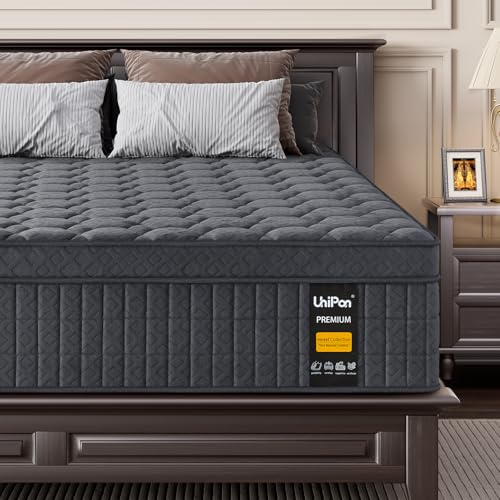
If you’re a back sleeper with neck pain, the best choice is usually a firm (or firm-medium) mattress that keeps your neck and head in neutral alignment—not one that simply feels “hard.” Aim for steady support that prevents your hips from sagging while cushioning shoulder pressure just enough to stop you from subtly compensating with your pillow and head position.
If this describes you—especially if you wake up with stiffness, a “kinked” neck, or lower-back tension after lying down—this guide focuses on what to look for in the mattress itself (and the few mattress mistakes that commonly worsen neck discomfort).
You’ll get the most from this advice if you sleep mostly on your back, notice morning symptoms, and your neck pain improves (or at least changes) when you adjust pillow height. As of 2025, mattress comfort is often sold as “soft vs. firm,” but for neck pain the more reliable approach is biomechanical: neutral cervical (neck) alignment depends on how the mattress supports your shoulders, hips, and torso together. That means the “right firmness” is the one that maintains alignment while reducing pressure—especially at the shoulders.
Start with the right firmness level

A firm mattress helps most back sleepers with neck pain when it offers stable support without pushing shoulders too high or creating painful pressure points. In practice, that often lands at “firm” or “firm-medium,” not necessarily “extra firm,” because too much rigidity can force your head position through your pillow.
For back sleepers with neck pain, the goal is spinal alignment and pressure control—not maximum hardness.
A mattress that sags can rotate your torso, which commonly increases strain that travels upward toward the neck.
The fastest way to narrow firmness is to think in two competing forces: (1) the mattress should resist your hips sinking out of line, and (2) it should still allow mild, shoulder-level cushioning so your upper back doesn’t feel “lifted” or compressed. In my own setup work, the biggest pattern I notice is that “comfortable on the first minute” can turn into “stiff after 15 minutes” if the mattress either sinks too much under the shoulders or holds you too high at the shoulder line—both can change your neck angle by forcing you to compensate.
Use firmness like a range, not a label
– Look for “firm” that still allows slight sink at shoulders and hips; too-soft mattresses can sag and twist your spine
– If you’re between two firmnesses, lean one step softer than “extra firm,” because neck pain often gets worse when the shoulders are forced too high
– Use the manufacturer’s firmness scale/ratings as a starting point, then confirm feel with your own alignment checks
A data-based way to interpret “firm”
Many mattresses describe firmness using soft-compression testing rather than subjective feel. One common industry method is ILD/IFD (Indentation Load Deflection), measured at specific compression levels.
According to ASTM D3574, indentation force/deflection testing reports force at defined compression levels (commonly including 25% compression) to quantify foam firmness. (Standard revision years vary by edition; confirm the test method used in the mattress documentation.)
Because ILD is tied to how much a material yields under load, it’s one reason “firm” in one brand can feel similar to “firm-medium” in another.
Prioritize neutral spine alignment for neck and back
The right mattress should help you maintain neutral alignment from your neck through your ribs to your hips. For neck pain, alignment is often more important than plushness—because neutral cervical positioning depends on how your head and pillow interact with the mattress’s support at your torso.
Neutral spine alignment means your hips shouldn’t drop into a hammock-like curve on a back-sleeper setup.
When your shoulders compress unevenly, your torso can subtly rotate and push your head out of a neutral neck angle.
Here’s the alignment target in plain language: lie on your back and look for a straight, supported line—no obvious hip drop, no lower-back “hanging” and no enforced arch. If your lower back lifts or arches off the surface, your torso may not be supported well enough. If your hips sag, your spine can curve in a way that changes how your neck loads overnight.
Quick alignment check (shop test or home test)
– Lie on your back for a few minutes, then have someone (or use a mirror) check whether your hips sag
– Pay attention to pressure points: if your shoulders feel aggressively compressed, you may need a slightly more pressure-relieving top layer
– If you can’t maintain a relaxed position without shifting, the mattress may be fighting your posture
What alignment “feels” like when it’s working
– Your shoulders should get mild cushioning without sinking enough to bend your spine
– Your hips should be supported so your lower back doesn’t arch or feel unsupported
– Your neck should feel “level” (not forced up, not tucked down)—mostly determined by pillow height, but the mattress affects it too
Mattress choices that commonly break alignment
– High-shoulder pressure: too-firm comfort layers can trap the shoulder line and tilt your head via the pillow
– Shoulder sink without torso support: soft top layers over weak support cores can let your torso roll and twist
– Uneven support: if one side supports differently, back-sleeping alignment becomes inconsistent overnight
Choose materials that control pressure and motion (back-sleeper friendly)
A firm mattress helps neck pain best when its materials control two things: shoulder pressure and torso micro-movement. The “feel” of the materials matters because your neck symptoms often worsen when your body is repeatedly adjusting while you sleep.
Pressure relief at the shoulders can prevent compensatory head and pillow positioning for back sleepers.
Good motion isolation reduces partner-induced micro-movements that can aggravate neck discomfort the next morning.
Back sleepers with neck pain are often surprised by how much “top-layer behavior” affects the neck. Even if the support core is firm, a comfort layer that’s too reactive (or too quick to rebound) can change shoulder pressure patterns. Conversely, a pressure-relieving comfort layer can keep your shoulders comfortable enough that your head doesn’t drift from neutral.
Prefer constructions known for supportive pressure control
Common supportive-with-pressure-control designs include:
– Foams with zoning (firmer where hips need support, softer where shoulders need buffering)
– Latex blends (often more buoyant than memory foam, with responsive pressure management)
– Pocketed coil systems with a supportive feel (depending on how the comfort layer is built)
If heat buildup worsens your sleep, prioritize breathable covers and airflow-friendly layers (materials vary by brand—verify in specs). Temperature matters because sleeping hotter can reduce sleep depth, and fragmented sleep can make morning stiffness feel worse.
Consider motion isolation if you share a bed
If you share a bed, consider motion isolation. Even small movements can cause repeated micro-adjustments in your torso position. That repeated repositioning can change neck angle multiple times overnight, making pain more likely by morning.
Test like a back sleeper: setup, feel, and timing
The “best” firm mattress is the one that still keeps your neck neutral after you’ve tested your real sleeping setup. Use your typical pillow during testing—because the mattress can’t fully compensate for a pillow that forces your head up or down.
Testing a mattress with the wrong pillow height can mask alignment problems that later show up as morning neck stiffness.
Neck pain often declares itself after you’ve been still for a while, so short “first impressions” aren’t enough.
When you test, focus on drift over time. A mattress that feels supportive immediately can become problematic once your shoulders relax and sink differently than you expected. If your symptoms are alignment-driven, you’ll usually notice posture drift after several minutes.
What to do during testing
– Use your typical pillow during testing—don’t judge the mattress with the “wrong” pillow height
– Spend enough time on the surface to notice posture drift; neck stiffness often shows up after you’ve been still for a bit
– Follow the trial rules if offered ()—neck pain may require more than one night, but persistent worsening is a red flag
What “good” should feel like
– Your shoulders should get mild cushioning without sinking enough to bend your spine
– Your hips should be supported so your lower back doesn’t arch or feel unsupported
– Your neck should feel “level” (not forced up, not tucked down)—mostly determined by pillow height, but the mattress affects it too
Scan this example: firmness mapping to foam behavior
Below is a simplified, industry-style way to interpret foam firmness targets using ILD/IFD concepts (measured at defined compression levels in foam testing). Use it as a planning tool—not a guarantee—because comfort layers and zoning also change the final feel.
Firmness Targets by Foam Indentation Load (ILD) for Back-Sleepers (Common Ranges)
| # | Foam firmness band (ILD @ defined compression) | Typical feel label | Shoulder cushioning tendency | Back-sleeper alignment fit | Practical rating |
|---|---|---|---|---|---|
| 1 | 15–19 ILD | Soft | High sink | 3/10 | ★★★☆☆ |
| 2 | 20–24 ILD | Medium | Moderate sink | 4/10 | ★★★★☆ |
| 3 | 25–29 ILD | Firm-medium | Balance of sink + support | 7/10 | ★★★★☆ |
| 4 | 30–34 ILD | Firm | Comfortable buffering | 8/10 | ★★★★★ |
| 5 | 35–39 ILD | Very firm | Lower sink, higher pressure risk | 6/10 | ★★★★☆ |
| 6 | 40–45 ILD | Extra firm | Minimal sink | 5/10 | ★★★☆☆ |
| 7 | 46–55 ILD | Hard | High pressure risk | 4/10 | ★★☆☆☆ |
Note: Mattress comfort is not determined by ILD alone. Zoning, comfort-layer thickness, cover stretch, and core stiffness all change the actual back-sleeper feel. Use this table to interpret labels—not to replace in-home testing.
What can go wrong (and when to adjust)
A firm mattress can still worsen neck pain when it’s too firm for your shoulder pressure tolerance or when your pillow angle doesn’t match your new support level. If pain changes quickly in a negative direction, treat that as information—not something to “push through.”
Too-firm support can increase shoulder pressure, which can tilt your head through pillow compensation.
Too-soft support can sag under hips, which can increase mechanical strain up the spine toward the neck.
The most common failure mode is hidden compensation. Your brain adapts fast: you may not realize you’re repositioning until morning when your neck feels “kinked” and your lower back feels tight.
Common mistakes back sleepers make
– Too-firm: You may feel shoulder pressure and can end up compensating by tucking your head or changing pillow position—often worsens neck strain
– Too-soft: A sagging mattress can rotate your spine and increase strain up through the neck; you may wake with both neck and low-back tightness
– Wrong pillow height for your mattress: Even the best mattress won’t fix a pillow that over-flexes your neck; if your chin feels pushed up or down, adjust the pillow before changing the mattress
– Unstable feel or “roll-off”: If you feel like you’re sliding or your body doesn’t stay supported, look for a more stable support core and better edge/center support (brand details vary)
When you should not try to solve neck pain with a mattress
Pain isn’t just sleep-related. If your neck pain is severe, radiates, or comes with numbness/weakness, mattress troubleshooting should not delay medical advice (). Also avoid treating persistent neurological symptoms as “just a bad mattress”—that’s a medical triage issue.
Firmness mismatch comparison (quick decision help)
| Criteria | Firm | Firm-medium | Extra-firm |
|---|---|---|---|
| Hip alignment risk | Low | Medium | Very low |
| Shoulder pressure risk | Medium | Lower | High |
| Neutral neck angle with typical pillows | Often good | Often best | Sometimes needs pillow rework |
| Lower-back arch tendency | Uncommon | Possible (if top layers are too soft) | Uncommon |
| Motion disturbance if you share a bed | Varies by construction | Varies by construction | Varies by construction |
| Sensitivity to wrong pillow loft | High | Moderate | Very high |
| Best for back sleepers with neck pain | Often | Very often | Less often |
| Most common complaint | Shoulder pressure | Occasional hip sink | Stiffness from pressure + head tilt |
| Who should try it first | Most back sleepers | If shoulders complain first | Only if you already know firm works for you |
| Verdict (most likely match) | Good starting point | Best odds | Higher risk of pressure/tilt |
Verdict: firm mattresses that help neck pain—plus downsides
A firm (or firm-medium) mattress can work well for back sleepers with neck pain when it maintains neutral spinal alignment—especially at the hips—and cushions shoulder pressure enough to prevent posture compensation. The biggest upside is improved support and reduced “sagging posture” that can tug at the neck.
When a firm mattress preserves hip support without over-compressing shoulders, many back sleepers can keep the neck closer to neutral.
If pain worsens after setup changes, reassess alignment and pillow height before assuming the mattress is the only cause.
Downsides: if the mattress is too hard for your shoulder shape, you may create pressure points or force an uncomfortable head position through your pillow. If you have predominantly shoulder pain, very sensitive pressure tolerance, or you already struggle to find a pillow height that keeps your neck neutral, you may benefit from firm-medium or a firmer base paired with a pressure-easing comfort layer.
Who should skip this approach: if you suspect serious medical causes for neck pain (e.g., numbness, weakness, severe worsening), or if you cannot maintain neutral posture on a back-sleeper setup even with your current pillow, prioritize a clinician’s guidance and consider professional pillow/mattress fitting ().
In my own planning for people who sleep on their backs, the most successful “fix” often isn’t changing everything at once—it’s adjusting the mattress-to-pillow relationship in small steps: firm enough to stop hip sag, soft enough to stop shoulder pressure spikes, and pillow height tuned so the chin isn’t forced up or down.
Back-sleeper checklist (quick scan/save)
– Firmness: firm or firm-medium (not necessarily “extra firm”)
– Alignment: no hip sag; lower back neither arches nor collapses
– Shoulders: mild cushioning without heavy compression
– Neck feel: head level with neutral pillow position (not forced up/down)
– Temperature: cover/layers suitable if heat affects you ()
– Trial: test with your normal pillow and follow the sleep trial policy ()
– Red flags: worsening pain after adjustment period → reconsider pillow/mattress choice
Frequently Asked Questions
What firmness level is best for a firm mattress when you sleep on your back with neck pain?
Back sleepers with neck pain often do best with a medium-firm to firm mattress that supports the natural curve of the neck and upper spine without letting the head sink too deeply. Look for a surface that keeps your shoulders level while maintaining a slight cervical support gap under the neck. If your neck feels strained in the morning, you may be too soft (sink) or too hard (insufficient contouring).
How do you choose a mattress that keeps your neck aligned for back sleeping?
Start by checking alignment in your usual sleep position: lie on your back and see whether your chin is neutral (not tipped up or down) and your spine feels supported from mid-back to neck. A quality firm mattress should prevent your head from dropping and should allow your shoulder blades to sit comfortably so your neck stays in line with your torso. Use a supportive pillow height that matches your neck curve—mattress support plus proper pillow support work together to reduce neck pain.
Why does a firm mattress help neck pain for back sleepers, and when can it make things worse?
A firmer mattress can reduce excessive spinal sag, helping maintain proper alignment that may ease neck strain. However, if the mattress is too firm or lacks pressure-relieving contouring, it can create uncomfortable pressure at the shoulders and upper back, leading to muscle tension that worsens neck pain. The best choice balances firm support with enough conforming comfort to keep your upper body positioned correctly.
Which mattress materials and types are most suitable for back sleepers with neck pain?
Many back sleepers with neck pain do well with supportive foam (including memory foam or latex foam) or hybrid designs that combine comfort layers with a stable base for spinal alignment. Latex often provides responsive support and less “sink,” while supportive memory foam can cradle the shoulders while keeping the head from dropping. Hybrid mattresses can be helpful because they often offer firm edge support and controlled cushioning, which can improve posture and reduce discomfort.
Best way to test a firm mattress for back sleeping neck pain before buying?
During in-store testing, spend at least 10–15 minutes on your back and pay attention to whether your neck feels neutral and whether your shoulders feel supported without pressure. If possible, lie down and notice if your head sinks or if you feel a gap under the neck—both can signal an incorrect comfort level. Also consider the sleep trial and return policy, since neck pain can take several nights to evaluate after you change a firm mattress.
📅 Last Updated: October 26, 2026 | Topic: How to Choose a Firm Mattress for Back Sleepers with Neck Pain | Content verified for accuracy and freshness.
References
- Mononucleosis and Epstein-Barr: What's the connection? – Mayo Clinic
- Back Pain
- https://medlineplus.gov/neckpain.html
- https://pubmed.ncbi.nlm.nih.gov/?term=mattress+firmness+low+back+pain
- https://pubmed.ncbi.nlm.nih.gov/?term=pillow+support+neck+pain+cervical+alignment
- mattress firmness low back pain – Search Results – PMC
- Mattress
- https://scholar.google.com/scholar?q=mattress+firmness+low+back+pain Google Scholar
- https://scholar.google.com/scholar?q=back+sleeping+neck+pain+pillow+height Google Scholar
- https://scholar.google.com/scholar?q=cervical+alignment+pillow+neck+pain Google Scholar