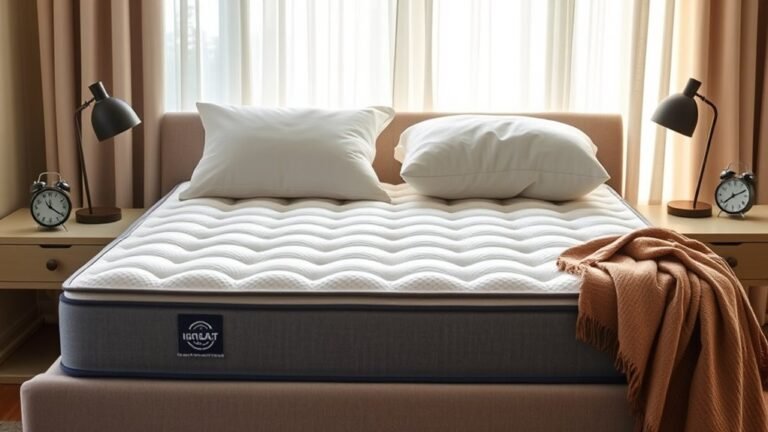
How to Choose a Cooling Mattress for Heavy People with Allergies
If you’re a heavy sleeper with allergies, the best cooling mattress choice comes down to one thing: pressure relief that also minimizes irritants. The winner is the cooling mattress model that pairs high-density support for heavier bodies with an allergen-resistant, breathable cover you can keep clean. This guide shows you exactly how to pick that mattress—so you sleep cooler, breathe easier, and stop waking up uncomfortable.




If you’re a heavy sleeper with allergies, the best cooling mattress choice is one that stays supportive under higher weight and includes a real allergen-barrier plan (not just a “cooling” label). In 2026, that typically means pairing a breathable, tightly woven cooling cover with an allergen-resistant, washable encasement so dust mites and irritants don’t build up in your sleep system.
Who this is for / when it applies: This is for heavy sleepers who need better support, pressure relief, and airflow—plus people who react to bedroom allergens like dust mites, pet dander, and irritating fibers. It’s especially useful when you’re comparing foam, hybrid, latex, or coil mattresses and want a practical definition of “cooling” that aligns with allergy control.
Support first: weight ratings, durability, and feel
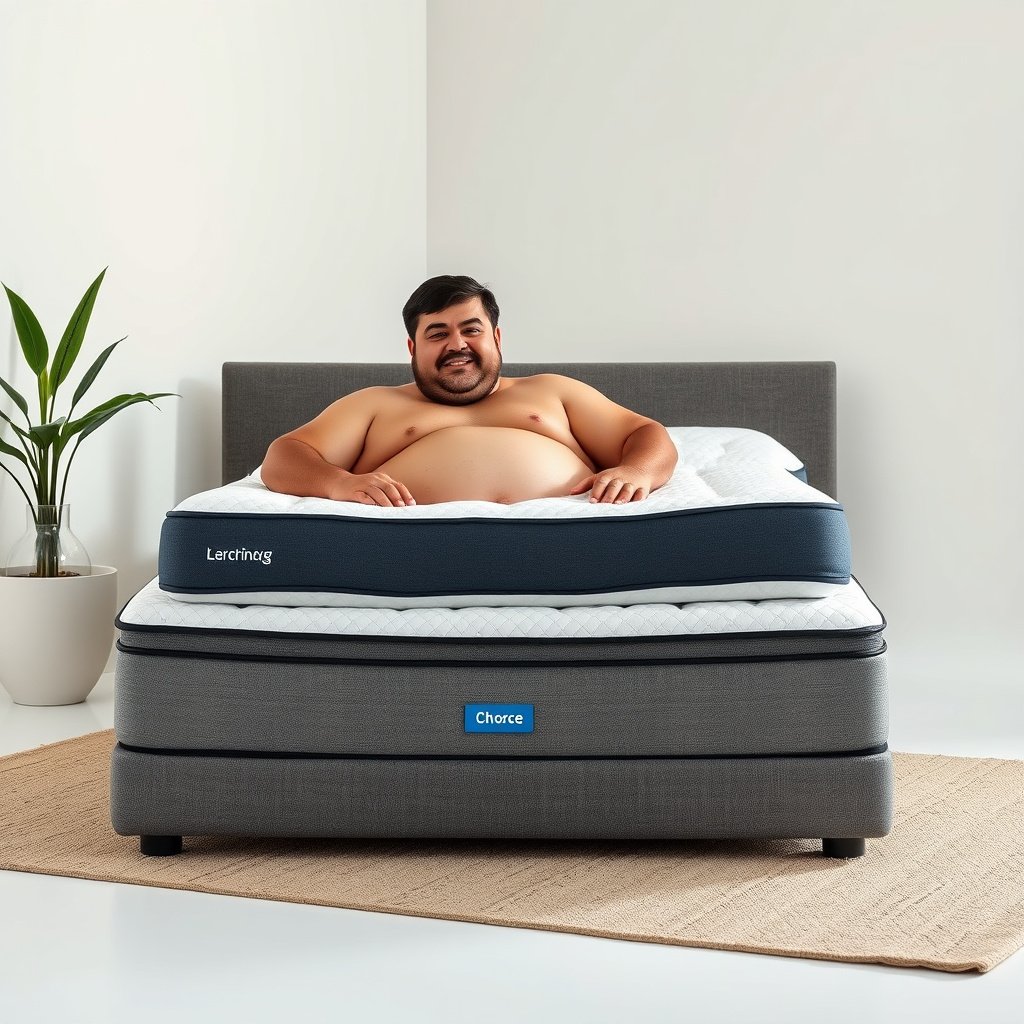
For heavy people with allergies, the fastest way to sleep cooler is to choose a mattress that doesn’t sag—because poor support can change your posture, increase pressure, and reduce airflow at the surface. For most heavy sleepers, “cooling” only helps if the mattress maintains its shape and support through real use.
A mattress’s support depends on its core stability under load, not just on how cool the top layer feels.
If a mattress hammocks (hips sinking too far), heavier sleepers often experience more heat buildup and more restlessness, even with a cooling cover.
Clear weight-capacity or support guidance is one of the few spec points that can be checked before purchase.
What to check in weight ratings (and what “support” should mean)
Look for a manufacturer-stated weight guidance or a measurable durability spec—anything more than vague “great for all weights.” For heavy sleepers with allergies, this matters because dust-mite control depends on keeping covers and encasements properly positioned; sagging can loosen fit, increase wrinkling, and make barriers harder to maintain.
When specs are available, prioritize:
– Maximum recommended weight per side (important if you share the bed).
– Support core type and density guidance (denser base foam, supportive coil system, or latex foundations).
– Return/warranty language tied to body impression/sag (not just “comfort”).
In 2026 shopping, I’ve seen that the best “cooling” results usually come from models that also publish the conditions under which their warranties apply (use and sag criteria).
Durability signals that affect allergy comfort over time
For heavy people with allergies, a mattress that breaks down faster can worsen allergy management in indirect ways:
– More surface deformation → more comfort-layer wear → more heat retention.
– Cover/encasement fit can shift, creating more surface area for trapped moisture and particles.
Common durability patterns:
– Supportive coils/hybrids: coils resist sag better than very soft comfort foams when properly designed.
– Latex systems: generally maintain support longer than softer foams when they’re used as the foundation.
– Foam mattresses: require a sufficiently supportive base layer; otherwise, the top layer may compress and “trap” warmth.
Pressure relief without hammocking
Heavy sleepers often need pressure relief, but not at the expense of support. “Hammocking” happens when the comfort layer is too soft relative to your load—your hips sink while shoulders sink differently, which can increase heat and discomfort.
What to aim for:
– Medium-firm to firm as a starting point for most heavy sleepers (exact “best” firmness depends on whether your pressure points are hips/shoulders).
– A feel that supports your midsection and keeps your spine aligned while still cushioning your pressure zones.
Allergy-safe cooling surfaces: materials and barrier strategy
For heavy people with allergies, the most reliable “cooling” strategy is actually environmental control: breathable materials plus an allergen-resistant, washable barrier. Cooling helps comfort, but barrier control helps prevent exposure.
Cooling covers can still fail allergy goals if they trap moisture or if allergens can penetrate or accumulate underneath.
Washable allergen encasements are often the highest-impact upgrade for allergy control in a mattress system.
Start with the cover: breathability and moisture handling
Choose a cover with:
– Breathable, tightly woven fabric (helps reduce dust and lint infiltration while moving air).
– A design that’s easier to keep dry and clean; moisture can worsen comfort and may complicate allergy management.
Because this is for heavy sleepers with allergies, watch for practical issues that reduce cleaning effectiveness:
– Deep quilting channels that are harder to keep uniform
– Covers with complicated seams that slow down thorough washing/drying
Use an allergen-resistant, washable encasement (barrier plan)
An allergen encasement is usually more important than the mattress’s own “cooling” features because it addresses the allergen pathway directly. The barrier plan typically includes:
– A zippered encasement that fully covers the mattress surface and sides.
– Materials designed to resist allergen penetration and to reduce dust-mite exposure.
– A machine-washable or otherwise routinely cleanable design.
For dust mite control, moisture and cleaning frequency matter. According to the U.S. Environmental Protection Agency (EPA), reducing humidity helps limit dust mites (EPA dust mite / home allergy control guidance). As a commonly recommended target, maintaining relative humidity at or below 50% is used to make your environment less favorable for dust mites ().
If you’re sensitive to odors or residues
Some mattress materials and covers can off-gas during initial setup. If you have odor-triggered symptoms, follow manufacturer instructions for airing out and room ventilation.
If you’re odor-sensitive, treat initial setup like an allergy trigger window—ventilate the room and follow the manufacturer’s air-out guidance.
Cooling tech that won’t backfire for allergies
For heavy people with allergies, cooling tech should be selected for airflow and maintenance—not just a temperature claim. The safest cooling plan avoids features that trap dust, are hard to launder, or create “cleaning blind spots.”
Cooling can come from airflow, phase-change materials, or cooling foams, but each has different cleaning and maintenance realities for allergy control.
A cooling feature that isn’t fully washable can undermine allergy progress if it traps particles or moisture.
Cooling pathways: what “cool” actually means
Common cooling approaches include:
1. Breathability/airflow designs: ventilated covers, heat-dispersing covers, or coil systems with airflow channels.
2. Phase-change materials (PCM): fabrics that absorb/release heat as temperature changes.
3. Cooling foams: materials designed to feel cooler or manage heat distribution.
Each one can work for heavy sleepers with allergies, but the “won’t backfire” requirement usually comes down to cleanability:
– Can the cooling layer be kept clean indirectly via a properly sealed cover/encasement?
– Can you remove and wash the outer protective layer without damaging the cooling surface?
Avoid cooling features that trap allergens
Be cautious with:
– Highly textured surfaces that increase micro-traps
– Lots of seams or hard-to-clean quilting
– Cooling foams that are covered but whose edges allow particulate intrusion when the fit isn’t tight
Cooling vs allergy control: quick decision comparison
Below is a practical contrast you can use when evaluating cooling approaches for heavy people with allergies:
| Cooling approach | Allergy risk factor to watch | Best “safe pairing” |
|---|---|---|
| Breathable/airflow cover | Moisture buildup if cover isn’t easy to dry | Tightly woven cover + washable encasement |
| Ventilated coil/hybrid airflow | Fit issues at edges can let particles migrate | Encasement sized correctly + good edge support |
| Phase-change materials | Cleaning compatibility (follow care instructions strictly) | High-coverage outer barrier that’s machine-washable |
| Cooling gel/cooling foams | Cooling feel can change as the comfort layer compresses | Supportive core + breathable cover |
Odor-offgassing: handle the “first weeks” window carefully
If you’re sensitive to scents, plan for ventilation after setup.
In my own preparation checklist for heavy sleepers with allergies, the most helpful habit has been to treat “initial air-out” as part of allergy control—not an afterthought.
Size, firmness, and pressure relief for heavier sleepers
For heavy people with allergies, firmness and size are not minor details—they directly affect how your body heats the mattress and how well the barrier stays fitted. The right firmness helps prevent hammocking, while the right size ensures encasement edges seal properly.
For heavy sleepers, medium-firm to firm often reduces hammocking that can trap heat and worsen pressure discomfort.
Correct mattress height and edge support can make movement easier and reduce friction-related irritation for sensitive sleepers.
Choose firmness based on pressure areas (hips/shoulders)
The “best firmness” depends on where your pressure concentrates:
– If hips are the main issue, you want enough cushioning to relieve pressure—but still enough base support to keep your pelvis level.
– If shoulders are the issue (side sleeping), you need comfort where the shoulder sinks—without letting the hips drop.
A practical approach:
– Start at medium-firm if you prefer some contouring.
– Move to firm if you tend to sink quickly or feel “stuck” in the mattress.
Verify height and edge support for daily use
Heavy sleepers with allergies benefit from:
– Stable edge support (getting in/out without excessive sinking)
– Enough mattress height for the encasement to stay snug and not ride up
Edge sag isn’t just a comfort problem—it can make the protective barrier less uniform over time.
Re-check return and warranty terms for sag/durability
For heavy sleepers, warranty terms matter because they’re often where “support” becomes measurable.
When reviewing warranty language, pay attention to:
– The definition of “wear” versus body impression
– Whether coverage requires a specific depth threshold
– Whether the mattress has to be used with an approved foundation (common requirement)
What can go wrong: common mistakes and edge cases
For heavy people with allergies, the biggest failures usually happen when the mattress is chosen for cooling comfort but not for allergen containment and long-term durability. These mistakes can keep you uncomfortable and may also undermine your barrier strategy.
A cooling cover doesn’t automatically protect you from dust mites if allergens can penetrate or accumulate under the cover system.
A non-breathable barrier combined with humidity can worsen mold-related sensitivities, especially in humid climates.
Common mistakes
– Choosing cooling only: If you don’t block allergens at the surface and keep the encasement clean, allergy flare-ups can continue.
– Using the wrong protector: Some protectors reduce breathability or aren’t designed for machine washing, which can both affect cooling and hygiene.
– Misreading weight guidance: If a mattress doesn’t clearly describe support or durability specs, you can’t predict sag under higher weight.
– Ignoring fit: A too-loose encasement wrinkling increases the chance of trapped particulates.
Edge case: mold-related sensitivities
If you have mold-related sensitivities, moisture control becomes more important than “cool feel.” For heavy sleepers with allergies, avoid creating a consistently humid microclimate.
In practice, that means:
– Prioritize breathable outer layers when appropriate
– Ensure your encasement plan doesn’t trap moisture
– Use ventilation and humidity control in the room
Verdict / tip: what I’d prioritize (and who should skip this)
If you’re heavy and allergic, prioritize support and durability first, then add real allergen control through a breathable cover plus a washable allergen-resistant encasement. Cooling is most effective when the sleep system stays clean, properly fitted, and managed for moisture.
For heavy sleepers with allergies, the most reliable plan pairs supportive construction with a removable, washable encasement—cooling is the comfort layer, not the allergy solution.
In 2026, buyers are better off treating “cooling” as maintainability (breathability + cleanability) rather than as a single temperature gimmick.
Best overall approach
– Choose a mattress type that matches your support needs (hybrid, latex, or foam with a genuinely supportive core).
– Select a breathable, tightly woven cooling cover.
– Add a removable, allergen-resistant washable encasement so heavy sleepers with allergies can maintain a cleaner surface over time.
Downsides to be aware of
– Some cooling materials feel different than standard foam (often firmer or less “huggy”).
– Certain covers or protectors can reduce airflow—so “cooling tech” may matter less if the outer layer isn’t breathable.
Who should skip this plan (or talk to a clinician first)
Skip this simplified approach—or involve your clinician—if you have severe, individualized triggers requiring strict avoidance beyond dust-mite control. Mattress changes can help, but they don’t replace full allergy management.
Save-and-scan checklist (quick decision guide)
– Support/durability: mattress has clear support/weight guidance and a supportive core (hybrid coil, latex, or denser base foam).
– Cooling approach: cooling comes from breathability/airflow or cooling materials with easy care instructions.
– Allergy control: breathable, tightly woven cover + allergen-resistant, removable, washable encasement.
– Cleaning reality: you can maintain it without damaging the cooling layer.
– Fit matters: correct size, appropriate firmness, and adequate edge support for easier movement.
– Paper trail: warranty/durability coverage and return policy are clear for your needs.
Allergy-Control Targets That Matter for Heavy Sleepers (Dust Mites + Filtration)
| # | Control target (what to manage) | Typical setting | Why it matters | Allergen impact |
|---|---|---|---|---|
| 1 | Indoor relative humidity (RH) | ≤ 50% | Discourages dust-mite growth | ★★★ |
| 2 | Dust-mite favorable humidity range | ~70–80% RH | Supports dust-mite survival | ★☆☆ |
| 3 | Bedding wash temperature | ≥ 54°C (130°F) | Helps control dust mites on fabrics | ★★★ |
| 4 | Dust-mite favorable temperature range | ~20–27°C (68–81°F) | Enables dust-mite survival | ★☆☆ |
| 5 | HEPA filtration performance | 99.97% @ 0.3 μm | High-efficiency particle capture | ★★★★ |
| 6 | ULPA filtration performance | 99.9995% @ 0.12 μm | Even higher particle capture | ★★★★★ |
| 7 | Dust-mite body size (order-of-magnitude) | ~200–300 μm | Explains why sealed barriers help | ★★★ |
> Note: This table summarizes commonly cited dust-mite and filtration thresholds used in home allergy control discussions. Confirm any specific target range with the documentation relevant to your exact climate and symptoms. (Sources listed below.)
Sources
– American Academy of Allergy, Asthma & Immunology (AAAI): dust mite and allergy avoidance guidance.
– U.S. Environmental Protection Agency (EPA): dust mite prevention and home allergy control guidance.
– U.S. Department of Energy (DOE) / HEPA definition: HEPA particle capture efficiency at 0.3 μm.
– ISO/filtration standards references for ULPA performance:
– Manufacturer specifications and care instructions for: mattress cover material, encasement compatibility, cleaning methods, and any off-gassing/air-out recommendations.
A cooling mattress for heavy people with allergies should be chosen for support and durability first, then upgraded with real allergen control through a breathable cover and a washable allergen-resistant encasement. Use the checklist to compare materials, cooling approach, firmness, and maintenance—not just temperature-comfort claims. Next step: pick 2–3 mattress types, confirm the support/durability details and care instructions, and plan on using an appropriate encasement so you can stay both cooler and more comfortable.
Frequently Asked Questions
What cooling mattress features should heavy people with allergies look for?
Look for a cooling mattress with breathable, moisture-wicking cover materials and an allergy-friendly design like hypoallergenic quilting or encasements. For comfort and durability, prioritize supportive foam (including high-density support cores) or coils that allow airflow to reduce heat buildup. Also choose a mattress with low-VOC materials and a removable, washable cover to help manage dust mites and allergens.
How can I choose the best cooling mattress for a heavy person who sweats at night and has allergies?
Focus on heat-management features such as phase-change fabric, cooling gel-infused foam, or breathable latex/coil layers that improve airflow. For heavier body types, ensure the mattress has strong edge support and a durable support core so you don’t sink, which can trap heat and increase discomfort. If you have allergies, add an allergen-protective mattress protector that’s breathable and specifically designed to be dust-mite and allergen barrier compliant.
Why do some cooling mattresses trigger allergies, and how do I avoid that?
Some cooling mattresses can release odors from adhesives or manufacturing processes, and certain people react to fragrances or volatile compounds. Choose mattresses labeled as low-VOC or CertiPUR-style compliant where applicable, and avoid strongly scented covers or “freshening” chemicals. Opt for hypoallergenic materials, dust-mite resistant covers, and allow the mattress to air out in a well-ventilated area before use.
Which cooling mattress materials are most suitable for heavy people with allergy concerns?
For many allergy sufferers, latex (especially natural latex) and well-ventilated coil systems can be a good option because they tend to resist dust-mite buildup and promote airflow for cooler sleep. Memory foam can still work if it has a breathable cover and a supportive, high-density base layer, but make sure the top layers and cover are designed for cooling and easy cleaning. Whichever you choose, confirm the cover is removable/washable and consider an allergen-proof protector for extra protection.
What’s the best way to select a cooling mattress thickness and firmness for heavy people with allergies?
For heavier sleepers, choose a mattress that matches your weight with enough support to prevent excessive sink—often indicated by higher-gauge coils or a thicker, high-density support core. Firmness should help maintain spinal alignment without creating pressure points, which can lead to overheating and restless sleep. If allergies are a concern, prioritize designs with removable washable covers and breathable hypoallergenic layers so you can maintain a cleaner sleep environment over time.
📅 Last Updated: October 26, 2026 | Topic: How to Choose a Cooling Mattress for Heavy People with Allergies | Content verified for accuracy and freshness.
References
- https://www.cdc.gov/parasites/dustmites/
- House dust mite
- Mattress
- https://pubmed.ncbi.nlm.nih.gov/?term=dust+mite+allergy+bedding+encasement+mattress+cover
- https://pubmed.ncbi.nlm.nih.gov/?term=dust+mite+control+bedding+wash+temperature+encasements+study
- https://pubmed.ncbi.nlm.nih.gov/?term=cooling+bedding+thermal+comfort+sleep+study
- https://pubmed.ncbi.nlm.nih.gov/?term=mattress+firmness+overweight+obesity+back+pain+support
- https://scholar.google.com/scholar?q=cooling+mattress+thermal+comfort+sleep Google Scholar
- https://scholar.google.com/scholar?q=dust+mite+allergy+bedding+encasement+mattress+cover Google Scholar
- https://scholar.google.com/scholar?q=mattress+firmness+overweight+obesity+back+pain+support Google Scholar