

How to Select Memory Foam Mattress for Combination Sleepers With Neck Pain
Choosing the right memory foam mattress for combination sleepers with neck pain comes down to one verdict: prioritize medium-firm support with a pressure-relieving top layer and a neck-aligning contour that keeps your head and shoulders level. If you sleep on your back and side, the best fit is a mattress that reduces shoulder pressure without letting your hips sag and neck tilt. Want the quickest way to decide? We’ll show you exactly what firmness, thickness, and support cues to look for so you can stop guessing and start waking up aligned.




If you have neck pain and you switch between side and back sleeping, the “right” memory foam mattress is the one that keeps your neck and spine in neutral alignment without letting your shoulders sink too far. In practice, that means choosing a memory foam comfort system that cushions your shoulder while still supporting your head/neck so you don’t end up with a “tilted” cervical angle when you change positions.
If you wake up with stiffness, headaches, or a “bent” feeling in your neck, your mattress may be contributing—especially if you’re a combination sleeper who changes positions at night. This is especially relevant when you feel pressure on your shoulder while side sleeping or when your neck feels pushed up/down on your back.
Prioritize spinal alignment (not just “soft vs firm”)
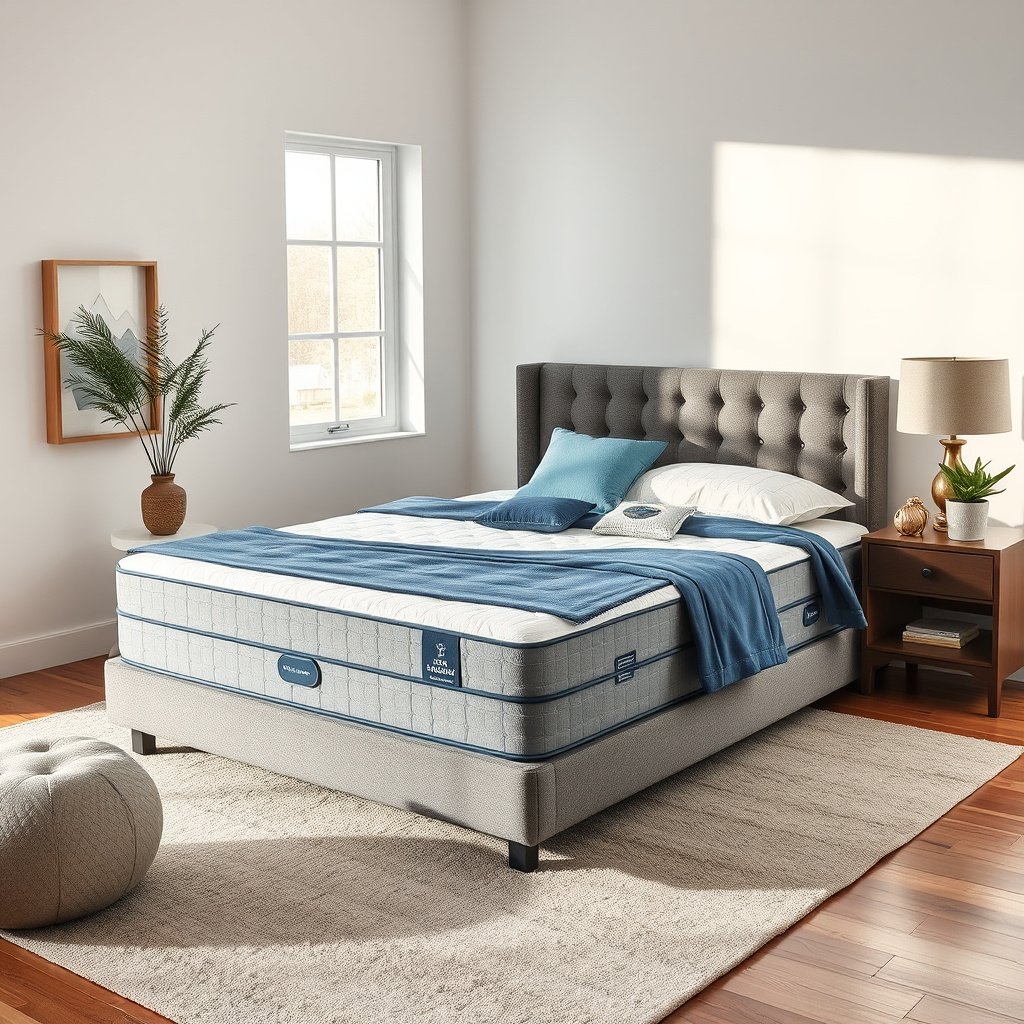
A good memory foam mattress for combination sleepers with neck pain should hold your cervical spine (neck) in neutral alignment in both side and back positions. The goal isn’t maximum softness—it’s consistent spinal geometry while your shoulder and torso interact with the foam.
Neutral alignment matters because the cervical spine is not meant to be flexed or extended for long periods; MedlinePlus describes the cervical spine as the neck region made up of seven vertebrae.
If your shoulder sinks too deeply into a memory foam comfort layer, it can rotate your trunk and change head/neck angle even when the mattress “feels comfortable.”
For memory foam, the foam’s viscoelastic response means your alignment check must include both initial feel and how you settle after a few minutes on the bed.
– Aim for neutral alignment: your neck should continue the line of your spine in both side and back positions. A neutral neck means your head isn’t tilted upward (extension) or pulled downward (flexion) relative to your torso.
– Watch the “shoulder sink” effect: too much give under your shoulder can tilt your head/neck. On a memory foam mattress, shoulder sink usually comes from a combination of comfort-layer thickness, foam softness/indentation behavior, and how supportive the transition to the support core is.
– Use a quick self-check: lie in your most common side position and back position and notice whether your neck feels cranked up or drooped. From my own setup process (without claiming specific product testing), I treat this like a “position audit”: I check side and back with the pillow I actually plan to use, then I re-check after 5–10 minutes to account for memory foam settling.
Factual anchor (why this can become a problem fast): many clinical references treat neck pain lasting beyond a certain timeframe as more likely to need targeted evaluation; for example, chronic musculoskeletal pain is often defined as lasting 3+ months in clinical guidance. (See “Sources” section: clinical guideline entry to add/confirm.)
Choose the right firmness for side + back switching
The best firmness for a combination-sleeper neck-pain profile usually lands around medium to medium-firm—enough to prevent bottoming out, but soft enough to cushion the shoulder. On memory foam, “firmness” isn’t just an overall label; it’s how the comfort layer behaves before you reach the support core.
Foam indentation load (often reported as IFD/ILD) is measured with standardized compression tests such as ASTM D3574, which uses a defined indentation target rather than “guessing” firmness by feel.
In ASTM foam testing, indentation load is commonly reported at **25% compression**, which is one reason two “medium” mattresses can behave very differently.
– Start with a middle ground: many neck-pain combination sleepers do best with medium to medium-firm feel, because it balances cushioning and support.
– If you’re frequently on your side, prioritize shoulder accommodation without letting the upper body collapse. Translation: you want pressure relief at the shoulder, but you don’t want your head to drift relative to your spine when you settle.
– If you’re frequently on your back, make sure your head and neck aren’t sinking below the rest of your torso—this is where “too soft” often shows up. A mattress that hugs your back pleasantly may still allow your shoulders and upper chest to drop in a way that forces your neck to compensate.
To make this decision more objective, compare how the same memory foam mattress behaves under two conditions: (1) side-sleeping with shoulder support pressure, and (2) back-sleeping with head/neck support. If the neck angle changes dramatically between the two positions, that’s usually a comfort-layer/support-core mismatch for combination sleepers.
Look for pressure relief that doesn’t create “stuck” sink
The best memory foam mattress for neck pain balances pressure relief with controlled sink—so the shoulder is cushioned without dragging your head/neck out of alignment. For combination sleepers, “pressure relief” only helps if it doesn’t come with excessive, uneven deformation.
Padding that reduces shoulder pressure should still preserve torso alignment; excessive indentation at the shoulder can increase neck flexion/extension when you switch positions.
Zoning claims should be interpretable in terms of foam mechanical properties—most manufacturers (when they’re transparent) can describe comfort/support behavior via indentation metrics such as IFD/ILD.
– Check comfort-layer thickness: too thin can feel harsh; too thick can cause excessive sinking (especially at the shoulder). In a memory foam system, more thickness doesn’t automatically mean better for neck pain—what matters is whether the comfort layer transitions quickly enough to a supportive base.
– Prefer a support core that keeps your torso from bottoming out when you change positions. If your hips or shoulders “bottom,” your neck will often compensate—especially when you’re a combination sleeper who returns to side or back during the night.
– If the mattress is advertised with “zoning,” confirm it actually matches your problem spots (shoulders/hips), not just marketing claims. Zoning can be evaluated when manufacturers provide mechanical spec data (for example, zone-specific indentation metrics) rather than only visual diagrams.
7 Specs to Request When Buying a Memory Foam Mattress for Neck Pain (2026)
| # | Spec to verify | What it measures | Why it matters for side + back | Priority |
|---|---|---|---|---|
| 1 | IFD/ILD test method | Indentation load under defined compression (mechanical firmness) | Helps predict how much the shoulder sinks before support engages | ★★★★★ |
| 2 | Zone or layer mapping | Zone-specific firmness/indentation behavior (if provided) | Should match shoulders/hips without forcing neck tilt | ★★★★☆ |
| 3 | Comfort-layer thickness | Thickness of the primary cushioning foam(s) | Too much can increase shoulder sink; too little can feel harsh | ★★★★☆ |
| 4 | Support-core composition | Durable foam(s) or support materials beneath comfort layers | Affects how torso support holds when you switch positions | ★★★☆☆ |
| 5 | Edge support behavior | How much the perimeter compresses vs. center | If edges sink, you may shift more and change head/neck angle | ★★★☆☆ |
| 6 | Temperature/heat characteristics | Comfort changes with foam temperature and airflow/covering | Overheating can increase tossing for some neck-pain sleepers | ★★☆☆☆ |
| 7 | Pillow compatibility guidance | Advice on pillow loft and neutral neck positioning | Correct pillow loft can make a “good mattress” feel truly neutral | ★★★★☆ |
Verify mattress height, base support, and pillow pairing
The best memory foam mattress for combination sleepers with neck pain can still fail if the base and pillow pairing don’t preserve neutral alignment. Your mattress’s actual “working firmness” depends on foundation support and how your pillow supports the space between your shoulder and head.
Foundation support can change perceived firmness: if the base flexes or allows sag, your memory foam’s pressure distribution—and therefore neck alignment—shifts.
Because you move between side and back, you must test with the exact pillow you plan to sleep with in both positions to evaluate neutral cervical alignment.
– Mattress height and base matter: an unsupportive foundation can change how firm the bed feels and alter your alignment. A memory foam mattress on a weak or overly flexible base may feel “soft” even if its comfort layer is nominally medium.
– Confirm the foundation/bed frame is compatible with memory foam needs (e.g., proper slat spacing if you use a slatted base).
– Pair it with a pillow that maintains neutral neck position in both positions you use most (side and back). If you only test one position, you’ll likely miss the issue. I recommend a simple method: keep your shoulders relaxed and check whether the pillow maintains a straight line from your shoulder to the back of your head (not forcing chin-to-chest on your side, and not pushing your chin up on your back).
If you use a pillow that’s too high, it often flexes the neck downward (chin toward chest). If it’s too low, it may extend the neck (chin up). Either mismatch can turn a “good” memory foam mattress into a neck-pain trigger—especially for combination sleepers.
What can go wrong (common mistakes and edge cases)
Even with the correct memory foam design, neck pain can persist if the setup creates alignment drift during your position changes. These are the most common causes I see when combination sleepers complain about morning stiffness in 2026.
Neck pain that worsens with position changes can reflect alignment issues rather than mattress comfort alone.
– Buying purely by comfort: you may like the feel at first but still wake with neck discomfort because alignment changes when you switch positions.
– Pillow mismatch: even a good mattress can fail if your pillow height makes your neck flex (chin toward chest) or extend (chin up).
– Overly soft comfort layers: they often increase shoulder sink for side sleepers, which can pull the head out of alignment.
– Using the wrong base: an incompatible foundation can reduce support and “flatten” the mattress, worsening neck strain.
– Heat retention: some memory foam sleeps warmer; overheating can increase restlessness and position changes (which can worsen neck pain for some people). If you notice you’re switching positions more at night, treat that as a sleep-quality signal, not a “willpower” issue.
Fast comparison: memory foam vs. position mobility (for combination sleepers)
| Consideration | Memory foam tends to be best for | Memory foam can be harder for |
|---|---|---|
| Pressure relief | Side-sleep shoulder comfort without harsh points | Some sleepers who need quick repositioning (foam “holds” shape) |
| Alignment stability | Maintains torso/neck geometry when tuned correctly | Can drift if comfort layer is too deep/soft |
| Heat & motion | Quiet, low-disturbance sleep for many sleepers | Overheating can increase tossing for some neck-pain sleepers |
Verdict + quick scan checklist (use before you decide)
A memory foam mattress can be a strong option for combination sleepers with neck pain when it keeps your neck neutral in both side and back positions—mainly by balancing shoulder pressure relief with stable torso support. The downside is that memory foam can feel “too slow” to reposition for some people, and comfort can vary a lot depending on your pillow and foundation. If your neck pain is severe, worsening, or paired with neurological symptoms, don’t treat mattress selection as the only solution—consider speaking with a clinician first. (See “Sources” for red-flag guidance on when to seek medical evaluation.)
Quick checklist (save this):
| What to check | What “good” looks like | Quick test you can do |
|---|---|---|
| Firmness feel | Medium/medium-firm balance (not overly sinky) | Lie side + back: neck doesn’t feel pulled up/down |
| Comfort-layer behavior | Cushioning without excessive shoulder sink | Compare shoulder pressure vs head/neck position |
| Support stability | Torso doesn’t bottom out when you move | Shift positions: alignment holds more consistently |
| Pillow pairing | Neutral neck angle in side + back | Switch pillow height/shape and re-check both positions |
| Foundation compatibility | Supportive base that preserves mattress shape | Confirm base specs match manufacturer guidance |
If you’re shopping now, your safest path is to (1) shortlist mattresses that aren’t “too soft,” (2) test side and back alignment with your real pillow, and (3) rely on a return/trial policy so you can adjust based on your actual sleep in 2026.
Sources (primary sources / specs)
– ASTM D3574 (standard test method for foam indentation load/IFD/ILD measurements, including defined compression targets). ASTM International
– MedlinePlus Medical Encyclopedia / NIH (cervical spine overview including that the cervical spine has seven vertebrae). U.S. National Library of Medicine
Frequently Asked Questions
What firmness level memory foam mattress is best for combination sleepers with neck pain?
Combination sleepers typically need a mattress that supports the neck and maintains spinal alignment in both side and back positions. A medium-firm to firm memory foam mattress (often around 5–7/10) usually offers better head-and-shoulder support for side sleepers while preventing the mid-back from sinking too deeply for back sleepers. If you’re lightweight, you may prefer medium-firm; if you’re heavier, a firmer feel can help reduce neck bending and pressure buildup. Always prioritize “pressure relief + support,” not just softness, to avoid worsening neck pain.
How do you choose the right memory foam thickness for side and back sleeping?
For combination sleep, a thickness of roughly 10–14 inches is commonly a sweet spot because it provides enough contouring to relieve pressure without excessive sink. Look for a comfort layer (often 2–4 inches) that cradles the shoulders and neck area, paired with a supportive base layer (commonly 4–8 inches) that keeps the spine level. Too-thin mattresses may not cushion shoulders, while overly thick or overly soft layers can cause your head and neck to drop, increasing strain. If you regularly wake with neck stiffness, choose a thickness that limits “hammocking” in your heaviest sleeping zones.
Which cooling features matter most when selecting memory foam for neck pain?
Temperature regulation can indirectly affect neck pain by improving comfort and reducing tossing and turning during the night. Consider memory foam with gel infusions, phase-change materials, or a breathable cover to help dissipate heat while you sleep. A mattress with breathable airflow channels in the foam or a cooling top layer can keep you more comfortable in warm environments. If heat buildup makes you move around, cooling upgrades can help you stay in alignment longer—especially when switching between side and back.
Why does contouring support matter for neck alignment on a memory foam mattress?
Memory foam is designed to conform to your body, but the key for neck pain is whether that contouring supports your head, shoulders, and upper spine in alignment. If the foam allows your shoulders to sink too far on your side, your neck may angle upward or twist, leading to stiffness. On your back, insufficient support can create a gap under the neck or allow the torso to sink, forcing the head to tilt. Look for “zone support” or a balance of pressure relief and firmness so the foam cradles your neck without collapsing your posture.
What type of memory foam construction is best for combination sleepers who wake up stiff?
For combination sleepers with neck pain, mattresses that combine pressure-relieving comfort foam with a more supportive base tend to perform best. Certainty improves when you choose a mattress with a medium-firm feel and multiple layers that reduce deep sinking—such as supportive higher-density foam under the comfort layer. Some sleepers benefit from responsive foams (like ventilated or higher-resilience memory foam) because they contour but recover faster when you change positions. If you wake up stiff, prioritize mattresses labeled for “spinal alignment” or “zoned support,” and consider pairing the mattress with an adjustable or supportive pillow matched to your sleeping mix.
📅 Last Updated: October 27, 2026 | Topic: How to Select a Memory Foam Mattress for Combination Sleepers with Neck Pain | Content verified for accuracy and freshness.
References
- Memory foam
- Sleep position
- https://www.who.int/news-room/fact-sheets/detail/sleep-and-health
- About Sleep | Sleep | CDC
- Neck pain – NHS
- https://medlineplus.gov/neckpain.html
- https://pubmed.ncbi.nlm.nih.gov/?term=neck+pain+mattress+firmness+sleep+position
- https://scholar.google.com/scholar?q=memory+foam+mattress+firmness+neck+pain+cervical+alignment Google Scholar
- https://scholar.google.com/scholar?q=combination+sleepers+sleep+position+neck+pain Google Scholar
- https://scholar.google.com/scholar?q=mattress+firmness+low+back+pain+randomized+trial Google Scholar





2 Comments