How to Tell If a Mattress Is Organic: What to Check
To confirm a mattress is genuinely organic, you must look past marketing language and verify its organic certifications and the exact materials used. In a few minutes of review, you can cross-check labels, fiber composition, and documentation so you know what you are buying. Get comfortable with the terms and requirements, and you will be able to shop with confidence and avoid misleading claims.



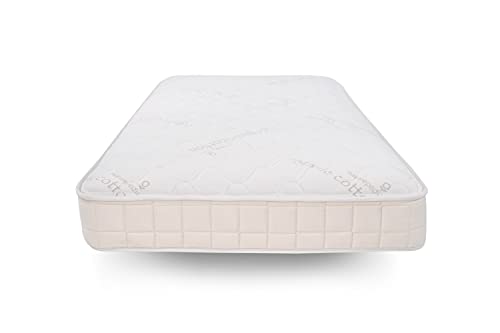
An organic mattress isn’t a vibe—it’s a verifiable claim. A mattress can only be called “organic” with confidence when the specific materials are certified organic under a recognized standard *and* the brand can back it up with documentation that clearly states the scope (which layers/components are covered).
When you shop in 2025–2026, you’ll see “organic,” “natural,” and “eco-friendly” used interchangeably online. The practical takeaway is simple: treat “organic” as a certification-and-scope question, not a marketing keyword.
Who this is for (and when it actually matters)
If you’re trying to buy an organic mattress (or avoid one that only *mentions* organic), your main job is to verify certification coverage layer-by-layer. This matters most when you’re reducing exposure to specific chemicals or irritants, because organic standards typically govern certified organic materials, not every part of a mattress’s manufacturing process.
This is also relevant for people with allergies or sensitivities: you can’t assume that one badge or logo covers foam, latex, adhesives, fire barriers, and every internal textile. Instead, we look for what standards apply to each component—especially the cover fabric, comfort layers (padding/foam), latex, and any other fillings—because organic content may apply to some of those materials and not others.
Start with certifications and label wording
If a brand’s “organic mattress” claim is real, it will be tied to a recognizable organic certification and a clearly stated scope. Start by finding the exact certification (and what it covers), then confirm which mattress layers/components are certified—not just the cover or a marketing line.
– Look for a real certification mark tied to a recognized organic standard (examples commonly include GOTS for organic textiles and GOLS for organic latex), not just “organic cotton” as a marketing phrase.
– Don’t stop at the logo—check the “scope” (what’s covered). Some brands certify only the cover fabric or certain fillings, not the full mattress.
– Be cautious with wording like “made with organic materials” or “contains organic”—it can be true while still meaning only a portion is certified organic.
– Use label wording as a clue, not proof. In the US, USDA labeling rules (NOP) define thresholds for “100% organic,” “organic,” and “made with organic,” and these definitions are anchored in regulation rather than brand marketing. For example:
– According to USDA National Organic Program (NOP) 7 CFR Part 205, Subpart D, “100% organic” requires all ingredients to be organic (rule text in effect since 2000).
– According to USDA NOP 7 CFR Part 205, Subpart D, “organic” generally requires at least 95% organic ingredients (rule in effect since 2000).
– According to USDA NOP 7 CFR Part 205, Subpart D, “made with organic” generally requires at least 70% organic ingredients (rule in effect since 2000).
If you read those rules and think, “so brands can truthfully say organic without covering everything,” you’re already applying the right framework. In practice, an “organic mattress” claim often maps to materials percentages and certified layers, not an automatically certified whole build.
Certifications That Commonly Appear in “Organic Mattress” Shopping (US/EU context)
| # | Certification / standard | Primary scope | What it supports in mattress claims | Direct match to US “organic” labeling rules? |
|---|---|---|---|---|
| 1 | USDA National Organic Program (NOP) | Organic production & handling for covered agricultural/processed products | US “100% organic / organic / made with organic” labeling framework | Yes |
| 2 | Global Organic Textile Standard (GOTS) | Organic textiles (certified organic fibers + processing requirements) | Organic textile claims (where the certified textile requirement is met) | No |
| 3 | Global Organic Latex Standard (GOLS) | Organic latex products (certified organic latex content + processing rules) | Organic latex claims for the latex component | No |
| 4 | OEKO-TEX Standard 100 | Chemical safety testing for textiles (harmful substance limits) | “Low chemical residue / tested for substances” claims (not organic certification) | No |
| 5 | CertiPUR-US | Performance and emissions criteria for flexible polyurethane foam | Foam emissions/content compliance claims (not organic certification) | No |
| 6 | Global Recycled Standard (GRS) | Recycled content and chain-of-custody requirements | Recycled-content claims (not organic certification) | No |
| 7 | Forest Stewardship Council (FSC) | Responsible forestry and chain-of-custody for wood materials | Sourcing claims for wood components (not organic certification) | No |
Verify the materials inside the mattress
If the mattress is truly organic, the certified materials will be identifiable by component and supported by certification details you can match to what’s inside the build. “Organic” often applies to the cover fabric and/or a latex or cotton layer—not necessarily every internal component.
– Identify the top cover/fabric, comfort layers (padding/foam), latex, and any other fillings. “Organic” is usually about the certified content of specific materials (often textiles or latex), not every component.
– Ask for the product’s certification details: either a certificate number, a certification body reference, or a documented statement of what portions are certified.
– If the mattress uses cotton, wool, or latex, confirm whether that specific material is certified under the relevant organic standard rather than assuming “organic” from the ingredient list.
In my experience reviewing product documentation for organic mattress claims, the biggest red flag isn’t that the brand is “wrong”—it’s that the brand is vague. If the documentation doesn’t explicitly say which layers are certified (for example, “cover fabric certified to GOTS; latex certified to GOLS”), you can’t reliably infer it from the website.
Also remember that a mattress is a layered system. Even if the cover and latex are certified organic, the comfort transition layers (extra padding, non-organic foams, binders, or blends) may not be. Organic mattresses should be evaluated as a set of certified components, not a single uniform label.
Check construction details and marketing claims
If a mattress uses “organic” language that’s not tied to a certification scope, it’s easy to misinterpret what’s actually organic. Your goal in 2025–2026 is to confirm whether marketing claims align with the certified layers described in documentation.
– Watch for “organic” used as a modifier for one layer (like the cotton cover) while other layers are not organic or not certified at all.
– Compare the brand’s claims to what you can verify on paperwork. If a brand can’t explain what is certified, what standard applies, and what portion is covered, treat the claim as uncertain.
– If you see environmental or “chemical-free” claims alongside “organic,” remember that organic standards and broader chemical/safety claims aren’t the same thing—so you may need separate verification.
Here’s a comparison that helps you quickly interpret what you’re looking at:
| Claim style you see | What it often means for an “organic mattress” | Pros / Cons |
|---|---|---|
| “Organic mattress” (no scope) | May be true for some components, but scope is unspecified. |
|
| “Certified organic cover” + separate latex claims | More likely to map to real certified materials (textiles/latex). |
|
| “Organic + chemical-free/non-toxic” | You may be mixing organic certification with general safety marketing. |
|
From a verification standpoint, the most reliable organic mattress claims are the ones that tell you (1) the standard name, (2) the certified material types, and (3) which layers are included—usually with a certificate reference or an explicit scope statement.
What can go wrong when assessing organic mattresses
If you don’t confirm certification scope, you can easily end up with a mattress that’s only partly organic. The most common mistakes are interpretive: you assume the entire build is certified just because the listing uses the word “organic.”
– Assuming “organic mattress” means the entire mattress is certified organic. Many products are “certified organic” for specific components only.
– Relying on third-party claims without certification scope. Some listings emphasize an organic material but omit which layers are actually certified.
– Missing the difference between an organic standard and general “green” marketing. “Natural,” “non-toxic,” and “eco-friendly” may sound close, but they’re not automatically organic.
– Forgetting that mattresses may include non-organic elements due to performance/safety requirements (for example, components used to meet flammability standards). Organic certification doesn’t necessarily remove every non-organic requirement.
A practical edge case: two mattresses can both advertise an “organic cotton cover,” but one may use certified organic cotton only for the outer fabric while the quilting layers include blends or non-certified padding. In other words, an organic mattress can still have meaningful non-organic content, even when the overall feel is similar.
Verdict: what to do next (downsides included)
If you want an organic mattress, buy from a brand that clearly states (1) which organic standard applies, (2) what layers are certified, and (3) provides certification details you can verify. The safest approach isn’t guessing from keywords—it’s matching the wording on labels and product pages to the actual certification scope.
The downside is real: mattresses marketed as “organic” may still include significant non-organic components, and certification can limit what materials are available—so you may pay more or have fewer options. Also, if your priority is strictly support/comfort rather than exposure reduction, verifying certifications can be time-consuming and may not change how the mattress feels.
Skip this verification-heavy approach if the brand won’t share documentation or can’t clearly explain certification scope. In that situation, the “organic mattress” claim may still be well-intentioned—but it won’t be reliably assessable.
Scan-ready checklist + FAQ + Sources
Quick checklist (save this)
| What to check | Why it matters | What to verify |
|---|---|---|
| Organic certification standard | “Organic” should map to a known standard | Look for a specific certification (e.g., GOTS/GOLS) tied to the product/components |
| Certification scope | “Organic” may cover only part of the mattress | Confirm whether the cover only, certain layers, or the full mattress is certified |
| Paperwork matches listing | Marketing claims can be incomplete | Ask for certificate details or a written statement of what’s certified |
| Layer-by-layer materials | Organic claims vary by material type | Identify cover, latex, padding/foam, and fillings; confirm certified status per material |
| Consistency across channels | Some claims change between product pages | Check the same wording on the official product page and any warranty/spec documents |
Frequently Asked Questions
What certifications should I look for to confirm a mattress is organic?
Look for recognized third-party certifications such as GOTS (Global Organic Textile Standard) for organic fabrics and GOLS (Global Organic Latex Standard) for organic latex. For the mattress as a whole, certifications like OEKO-TEX Standard 100 can help indicate harmful substance limits, though it’s not the same as “organic.” Always check whether the mattress lists “organic cotton” or “organic wool” and whether the labels specify the percentage and the certified materials.
How can I tell if a mattress is truly organic or just “made with organic materials”?
Start by reading the product label and documentation for exact wording—“organic” should be tied to certified materials, not marketing claims like “natural” or “eco-friendly.” If the mattress only says “contains organic cotton,” ask what portion is certified organic and whether that component is GOTS-verified. Be cautious of vague statements and third-party logos that don’t match widely recognized organic standards.
How do I check for synthetic chemicals or “greenwashing” when shopping for an organic mattress?
Review the transparency of the manufacturer: detailed material lists, certification numbers, and testing reports are strong signs. You can also look for safety documentation that references emissions and chemical restrictions, such as OEKO-TEX or comparable standards for textiles and finishes. If a seller can’t provide certification details or specific material sourcing, it’s a red flag that the mattress may not meet your “organic” expectations.
Which materials in an organic mattress should I verify—latex, cotton, wool, or foam?
Verify each major layer separately because “organic mattress” claims may apply to only one component. For example, organic cotton should be GOTS-certified, organic wool may be certified through organic textile standards, and organic latex should have GOLS certification. If the mattress includes foam, confirm whether it’s conventional foam, plant-based alternatives, or independently tested for chemical exposure, since foam is often where “organic” claims get unclear.
Why do some organic mattresses cost more, and what does that tell me about authenticity?
Organic materials often cost more because they’re grown and processed under strict organic agriculture and manufacturing rules, typically requiring certification and traceable sourcing. Higher prices can reflect verified organic fibers, organic latex production standards, and more rigorous quality control rather than just branding. To confirm authenticity, match the price and promises with specific certifications and itemized materials instead of relying on “organic” wording alone.
📅 Last Updated: November 02, 2026 | Topic: How to Tell If a Mattress Is Organic | Content verified for accuracy and freshness.
References
- Labeling Organic Products | Agricultural Marketing Service
- Global Standards – GOTS – How the system works │ Global Standards
- https://www.ftc.gov/legal-library/browse/rules/guide-use-environmental-marketing-claims
- National Organic Program
- https://en.wikipedia.org/wiki/Global_Organic_Textile_Standard
- https://en.wikipedia.org/wiki/Organic_Content_Standard
- https://scholar.google.com/scholar?q=how+to+tell+if+a+mattress+is+organic Google Scholar
- https://scholar.google.com/scholar?q=mattress+organic+certification+GOTS+USDA+organic+OCS Google Scholar
- https://scholar.google.com/scholar?q=organic+latex+GOLS+mattress+certification Google Scholar