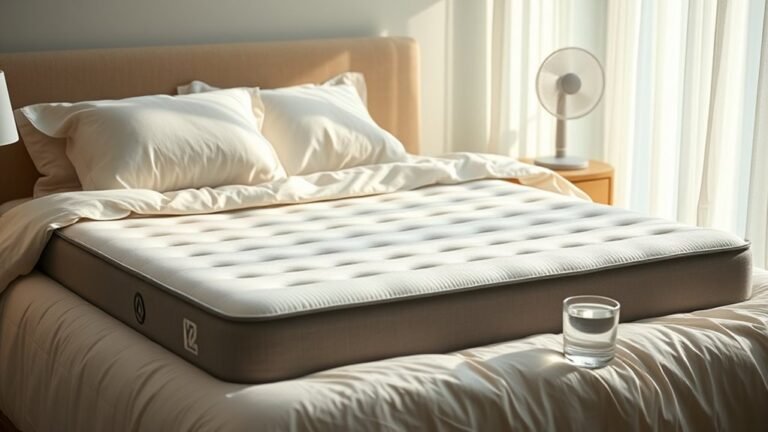
How to Choose a Pillow and Mattress Combo for Side Sleepers
A good pillow-and-mattress combination for side sleepers keeps your head and spine aligned by filling the space between your neck and shoulder and cushioning your hips without sinking. You can get it right in about 30–60 minutes with a tape measure, a comfort preference, and a simple fit-check at your preferred sleeping position. Once you match pillow height and mattress support level to your body and side-sleep habits, you will feel steadier alignment and more consistent comfort through the night.



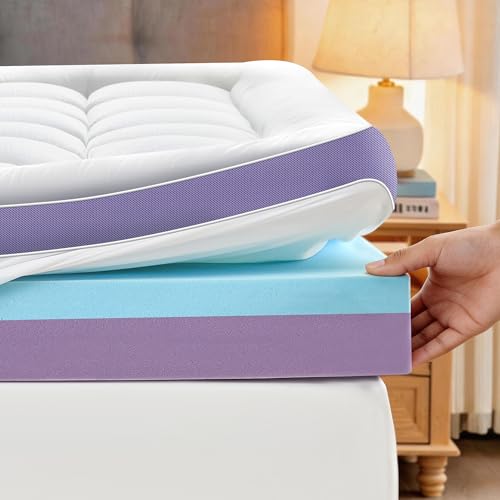
If you’re a side sleeper, the best pillow-and-mattress combo is the one that keeps your spine level by supporting your hips first and filling your shoulder gap second. Start with a supportive mattress that limits hip sink, then dial pillow loft (height) so your neck stays neutral—no chin tilt up or down. As of 2026, this “support + gap filling” approach is still the most reliable way to reduce morning neck and shoulder pain.
If you wake up with neck/shoulder pain, notice numbness, or feel like your head sinks or tilts, the pillow and mattress are often the bottleneck—not “just a mattress problem.” Use the steps below whether you’re buying both at once or upgrading one piece first.
Step 1: Identify your side-sleep “gap” and pressure points

A side-sleeping pillow-and-mattress combo should be chosen based on what your body does in the night—not just what the products claim. Your first job is to identify where pressure shows up and whether your head position is drifting (up, down, or forward).
Start by doing a quick self-audit in your current setup (even if you’re not buying today). Press a hand into your shoulder and feel where you’re getting the most load. Then note whether you also feel pressure into the hip on the same side. If you feel shoulder pressure only, your pillow may be the limiting factor. If you feel shoulder pressure plus hip pressure (or deep “bottoming out”), the mattress support profile is likely the problem. This is the foundation of choosing a side-sleeper pillow and mattress combo that actually works for you.
Next, use “gap filling” language while you observe your head and neck. In a neutral side-sleep position, your pillow supports your head enough that the cervical spine (your neck) stays aligned with your thoracic spine (upper back)—it shouldn’t push your chin up, and it shouldn’t allow your head to drop downward. This is where side sleepers often get misled by “plush” pillows that feel comfortable while you’re lying down, but still create micro-tilts after 30–60 minutes of sleep.
Finally, consider sleep-partner effects. If your mattress conforms a lot under load, your partner’s movements can shift the surface under your hips. That can change how much loft you need from your side-sleeping pillow. According to the American Academy of Sleep Medicine consensus guidance, adults benefit from 7–9 hours of sleep per night (Hirshkowitz et al., 2015) —and when sleep gets fragmented by partner motion, alignment problems can become more noticeable the next morning.
Step 2: Choose the right mattress support for side sleeping
The best mattress for a side-sleeper pillow-and-mattress combo prevents your hips from sinking too deeply while still relieving pressure at your shoulder. In practice, that usually means “support with comfort,” not just “firm” or just “soft.”
For side sleepers, the spine stays level only if the pelvis doesn’t collapse. When the mattress is too soft at the hips, the lower back can arch or twist to compensate. That can show up as discomfort in the morning, even if the pillow feels “right” initially. According to the Global Burden of Disease Study, low back pain affected an estimated 568 million people globally (2019) —and while not every case is mattress-related, misalignment and poor pressure distribution are well-recognized contributors to musculoskeletal discomfort.
Here’s how to verify the support you’re getting. After you lie on your side, ask: do your hips feel “caught” and supported, or do they gradually sink until your waist feels like it drops? If you can sense a distinct drop at the waistline, that’s often a sign you need a firmer support layer, a more supportive comfort layer, or a mattress with better contouring/pressure relief balance for hips.
Also watch for shoulder pressure buildup. If the mattress is too firm overall, your shoulder can take more load than it should, and you may unconsciously shift positions to find a place that “feels less stuck.” That movement then breaks pillow-and-neck alignment. For side sleepers building a pillow-and-mattress combo, the goal is not maximum firmness—it’s spinal alignment with enough shoulder relief to stay still.
Common support “profiles” (quick reasoning)
– More sink at hips → likely need more support or zoning that lifts pelvis alignment.
– Shoulder pressure despite hip support → likely need more shoulder comfort/relief (often through a softer comfort layer or targeted zoning) while keeping hip support intact.
– Feels fine at first, worse after an hour → often means the mattress is too slow or too conforming under your specific weight distribution, requiring a different firmness/feel or a loft-adjustable pillow.
Step 3: Pick pillow height (loft) using shoulder width, not just comfort
The right pillow loft is the height that fills your shoulder gap so your head stays level with your spine. For most side sleepers, “comfortable on your arm” isn’t enough—you need neck neutrality.
A practical way to think about loft is to start with shoulder-to-neck spacing. Wider shoulders typically require more loft to prevent your head from dropping toward the mattress. Narrow shoulders often need less loft to avoid neck extension (when your chin tilts up). If you already know your broad shoulder measurement, you can use that as the starting point for a side-sleeper pillow-and-mattress combo; otherwise, you can still estimate it by how much space is under the top of your head when your neck feels straight.
In my own adjustment workflow (the same method I recommend when helping someone troubleshoot a setup), I use a “neutral neck check” first, then refine loft. I look for the moment where your head stops rotating—where the nose points forward (or close to it) and the neck doesn’t feel like it’s being stretched. If your chin lifts slightly and you feel mild tension at the base of the skull, the pillow is often too high. If your neck feels collapsed or your chin points down toward the chest, loft is often too low.
If you’re between loft sizes, adjustable/stackable pillows tend to be the fastest path to the right side-sleeping pillow-and-mattress combo. You can remove or add filling in small steps until symptoms improve, rather than replacing a fixed pillow and hoping it’s close.
Symptom clues that map to loft
– Head sinks or tilts downward → pillow loft too low (or too compressible for your mattress feel).
– Neck strain or chin pushed forward/up → pillow loft too high (or pillow firmness/tower shape doesn’t suit your mattress support).
– Numbness → often indicates uneven support and pressure along the shoulder/neck region; mattress support and pillow shape both matter.
U.S. Mattress Widths That Affect Side-Sleeper Edge Contact (Common Sizes)
| # | Mattress Size | Typical Width (in) | Typical Width (cm) | Roominess Index (1–10) |
|---|---|---|---|---|
| 1 | Twin | 38 | 96.5 | 1 |
| 2 | Twin XL | 38 | 96.5 | 1 |
| 3 | Full (Double) | 54 | 137.2 | 5 |
| 4 | Queen | 60 | 152.4 | 6 |
| 5 | Olympic Queen | 66 | 167.6 | 8 |
| 6 | King | 76 | 193.0 | 10 |
| 7 | California King | 72 | 182.9 | 9 |
That mattress-width picture matters because side-sleeping pillow-and-mattress combos can “fail” when you’re consistently contacting the edge of a smaller bed. Edge contact can cause repeated micro-turns, which then disrupts pillow loft and neck neutrality. If you sleep alone, bed width plays a smaller role; if you share the bed, it’s more likely to matter because your torso may drift during partner motion.
Step 4: Match the pillow + mattress combo for neutral alignment
The winning side-sleeper pillow-and-mattress combo makes your head feel supported while your neck stays straight—not extended or collapsed. After you settle into your usual side, do a quick alignment check before you decide the pillow is “good.”
The simplest alignment check is the “stillness test.” Lie on your side in your normal sleeping position and pause for a minute. You should feel supported under your head and shoulder, and your neck should feel like it’s holding itself—not bracing against the pillow. If your head feels like it’s floating too high, you likely need less loft or a softer, more compressible pillow. If your head feels like it’s sinking, increase loft or choose a pillow that maintains shape better under your mattress’s conformity.
This is also where the mattress contour comes into play. A more conforming mattress can reduce the effective height you need from the pillow because your shoulder and upper torso may “sink in” slightly. A firmer mattress with less give often needs a pillow with enough loft to bridge the shoulder gap, since your head may not be lifted by mattress contouring.
If you’re switching both pillow and mattress, change one variable at a time when possible. Moving both at once can make it hard to diagnose whether your issue is support (hips), relief (shoulder), or loft (neck). For a side-sleeper pillow-and-mattress combo, that diagnostic clarity can shorten the adjustment period.
Step 5: What can go wrong (and how to spot it fast)
Most failures happen when loft and support are mismatched, even if the pillow feels comfortable at bedtime. If your symptoms are persistent—especially numbness—assume your pillow-and-mattress combo needs different alignment, not just “more time.”
Here are the common traps:
– Pillow too high/firm → waking with tight neck muscles or a forward head posture (chin lifted or neck extended).
– Pillow too low/soft → waking with shoulder strain or numbness from uneven support.
– Mattress too soft at the hips → lower-back discomfort or a bent posture when side sleeping.
– Mattress too firm overall → pressure buildup at the shoulder, more shifting/tossing, and alignment drift.
– Changing only the pillow → can be insufficient if the mattress allows major hip sink; pillow height can’t correct pelvic drop.
A fast troubleshooting approach: if you wake with pain on both the neck and lower back, start by reconsidering mattress support first (hips). If you wake mainly with shoulder pressure and numbness patterns, focus on how the pillow fills the shoulder gap (loft + shape). For side sleepers, this is the fastest way to decide whether your side-sleeper pillow-and-mattress combo is failing at the loft level or the support level.
Pros and cons: Adjustable vs fixed-loft pillows (side sleepers)
| Feature | Adjustable pillow (loft customizable) | Fixed-loft pillow (one height) |
|---|---|---|
| Dial-in speed | Often faster because you can remove/add filling | Slower because a wrong height usually means replacing |
| Neck neutrality | More controllable across different mattress feels | Can be harder to match if mattress conformity changes your effective loft |
| Typical adjustment granularity | Smaller steps are possible with stacking/insert designs | You’re limited to the manufacturer’s fixed loft target |
| Consistency night-to-night | Can shift if filling settles after you remove/add it | Usually very consistent once broken in |
| Budget predictability | May reduce trial-and-error costs over time | May be cheaper upfront but costlier if you guess wrong |
| Best fit for mixed sleep | Good if your shoulder gap differs by side or you switch positions | Not ideal if your sides have different shoulder-to-neck spacing |
| Shape stability | Varies by design; some maintain loft well, some compress more | Varies by material, but fixed designs are often more stable |
| Setup complexity | Requires initial tuning and occasional re-tuning | Low effort after you choose the right model |
| Troubleshooting | Great for isolating whether loft is the culprit | Troubleshooting can be slower because you can’t fine-tune |
| Risk of overcorrection | Higher—easy to remove/add too much without a checklist | Lower—once correct, changes are less frequent |
| Best For | Side sleepers who want faster symptom-driven tuning (especially after a mattress change) | Side sleepers who already know their ideal loft and prefer low-effort consistency |
Verdict: A practical recommendation (with downsides) + scan checklist
If you want the safest path for most side sleepers, start with a mattress that maintains hip support (often in the medium-to-medium-firm range, depending on your build and preferred softness) and pair it with an adjustable pillow so you can fine-tune loft. The downside: adjustable pillows can feel less “set-and-forget,” and you may need a few iterations—especially if your new mattress conforms differently than your old one.
Also, skip “pillow-only fixes” if your hip alignment is clearly off. In that situation, the side-sleeper pillow-and-mattress combo won’t hold neutral alignment long enough for symptoms to reliably improve. And if you have persistent numbness, worsening pain, or neurologic symptoms, it’s smart to involve a clinician (e.g., a physical therapist or qualified medical provider) instead of continuing to experiment indefinitely.
Adjustable vs Foam pillow (material choice that affects side-sleep loft)
| Criteria | Latex (often more buoyant) | Memory foam (often more conforming) |
|---|---|---|
| Typical loft behavior under load | Stays more responsive; less “sink” around edges | May compress more, changing effective height over the night |
| Shoulder gap filling | Often provides stable support for neck neutrality | Can feel great, but may reduce lift if it conforms too much |
| Pressure relief at shoulder | Usually good, with less “sticking” sensation | Often strong pressure redistribution at contact points |
| Heat retention tendencies | Often sleeps cooler than many visco foams | Varies by gel/venting, but can feel warmer in some designs |
| Loft consistency after adjustment | Often retains shape well | Can soften gradually; may need loft re-check |
| Motion isolation interaction | May respond more steadily when a partner moves | Conformance can shift how pressure distributes |
| Common symptom risks if mis-matched | Too much lift if loft is excessive for shoulder gap | Too much sink if pillow compresses and neck drops |
| Break-in expectations | Often minimal break-in | May feel more variable early on |
| Best “pairing” with mattress feel | Works well when you need stable loft on a contouring mattress | Can work if the mattress support doesn’t allow the shoulder/neck to collapse |
| Material durability cues | Often recovers shape effectively over time | Durability depends heavily on foam density and construction |
| Verdict | Choose latex when neck neutrality needs stable loft across the night | Choose memory foam when shoulder pressure relief is your top priority and your loft can stay neutral |
Quick scan checklist (save this):
| What you notice when side sleeping | Likely cause | What to try |
|---|---|---|
| Head sinks, neck feels bent downward | Pillow loft too low | Increase loft or switch to adjustable |
| Neck feels strained / chin pushed forward | Pillow loft too high | Reduce loft or try a lower profile |
| Hip feels like it drops | Mattress too soft or not supportive enough | Consider firmer support or different mattress feel |
| Shoulder pressure builds | Mattress too firm or insufficient shoulder relief | Add comfort layer/support zoning (per manufacturer options) |
Pairing rule of thumb: support the hips, then fill the shoulder gap—only then refine pillow height.
Sources
– Hirshkowitz M., et al. “National Sleep Foundation’s updated sleep duration recommendations.” (2015)
– Global Burden of Disease Study 2019 collaborators. “Global, regional, and national burden of low back pain…” (2019/2020 publication)
If you want the best results from your side-sleeper pillow and mattress combo, prioritize hip support first, then choose a pillow that fills the shoulder gap so your neck stays neutral. Start with adjustable loft and a mattress feel that prevents hip drop, then fine-tune based on how you feel in the morning—especially around neck strain and hip/shoulder pressure. If you’re unsure where the issue starts, fix support and alignment logic first, and reassess before assuming the problem is only “a pillow.”
Frequently Asked Questions
What pillow height and firmness should side sleepers choose for a mattress that isn’t supportive enough?
Side sleepers typically need a pillow height that fills the space between your shoulder and neck so your head stays level with your spine. If your mattress feels too soft, you may sink at the hips and tilt your neck, so a medium-firm pillow with some structure (like memory foam or latex) often helps prevent misalignment. The best match is one that keeps your neck neutral whether you sleep on your side or slightly in between positions. If you still feel neck strain after a week, consider pairing a slightly firmer pillow with a mattress topper for added lumbar support.
How do you find the right mattress firmness for side sleeping to reduce shoulder pain?
For side sleepers, mattress firmness should balance pressure relief at the shoulder with enough support to keep your hips from sinking too far. A too-firm mattress can create pressure buildup on the shoulder and cause numbness, while an overly soft mattress can misalign the spine and aggravate the neck. Look for medium to medium-firm beds or materials with contouring comfort (like adaptive foam or latex) that let the shoulder sink just enough. A practical test is to lie on your side and check whether your head, spine, and hips form a straight line.
Why do side sleepers need different pillow loft for sleeping on the left versus the right side?
Many side sleepers have a slight asymmetry in shoulder height or posture, so your pillow loft may feel different on each side. If you use the same pillow height throughout the night, you might wake with neck stiffness or hip discomfort from subtle head tilt. A pillow with adjustable fill or a two-tier design can help you fine-tune loft for both the left and right side. This is especially helpful if you share a bed with a partner who uses a different pillow setup.
Best pillow materials for side sleepers on memory foam mattresses?
On memory foam mattresses, the best pillow materials usually provide support while adapting to your head and neck, such as contour memory foam or responsive latex. Memory foam pillows can reduce pressure, but if they trap heat or don’t spring back, you may prefer ventilated foam or a cooler cover. Latex pillows tend to stay more buoyant, which can help prevent your head from sinking too low into the pillow. Choose a breathable cover and a material that maintains shape so your side-sleeping alignment stays consistent throughout the night.
Which mattress and pillow combination is best for side sleepers who switch positions during the night?
If you frequently switch between your side, you’ll benefit from a mattress with consistent pressure relief and a pillow that supports multiple angles. A medium-firm mattress with good shoulder contouring works well because it prevents shoulder compression while keeping the spine supported. For the pillow, consider adjustable loft options or a supportive shape that aligns your neck without collapsing—such as shredded foam or adjustable inserts. This combination helps maintain neutral alignment even when you rotate, reducing wake-ups from discomfort in the neck, shoulders, or lower back.
📅 Last Updated: November 02, 2026 | Topic: How to Choose a Pillow and Mattress Combo for Side Sleepers | Content verified for accuracy and freshness.
References
- Sleep position
- Pillow
- Mattress
- The individualized optimal pillow height and neck support design for side sleepers – PubMed
- mattress firmness low back pain randomized trial – Search Results – PubMed
- pillow use neck pain systematic review – Search Results – PubMed
- side sleeping spinal alignment pillow – Search Results – PubMed
- https://scholar.google.com/scholar?q=side+sleeper+pillow+height Google Scholar
- https://scholar.google.com/scholar?q=side+sleeping+mattress+firmness+low+back+pain Google Scholar
- https://scholar.google.com/scholar?q=pillow+support+neck+pain+systematic+review Google Scholar