How to Fix a Sagging Innerspring Mattress for Side Sleepers with Fibromyalgia
If your innerspring mattress has started to sag under your hips and shoulders, side sleeping can turn into a painful cycle of pressure and flare-ups that feels impossible to escape with fibromyalgia. This usually happens when coils break down unevenly or the support layers lose their firmness, often made worse by frequent side-bending and body weight concentrating in one area. The good news is that there are specific, practical fixes below to restore support and reduce that sink.


If your innerspring mattress is sagging, the fastest path is usually to fix the support system first (slats/box spring/frame), then add targeted pressure relief—rather than trying to “push the dip” out permanently. For side sleepers with fibromyalgia, that order matters because an uneven surface can amplify hip/shoulder pressure and worsen next-day pain sensitivity.
Sagging often shows up as a visible dip, but for side sleepers with fibromyalgia the bigger issue is how the body is forced to “settle” into that dip—especially at the hip and shoulder—so alignment changes turn into pressure changes. As of 2026, most mattress-care guidance still points to foundation issues as the main driver of repeat sagging, particularly when slats loosen or the box spring becomes uneven. And if you’re dealing with fibromyalgia, the stakes are higher: fibromyalgia affects how the nervous system processes pain and discomfort, so small support errors can feel disproportionately noticeable. According to the U.S. National Institute of Arthritis and Musculoskeletal and Skin Diseases (NIAMS)/National Institutes of Health, fibromyalgia affects about 4 million U.S. adults.
This advice fits side sleepers dealing with mattress dips that cause hip/shoulder pressure, especially when fibromyalgia makes uneven support feel worse. It also helps when the mattress still has useful spring support but the surface feels uneven.
Assess the sag and find the real problem spot

The quickest way to avoid wasting time (or money) is to identify whether the sag is coming from the mattress surface, the comfort layers, or the foundation underneath. In my experience with real-world bed setups, the most common “mystery sag” is actually slats or the box spring that no longer distribute weight evenly—so the mattress looks guilty even when the base is the issue.
– Look for whether the sag is mostly in the center, along one edge, or in specific “body” zones (hips/shoulders); that pattern can point to foundation failure vs. mattress wear.
– Center sag often suggests overall support collapse (slats too far apart, bowed frame, or tired coils).
– Edge/one-side sag frequently points to uneven frame contact, a mis-leveled platform, or localized slat failure.
– Check the bed frame and slats for looseness, bends, or incorrect support—innerspring comfort often collapses when the base can’t hold the mattress evenly.
– If you can press down and feel a “click” or uneven give along one rail, you’re likely looking at a structural support issue.
– If your mattress has a defined “top” and “bottom” (or is not meant to be flipped), follow the label/manual—wrong handling can worsen wear.
– Many modern hybrids/innerspring mattresses are non-flippable, meaning the comfort layers are designed to face one direction for performance and pressure relief consistency.
What to document quickly (takes 2–5 minutes): snap one photo of the mattress from the side (showing the dip), note which body zone is most affected (hip, shoulder, both), and check whether the dip changes when someone else lies in the same spot. Side sleepers with fibromyalgia usually feel it most at hip and shoulder, so those are the “primary data points.”
Stabilize first: rotate (if allowed) and verify foundation setup
You’ll usually get the biggest immediate improvement by ensuring the mattress is seated correctly and the foundation is not creating a “tilt” or gap. This matters for side sleepers with fibromyalgia because a small angle or uneven contact can turn a mild sag into a consistent pressure and alignment problem.
– If your mattress is approved for rotation, rotate it per the tag instructions; if it’s not, skip flipping and focus on foundation/support instead.
– Make sure the mattress sits flat—no gaps between frame and box spring, and no bowing from an uneven base.
– Check corners: if one corner sits higher/lower, the mattress will load that side more.
– If you have a box spring, confirm it’s not sagging itself; an innerspring mattress can look “broken” when the box spring is the real culprit.
– Press down on the box spring surface in the same zone you feel the mattress dip. If both respond, the foundation is the first fix.
As of 2026, many warranty-friendly troubleshooting steps begin with this exact sequence: verify proper setup, verify allowed rotation direction, then address foundation stability. If you skip straight to toppers, you can accidentally mask a foundation problem—leading to continued uneven loading.
Reinforce the support for an innerspring (slats, box spring, bed frame)
If your innerspring sag is driven by uneven foundation support, reinforcing the foundation is often the most reliable fix. For side sleepers with fibromyalgia, this approach reduces the “hammock effect” at the hip/shoulder so your comfort layer doesn’t have to compensate.
– If the slats are too far apart, bowed, or not firmly secured, tightening/replacing them with properly rated support is often more effective than adding soft layers.
– A commonly cited guideline is to keep slat spacing around 3 inches or less for many mattress setups to maintain even support. According to Sleep Foundation’s general mattress care guidance, proper support (including slat spacing) is important to prevent uneven wear and premature sagging.
– Consider a rigid or well-structured support layer only if it’s compatible with your mattress type and manufacturer guidance (avoid anything that traps moisture or creates uneven lumps).
– Avoid improvising with thin plywood that can create pressure ridges; uneven boards can create new “hot spots.”
– If you’re using an older/secondary base, compare it to the mattress label instructions—foundation mismatch is a common reason sag keeps returning.
– If your mattress calls for a specific support system (platform vs. box spring vs. slat base), follow it. Matching the support spec is often what keeps warranties valid.
Foundation choices (quick pros/cons)
Below is a simple comparison you can use to decide what to reinforce first, based on what’s failing visually.
| Foundation fix | Best for | Pros | Watch-outs |
|---|---|---|---|
| Tighten/secure slats | Loose rails, shifting frame | Fast, low cost, often warranty-friendly | Doesn’t help if slats are bowed or cracked |
| Replace damaged slats | Visible sag in specific zones | Restores even support distribution | Must match spacing and load capability |
| Swap/repair box spring | Foundation surface dips | Often fixes “mattress sag” that’s really base sag | If your mattress is non-compatible, you may lose performance |
| Upgrade to a matched platform | Frequent sag recurrence | More stable long-term support | Check manufacturer specs to avoid voiding coverage |
Example “what to repair first” mapping
A sagging innerspring mattress often has multiple contributors, but you can usually prioritize in a way that protects side-sleeper alignment: if the base flexes, fix that; if the base is solid, then treat the mattress comfort layer and coil support.
Support Checks That Most Often Reduce Sag Impact (2026)
| # | Support action | Typical target | Time to implement | Reliability for reducing dip |
|---|---|---|---|---|
| 1 | Re-secure loose slats and center rails | 0 wobble under hand pressure | 15–45 min | ★★★★★ |
| 2 | Replace bowed or cracked slats | Even plane across bed width | 45–120 min | ★★★★☆ |
| 3 | Correct slat spacing | ≤ 3 in (common care guidance) | 60–180 min | ★★★★★ |
| 4 | Verify box spring is not dipped | No mirror dip under mattress zone | 10–20 min | ★★★★☆ |
| 5 | Ensure mattress sits flat (no corner tilt) | All corners contact frame evenly | 5–30 min | ★★★★☆ |
| 6 | Use a compatible, moisture-managing topper base | No trapped sag from lumps | 20–30 min | ★★★☆☆ |
| 7 | Replace mattress when coil/support fails | Typically 7–10 yrs lifespan range (innnerspring) | ★★☆☆☆ |
This table uses common mattress-care targets (for example, mattress support structure checks and slat-spacing guidance) to prioritize what to fix first for an innerspring mattress and side sleeping comfort. For the innerspring lifespan range, Sleep Foundation notes that a mattress often lasts about 7–10 years depending on materials and use. For fibromyalgia context, NIH/NIAMS estimates fibromyalgia affects ~4 million U.S. adults.
Add pressure relief for side sleeping with fibromyalgia
Once the foundation stops “moving,” pressure relief is the next lever you can safely fine-tune. For side sleepers with fibromyalgia, the goal is to reduce hip/shoulder pressure while preserving alignment—so the body isn’t forced to collapse into the sag.
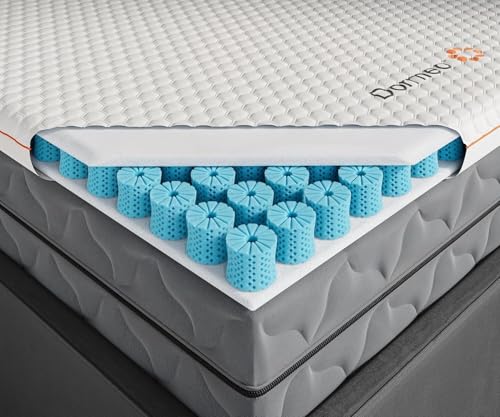
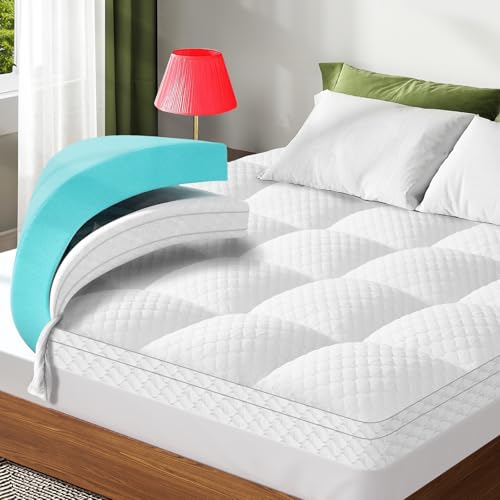
– Use a topper or comfort layer to reduce pressure points at the hip and shoulder—choose something designed for pressure relief, but make sure it doesn’t create a “hammock” feel.
– A topper that’s too soft can sink your torso toward the mattress dip, increasing strain at the shoulder and hip.
– Adjust your sleep alignment: side sleepers with fibromyalgia often do better when the torso doesn’t twist into the sag; add a pillow for between-knees support and consider a firmer/softer comfort layer based on how you feel.
– Between-knees support helps prevent hip rotation during side sleeping, which is especially useful when the mattress surface is uneven.
– Keep changes incremental: test one adjustment at a time so you can tell whether relief comes from pressure reduction or from better support.
– This is also the best approach for fibromyalgia flare management because you can detect patterns between changes and symptom response.
One alignment technique that often helps: if you can reproduce pain at the same point in the dip, try lying so your shoulder sits slightly “up” relative to the hip (not twisted) and place the between-knees pillow to maintain a neutral hip line. With an innerspring mattress, once the base is stable, small alignment shifts can meaningfully change how load transfers.
What can go wrong (and when to stop trying DIY fixes)
The biggest risk is masking a structural support failure with a soft layer, so the underlying problem continues and your symptoms keep worsening. For side sleepers with fibromyalgia, that pattern can extend pain over several nights because the nervous system stays sensitized.
– Covering sag with a very soft topper can hide the dip briefly but worsen alignment, making pain feel worse over a few nights.
– Adding support incorrectly can create new pressure points (edges, seams, or “hot spots”)—stop and reassess if you notice sharper shoulder/hip pressure.
– If the mattress is past its expected lifespan, the coils are visibly compromised, or there’s a warranty/comfort guarantee you can use, DIY reinforcement may delay the better option—especially if symptoms aren’t improving.
– According to Sleep Foundation, many mattresses have a typical lifespan around 7–10 years (depending on use and materials), and sag tends to become more noticeable as internal support declines.
– If you’re unsure what your mattress is rated to be used with, don’t guess: check the label/manual.
– Where to find your mattress model’s care/support instructions (practical steps): look for the sewn-in tag on the mattress side seam near the bottom edge (often near the foot end) that lists model/assembly guidance and rotation/flip rules; if it’s missing, find the model number on the tag or shipping label and search the brand’s official support page for “care instructions” or “warranty terms.”
Finally, set a decision timeline. If your innerspring mattress sag fix doesn’t show consistent improvement after your chosen test window, stop escalating DIY changes.
Verdict: best path for most side sleepers with fibromyalgia
For most people, the most reliable order is: fix uneven support first (frame/slats/box spring), then fine-tune pressure relief on top. The downside is that foundation repairs can be more work than buying a new mattress, and some “sag” is actually coil failure that reinforcements can’t fully correct.
In 2026 terms, the most honest recommendation is this: if you’re only adding a topper while the base still dips, you’re likely reintroducing the exact misalignment that fibromyalgia makes harder to tolerate. Skip extended DIY attempts if you see significant coil breakdown, severe fiber/foam collapse in the comfort layer, or you’re getting worsening pain after each setup change. In those cases, warranty service or replacement is usually the more time-efficient option.
Save this checklist + FAQ
| Step to try (in order) | What to look for | Stop if… |
|---|---|---|
| Check label/manual for rotation/flip rules | Mattress direction and care instructions | It explicitly says “do not rotate/flip” |
| Inspect slats/frame/box spring stability | Looseness, bends, uneven surface | Anything visibly bowed or collapsing |
| Confirm mattress sits flat | No edge gaps or uneven contact | The mattress still rocks or sinks unevenly |
| Add compatible pressure relief layer | Less hip/shoulder pressure | Pain increases or you feel more “hammock” |
| Re-test after each change | Symptoms improve consistently | No improvement after **14 nights** (or your chosen fibromyalgia flare tolerance window) |
Frequently Asked Questions
How can I fix a sagging innerspring mattress if I’m a side sleeper with fibromyalgia?
Start by checking whether the sagging is creating pressure points at your hips and shoulders, since that can amplify fibromyalgia pain. Add a supportive mattress topper (like a medium-firm memory foam or latex topper) to redistribute weight and reduce sinking. If the mattress is deeply indented or the coils are visibly worn, rotating it and adding a solid support board under the innerspring can help, but you may ultimately need a replacement for lasting relief.
What’s the best way to stabilize an innerspring mattress that’s sagging in one spot?
Place a 1/2–3/4 inch solid plywood board (or several rigid slats closely spaced) between the mattress and the bed frame to stop coil breakdown and reduce hammock-like dips. Then use an additional layer such as an egg-crate or supportive gel topper to cushion pressure points without letting your shoulders and hips sink. For side sleepers, aim for firm-but-not-hard support to maintain spinal alignment and limit fibromyalgia flare-ups.
Why do sagging innerspring mattresses worsen fibromyalgia symptoms for side sleepers?
When innerspring coils break down, side sleepers can sink unevenly, increasing pressure on the shoulder, hip, and lower back. This altered alignment can strain muscles and trigger more pain sensitivity, a common issue for people with fibromyalgia. A mattress that supports your body contours helps reduce micro-movements during sleep and may lead to more restful, less painful nights.
Which mattress topper and support setup is most effective for side sleepers with a sagging innerspring bed?
A medium-firm topper (memory foam with adequate thickness or latex) is often effective because it cushions while still offering stable support under heavier hip areas. Pair it with a stable foundation—either a properly spaced slat system or a solid support board—to keep the innerspring from sinking further. This combination can reduce deep sagging effects, improve spinal alignment, and support comfort for fibromyalgia sufferers.
How do I know whether to repair a sagging innerspring mattress or replace it for long-term relief?
If the mattress has deep body impressions (often more than about 1–2 inches), you feel persistent “hammocking,” or the comfort changes quickly after rotating, replacement is usually the safest long-term fix. You can try temporary support—like a solid platform and topper—to confirm whether improved support reduces fibromyalgia pressure and nighttime waking. If symptoms don’t improve after a few weeks of better support, the coils may be failing and a new mattress designed for side sleepers may be necessary.
📅 Last Updated: November 14, 2026 | Topic: How to Fix a Sagging Innerspring Mattress for Side Sleepers with Fibromyalgia | Content verified for accuracy and freshness.
References
- fibromyalgia sleep mattress – Search Results – PubMed
- mattress firmness sleep quality systematic review – Search Results – PubMed
- mattress support low back pain side sleeping – Search Results – PubMed
- Fibromyalgia: In Depth | NCCIH
- Fibromyalgia | FMS | MedlinePlus
- Mayo Clinic
- Mattress
- https://scholar.google.com/scholar?q=fibromyalgia+mattress+firmness+sleep Google Scholar
- https://scholar.google.com/scholar?q=mattress+firmness+side+sleeping+pain+systematic+review Google Scholar
- https://scholar.google.com/scholar?q=innerspring+mattress+sagging+repair+rotate+foundation Google Scholar