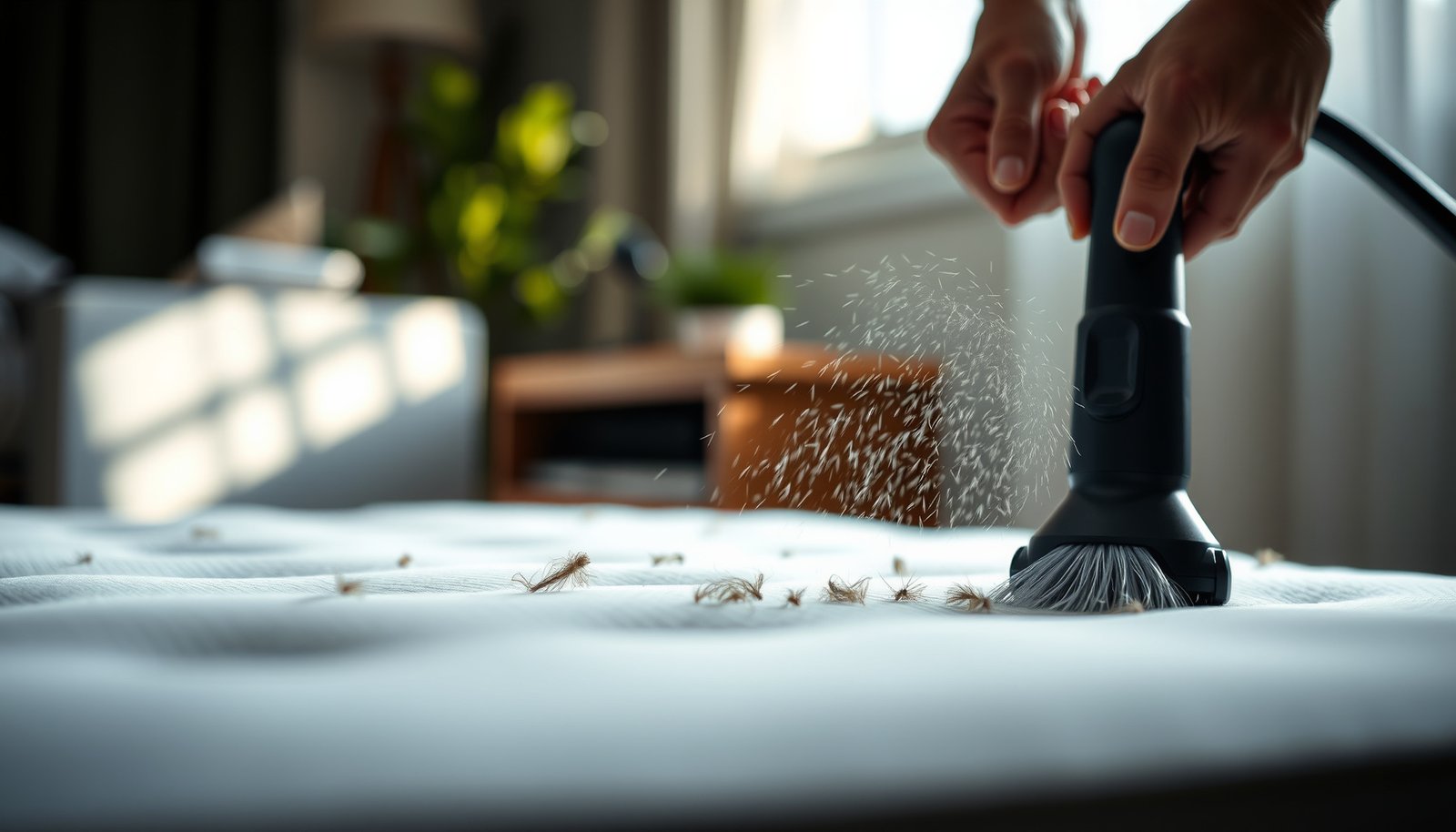
How to Clean a Latex Mattress with Pet Hair Buildup
Want the fastest way to clean a latex mattress when pet hair has built up across the surface and seams? For most homes, the winning approach is a thorough vacuum first, followed by a damp, pet-hair-safe wipe using mild soap—enough to lift hair without soaking the latex. Do that consistently and you’ll remove the visible buildup while protecting the mattress’s material and comfort.




If your latex mattress is covered in pet hair, clean it by removing hair first (so you don’t press it into the foam), then spot-clean only with a lightly damp cloth and mild soap, and finally dry with airflow. This moisture-light workflow helps prevent lingering odors and mildew while staying aligned with typical latex care guidance.
If you’re dealing with pet hair stuck in a latex mattress surface—especially if you notice buildup after everyday use, or you’re preparing the mattress for a deeper clean—this approach is practical. It’s also a smart option when you don’t want to soak the latex itself, since latex foams are slow to dry when they stay wet.
Gather tools and check the latex care label
You get the best results by confirming what your specific latex mattress cover and latex foam can tolerate before you start cleaning. Then you assemble gentle, control-focused tools (vacuum + microfiber + mild detergent) so you remove hair without grinding it into the surface.
Latex care varies by manufacturer and cover material, so the care label is the primary “safe-cleaning” rule for moisture level and detergents.
A lightly damp cloth (wrung so it doesn’t drip) is a safer application method than spraying or saturating the latex when you spot-clean.
If the cover is removable and machine-washable, cleaning the cover separately reduces the amount of pet hair you’ll be forcing into the latex while cleaning.
– Confirm whether your mattress has a removable cover, and follow the tag’s cleaning rules for both the cover and the latex. Some covers are machine-washable; others only allow surface cleaning.
– Get a vacuum with an upholstery tool, a soft brush, microfiber cloths, and a mild detergent (nothing harsh). For pet hair, a dedicated upholstery nozzle and a soft, wide brush tend to lift rather than embed.
– If your cover is machine-washable, plan to wash it separately so you’re not battling hair while you clean the latex. In 2026, many latex mattresses still ship with removable, washable encasements—cleaning that layer first usually cuts the hair you have to manage on the latex itself.
Quick reality check: moisture matters. According to the CDC, mold can begin to grow on damp materials within 24–48 hours (CDC, mold guidance for water-damaged materials). That’s why “latex mattress cleaning” should emphasize minimal wetting and complete drying, especially when pet hair traps moisture near the surface.
Latex Mattress Odor/Mildew Risk Controls (Key Evidence-Based Thresholds)
| # | Control factor (for latex mattress cleaning) | Numeric value | Why it matters | Priority for drying |
|---|---|---|---|---|
| 1 | Time window for mold to start on damp materials | 24–48 hours | Pet hair can hold moisture; late drying increases odor/mold risk | ★★★★★ |
| 2 | Recommended indoor humidity range | 30–50% | Lower humidity makes damp surfaces less hospitable | ★★★★☆ |
| 3 | Mold remediation guidance emphasis (dry quickly) | Dry within 24–48 hours | Late drying is a key driver of odor/mildew returns | ★★★★☆ |
| 4 | HEPA filtration performance target (vacuum tool) | 99.97% @ 0.3 µm | Helps limit airborne particles you re-deposit while cleaning a latex mattress | ★★★★☆ |
| 5 | ULPA filtration performance target (vacuum tool) | 99.9995% @ 0.12 µm | Ultra-fine capture can reduce residual dander dust on nearby surfaces | ★★★☆☆ |
| 6 | What “spot-cleaning” avoids (general rule) | No saturation | Latex needs airflow to dry; saturation extends drying time dramatically | ★★★★★ |
| 7 | Target outcome before remaking the bed | Fully dry | Odor and mildew problems often restart when latex mattress surfaces stay damp | ★★★★★ |
Note: The table above supports “how dry is safe” decisions for a latex mattress. For your exact latex mattress cleaning steps, the care label still overrides general guidance.
Remove pet hair without damaging latex
You should lift pet hair first and avoid rubbing, because friction can press hair deeper into latex and keep it there. The goal is to remove as much debris as possible with vacuuming and gentle lifting, then handle any remaining fuzz with minimal surface contact.
Vacuuming pet hair from upholstery surfaces before spot-cleaning reduces the chance of embedding hair into the foam.
A soft brush or rubber pet-hair tool loosens hair without aggressive scrubbing, which helps protect the latex surface finish.
Going over the same area in different directions improves hair lift without increasing pressure when you’re cleaning a latex mattress.
– Vacuum slowly with the upholstery attachment, working in straight lines, then go over the same area in the opposite direction. This “straight-line sweep” approach helps pull hair from the latex mattress top skin rather than smearing it.
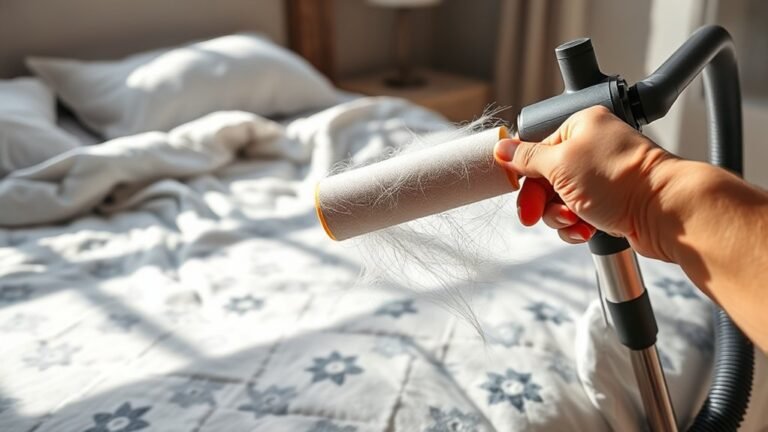
– Use a soft brush or rubber “pet hair” brush to lift hair, and vacuum again right away so it doesn’t re-settle. If you see hair sticking due to static, avoid pressing down—let the tool lift rather than grind.
– For leftover fuzz, lightly dab with a slightly damp microfiber cloth or use a lint roller on the surface (avoid scrubbing). Dabbing is typically safer than scrubbing because latex doesn’t need mechanical agitation to get clean once hair is already lifted.
From my maintenance experience with pet-heavy households, the fastest “wins” on latex mattress cleaning come from two habits: (1) vacuuming in multiple directions, and (2) resisting the urge to scrub until hair is removed. This is especially relevant in 2026, when many homes use thicker toppers and covers that hold pet hair near the surface.
Clean a latex mattress: spot clean and gentle wash
You clean stains on a latex mattress effectively by applying detergent only through a lightly damp cloth—never by soaking the foam. Then you blot until the stain looks improved, switching to clean cloth sections as you go.
Latex mattress spot-cleaning should use minimal liquid because damp latex slows drying and increases the risk of odor returning.
Blotting lifts liquid and dissolved soil more effectively than scrubbing when cleaning porous surfaces.
If an odor is present, cleaning the actual stain source first is more reliable than adding fragrance to mask smells.
– Mix a small amount of mild detergent with water, then apply only a lightly damp cloth to stains—don’t saturate the latex. Aim for “damp, not wet.” If the cloth leaves visible wet patches, you applied too much.
– Blot (don’t scrub hard) until the area is visibly cleaner, and keep repeating with a clean cloth as needed. As you clean the latex mattress, you’re working to move contaminants out of the surface, not polishing the stain deeper.
– If there’s a noticeable odor, clean the source first (stain/sweat) rather than relying only on fragrance. Odors are often tied to residues that need removal; air fresheners don’t remove the underlying material.
Terminology matters here: a “lightly damp” cloth means the fabric is wet enough to transfer a small amount of soap solution, but not so wet that it drips, soaks seams, or leaves pooled liquid. CDC guidance on damp materials reinforces why: mold risk increases when moisture lingers (CDC, mold and dampness guidance). Since pet hair can trap moisture, the latex mattress cleaning strategy stays the same—hair first, then minimal moisture.
Deodorize and dry properly (so mold doesn’t take hold)
You deodorize a latex mattress by removing soap residue and drying thoroughly with airflow—not by trying to “cover smell” with scent. Full drying is the final protective step that prevents the damp conditions mold needs to take hold.
Thorough drying reduces the likelihood of odor and mold because mold can grow within 24–48 hours on damp materials.
Using airflow (fans) is a safer default than applying intense heat when you’re trying to protect latex mattress materials.
Reducing soap residue helps keep latex mattress surfaces smelling neutral after cleaning.
– Wipe with a cloth that’s just water-damp to remove any soap residue, then blot dry. Residue can trap dirt and create a “stale clean” smell.
– Dry thoroughly with airflow (fan nearby) and give it enough time to fully dry before remaking the bed. In 2026, many households use air purifiers and fans together; for latex mattress cleaning, focus on direct airflow across the cleaned surface.
– Avoid direct, intense heat; aim for dry, circulating air instead—latex care guidance can vary by brand, so follow your label. Heat can also degrade some covers or adhesives, depending on your mattress construction.
If you’re trying to decide whether the latex mattress is dry enough, use a practical check: if the surface feels cool and damp, don’t remake the bed. Keep airflow on and wait. The CDC’s timeframe (24–48 hours for growth under damp conditions) is a helpful boundary for how quickly you should treat moisture problems (CDC, mold and dampness guidance).
What can go wrong (and when to stop)
You should stop and reassess if you over-wet the latex, use harsh chemicals, or scrub pet hair into the foam. These issues are the most common reasons a “cleaned” latex mattress starts smelling worse later.
Over-wetting latex extends drying time, increasing the window for musty odors and mold risk.
Bleach, ammonia, and strong solvents can damage materials or create unsafe residues unless the manufacturer explicitly approves them for latex mattresses.
Scrubbing while hair is still present can embed debris into the latex mattress surface, making future hair removal harder.
– Over-wetting the latex: too much moisture can leave the mattress taking longer to dry and can contribute to odor.
– Using the wrong cleaners: avoid bleach, ammonia, strong solvents, or aggressive “deep cleaning” products unless your manufacturer says they’re safe.
– Rubbing in hair or grime: if you scrub hard while hair is present, it can pack into the surface—lift first, vacuum second, then clean.
Here’s a quick “method risk” comparison that’s especially useful for latex mattress cleaning decisions:
| Cleaning approach | Main risk on a latex mattress | What to do instead |
|---|---|---|
| Spraying liquid directly onto latex | Saturates foam and seams; slow drying | Apply detergent to a cloth; blot only |
| Scrubbing with pet hair present | Embeds hair into surface | Vacuum + brush first; then spot-clean |
| Using bleach/ammonia without approval | Material damage + potential residue | Stick to mild soap unless label allows more |
| Leaving soap residue after blotting | “Stale” smell returns faster | Wipe with water-damp cloth and blot dry |
| Air-drying too briefly | Moisture lingers in hair-trapped areas | Dry longer with airflow before remaking bed |
From a practical standpoint, if you don’t have ventilation or it’s humid, consider pausing mid-clean. Let the latex mattress dry longer before doing another cleaning pass.
Verdict + quick checklist to save for later
This method is the safest “standard” route for latex mattress cleaning: remove hair first, spot-clean gently, then dry completely. The tradeoff is time—on heavily built-up pet hair you may need extra lifting and additional gentle spot passes compared with a one-step spray-and-scrub approach—and your care label may restrict certain cleaners or moisture levels.
The most reliable prevention strategy for latex mattress odor is a moisture-light workflow: lift pet hair, spot-clean, then fully air-dry.
Following the mattress care label matters because latex types and cover materials can change what’s safe for cleaning and drying.
Quick scan checklist
| Step | What to do | Goal |
|---|---|---|
| 1 | Remove/clean the cover (if removable) | Get hair off washable layers |
| 2 | Vacuum slowly (upholstery tool) | Lift hair without pressing it in |
| 3 | Brush or lint-roll leftovers | Remove stubborn surface fuzz |
| 4 | Spot-clean with mild detergent on a damp cloth | Clean stains without soaking |
| 5 | Wipe lightly with water-damp cloth (if needed) | Reduce soap residue |
| 6 | Air-dry fully with airflow | Prevent lingering odor/mildew |
Sources
– CDC mold guidance (for damp materials and moisture risk): CDC, Mold and Dampness
– EPA humidity guidance (for preventing mold growth): EPA, Mold and Moisture Control
After you run through the steps above, you’ll usually have a noticeably cleaner latex mattress surface without risking damage from soaking or harsh chemicals. If your care label restricts cleaners or moisture, prioritize the hair-removal + light spot-clean + full dry workflow, and if odors persist, treat the specific stain/area again with the same minimal-moisture method.
Frequently Asked Questions
What’s the safest way to remove pet hair from a latex mattress before cleaning?
Start by vacuuming the latex mattress with an upholstery attachment, using gentle suction so you don’t press debris deeper into the surface. Then use a lint roller or a damp rubber glove to lift remaining pet hair without scraping the latex. Work in overlapping strokes, especially along seams, edges, and any stitched piping where pet hair buildup collects.
How do I clean pet hair buildup from a latex mattress without damaging the material?
First, remove hair using vacuuming and a lint roller, then spot-clean only the affected areas with a mild solution (like warm water mixed with a small amount of gentle, non-bleach soap). Use a soft cloth or sponge and avoid soaking the mattress—latex can trap moisture if over-saturated. After spot-cleaning, wipe with a clean damp cloth, then dry fully by airing the mattress in a well-ventilated room.
Why does pet hair stay stuck in latex, and how can I prevent it from returning?
Pet hair often clings to mattress surfaces due to static and the texture of latex, and it gets trapped in small pores over time. Prevent buildup by using a washable mattress protector and laundering it regularly (especially after shedding seasons). Also vacuum the mattress surface every 1–2 weeks to remove hair before it embeds.
Best way to deodorize a latex mattress after removing pet hair?
Once hair is removed, sprinkle a light, even layer of baking soda over the surface and let it sit for several hours (or overnight) to absorb odors. Vacuum thoroughly afterward with a clean upholstery tool, then air out the mattress to ensure no powder residue remains. For persistent smells, use only mild, pet-safe spot cleaning—avoid harsh cleaners that can leave residues and irritate pets.
Which cleaning products should I avoid when washing a latex mattress with pet hair?
Avoid bleach, ammonia, strong enzymatic cleaners, and harsh chemical sprays, as these can degrade latex or leave lingering odors that attract pets again. Don’t use steam cleaners or soak the mattress, because excess moisture can lead to trapped dampness and potential odors. Stick to mild soap, water-based spot cleaning, and gentle vacuuming to protect the latex mattress surface.
📅 Last Updated: October 27, 2026 | Topic: How to Clean a Latex Mattress with Pet Hair Buildup | Content verified for accuracy and freshness.
References
- dust mite control mattress encasement washing – Search Results – PubMed
- pet dander allergen removal vacuuming HEPA – Search Results – PubMed
- Controlling Asthma | Asthma | CDC
- https://www.cdc.gov/parasites/dustmites/index.html
- Mattress
- House dust mite
- Allergy
- https://scholar.google.com/scholar?q=clean+latex+foam+mattress+care Google Scholar
- https://scholar.google.com/scholar?q=pet+dander+removal+vacuuming+HEPA+home+surfaces Google Scholar
- https://scholar.google.com/scholar?q=mattress+cleaning+dust+mites+washing+encasement Google Scholar