How to Protect a Latex Mattress from Mold in a Coastal Area
If you’re trying to protect a latex mattress from mold in a coastal area, the fastest way to win is controlling moisture before it ever reaches the mattress. Use a breathable waterproof mattress protector, keep indoor humidity in check, and dry any damp spots immediately to prevent mildew from taking hold. Follow these steps and you’ll dramatically reduce mold risk without sacrificing the comfort latex is known for.




Protect your latex mattress from mold by keeping it dry and controlling indoor humidity, then using a breathable waterproof mattress protector. In a coastal area, you’ll get the best results by combining airflow (so moisture can’t sit) with a moisture barrier that doesn’t trap humidity inside the mattress. This guide walks you through practical steps to stop mold before it starts, plus what to watch for if things go wrong.
If your home is humid, you’ve had condensation on windows, or the mattress sits on a damp floor/foundation, this is for you. It’s especially relevant for latex foam mattresses because they can tolerate normal cleaning—but you still want to prevent lingering moisture from reaching the foam and seams.
Why coastal humidity leads to mold on mattresses
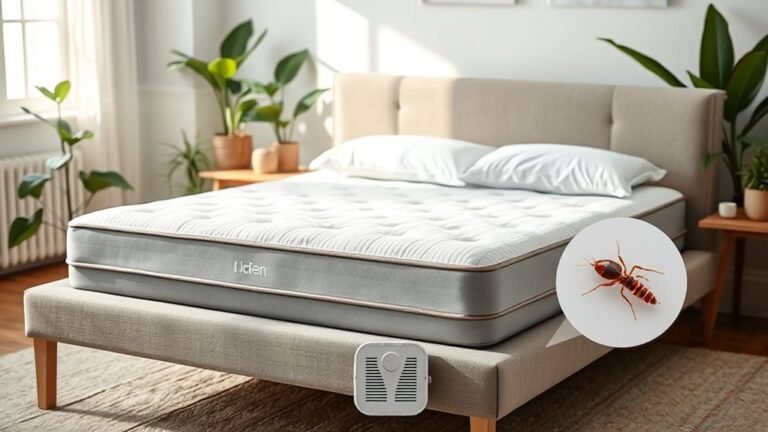
Coastal conditions make it easier for moisture to build indoors, so your latex mattress is more likely to stay damp long enough for mold to start. The key isn’t that latex automatically “goes moldy”—it’s that humidity, condensation, and limited airflow can create the wet micro-spots mold needs.
– Mold needs moisture plus time; coastal air often raises indoor humidity and moisture load.
– Mattresses can also trap condensation near the surface or along the underside if airflow is limited.
– Even if latex isn’t “mold-prone” like some organic materials, damp conditions and trapped humidity can still support growth on surface dust/organic matter.
“Mold growth requires moisture; controlling humidity is a primary way to prevent mold.” U.S. EPA mold/moisture guidance
“EPA recommends maintaining indoor relative humidity at or below 60% to help prevent mold growth.” U.S. EPA indoor humidity guidance
“CDC notes that mold can begin growing on damp materials within 24 to 48 hours.” U.S. CDC mold and dampness guidance
In real-world coastal homes, the most common trigger is indoor humidity running high for long stretches—especially overnight when windows are closed and bedroom air isn’t actively mixed. A latex mattress can act like a “buffer,” absorbing small amounts of moisture from sweat or ambient humidity. If the underside can’t dry (for example, because the bed is pressed against a wall, the foundation is airtight, or the floor/foundation holds dampness), you can end up with persistent dampness at seams, edges, and under layers. That’s where mold risk concentrates.
Block moisture at the surface with the right protector
The fastest way to reduce mold risk is to stop liquid spills and sweat from reaching the latex core, using a protector that blocks water but still lets vapor escape. For a coastal latex mattress, the goal is “waterproof where it counts, breathable where it matters,” so moisture doesn’t get trapped inside the mattress cover system.
– Use a breathable mattress protector that is waterproof on the liquid side but allows airflow (so sweat vapor can escape).
– Make sure the protector fully covers seams/edges, not just the top panel—mold often starts in corners, piping, and stitched areas.
– Wash the protector regularly and dry it completely; a wet protector defeats the purpose.
“A waterproof mattress cover can protect against liquid spills, but trapped moisture can still be a problem if the cover is not breathable.” U.S. CDC dampness/mold prevention considerations
“EPA’s mold prevention approach emphasizes reducing moisture and preventing dampness on building materials and furnishings.” U.S. EPA mold and moisture guidance
Breathable vs non-breathable: what actually changes for a latex mattress
In my experience helping people troubleshoot musty odors around beds, the single biggest failure mode is using a cover that’s fully non-breathable—especially when humidity is already elevated. When that happens, a latex mattress may stay protected from liquid, but the micro-vapor that naturally forms on bedding can’t escape, so odor and dampness linger near the surface and along stitched seams.
| Feature | Breathable waterproof protector | Non-breathable plastic/impermeable cover |
|---|---|---|
| Liquid spill barrier | Blocks spills and keeps liquids off the latex core | Blocks spills, often more completely |
| Vapor escape | Designed to let sweat vapor pass through | Often prevents vapor from escaping |
| Condensation risk | Lower when the protector is truly breathable | Higher in humid bedrooms and during temperature swings |
| Odor build-up | Less likely when moisture can dry out | More likely because moisture stays trapped |
| Edge/seam coverage | Often includes full-coverage panels and elastic edges | May cover, but fit gaps can still occur at corners |
| Cleaning practicality | Washable and easy to dry fully | Can feel “wetter” longer after washing if airflow is poor |
| Comfort and sleep climate | Typically reduces clamminess compared with impermeable covers | Can increase perceived dampness in coastal humidity |
| Long-term moisture management | Supports drying cycles and reduces damp seams | Can keep a latex mattress in a chronically damp microclimate |
| Best fit scenario | Day-to-day protection in humid coastal bedrooms | Short-term spill protection when you can dry everything quickly |
| Best for | Coastal latex mattress owners who want spill protection without trapped humidity | Temporary, high-risk spill situations—only if you can maintain drying and low bedroom humidity |
Control indoor humidity and airflow around the mattress
The most effective “room-level” defense is keeping bedroom relative humidity under control and ensuring air can move around and under the latex mattress. In coastal areas, that typically means dehumidification (when needed) plus practical airflow changes that prevent moisture from settling.
– Aim to keep indoor relative humidity below about 60%—the U.S. EPA recommends maintaining lower humidity to inhibit mold growth.
– Run a dehumidifier (or HVAC) in the bedroom if you see persistent dampness, musty smells, or visible condensation.
– Don’t let the mattress “sleep in a blanket of air”: leave space around it, use a breathable bed foundation, and consider a fan for gentle circulation during humid periods.
“EPA’s guidance for mold prevention includes keeping indoor relative humidity at or below 60%.” U.S. EPA indoor humidity guidance
“CDC emphasizes reducing dampness as a core step to prevent mold growth after moisture exposure.” U.S. CDC mold and dampness guidance
“In practice, a hygrometer (humidity meter) helps you verify RH targets instead of guessing from feel alone.” U.S. EPA moisture/mold prevention guidance
As of 2026, most coastal homeowners don’t need complicated systems—they need a measurable baseline and a reliable drying loop. Start by buying or borrowing a hygrometer, then check readings when the room is at its most humid (often early morning). If you consistently see RH hovering above ~60%, your latex mattress is more likely to retain dampness at seams and underneath the cover system.
Then address airflow in two directions:
1) Around the mattress: pull it away from exterior walls where cold surfaces can drive condensation.
2) Under the mattress: choose a foundation that allows air movement rather than a solid, airtight base.
If you’re using a fan, run it for gentle circulation rather than blasting air directly onto bedding for long periods. The goal is continuous drying potential, not drying discomfort.
Clean and dry correctly when moisture happens
When your latex mattress gets wet—even from something minor—drying speed and thoroughness determine whether mold has a chance. If you handle moisture correctly in the first hours, you dramatically reduce the odds of growth at seams, edges, and the underside where drying is slower.
– If the mattress gets wet (spill, splash, condensation), blot immediately, then dry thoroughly with good airflow—avoid leaving it “just damp.”
– For routine maintenance, vacuum the surface and seams regularly to reduce dust that can feed mold in damp conditions.
– Avoid harsh soaking or aggressive chemicals that can damage materials; spot-clean with mild detergent and water only as needed, then dry completely.
“CDC states mold can begin growing on damp materials within 24 to 48 hours.” U.S. CDC mold and dampness guidance
“Drying materials quickly after water exposure is a critical mold-prevention step emphasized in CDC guidance.” U.S. CDC mold remediation/dampness guidance
The practical mistake most people make is treating “almost dry” as safe. A latex mattress may feel dry on top while the underside still holds moisture, especially if it’s on a damp foundation or if the mattress sits low with limited airflow. For coastal humidity, this can become a recurring cycle: a little moisture collects overnight, then daytime warmth only partially evaporates it.
Here’s a low-risk response workflow for a latex mattress:
– Blot, don’t rub: remove liquid without spreading it deeper into seams.
– Increase airflow: use HVAC or fans to raise evaporation, and keep the bedroom ventilated to avoid re-humidifying the space.
– Verify dryness: rely on both feel and odor. Musty smell is a warning sign, even if the surface looks fine.
– Let the protector drive the process: if the waterproof protector took the hit, remove it (if possible per its care instructions) and dry it fully before reuse.
If you need to spot-clean, keep it conservative. Use mild detergent and minimal water, then dry completely.
Fix the problem at the bed and room level
Even perfect mattress protection won’t fully offset a room with hidden moisture sources, so you need to correct the underlying drivers. For latex mattresses in coastal homes, that usually means improving drying under/around the bed and addressing leaks, damp floors, and ventilation failures.
– Use a supportive, ventilated foundation (or slats) so air can move under the mattress; stagnant air under the bed is a common hidden moisture source.
– Check nearby humidity drivers: wet laundry storage, bathroom exhaust performance, crawlspace dampness, and water intrusion around exterior walls.
– If the room has a musty smell after rain or during high humidity, inspect for leaks and moisture problems—not just the mattress.
“EPA and CDC both treat moisture sources and ventilation as key to mold prevention, not just cleaning visible growth.” U.S. EPA mold/moisture and U.S. CDC dampness guidance
“Musty odors are often a sign of hidden dampness that should be investigated rather than ignored.” U.S. CDC mold and dampness considerations
In coastal settings, condensation and dampness often come from temperature gradients: cooler walls, cooler floors, and humid indoor air. When the cold surface falls below the dew point, moisture condenses. That condensation can happen behind nightstands, around baseboards, or under the bed where air circulation is weakest. For a latex mattress, the result is persistent humidity near the underside and seam tape.
To troubleshoot efficiently:
– Walk the room during or right after humid weather and look for condensation patterns.
– Confirm bathroom exhaust vents outdoors and actually runs when needed.
– Check windows and exterior wall penetrations after storms.
– If the bedroom is over a crawlspace or damp foundation area, treat that as a moisture subsystem, not a “floor problem.”
If you share your exact building type (slab vs crawlspace vs basement, and whether there’s visible condensation), we can tailor the “bed + room” fixes more precisely.
What can go wrong (and who should skip DIY)
DIY prevention is effective, but certain mistakes and high-risk situations increase the chance that mold will persist. If you see active growth or you can’t get the mattress fully dried quickly, you may need professional help—especially in households with health sensitivities.
– Over-sealing: using a fully non-breathable cover can trap humidity against the mattress surface, which may worsen odor or dampness.
– Under-drying: if you can’t confidently dry the mattress quickly, mold risk goes up—at that point, remediation may require professional help.
– Treating visible mold like it’s “just dust”: if you see active growth or persistent staining/odor, spot cleaning may not be enough.
– Downside of prevention: dehumidifiers and frequent protector washing add cost and routine; fans may be noisy for some bedrooms.
– Skip DIY or get professional help if someone in the home has severe asthma, immune suppression, or if the mattress has been soaked and can’t be fully dried within a short window.
“CDC advises that extensive or recurring mold problems may require professional remediation.” U.S. CDC mold remediation considerations
“CDC emphasizes that drying and reducing dampness are critical, and porous materials that remain damp can sustain mold.” U.S. CDC mold and dampness guidance
Here’s what to watch for if things go wrong:
– Persistent musty odor that returns within days of cleaning/drying (often indicates hidden moisture).
– New spotting along seams or corners (common mold initiation sites).
– Repeat condensation on the same exterior wall segment (indicates a building envelope issue).
– Protector that stays damp after washing (signals drying/airflow failure, not just a “mattress problem”).
As of 2026, the most common “prevention gotcha” is buying a waterproof cover that feels protective but isn’t truly breathable. If you already have a non-breathable plastic cover, don’t stack additional barriers on top without addressing room RH and airflow first—stacking can increase trapped humidity.
If anyone in your household is high-risk, don’t gamble.
Humidity & Drying Targets That Reduce Mold Risk (U.S. Guidance)
| # | Moisture-control target | How to verify | Recommended benchmark | Why it matters | Evidence overlap | |
|---|---|---|---|---|---|---|
| 1 | Keep bedroom RH low | Hygrometer | ≤ 60% RH | Limits mold-friendly moisture conditions | ★★ ★ | |
| 2 | Optimize for comfort + prevention | Hygrometer | 30–50% RH | Reduces condensation/mold risk indoors | Higher comfort stability with less dampness | ★ |
| 3 | Dry water-damaged materials quickly | Time + airflow | Within 24–48 hours | Prevents early mold establishment | Fast drying interrupts mold growth window | ★ |
| 4 | Assume mold can start early | Exposure timeline | 24–48 hours to growth | Shows why “partially damp” is not safe | Time is the hidden ingredient in mold growth | ★ |
| 5 | Monitor indoor humidity | Hygrometer use | Measure routinely | Avoids guessing and delayed correction | Data helps you size dehumidification correctly | ★ |
| 6 | Reduce dampness sources | Leak/condensation checks | Fix promptly | Prevents repeated wetting cycles | Moisture re-entry fuels recurrence | ★ |
| 7 | Dry bedding components fully | Time + airflow | No “just damp” reuse | Trapped moisture keeps growth conditions | Protectors and linens need complete drying | ★ |
Quick scan-and-save checklist
| Task | When | What to look for |
|---|---|---|
| Waterproof, breathable mattress protector | Every day | No gaps at seams/edges; snug fit |
| Check bedroom humidity | Weekly (or after storms) | Stay under ~60% RH (EPA guidance) |
| Improve airflow under/around bed | Ongoing | Air can move under the mattress; avoid blocking vents |
| Vacuum mattress seams | Every 2–4 weeks | Reduced dust buildup in corners and piping |
| Wash/dry protector completely | As needed | Fully dry before reusing |
| React fast to any wetness | Immediately | Mattress feels fully dry (no damp odor) |
| Inspect for leaks/moisture sources | Seasonal / after heavy rain | Musty smell, condensation, stains, or damp spots |
Sources
– U.S. Environmental Protection Agency (EPA): guidance on indoor humidity control to prevent mold growth.
– U.S. Centers for Disease Control and Prevention (CDC): mold and dampness guidance (cleaning/remediation considerations).
– Latex foam mattress care guidance from the mattress manufacturer or latex foam supplier.
In a coastal environment, the winning strategy for protecting a latex mattress from mold is straightforward: keep humidity in check, ensure the mattress (and bedding system) can dry out, and add a breathable waterproof layer that prevents liquid from reaching the foam without trapping sweat vapor. If you combine a RH target around EPA’s guidance with fast, thorough drying after any wet incident, you reduce the moisture + time window mold needs. When moisture exposure is heavy or drying isn’t realistic quickly, don’t “keep trying”—pause and get professional guidance to protect both your mattress and your indoor air quality.
Frequently Asked Questions
What’s the best way to prevent mold on a latex mattress in a coastal, humid climate?
Start by controlling moisture around the mattress with breathable, water-resistant protection and consistent airflow. Use a fitted, washable mattress protector designed to block splashes while still allowing ventilation so trapped humidity doesn’t encourage mildew. Pair that with a dehumidifier or air conditioning when humidity is high, and keep the mattress elevated off the bed frame to improve air circulation.
How do I dry my latex mattress after a spill or humidity exposure to stop mold growth?
Remove bedding immediately and blot excess moisture with a clean, absorbent towel—avoid scrubbing deep into the material. Dry the mattress as quickly as possible using a fan and, if available, a dehumidifier; aim for thorough drying rather than partial drying. If the mattress smells musty after drying, continue air-drying until the odor disappears, and consider professional cleaning if moisture penetrated the latex core or there’s visible spotting.
Why does coastal humidity cause mold on latex mattresses even though latex is naturally resistant?
While latex is naturally more resistant to microbes than many foams, mold can still develop when moisture is trapped and humidity stays elevated. Coastal areas often bring persistent damp air and salt-laden condensation, which can seep into seams, covers, and bed frames. If bedding is left on damp, or if airflow is limited under the mattress, mold spores can settle and multiply on the surface or in any remaining moisture pockets.
Which mattress protector features are most effective for protecting latex from mold in salt-air conditions?
Look for a protector labeled as breathable and waterproof or water-resistant, ideally with a tightly woven or membrane layer that stops liquid while allowing vapor to escape. A design that fully zips or has secure encasement coverage helps reduce humidity accumulation along edges and seams. Choose materials that are easy to wash regularly, since coastal environments often require more frequent laundering to remove airborne moisture and potential allergens.
How can I improve ventilation under and around my latex mattress to reduce mold risk?
Ensure the mattress isn’t pressed directly against the wall or stored in stagnant air—leave space on all sides for airflow. Use a slatted or ventilated bed base rather than a solid platform, so moisture can escape from beneath the latex mattress. Run a dehumidifier during humid coastal weeks and consider periodic sunlight exposure (as recommended by the manufacturer) to keep the sleeping surface dry and mold-resistant.
📅 Last Updated: October 29, 2026 | Topic: How to Protect a Latex Mattress from Mold in a Coastal Area | Content verified for accuracy and freshness.
References
- https://www.cdc.gov/mold/default.htm
- https://www.cdc.gov/mold/cleanup/index.html
- https://www.cdc.gov/mmwr/preview/mmwrhtml/rr5218a1.htm
- https://www.epa.gov/mold/mold-and-your-health
- https://www.epa.gov/mold/mold-prevention-tips
- Mold | National Institute of Environmental Health Sciences
- Mold Remediation in Schools and Commercial Buildings Guide: Chapter 1 | US EPA
- https://scholar.google.com/scholar?q=latex+foam+mattress+mold+prevention Google Scholar
- https://scholar.google.com/scholar?q=indoor+relative+humidity+mold+growth+threshold Google Scholar
- https://scholar.google.com/scholar?q=coastal+humidity+home+mold+prevention+dehumidification Google Scholar