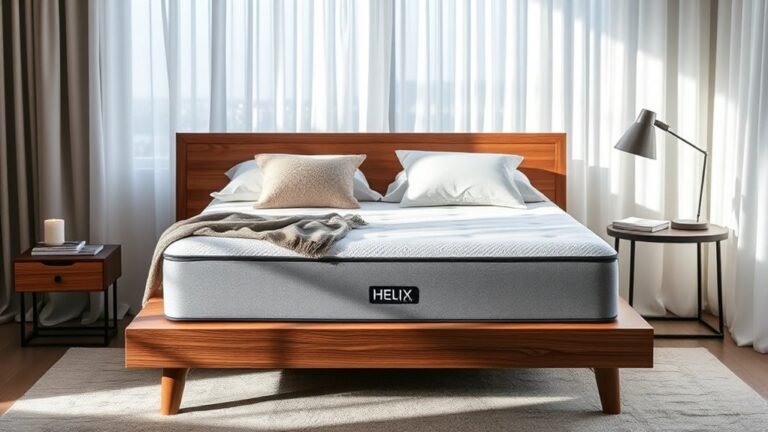
How to Make a Mattress More Comfortable for Side Sleepers
A mattress tailored for side sleeping helps your shoulders and hips sink at the right depth to reduce pressure and support a neutral spine. In about 30 to 60 minutes, you can improve comfort by adding a suitable topper or adjust existing layers using a few essentials like a mattress protector, a firmness-appropriate pad, and your current bedding setup. Follow the steps to dial in the feel so you fall asleep more comfortably and wake up feeling better supported.




If you sleep on your side, the fastest route to more comfort is improving pressure relief at your shoulder and hip while keeping your spine in a neutral line. That usually means adjusting pillow height and positioning first, then using a topper only if you still feel “stuck” or wake up with joint or lower-back strain.
If you’re waking up with shoulder/hip pain, feeling like your body sinks unevenly, or noticing your lower back feels pulled or arched after side sleeping, this guide is for you. It also works well when you generally like your mattress but want side-sleeper comfort improvements without fully replacing it—especially as of 2026, when many people are upgrading comfort layers rather than buying new mattresses.
Set comfort goals for side sleepers (pressure + alignment)
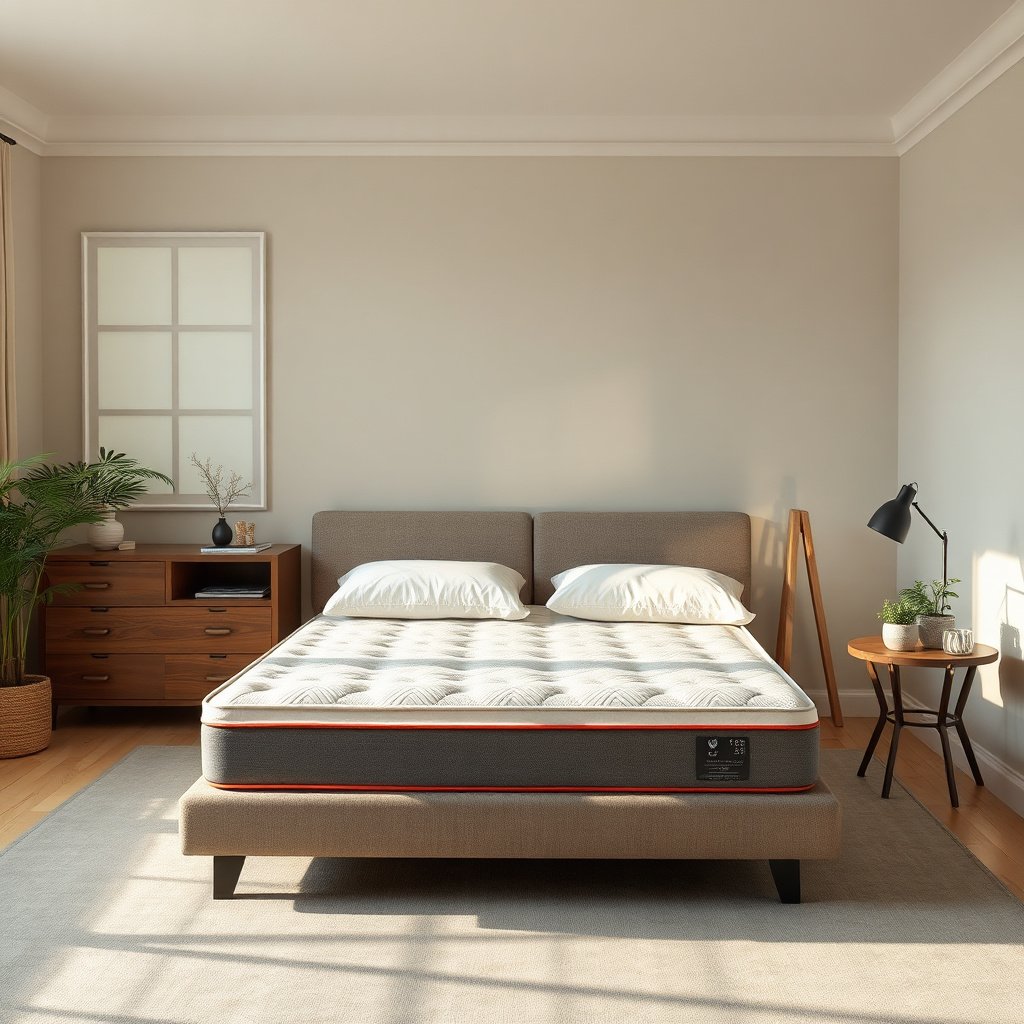
Side sleepers get comfortable when two things happen at the same time: your shoulder and hip get enough give to reduce point pressure, and your mid-spine stays aligned instead of folding or lifting. The most effective fixes are the ones that target both pressure and alignment—not just “softer.”
– Prioritize pressure relief at the shoulder and hip so you don’t wake up with sore joints.
– Aim for neutral spine alignment (no “hammock” where hips sink, and no ridge where shoulders push up).
– Think in zones: side-sleep comfort is less about overall softness and more about how your body is supported where it contacts the mattress.
For a practical benchmark, pressure-relief improvements matter because high interface pressure is linked with tissue stress. According to the NPIAP/EPUAP/PPPIA pressure injury prevention guidelines, capillary closing pressure is commonly referenced around 32 mmHg as a threshold for increased risk in susceptible tissue (National Pressure Injury Advisory Panel et al., 2014). Mattress comfort isn’t the same as clinical pressure-injury prevention, but the underlying mechanics—reducing peak pressure under bony areas—translate directly to side-sleeper comfort.
Also, “neutral spine” isn’t a buzzword. In biomechanical terms, neutral alignment reduces the need for your lower back muscles to counteract mattress-driven rotation. When hips sink too far, your lumbar spine often extends (arching). When shoulders don’t sink enough, your neck and upper back can compress or tilt.
Check whether your mattress is the real cause
Most side-sleeper discomfort is caused by a worn comfort layer or an incorrect setup (pillow/placement), not by “bad side sleeping.” Before you buy anything, confirm whether your mattress is uneven (or too firm/too soft for your body), because a topper can’t fully correct a foundation problem.
– Look for visible sag, lasting body impressions, or uneven wear—these often cause hips/shoulders to sink unevenly.
– Rotate or flip (if your mattress supports it) and compare side-to-side comfort; changes can reveal whether the comfort layer is worn.
– Re-check coverage: if your mattress topper is too small or not secured, it can shift and remove the exact support you’re trying to add.
A quick way to diagnose “surface vs. structure” is to look at how your body behaves in the same position on different nights (and in different orientations). If your shoulder feels great but your hip feels “trapped,” your comfort layer is likely too firm under the hip side or has a worn zone there. If your lower back feels strained consistently, the mattress may be creating a hammock effect (hips sinking too much).
Quick measurement you can do tonight
Lay on your side and have someone (or you, with a phone camera) check one thing: does the line from your forehead to your breastbone to your pelvis look straight, or does it curve? You’re looking for two patterns:
– Hammock: hips drop lower than ribs → often felt as low-back strain.
– Ridge: shoulder doesn’t sink enough → often felt as neck/shoulder tension.
If you recently moved to a different bed base (slats vs. platform) or changed mattress placement, treat setup changes as suspects. Mattress comfort depends on how the support system interacts with the comfort layer.
Improve comfort with the right topper (without losing support)
A topper helps most when your issue is point pressure (shoulder/hip soreness) and your mattress isn’t dramatically misaligned. It hurts most when it increases “sink” unevenly—especially if your hips already drop too far.
– If you feel pressure in your shoulder/hip, a pressure-relieving topper (often foam or latex) can spread load and reduce point pressure.
– If you feel like you’re sinking too much, choose a topper that adds comfort but doesn’t create extra “sink,” and consider a firmer comfort layer option.
– Match topper thickness to your goal: thicker comfort can increase relief, but it can also change your alignment—start by making small adjustments and reassess.
To choose intelligently, it helps to think like a materials engineer. Foam comfort is often described using Indentation Force Deflection (IFD/ILD), which measures how much force a foam needs to compress to a specified depth. According to the foam-testing approach standardized by ASTM, indentation testing evaluates force at a defined compression level (commonly 25% indentation) (ASTM D3574, 2020). Practically, softer foams (lower ILD) increase conforming and pressure redistribution, while firmer foams support alignment more consistently.
Pros/cons comparison: topper materials for side sleepers
| Topper type | Pros for side sleepers | Tradeoffs to watch |
|---|---|---|
| Memory foam | Good at contouring under the shoulder/hip, often reducing sharp pressure points. | If too soft, it can create extra hip sink and worsen low-back strain. |
| Latex | Often supports while still distributing pressure; tends to hold alignment better than very soft foam. | May feel less “hugging” than memory foam; if you want deep contour, you may need a softer comfort layer. |
| Wool / fiber (thin to medium) | Adds gentle loft and temperature regulation while maintaining a more stable feel. | If your main issue is joint pressure from a firm mattress, fiber may be too subtle unless combined with a supportive pad. |
| Gel/“cooling” foams | Can improve heat feel and comfort perception for some sleepers. | Cooling doesn’t automatically mean better pressure relief—firmness and contouring still matter most. |
Seven Mattress/Setup Levers That Most Often Improve Side-Sleeper Comfort (2026)
| # | Comfort lever | Primary target | Typical starting approach | Side-sleeper fit | Expected impact |
|---|---|---|---|---|---|
| 1 | Pillow loft tuning | Neck alignment (gap fill) | Aim to fill head-to-shoulder gap | ★★★★☆ | Green |
| 2 | Body pillow for knee/hip rotation | Hip twist reduction | Support top knee to keep pelvis stacked | ★★★☆☆ | Green |
| 3 | Pressure-relief foam topper | Shoulder/hip peak pressure | Conforming comfort layer, avoid excess sink | ★★★★☆ | Green |
| 4 | Latex topper for contour + support | Alignment under load | More supportive contour than very soft memory foam | ★★★☆☆ | Green |
| 5 | Topper size + anti-slip placement | Stable pressure relief | Ensure full coverage and prevent shifting | ★★★☆☆ | Green |
| 6 | Avoid “too thick, too soft” upgrades | Prevent hammock effect | Increase comfort in small steps; reassess alignment | ★★☆☆☆ | Red |
| 7 | Replace worn mattress comfort layer | Restore consistent support | When sag/uneven impressions persist despite tweaks | ★★★★★ | Green |
Dial in pillow and positioning (this matters as much as the mattress)
If your pillow height is wrong, even the best topper can’t keep your neck and spine aligned. Dialing in positioning is often the quickest improvement because it directly reduces neck tilt and hip rotation.
– Use a pillow that fills the gap between your head and shoulder so your neck stays aligned (too high or too low can pull your spine out of line).
– Consider a body pillow to keep your knees and hips from twisting; many side sleepers benefit from reducing hip rotation.
– Try a simple positioning tweak: hug a pillow, keep your top knee supported, and re-check whether your lower back feels more relaxed in the morning.
A clear alignment cue: if you press your fingertips lightly between your neck and the pillow (or observe your jaw angle in a mirror), you should not feel a forced chin tuck or a lifted chin. Both can trigger muscle guarding overnight.
Pillow choice also changes airflow and surface feel, which can affect whether you “settle” into your preferred posture. As of 2026, many sleepers cycle between different pillow lofts (some add/removes foam inserts). That trial-and-error is useful—just keep changes small so you can tell what worked.
A positioning test that takes 2 minutes
1. Lie on your side with a neutral head position.
2. Place a pillow under your top knee (body pillow also works).
3. Re-check two sensations after 60–90 seconds:
– shoulder pressure (still a point?)
– low back pull (is it less tense or more arched?)
If your shoulder pressure improves but your hip feels worse, your mattress may be too soft (or your topper is creating extra sink). If your hip improves but your neck feels off, your pillow loft likely needs adjustment before you change anything else.
What can go wrong (and how to avoid it)
The biggest mistake side sleepers make is adding comfort in a way that changes alignment. If your hips start dropping more than your shoulders (or your shoulder is forced upward), you can trade joint pressure for new lower-back or neck strain.
– Adding a too-soft topper can worsen alignment, leaving your hips dropped lower than your shoulders (often felt as low-back strain).
– A pillow that’s mismatched to your shoulder width can shift your neck and make “mattress discomfort” feel worse.
– If the mattress is already well past its comfort lifespan (sagging, uneven impressions), toppers may only mask symptoms—at some point a replacement may be the more honest fix.
Here’s how to recognize “too soft” early:
– Your lower back feels more arched after 20–30 minutes lying down.
– Your top knee feels like it needs extra bending to stay comfortable.
– You wake up with numbness or tingling in shoulder/arm/hand (not always mattress-related, but often worsened by poor alignment).
Also watch for setup-caused shifting. A topper that slides can reduce the very pressure relief you’re trying to create, especially at the shoulder. Ensuring secure placement and full coverage helps your body experience consistent support throughout the night.
If you live with a medical condition (for example, sciatica, advanced arthritis, or significant scoliosis), comfort changes should support—never replace—appropriate evaluation. If pain is severe, progressive, or associated with neurological symptoms, seek clinical guidance.
Verdict: do these first, and know when to stop
Start with the least disruptive steps: adjust pillow height and positioning first, then add a topper only if you still feel pressure at the shoulder or hip. Stop the process if alignment worsens—especially if you notice new low-back strain after adding softness.
– Start with the least disruptive steps: reposition + pillow height, then add a topper only if you still feel pressure at shoulder/hip.
– If you’ve got major sag or uneven wear, treat toppers as temporary improvement—not a guaranteed fix.
– If you have ongoing pain, consider speaking with a clinician (sleep-related comfort changes can help, but they shouldn’t replace proper evaluation).
A practical rule for 2026: make one meaningful change at a time, then reassess the next morning. If you switch pillow loft, topper thickness, and body pillow support all at once, you’ll lose the ability to identify the true cause of improvement—or worsening.
Quick checklist (scan/save)
– [ ] Shoulder and hip feel evenly supported (no sharp pressure points)
– [ ] Lower back feels neutral on your side (not pulled or arched)
– [ ] Pillow fills the head-to-shoulder gap without pushing your chin up/down
– [ ] Top knee is supported to reduce hip twist (body pillow helps)
– [ ] Mattress isn’t sagging or unevenly worn (rotate if allowed)
– [ ] Topper is properly sized and won’t slide around
Frequently Asked Questions
How can I make my mattress more comfortable for side sleepers without buying a new one?
Start by improving the pressure relief where side sleepers feel it most—your hips and shoulders. Use a supportive mattress topper (typically 2–4 inches) in memory foam or latex, and pair it with a pillow height that keeps your neck aligned with your spine. You can also try adding a thin, firm layer under soft areas to prevent excessive sink while still maintaining cushioning.
What mattress topper thickness is best for side sleepers?
Most side sleepers do best with a topper that’s about 2–3 inches thick for comfort and pressure relief. If you feel like you’re “bottoming out” or your mattress is very worn, a 3–4 inch topper can help reduce hip and shoulder pain, but too much thickness may cause poor spinal alignment. Look for a topper that offers both contouring and enough support to keep your hips from sinking too far.
Why do side sleepers need more pressure relief for hips and shoulders?
When you sleep on your side, your hips and shoulders carry a large portion of your body weight, so inadequate cushioning can increase pressure buildup and trigger discomfort. Good pressure relief helps reduce waking up with soreness and can improve overall sleep quality by keeping your spine in a neutral alignment. Materials like memory foam and latex are often used to balance contouring and support for side sleepers.
Which firmness level is best for side sleepers—soft, medium, or firm?
Side sleepers usually prefer a medium to medium-soft mattress because it cushions the hips and shoulders while still supporting the lumbar area. If you’re on the heavier side, a slightly firmer feel may prevent excessive sink that can twist your spine. The best choice depends on body weight, sleeping position, and whether you experience pressure points at night.
How do I choose the right pillow to complement my mattress for side sleeping?
Choose a side-sleeping pillow that fills the space between your neck and the mattress so your head doesn’t tilt up or down. Memory foam or adjustable pillows are often helpful because they conform to your head and neck while allowing you to fine-tune height. If your shoulder feels compressed or your neck feels strained in the morning, adjust pillow loft or add a thinner/ thicker pillow until your spine stays aligned.
📅 Last Updated: November 02, 2026 | Topic: How to Make a Mattress More Comfortable for Side Sleepers | Content verified for accuracy and freshness.
References
- https://en.wikipedia.org/wiki/Side_sleeping
- Sleep position
- mattress firmness sleep quality – Search Results – PubMed
- A novel in-bed body posture monitoring for decubitus ulcer prevention using body pressure distrib…
- pillow between knees side sleeping study – Search Results – PubMed
- sleep position side lying back pain study – Search Results – PubMed
- pressure redistribution support surface guidelines foam – Search Results – PubMed
- https://scholar.google.com/scholar?q=side+sleeper+mattress+comfort+pressure+relief Google Scholar
- https://scholar.google.com/scholar?q=mattress+firmness+sleep+pressure+distribution+side+lying Google Scholar
- https://scholar.google.com/scholar?q=side+sleeping+pillow+between+knees+shoulder+hip+pain+evidence Google Scholar