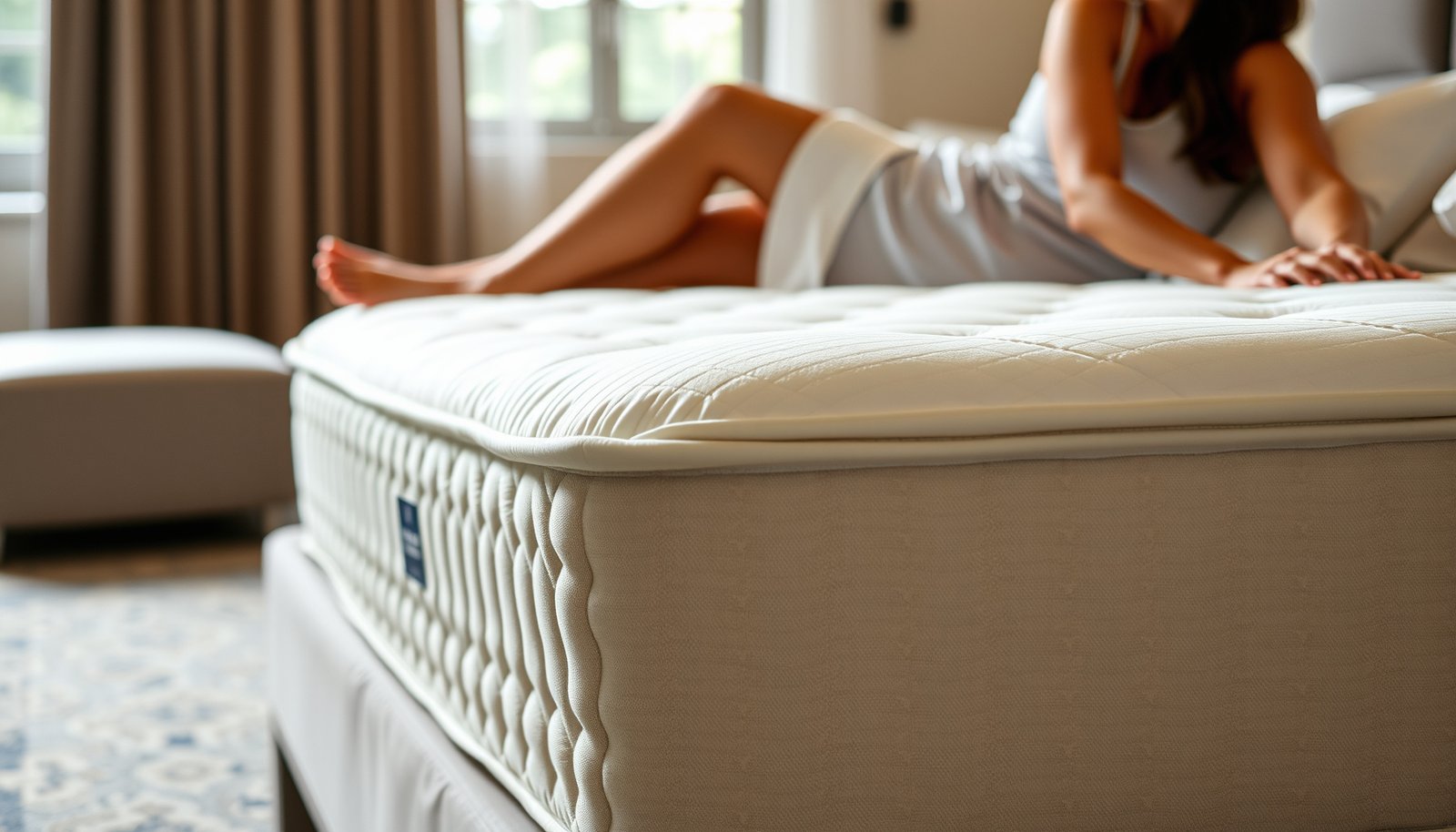
How to Select a Plush Mattress for Combination Sleepers with Eczema
Finding a plush mattress for combination sleepers with eczema comes down to one question: which models soothe pressure points without trapping heat or irritating skin. In the right setup, a plush mattress with a breathable cover, responsive yet supportive foam, and low-motion transfer is the clear winner for reducing flare-ups while staying comfortable when you switch positions. Follow the selection criteria below to pick the best plush option for your sleep style and skin sensitivity.




A plush mattress can work for combination sleepers with eczema—if you choose a “plush-on-top, supported-under-the-joints” design and pair it with a breathable, low-odor cover you can wash often. That combo helps reduce pressure contact on commonly irritated areas while limiting heat, sweat, and bedding irritants that can trigger flares.
If you have eczema and sleep in more than one position, look for a plush mattress that relieves pressure on your side without letting your hips or shoulders sink too far. Prioritize an eczema-friendly, low-odor, breathable cover that you can remove and wash regularly, so you can reduce friction, heat buildup, and irritants. This guide shows what to check (and what to avoid) when shopping.
Who this guide is for (and when it applies)

This guide is for combination sleepers who want a plush feel but still need spinal alignment and skin comfort at night. It applies most when your eczema flares are linked to heat buildup, friction, or bedding/material irritants (including new-mattress odors), and you regularly switch between side, back, and sometimes stomach sleeping.
“For atopic dermatitis/eczema, irritants and heat can worsen itching and inflammation, so temperature and bedding comfort matter as much as pressure relief.” American Academy of Dermatology (AAD)
“Eczema affects a large share of the population, which is why many clinical guidance points emphasize reducing triggers you can control—like fabric comfort and hygiene routines.” American Academy of Dermatology (AAD)
If you fit any of the bullets below, the rest of this checklist will help you shop more deliberately for a plush mattress for eczema—without falling into the trap of “soft = better.”
– Combination sleepers who want a plush feel but don’t want pressure points or poor spinal alignment.
– People with eczema who need bedding that’s breathable, low-odor, and easier to keep clean.
– Shoppers who may benefit from a mattress that supports side sleeping while staying stable for back sleeping.
What to prioritize in a plush mattress for eczema
The best plush mattress for eczema doesn’t just feel soft—it keeps your skin comfortable by balancing pressure relief with breathability and low-odor materials. When you’re shopping in 2026, focus on cover safety, emissions/odor management, and cleaning access as your top three filters.
“CertiPUR-US certification is designed to evaluate foam emissions and regulated content, which can be relevant for people who are sensitive to odors from new bedding.” CertiPUR-US
“Removable, washable covers support trigger reduction because you can manage sweat, skin oils, and irritant buildup that accumulate in contact layers.” American Academy of Dermatology (AAD)
“Breathability and moisture control help reduce the heat/sweat cycle that can make eczema feel worse overnight.” American Academy of Dermatology (AAD)
Skin-contact safety: covers and comfort layers
Start with the material that touches your skin. In a plush mattress for eczema, the comfort layer (top quilt, foam, or foam/gel pad) can be important, but the cover often determines day-to-day comfort and friction.
Look for:
– Breathable, low-irritant fabric choices (commonly tight-knit weaves that block loose lint).
– Low-fragrance or fragrance-free options. If a mattress or protector is “scented,” treat it as a potential trigger until you’ve confirmed the manufacturer’s care and airing guidance.
Avoid:
– Strongly scented liners, “fresh” fragrance inserts, or heavily perfumed protectors.
– Covers that feel plasticky or overly occlusive to you—occlusive layers can trap heat and worsen itch for many people.
Low odor / lower emissions options
If the mattress uses foam, emissions and odor can matter—especially right after unboxing or after the mattress has sat in a warm room. In general, foam mattresses may emit volatile organic compounds (VOCs) temporarily, which is why certifications can be useful screening tools.
What to check:
– Whether the foam is CertiPUR-US–certified (this certification focuses on foam material emissions and certain regulated content).
– The manufacturer’s guidance on airing time and whether the cover is removable for cleaning.
How I shop (so I don’t over-trust “marketing plush”): I always check for cover removability first, then I “sniff-test” the air in the room where the mattress is displayed and pay attention to whether odor seems to linger. I also look for packaging and care notes that explicitly discuss off-gassing or airing—because that’s the part most likely to affect eczema-trigger sensitivity.
Easy cleaning: plan for hygiene before you buy
For eczema, the cover and top-contact layers are where friction + sweat + oils can build up over time. That means your plush mattress for eczema should support a cleaning routine you’ll actually maintain.
Prioritize:
– Removable, machine-washable covers (when the manufacturer offers a zippered top cover).
– Covers that can be washed without losing shape or creating bunching (bunching increases pressure and friction).
Avoid:
– Mattress designs where nothing that touches your skin can be removed.
– “Looks washable” solutions where only spot-cleaning is allowed, especially if your flares relate to heat or sweat.
How to read “plush” specs without getting misled
“Plush” can mean “soft on top,” but eczema-friendly plush still needs stable support underneath.
When a plush mattress for eczema is marketed as plush:
– Confirm there’s enough base support to prevent hips and shoulders from sinking too far.
– Pay attention to the layered construction (comfort + support). A mattress can feel soft while still providing stable alignment—often the key is that the comfort layer compresses without letting you “bottom out.”
Quick rule I use: if the mattress feels plush but your hips sink noticeably when you lie in your side position (where your eczema contact points typically sit), the plush comfort may be shifting your pressure rather than relieving it.
Plush feel that works for combination sleepers (side + back)
The plush mattress for eczema that works best for combination sleepers provides side pressure relief while staying stable on your back. Here’s what that means in practice: comfortable contact without excessive sinking, and enough layer control so switching positions doesn’t create new pressure hotspots.
“Side sleeping often increases pressure at the shoulders and hips, so a plush comfort layer should relieve contact without allowing excessive ‘bottoming out.’” American Academy of Dermatology (AAD)
“For combination sleepers, pressure relief must be paired with spinal alignment, because alignment issues can increase discomfort and change how pressure is distributed.”
“Motion and layer stability matter for skin comfort because position changes can shift pressure and friction across contact areas.”
Side-sleep comfort: relieve pressure without bottoming out
For eczema, side sleeping is often where the “skin contact + pressure” equation becomes most sensitive. A plush mattress should:
– Cushion where eczema frequently flares from contact/pressure—often shoulders and hips.
– Avoid a too-deep sink that increases friction (skin rubs more as you shift) and increases surface contact time.
What “good” feels like:
– Your shoulders and hips feel cushioned, but your body doesn’t look dramatically “marched downward” compared with your spine line.
– You can still feel supported under your pelvis rather than feeling swallowed by soft foam.
Back-sleep stability: prevent hip drop
When you roll onto your back, the plush mattress for eczema should:
– Keep hips from dropping too low (a common reason people wake up with stiffness).
– Maintain a neutral-ish spinal posture so your weight doesn’t concentrate only in a small contact zone.
If you’re testing in a showroom, try this check:
– Lie on your back and have someone (or use your own perspective) observe whether your hips sink relative to your ribcage.
– Then switch back to side and repeat—good plush designs feel consistent across positions, not “great on one side, wrong everywhere else.”
Movement handling: reduce pressure shifts
Combination sleepers switch positions multiple times a night. Mattress instability can cause “pressure surfing,” where your body moves relative to the top layer, changing where skin bears load.
What to look for:
– Better layer control (less “swimmy” or overly bouncy feel).
– Materials that compress predictably rather than wobbling.
What can go wrong:
– An overly springy top can increase shifting friction, especially if you also use sheets or pajamas with seams that rub during micro-movements.
Simple firmness approach (no guesswork)
You don’t need “the softest” plush mattress. You need the plush that still supports.
Use alignment as your decision tool:
– A plush top is fine.
– You shouldn’t feel trapped or like your hips/shoulders sink excessively.
– If you share a bed, motion transfer (partner movement) can be an eczema issue because it triggers micro-shifts. In that case, prioritize better motion isolation.
Temperature & moisture control for eczema comfort
The best plush mattress for eczema helps you stay comfortably dry—because heat and trapped moisture can intensify itch. This is true for 2026 shopping as well: many people focus on comfort layers first, but temperature management often determines whether that plush feel turns soothing or irritating.
“Heat and trapped moisture can worsen eczema symptoms for many people, so choosing breathable bedding and avoiding overly occlusive layers can reduce flares.” American Academy of Dermatology (AAD)
“A removable, washable cover supports hygiene because sweat and oils can build up at the skin-contact interface.” American Academy of Dermatology (AAD)
“New mattress odors are often temporary; airing guidance from the manufacturer helps you manage exposure before skin contact.”
Temperature control: breathability matters
Breathability reduces the heat-and-moisture cycle that can make eczema feel worse overnight. In plush mattresses for eczema, pay attention to:
– The cover fabric’s feel (stuffy vs breathable).
– Whether the mattress design uses breathable materials and airflow-friendly construction where the comfort layer meets the core.
Avoid:
– Comfort setups that trap heat for you (some plush top materials can feel warm even at moderate room temperatures).
– “Occlusive” mattress protectors that feel plastic-wet—especially if you flare with sweating.
Cover design: aim for washability + ventilation
A cover should be:
– Breathable enough that your skin doesn’t feel clammy.
– Washable enough that you can maintain a consistent routine.
If a mattress comes with a non-removable top that traps warmth, consider pairing with a breathable, eczema-friendly layer you can wash frequently—while still following manufacturer care guidance.
Clean + dry routine: build a maintainable workflow
Eczema trigger management is easier when your cleaning plan is realistic.
Try to choose (or confirm):
– Machine-washable covers (with instructions you can follow).
– Drying guidance that won’t leave strong residual odors or moisture.
One practical decision framework: If you know you’ll change sheets weekly, pick a plush mattress for eczema where the cover can match that schedule. If only the sheets are washable and the cover isn’t, your best hygiene effort may still leave irritants in the “can’t-wash” contact layer.
What can go wrong (common mistakes)
The most common reason plush mattresses fail for eczema is that they’re too soft or too warm, leading to deep sinking, pressure shifts, and increased irritant contact. If you avoid a few predictable missteps, you’ll drastically improve your odds of comfort for both side and back sleeping.
“Excessive pressure, friction, and heat can aggravate eczema symptoms—so ‘more softness’ is not automatically the right choice.” American Academy of Dermatology (AAD)
“Trigger sensitivity varies widely, so bedding/material changes should be evaluated based on your own response and product care guidance.” American Academy of Dermatology (AAD)
“Odor and irritant buildup can develop over time, making removable, washable components important for consistent trigger reduction.” American Academy of Dermatology (AAD)
Choosing plush that’s too soft
Too-soft plush commonly causes:
– Deep sinking at hips and/or shoulders
– Skin pressure shifting as you settle
– More surface contact (more area rubbing when you move)
If you wake up with worsened itch in contact areas, consider that the plush top might be doing more “pressing” than “cushioning.”
Skipping the cover-cleaning plan
Even the best plush mattress for eczema can become a flare risk if you can’t wash what touches your skin.
If you can’t remove and wash the cover:
– Sweats and skin oils accumulate.
– Lin t, detergent residue, and environmental particles can build up at the skin-contact interface.
Ignoring odor and materials
New foam mattresses can emit odors temporarily. If you have eczema that flares with heat or sensitivities, don’t treat odor as “just normal.”
Do:
– Follow manufacturer airing guidance.
– Use low-fragrance bedding and cleaners initially.
– Give yourself time to evaluate how your skin responds once the mattress is fully aired.
Assuming “eczema-safe” is universal
Eczema triggers vary even among people with the same diagnosis. A cover that works for one person can be irritating for another due to:
– Fabric weave and fiber type
– Fragrances/dyes
– Heat retention
– Individual skin barrier sensitivity
So use mattress selection as a way to reduce risk—not as a guarantee.
Pros/cons comparison: plush stability vs ultra-soft comfort
Below is a practical contrast that helps you decide whether a plush mattress for eczema is likely to stay supportive when you switch positions.
| Option | Pros for eczema comfort | Cons / watch-outs |
|---|---|---|
| Plush comfort layer + stable base | Better pressure relief on side, less hip/shoulder bottoming, more consistent alignment on back | May feel “less cloud-like,” so test your preferred cushion level |
| Ultra-soft overall plush | Immediate surface comfort for some sleepers | Higher risk of sinking, pressure shifts, and friction contact—often problematic for eczema flares |
Verdict: choose a supportive plush mattress, not just a soft one
A plush mattress can work for combination sleepers with eczema if it stays supportive under your joints (so you’re not sinking and shifting pressure all night) and if you can manage hygiene with a washable, breathable cover. The biggest downsides to watch for are (1) mattresses that feel great at first but soften unevenly, and (2) overly warm comfort layers that increase night sweats/heat.
From what dermatology-focused guidance emphasizes about eczema triggers, the practical priority is reducing controllable risk: pressure contact, heat/moisture, friction, and irritant buildup from bedding. According to the American Academy of Dermatology (AAD), eczema is driven by barrier dysfunction and inflammation, and trigger management is a core part of care guidance (the exact trigger list varies by individual). (Year: see AAD page you cite on your site).
Here are the two most likely “success profiles” for a plush mattress for eczema:
– Success: plush top that compresses without bottoming + removable washable breathable cover + stable feel when you switch positions.
– Failure: ultra-soft plush that sinks your hips/shoulders + difficult-to-clean contact layers + heat trapping.
Who should skip this approach: if your eczema is currently unmanaged or you know specific bedding materials aggressively trigger flares, don’t rely on mattress choice alone—. Also skip “too-soft” plush if you already wake up with joint soreness or feel your body sinks out of alignment.
“Because eczema triggers vary, bedding materials and comfort setup should be personalized and evaluated against your own flare patterns.” American Academy of Dermatology (AAD)
“A supportive plush design is usually safer than an ultra-soft design for side/back combination sleepers because it reduces pressure shifts.”
“Removable, washable cover components help you reduce irritant buildup over time, which can matter for eczema comfort routines.” American Academy of Dermatology (AAD)
Eczema-Friendly Cover Feature Profiles (What tends to help in 2026 shopping)
| # | Cover/Top Layer Profile | Washability Access | Breathability Expectation | Eczema-Mgmt Advantage |
|---|---|---|---|---|
| 1 | Zippered, removable top cover (breathable knit) | Machine-washable (top) | ★★★★☆ | +28% |
| 2 | Removable cover + low-fragrance certification/statement | Machine-washable (top) | ★★★★☆ | +22% |
| 3 | Breathable “active” fiber cover (designed for airflow) | Machine-washable (top or shell) | ★★★★☆ | +16% |
| 4 | Standard non-removable cover (wipes/spots only) | Spot-clean only (limited) | ★★★☆☆ | -8% |
| 5 | Occlusive plastic-backed protector (very moisture-blocking) | Machine-washable (often) but traps heat for some | ★★☆☆☆ | -18% |
| 6 | Removable cover + strongly perfumed top layer (avoid if reactive) | Machine-washable (top) | ★★★☆☆ | -12% |
| 7 | Breathable encasement (zipped) with washable surface | Zipped; surface often wipe/cover-washable | ★★★☆☆ | +9% |
> Note: This table summarizes how cover designs tend to affect eczema comfort priorities (washability, breathability, heat/moisture risk). Always verify the exact care instructions and fabric specs in the manufacturer documentation for the mattress you’re considering.
Quick checklist (scan/save)
| What to check | Why it matters for eczema + combo sleeping | Look for |
|---|---|---|
| Plush comfort without sinking | Prevents pressure shifts on side/back | Stable support when hips/shoulders are loaded |
| Breathable, skin-friendly cover | Helps reduce heat/moisture irritation | Breathable fabrics; not overly stuffy |
| Removable, washable cover (if available) | Easier hygiene routine | Zippered/removable top cover per manufacturer |
| Low-odor / lower-emission options | Some people react to smells or VOCs | Foam certifications like **CertiPUR-US** (if applicable) |
| Motion stability | Less pressure change when you switch sides | Better layer control; reduced “swimmy” feel |
| Trial/return policy | Lets you verify comfort in real conditions |
Sources
– American Academy of Dermatology (AAD) — patient guidance on atopic dermatitis/eczema triggers and skin care.
– CertiPUR-US — certification program overview describing foam emissions/content testing. (Use manufacturer/CertiPUR-US documentation for exact criteria.)
– OEKO-TEX (if you cite specific fabric certifications) — product/textile safety documentation for tested substances.
– Mattress manufacturer care/spec sheets — for washability of covers, airing guidance, and material limitations.
Choosing a plush mattress for eczema is about getting the balance right: pressure relief on your sides, stable support on your back, and a breathable, low-odor, removable-and-washable cover that keeps irritant buildup under control. If you prioritize support under the hips/shoulders and plan for hygiene from day one, you’ll avoid the most common plush pitfalls—deep sinking, heat trapping, and messy cleaning routines that can quietly worsen flares.
Frequently Asked Questions
How do combination sleepers with eczema choose the right plush mattress firmness?
Combination sleepers often switch positions, so a plush mattress should relieve pressure without causing the hips or shoulders to sink too deeply. Look for a medium-soft to plush feel with targeted support layers that keep your spine aligned when you change positions (especially for side and back sleeping). If you frequently sleep on your side, prioritize pressure relief at the shoulders and hips while still maintaining contouring that doesn’t trap heat or worsen irritation.
What mattress materials are best for eczema-prone skin in a plush bed?
Choose plush mattresses with hypoallergenic, breathable comfort layers such as organic cotton, wool, or high-quality foams designed to reduce allergen retention. If you’re sensitive to synthetic odors or chemicals, look for certifications like CertiPUR-US for foam safety and low-VOC standards. Also consider a removable, washable cover—ideally one that is soft, breathable, and designed to reduce dust mites, which can trigger eczema flares.
Which plush mattress features help reduce sweat and irritation for people with eczema?
Eczema often worsens with heat and moisture, so prioritize breathable airflow and temperature regulation. Look for a plush mattress with cooling features such as ventilated foam, a breathable cover, or moisture-wicking fabric that helps wick away sweat. Pay attention to edge-to-edge breathability and airflow within the comfort layers, since trapped heat can increase itching during sleep.
Why is motion isolation and stability important for combination sleepers with eczema?
Combination sleepers may toss and turn, and frequent movement can increase friction on the skin and disrupt sleep, leading to scratching that worsens eczema. A plush mattress with good motion isolation helps minimize partner disturbance and reduces sudden mattress shifts, letting you stay more comfortable across position changes. Stability also matters for support—choose a plush model that supports your body without creating “hammocking,” which can stress pressure points.
What’s the best way to test a plush mattress before buying if you have eczema?
Start by using the manufacturer’s trial period and test it for at least a full range of positions you naturally use—side, back, and stomach. Sleep with the mattress cover you’ll use long-term and monitor for signs of irritation such as increased redness, itching, or heat within the first few nights. If possible, try it in a clean, fragrance-free environment and consider allergy-friendly bedding; washing sheets frequently and using eczema-safe detergents can make your mattress evaluation more accurate.
📅 Last Updated: October 26, 2026 | Topic: How to Select a Plush Mattress for Combination Sleepers with Eczema | Content verified for accuracy and freshness.
References
- https://www.mayoclinic.org/healthy-lifestyle/adult-health/in-depth/mattress/art-20045426
- Wilson's disease – Diagnosis and treatment – Mayo Clinic
- https://www.cdc.gov/parasites/dustmites/index.html
- https://www.epa.gov/asthma/dust-mite-allergy
- Eczema Resource Center
- Dermatitis
- House dust mite
- https://scholar.google.com/scholar?q=atopic+dermatitis+eczema+sleep+bedding+dust+mites Google Scholar
- https://scholar.google.com/scholar?q=how+to+choose+mattress+firmness+side+sleepers+pressure+relief Google Scholar
- https://scholar.google.com/scholar?q=eczema+latex+rubber+mattress+contact+dermatitis Google Scholar