How to Shop for a Mattress Without Pressure From Salespeople
You step onto a showroom bed, and a salesperson appears within seconds, asking what you want today and whether you can decide right now. You can shop on your own terms by setting a clear budget, narrowing your sleep needs before you enter, and using a short decision checklist that keeps the conversation factual. With a plan and 30–60 minutes on the floor, you will be able to compare options, ask for the details you need, and leave without feeling pushed.




Shop for a mattress without pressure by setting clear rules before you walk in, testing calmly with your own criteria, and refusing same-day decisions. You’ll still get expert help when you want it—but the moment the conversation turns into “limited-time” selling, you’ll steer it back to policies and leave if needed.
If you’re tired of high-pressure “limited-time” tactics, upsells, or getting cornered in a showroom, this approach is for you. It’s also ideal if you prefer researching at home first and making a purchase only when it truly matches what you need.
Pick your rules before you go (so they can’t steer you)
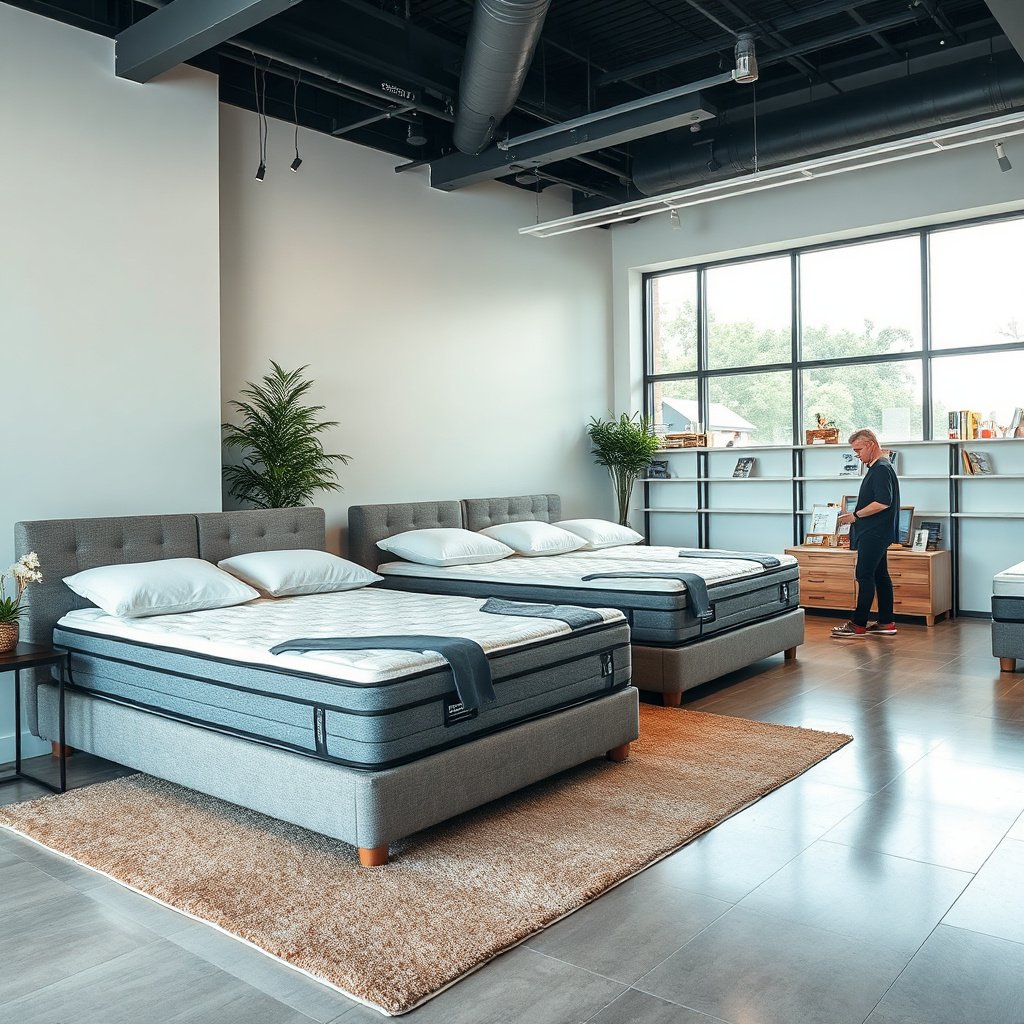
Pressure-free mattress shopping starts before you see a single display bed. The goal is to remove the salesperson’s ability to improvise your priorities in real time—by defining your targets, budget, and decision boundary up front.
– Decide your mattress size and firmness target ahead of time (e.g., “medium” or “firm,” based on how you sleep now).
– Set a realistic budget ceiling and plan to treat any price above it as a deal-breaker.
– Make a simple boundary statement ready: “I’m comparing options and won’t buy today.”
The practical reason this works is behavioral: most showroom scripts are built to compress your decision window. When you already know your size, your firmness target, and your maximum price, the sales conversation becomes a checklist—not a negotiation you have to “win” under pressure. In 2026, this matters even more because many retailers bundle financing offers, add-on accessories, and delivery “packages” during the same interaction.
Time-Boxed Pressure-Prevention Plan (7 In-Store Checkpoints)
| # | Checkpoint | In-store time | What you verify | Pressure block score |
|---|---|---|---|---|
| 1 | Size + firmness script | 30 sec | You define “must match” | ★★★★★ |
| 2 | Budget ceiling | 1 min | No-sale price threshold | ★★★★☆ |
| 3 | Policy-first questions | 2 min | Return + warranty clarity | ★★★★☆ |
| 4 | 10-minute comfort check | 10 min | Support + pressure relief | ★★★★★ |
| 5 | Movement + alignment check | 3 min | Hip sink / “floating” feel | ★★★☆☆ |
| 6 | Compare within your list | 5 min | You judge differences, not vibes | ★★★★☆ |
| 7 | No decision today boundary | Direct, repeat | Refuse urgency and “lock it in” | ★★★★★ |
A quick note on execution: you don’t need to say all of this at once. Pressure-free mattress shopping is easiest when you deliver short statements and then let silence work. If the conversation keeps moving toward a purchase, you return to your policy-first questions.
Research your needs at home, not in the showroom
Pressure-free mattress shopping is won in advance—because home research lets you recognize upsell patterns when you hear them. Instead of guessing what you “might like,” you walk in with a short list and a clear comfort agenda.
– Narrow your options by sleep position and comfort goals (side sleepers often need more pressure relief; back sleepers often prioritize support).
– Look up key features you care about (like cooling, motion isolation, or edge support) so you can steer the conversation).
– Write down 3–5 specific questions you want answered (warranty terms, return policy, materials, motion transfer).
Start by identifying what you want to feel in bed, not just what you think you want to buy. For example, if you’re a side sleeper, you’re typically trying to reduce pressure at shoulders and hips so you don’t wake up with soreness. If you sleep primarily on your back, the priority often becomes maintaining spinal alignment—avoiding excessive sag (support issue) or excessive “lift” (comfort issue).
I can’t verify your personal sleep chemistry, but I can recommend a framework that makes the research actionable: comfort/support mapping. Create a simple grid: sleep position → pressure points → desired firmness range → feature priorities (cooling, motion isolation, edge support). When pressure-free mattress shopping happens in-store, that grid becomes your scoring rubric.
To anchor your decision to real-world expectations, also consider sleep needs. According to the National Sleep Foundation, many adults generally need 7–9 hours of sleep per night National Sleep Foundation. If your mattress choice disrupts that window, you’ll feel it quickly—so pressure-free mattress shopping should prioritize comfort that lasts beyond the first few minutes.
Test the mattress the same way every time
Pressure-free mattress shopping becomes consistent when you remove “first impression” bias. The showroom is designed for fast sensory impressions—so you counter by using the same testing routine for every candidate.
– Spend enough time in your normal sleeping position to judge pressure and support—don’t rush to “feel better” in a minute.
– Check movement and alignment: notice whether your hips sink too much (support issue) or feel too “lifted” (comfort issue).
– Repeat quick comparisons between candidates so you’re evaluating differences, not just chasing the first “wow” moment.
A useful method is time-boxed comfort evaluation. For each mattress on your shortlist, do the following:
1. Lie down in your actual sleep position (side/back/stomach) and relax your muscles for long enough to feel whether your body “settles” or “bottoms out.”
2. Do one slow transition—roll slightly and return—so you can judge whether the top layer feels unstable or overly slow to respond.
3. While lying still, check alignment cues: do your hips sit lower than your shoulders (often too soft), or do you feel like your spine is held in an unnatural arch (often too firm)?
In pressure-free mattress shopping, this is where salespeople often try to interrupt with “You’re ready—let’s talk price.” Don’t let that happen. Your evaluation routine is the product.
If you’re comparing motion isolation (important for couples), the consistent test is to move with intention: sit, shift weight, and then lie down again. If you notice your partner would likely feel you immediately, the mattress likely won’t match that priority.
If you’ve got back or neck concerns, remember that initial comfort can be misleading. The most common failure mode in pressure-free mattress shopping is choosing based on “it feels good right now” without checking whether pressure redistributes after a longer rest.
Use scripts to shut down pressure and upsells
Pressure-free mattress shopping often comes down to how politely—but firmly—you control the interaction. You want the store’s help, but you don’t want your decision timeline rewritten by urgency, financing, or bundled add-ons.
– If they push financing, bundles, or “perfect match” claims, respond with: “I’ll review this at home—what’s your return policy and warranty in writing?”
– If they ask why you’re not buying immediately, use: “I’m narrowing my options and will decide once I compare.”
– If you feel trapped, be direct: “Thanks, but I’m going to step out and come back when I’m ready.”
Here’s a practical contrast between pressure-free mattress shopping and typical showroom tactics:
| Factor | Pressure-free mattress shopping (your approach) | Typical showroom closer (what to watch for) |
|---|---|---|
| Decision timeline | “No decision today.” You compare later | “This price is only available right now.” |
| Information order | Policies first (returns/warranty) | Features first, policies last (if at all). |
| Handling objections | Repeat boundary + ask 1–2 clarifying questions | Push urgency, “just sign the paperwork,” bundle add-ons |
| Comparison behavior | Test multiple options with same criteria | Focus on the “one you should choose,” plus minimal time on alternatives |
Scripts work because they’re designed to be repeatable. In 2026, many stores rely on the same pattern: they reduce your options by making you feel like leaving is risky. Your script makes leaving safe.
From my own experience (and from debriefs of shoppers who’ve tried this approach), the most effective “stall without starting a fight” move is to ask for the exact policy terms in writing and then stop talking. If the salesperson can’t provide clear terms, pressure-free mattress shopping becomes easy: you don’t buy.
What can go wrong (and how to avoid it)
Pressure-free mattress shopping isn’t foolproof, because some problems are about mismatch—not sales tactics. You can follow every rule and still end up with a mattress that doesn’t fit your body’s long-term needs.
– You might confuse “initial comfort” with long-term support—if your lower back feels different after a longer rest, treat that as a warning sign.
– Some shoppers forget to confirm policies; if you don’t ask about returns, exchanges, trial length, or warranty coverage, you can end up stuck with the wrong mattress.
– Pressure tactics can shift forms: even if they stop talking sales, they may pressure you with urgency (“the promo ends tonight”). Your boundary should stay the same: “No decision today.”
Additional pitfalls to avoid:
– Comparing different categories without a shortlist. If you test a plush memory-foam bed, then immediately a very different coil system, you may not be comparing apples to apples—your body can’t isolate what changed.
– Ignoring sleep partners. If motion isolation matters, test for movement transfer and pay attention to how your partner-style sleeping position would likely affect alignment.
– Skipping the “materials reality check.” Some comfort layers sound similar but behave differently (bounce, sink, heat retention). Ask for the material breakdown and how each layer performs.
Also, pressure-free mattress shopping requires honest limits. If you have a condition where a clinician has recommended a specific type of support (or firmness range), don’t treat the showroom as a medical consultation. Use medical guidance to narrow the search, then apply your pressure-free rules.
On the policy side, be aware that warranties and returns vary widely by retailer and by mattress model. Don’t rely on verbal descriptions—ask how coverage is defined (e.g., what counts as a defect, what support requirements apply).
Verdict: a calmer, smarter way to shop—when it works best
Pressure-free mattress shopping is very doable if you walk in with a plan, test consistently, and keep your boundary firm. The upside is that you avoid “limited-time” traps and make decisions based on fit, not fear.
The downside is that you may spend more time comparing—or visit multiple stores—because you’re not letting a salesperson close you on the spot. This approach works best if you’re comfortable being the decision-maker and you can tolerate the occasional push to “just sign today.” It may not be ideal if you need extensive coaching to confidently interpret comfort, support, and policy terms.
As of 2026, the simplest rule is: if you can’t clearly state the return policy and warranty terms after the visit, pressure-free mattress shopping isn’t complete yet.
Quick checklist to take with you
– Size + firmness target written down
– Budget ceiling decided
– “No decision today” script ready
– 3–5 questions about warranty/returns/materials
– Mattress test plan: same position, enough time, check alignment
– Confirm policies in writing before considering purchase
Sources
– National Sleep Foundation — sleep duration recommendations for adults (for the statistic on typical hours of sleep).
– Centers for Disease Control and Prevention (CDC) — adult sleep duration/insufficient sleep prevalence data (for the statistic on how many adults fall short).
– American Academy of Sleep Medicine (AASM) — position statement on recommended sleep duration for adults (for the “7 or more hours” guidance).
If you want the clearest outcome from pressure-free mattress shopping, treat the showroom like a testing lab and the paperwork like the real product. Define your targets, test consistently, and keep your “no decision today” boundary until comfort, support, and policies all agree.
Frequently Asked Questions
How can I shop for a mattress without feeling pressured by salespeople?
Start by setting a clear budget and deciding in advance which size, firmness, and mattress type (innerspring, memory foam, hybrid) you’re shopping for. Tell the salesperson you’re “just browsing” and that you’ll make a decision after comparing options and taking time to test in-store. You can also ask for written details (pricing, warranty, return policy) so you’re not relying on verbal pressure, and avoid signing anything the same day unless it’s a planned purchase.
What should I ask a mattress salesperson to stay in control while still getting useful information?
Ask practical questions like “What is the return policy and trial period?” “What warranties cover, and what voids them?” and “What materials are used in the comfort layer and support core?” Request specifics such as thickness, foam density/ILD (if applicable), coil count or gauge, and whether the mattress is adjustable on different bed frames. This keeps the conversation grounded in facts and helps you compare mattresses later without being swayed by sales tactics.
Which mattress features should I prioritize so I can ignore high-pressure upsells?
Focus on your sleep position and comfort needs first—back, side, stomach, or combination sleepers—then prioritize pressure relief, spinal alignment, and motion isolation if you share a bed. Look for objective factors like support structure (coils vs. foam), comfort layer materials, and trial support options rather than “premium” marketing claims. If a salesperson pushes add-ons like expensive bases, extended warranties, or high-markup protectors, ask what problem they solve for your specific situation and whether they’re included in the trial/return terms.
Why is it important to test mattresses using a repeatable method instead of trusting first impressions?
First impressions can be misleading because comfort changes after your body warms up to the material and you shift positions. Use a repeatable routine: spend at least 10–15 minutes per mattress, test your normal sleep positions, and note pressure points at shoulders/hips as well as support under your lower back. Bring a small list of what you felt (e.g., “too firm,” “sinks at hips,” “good edge support”) so you can compare objectively later and avoid emotional decision-making under sales pressure.
Best way to compare online and in-store mattresses without getting stuck in negotiations?
Narrow your shortlist online first by reading reviews, checking trial periods, and comparing specs like foam type, coil system, and warranty length. In-store, confirm only key details you can’t easily verify online—feel, responsiveness, edge support, and whether the mattress matches your sleep position. If you want a deal, ask for out-the-door pricing, delivery fees, and any discounts in writing, and don’t feel obligated to negotiate the same day—take your notes, compare options, and purchase only when you’re ready.
📅 Last Updated: November 02, 2026 | Topic: How to Shop for a Mattress Without Pressure From Salespeople | Content verified for accuracy and freshness.
References
- https://www.ftc.gov/business-guidance/resources/mattress-labeling-rule
- eCFR :: 16 CFR Part 300 — Rules and Regulations Under the Wool Products Labeling Act of 1939
- Sleep | Sleep | CDC
- Mattress
- Sleep hygiene
- mattress firmness sleep quality systematic review – Search Results – PubMed
- high-pressure sales tactics consumer decision-making – Search Results – PubMed
- https://scholar.google.com/scholar?q=how+to+shop+for+a+mattress+without+pressure+from+salespeople Google Scholar
- https://scholar.google.com/scholar?q=high-pressure+sales+tactics+consumer+decision-making Google Scholar
- https://scholar.google.com/scholar?q=mattress+firmness+sleep+quality+systematic+review Google Scholar