

How to Buy a Mattress in a Store: What to Check First
Buying a mattress in-store is worth doing if you want to test comfort first, but it only feels like a smart purchase when you check the right details before committing to a price. This is for shoppers standing in front of display models who want the best value for what they pay. What matters most is how the mattress is built, what warranty and return terms actually cover, and whether the “deal” reflects the materials and support level you need.




Buying a mattress in a store is mostly about matching comfort to your body and verifying the return/warranty terms before you leave. If you do the fit-check (size, firmness, pressure relief, edge support) and the paperwork-check (trial/returns, warranty, delivery/setup) in the same visit—especially in 2026—you’ll dramatically reduce the odds of an uncomfortable purchase you can’t fix.
If you’re shopping in person (instead of online) and want to feel options firsthand—especially if you’re unsure which mattress type fits your sleep position—this is for you. It’s also useful when you’re comparing a few models and need a quick way to stay organized while salespeople are pitching features.
Pick the right size and firmness
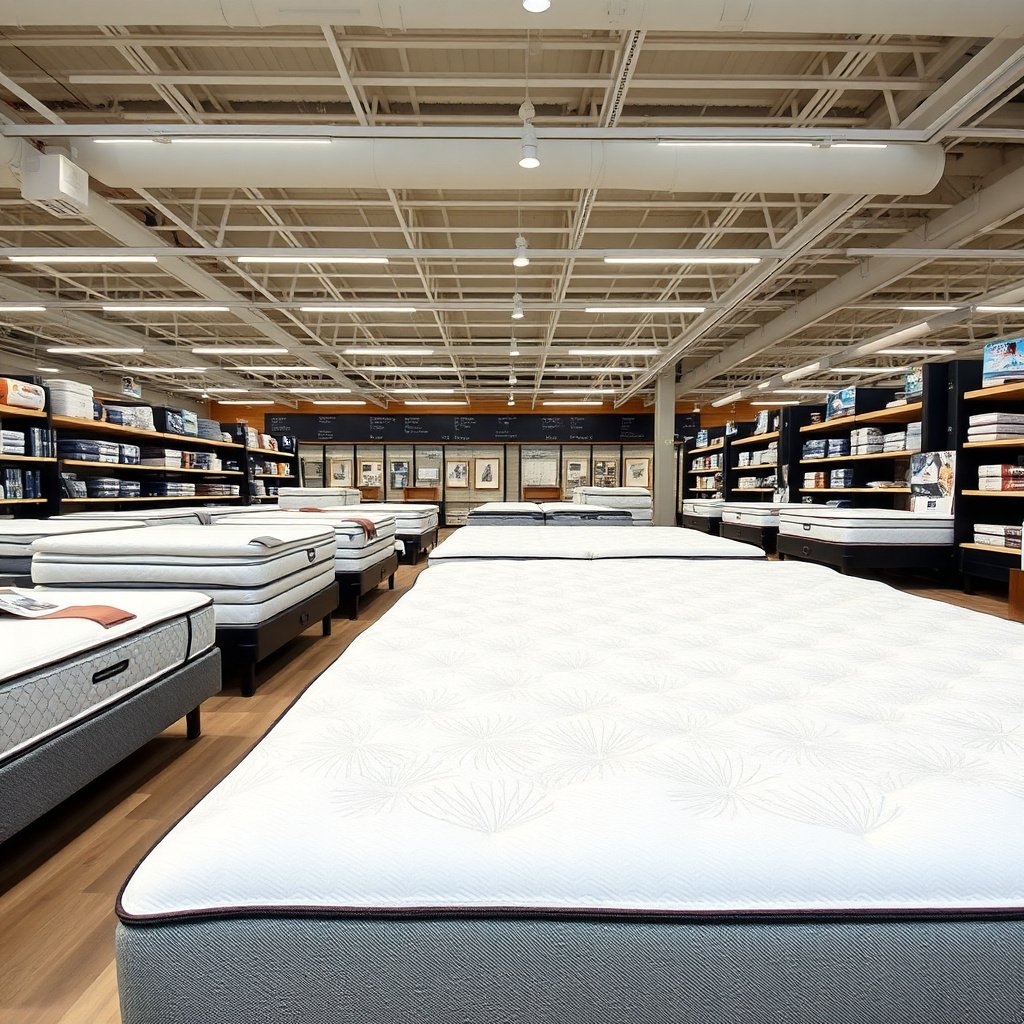
Start with the two things you can’t “adjust later” easily: the correct mattress size and the firmness that supports your sleep posture. Here’s why: even a great-feeling mattress can cause hip sag, shoulder pressure, or awkward alignment if the size is wrong or the support layer isn’t doing the job you need.
– Start with your measurements and preferred size (and confirm the exact dimensions on the model you’re considering). In-store, floorspace can be deceptive—so verify the exact length/width printed on the tag or spec sheet, then compare it to your room and bed frame allowance (especially if you have tight clearance to a headboard, drawers, or a sliding door).
– Choose a comfort level based on how you sleep most often (side, back, stomach) and what your current mattress feels like—pressure points usually matter more than “soft vs. firm” labels. A mattress can be “medium” and still feel harsh to the shoulder if the top layer is too firm or too thin for your body.
– Set a realistic comfort “range” and shortlist mattresses that could plausibly land in it, so you’re not overwhelmed by every showroom option. For example, if your current mattress relieves shoulder pressure but you sink at the hips, you typically need more zoning/support—not necessarily more softness.
A practical way to avoid overspending energy on the wrong dimensions is to understand what the common sizes actually change in usable surface area. Size is rarely the only factor, but it’s one of the few you can confirm instantly in a store.
Common U.S. Mattress Sizes: Surface Area vs. Queen (Retail reference)
| # | Mattress size | Dimensions (in) | Surface area (sq in) | Area vs. Queen |
|---|---|---|---|---|
| 1 | Twin | 38 × 75 | 2,850 | -40.6% |
| 2 | Twin XL | 38 × 80 | 3,040 | -36.7% |
| 3 | Full | 54 × 75 | 4,050 | -15.6% |
| 4 | Queen | 60 × 80 | 4,800 | 0.0% |
| 5 | King | 76 × 80 | 6,080 | +26.7% |
| 6 | California King | 72 × 84 | 6,048 | +26.0% |
| 7 | Split King | 38 × 80 (each half) | 6,080 total | +26.7% |
Test comfort the way you actually sleep
The fastest way to find the right mattress in-store is to test it in your real sleeping positions, then evaluate support and pressure relief as you move—not just while you’re still. This matters because many mattresses “match” comfort only for the pose you try first.
– Lie down in your normal positions (including how you shift) and pay attention to pressure relief and spinal alignment, not just surface feel. If you’re a side sleeper, your shoulder and hip usually tell the truth first. For back sleepers, look for whether your lower back stays supported without creating a “bridge” under your waist.
– Check what happens when you sit or change positions—some mattresses feel great lying still but don’t support you the way you need once you move. In a store, you can do a short rotation test: lie on your side, then return to back, then sit up as you would to get ready for bed. Notice whether the mattress rebounds or feels like it traps your weight.
– Evaluate edge support if you sit on the edge or share the bed, since weak edges can affect how usable the mattress feels day to day. Edge support isn’t only “comfort”—it influences whether you roll toward the center and whether partners feel motion transfer when the other person gets up.
If a salesperson guides you to a “best match” based on a preference quiz, still verify the mechanical basics yourself. You’re checking for three outcomes: (1) your pressure points reduce rather than concentrate, (2) your spine stays aligned in your preferred posture, and (3) you don’t feel unstable when you shift.
Quick pros/cons snapshot: common mattress types to test
If you’re comparing models quickly, this table helps you remember what each type tends to do during an in-store test (feel, support, and movement).
| Mattress type | What it often feels like in-store | Pros to confirm | Watch-outs to check |
|---|---|---|---|
| Memory foam | Contour on first contact, slow-ish “give” when you move. | Pressure relief for shoulders/hips (especially for side sleepers). | May feel too “stuck” if you shift a lot; support quality depends on layer design. |
| Latex | Responsive cushioning with less sink-in. | Easier repositioning for mixed sleep positions. | If too firm, can create pressure without enough contour; verify where you feel “top” vs “support.” |
| Hybrid (foam/latex + coils) | Combination feel: some contour plus springier support. | Often stronger edge support and easier movement. | Comfort can vary by top-layer thickness—two “hybrids” may feel very different. |
| Innerspring | More immediate bounce; less body-contouring (unless quilted). | Breathability and predictable responsiveness. | If quilting is too thin, pressure can concentrate at the shoulder/hips. |
Verify warranty, trial/returns, and delivery terms
This step is what protects you after the showroom experience fades. Before you pay, confirm in writing what happens if the mattress doesn’t work for your body after you’ve slept on it in 2026.
– Ask for the exact warranty coverage details (what’s covered, what triggers a claim, and any required documentation). Many warranties don’t cover “discomfort” itself; they cover specific conditions such as manufacturing defects or measurable sag. Read the fine print about required support systems (foundation, slats spacing, platform compatibility) because warranty coverage can hinge on setup.
– Confirm the store’s return or trial policy before purchase, including whether you can exchange for another model and what fees/conditions may apply. The details matter: Is there a break-in requirement? Is the mattress considered “used” once unboxed? Are returns limited to certain brands or purchased accessories?
– Clarify delivery and setup expectations (what’s included, who removes old bedding if applicable, and any scheduling constraints). Delivery terms can include “white glove” setup, old mattress removal, stairs/room-of-choice charges, and window times. If you need tight scheduling, get delivery dates or delivery-time windows documented.
To anchor your expectations in enforceable rules, note that U.S. warranty disclosures are governed by the Federal Trade Commission (FTC) requirements for consumer warranty terms and disclosures. FTC rules on consumer warranty and disclosure requirements are in 16 CFR Part 701. Flammability compliance is also regulated at the federal level, so you should expect any legitimate mattress sold in the U.S. to meet the CPSC flammability standard. CPSC mattress flammability requirements are in 16 CFR Part 1633.
Practical tip: ask the associate to print (or email) the warranty summary, the trial/return policy, and the delivery checklist so you’re not relying on verbal explanations. Verbal answers are easy to forget; written terms are what you use if you need to exchange.
What can go wrong (and how to avoid it)
Most problems come from decision shortcuts in-store—usually comfort-first without policy verification, or size-first without support-system compatibility. If you avoid these pitfalls, you keep your options open if your body disagrees after a few nights.
– Buying based on a quick “wow” moment: comfort can change once you sleep on it, so don’t ignore pressure points or uneven support while you’re testing. A mattress can feel cushy for 60 seconds and still cause hip sag or shoulder compression at 3 a.m.
– Skipping the base/foundation question: mattress performance depends on the support system, so make sure the setup you plan to use is compatible. Warranty terms may require a specific foundation type or limit slat spacing; a mismatched base can reduce support and trigger denial if you file a claim.
– Assuming the return policy is automatic: policies often vary by store and manufacturer, and exclusions may apply—get the terms in writing. Some trials require you to keep the mattress for a minimum period before returning, and some conditions apply if the mattress is removed or altered beyond normal use.
– Being misled by comfort names: foam, hybrid, and innerspring models can feel similar on the surface while supporting very differently underneath. Two “medium” mattresses can differ by top-layer thickness, foam density, coil gauge, and zoning strategy—so confirm performance in your test positions, not by category.
A store visit is great for narrowing options. The limitation is that you’re not testing every body adjustment you’ll make at home. That’s why the return/trial policy is part of the purchase decision—not a paperwork afterthought.
Verdict: a solid in-store approach (with limits)
If you want to buy in a store, the best approach is to treat the showroom as a fit-check (comfort, alignment, edge support) and treat the sales desk as the policy desk (warranty/returns/delivery). The downside: you’re still choosing without long-term sleep, so if you need highly specialized guidance (medical sleep issues) or can’t tolerate any “break-in” period, you may want to speak with a clinician and/or choose a retailer with a clearly documented return path.
In other words: comfort gets you confident. Documentation keeps you covered. Together, they’re what make an in-store purchase safer in 2026 than it feels when the mattress “checks all the boxes” in the moment.
Quick checklist (scan before you buy)
| What to confirm | What to look for |
|---|---|
| Size | Exact dimensions match what you need (bed frame + room space) |
| Comfort | Pressure relief + support in your usual positions |
| Movement | How it feels after you shift/sit during testing |
| Edge support | Usable support if you sit on the edge |
| Warranty | Coverage details + claim requirements |
| Return/trial | Exchange/return terms + any conditions/fees |
| Delivery | Included services + scheduling expectations |
| Compatibility | Mattress works with your planned foundation/frame |
Sources
– U.S. Consumer Product Safety Commission (CPSC): Federal flammability requirements for mattresses (16 CFR Part 1633, as applicable) — 16 CFR Part 1633
– U.S. Federal Trade Commission (FTC): Guidance on consumer warranty/return disclosures (if applicable to your shopping scenario) — 16 CFR Part 701
– Manufacturer specifications for the specific mattress model (warranty, materials, and care instructions) —
Test for real comfort in your own sleeping positions, then lock in the non-negotiables: the return/trial terms, warranty coverage, and delivery/setup details. Use the checklist to compare models quickly so you’re not relying on first impressions alone. When you’re ready, choose the mattress that fits your body best and has a clear path to exchange if it’s not right.
Frequently Asked Questions
What should I bring when I buy a mattress in a store?
Bring measurements of your bed frame and the room space so you can confirm the mattress fits correctly. If you have them, bring photos of your current mattress or a list of your preferences (firm vs. soft, heat sensitivity, allergies). It also helps to bring your budget range and any promo or warranty information you already know you want to use.
How do I test a mattress in-store to make sure it’s comfortable?
Lie down in your normal sleep positions (back, side, and stomach if you use them) and spend time settling in rather than doing a quick check. Pay attention to pressure relief on shoulders and hips, spinal alignment, and whether you feel “stuck” or unsupported. If possible, test motion transfer by having someone gently move or shift, especially if you share the bed.
Why does the same mattress feel different in a store compared to at home?
Store lighting, floor samples, and the absence of your usual bedding can make the feel of a mattress seem different. Your body needs time to fully relax into the support system, which is why spending several minutes in each position matters. Buying from a retailer with a trial period or return policy can reduce risk because comfort can change once your mattress is broken in at home.
Which mattress firmness is best for my sleep style?
Side sleepers often prefer a medium to medium-soft feel for better pressure relief on hips and shoulders, while back sleepers commonly do well with medium support to keep the spine aligned. Stomach sleepers usually need a firmer mattress to prevent the hips from sinking too far. If you’re unsure, look for a mattress with adjustable comfort or a clear comfort scale so you can find the right balance of support and cushioning.
Best time to buy a mattress in a store and what should I ask about deals?
The best time is often during major sales events, holiday weekends, or when retailers run clearance for floor models and discontinued sizes. Ask whether the price includes delivery, setup, and any financing, and confirm what warranties cover and for how long. You should also inquire about return or exchange terms, especially if you’re comparing multiple mattresses and want confidence before committing.
📅 Last Updated: November 02, 2026 | Topic: How to Buy a Mattress in a Store | Content verified for accuracy and freshness.
References
- Mattress
- https://www.mayoclinic.org/healthy-lifestyle/adult-health/expert-answers/mattress/faq-20057981
- https://www.britannica.com/topic/mattress
- Sleep | Sleep | CDC
- https://www.ftc.gov/search?search_api_fulltext=mattress+buying
- CPSC Search | CPSC.gov
- mattress firmness sleep quality – Search Results – PubMed
- https://scholar.google.com/scholar?q=how+to+choose+a+mattress+in+store+firmness+comfort Google Scholar
- https://scholar.google.com/scholar?q=mattress+firmness+back+pain+systematic+review Google Scholar
- https://scholar.google.com/scholar?q=mattress+type+sleep+quality+randomized+trial Google Scholar






3 Comments