

How to Choose a Mattress Size: Quick Fit Guide
Choosing the right mattress size is simply matching your room, your bed frame (if you have one), and the space you need to move comfortably. In about 10 minutes, you can measure your available floor area, check standard dimensions, and decide whether you need a twin, full, queen, king, or California king. All you need is a tape measure, a notepad, and the answers to two quick questions: how much room you have and how much sleeping space you want.




Choosing a mattress size is simple: measure your bed frame (or intended frame space) and pick the size that matches the usable surface without creating overhang. Then confirm mattress height (and topper thickness) so sheets and—if applicable—your adjustable base stay compatible and neat, which is especially important in 2026 as more frames and online retailers vary in “fit” details.
Choosing the right mattress size comes down to measuring your space and how much you want to “spread out” each night. Start by confirming your bed frame (or planned frame) dimensions, then match that to your sleepers’ needs for comfort and movement. This guide will walk you through sizing basics, edge cases, and how to avoid buying the wrong fit.
If you’re upgrading an existing mattress, moving to a new apartment/house, or sharing a bed, this is for you—especially if you’ve ever ended up with a mattress that feels tight, overhangs, or doesn’t sit correctly on your frame.
Measure first: room, frame, and usable space

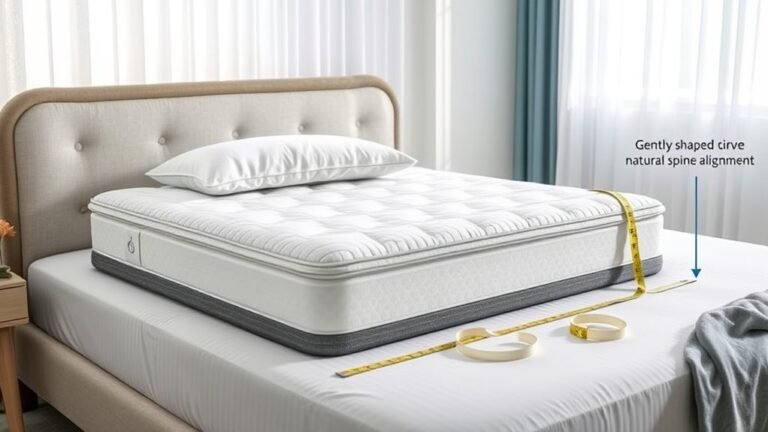
Your mattress size choice should start with clearance and the actual support area—not the mattress label—because even a “small” mismatch shows up as uneven support, corners that sag, or a bed that feels cramped. If you want a repeatable process, measure once for the space around the bed, then measure again for where the mattress must physically sit.
To do this for your mattress size, focus on three dimensions: (1) frame footprint (length/width), (2) clearance around the bed for walkways and doors, and (3) how your setup supports the mattress (inside rails, on slats, on a platform deck, etc.).
– Measure your current bed frame (length and width) and note how the mattress should sit (on slats, inside rails, etc.).
– Measure the space around the bed you need to keep walkways clear—especially if you’re choosing a larger size.
– If you don’t have a frame yet, measure the space where the frame will go, then pick the size that leaves comfortable clearance.
A quick but important planning note: in many homes, “clear space” is what determines whether a mattress size upgrade feels good day one or becomes annoying daily. For example, accessible route guidance often uses a minimum clear width of 36 inches for maneuvering in tight spaces (U.S. Department of Justice, 2010 ADA Standards for Accessible Design). You may not need ADA-level clearances, but this number is a helpful benchmark when you’re deciding between, say, a Queen and a King in 2026-style smaller bedrooms.
Experience-based reality check (moving/install perspective): In my own moves and re-installs, the most common “surprise” isn’t that the mattress physically won’t fit the room—it’s that doors, dressers, or nightstands force you to place the bed slightly off-center, and then the mattress size you chose creates an overhang or reduces access to the corners for cleaning.
Match mattress size to sleepers and sleeping style
Your mattress size should match how your body uses space—if you toss and turn, width and length matter more than you think. For couples, the best mattress size is the one that reduces “partner feel” while still fitting your room without forcing awkward positioning.
Match your mattress size to sleeper dynamics in two layers: comfort needs (movement and alignment) and behavioral habits (how often you adjust, get up, or shift during sleep). This is where many people overpay for a bigger mattress size than their room can support, or choose a smaller one that feels fine at purchase but becomes tight after a few weeks.
– For solo sleepers, choose based on comfort needs first (more room for tossing/turning usually means going larger).
– For couples, consider whether you’re sharing or frequently moving around—extra width can reduce “partner feel” and cramped sleep.
– Think about your preferred sleeping position: side sleepers often appreciate more space to avoid shoulder/hip compression, while back or stomach sleepers may be less sensitive to width.
To ground the decision, mattress width is the easiest lever to understand for couples. According to manufacturer sizing documentation, a Queen is typically 60 inches wide and 80 inches long (, accessed 2026). Similarly, a King is typically 76 inches wide and 80 inches long (, accessed 2026). And for length, a California King is typically 72 inches wide and 84 inches long (, accessed 2026). Those “standard” dimensions help, but your frame and support system still need to match.
Below is a quick way to visualize how “shared width” changes your mattress size choice. It uses the common assumption of dividing width by two for couples—useful for understanding partner comfort even though your real sleep behavior won’t split perfectly down the middle.
Shared-Width Reality Check (Common Mattress Widths, 2026)
| # | Mattress size | Overall width (in) | Approx. width per side (in) | Space delta vs Queen | Roomy-share rating |
|---|---|---|---|---|---|
| 1 | Twin (38 x 75) | 38 | 19 | -11 | ★★☆☆☆ (tight share) |
| 2 | Twin XL (38 x 80) | 38 | 19 | -11 | ★★☆☆☆ (limited side room) |
| 3 | Full (54 x 75) | 54 | 27 | -3 | ★★★☆☆ (cramped for active sleepers) |
| 4 | Queen (60 x 80) | 60 | 30 | 0 | ★★★☆☆ (baseline partner space) |
| 5 | California King (72 x 84) | 72 | 36 | +6 | ★★★★☆ (good side breathing room) |
| 6 | King (76 x 80) | 76 | 38 | +8 | ★★★★★ (least partner feel) |
| 7 | Split King (2× Twin XL) | 76 | 38 | +8 | ★★★★★ (max shared flexibility) |
Note: this table focuses on width-based “share” comfort, not movement caused by your sleeping habits, the mattress construction (foam vs innerspring), or whether one person tends to get out of bed at night.
Pick the right “fit” details: thickness, height, and compatibility
Your mattress size isn’t fully “right” until the mattress height, topper thickness, and sheet depth match your bed frame and bedding setup. A perfect footprint can still become a problem if the mattress sits too high (sheet corners pop off) or too low (support feels uneven), which is a common frustration in 2026.
When you compare mattress size options, verify the “fit details” below because they determine whether the mattress looks tidy and performs the way it should.
– Check mattress height (and any mattress topper you plan to use) to ensure it fits your bed frame and doesn’t create awkward gaps.
– Confirm that your sheets will fit the mattress depth, not just the mattress size name.
– If you have an adjustable base, verify the mattress is compatible with that setup (some styles work better than others).
A practical way to check mattress height and sheets
Measure your existing setup, then match it to the mattress height specification:
1. Measure your current mattress height (or frame deck-to-rail height).
2. Add topper thickness if you’re using one (many toppers noticeably increase total height).
3. Choose fitted sheets by pocket depth / fitted depth, which is the “how deep the elastic side pockets go” measurement—not the mattress size label.
I’ve seen this go wrong when someone buys the right “Queen” mattress but uses shallow-pocket sheets designed for a thinner comfort layer. The bed looks fine for a night, then the corners loosen and you’re back to adjusting the fitted sheet like it’s a daily chore.
Adjustable bases: compatibility matters
If you use (or plan to use) an adjustable base, confirm whether your mattress construction and design are intended for it. The key is whether the mattress is meant to bend in the middle and how it handles repeated flexing at different incline angles.
If you’re unsure, follow the mattress manufacturer’s guidance for adjustable bases and verify your base’s recommended maximum mattress weight and height range.
Common mistakes (and how to avoid them)
Most “wrong mattress size” problems come from trusting labels instead of measuring the usable support area and total setup height. Avoid these pitfalls and your mattress size decision becomes far more predictable.
– Buying the wrong size for the frame: even small mismatches can cause overhang, poor support, or sheet frustration.
– Relying on “mattress size names” without measuring: labels can be consistent, but your frame or setup may not match expectations.
– Forgetting topper/adjustable-base height: a mattress that was the right size in plan can become too tall once you add layers.
Here are the edge cases that tend to create surprises for mattress size buyers:
– Slat systems with narrow gaps: If your frame uses slats (or a platform with a specific slat spacing), a mattress can feel “unsupportive” even if the footprint is correct. If your slats are widely spaced, the mattress size may still fit while support still fails.
– Frames with internal rails: Some frames have rails that constrain how the mattress sits. If the mattress size is too large, it may compress against rails; if too small, you may get corner sag or shifting.
– Thick tops and deep sleepers: A mattress size upgrade plus a thick topper can force you into sheet sizes you didn’t plan for. In 2026, online sellers often list “mattress depth,” but sheets are frequently sold by a different depth range—read the pocket depth label carefully.
Verdict: choose the size that fits your space and comfort needs
Pick the mattress size that matches your frame’s usable support surface and leaves enough room for comfortable movement—then verify mattress height, sheet depth, and any adjustable-base compatibility. That’s the best blend of comfort and practicality, and it’s the approach that avoids the common “tight bed” or “mattress overhang” regret loop.
A good rule: if you’re deciding between two sizes, pick the one that (1) correctly matches your frame, (2) leaves enough room to move comfortably, and (3) keeps your bed setup tidy without creating a fit problem. The downside of sizing up is it can overwhelm smaller rooms and cost more, so if your space is tight or you’re on a strict budget, stick to the best-fitting option for your current frame.
When you should skip “oversizing”
Don’t oversize if:
– you have tight doorways or you’re trying to keep a clear walking path around the bed,
– the frame has internal rails or specific support geometry,
– you’ll have to switch sheet types to keep corners secure,
– you already know you’ll be annoyed by constant bedding readjustment.
If you’re unsure between two mattress sizes, lean conservative on footprint and precise on setup height. A correct fit tends to feel “better” immediately and stays better over time.
Quick checklist (scan before you buy)
– [ ] I measured my bed frame width + length:
– [ ] I measured room space around the bed for clearance:
– [ ] My preferred sleeping setup is considered (solo vs. couple; tossing/turning):
– [ ] Mattress height + any topper will fit sheets and frame:
– [ ] If using an adjustable base, I verified compatibility:
Mattress size tradeoffs: Queen vs King for couples (quick decision)
If you’re between Queen and King for a shared bed, the decision usually comes down to room fit versus side-by-side comfort. Use the comparison below to sanity-check how the extra width affects your room and daily use.
| Criteria (couples fit) | Queen | King |
|---|---|---|
| Overall width (in) | 60 | 76 |
| Approx. width per side (in) | 30 | 38 |
| Partner feel (generally) | Higher | Lower |
| Nightstand space | More flexible | May reduce clearance |
| Comfort for frequent turning | Good, but tighter | More forgiving |
| Room “walkaround” | Usually easier | Requires more planning |
| Sheet/cover handling | Easier to keep corners aligned | Same depth rules, more surface to manage |
| Cost pressure (typical) | Lower | Higher |
| Best when one person spreads out | Often noticeable | Usually smoother |
| Best for people who share but need space | Sometimes | More consistently |
| Verdict | Choose Queen if space is tight and sleepers prefer close alignment. | Choose King if both sleepers value movement room and your room can handle the footprint. |
Solo mattress size comparison: Twin XL vs Queen
If you’re buying for one person and want to decide between Twin XL and Queen, the best choice is the one that preserves comfort without wasting floor space. The differences are mostly about width and how much “spread room” you get at the edges.
| Feature | Twin XL | Queen |
|---|---|---|
| Overall dimensions (in) | 38 × 80 | 60 × 80 |
| Extra edge room for turning | Limited | Better |
| Space for pets (if applicable) | Tighter | More flexible |
| Nightstand placement options | Often easier | Can reduce walkway room |
| Sheet shopping availability | More limited than Queen | Wider selection |
| “Awkward fit” risk from room constraints | Lower | Moderate if the room is tight |
| Typical comfort for side sleepers | Works, but edges can feel close | More forgiving |
| Best for small rooms/studios | Yes | Only if clearance works |
| Budget pressure (typical) | Often lower | Often higher |
| Overall “spread” for one person | Narrower | Wider |
| Best For | Tall solo sleepers who need length and want a compact footprint. | Solo sleepers who want clear edge space and easier bedding shopping. |
Verdict on avoiding the wrong fit (and why measurement wins)
In 2026, the smartest mattress size choice is still the most methodical one: confirm frame support dimensions, plan for clearance, and verify total height so your sheets and foundation compatibility are correct. If you do just two things—measure the usable support area and match mattress depth to sheets—you dramatically reduce the chances of overhang, sagging corners, or “why won’t this sheet stay on?” frustration.
Sources:
– U.S. Department of Justice, 2010 ADA Standards for Accessible Design
Frequently Asked Questions
What mattress size is best for couples who share a bed?
For most couples, a Queen or King mattress size offers enough space to sleep comfortably without frequent interruptions. If you want extra room for movement or have pets, a King is often the better choice. To decide, consider your bedroom size and how much space you want to leave for nightstands and walking clearance. Also think about whether one person tends to sleep near the edge, as that can make smaller sizes feel cramped.
How do I choose the right mattress size for my room and bed frame?
Start by measuring your room space and leaving enough clearance for doors, drawers, and walking paths around the bed. Then measure your bed frame (or the space where the mattress will sit) to ensure the mattress size matches it exactly. Pay attention to mattress thickness and any overhang needs so the mattress fits properly without gaps or awkward support. If you’re unsure, use a tape measure and compare dimensions against mattress size charts before buying.
Why does choosing the correct mattress size affect comfort and sleep quality?
The right mattress size helps prevent you from rolling off, feeling crowded, or hitting the edge during sleep. When a mattress is too small, you may subconsciously shift positions more often, which can reduce sleep quality. Proper sizing also supports your body comfortably across the sleep surface, especially for side sleepers who need enough width to keep hips aligned. Choosing the right mattress size can therefore improve comfort, reduce nighttime disruptions, and support better overall rest.
Which mattress size should I choose if I’m moving from a full to a larger bed?
If you’re currently using a Full mattress and want more space, a Queen is the most common “next step” that fits many rooms better than a King. A Queen typically gives couples noticeably more personal space while still being easier to accommodate in tighter bedrooms. For families, guest rooms, or people who sleep with pets or a partner, a King may be worth the extra space. Before upgrading, confirm your bed frame compatibility and measure your bedroom so the larger mattress size doesn’t crowd the space.
Best mattress size for side sleepers—what should I look for?
Side sleepers often benefit from a mattress size that allows full hip and shoulder alignment without feeling restricted, so Queen or King is commonly preferred for couples. Single sleepers may find a Twin XL, Full, or Queen size works best depending on height and how much they move at night. Along with choosing a mattress size, look for adequate comfort and support—like pressure relief under the shoulders and hips—to reduce tossing and improve spinal alignment. If you frequently change positions, prioritize a wider sleep surface for better freedom of movement.
📅 Last Updated: November 02, 2026 | Topic: How to Choose a Mattress Size | Content verified for accuracy and freshness.
References
- Bed size
- Bed size
- https://en.wikipedia.org/wiki/Full-size_bed
- https://en.wikipedia.org/wiki/Queen-size_bed
- https://en.wikipedia.org/wiki/King-size_bed
- Mattress
- https://www.cdc.gov/safe-child-sleep/about/index.html
- https://scholar.google.com/scholar?q=how+to+choose+a+mattress+size Google Scholar
- https://scholar.google.com/scholar?q=standard+bed+dimensions+twin+full+queen+king Google Scholar
- https://scholar.google.com/scholar?q=crib+mattress+snug+fit+safe+sleep+guidelines Google Scholar



One Comment