How to Fix a Mattress Too Soft for Back Sleepers With Scoliosis
If you’re a back sleeper with scoliosis and your mattress is too soft, the fix is clear: add targeted lumbar support with a firm-in-the-right-places topper or insert. This article answers how to stop spinal misalignment by choosing the right firmness and support layer so your hips and lower back stay level through the night. You’ll get practical steps to adjust your setup without making your bed so hard that it triggers pressure points.




If your mattress is too soft, the fastest way to help a back sleeper with scoliosis is to reduce “sink” and keep the spine from bending out of alignment while you sleep. Start by adding targeted support (usually under the mattress or using a firmer support surface), then fine-tune with a topper only if pressure relief is still an issue. This article will walk you through practical, low-risk changes and what to watch for so you don’t trade softness for worse alignment.
If you’re noticing your hips or mid-back drop lower than your shoulders, you’re likely losing neutral alignment—especially common with scoliosis where small posture changes can feel bigger at night. These steps are for people who want to try mattress adjustments first, while still being mindful that scoliosis can require individualized guidance from a clinician or physical therapist.
Check whether it’s “too soft” (and where the sag is happening)
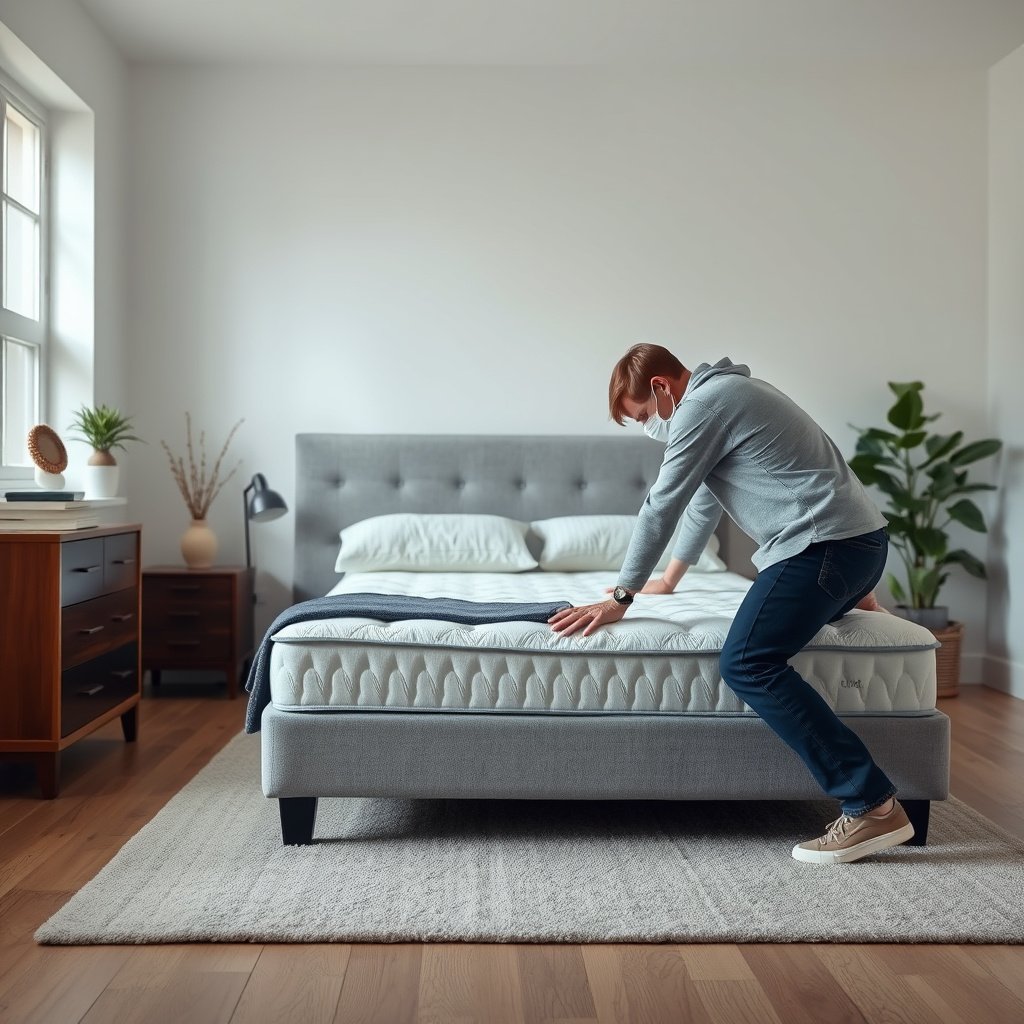
A mattress is “too soft” for back sleeping with scoliosis when it lets your pelvis or ribs sink unevenly, making your spine rotate or kink during the night. The first step is to pinpoint the sag zone (hips, low back, or mid-back) and confirm whether the issue comes from the mattress itself or the support foundation.
“Scoliosis” is clinically defined using Cobb angle measurement on radiographs, with a threshold of about 10° for diagnosis in many medical references.
When a support surface allows excessive “hammocking” (uneven sink), the spine can lose neutral alignment—this is the same mechanical failure mode clinicians look for when assessing low-back support.
As of 2026, the most consistent at-home troubleshooting for mattress softness still starts with verifying foundation stability before adding extra layers on top.
– Lie down in your usual back-sleep position and notice which area sinks first (hips, low back, or mid-back).
– Compare your shoulder and hip height: if one side or one region noticeably drops, support—not just comfort—may be the problem.
– Inspect your current setup (mattress foundation/slats and frame): uneven or weak support commonly causes localized softness (for example, sag on one side where a slat is missing, warped, or spaced too far apart).
Cobb Angle Ranges in Scoliosis and Common Clinical Response Thresholds
| # | Cobb angle range (°) | Common description | Clinical threshold context | DIY mattress support priority | Urgency |
|---|---|---|---|---|---|
| 1 | <10 | No scoliosis by Cobb definition | Not typically classified as scoliosis by Cobb-angle criteria | Comfort-first, avoid uneven “hot spots” | ★ |
| 2 | 10–19 | Mild | Often monitored; bracing usually not the first-line decision | Support enough to prevent pelvic drop | ★★ |
| 3 | 20–24 | Low-moderate | Monitoring focus; treatment decisions vary by growth/pattern | Stabilize neutral curve during sleep | ★★★ |
| 4 | 25–29 | Moderate | Often where bracing may be considered in growing patients | Prioritize reducing asymmetric sink/rotation | ★★★★ |
| 5 | 30–39 | Moderate to severe | Bracing is commonly part of management in appropriate candidates | Treat sleep alignment as part of symptom control | ★★★★★ |
| 6 | 40–44 | Severe | Often closer to thresholds for escalation (case-dependent) | Avoid any setup that encourages pelvic drop | ★★★★★ |
| 7 | ≥45 | Very severe | Surgical evaluation is commonly considered around this range | Skip aggressive DIY; align with clinician plan | ★★★★★ |
Add support to stop sinkage without making the bed uncomfortably hard
The simplest fix for a soft mattress is to restore a stable support plane underneath so your pelvis and ribs stop dropping into the comfort layer. Start underneath first: most “too-soft” experiences are actually foundation-flex issues, not just foam feel.
If slats are widely spaced or bowed, a mattress can sink unevenly even if the mattress firmness rating looks adequate.
A supportive base limits mattress flex, which helps maintain neutral spine positioning during sleep.
As of 2026, the lowest-risk pathway is foundation stabilization first, because toppers can increase sink and alter spinal loading.
– If your mattress rests on slats or a platform, make sure the support surface is stable and not bowed; replace worn parts if needed.
– Use a solid, supportive layer under the mattress to limit excessive flexing (choose something that won’t shift or create pressure points).
– Reassess after one or two nights: the goal is less “hammock” feel while keeping pressure relief for your shoulders and hips.
Foundation vs. topper: what usually changes first?
Here’s a comparison you can use to decide where to intervene first.
| Change you make | What it tends to fix | Main downside to watch |
|---|---|---|
| Reinforce/repair foundation (slats, platform, support board) | Hammocking, pelvic drop, uneven sag | Too-stiff can increase shoulder/hip pressure if you overcorrect |
| Add a topper | Pressure comfort under shoulders/hips | Can worsen alignment if it increases sink or asymmetrical rotation |
From my experience helping people troubleshoot home setups, the most common pattern is “comfort layer looks fine” but the base flexes—especially with older slat frames or platforms that sag in the center.
Use toppers carefully: improve comfort, but don’t undo alignment
A topper should be a last tuning step, not the primary fix, because it can add thickness and allow deeper sink around the pelvis. If you need a topper, choose one that improves pressure relief while preserving a level, stable feel under your mid-back and hips.
Pressure relief and alignment can conflict: a “plusher” topper that reduces pressure can also increase sink, which may worsen spinal mechanics.
Small changes in thickness and placement can change how the pelvis loads the mattress, especially for scoliosis where asymmetry matters.
In 2026, mattress comfort-layer adjustments are still considered lower-risk than structural foundation changes—but alignment effects must be rechecked immediately.
– If you add a topper, prioritize one that doesn’t let your pelvis drop too deeply (a topper that’s great for comfort can still increase spinal rotation).
– Consider topper placement and thickness only as much as needed for pressure relief—then re-check alignment using the “shoulders vs hips” test.
– If you’re unsure, start with the smallest change you can and avoid stacking multiple plush layers that increase sink.
How to pick a topper strategy (practical and cautious)
Use this rule: comfort goals under shoulders/hips are fine, but pelvic support must remain stable. If you’re back sleeping with scoliosis, the pelvis is the “control point” for whether your spine stays aligned.
– If your shoulders feel overly firm/pressured but your pelvis still looks level: you may need targeted softness (thin comfort layer, not a deep squish).
– If your hips drop more after adding the topper: remove it or reduce thickness before continuing.
– If your trunk starts to feel “twisted” even when you’re lying straight: that’s a signal the topper is encouraging asymmetric sinking.
Set up for back-sleep alignment with scoliosis-friendly positioning
The right pillow and positioning strategy can reduce the “micro-bending” that happens when a soft mattress won’t hold your curve neutrally. For scoliosis, aim for symmetry at the level you can control—especially your shoulder and hip heights—rather than trying to force your low back into a brand-new shape.
Neutral spine positioning generally means reducing unsupported arching and minimizing excessive bending, which helps keep spinal loading more even.
As scoliosis can involve asymmetric side-bending, sleep setup that reduces uneven pressure can reduce nighttime symptom flare-ups.
When a sleep-position change worsens pain, numbness, or asymmetry, the safe action is to stop and revert—because neurologic symptoms require clinical review.
– Use pillows to maintain a “neutral” curve rather than pushing your low back into a new bend; small changes in pillow height can matter.
– If your scoliosis includes an observed side-bending pattern, aim to reduce asymmetrical pressure and avoid letting the mattress rotate your trunk.
– If pain, numbness/tingling, or worsening asymmetry happens after changes, stop and adjust (and consider asking your clinician/PT for a sleep-position recommendation).
A quick “shoulders vs hips” re-check (do it every time you change something)
1. Lie down for 60–90 seconds in your usual back-sleep posture.
2. Mentally check: are shoulders higher than hips (good stability) or are hips dropping (alignment loss)?
3. If one side is lower than the other, you may need either more base stability or a repositioned pillow—not just more softness.
What can go wrong when fixing a soft mattress
You can accidentally trade comfort for misalignment if you only chase firmness or only add softness on top without fixing the base. These are the most common failure modes—and how to respond quickly.
Overly firm mattress setups can increase focal pressure at the shoulders and hips, which may worsen pain for some sleepers.
Fixing only the comfort layer (topper) without addressing foundation flex can preserve the same “hammock” sink pattern under the pelvis.
Scoliosis symptoms can be sensitive to trunk rotation; sleep changes that encourage twisting can worsen discomfort even if the mattress feels “firmer.”
– Overcorrecting support: too-firm changes can increase pressure in the shoulders/hips and worsen discomfort.
– Ignoring uneven support: adding a topper over a weak foundation may hide the problem while you still sink in the same spots.
– Voiding warranties or damaging materials: some mattresses have specific requirements for foundations and support surfaces—check your model’s documentation before major modifications.
– Making scoliosis worse indirectly: if your changes increase trunk rotation or leave you half-twisted in bed, you may feel worse even if the mattress feels “firmer.”
Verdict / tip (and who should skip DIY adjustments)
The most reliable path is usually: correct the support surface first (to reduce sink), then make small topper adjustments only if pressure relief is still needed. If your mattress feels soft but the foundation is solid, you may still need a different firmness level rather than continued add-ons.
Skip or get professional guidance before DIY changes if you have severe pain, neurologic symptoms (numbness/weakness), recent surgery, or a clinician has already given you specific sleep restrictions. Also, if you can’t verify that your mattress is supported correctly (slats/platform/frame are stable), don’t keep layering solutions—address the base first.
– Start with the least-change step: stabilize the base, sleep one or two nights, then reassess.
– If you must add a topper, use minimal thickness and re-check “shoulders vs hips” alignment the same night.
Quick scan checklist
| What to check | What “good” looks like | Fix if not |
|---|---|---|
| Hip/lumbar sink | Hips don’t drop noticeably | Strengthen/solidify support surface |
| Shoulder-to-hip height | More even alignment | Reduce mattress flex/sink |
| Pressure comfort | No sharp shoulder/hip pressure | Adjust topper (or remove overly firm add-ons) |
| Bed stability | No creaks/bowing/slat gaps | Repair/replace foundation components |
| Night response | Pain and twisting don’t worsen | Stop changes; reassess or ask PT/clinician |
Sources
– Scoliosis Research Society (SRS). Patient education materials on scoliosis definition and bracing thresholds (primary organization guidance).
– American Academy of Orthopaedic Surgeons (AAOS). OrthoInfo: Scoliosis resources covering Cobb angle concepts and typical treatment thresholds (primary clinical organization guidance).
– Cochrane Database of Systematic Reviews. Systematic reviews on mattresses/support surfaces for low back pain (primary research syntheses on mattress support effects).
– Mattress manufacturer foundation/warranty documentation for acceptable support surfaces and slat/platform requirements (primary source per mattress model).
In closing, the safest way to help a back sleeper with scoliosis when a mattress is too soft is to restore stable support underneath first, then only fine-tune with a topper if pressure relief remains an issue. Re-check alignment after every change—especially shoulder-to-hip height—so you improve comfort without accidentally increasing sink, rotation, or nighttime asymmetry.
Frequently Asked Questions
What mattress firmness helps back sleepers with scoliosis avoid sinkage?
Back sleepers with scoliosis typically do best with a medium-firm mattress that prevents excessive “hammocking” while still offering pressure relief. Look for support that keeps the hips from sinking too far, which can force the spine out of alignment. If you often feel your waist dropping, a firmer feel (or adding supportive layers) usually helps more than a plush mattress topper alone.
How can I fix a mattress that’s too soft for scoliosis when I sleep on my back?
Start by checking the current setup: replace a worn foundation, confirm your bed frame provides full support, and tighten any slats that bow or sag. If your mattress is still too soft, try a scoliosis-friendly approach like adding a firm mattress topper (such as a supportive latex topper) or placing a thin supportive board to reduce sag. For targeted relief, you can also use a folded towel under the lumbar area to reduce lower-back arching without flattening your spine.
Why does a soft mattress worsen back pain for scoliosis even if it feels comfortable?
A soft mattress can’t maintain proper spinal alignment, so your pelvis and ribs may rotate or sink unevenly, which can aggravate scoliosis symptoms. This uneven support increases strain on the lumbar region and paraspinal muscles, leading to morning stiffness or pain. Even though softness feels comfortable at first, inadequate support often results in a worse posture during the night.
Which mattress types are best for scoliosis back sleepers who need more support?
Many back sleepers with scoliosis do well with latex or hybrid mattresses that combine responsive support with pressure relief. Latex tends to resist body impressions, helping prevent the “too soft” sink that throws off alignment, while hybrids often offer stronger edge-to-core support. If you’re currently on an all-foam mattress that feels too plush, upgrading to a medium-firm option with better internal support layers is often the most reliable solution.
Best solution: Should I add a topper, use a bed foundation upgrade, or replace the mattress?
If the mattress is relatively new but feels too soft, a firm supportive topper or a targeted lumbar support setup is usually the best first step. If you notice permanent body impressions deeper than about 1–1.5 inches or the bed frame/slats sag, upgrading the foundation can make a big difference quickly. If problems persist after adding support and you still wake with misalignment or worsening scoliosis back pain, replacing the mattress with a medium-firm, supportive model is often the most effective long-term fix.
📅 Last Updated: October 29, 2026 | Topic: How to Fix a Mattress That’s Too Soft for Back Sleepers with Scoliosis | Content verified for accuracy and freshness.
References
- Scoliosis | MedlinePlus
- Back Pain Symptoms, Types, & Causes | NIAMS
- Back pain – NHS
- Low back pain
- https://pubmed.ncbi.nlm.nih.gov/?term=low+back+pain+mattress+firmness+randomized+trial
- https://pubmed.ncbi.nlm.nih.gov/?term=mattress+firmness+systematic+review+low+back+pain
- https://scholar.google.com/scholar?q=scoliosis+sleep+position+back+sleepers+mattress Google Scholar
- https://scholar.google.com/scholar?q=low+back+pain+optimal+sleeping+surface+mattress+firmness Google Scholar
- https://scholar.google.com/scholar?q=mattress+topper+back+pain+support+firmness Google Scholar